Specs are compiled from manufacturer listings and verified buyer reviews and can change over time — please confirm the key details on the product page before buying.
Squinting into a low sun every morning gets old fast, and the fix is a lens that filters the glare bouncing off your hood, the road and the car ahead. That filter is called polarization (a built-in layer that blocks horizontally reflected light), and it is the one feature you cannot compromise on. Everything else — frame weight, lens tint, how the arms sit under a cap — is a comfort call. The nine pairs below all state polarization outright, so you can match a lens to your commute instead of guessing from photos.
This guide is built by comparing the manufacturers’ published specifications and the patterns across verified customer reviews, so you get each pick’s real strengths and trade-offs instead of marketing spin.
Some pairs here cut glare beautifully but sit heavy on the bridge. Others feel weightless yet punish you with a narrow fit. Below you get the honest split between them, laid out so you can match a lens to your real windshield time with the top rated sunglasses for driving.
Top Picks


How To Choose The Best Top Rated Sunglasses for Driving
Two kinds of light hit you behind the wheel, and a normal pair of shades handles both badly. The first is direct sun through the windshield. The second is reflected glare off asphalt, wet roads, chrome bumpers and your own dashboard — and that second one is the fatigue-maker. A polarized lens filters out that horizontal bounce (light that skips flat off a surface and hits your eyes sideways). You see contrast again instead of a wash of white.
Polarization is the line you cannot cross
Every pair on this list states polarization in its own product copy, which is the bare minimum for driving. Here is the catch most buyers miss: polarization and UV protection are separate things. A lens can cut glare and still let ultraviolet light through. So check that the pair also names UV400 (the rating that blocks the full ultraviolet range, not just part of it).
Lens material decides weight and scratch life
TAC (cellulose triacetate — a layered plastic film that is light and optically clear) is what most of these pairs use. It resists scratching reasonably well but is not armor. The frame material matters just as much for comfort. TR90 and TPX are flexible, low-density plastics that keep the whole pair light on your nose over a long haul. Al-Mg (an aluminum-magnesium metal alloy) gives a stiffer, more premium feel at a slight weight cost.
Tint color is a driving decision, not a style one
Brown and amber lenses lift contrast on flat grey roads and in dappled tree shade, which is why anglers and long-haul drivers gravitate to them. Grey keeps colors truer for general use. Either way, skip any lens that is only lightly tinted for daytime highway work. You want enough density to cut the sun’s bite without going so dark that tunnels and underpasses turn into guesswork.
Side-by-Side Comparison
| Model | Best For | Lens Material | UV Rating | Frame Material | Amazon |
|---|---|---|---|---|---|
| INFI Fishing Polarized★ Best Overall | All-round driving and water glare | TAC film | UV400 | — | Amazon |
| ATTCL Al-Mg Metal UltralightMost Reviewed | Long commutes with a stiffer frame | TAC | UV400 | Al-Mg metal | Amazon |
| ATTCL 0.8 oz SquareFeatherweight Pick | Featherweight everyday driving | — | UV400 | TR90 | Amazon |
| SUOSO Polarized Sports Wrap | Wind, sweat and highway grip | TAC | Blocks over 99% UVA/UVB | TR90 | Amazon |
| 2 Packs Sunglasses for Women | Two-pair rotation for a shared car | — | UV400 | — | Amazon |
| ROCKNIGHT Driving Al-Mg | Wrap-around coverage on the highway | — | UV400 | Al-Mg metal | Amazon |
| FEISEDY Adjustable Round | Round-frame styling with adjustability | TAC | UV400 | — | Amazon |
| ANCHOR Floating Sport | Boat and dock days between drives | — | UV400 | TPX | Amazon |
| HARBOR Floating Sport | Occasional water use, light wear | — | UV400 | TPX | Amazon |
Detailed Reviews
1. INFI Fishing Polarized Sunglasses
Our pick — 4.5+★ from 7,000+ verified ratings; the strongest balance of quality and price.
A sub-thirty-dollar polarized lens that filters 99.5% of glare and ships with a hard case and strap.
The number to circle here is the claimed polarizing effect of more than 99.5%. In plain terms, that is the share of horizontal glare the laminated filter is built to block. That bright sheet of light lifts off wet asphalt and makes your eyes water on an afternoon drive. It also ships with UV400 protection, so you get glare control and the full ultraviolet block in one lens.
Glare is the reason this pair takes the top spot. It filters more than 99.5% of it, which edges out the wrap-style picks that lean on frame shape instead of a headline number. INFI makes the lens from TAC film imported from Germany, and the copy specifies a “fuzzy index” held within 0.6% — a measure of how little optical distortion the lens adds. That low distortion is what lets you read structure below the surface instead of just glare on top of it. The kit is the practical part: a hard case, a sunglasses strap, a microfiber pouch and a cloth all come in the box, so it goes from glovebox to boat without extra shopping.
What wins people over is build and value together. Quality is praised far more than any other single trait, with value right behind it. It carries 4.5+ stars across 7,000+ owners. The one honest caution is lens longevity — some buyers report the lenses do not hold up over the long haul even though the frames do. Treat them as a pair you store in the case rather than toss on the dash.
What earns the top spot
- More than 99.5% polarizing effect — real glare cutting, not just a dark tint
- UV400 protection stated outright on the lens
- Full starter kit included: hard case, strap, pouch and cloth
Where it asks for care
- Lens durability is the mixed note — store it in the case, not loose in a door pocket
- Square unisex shape is a style call rather than a universal fit
Settle on this one: You want maximum glare control for commuting, fishing and golf without spending like a premium brand.
Reconsider if: You toss glasses straight onto the dashboard — the lenses reward a case.
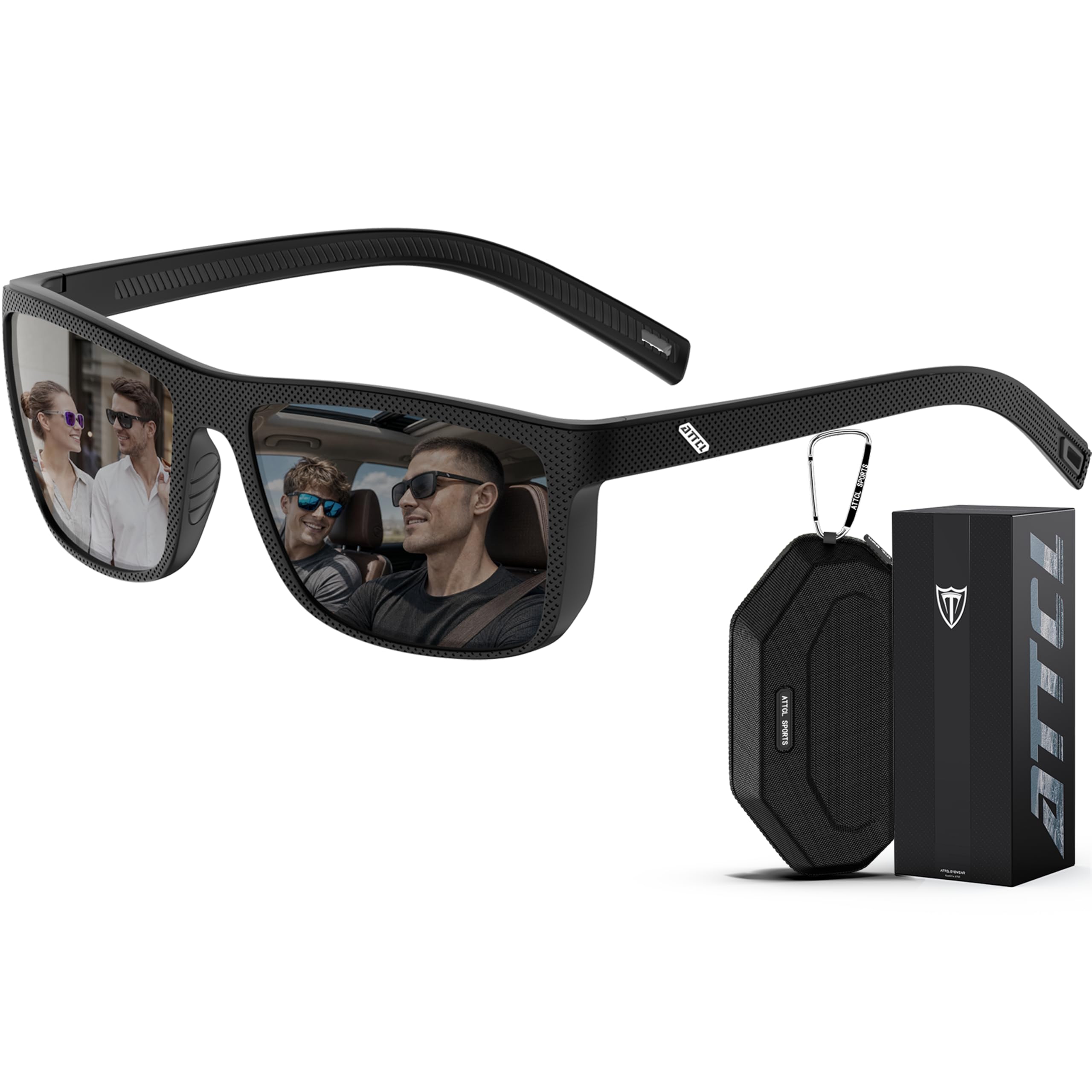
2. ATTCL Polarized Sunglasses Al-Mg
A metal frame that stays put for hours instead of sliding down your nose at every red light.
The Al-Mg frame is what earns this spot. Al-Mg means an aluminum-magnesium alloy — a metal blend that keeps its shape and holds tension on your head better than a soft plastic frame does. Most driving shades in this group are plastic all the way through. If your current pair creeps down your face on long highway stretches, the material difference is the whole reason to look here.
The lens is TAC with UV400 protection and an anti-glare coating aimed at UVA and UVB rays (the two types of ultraviolet light that reach your eyes). The copy notes it filters harsh light to restore true color, so traffic lights and brake lights read the way they should instead of washed out. The rectangular silhouette is the safe, business-casual choice. It looks fine out of the car and at a client meeting without a wardrobe change.
Fit is the trait that keeps coming up, and the recurring note is that it does not slip — one buyer simply says they “don’t slip at all,” and the interior is described as soft against the face. UV protection and solid build get the same steady approval. Choose this when your priority is a frame that behaves like equipment rather than fashion.
The frame argument: Metal construction plus a rectangular cut makes this the most conventionally wearable pick for a daily commuter who wants it to look sharp in a parking lot full of work trucks.
Made for the commuter: A metal frame, TAC lens and UV400 build for someone logging serious windshield time.
Not your pair if: You want a featherweight, forget-you-wore-them feel — alloy carries more presence than plastic.
3. ATTCL Square Polarized Sunglasses
Twenty-two and a half grams on the bridge — the weight where you stop noticing sunglasses halfway through a drive.
Twenty-two and a half grams for the whole pair is the spec that does the selling. That is light enough that a long highway run does not leave pressure marks on your nose or a hot spot behind your ears. The TR90 frame that gets you there is a flexible, low-density plastic, so it bends with a knock rather than snapping. The square shape gives decent coverage without a full wrap.
The polarized lenses are built to cut glare off roads and cars, and the copy is direct that they are intended for driving. UV400 protection is named too. The package is better than you would expect at this level — a zipper hard case, a cleaning cloth, a polarized test card and a manual all come included. That test card is genuinely useful for confirming polarization on a lens you will depend on.
Owners lean hard on the quality story, with value the second strongest theme, and there is a standout comparison: one buyer rates them better than Fendi sunglasses. A compact pool of ratings keeps this a newer pick rather than a proven workhorse. It earns its place on the spec sheet and the early signals rather than a long track record.
The weight verdict: At 22.5 g this is the lightest-labelled pair on the page, and for a daily commuter who hates the bridge-dent feeling, that number alone justifies a look.
Reach for it if: Weight on the bridge is your chief irritation and you want a flexible TR90 frame for all-day wear.
Think twice if: You want a long review history behind a purchase — this is a newer listing with a small pool of ratings.
4. SUOSO Polarized Sports Sunglasses
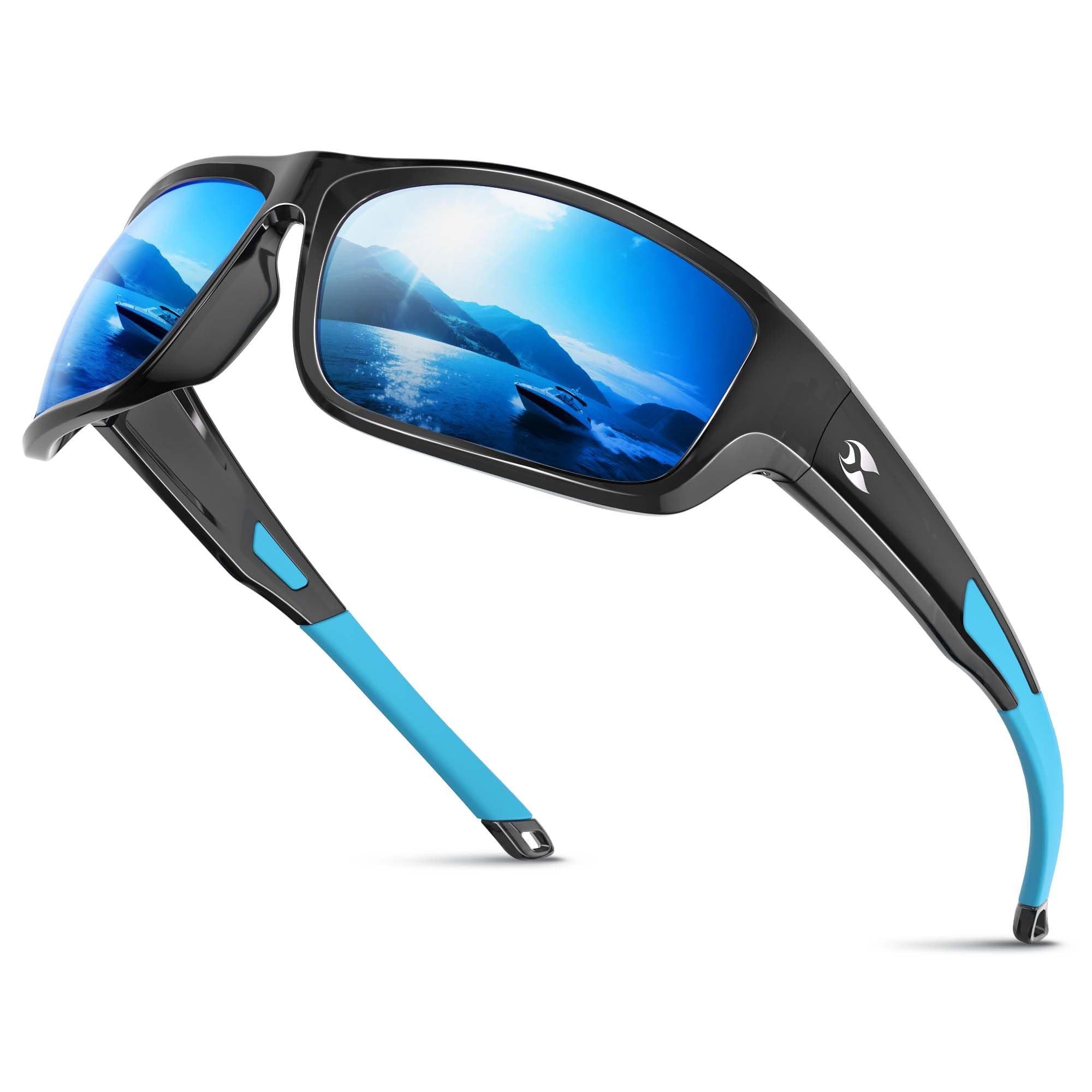
Built for the window-down drive: silicone temple tips and a nose pad that refuse to let go.
Non-slip silicone temple tips are what earn this pick. The temple tips are the arms that run back over your ears, and the silicone keeps them gripping the sides of your head. An integrated nose pad holds the bridge too, so the pair stays put through intense movement. That is the exact problem when you crack the window at highway speed or drive with the top down. The TR90 frame (a flexible, impact-resistant plastic) adds toughness.
The HD polarized TAC lenses reduce glare from roads and water. The coating story is practical: smudge-resistant and water-repellent, so fingerprints and moisture wipe away instead of smearing. Several lens tints are offered so you can match the environment, and the brown option gets specific praise for cutting glare. Sun protection is listed as blocking over 99% of UVA and UVB rays.
Fit is among the most-praised traits of the pair, alongside quality and value, and the recurring description is that they stay put even when things get sweaty. Appearance gets its own nod — they read as more expensive than they are. Grip is where it beats the ATTCL metal pair above, which relies on alloy tension rather than silicone. A wrap shape does hug the face more closely than a square frame, so it is a different look entirely.
Reasons the grip wins
- Silicone temple tips and integrated nose pad for real hold
- Water-repellent, smudge-resistant lens coating
- Multiple tints available to match your environment
The trade-off to weigh
- Wrap coverage is a tighter, sportier look than a standard square frame
Pick it for the grip: Wind, sweat and a wrap that holds tight are what you are buying here.
Look elsewhere if: You prefer a loose, traditional rectangular fit against your face.
5. 2 Packs Sunglasses for Women Polarized UV400 Protection
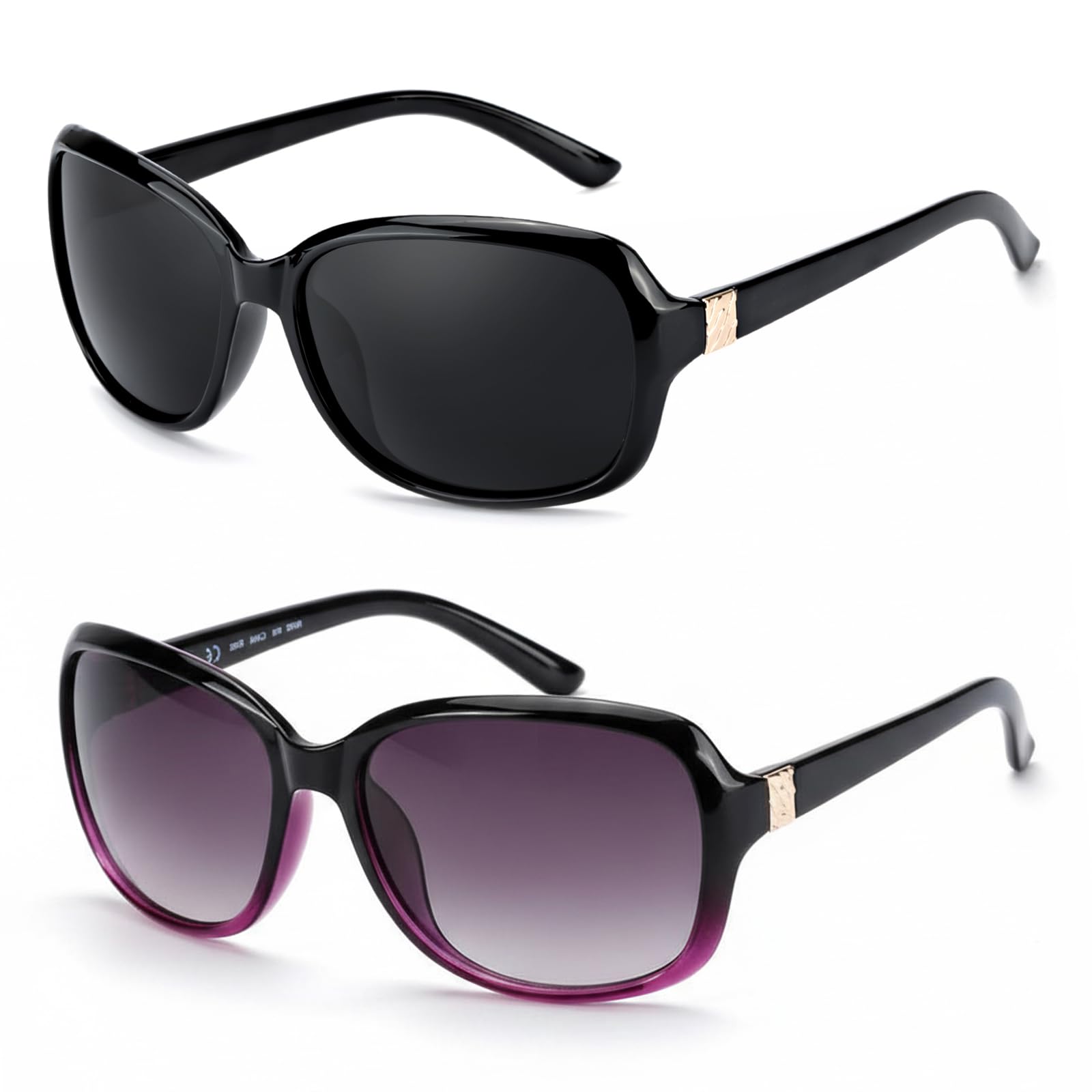
Two polarized pairs in black, gradient purple and purple — one for the car, one for the bag.
Two pairs instead of one is the appeal, and it is arithmetic you can feel. Keep a black pair in the glovebox for the commute and a purple pair in your handbag, so you are never squinting through a borrowed gas-station pair on a bright afternoon. Both are UV400 polarized, and the whole set is listed at 2.47 ounces in the package — genuinely light enough to forget you packed them.
Owners describe them as comfortable and lightweight with protection that holds up through the day. The appearance draws compliments — appearance is one of the strongest themes in the feedback, right behind overall quality. There is a specific note that they work well with prescription glasses, which matters if you wear readers or specs and want a pair that layers over them.
Fit gets steady approval too, and the sun protection is described as effective both day and night. These are not the pair to buy if you need a single hard-wearing workhorse. The value here is spread across two frames, so each one is a lighter-duty companion rather than a daily-armor lens.
The two-glovebox logic: A matching black and purple set means each car, bag or jacket pocket can hold its own pair without anyone borrowing yours.
Best for a shared ride: Anyone who wants a spare pair stashed in the car and a stylish pair on hand, all in one purchase.
Skip if you want: One heavy-duty pair — this is a two-pair rotation, not a single armored lens.
6. ROCKNIGHT Driving Polarized Sunglasses
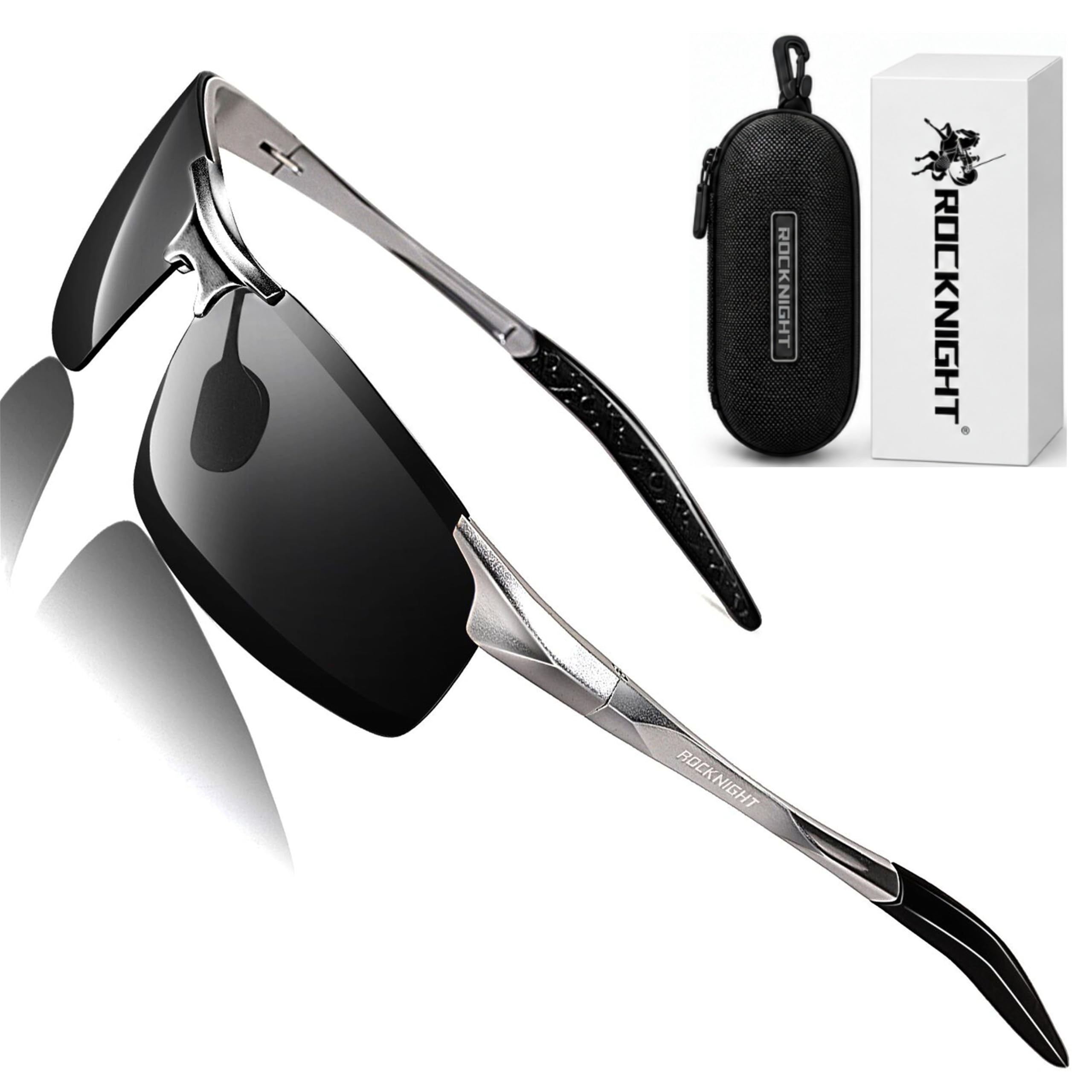
A wrap-around metal frame that blocks the light sneaking in past the edges of a flat lens.
The wrap is the design choice that matters for driving. A lens that curves around the side of your face cuts off the side-light that a flat square frame lets leak in at the temples — that wedge of glare from a sun sitting low and off to your left. This pair pairs that curvature with an Al-Mg frame (the same aluminum-magnesium alloy family used on the ATTCL metal pair above) and adds UV400 protection.
Side coverage is where it beats the INFI at the top of the list. The INFI wins on a headline polarizing percentage, but a flat lens cannot block that low wedge of sun from the side the way this curve does. Fit is among the most-discussed strengths, described in terms of wrapping around the eyes cleanly, and the appearance matches the photos. Comfort, sun protection and light weight all land as consistent positives.
The honest note is durability — it shows up as the one divided theme in the feedback, so plan to keep these in a case rather than rattling around in a cup holder. For the price of that extra care, you get a wrap that reads as premium to the eye and handles highway glare from the side as well as head-on.
Wrap vs. flat lens: If your commute points you east into a sunrise, side coverage is the upgrade that flat frames cannot give you.
Worth it for side glare: Sunrise and sunset drivers who want wrap-around coverage on a metal frame.
One caution: Durability is the split feedback theme — a case is not optional here.
7. FEISEDY B1400 Polarized Round Sunglasses

Round frames with an adjustment you set once, so the pair fits your head instead of fighting it.
An adjustable frame is the fix for a pair that slides, pinches or sits crooked no matter how you push it up. Not everyone’s face matches a fixed frame. The FEISEDY lets you tune the fit to your preference, so a narrow face and a wide one can each find their setting. The TAC lenses carry UV400 protection, and the round silhouette is the styling departure of this set.
Owners describe the frames as good quality and stylish, and the adjustable mechanism is called out as easy to set. It works the way you expect without a fight. The lens story is where this pair asks for honesty: glare reduction and lens tint land as divided feedback. The photochromic lenses shift from clear to dark, and owners repeatedly note one lens can read darker than the other.
For errands and short town hops, that uneven tint is a mild nuisance rather than a dealbreaker. If you rely on a perfectly even pair of lenses for a long twilight highway run, it is worth knowing. At 1.41 ounces the frame is light enough to forget on the commute.
Set-it-yourself fit: Adjustability is the entire pitch — pick this if standard temples always let a pair slip, and take the lens tint unevenness as the price of a tunable frame.
For hard-to-fit heads: A tunable round frame that you dial in once and stop adjusting.
Caveat to consider: Tint consistency between the two lenses is uneven, so skip it for demanding dusk driving.
8. ANCHOR Floating Polarized Fishing Sunglasses

Drop them over the side and they float — the pair built for the boat dock and the car ride there.
A TPX frame that floats is the whole reason this pair exists. TPX is an ultra-light plastic that stays on the surface of the water. If your sunglasses live in the boat bag, an over-the-side drop is not a lost pair — the frame stays on the surface where you can grab it. For a driver who fishes or launches a boat on the weekend, that is a feature you cannot retrofit onto any other pair on this list. Polarized lenses cut the surface glare that hides structure and fish below the water line.
Saltwater resistance is stated, and the frame is designed for marine environments — offshore, lake, or casting from shore. The feather-light TPX build is noticeably lighter than traditional sport sunglasses, so it sits comfortably on long days where you are wearing them from the ramp to the last cast. Floatability is among the most-praised traits in the feedback, right behind overall quality, and owners describe them as comfortable with no headaches.
Two honest caveats. Fit is divided — some find it a pleasant fit, others a bit wide for their head, so it is a frame to size carefully. And durability is the concern flagged, so keep them on a strap rather than stuffing them in a tackle box.
Why anglers like it
- TPX frame floats — retrievable if it goes overboard
- Designed for saltwater, sun and outdoor wear
- Feather-light feel for full-day wear
Where it may not fit
- Wide fit for some head shapes
- Durability is the noted weak point — a strap helps
Boat-bag pick: Dock, boat and shore anglers who want a floating polarized pair for water days.
Better elsewhere if: Your head runs narrow, or you need one pair to survive a tackle box.
9. HARBOR Floating Polarized Fishing Sunglasses
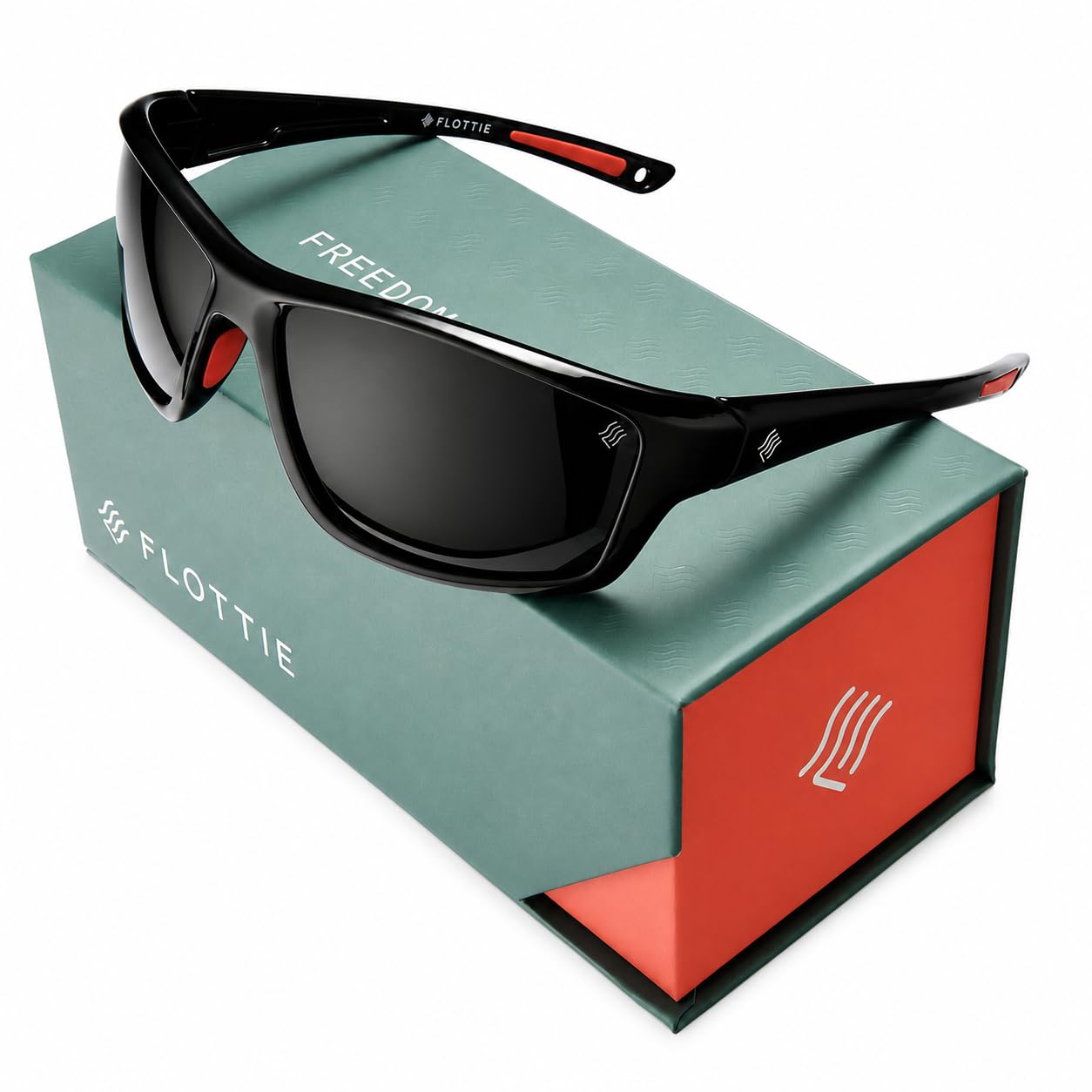
Same floating TPX playbook as the ANCHOR, in a newer listing that has not built its track record yet.
HARBOR runs the same design as the ANCHOR: an ultra-light TPX frame that stays on the surface of the water, polarized lenses that cut surface glare to improve visibility below, and UV400 protection. Saltwater resistance and a feather-light build are part of the same package, so a long day from the dock to the ramp does not turn into an earache.
Time is where it differs. This is a fresh listing with only a small handful of ratings, so there is no deep pool of owner experience to lean on. You are buying the spec sheet and the floating premise rather than a proven track record.
It is a solid second floating option if this frame shape or color suits you better than the ANCHOR. If you want the confidence of many owners behind the same concept, the ANCHOR carries the longer history in this list.
What you get and what you skip: You get a genuinely floating polarized frame for water days. You skip the depth of owner feedback — a newer listing without a long track record.
Consider this if: You want a floating polarized pair and prefer this frame or color over the other floater.
Proven-option buyers: Go with the ANCHOR if a longer owner history matters to you.
Know the Specs
Polarization and UV400
Polarization is a filter inside the lens that blocks horizontal reflected light. That is the glare that comes off a wet road or a chrome bumper and makes you squint. UV400 is a separate protection rating that covers the ultraviolet range. A pair can be polarized and rated UV400 at the same time — every pair here states both. You want both on a highway drive, where you sit behind glass for an hour or more with the sun beating down.
Lens material: TAC vs. frame plastics
TAC (cellulose triacetate) is a lightweight film layered into the lens. Most of these driving pairs use it because it stays optically clear without heavy glass. TR90 and TPX are low-density frame plastics: TR90 is flexible and impact-resistant, and TPX is chosen for a feather-light, floating build. Al-Mg is an aluminum-magnesium alloy that gives a stiffer metal frame. Each choice trades weight against toughness, so match the material to how you treat your glasses.
Common Questions
Why do polarized lenses matter more for driving than dark tint?
Can I wear these polarized sunglasses over prescription glasses?
What does UV400 protection actually block?
Are brown lenses better than grey for driving?
How long do TAC lenses usually last?
Will a wrap frame or a square frame be better on the highway?
Do I need a case for floating fishing sunglasses?
Are cheap polarized sunglasses safe to wear while driving?
Can I use these fishing sunglasses as everyday driving glasses?
How much does frame weight affect all-day comfort?
The Bottom Line
For most people, the top rated sunglasses for driving winner is the INFI Fishing Polarized pair