Specs are compiled from manufacturer listings and verified buyer reviews and can change over time — please confirm the key details on the product page before buying.
If you want a home phone that keeps working without a giant monthly bill, a VoIP system is the honest answer — it runs your calls over your internet instead of a traditional phone line. The rest of this page tells you which camp fits your house.
This guide is built by comparing the manufacturers’ published specifications and the patterns across verified customer reviews, so you get each pick’s real strengths and trade-offs instead of marketing spin.
A quick note before the picks: this list uses flexible, human-like matching, so not every system here is the exact unit you pictured — the nearest same-type setup serves the same job. Keep that in mind as you read this guide to the best VoIP phone system for home.
Top Picks
How To Choose The Best VoIP Phone System for Home
The first fork in the road is not brand or button layout — it is whether you are buying a phone line or a phone. An adapter takes your existing internet connection and turns it into a dial tone. A handset is just the thing you hold; it needs something else to actually place the call. Mix those two up and you will buy a beautiful cordless phone that has nothing to talk to.
Does it need a base station or a subscription?
Some cordless VoIP handsets are designed to pair with a specific base station the same manufacturer sells separately — buy the handset alone and it will not make a call. Others are service bundles where the hardware is only half the story and a monthly plan is required to keep the dial tone alive. Read the listing for the words “base station” and “subscription required” before anything else. A system that needs neither is the simplest thing to own.
The 911 problem nobody mentions
Traditional landlines trace your address automatically when you dial emergency services. Internet phones often need your registered address on file to do the same, which is why some bundles advertise address-based 911 and a text alert when 911 is dialed. If anyone in the house is elderly, lives alone, or you simply want that safety net, this is the spec worth paying attention to. It is easy to overlook because it only matters on the worst day.
Call quality rides on your internet, not the handset
Every VoIP call is data moving over your broadband, so a busy network or a weak Wi-Fi signal shows up as echo, delay, or dropouts. That is why the recurring complaint across this category is sound quality rather than build quality — the phone is fine, the pipe is the problem. Wired ethernet to the adapter, or built-in wireless on the base, both help. If your internet is unreliable, fix that before blaming the phone.
Side-by-Side Comparison
| Model | Best For | Type | Monthly Bill | Corded Base | Amazon |
|---|---|---|---|---|---|
| magicJack VOIP Phone Adapter★ Best Overall | Free calling, no plan | USB adapter | None for 12 months | — | Amazon |
| Grandstream DP720Existing Base Owners | Existing Grandstream base owners | DECT handset | Service dependent | — | Amazon |
| AT&T DL72219 | Robocall blocking on two handsets | DECT 6.0 cordless pair | Service dependent | No | Amazon |
| Ooma Telo + HD3 | Budget entry into Ooma service | Base + HD3 handset | Taxes and fees only | No | Amazon |
| AT&T CL84118 | Storms and power cuts | Corded + cordless DECT | Service dependent | Yes | Amazon |
| Ooma Telo Air | Placing the phone anywhere | Wireless base station | Taxes and fees only | No | Amazon |
Detailed Reviews
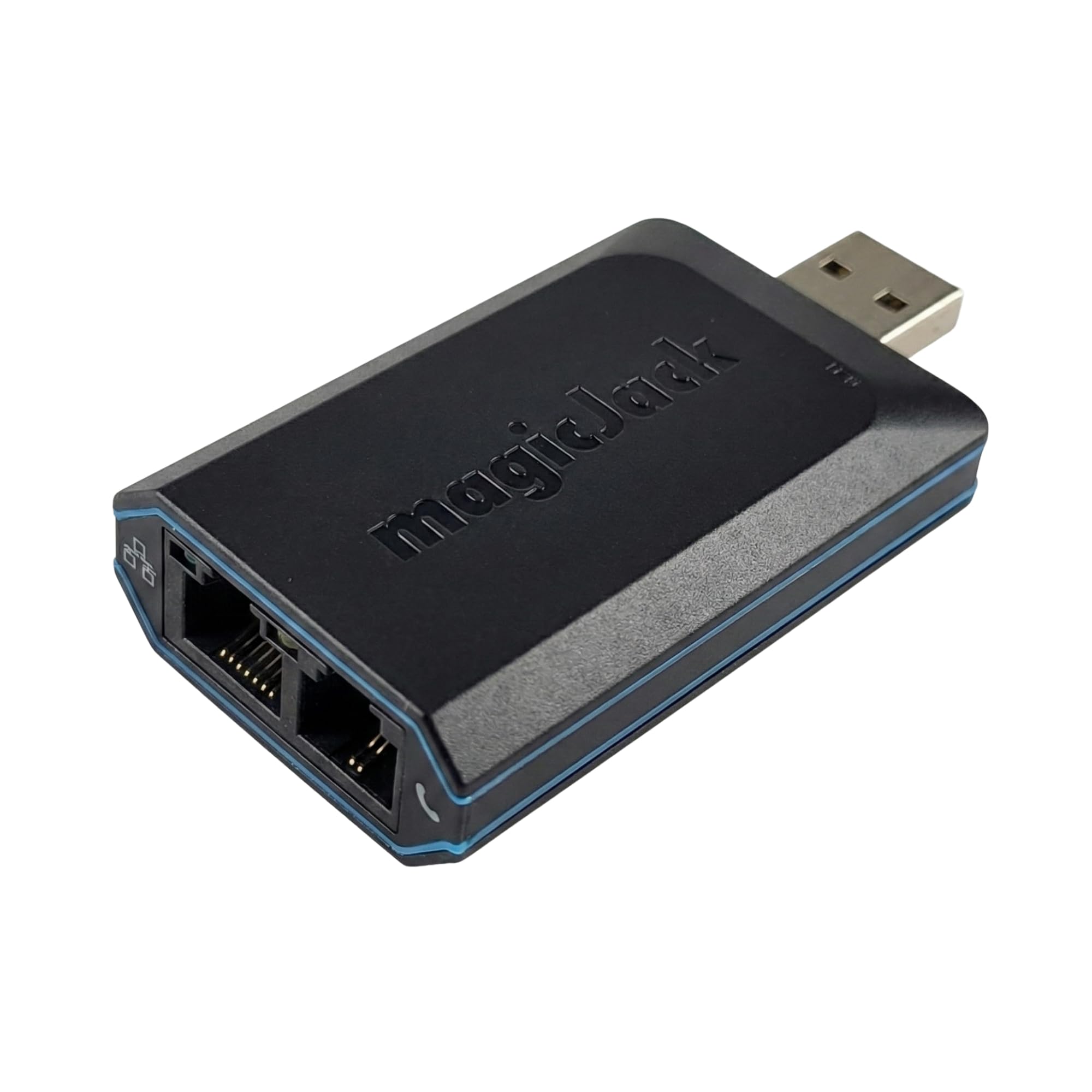
1. magicJack VOIP Phone Adapter
Our pick — 4.0+★ from 9,500+ verified ratings; the strongest balance of quality and price.
The tiny adapter that turns the phone already on your desk into a free-calling line.
Here is the whole idea in one line: you get 12 months of free local and long-distance calling to the U.S., Canada, Puerto Rico, and the Virgin Islands, with no monthly bill attached. Plug the adapter into your high-speed internet and into any cordless or landline phone you already own, and that handset starts working again. It also works with your computer if you would rather call from a headset. Porting your old number is a one-time fee, and magicJack-to-magicJack calls are free worldwide.
What keeps people loyal is simple reliability. Owners of this adapter mostly talk about whether it dials, rings, and hangs up cleanly, and it holds up well. It is the crowd favorite here at 4.0+ stars across 9,800+ ratings, and the reason is mundane in the best way: it behaves like the landline it replaced. Caller ID, voicemail, call waiting, call forwarding, and conference calling are all included, and the free mobile app rings your phone and your home handset at the same time so you can answer either.
The honest catch is call quality, which is the one thing buyers split on. Some describe it as sounding exactly like a landline; others run into echo or thin sound, which usually traces back to a busy network rather than the adapter. The upgraded voice quality and faster processor with more memory help on crowded connections, but they cannot fix bad broadband. Budget-minded households that already have decent internet get the most out of this, and the 1-year warranty covers a unit that simply stops working.
Where It Earns Its Keep
- 12 months of free calling to the U.S., Canada, Puerto Rico, and the Virgin Islands with no monthly bill
- Works with the cordless or landline phone you already own — no new handset needed
- Free mobile app rings your smartphone and home phone together, with free magicJack-to-magicJack calls worldwide
- Caller ID, voicemail, call waiting, call forwarding, and conference calling included
What To Expect Going In
- Call quality draws mixed reports — echo and thin sound on some connections
- Number porting carries a one-time fee
- It is an adapter, not a phone — you supply the handset
Worth it for: anyone who already owns a cordless phone and wants a dial tone back without a recurring charge.
Think twice: if your internet is already flaky, an adapter will only amplify that.
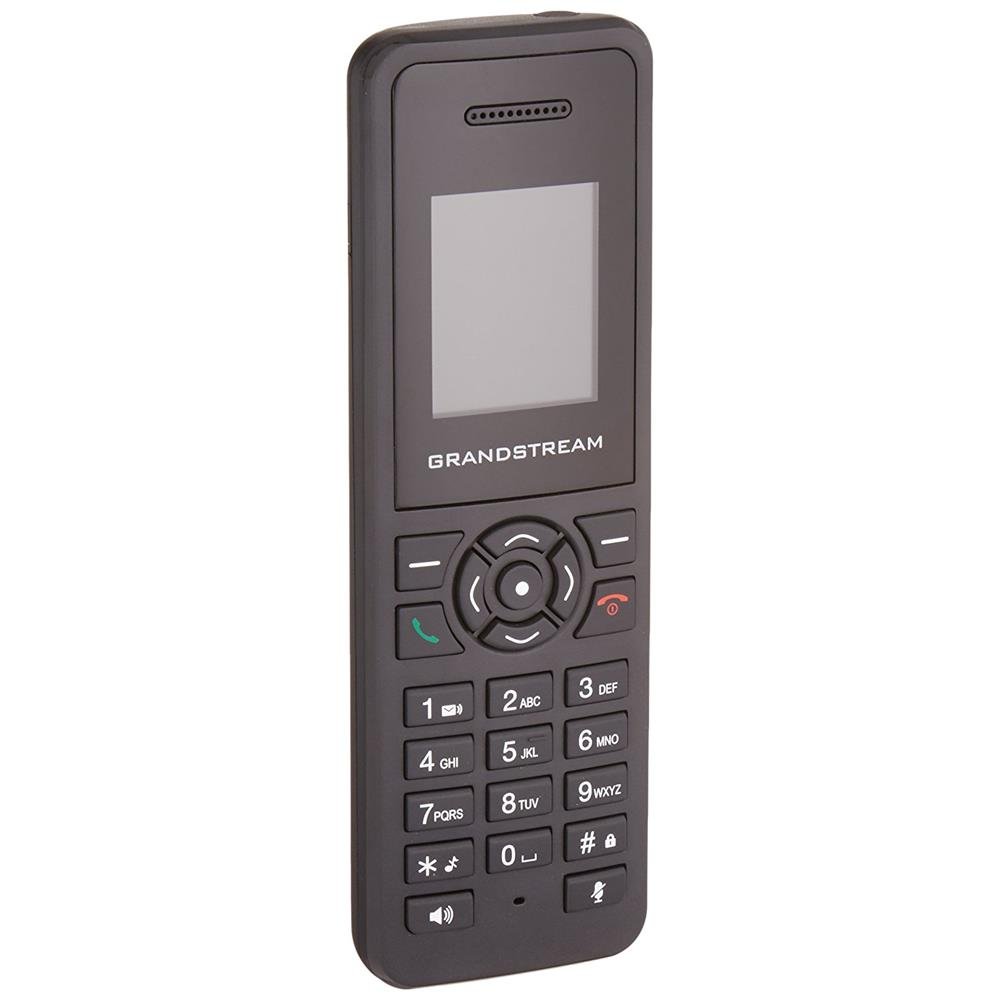
2. Grandstream DP720 DECT Cordless VoIP Telephone
A handset, plainly, for people who already own the Grandstream base it needs.
This is a DECT cordless VoIP handset that pairs with the Grandstream DP750 base station, which is listed as its compatible device — and that phrase is the entire buying decision. If you have a DP750 already running a home or small-office phone line, the DP720 is a second or replacement handset that joins it. If you do not have that base, this handset has nothing to connect to and will sit in the cradle doing nothing. It weighs 9.6 ounces and comes with a charger cradle, a belt clip, two batteries, a universal power supply, and a quick start guide.
There is a dedicated MWI LED — a message-waiting light that flashes when you have voicemail or a missed call — so you can see from across the room that something is waiting without picking the handset up. Owners speak well of the build and the features, and describe setup as straightforward once the DP750 base is in place. It carries DECT certification across FCC, CE, RCM, and ANATEL standards, which is paperwork, not a promise of call quality.
The earpiece question: sound is the one spec buyers genuinely disagree on, and it is not a subtle split — some call it excellent, others describe the earpiece as poor outright.
Who this is not for: anyone starting from scratch. This is an accessory purchase for a base you already own, so treat it as expanding a system rather than building one.
Matches up when: you run a DP750 base and want a second handset with a visible message light.
Not your part: you have no Grandstream base — this needs one before it can dial.
3. AT&T DL72219 DECT 6.0 2-Handset Cordless Phone

Two handsets and a robocall wall — the spam stops before the first ring.
If your phone currently rings six times a day with strangers, this is the pick that fixes the annoyance rather than the call quality. It blocks robocalls automatically on the very first call with no setup at all, and a dedicated handset key one-touches any number into a block directory that holds up to 1,000 entries. Both handsets run off a single phone jack, which means you get a kitchen phone and a bedroom phone from one wall outlet. Each has a 1.8″ backlit display and a big lighted keypad that you can read without turning a lamp on.
Range is genuinely generous — DECT 6.0 carries interference-free calls up to 1,000 feet, so a phone in the garage or out in the yard still connects to the base. Bluetooth pairing lets you connect up to two smartphones (or one phone plus a headset) and take mobile calls through either handset, including Siri or Google Assistant from anywhere in the house. The answering machine records up to 22 minutes of messages with remote playback. Since this shares the same 22-minute recording ceiling as the AT&T CL84118 further down, the real difference between them is the corded base — this one has none.
You can plug it into a landline, cable, or VoIP service (a phone line that runs over your internet), including Ooma and Vonage, so it works as the front end for a VoIP line. It is among the most proven cordless units on this page at 4.0+ stars across 15,000+ ratings. The trade-off is voice quality: some buyers find the speakerphone clean, others find the sound thin. If you mainly want spam blocking and a phone in two rooms, that is a fair exchange.
The Case For Two Handsets
- Automatic robocall blocking on the first call, plus a 1,000-entry block directory
- DECT 6.0 range up to 1,000 feet through walls and floors
- Connects up to 2 smartphones over Bluetooth and takes mobile calls on either handset
- 22 minutes of answering machine recording with remote playback
Where It Gives Ground
- Voice quality reads mixed — the speakerphone is praised more than the earpiece
- No corded base, so it depends on power like any cordless phone
The right call if: spam calls are your daily irritation and you want a phone in two rooms from one jack.
Look elsewhere: if you need a phone that survives a power cut — this one does not.
4. Ooma Telo VoIP
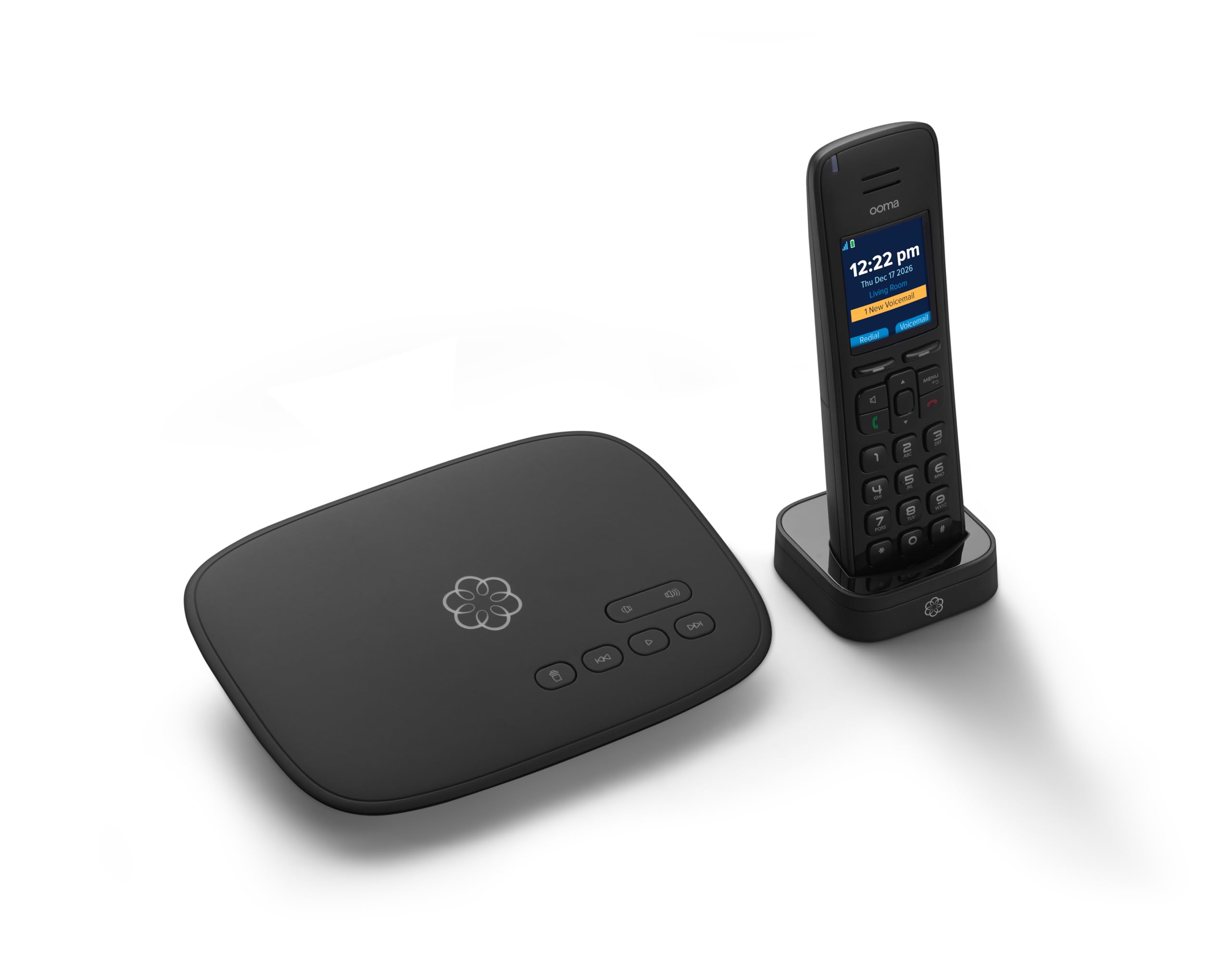
A base station, a handset, and batteries — a complete Ooma setup in one box.
The bundle is the appeal: the Telo device, its power adapter, an ethernet cable, the black HD3 handset, its charging cradle and power adapter, two AAA batteries, and both quick start guides arrive together. You pay only the applicable monthly taxes and fees rather than a full service charge, and calling across the U.S. is free with low international rates — the listing notes it works only in the U.S. The HD3 handset carries a 2″ color display and a full-duplex speakerphone, meaning both sides can speak at once without one voice cutting out.
Feedback settles on setup and ergonomics as strengths, along with responsive customer support — the kind of unglamorous competence that matters most on day one. Pure Voice technology is the maker’s name for its voice-processing work, and the mobile app puts your home number on your phone when you are out. It weighs 1.6 pounds, so it tucks onto a shelf without much room. It even lists Starlink internet as a compatible connection.
Sound is where it wobbles. Reports land on both sides — some find it good, others hit poor performance — which is a normal pattern for VoIP hardware running on real home networks. Its 3.5+ stars makes it a solid mid-pack pick rather than a standout, so treat it as the sensible entry point into Ooma service and set expectations around clarity accordingly.
The value read: you get the base, the handset, and the batteries in a single purchase, which removes the most common Ooma beginner mistake — buying a handset with no base to pair it to.
Best fit: a first-time VoIP buyer who wants one box that covers everything and no service charge beyond taxes and fees.
Second thoughts if: you need premium call clarity above everything else.
5. AT&T CL84118 DECT 6.0 Corded/Cordless Phone
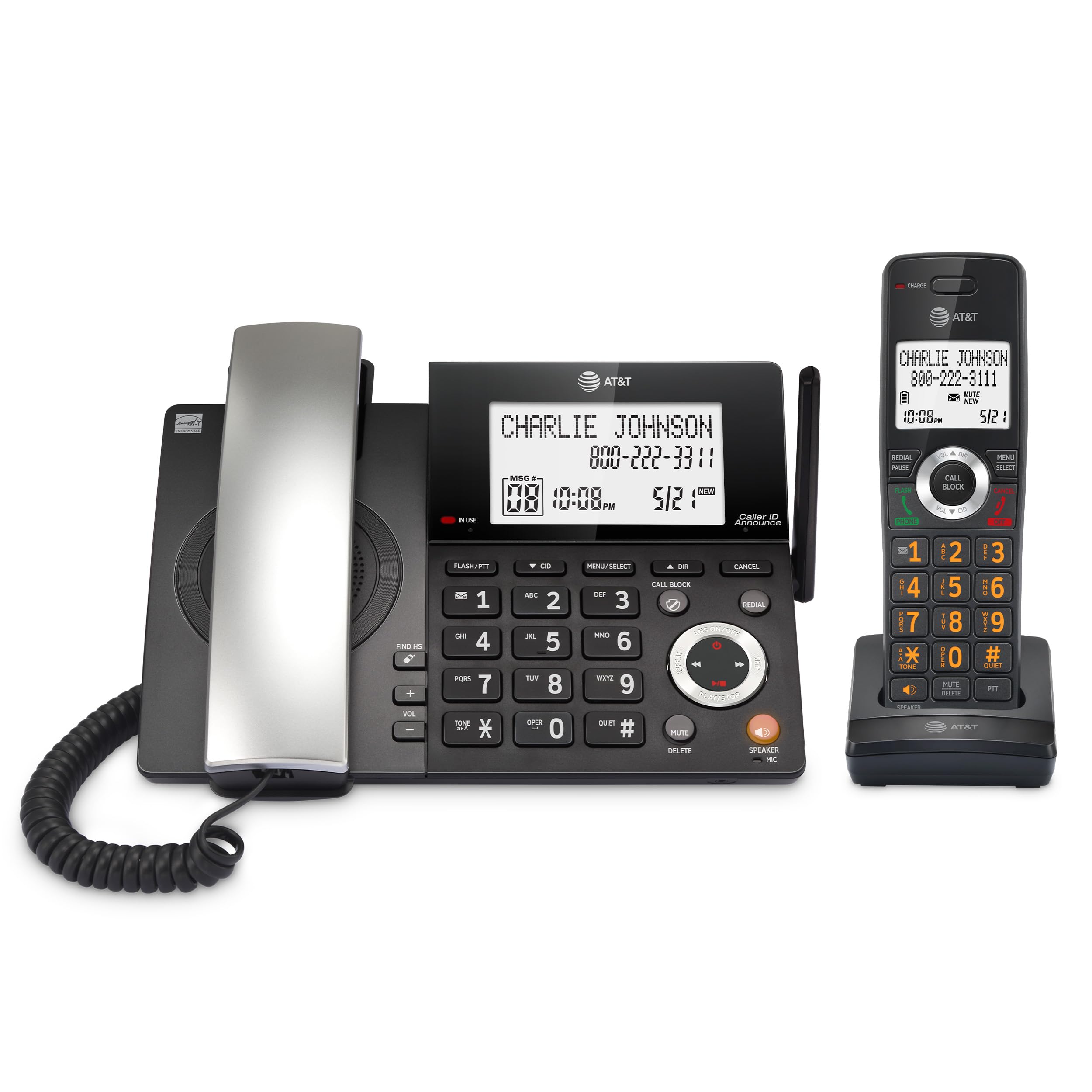
The one phone here that still dials when the lights are out and the Wi-Fi is dead.
Storms are the reason this model exists. The corded base runs on line power, with no electricity needed, so you can make and receive calls when the power is out or the internet drops — which is precisely when people reach for a phone. That single feature is worth more than any display spec to someone who has sat through an outage with a dead cordless handset. The 3.5-inch base display and 2-inch handset display use high-contrast text with fully lighted keypads, and the handset announces the caller’s name aloud so you can screen a call without walking over.
Around that core you get the usual AT&T toolkit: robocalls blocked automatically on the first call with no setup, a one-touch blacklist with a 1,000-entry directory, and 22 minutes of answering machine recording with remote access. DECT 6.0 range reaches up to 1,000 feet through walls and floors, and a full-duplex speakerphone lets both sides talk at once. It intercoms between handset and base, is hearing aid compatible, and works with landline, cable, and VoIP services including Ooma and Vonage. The bundled accessories run to a charger, two AC adapters, a telephone line cord, and a battery pack.
Buyers setting this corded/cordless unit up for an elderly parent tend to report it goes smoothly. The caller ID announce (a loud name read out before you pick up) gets steady praise for exactly that reason — a genuine accessibility win. At 4.0+ stars and 1.18 kg, this is a desk-top unit with a real base, not a pocket handset.
Buy this when: losing phone service during a storm is the scenario you are guarding against.
Consider the DL72219 instead if: you would rather have two walk-around handsets than a corded base.
6. Ooma Telo Air VoIP Free Internet Home Phone Service

Same Ooma service, but the base no longer has to sit next to your router.
Built-in wireless connectivity is the entire difference between this and a standard Telo, and it solves a specific logistical headache: the base can go wherever the phone is actually useful instead of wherever the ethernet cable reaches. You pay only the applicable monthly taxes and fees, with free nationwide calling and low international rates, and the listing notes it works only in the U.S. The 1.2-pound base measures 5.9 x 7.8 x 1.7 inches — small enough to sit on a side table or a hallway shelf without complaint.
Everything else follows the Ooma playbook: voicemail, caller ID, call waiting, unlimited calling in the U.S., 911 calling with text alerts, and a mobile app that puts your home number on your smartphone when you are away. Compatibility is broad — phones, iOS devices, and Android devices — and Starlink internet is listed as a supported connection. It is the most-reviewed Ooma base here at 4.0+ stars across 2,300+ ratings. Reviewers report easy setup, meaningful monthly savings against a traditional line, and support that answers.
What you give up is the handset. Unlike the Telo and HD3 bundle above, this box ships with just the base station, power adapter, ethernet cable, and a quick start guide — you bring your own cordless phone or add an Ooma handset separately. That is fine if you have a good cordless phone in a drawer. It is a hidden second purchase if you do not.
Who it suits
Anyone whose router lives in a closet or a corner and whose phone needs to live somewhere else — the wireless base removes that constraint entirely.
The missing piece
No handset in the box. Budget for one, or plan to reuse your existing cordless phone on the base.
Pick it for: the freedom to place the base wherever the signal and the household actually need it.
Skip the upgrade if: your router already sits next to the phone — the standard Telo does the same job.
Know the Specs
DECT 6.0 Range
DECT 6.0 is the wireless standard cordless home phones use to talk to their base, and it is measured in feet, not bars. A rating of up to 1,000 feet means the handset holds a clear link through walls and floors — useful if the base sits in a front room and you want a phone in the garage. Treat the number as a ceiling under good conditions, not a guarantee through a concrete wall. Interference from Wi-Fi is the usual reason a call breaks up before you reach the stated distance.
Corded vs Cordless Base
A corded base is a phone that draws its power from the phone line itself, so it keeps working when the electricity goes out. A cordless base plugs into a wall outlet and dies with the power. If you keep a phone for emergencies rather than convenience, the corded base is the spec that matters — everything else is preference. DECT handsets can still pair with a corded base, which is how you get both in one system.
Subscription vs No Monthly Bill
VoIP (phone calls over your internet) splits into two cost models. Some systems include a period of free calling with no monthly bill. Others require an ongoing service plan with only taxes and fees added on top. Neither is a trick — they are different products. Read the listing for the words “subscription required” and plan around it. A cheap box with a mandatory plan is a recurring cost, and a box with free calling may still charge a one-time fee to port your old number.
Answering Machine Capacity
Recording time is listed in minutes, and it tells you how many messages fit before the machine is full. A 22-minute machine holds a reasonable backlog for a household that checks messages weekly. The other half of the spec is remote playback — being able to hear messages from a handset or from away from home — which matters more than raw minutes for most people.
Common Questions
Do I need a base station to use a DECT VoIP handset?
Will a VoIP phone still work during a power outage?
Can I keep my existing phone number when I switch to VoIP?
Does a VoIP phone call 911 the same way a landline does?
Why does my VoIP call sound echoey or choppy?
Do these phones block robocalls on their own?
Can I use a VoIP system with Starlink internet?
Is a VoIP system cheaper than a traditional phone line?
How many handsets can I run from one phone jack?
What is an MWI light on a VoIP handset?
The Bottom Line
For most households, the winning voip phone system for home is the magicJack adapter. It turns the phone you already own into a working line with 12 months of free calling and no monthly bill, and it is the most proven pick on this page at 4.0+ stars across 9,800+ ratings. If spam calls are the daily irritation, grab the AT&T DL72219 for its automatic robocall blocking and two handsets from one jack. For outage protection, reach for the AT&T CL84118, since its corded base keeps dialing when the power does not. Whichever you choose, register your address during setup — that is what makes 911 work on an internet phone.
How we choose
We do not accept paid placement. Every pick is matched to a real buyer and a real use-case; we do not hands-on test units.
Sources
Specifications: manufacturer listings and product documentation. Review insights: verified customer reviews, as of November 2026. Pricing: not shown on this page (it changes often); check the current price via the retailer link.
As an Amazon Associate, Tactical Gear Guy earns from qualifying purchases. This does not affect which products we feature.