Specs are compiled from manufacturer listings and verified buyer reviews and can change over time — please confirm the key details on the product page before buying.
Carrying less weight is the whole game on a long trail. Every extra ounce on your back is one you feel on the third climb, so the smartest gear choices are the ones that drop grams without dropping comfort, warmth, or safety. This guide covers nine pieces that do exactly that, from poles that fold into a daypack to a sleeping pad that rolls up smaller than a water bottle.
This guide is built by comparing the manufacturers’ published specifications and the patterns across verified customer reviews, so you get each pick’s real strengths and trade-offs instead of marketing spin.
Start with the trekking poles, because how you carry weight matters as much as how much you carry. Below you’ll find the full shortlist of ultra lightweight hiking gear, ranked and explained in plain terms.
Top Picks


How To Choose The Best Ultra Lightweight Hiking Gear
Light gear only helps if it still does its job. A pole that folds to nothing but slips on wet rock is worse than a heavier one that holds. So the trick is to find the spot where weight drops and performance does not. Here is what actually matters when you shop.
Weight Is Only Half The Story
A trekking pole listed at 9.7 ounces sounds perfect. But you need to know what that weight buys you. Does the pole lock with one hand or two? Does the handle stay dry when your palm sweats? The number on the listing is a starting point, not a verdict. Match the weight to the job the item has to do.
Packed size matters just as much on a full pack. A stove that collapses to 0.2 inches thick slides into any gap. A tent that packs to 16.9 inches fits alongside your sleeping bag. Always check the folded or packed dimensions, not just the weight, because a light item that will not fit is dead weight.
Materials Tell You How Long It Lasts
Aircraft-grade 7075 aluminum, Grade-1 titanium, and 20D nylon are the names you will see most. Titanium resists corrosion and stays strong while weighing little. Nylon rated with a PU number (like PU3000mm) tells you how much water pressure the fabric can take before it leaks. Higher numbers mean better rain protection.
The Specs You Should Check First
For water filters, look at the micron rating and the gallon capacity. For sleeping pads, look at the R-value, which is a number that measures how well the pad traps heat. For tents, look at the waterproof rating and the packed size. These are the numbers that decide whether a piece of gear works on a cold, wet night or lets you down.
Side-by-Side Comparison
| Model | Best For | Weight | Key Spec | Packed Size | Amazon |
|---|---|---|---|---|---|
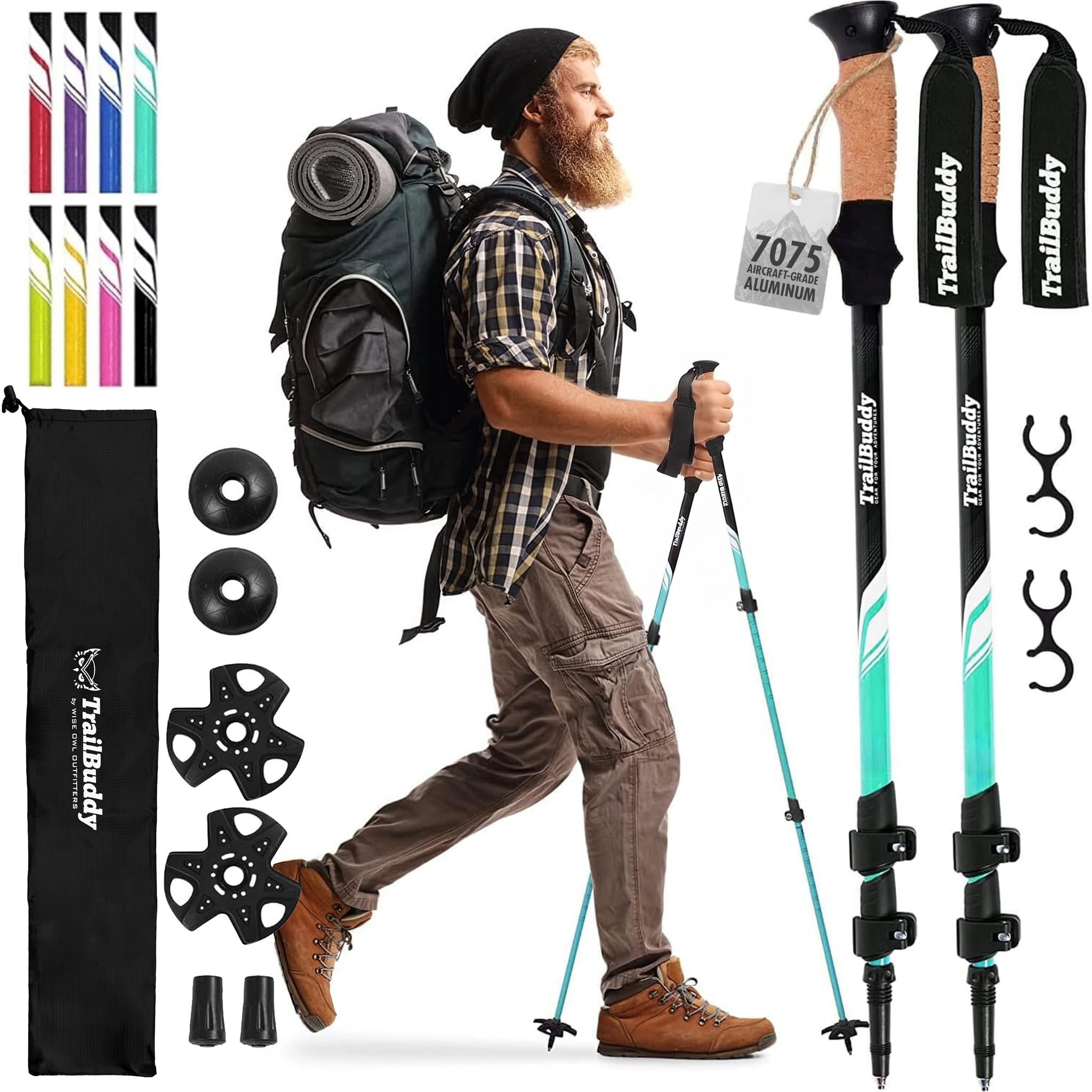
| TrailBuddy Trekking Poles★ Best Overall | All-around trail support | 1.2 lb per pair | 54″ max height | 24.5″ collapsed | Amazon |
| Sawyer SP128 Mini FilterBest Water Safety | Safe drinking water anywhere | 2 oz | 0.1 micron absolute | Palm-sized | Amazon |
| 3M Thinsulate Camping BlanketWarmth Without Weight | Warmth without bulk | 450 g (16 oz) | 3M Thinsulate M80 fill | 10.2″ × 7.5″ × 3.1″ | Amazon |
| Kuvik Titanium Wood Stove | Wood-fired cooking | 6.88 oz | Grade-1 titanium | 0.2″ flat | Amazon |
| LuminAID Max Lantern | Light and phone backup | 10 oz | 200 lumens | 1″ thick | Amazon |
| Osprey Ultralight 20L Dry Stuff Pack | Day trips and souvenirs | 0.43 lb | 20L capacity | 17.7H x 9.8W x 8.3D in | Amazon |
| Naturehike Cloud Up 3 Tent | Three-season shelter | 5.1 lb | PU3000mm waterproof | 16.9″ x 6.7″ x 6.7″ | Amazon |
| Therm-a-Rest NeoAir Xlite NXT | Warm, compact sleep | 13 oz (370 g) | 4.5 R-Value | 1-liter bottle size | Amazon |
| Osprey Stratos 36L Backpack | All-day hiking comfort | 3.28 lb | 36L capacity | 28H x 14.6W x 10.6D in | Amazon |
Detailed Reviews
1. TrailBuddy Trekking Poles
Our pick — 4.5+★ from 64,000+ verified ratings; the strongest balance of quality and price.
Lighter on your legs than any pole on this list, and one-hand friendly at the lock.
These poles come from the most-reviewed product in this whole lineup, and the crowd favorite status holds up. The core win is the lever lock. Twist locks need two hands and a bit of patience. A lever you can flick with one hand means you adjust mid-climb without stopping to wrestle your own gear. Each pole is 9.7 ounces of aircraft-grade 7075 aluminum, which is a hard alloy that bends less than plain aluminum when you load it on rough ground.
The adjustment range does real work here. You can set them from 54 inches tall down to 24.5 inches collapsed, so they fit a tall hiker or a shorter one in the same household. They even work as trekking poles for kids age 7 and up. When you break them down, they measure 21 inches, which is short enough to go in a carry-on bag. That makes them travel gear, not just trail gear.
The cork and moisture-wicking handles are the part that earns its place on a long day. Cork molds to the shape of your hand, so the grip stays dry even when your palm does not. The padded straps and the threaded pole tips keep the included mud baskets and snow baskets attached in wet or muddy ground. The whole set comes with a carry bag, two poles, and four rubber tips.
What earns the top spot
- One-hand lever locks that beat two-hand twist locks on the move
- 9.7 oz per pole in 7075 aluminum, light but hard-wearing
- Cork handles that stay dry under a sweaty grip
- Folds to 21 inches, so it slides into a carry-on
The honest trade-off
- The 1.2 lb pairing weight is a chunk of your pack compared to a carbon pole
- Kids’ sizing starts at age 7, so smaller hikers will need a separate pair
Reach for this if: you want one pole pair that handles trails, snowshoeing, Nordic walking, and a flight to the trailhead.
Look elsewhere if: you are chasing the absolute lowest gram count and will accept less durability for it.
2. Sawyer Products SP128 Mini Water Filtration System
Two ounces that make any stream drinkable, which is the whole ballgame on a long carry.
Here is the number that reframes the whole category. At just 2 ounces, the Sawyer Mini is light enough that it disappears into a hip pocket. You will not notice it is there until you need it.
The 0.1 micron absolute filter is the reason it earns trust. A micron is a tiny unit of measurement, and an absolute rating means every single hole in the filter is that small or smaller. At 0.1 micron absolute, the filter removes 99.99999% of bacteria like Salmonella, Cholera, and E. coli. It also removes 99.9999% of protozoa such as Giardia and Cryptosporidium, plus 100% of microplastics. The maker states each filter is tested three times before it ships.
You can screw it onto the included 16-ounce squeeze pouch, a standard 28 mm disposable water bottle, or a hydration pack. Or use the 7-inch straw to drink straight from the source. The filter is rated up to 100,000 gallons, which covers many seasons of refills. It comes with the filter, pouch, straw, and a cleaning plunger, so nothing extra to buy.
Where it wins: tiny footprint, big safety margin, and a lifespan measured in seasons rather than trips.
What to know: the squeeze pouch takes a hand to work, so plan a few minutes at the water source rather than a quick grab-and-go.
Worth it for: backpackers, travelers, and anyone building an emergency kit who wants water safety at near-zero weight.
Not for: car campers who already carry treated water and will not use a squeeze filter.
3. 3M Thinsulate Insulation Warm Camping Blanket
Packs down to a book size and still keeps a fire-side sit warm.
This is what people reach for when the sleeping bag feels like overkill. The blanket weighs 450 g (16 oz) and packs into 10.2″ × 7.5″ × 3.1″, so it fits in a pack pocket and still unfolds to 6’1″ × 4’7″ — roomy enough for a big frame. The fill is 3M Thinsulate M80 at 80 g/m², which traps body heat while letting moisture escape, so you do not wake up in a clammy wrap.
The fabric is 20D nylon, a thin ripstop-style weave that stays windproof and water-resistant. The maker states the Thinsulate fill absorbs less than 1% of its weight in water, so evening dew beads off instead of soaking in. It also buttons and straps into a quilt, poncho, shawl, or a temporary sleeping bag. You can even join two blankets into a two-person sleeping bag.
A built-in carry pouch means you will not lose the stuff sack in the dark. Machine-wash it on a delicate cycle in a front-loading machine when it needs a clean. It carries a limited lifetime warranty against manufacturer defects. What buyers tend to notice most is how warm it stays for the weight, with a lot of campers using it in mild southern nights in particular.
The case for it: a warm layer, a pillow, and a picnic quilt in one very packable package.
The catch: 20D nylon is thin, so keep it clear of sharp branches and hot embers from the fire.
Ideal for: campers and backpackers who want warmth around the fire and a light extra layer at night.
Think twice if: you need a true sub-freezing sleeping bag, since this is a lightweight layer rather than a deep-cold bed.
4. Kuvik Titanium Wood Stove
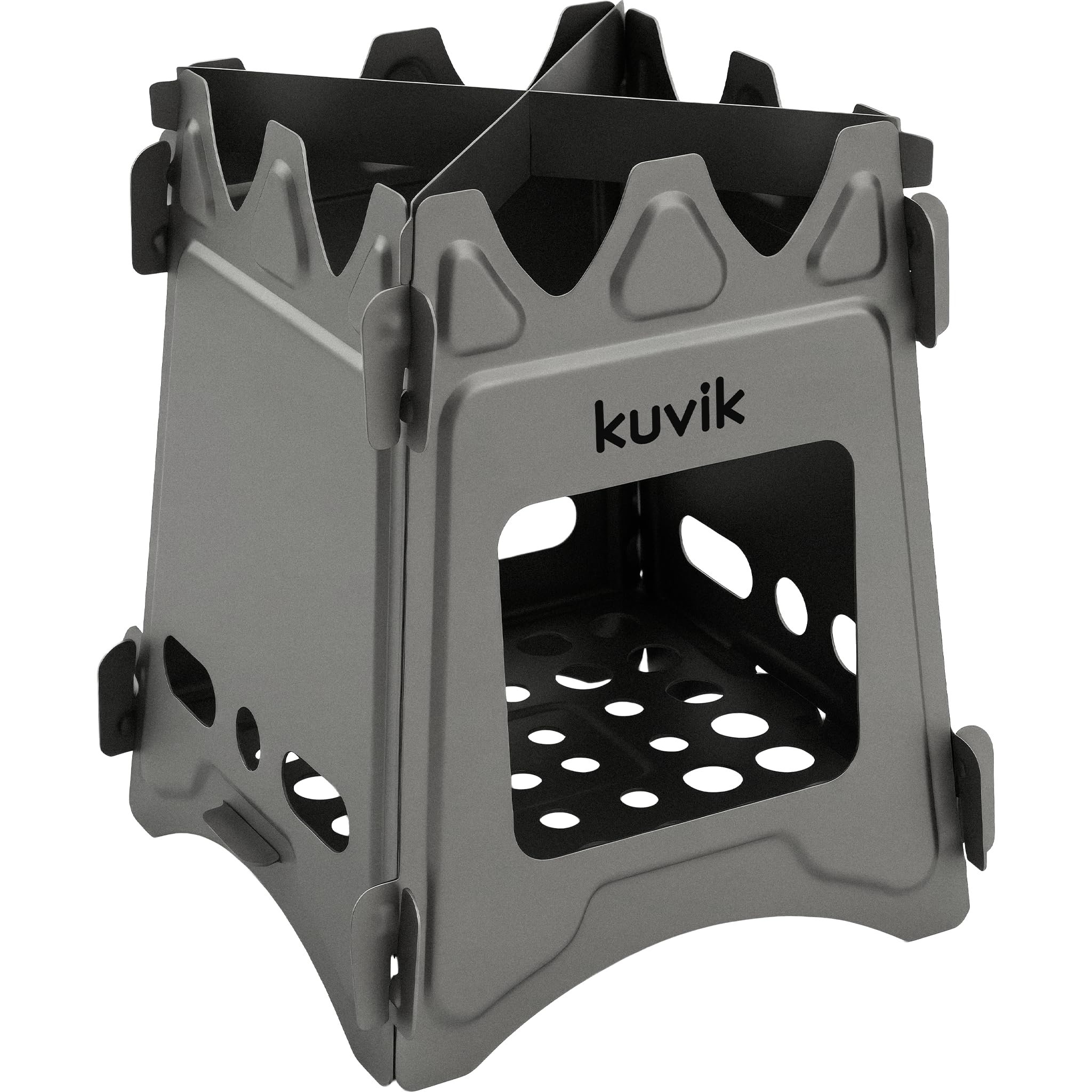
Burns twigs you find, folds to a quarter inch, and refuses to quit.
The measured footprint tells the story. This stove sits at 6.75″L x 6.25″W x 0.2″H, which puts it in a different size class from the Sawyer filter at 4″L x 3″W x 8″H. That 0.2-inch profile means it slides into a flat pocket of your pack and stays out of the way. Its 6.88 oz titanium body is the fuel-free option: you burn dry twigs, sticks, grass, roots, or bark from the campsite.
Setup is tabs-into-slots and takes seconds to a freestanding fire pit. There is an opening for stoking the fire and a rack that takes pots of various sizes. Buyers report the titanium stove boils 750ml of water in about 3 minutes, even with damp twigs. That is the difference between a stove that needs perfect conditions and one that works in a drizzle.
Grade-1 titanium is why it survives. It resists corrosion, which keeps it alive across wet and salty trips, and the maker states the strength is comparable to steel while weighing half as much. Quality is the trait owners praise most, and the consensus is that this is built for many seasons of use. It also fits into a bug-out bag or a winter survival kit as a backup heat and cook source.
Why it earns a spot
- Packs to 0.2″ thick, so it disappears into a pack gap
- No fuel canisters to buy or carry
- Boils 750ml in about 3 minutes, even with wet wood
- Grade-1 titanium resists corrosion for many seasons
Plan around this
- It needs dry fuel nearby, so it is not a choice for bare alpine or snow-covered ground
- Soot on the stove means the carry case is a must to keep your pack clean
Pick this one if: you cook over fire and want a stove that weighs less than a candy bar.
Pass if: you need instant push-button heat in a treeless spot where there is no wood to burn.
5. LuminAID Max 2-in-1 Inflatable Solar Lantern

A camp light, a phone charger, and a float toy in one twist-to-inflate shell.
Two things make this lantern a keeper. First, it puts out 200 lumens of LED light with adjustable brightness and a Turbo mode, so it can light a room or a tent interior. The lighting quality is the thing owners rave about most, and the reviews consistently say it can fill a space. Second, it inflates to a 6-inch cube and packs to 1 inch thick, so it takes up less room in a pack than a folded camp towel.
The IP67 rating means it is waterproof and dustproof, and because the body is heavy-duty TPU it floats when inflated. That makes it a safe pick around a pool or a riverbank. Charge it in 16-20 hours of direct sun, or in 1-2 hours over USB with the included cord. The internal battery also pushes 5V at 2.1 A out a port to recharge a phone.
Weight is the other thing to know. At 10 oz it is the lightest full light-and-power unit here, but it is not a featherweight. The honest note from the review pages is that phone charging is mixed, with some owners reporting it will not fully power a phone even after a full charge. Treat it as an emergency top-up, not a daily charger.
Strongest card: one 10 oz object covers tent light, power outage light, and a float for the lake.
The reality check: solar recharge takes a couple of days, so plan a USB top-up before a trip.
A fit for: campers, boaters, and anyone who wants a light and phone backup in one compact item.
Skip if: your main need is reliable phone charging on the trail, where a dedicated power bank does more.
6. Osprey Ultralight 20L Dry Stuff Pack

A 20-liter day bag that weighs less than a pound and shrugs off water.
At 0.43 lb, this pack is barely a factor in your base weight, but it does the job of a full daypack. The 20L capacity is enough for a summit push, a day tour, or a spare bag for souvenirs on the way home. The body is 100% recycled nylon with a waterproof coating on the fabric and seams, so rain rolls off instead of soaking in.
The carry system is simple from the reviews, and that is the point. Mesh shoulder straps and an adjustable sternum strap sit comfortably on a day of walking, and side stretch pockets take a bottle or an extra layer. It has several compartments, so you are not digging through one big sack. Its footprint of 17.7H x 9.8W x 8.3D in makes it a neat day bag rather than a hauling pack.
The real-world report from owners says it handles a dunk in the lake, and buyers praise it for hiking and touring. Quality is the trait people call out most, and the water resistance follows close behind. The stitching gets mixed feedback, though, so do not overload it past its 20L purpose.
Where it shines: a light day bag that takes rain and stays comfortable over a full day.
One caution: keep the load within its daypack design, because stitching is the one weak point noted in the reviews.
Best suited to: travelers and hikers who want a packable second bag for day trips and wet weather.
Not the pick if: you need a loaded multi-day pack for a full weekend of gear.
7. Naturehike Cloud Up 3 Person Backpacking Tent
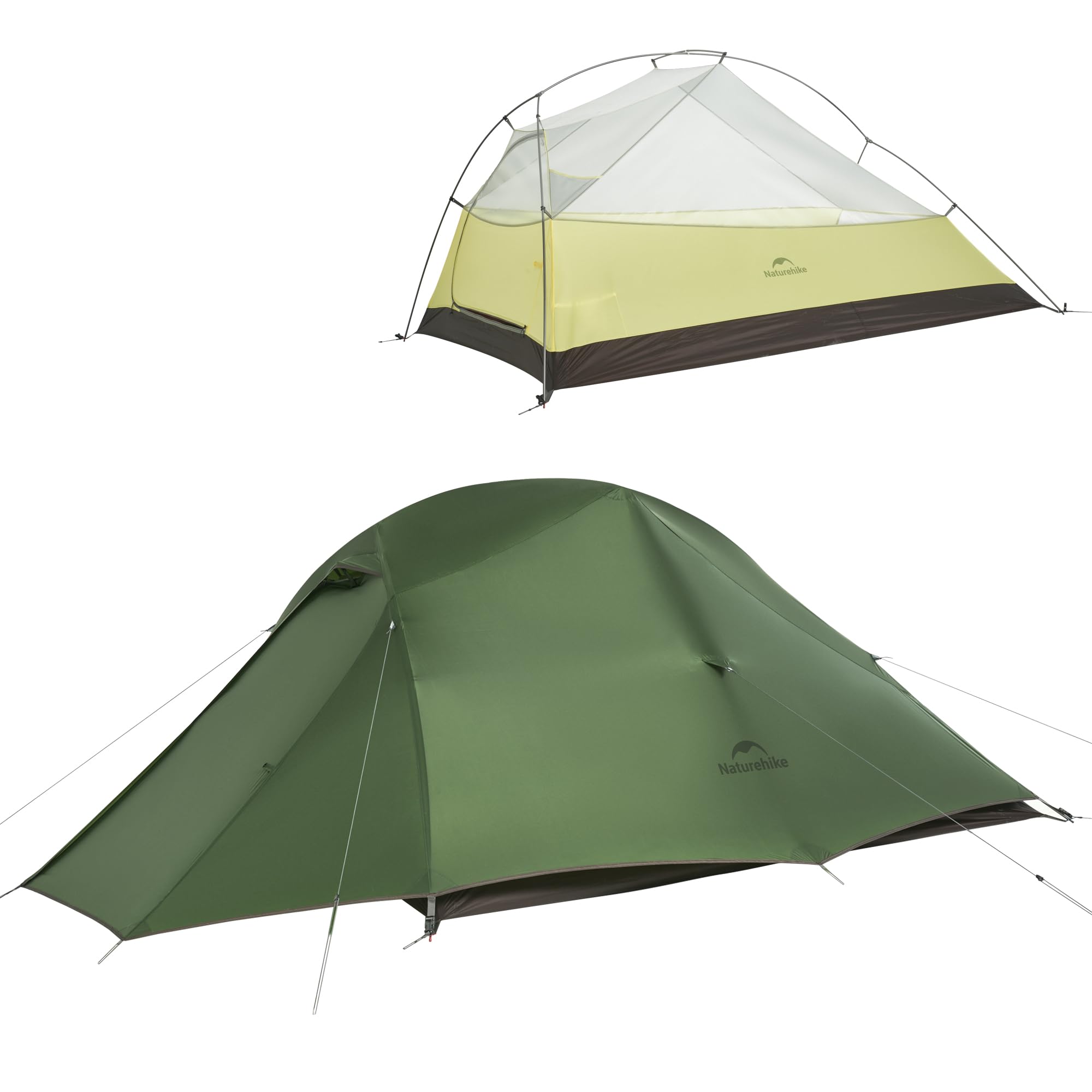
A three-person shelter that packs smaller than most two-person tents.
The number to focus on is 16.9″ x 6.7″ x 6.7″ — the packed size. That is compact enough to sit beside your sleeping bag in a 36L pack rather than forcing you to strap it on top. Total weight is about 5.1 lbs, which is a fair trade for a free-standing dome that sleeps three. The footprint is included, so you do not buy a groundsheet separately.
Water protection is serious here. The outer tent and floor are 20D nylon with a PU3000mm rating, which means the fabric can take a specific amount of water pressure before it leaks. The seams are taped, and the included footprint adds a PU5000mm layer under the floor. The aluminum alloy poles and 7075 aluminum stakes hold the tent in heavy wind, and the 2mm reflective guy lines help you find it in the dark.
Setup is easy enough that owners call it out as a top strength, and the durability follows close behind. It handles heavy rain, wind, and snow according to the reviews, and the water resistance keeps gear dry. One thing to think through: the interior is 116.1″L x 82.7″W x 45.3″H, which is roomy for two but tight for three full-size adults.
What the tent gets right
- 16.9″ x 6.7″ packed size fits inside a mid-size pack
- PU3000mm nylon plus a PU5000mm footprint for wet weather
- Free-standing dome with taped seams and aluminum poles
- Footprint, stakes, and guy lines all included
Where it asks for a trade
- At 5.1 lbs it is no featherweight compared to a one-person shelter
- Three people fit, but the floor plan is happier for two plus gear
Choose it for: a couple or a small group who want a storm-ready three-season base camp.
Reconsider if: you are solo and counting every ounce, where a smaller single-person tent makes more sense.
8. Therm-a-Rest NeoAir Xlite NXT Sleeping Pad
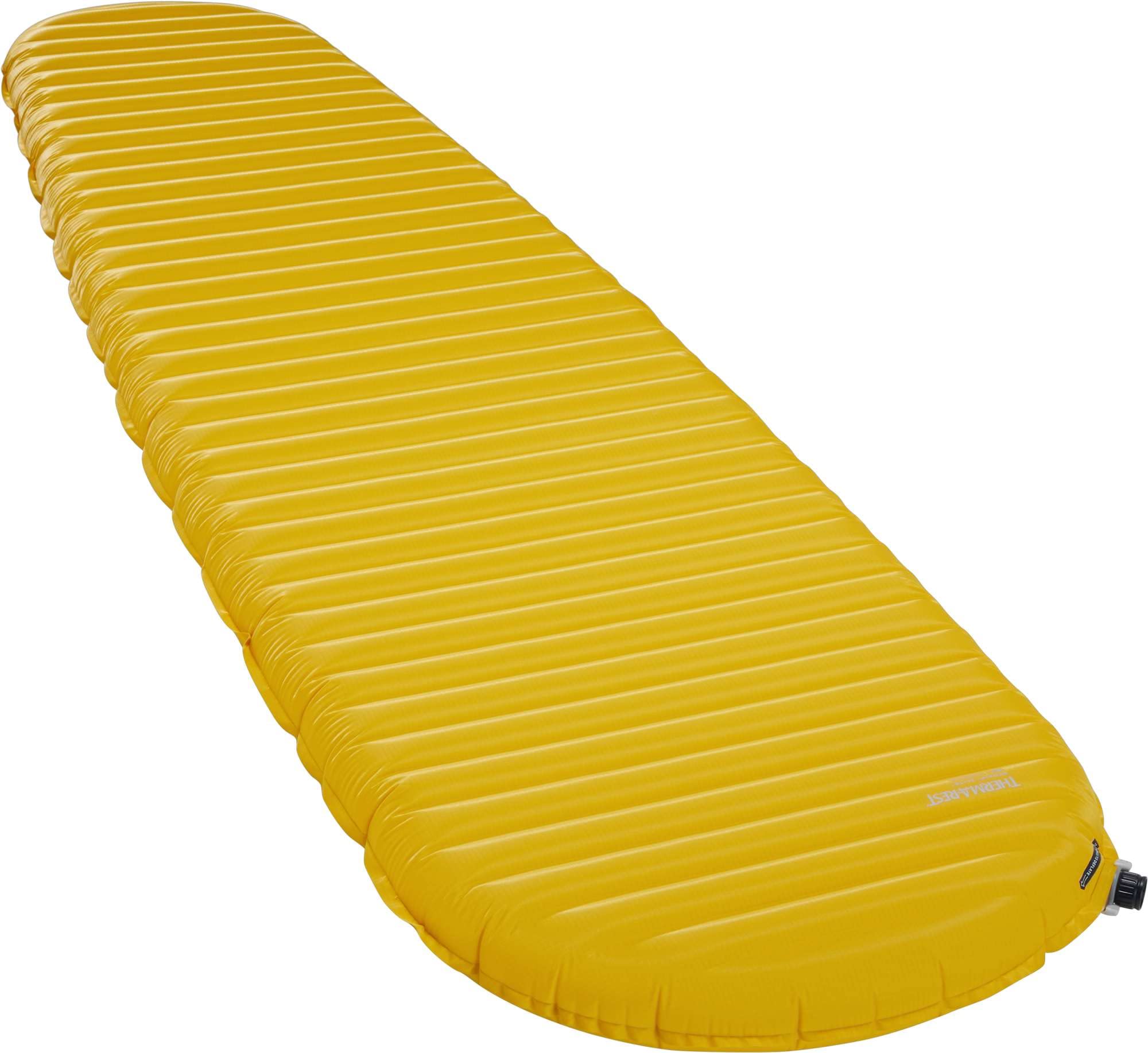
Thirteen ounces that roll up smaller than a water bottle and still warm a cold night.
The R-value is the spec that matters here. R-value is a measure of how well a pad blocks heat from escaping into the ground, and 4.5 is warm enough for year-round use on cold ground. It gets there with reflective ThermaCapture technology and a Triangular Core Matrix that cuts convective heat loss. The foam-free design weighs just 13 oz (370 g) in the regular size and rolls up to about a 1-liter bottle’s size.
The 3-inch thick profile and baffled internal structure keep you stable and supported through the night. The WingLock valve is the part you will touch daily: it inflates quickly and deflates fast for packing up. The pad is rated to hold 264.6 pounds, so a big hiker will still find it supportive. It ships with a pump sack, stuff sack, and patch kit.
The honest story from owners is that it sleeps quiet and comfortable for most, but the value question gets mixed reactions. Some find it well worth it for the warmth-to-weight ratio while others think it is priced high for what it is. That is a trade you make for a 13 oz pad with a 4.5 R-value.
The big win: year-round warmth at 13 oz, with a pad that packs small enough to carry anywhere.
What to weigh: the premium cost is the main complaint, so decide if the warmth-to-weight math matters for your trips.
Made for: backpackers who feel the cold through the ground and want a warm pad that still saves weight.
Look past it if: you only camp in summer and a cheaper foam pad is enough.
9. Osprey Stratos 36L Men’s Hiking Backpack
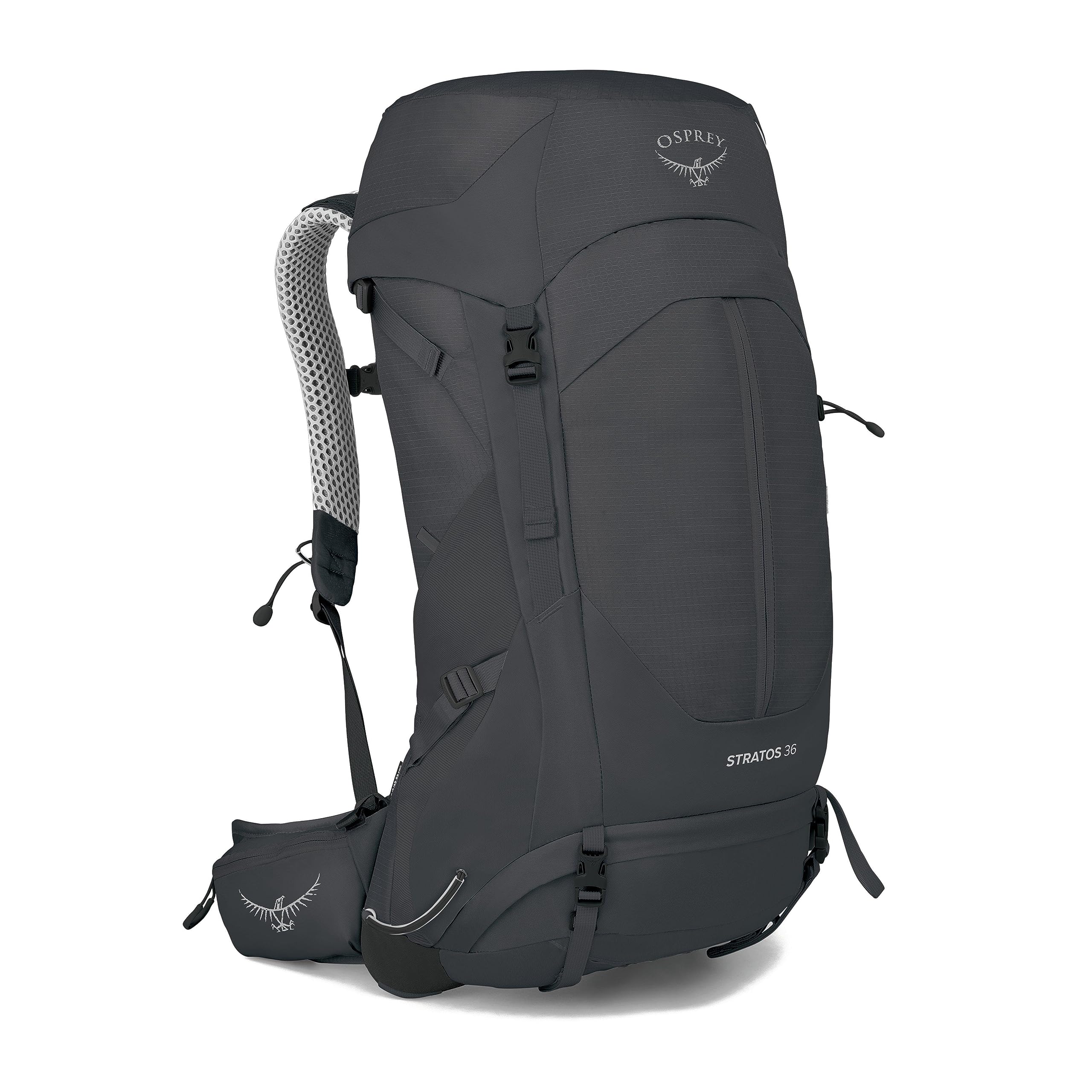
The pack that moves the load onto your hips so your shoulders stop complaining.
At 3.28 lb, this is the heaviest item on the list, and it earns that weight by distributing the load. The AirSpeed ventilation system uses a 3D-tensioned mesh suspension that keeps the pack off your back for airflow. More importantly, the adjustable ladder torso system lets you dial in the fit, so the hip belt takes the bulk of the weight. Weight distribution is one of the things owners praise most, and the consensus is that the load moves to your hips as it should.
The 36L capacity gives you room for a long day or a light overnighter, with a top-loading drawcord closure and an internal hydration sleeve with a hose port. The included raincover keeps the pack and gear dry when the weather turns. A hip belt with side pockets lets you grab snacks or a phone without pulling the pack off. The frame geometry is built for a taller, wider torso, which is why the fit earns praise.
The one honest caveat is the size: the reviews are a bit split between people who find 36L roomy and those who want more on a bigger trip. It is a day-to-overnight pack, so pack it with that limit in mind.
Its best quality: a suspension system and hip belt that turn a 3.28 lb pack into something you barely feel after miles.
The size question: 36L suits a full day or a light night, but bigger trips need a larger pack.
Go for it if: you want a pack that prioritizes long-hike comfort and carries the weight on your hips.
Choose something else if: your trips routinely run past two nights and need more than 36L of volume.
Know the Specs
Weight In Ounces And Grams
Weight is the first number you check, and it is usually listed in both ounces and grams. A trekking pole at 9.7 oz each, a filter at 2 oz, and a pad at 13 oz all sit at different points on the scale, so do the math on the whole pack, not one item. The difference between a 10 oz and a 20 oz item is a lot less than a 5 lb tent swapping for a 3 lb one. Start with your heaviest items, because that is where the biggest weight comes off.
R-Value And Waterproof Ratings
R-value measures how well a sleeping pad blocks heat from the cold ground, and a higher number means warmer nights. Waterproof ratings like PU3000mm tell you how much water pressure a fabric handles before it leaks. A 0.1 micron absolute filter rating is about the size of the holes in a water filter, and absolute means every hole meets that size. These numbers let you compare gear on a level field instead of guessing from a description.
Common Questions
How much weight can I realistically save on an ultralight hiking setup?
Does the Sawyer Mini filter work on a standard water bottle?
What R-value do I need for cold-weather backpacking?
Can the TrailBuddy trekking poles fit in a carry-on bag?
Will the Naturehike Cloud Up 3 tent really sleep three people?
Is the Kuvik titanium stove hard to light with wet wood?
Does the LuminAID lantern charge a phone reliably?
Why choose a 36L pack over the 20L dry stuff pack?
Can two 3M Thinsulate blankets be joined into a sleeping bag?
How long will a titanium wood stove last compared to an aluminum one?
The Bottom Line
For most hikers, the ultra lightweight hiking gear winner is the TrailBuddy Trekking Poles because they save your legs on every climb and fold small enough for a carry-on. If you want the lightest water safety at 2 oz, grab the Sawyer Mini filter. And for a warm night that packs to the size of a water bottle, the Therm-a-Rest NeoAir Xlite NXT is the one to reach for. Every pick here is chosen for weight that you will not notice and performance you will, so take the one that matches your trip and leave the extra grams at home.
How we choose
We do not accept paid placement. Every pick is matched to a real buyer and a real use-case; we do not hands-on test units.
Sources
Specifications: manufacturer listings and product documentation. Review insights: verified customer reviews, as of November 2026. Pricing: not shown on this page (it changes often); check the current price via the retailer link.
As an Amazon Associate, Tactical Gear Guy earns from qualifying purchases. This does not affect which products we feature.