Specs are compiled from manufacturer listings and verified buyer reviews and can change over time — please confirm the key details on the product page before buying.
You want a camera you can actually carry, and you want the video to look clean. The real divide in small video cameras is sensor size versus portability. A camera with a tiny sensor slips into a shirt pocket but turns noisy the moment the sun drops. A compact with a larger sensor handles low light and still travels light. This guide separates the two so you pick the right tool the first time.
This guide is built by comparing the manufacturers’ published specifications and the patterns across verified customer reviews, so you get each pick’s real strengths and trade-offs instead of marketing spin.
Each pick below earns its place on a mix of sensor size, video frame rates, stabilization, and how it actually survives a day in a pocket or a backpack. Every model here is compact enough to live with. With that in mind, here is the honest, spec-first breakdown of the best small video cameras.
Top Picks


How To Choose The Best Small Video Cameras
Start with the sensor, not the megapixel number on the box. A larger sensor gathers more light, which is what keeps your video clean when you film indoors or after sunset. The 1-inch sensors in this group are your best bet for low light; the smaller sensors are fine for daylight travel and casual clips. Decide where you film most before you decide on a model.
Sensor Size And Low-Light Video
A 1-inch sensor (measured diagonally, so it reads larger than most phone sensors) is the dividing line in this category. It usually means less grain in dim light, which you notice most in evening vlogs and indoor shots. If most of your footage happens in bright sun, a smaller sensor still delivers crisp daytime video and lets the camera stay genuinely pocketable.
Frame Rates And Resolution You Can Edit
4K refers to the frame width in pixels, roughly 4000 across. Higher frame rates like 60fps (frames per second) give you smoother motion and let you slow footage down later without it looking choppy. Ultra-high frame rates like 960fps create heavy slow motion but usually only in short bursts. Match the frame rate to what you shoot: 30fps for talking-head vlogs, 60fps and up for action.
Stabilization, Waterproofing, And Mounting
Stabilization comes in three flavors here: a 3-axis mechanical gimbal that physically counters your hand shake, optical stabilization inside the lens, and electronic smoothing that crops and corrects the frame. A gimbal tends to give the smoothest walking shots. Waterproof ratings and shock ratings matter if you film near water, dust, or drops. Check how the camera mounts, too, since a magnetic or quick-release system saves setup time on the move.
Side-by-Side Comparison
| Model | Best For | Sensor / Resolution | Max Video | Stabilization / Form | Amazon |
|---|---|---|---|---|---|
| DJI Osmo Action 4 Essential Combo★ Best Overall | All-round action and low light | 1/1.3-inch sensor | 4K at 120fps | Three modes / waterproof to 18m | Amazon |
| Canon PowerShot V10Pocket Vlog Pick | Pocket vlogging with a stand | 15.2MP 1-inch CMOS | 4K at 30fps | Three IS modes / built-in stand | Amazon |
| Xtra MuseGimbal Smoothness | Smooth cinematic walking shots | 1-inch CMOS | 4K at 120fps | 3-axis gimbal / 2-inch touchscreen | Amazon |
| Insta360 Luna Pro | High-resolution solo shooting | 1-inch 8K sensor | 8K at 30fps | 3-axis mechanical / detachable screen | Amazon |
| Sony ZV-1 II | Selfie vlogging wide angle | 1.0-type sensor | 4K video | Real-time autofocus / Eye-AF | Amazon |
| Panasonic LUMIX ZS99 | Travel and concerts zoom | 24-720mm LEICA lens | 4K at 30p | Tiltable touchscreen / USB-C | Amazon |
| OM SYSTEM Tough TG-7 | Rugged underwater use | 12MP back-illuminated CMOS | 4K at 30fps | Waterproof to 15m / shockproof | Amazon |
| GoPro Mission 1 PRO | Open Gate 8K cinema | 1-inch sensor | 8K at 60fps | HyperSmooth / 2150mAh Enduro 2 | Amazon |
| Sony RX100 VII | Premium travel zoom | 20.1MP 1.0-Type CMOS | 4K video | Optical / 24-200mm lens | Amazon |
| GoPro LIT Hero | Budget action with a light | 12MP photo | 4K at 60fps | HyperSmooth / waterproof to 5m | Amazon |
| 4K Video Camera Camcorder (Pink) | Budget starter kit | 56MP still | 4K FHD | Infrared night vision / 18x zoom | Amazon |
Detailed Reviews
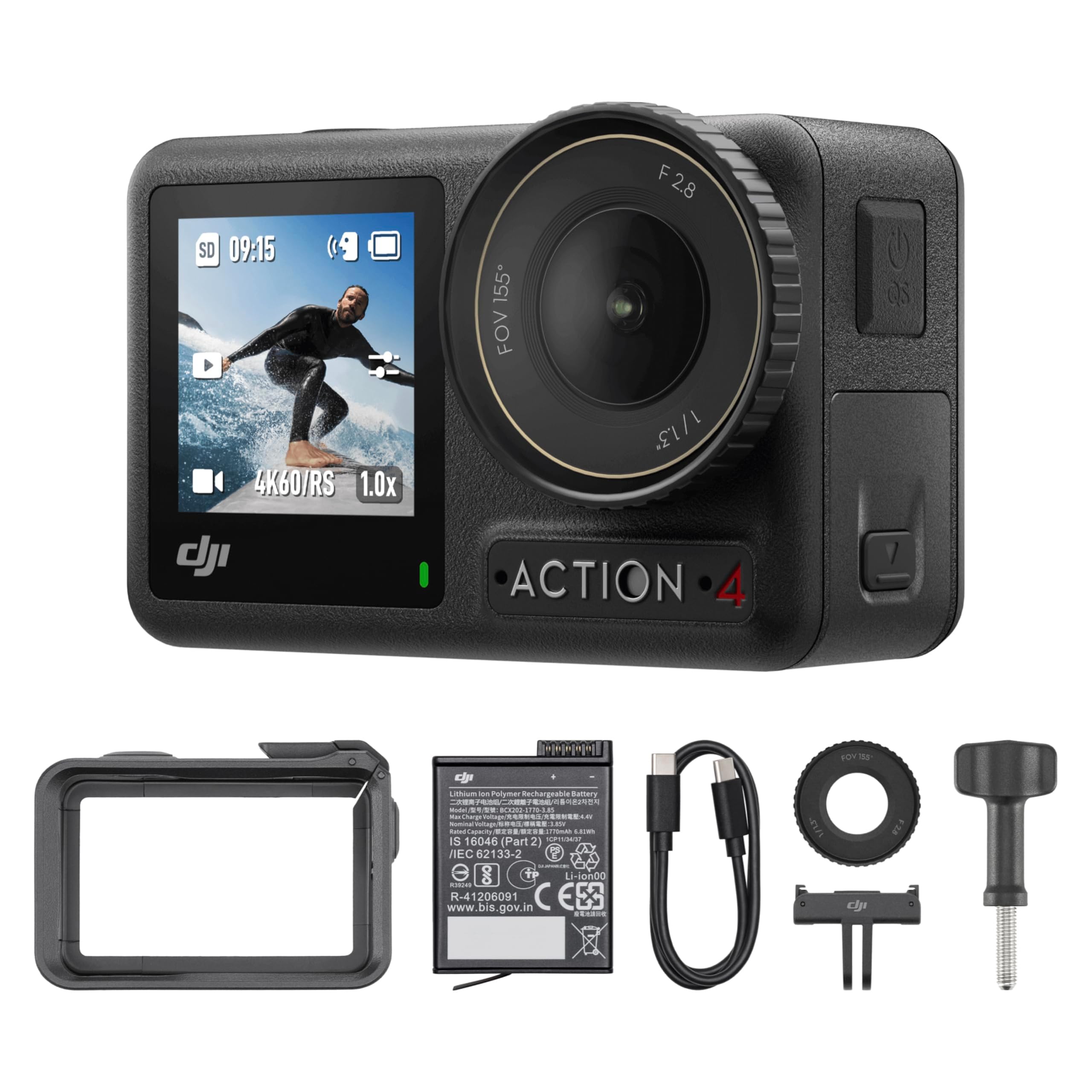
1. DJI Osmo Action 4 Essential Combo
Our pick — 4.5+★ from 2,500+ verified ratings; the strongest balance of quality and price.
The low-light action cam that shrugs off cold, water, and bad lighting at once.
This is the pick that solves the exact problem most small cameras have: footage that turns to mush indoors or after dark. DJI fits a 1/1.3-inch sensor with 2.4μm pixels — that pixel size means each light-catching point is big enough to collect real detail in dim scenes. It shoots 4K at up to 120fps with a 155° ultra-wide field of view, so more of the scene lands in the frame without the tight crop you get on narrower lenses. It carries the highest owner rating in this group, backed by 2.4μm pixels and an 18m depth rating.
The battery is where it pulls ahead for real trips. DJI rates the 1770mAh pack at up to 150 minutes, in temperatures as low as -20°C (-4°F). The waterproofing reaches 18m, so you can take it snorkeling without a housing. A magnetic quick-release mount lets you switch angles and go vertical in seconds, and three stabilization modes handle the shake whether you are cycling or vlogging. For editing headroom, 10-bit color and D-Log M preserve more range to grade later.
Owners single out image quality and build as its strongest traits, the two areas where it sets the bar in this class. The honest limits are practical: connectivity and the touchscreen split opinion, and some users find the app pairing fiddly. Compared with the GoPro Mission 1 PRO below, the GoPro leads on still resolution, 50MP versus 10MP on the DJI, but the DJI counters with that huge 18m depth rating and a smaller footprint you can pocket.
Why It Takes The Crown
- 1/1.3-inch sensor and 2.4μm pixels keep low-light video clean
- Waterproof to 18m with no extra housing needed
- 1770mAh battery rated to 150 minutes and works at -20°C
- 4K at 120fps and a 155° field of view for rich clips
What To Weigh First
- App connectivity and touchscreen get mixed reactions
- Essential Combo skips the curved adhesive base of the Standard kit
Reach for this if: you want one small camera that handles action, water, and dim light without fussing over settings.
Think twice if: you need a big still-photo mode or shoot mostly long zoom shots — this is built around wide motion.
2. Canon PowerShot V10 Compact Vlogging Camera
A vlogging camera with its own kickstand, so your shot is hands-free in seconds.
You film yourself talking, so you need a camera built for that. The 15.2-megapixel 1-inch back-illuminated sensor (a large sensor that captures more light) is the same sensor class as the pricier picks here. It gives you real low-light performance in a body small enough to live in a bag. The wide 19mm fixed lens (35mm equivalent) keeps a full selfie frame at arm’s length. It shoots 8-bit 4K at up to 30fps and Full HD at up to 60fps, with 14 movie color filters built in.
The clever part is the fold-out stand. It folds front or back, so the camera props up on a table for hands-free shooting and you can angle it without a tripod. The front-facing screen retracts, the stereo microphones pair with a third center mic aimed at cutting background noise, and there is a micro-HDMI out plus an external mic port if you want to grow your audio setup. USB-C charging keeps it topped up from the same cable as your phone. Owners call it genuinely pocketable — small enough to drop in a fanny pack and go.
The one thing to plan around is runtime, since the published battery average life is 2 hours. For longer sessions, carry a USB-C power bank and shoot with the mic port handy. Compared with the Sony ZV-1 II below, the Canon uses a fixed wide lens where the Sony zooms from 18-50mm, so the Sony gives you more framing reach while the Canon’s stand makes solo shooting simpler.
The vlogger’s shortcut: a built-in stand plus retractable front screen means you can set it down, frame yourself, and start recording without rigging anything.
Budget the power: at 2 hours of rated life, this is a camera to pair with a power bank on long days rather than a single-charge workhorse.
Made for: solo creators who film talking-head vlogs and want a tripod-free setup in a pocket-sized body.
Pick another if: you need a zoom lens or shoot handheld action — a fixed wide lens and 30fps ceiling won’t stretch that far.
3. Xtra Muse Pocket Gimbal Camera
The walking-shot specialist — a real gimbal tucked into a pocket-sized body.
Most tiny cameras fight shake with software. Xtra Muse fights it with hardware: a 3-axis gimbal stabilizer physically counteracts your hand movement, which is what keeps footage level while you dance, run, or hike. It pairs that with a 1-inch CMOS sensor recording 4K at 120fps, so you get smooth motion and enough resolution to slow it down later. There is a 2-inch touchscreen on the side, and a tap flips between horizontal and vertical shots for social clips.
Color is the quiet upgrade here. True 10-bit X-Log captures up to one billion colors, which gives you real room to grade footage in editing without the banding you see on 8-bit files. The battery’s published average life is 161 minutes, close to the DJI’s rating, and Master Follow keeps your subject centered while you spin or jump on a tripod. The bundle includes a threaded handle, a wrist strap, and a carrying bag, so it is ready to shoot out of the case.
The trade-off is that a mechanical gimbal adds a moving part a plain action cam does not have. Treat it like the precision piece it is, and it rewards you with the steadiest handheld video in this group. Compared with the Canon above, the Xtra Muse shoots 120fps where the Canon tops out at 30fps in 4K — a real gap if you want slow motion.
The Case For The Gimbal
- 3-axis mechanical stabilization keeps walking shots genuinely smooth
- 1-inch sensor with 4K at 120fps for detailed slow motion
- 10-bit X-Log for serious color grading
- 161-minute battery and an included handle and bag
The Things To Know
- A moving gimbal needs gentler handling than a sealed action cam
- No waterproof depth rating published, so keep it dry
Your match if: you want buttery handheld footage without carrying a separate stabilizer rig.
Consider elsewhere if: you film near water or want to throw the camera around without care.
4. Insta360 Luna Pro 8K Vlogging Camera
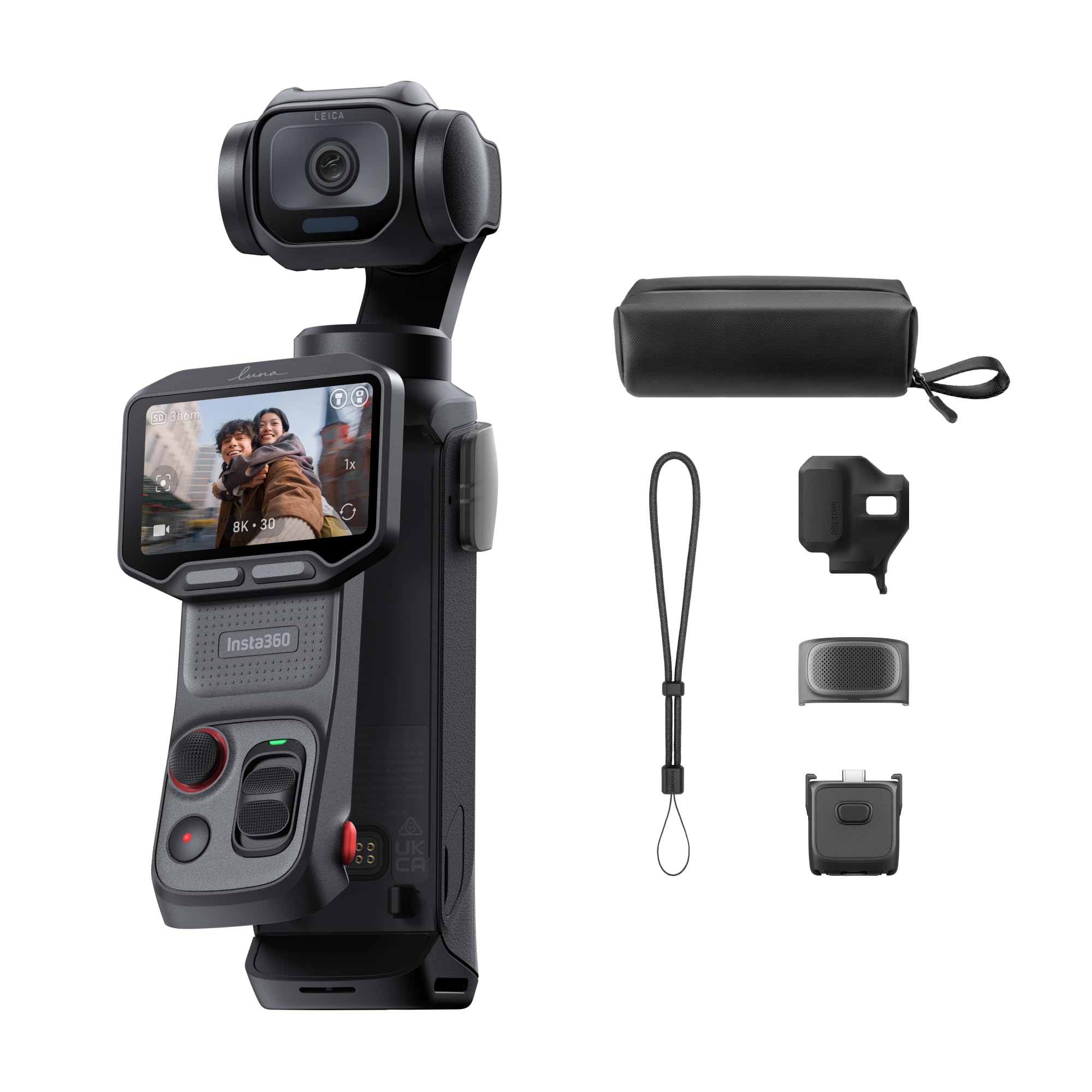
An 8K pocket camera whose screen detaches so you can frame yourself from across the room.
The headline number is the 1-inch 8K sensor, which shoots up to 8K at 30fps with Dolby Vision (a high-dynamic-range format for vivid color and deep contrast). That is the highest resolution in this group, and it buys you real cropping room when you deliver a 4K edit from an 8K master. The detachable 2-inch OLED touchscreen is the standout feature: pull it off and use it as a live preview and remote control up to 20m away. That makes solo shooting and group shots far easier than guessing your frame.
Leica color science and 10-bit I-Log push it toward professional use, with support for ACES and DaVinci Resolve workflows. Dynamic range reaches up to 14 stops, so highlights and shadows both hold detail, and a 4K60fps PureVideo mode tackles night scenes. A 3-axis mechanical stabilizer keeps shots smooth while AI tracking holds your subject centered. Battery life is rated up to 4 hours, with fast charging to 80% in 23 minutes. The screen also flips for 4K30fps vertical video for social posting.
This is the most ambitious camera on the list, and it is priced to match its 8K sensor. The catch for most buyers is that 8K files demand serious storage and a capable editing machine — if you deliver straight to social in 4K, you are paying for resolution you may not use. Compared with the Xtra Muse, the Luna Pro goes further on sensor resolution and a detachable screen, while the Muse leans on its gimbal-first design.
Why it stands out: an 8K sensor plus a screen you can leave behind as a remote viewer gives solo creators framing freedom no fixed-screen camera matches.
Plan for the files: 8K footage and 10-bit I-Log are heavy on storage and processing power, so budget for both the memory and the computer.
Right for you if: you want maximum resolution, Leica color, and a detachable preview screen for shooting alone.
Look past it if: you post in 4K and want to keep your file sizes and workflow light.
5. Sony ZV-1 II Premium Compact Camera

A wide-angle vlogger that fits your whole scene in frame at arm’s length.
Sony built this one around the selfie problem: the ultra-wide 18-50mm zoom lens lets you hold the camera at arm’s length and still get your full face and background in shot, then zoom in when you want a tighter frame. A 1-inch sensor backs it up for low-light shooting, and the wide F1.8-4.0 aperture (a wide opening that lets in more light) gives you that soft, blurred background when you want your subject to pop. A directional 3-capsule mic with a wind screen accessory handles your audio on the go.
Focusing is handled without you thinking about it — Real-time autofocus tracking and Eye-AF keep your face sharp as you move. That makes it a strong choice for talking-head content and interviews where the camera needs to hold your eyes in focus. It is genuinely compact, which owners appreciate for travel, and the wide lens means you are not backed into a corner trying to fit a group into the frame.
Battery life is the thing to manage here, since the published rating runs on the shorter side and the camera is best paired with a spare or a power bank for long shoots. This is a stills-and-video hybrid for creators, not a rugged action cam — no waterproof rating belongs to it. Against the Canon V10 above, the Sony adds a zoom lens and 3-capsule audio, where the Canon leans on its built-in stand.
Where It Wins
- 18-50mm zoom fits full groups and solo selfies in one lens
- 1.0-type sensor with F1.8-4.0 aperture for shallow depth of field
- 3-capsule directional mic with a wind screen included
- Eye-AF and real-time tracking keep faces sharp
Where It Asks More
- Battery runs short, so spares are a sensible add
- Not a rugged camera — keep it away from water and drops
Suits you if: you film interviews, talking heads, and selfie vlogs in tight spaces and want a zoom plus clean audio built in.
Skip the fit if: you need all-day battery or a camera that survives the beach.
6. Panasonic LUMIX ZS99 Point And Shoot

The travel camera that reaches from sweeping landscapes to a stage across the arena.
Where the action cams here trade zoom for ruggedness, the ZS99 swings the other way. Its 24-720mm LEICA lens with 30x optical zoom goes from wide scenery to a tight shot of a performer on stage, all in a body that slips in your pocket. The 4K video records at 30p, and you can grab quick 4K PHOTO bursts at 30fps or drop to HD high-speed video at 120fps for slow motion. For concerts and travel days, that reach is the whole reason to pick it.
Image quality and overall performance rank as its top strengths, and owners praise the menu and features for being approachable. A 1,840k-dot tiltable touchscreen lets you shoot from high or low angles, and universal USB Type-C charging means one cable covers it. Built-in Bluetooth v5.0 with a dedicated Send Image button pushes photos and video straight to your phone. Full PASM exposure modes keep a manual-control option open as you learn.
Be honest about the light: a smaller sensor with this much zoom means image quality takes a hit in dim conditions, so lean on the reach for daylight and well-lit venues. The menu also splits opinion among pickier shooters. Against the Sony RX100 VII below, the Panasonic zooms further — 720mm versus the Sony’s 200mm — while the Sony counters with a larger stacked sensor.
The reach is the reason: a 30x, 24-720mm lens in a pocketable body covers shots no fixed wide lens can touch, from landscapes to far-off stage detail.
Mind the light: that long zoom sits on a smaller sensor, so plan around dim scenes and count on daylight and well-lit venues for your best footage.
Matches you if: you travel, shoot concerts, and need a long zoom you can carry in a pocket.
Look elsewhere if: most of your filming happens after dark and low-light video is the priority.
7. OM SYSTEM Tough TG-7 Underwater Camera

A camera built to be dropped, frozen, crushed, and taken 50 feet underwater.
This is the tank of the group, and its numbers tell you why. It is waterproof to 50 ft (15m), shockproof to 7 ft (2.1m), crushproof to 220 lbf (100kgf), freezeproof to 14°F (-10°C), and dustproof, with anti-fog dual-pane lens glass so the lens stays clear when temperatures swing. For snorkeling, hiking, and camping, that ruggedness is the entire point — you can take it places a compact camera would not survive.
The optics are more than survival gear. A 12-megapixel back-illuminated CMOS sensor and TruePic VIII processor sit behind a bright F2.0 lens — that lower F-number means more light reaches the sensor, which helps in dim conditions. The 25-100mm equivalent lens gives 4x optical zoom. Macro is the sleeper feature: four dedicated macro modes let you focus as close as 1cm from the front of the lens, so flowers and insects fill the frame. There are five underwater shooting modes, plus 4K at up to 30fps and Full HD high-speed movies at 120fps with vertical video recording.
The honest note is photo quality, which draws a divided reaction — some find the images crisp, others want more from the smaller sensor. If you are buying for underwater and adventure video rather than gallery prints, it delivers exactly what it promises. Against the DJI Osmo Action 4, both are waterproof, but the DJI goes deeper at 18m versus the TG-7’s 15m, while the TG-7 adds a zoom lens and the DJI leans on wider action framing.
Built For Punishment
- Waterproof to 15m and shockproof to 2.1m for real adventure
- Freezeproof to -10°C with anti-fog dual-pane glass
- Bright F2.0 lens and 4x optical zoom
- Macro focusing as close as 1cm for detail shots
Set Your Expectations
- Photo quality gets a mixed reception from owners
- 12MP sensor is not aimed at large prints
Worth it for: divers, hikers, and campers who prioritize surviving the trip over pixel count.
Not for you if: you want the sharpest stills and never film in water, dust, or cold.
8. GoPro Mission 1 PRO
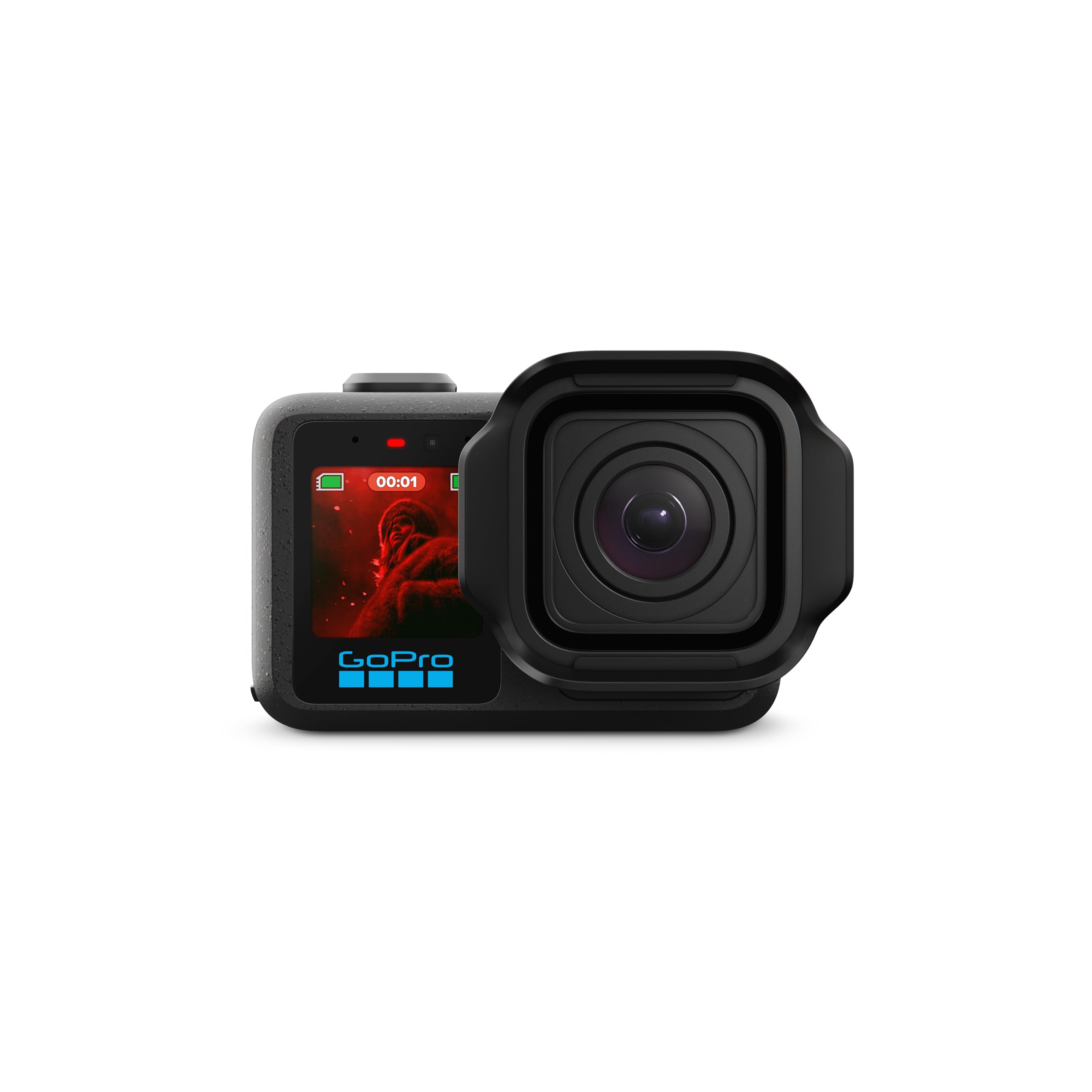
A compact action cam built for 8K Open Gate capture and long, cool runtimes.
GoPro’s pitch here is resolution and flexibility packed into a compact action body. A 1-inch sensor drives better low-light performance with less noise than the smaller sensors on most phones and some compacts, which is what keeps dusk and indoor shots usable. The 8K Open Gate mode uses the full sensor for maximum height and width, giving you the most room to crop and reframe in post — that is the feature a serious editor reaches for. A 2150mAh Enduro 2 battery is rated for over 3 hours of continuous 4K30 recording and over 5 hours of 1080p30.
Still capture runs up to 50MP in single, interval, and burst modes, and you can pull 44MP frame grabs from 4:3 8K video in the GoPro Quik app. Heat management is tuned to avoid thermal shutdown, and rapid charging cuts downtime. HyperSmooth stabilization handles the shake, and the compact form factor slips into a kit bag easily.
This camera draws a genuinely split reaction from owners, and value is where opinions divide most — some find it excellent, others feel it asks a lot for what they use. The 8K files also demand fast cards and a strong computer. Compared with the DJI Osmo Action 4, the Mission 1 PRO goes further on resolution and stills, 50MP versus the DJI’s 10MP, while the DJI counters with its 18m waterproof rating.
The editor’s edge: 8K Open Gate and 50MP stills give you more latitude to crop and reframe than any rigid 4K workflow allows.
Check the value for you: the price-to-performance math divides owners, so decide up front whether you will actually use 8K before committing.
Best suited to: shooters who edit their footage and want 8K flexibility plus long 4K runtimes in a compact body.
Perhaps not if: you post straight to social and want simple point-and-shoot video without heavy files.
9. Sony RX100 VII Premium Compact Camera

A pocket powerhouse pairing a 24-200mm Zeiss lens with lightning-fast autofocus.
This is the do-it-all compact for people who want both stills and video to look sharp. A 20.1MP 1.0-type stacked CMOS sensor (a fast-reading sensor design) pairs with a Zeiss Vario Sonnar T 24-200mm F2.8-4.5 zoom lens. The stacked sensor design reads out fast, and the 24-200mm range covers wide scenes and pulled-in detail in one pocketable body. For video, it shoots 4K with HLG and S-Log3 (color profiles for grading), plus a microphone jack and Active mode image stabilization.
Autofocus is the standout. A 0.02-second high AF speed with 357-point focal plane phase detection and 425-point contrast detection locks on quickly, and blackout-free shooting reaches up to 20 fps. AI-based real-time tracking works for stills and movies, and real-time Eye-AF holds focus on people (and animals for stills). Image quality is its most-praised trait, ahead of every other spec owners mention. Owners also love how it slips into a purse or pocket, which makes it a natural travel camera.
Value is the honest tension point: this is the top of the compact price range, and reliability and ease of use draw mixed notes as the menu system takes learning. If you want one small camera for serous stills and video, that reach and speed justify it. Compared with the Panasonic ZS99, the Sony trades zoom reach, 200mm versus 720mm, for a larger stacked sensor and faster autofocus.
The Reason It Costs More
- 20.1MP 1.0-type stacked sensor delivers class-leading image quality
- 0.02-second autofocus with 357-point phase detection
- 24-200mm Zeiss zoom covers wide to telephoto
- 4K video with S-Log3 and a microphone jack
The Honest Tensions
- Premium tier pricing draws mixed value feedback
- Menu system takes time to learn
The one for: hybrid shooters who want top image quality and fast focus in a genuinely pocketable body.
Pass on it if: you want maximum zoom reach or a simpler, more forgiving interface.
10. GoPro LIT Hero
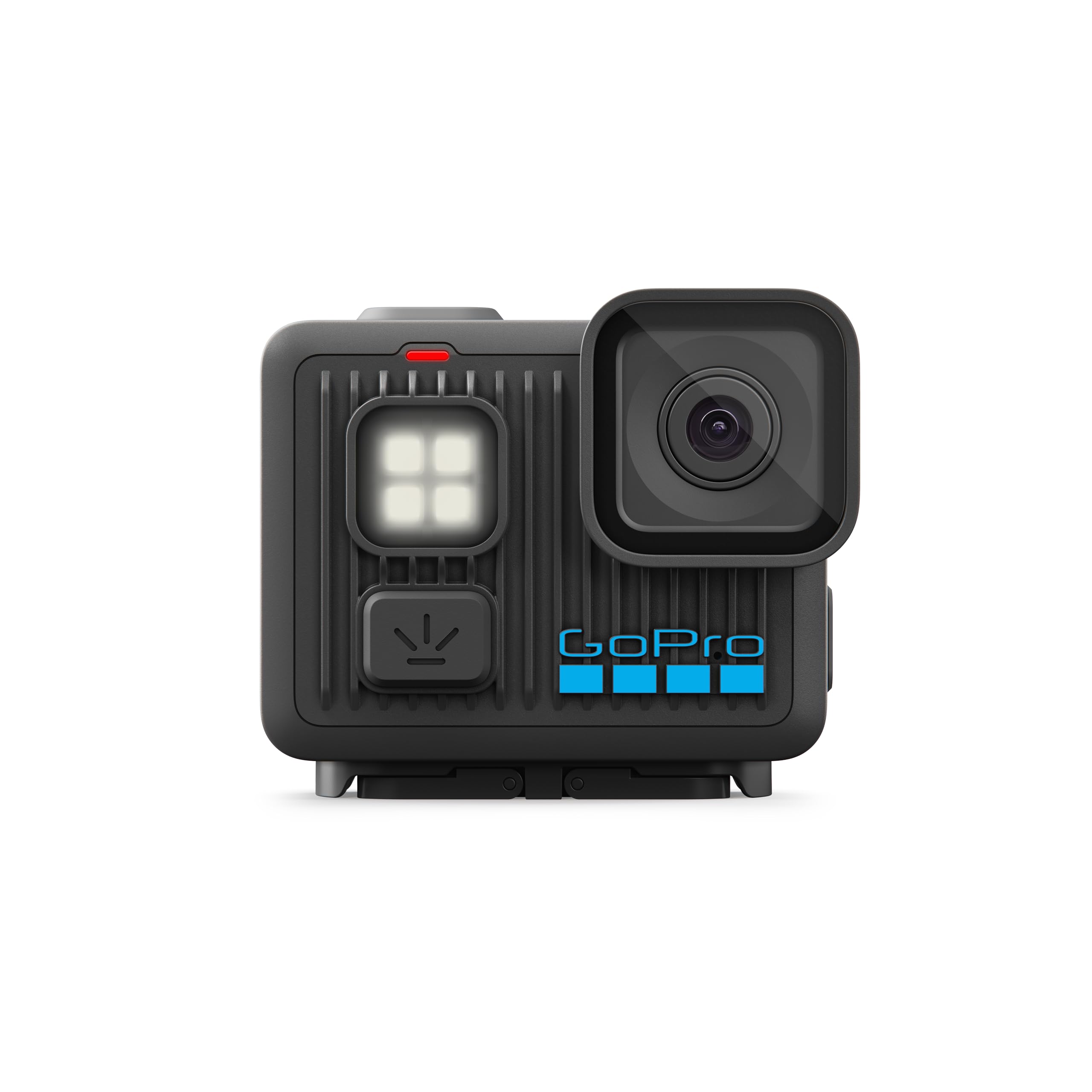
The entry-level action cam that carries its own light for after-dark shots.
If you want to try action filming without a big outlay, this is the gentle on-ramp. Simplified controls let you tap and swipe between video, photo, and slo-mo, so there is little to learn before your first clip. It records 4K at up to 60fps — that frame rate gives you more fluid motion and lets you play back in 2x slow motion — and takes 12MP photos, with 11MP frame grabs from video via the GoPro Quik app. It ships with a 128GB micro SD card, so you are ready to record.
The built-in light is the feature that separates it in this tier. It offers 3 brightness settings and even works when the camera is off or plugged in and charging, which helps light a scene that needs a little more or capture shots in total darkness. It is waterproof to 16ft (5m) and built with GoPro’s rugged construction, so mud, snow, and water are fair game. Owners rate portability among its strongest traits, noting how light and easy it is to carry.
Know the shortcuts before you buy. Battery life is the weakest point of the pitch and is the most consistent gripe, so carry a spare or a power bank for long outings. Some users also report unit-to-unit inconsistency, which is why going with a straightforward action cam that you can mount quickly and simply may suit you better than chasing features.
The light does the heavy lifting: a built-in light with 3 settings that works even while charging is a rare find at this level.
Power is the pinch point: battery life is the recurring complaint, so treat it as a short-session cam and bring backup power.
A good first action cam if: you want rugged 4K60 video and a built-in light without a steep learning curve.
Better to upgrade if: you plan long recording sessions where battery life matters most.
11. 4K Video Camera Camcorder (Pink)

A pocket camcorder kit for learning the ropes without spending much.
This one is built for beginners and gift-givers, and it comes ready to shoot. It records 4K FHD video and 56MP stills, backed by an upgraded CMOS sensor, and the 18x digital zoom pulls distant subjects in close. A 3.0-inch touchscreen that rotates a full 270° lets you frame solo shots, high overhead angles, and low creative perspectives. Wi-Fi transfer pushes photos and videos to your phone for one-touch sharing, and the box includes a 64GB card.
Infrared night vision is the extra that surprises at this level — it lets the camera record in dim settings and produce clear black-and-white images with distinct layering. You also get slow-motion, loop recording, burst mode, time-lapse, a self-timer, and multiple filters. It accepts SD cards up to 128GB, and it can pair with an external LED light and microphone (neither included) if you want to grow your kit later. For a first camera or a gift, that package covers a lot of ground.
The limits are the usual ones for this tier: digital zoom (as opposed to optical zoom) softens detail as you push in, and low-light video is not what this camera is built for. It is a solid way to learn framing, night vision, and timelapse before committing to a pricier compact. Treat it as a trainer, not a pro tool. Against the GoPro LIT Hero, this camcorder offers 56MP stills where the LIT Hero gives 12MP, but the GoPro brings rugged waterproofing this one does not.
What You Get In The Box
- 4K FHD video and 56MP stills with a 64GB card included
- 18x digital zoom and infrared night vision
- 270° rotating 3.0-inch touchscreen for solo framing
- Slow-motion, loop, burst, and time-lapse modes built in
Where It Shows Its Price
- Digital zoom softens detail as you push toward 18x
- Not suited to low-light video work
Great for: beginners, students, and gift-givers who want a full kit and features to learn on.
Hold off if: you need sharp low-light footage or true optical zoom for serious work.
Know the Specs
Sensor Size And Pixel Size
A sensor is the chip that catches light, and its size sets how clean your video looks in dim settings. A 1-inch sensor is the common dividing line in this group; it usually means less grain after sunset than the tiny sensors in budget camcorders. Pixel size works the same way — DJI’s 2.4μm (micrometer) pixels describe how large each light-catching point is, and bigger points gather more light. For night filming, sensor and pixel size matter more than a big megapixel count.
Frame Rate And Resolution
Resolution describes how many pixels wide your video is — 4K is roughly 4000 pixels across, and 8K roughly 8000. Frame rate is how many images are captured each second; 30fps suits talking-head filming, while 60fps and 120fps give you smoother motion and slow-motion options. Higher numbers are not always better: 8K and ultra-high frame rates make larger files that need faster cards and a stronger computer. Match resolution and frame rate to where your video actually goes, whether that is a phone screen or an edit suite.
Stabilization And Waterproof Ratings
Shake is the enemy of handheld video, and small cameras fight it in different ways. A 3-axis mechanical gimbal moves the lens to cancel your hand motion, while electronic stabilization crops and corrects the frame. Waterproof depth ratings (like 5m, 15m, or 18m) tell you how far underwater the camera can go without a housing, and shockproof or crushproof figures describe how much abuse it survives. If you film near water, sand, or on the move, these rugged numbers decide whether a camera is the right fit.
Common Questions
Do I really need a 1-inch sensor for small video cameras?
What does 4K at 60fps actually mean for my footage?
Is a mechanical gimbal better than electronic stabilization?
Can a small video camera be taken underwater without a case?
How long can these cameras run on a single battery?
Will 8K video work on my computer for editing?
What is the difference between digital zoom and optical zoom?
Do these cameras work with external microphones?
Which small video camera is best for concerts and travel?
Are compact cameras with a tilting screen easier for solo vlogging?
The Bottom Line
For most people shopping for the small video cameras in this group, the winner is the DJI Osmo Action 4 Essential Combo because it pairs a 1/1.3-inch sensor and 2.4μm pixels for clean low light with an 18m waterproof body and a 1770mAh battery rated to 150 minutes. It is the strongest all-rounder here across action, travel, and dim conditions. If smooth cinematic handheld video is what you want, grab the Xtra Muse with its 3-axis gimbal and 4K at 120fps. And for underwater adventures where the camera has to survive the trip, the OM SYSTEM Tough TG-7 is the one to reach for, waterproof to 15m with 1cm macro focusing.
Whichever way you lean, buy on the sensor size and rugged rating that match how you actually film, not the biggest number on the box.
How we choose
We do not accept paid placement. Every pick is matched to a real buyer and a real use-case; we do not hands-on test units.
Sources
Specifications: manufacturer listings and product documentation. Review insights: verified customer reviews, as of November 2026. Pricing: not shown on this page (it changes often); check the current price via the retailer link.
As an Amazon Associate, Tactical Gear Guy earns from qualifying purchases. This does not affect which products we feature.