Specs are compiled from manufacturer listings and verified buyer reviews and can change over time — please confirm the key details on the product page before buying.
Buying an open up phone is only half the job. “open up” means no carrier has a grip on the handset, but it says nothing about whether your SIM will actually connect — and that gap is where most buyers get burned. The Samsung Galaxy A06 is the safest place to start for most people, because it makes no false promises, but every pick below has a specific carrier reality you need to read before you tap buy.
This guide is built by comparing the manufacturers’ published specifications and the patterns across verified customer reviews, so you get each pick’s real strengths and trade-offs instead of marketing spin.
Some of these phones run on T-Mobile and its smaller partners only, while others work almost anywhere. The next few minutes will show you which is which, so you can shop the best open up gsm phones without getting stuck with a handset that never finds a signal.
Top Picks


How To Choose The Best open up GSM Phones
Before you buy, confirm your carrier, then confirm the phone lists that carrier’s LTE bands. A phone can be perfectly open up and still refuse to register on your network because it lacks the specific radio bands that network uses.
Start with your carrier, not the phone
Several phones here are built for T-Mobile and its partners — Metro, Mint, Tello and StandUp Wireless — and will not activate on AT&T or Verizon at all. Others, like the iPhone 11, are open up for both GSM and CDMA networks, so your options are far wider. If you are married to AT&T, that shortens your list immediately.
Then read the band list, not the headline
LTE bands are numbered radio frequencies. A phone listing bands 1, 3, 5, 7, 8, 20, 28, 38, 40 and 41 covers a lot of ground abroad but leaves out a lot of American coverage. Cross-check the specific bands your carrier publishes against the list on the product page.
Decide how much storage you actually fill
Storage decides how long a cheap phone lasts before you start deleting apps to make room. A 64GB handset holds everyday apps comfortably; a 256GB one lets you stop deleting photos. Several phones here also take a microSD card, which is the cheapest way to add room later.
Understand what “renewed” means before you save
A renewed phone has been inspected, wiped and resold — it is used hardware, not new stock. The iPhone 11 listing promises tested battery health with a minimum capacity of 80%, which is a clear floor you can hold the seller to. Ask the same question of any renewed listing that stays quiet about it.
Side-by-Side Comparison
| Model | Best For | Display | Storage | Battery | Amazon |
|---|---|---|---|---|---|
| Samsung Galaxy A06★ Best Overall | T-Mobile users who want simple and cheap | 6.7″ 720 x 1600 LCD | 64GB | 5000 mAh | Amazon |
| Motorola Moto G Play 2024 (Renewed)Budget Champion | The tightest budget with a 90Hz screen | 6.5″ 720 x 1600, 90Hz | 64GB | 5000 mAh | Amazon |
| Samsung Galaxy A05Dual-SIM Workhorse | Dual-SIM users who want brands they know | 6.7″ 720 x 1600 LCD | 64GB | 5000 mAh | Amazon |
| Blackview Wave 7C | Storage on a budget with a long warranty | 6.56″ HD+ IPS | 128GB | 5000 mAh | Amazon |
| Motorola Moto G15 | The sharpest cheap screen and 256GB | 6.72″ 1080 x 2400 IPS | 256GB | 5200 mAh | Amazon |
| Apple iPhone 11 (Renewed) | Switching between GSM and CDMA freely | 6.1″ 1046 x 1792 | 64GB | 3110 mAh | Amazon |
| Fairphone (Gen. 6+) | Fixing your own phone instead of replacing it | 6.3″ 1080 x 2400 OLED, 120Hz | 256GB (to 2TB) | 4415 mAh | Amazon |
| Apple iPhone 17e (Renewed) | Small hands and all-day video | 6.1″ 2532 x 1170 OLED, 120Hz | 256GB | 4000 mAh | Amazon |
| Nothing Phone (3) | Noticeably different design and four 50MP cameras | 6.67″ 1.5K AMOLED, 120Hz | 512GB | 5150 mAh | Amazon |
| Google Pixel 11 | Camera-first buyers on any major carrier | 6.3″ OLED, 30x zoom | 256GB | 30+ hours rated | Amazon |
| OnePlus 15 | Heavy users who hate charging | 6.78″ 165Hz AMOLED, 450 ppi | 512GB | 7300 mAh | Amazon |
Detailed Reviews
1. Samsung Galaxy A06 4+64GB
Our pick — 4.5+★ from 450+ verified ratings; the strongest balance of quality and price.
A plain, honest 4G phone that asks almost nothing of you except the right carrier.
Here is the case for the A06 in one breath: it is the cheapest way to hand someone a big screen and a two-day battery without handing them a puzzle. The screen measures 6.7 inches at 720 x 1600 pixels, which is enough for text messages, maps and a video on the bus, even if fine print in photos looks soft. A 5000 mAh battery (a measure of stored charge) sits behind it, and 25W wired charging tops it back up when the day gets long.
What it does not do is travel well across American carriers. It runs on 4G LTE bands 1, 3, 5, 7, 8, 20, 28, 38, 40 and 41, and the seller is blunt about the rest: outside the U.S. it works with GSM networks worldwide, but inside the U.S. it only works on T-Mobile and its partners Metro and StandUp Wireless. It will not activate on Verizon, Spectrum, AT&T, Total Wireless, Cricket, Visible or Xfinity Mobile. There is also no eSIM and no power adapter in the box.
Set that against the price and the picture makes sense. Build quality is the most-praised thing about this handset, with value close behind. Durability is the honest weak spot, with a small number of units reported to give out early, so treat it as a phone for a careful owner rather than a pocket full of keys.
Where it earns its place
- 6.7-inch screen with 720 x 1600 pixels — big enough to read without squinting
- 5000 mAh battery with 25W wired charging for a full day plus spare
- 50 MP main camera that handles casual daylight shots fine
- Face recognition open up and a case included in the box
What you give up
- T-Mobile and its partners only in the U.S. — no AT&T, no Verizon
- No 5G and no eSIM support
- Power adapter sold separately
Best fit: a T-Mobile, Metro or StandUp Wireless line that needs a big, simple screen for calls, texts and maps.
Think twice: AT&T and Verizon customers, because this phone simply will not register on those networks.
2. Motorola Moto G Play 2024 64GB
A 90Hz screen and a Snapdragon 680 for less than most people spend on a case and charger.
Scrolling stays smooth on this phone instead of smearing, because the Moto G Play runs a 6.5-inch 720 x 1600 LCD at a 90Hz refresh rate (90 screen redraws a second, so motion looks fluid). Most phones in this price band give you a 60Hz panel that smears when you scroll. It peaks at 500 nits of brightness, so you can still read it outdoors. Power comes from the Snapdragon 680 4G platform, with four 2.4GHz cores and four 1.9GHz cores, plus 4GB of RAM and 64GB of storage.
Battery is a 5000 mAh cell rated for 18 hours of average use, and the software is Android 13. The camera setup is a 50MP rear with Quad Pixel merging (four small pixels act as one bigger one, which helps in dim light) plus an 8MP front. A side-mounted fingerprint reader and face open up both handle security.
The catch worth knowing sits in the SIM tray. Reviews flag open up and SIM compatibility as recurring friction points, so confirm your carrier accepts this handset before you open the box. Buyers otherwise describe the phone as arriving looking and feeling like new, with the sapphire blue finish drawing more compliments than you would expect at this level.
Screen that punches up: the 90Hz refresh rate is the standout at this price, and 269 pixels per inch keeps text legible without a magnifying glass.
The trade-off: a renewed handset means someone owned it first — the refurb check is the whole ballgame here.
Worth grabbing if: you want the smoothest scrolling screen in the cheap tier and already know your carrier will take it.
Walk on by if: you need a handset that is guaranteed to activate on any network without a call to support.
3. Samsung Galaxy A05 A065M 64GB
Two SIM slots, a 3.5mm headphone jack, and the widest band list in the cheap tier.
You can run a work number and a personal number on one phone, because the A05 holds two SIMs at once. It runs the Mediatek Helio G85 chip (an octa-core processor built on a 12nm process, which is modest but steady) with 4GB of RAM and 64GB of storage. It also keeps a 3.5mm stereo earphone jack, so your wired headphones still plug in — a rarity worth naming. The 6.7-inch 720 x 1600 PLS LCD and 5000 mAh battery match the headline numbers of its Samsung sibling.
You get far more carrier freedom than the A06, because band coverage is where it clearly leads. It lists 4G LTE bands 1, 2, 3, 4, 5, 7, 8, 12, 13, 17, 26, 28, 38, 40, 41 and 66, and the compatibility listing names T-Mobile, AT&T and MetroPCS — so unlike the A06 above, AT&T is genuinely on the table. Bluetooth 5.3 handles your earbuds. The rear camera is a 50MP wide plus a 2MP depth sensor, with an 8MP front.
The honest caveat is longevity: some units stop working after a few months. Functionality and value both come in mixed across the review pages, and the recurring theme is that some units stop working after a few months while most run fine. Screen resolution is also plain — 720 x 1600 — so text is serviceable rather than sharp.
Why it stands out
- Dual SIM plus a real 3.5mm headphone jack
- 16 listed 4G LTE bands covering AT&T, T-Mobile and MetroPCS
- 5000 mAh battery and a 50MP main camera
Honest limitations
- 720 x 1600 resolution looks soft next to 1080p rivals
- A minority of units fail early per the review pattern
- No camera flash listed
The right call for: anyone running two lines on AT&T or T-Mobile who still wants a cable for wired headphones.
Look elsewhere if: you want a crisper screen — the Moto G15’s 1080 x 2400 panel is a genuine step up.
4. Blackview Wave 7C 128GB
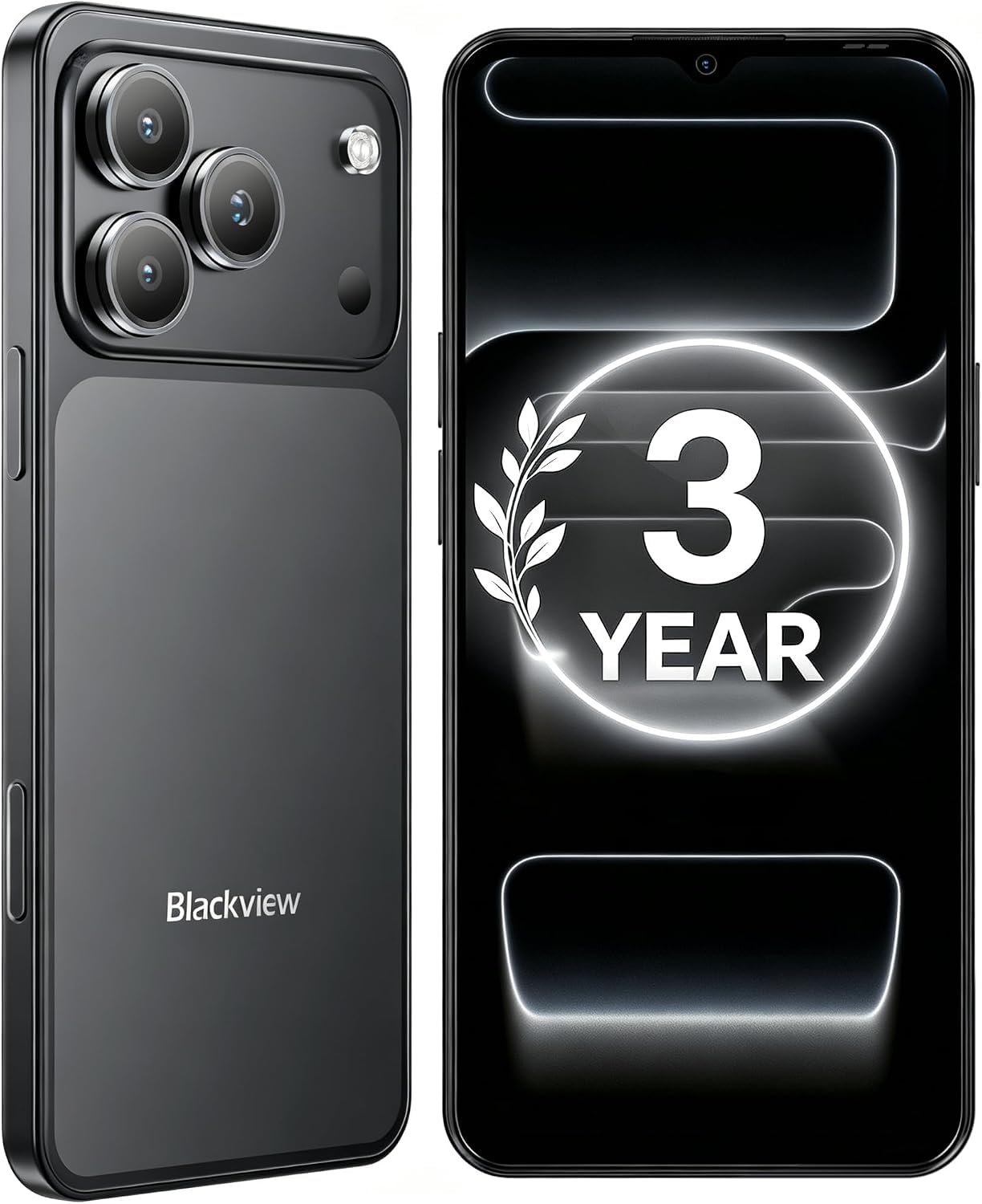
Double the storage of the Samsung pair and a warranty that runs three years.
Storage is the spec that decides how soon you start deleting apps and photos to free up space. This one gives you 128GB — double what the A05 and A06 carry — plus a dedicated microSD slot that takes a card up to 1TB, and it runs Android 16 with DokeOS 5.0 on top. The battery is a 5000 mAh cell charged at 10W, which is slow next to the 25W Samsung option, so plan on overnight charging.
The cameras go further than the price suggests: a 32MP rear and 13MP front. The rear is 32MP with autofocus and an LED flash, the front is 13MP, and both feed a phone that records 1080p video with a side capture button for quick shots. Compare that to the Moto G Play’s 8MP front shooter and the gap in selfie detail is real. You also get two Nano-SIM slots, Wi-Fi 5, Bluetooth 5.0, GPS, USB-C, a 3.5mm jack, Face open up and IP54 splash resistance — resistance against light dust and splashes, not a dunking.
The one thing to sort before you buy is the network. Blackview is direct about it: this is a GSM-only phone for T-Mobile, Mint, Metro and the like, and it is not for AT&T, Verizon or CDMA carriers. Verify the IMEI with your carrier first. Owners describe it as a straightforward everyday device that does the basics without drama.
Storage math in your favor: 128GB built in plus room for a 1TB card means you can stop rationing photos.
The honest cost: 10W charging is the slowest here, and T-Mobile-family carriers are your only U.S. option.
Pick this one when: the photo library keeps filling up and you want backup support that lasts years.
Keep looking when: you are on AT&T or Verizon — no amount of storage fixes an incompatible radio.
5. Motorola Moto G15 4+256GB

A full 1080p panel and 256GB of storage where most rivals settle for 720p and 64GB.
Small text stays crisp on the Moto G15 because its 392 pixels per inch beats the Galaxy A06’s 262. It runs 1080 x 2400 pixels across 6.72 inches at 392 pixels per inch, against the A06’s 720 x 1600 at 262 pixels per inch — a direct side-by-side where Motorola simply has more dots to work with. Storage tells a similar story: 256GB here against 64GB on the A06, so you fit far more photos and apps before you clear space.
Under the hood sits Android 15 on the Mediatek Helio G81 Extreme, an octa-core chip with two 2.0 GHz Cortex-A75 cores and six 1.7 GHz Cortex-A55 cores. The battery is 5200 mAh, the largest in the cheaper group, and the camera array is a 50MP f/1.8 wide paired with a 5MP f/2.4 ultrawide for group shots and landscapes. You also get a 3.5mm jack, Bluetooth 5.0, FM radio, dual SIM and a fingerprint reader.
Owners are happiest about build quality and long battery life, and setup takes minutes. Performance is the honest split: some find it fine, others describe it as slow when several apps are open. Carrier support is the real filter — this is an international model built around T-Mobile, Metro PCS, Mint and Tello, so check your SIM before ordering.
The wins that matter
- 1080 x 2400 at 392 pixels per inch — text stays sharp at small sizes
- 256GB of storage, four times the A06’s 64GB
- 5200 mAh battery for a long day off the charger
- 50MP main plus a 5MP ultrawide and a 3.5mm jack
Where it stumbles
- Built for T-Mobile, Metro PCS, Mint and Tello rather than every U.S. network
- Performance drags with several apps open at once
- No 5G
For the sharp-eyed bargain hunter: this is the best-looking cheap screen in the group and the storage to match.
Not for you if: your line runs on AT&T or Verizon — the international model limits you to the T-Mobile family.
6. Apple iPhone 11, 64GB, Black – open up (Renewed)

The one phone here that walks onto GSM and CDMA networks without an argument.
You can switch carriers without buying a new phone, because the iPhone 11 is open up for any carrier on both GSM and CDMA networks. Most picks in this guide ask you to check your carrier first; this one does not. The listing names AT&T, T-Mobile, Sprint, Verizon, US Cellular, Cricket, Metro, Tracfone and Mint Mobile as examples. If you move between networks or you are switching soon, that freedom is worth more than any spec sheet number.
The hardware is older and the numbers say so. A 3110 mAh battery is the smallest capacity in this entire roundup — the OnePlus 15 carries 7300 mAh, more than double — and Apple rates it for 17 hours of average use. Storage is 64GB with no expansion. The screen is 1046 x 1792 pixels, and the connector is Lightning rather than USB-C. Then there is the renewed part: the seller promises tested battery health with a guaranteed minimum capacity of 80%, which is the floor you should insist on from any refurbisher.
Owners consistently report the phone arriving in excellent cosmetic condition, and durability is the honest weak note — a minority report units giving out after a few months. That is the standard renewed risk, not a defect in the model.
The reason to buy it: true dual-standard carrier freedom with verified battery health of at least 80%.
The reason to pause: 3110 mAh and 64GB are modest numbers for a phone you plan to keep for years.
Reach for this if: you switch carriers often or want an iPhone without paying current-model money.
Look past it if: you stream all day — that 3110 mAh cell will need a charge before dinner.
7. Fairphone (Gen. 6+) 12GB/256GB
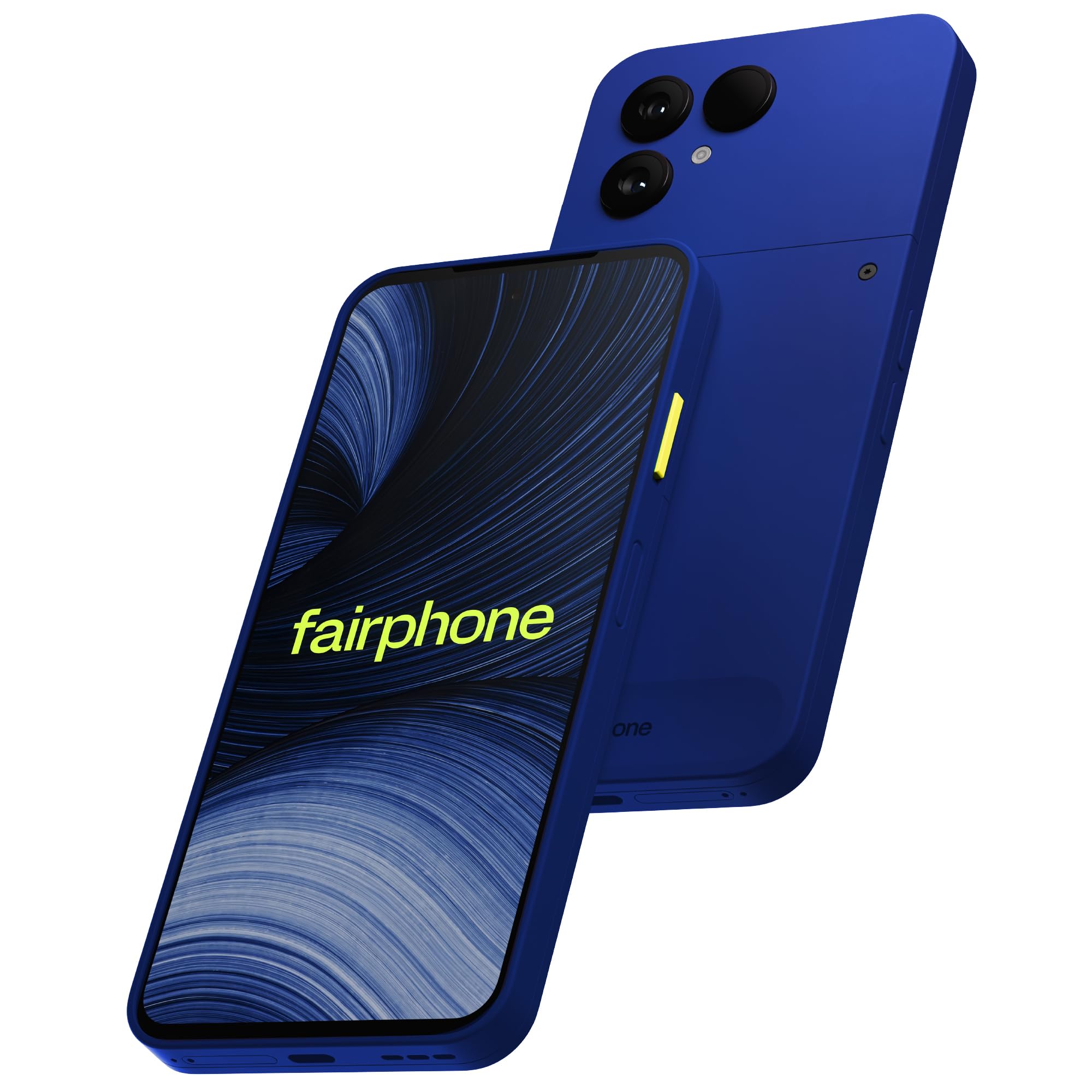
Swap the battery, screen or camera yourself with one screwdriver, then keep going.
You can fix this phone yourself instead of paying a repair shop, because Fairphone designs the Gen 6+ around 12 replaceable modules. The battery, screen, speaker and cameras all come out with a screwdriver. It backs that with a hardware warranty of up to five years and software support through 2033 — the longest support window in this guide by a wide margin. It is the only phone on the list built to be taken apart. Buyers report repairability is what they talk about most, and it is not just marketing: the parts really do come out.
When it is together, it performs like a mid-range phone should. A Snapdragon 7s Gen 4 chip with 12GB of RAM keeps multitasking smooth, and the 6.3-inch OLED runs 1080 x 2400 pixels at 431 pixels per inch with a 120Hz refresh rate so scrolling looks fluid. There is 256GB built in, expandable up to 2TB, and the 4415 mAh battery is reported to run about two days on a single charge. Gorilla Glass 7i covers the front, and IP55 gives splash resistance against light water spray.
Two things need saying plainly. First, this is an AT&T and T-Mobile phone — Verizon and its partner networks are not supported. Second, it is a premium purchase justified by longevity rather than raw power, so the value question depends entirely on how long you plan to keep it.
Why it belongs here
- 12 modular parts you can replace yourself — no repair shop
- Hardware warranty up to five years, software support through 2033
- 120Hz OLED at 431 pixels per inch with 12GB of RAM
- 4415 mAh battery that regularly runs about two days
- 256GB storage expandable to 2TB
The caveats that come with it
- No Verizon or Verizon-network MVNO support
- Modular design and long support are what you pay for, not raw speed
- IP55 resists splashes only — do not submerge it
Best suited to: the buyer who would rather replace one broken part than a whole handset, and who keeps phones for years.
skip it if: you are on Verizon, because this handset will not activate there.
8. Apple iPhone 17e, 256GB, Soft Pink – open up (Renewed)

Densest display in this roundup at 460 pixels per inch, in a 6.1-inch frame.
Your thumb can reach across this screen one-handed, because it measures just 6.1 inches. The Super Retina XDR OLED (Apple’s OLED panel name) runs 2532 x 1170 pixels at 460 pixels per inch — the highest pixel density here, ahead of even the OnePlus 15 at 450 — so fine text stays sharp. True Tone adjusts the color to your room’s light, and brightness reaches up to 800 nits, peaking at 1200 nits for HDR content. Ceramic Shield 2 glass with an anti-reflective coating covers the front, so glare is cut down.
Inside is the Apple A19 chip with a 6-core CPU and 16-core Neural Engine, backed by 8GB of RAM and a 256GB storage tier. Battery is 4000 mAh, and Apple rates it for up to 26 hours of video playback, so a travel day of movies fits comfortably. The rear camera is a 48MP Fusion main with optical image stabilization and optical-quality 2x telephoto; the front is a 12MP TrueDepth camera with autofocus.
Two details deserve your attention before you commit. It is dual eSIM only with no physical SIM tray, so you activate through your carrier’s eSIM process. And the recurring concern in reviews is that some units arrive locked to a carrier despite the listing — verify open up status the day it lands, while return options are still open.
What you feel in hand: a 6.1-inch body with the sharpest pixel density on the list and Qi2 MagSafe charging beside it.
What to guard against: no physical SIM slot, plus a carrier-lock risk worth confirming on arrival.
The pick for small hands: one-handed reach with a 460 pixel-per-inch OLED and Sub-6 GHz 5G.
Not the one if: you insist on swapping physical SIM cards from phone to phone.
9. Nothing Phone (3) 512GB

Four 50MP cameras and a back that lights up — this is the most talkable phone here.
Four 50MP cameras on one phone is the kind of spec that usually shows up far higher up the price ladder. The Nothing Phone (3) puts a 50MP main, a 50MP periscope, a 50MP ultrawide and a 50MP front camera together, with Ultra XDR 4K video, Night Mode and a Portrait Optimiser. The 6.67-inch FHD+ 1.5K AMOLED panel runs 120Hz adaptive refresh with 1.07 billion colors, and the maker claims 4500 nits peak brightness, 460 pixels per inch and a 1000Hz touch sampling rate.
The engine behind it is the Snapdragon 8s Gen 4 on a 4nm process with a 3.2GHz full-core CPU, paired with LPDDR5X RAM and UFS 4.0 storage and 512GB of room. Battery is 5150 mAh, rated for 33.43 hours of talk time, and the body is IP68 rated for dust and water. The Glyph Interface turns notifications, tools and games into light animations, and a side Essential Key captures your screen or records a voice memo with a press.
Network support is broad on AT&T and T-Mobile, with full voLTE, voNR, 3G, 4G and 5G coverage across the bands both carriers list. Verizon is the exception: the maker asks you to contact Verizon to whitelist your IMEI first, and does not recommend the network. Owners love the battery and the customisable Glyph, while performance returns a mixed verdict across the review pages.
The draw
- Four 50MP cameras, front included
- 512GB storage plus Snapdragon 8s Gen 4 and UFS 4.0
- 5150 mAh battery rated for 33.43 hours of talk time
- IP68 dust and water rating
The friction
- Verizon needs IMEI whitelisting and is not recommended
- Performance opinions split between “does everything well” and “stops working”
- The Glyph interface is a taste some never acquire
Choose it for: the camera count, the 512GB and a phone nobody will mistake for yours.
Steer clear of it on: Verizon, where the IMEI whitelist step adds real hassle.
10. Google Pixel 11 256 GB
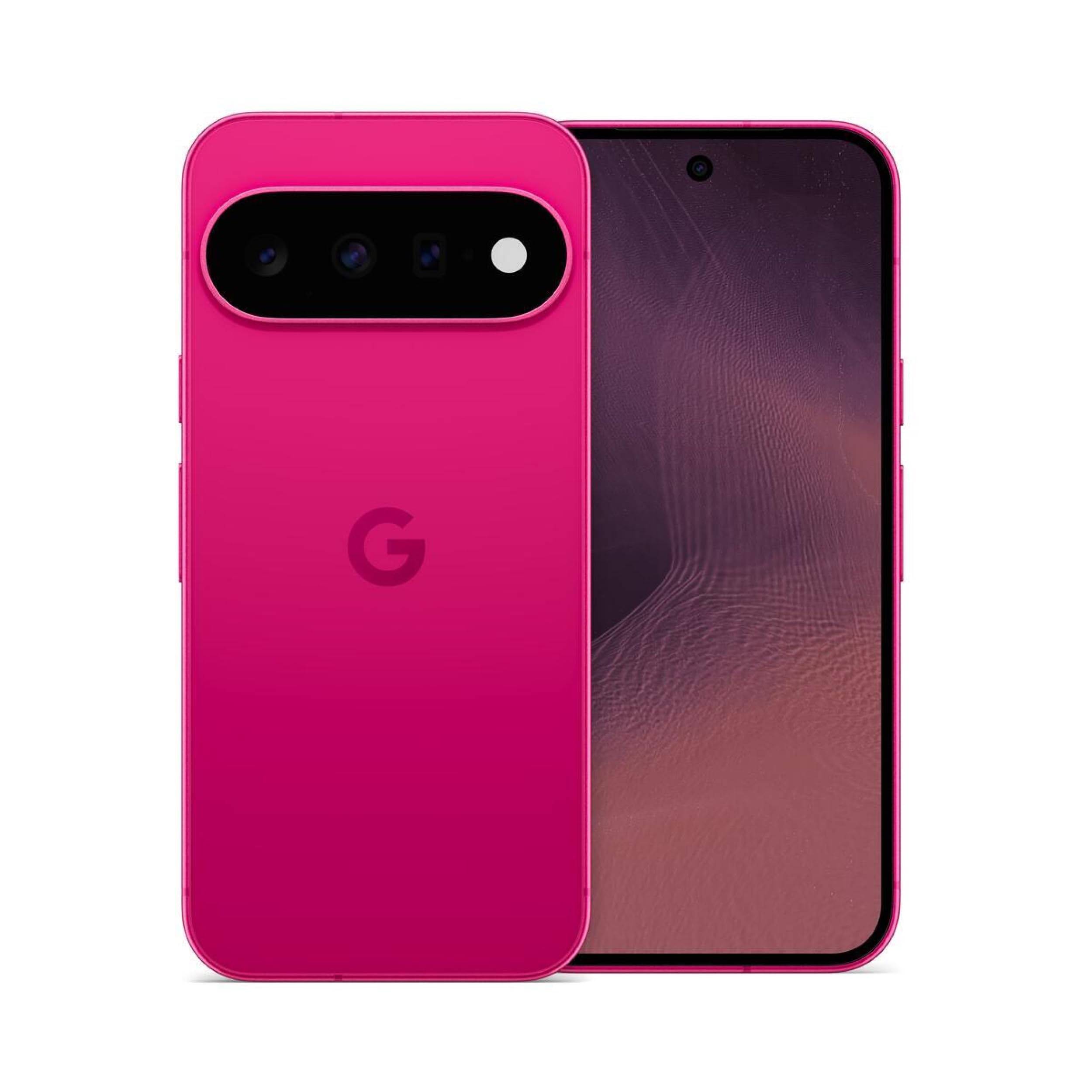
An upgraded 30x Super Zoom and Night Sight in a body with the slimmest camera bar yet.
For the buyer whose phone is really a camera with a calling app, the Pixel 11 makes the argument clearly. An upgraded 30x Super Zoom gets you close to a subject across a field, and Night Sight handles low-light photos, portraits and panoramas that other cameras give up on. IP68 protection means dust-tight and safe in water, and the satin back with ultra-durable glass is built to survive years in a pocket.
Carrier freedom is the other half of the pitch. It works with Google Fi, Verizon, T-Mobile, AT&T and other major carriers, so you are not locked into one network’s decision. Battery life is rated at 30+ hours, and the maker claims 25% faster wireless charging than before, with a wired charge reaching up to 55% in roughly 30 minutes. There is 256GB of storage, a G6 Tensor chip with a Titan M3 security chip, and Gemini Intelligence built in.
Owners describe operation as extremely smooth and the camera output as genuinely strong. The honest counterweight is cost — this sits at the premium end, and the value question divides opinion. Treat it as a camera purchase that happens to make calls, and the math gets easier.
The case in one line: 30x Super Zoom, Night Sight and IP68 protection with the freedom to pick your carrier.
The honest question: whether the premium outlay is worth it if you rarely open the camera app.
Right for you if: photos come first and you want Gemini and Pixel camera software doing the heavy lifting.
Wrong for you if: you want the most battery or storage per dollar — the OnePlus 15 and Nothing Phone (3) go further on both.
11. OnePlus 15 16GB RAM + 512GB
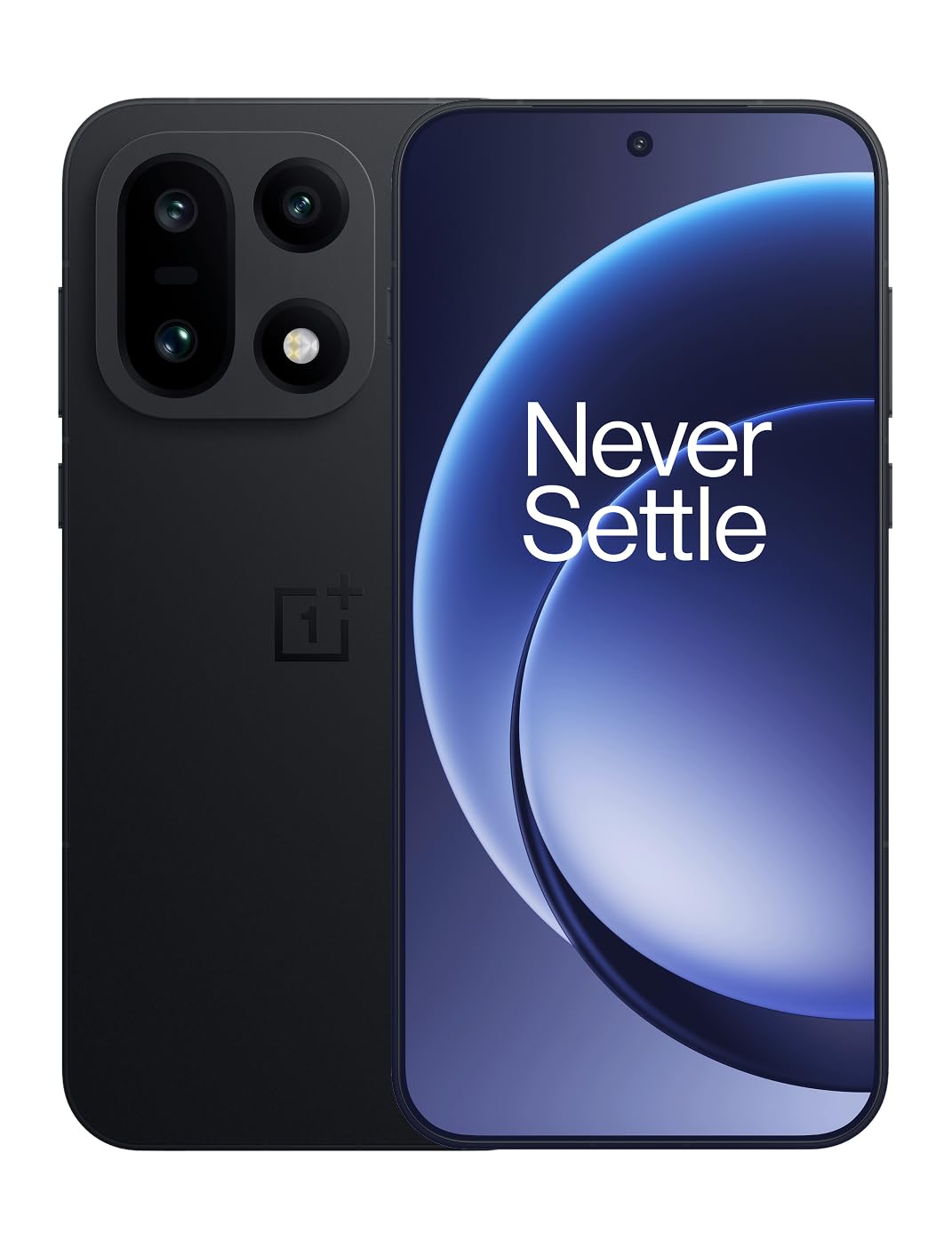
7300 mAh — the biggest battery here by a wide margin, and 165Hz to go with it.
Compare the capacity numbers directly and the gap is hard to miss. The OnePlus 15 carries 7300 mAh, while the iPhone 11 above holds 3110 mAh and the Fairphone 4415 mAh. Owners regularly report getting up to two days from a full charge, which is the sort of number that changes how you pack for a trip. Charging is quick too, and a charger ships in the box alongside a USB cable and a case.
It is not a one-trick phone. The 6.78-inch AMOLED runs at 165Hz — faster than the Nothing Phone (3)’s 120Hz — at 450 pixels per inch, so motion looks glassy. The tri-chip system pairs a Snapdragon 8 Elite Gen 5 with a dedicated Wi-Fi chip and a CPU scheduler for smoother connectivity. You get 16GB of RAM, 512GB of storage, a triple 50MP camera system covering wide, ultrawide and telephoto, plus dual SIM and wireless charging.
Performance is the aspect that earns the most praise, and it is not hard to see why. Camera quality splits opinion, and connectivity shows up as the occasional grumble. At the top of the premium tier, this is a phone you buy for endurance and speed, not for a compact body.
What earns the praise
- 7300 mAh battery — the largest capacity in this guide
- 165Hz AMOLED at 450 pixels per inch
- 16GB RAM and 512GB storage with Snapdragon 8 Elite Gen 5
- Triple 50MP cameras and dual SIM with wireless charging
The fair warnings
- Camera results draw mixed feedback
- Connectivity hiccups surface now and then
- A large 6.78-inch body in a premium tier
Made for the heavy user: long days, long flights and a charger you would rather leave at home.
Not the compact choice: if you want a smaller phone, the iPhone 17e is the better fit.
Know the Specs
What LTE band numbers mean for you
An LTE band is a numbered slice of radio spectrum a carrier uses. A phone that lists bands 2, 4, 12 and 66 has the raw hardware to talk to networks that use those slices; one missing the band your carrier relies on will simply fail to register. That is why the Galaxy A06 lists bands 1, 3, 5, 7, 8, 20, 28, 38, 40 and 41 and still will not work on AT&T or Verizon in the U.S. Always match the band list to your carrier’s published list before buying.
Reading battery capacity in mAh
mAh stands for milliamp-hours, a measure of how much charge a battery holds. A 7300 mAh cell like the OnePlus 15’s holds more stored energythan a 3110 mAh cell like the iPhone 11’s, which is why owners mention up to two days from a full charge versus a single day. Higher mAh does not guarantee longer runtime on its own, because screen brightness and processor load also drain the cell, but it is the clearest starting point when comparing phones.
Refresh rate explained in plain terms
Refresh rate is how many times per second the screen redraws, measured in hertz (Hz). A 90Hz panel like the Moto G Play’s redraws 90 times a second, so scrolling looks smooth; a 165Hz panel like the OnePlus 15’s redraws 165 times, which looks glassier still. Higher refresh rates also draw more power, which is one reason a big battery and a fast screen often appear together.
Storage versus RAM — the pair people mix up
Storage is where your photos, apps and videos live. RAM is the short-term workspace the phone uses to keep apps running at the same time. The Blackview Wave 7C shows both plainly: 128GB of storage for your files, and 4GB of physical RAM plus up to 12GB of virtual RAM that borrows from storage when enabled. Virtual RAM is not physical RAM, and a bigger storage number never makes a phone faster on its own.
Common Questions
Will an open up GSM phone work on Verizon or AT&T?
What does dual SIM actually let me do?
Do these phones come with a charger in the box?
What battery health should a renewed phone have?
Is 720p screen resolution good enough on a phone?
Can I add a memory card to these phones?
Which of these phones supports 5G?
What does IP68 mean compared with IP55?
Is a modular phone like the Fairphone actually repairable at home?
Do these phones support eSIM or only a physical SIM card?
The Bottom Line
For most buyers, the open up gsm phones winner is the Samsung Galaxy A06, because it gives you a 6.7-inch screen and a 5000 mAh battery with 25W charging for the smallest outlay, and owners praise its build quality most. If you want a sharper display and 256GB of storage instead of 64GB, grab the Motorola Moto G15. And for a phone you can repair yourself for years, the Fairphone Gen 6+ is the one to reach for — with a 12-part modular design and software support through 2033, it is the longest-lived handset on this list.
The single honest nudge: the A06 holds 4.5+ stars across 400+ ratings, and that crowd confidence is why it sits first — but it is a T-Mobile-family phone, so if your line runs anywhere else, start with the Galaxy A05 or the iPhone 11 instead.
How we choose
We do not accept paid placement. Every pick is matched to a real buyer and a real use-case; we do not hands-on test units.
Sources
Specifications: manufacturer listings and product documentation. Review insights: verified customer reviews, as of November 2026. Pricing: not shown on this page (it changes often); check the current price via the retailer link.
As an Amazon Associate, Tactical Gear Guy earns from qualifying purchases. This does not affect which products we feature.