Specs are compiled from manufacturer listings and verified buyer reviews and can change over time — please confirm the key details on the product page before buying.
You bought the soundbar, and now you want the sound to move around you — but the two speakers that do that have to sit behind your couch. Running speaker cable from the front of the room to the back is usually what stops people buying rear channels at all. This list stays inside one strict type — rear speakers that connect to a soundbar or AV receiver without speaker wire running to the back of the room — so you can pick the one that matches the hardware you already own. One honest caveat worth saying upfront: because model numbers and speaker sizes shift between regions and generations, some picks here are the nearest same-type match rather than the exact unit you searched for. They serve the same job in the same spot on your wall.
This guide is built by comparing the manufacturers’ published specifications and the patterns across verified customer reviews, so you get each pick’s real strengths and trade-offs instead of marketing spin.
Compatibility decides everything here — a rear kit that will not pair with your bar is just two black boxes. Below you will find which bar each set pairs with, what the wireless link actually uses, and how each one sounds behind your head, all in one place for wireless surround back speakers.
Top Picks


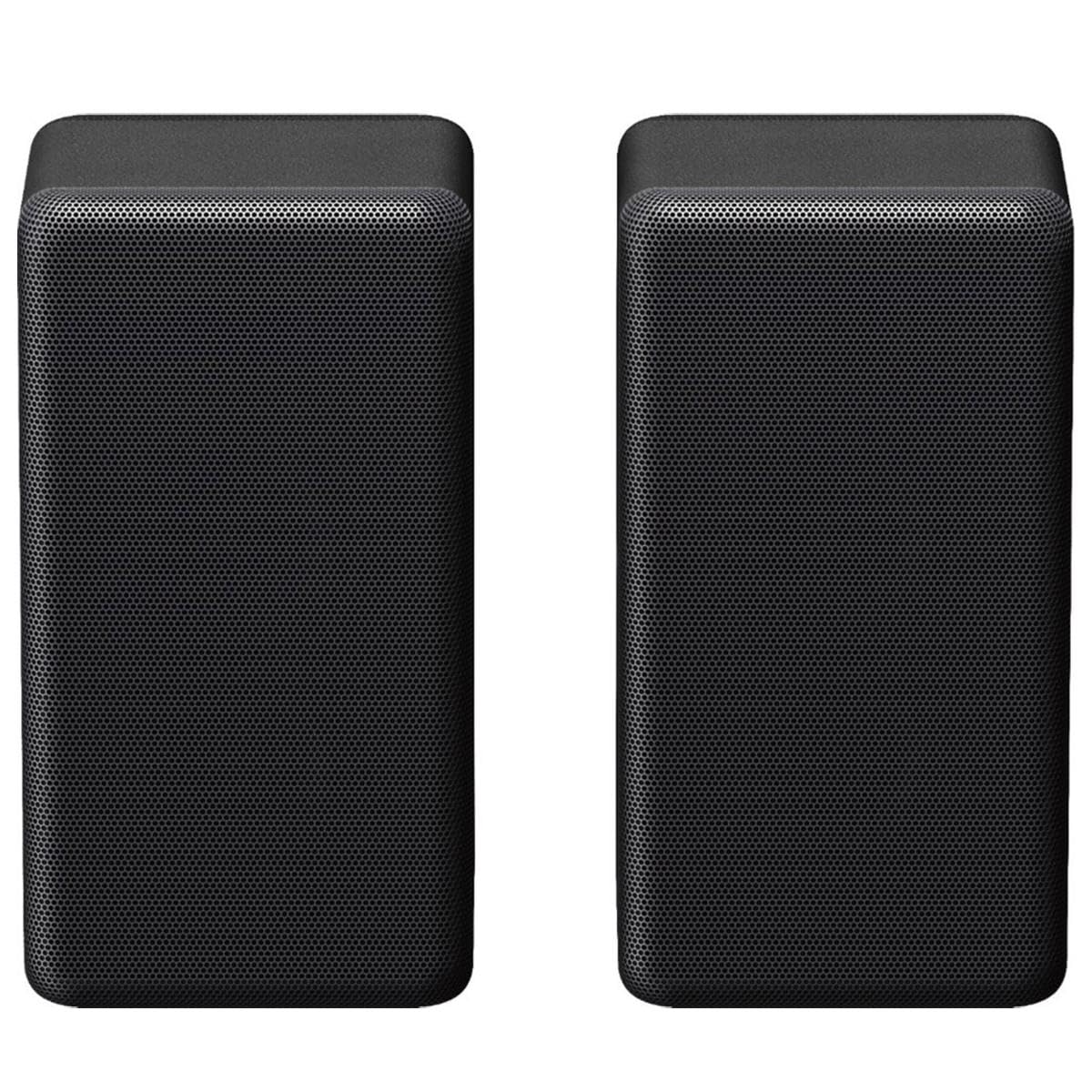
How To Choose The Best Wireless Surround Back Speakers
The first decision is not brand and it is not price tier — it is the box already sitting under your TV. A rear kit connects to a specific soundbar or AV receiver and to nothing else, so the compatibility line on the listing is the single most important sentence you will read. Confirm that compatibility line before you compare drivers, ranges, or price.
Start with the bar or receiver you already own
Every kit here is built to pair with a named family of bars or receivers. Sellers list those model numbers for a reason: the wireless link between a soundbar and its rear speakers runs on the brand’s own protocol, so a Samsung kit does not talk to a Sony bar. Find your bar on the list before you look at anything else. If your bar is not on any list, your realistic path is a matched kit from the bar’s own maker.
Check the generation, not just the badge. A kit may list some models from one year and not others, and the same brand can ship rear kits that fit one line of bars but not its entry models. Read the exact model string, including the letter and number after the dash.
Understand what “wireless” really means
The rear speakers here still need power. What disappears is the long run of speaker cable from the front of the room to the back — the link from the bar to each rear speaker is wireless instead. So you need a wall outlet or power strip near each rear speaker position. Plan that before you fall for a particular set.
Some kits route that power through a small wireless receiver module that each speaker plugs into. That module still needs an outlet too, and some owners find the module the part that needs attention when a channel drops out.
Match the speaker shape to your rear wall
A compact cube hides on a shelf or a stand. A taller two-way box with a separate woofer and tweeter fills a bigger room. An up-firing driver bounces sound off your ceiling to add height, which is what makes a helicopter pass overhead instead of just left and right. A cube suits a shelf, a two-way box suits a larger room, and an up-firing driver suits a low, reflective ceiling.
Wall-mount capability matters more than people expect. A bracket with swivel adjustment lets you aim the speaker toward the couch instead of straight across the room, and that aim is what makes the rear effect land where you sit.
Decide how much bass and height you actually want
A basic rear kit adds left-and-right movement behind you. A kit with a passive radiator deepens the low end without a separate subwoofer. A set with an up-firing driver adds a height layer on top of that. Each step up in effect usually means a step up in size and price tier, so pick the level that matches how much you watch films that use overhead sound.
Side-by-Side Comparison
Three specs decide most of these picks: what your bar must be to pair it, how the rear link connects, and whether the set adds height. Scan across the rows rather than down a single column.
| Model | Best For | Pairs With | Rear Link | Height / Atmos | Amazon |
|---|---|---|---|---|---|
| Roku Wireless Speakers (Set of 2)★ Best Overall | Roku TV owners wanting a simple cinematic upgrade | Roku TV, Streambar, Streambar Pro, Roku Smart Soundbar | Bluetooth, 10 meters | — | Amazon |
| Samsung 9250S Wireless Rear Speaker Kit (SWA-9250S/ZA)Budget Entry | Owners of a 2025 Samsung bar | HW-Q600F, HW-B750F, HW-B630F, HW-B550F | Bluetooth | — | Amazon |
| Sony SA-RS3S Wireless Rear SpeakersTop Performer | Older Sony bar and BRAVIA Theater owners | BAR 8, BAR 9, HT-A7000/A5000/A3000/S2000, STR-AN1000 | Bluetooth, 10 meters | — | Amazon |
| Samsung SWA-9500S/ZA with Dolby Atmos | Atmos height on a Samsung bar | Samsung soundbars | Wi-Fi / Bluetooth, 10 meters | Dolby Atmos | Amazon |
| Sony BRAVIA Theater Rear 8 (SA-RS8) | Current Sony bars and BRAVIA TVs | BRAVIA Theater Trio, Bar 9, Bar 8, Bar 7, HT-A series, STR-AN1000 | Bluetooth | 360 Spatial Sound Mapping | Amazon |
| Bose Surround Sound System | Hiding small speakers in a Bose setup | Compatible Bose soundbars | Wireless, 30 feet | — | Amazon |
| NEBULA Wireless Satellite Speaker (2-Pack) | Outdoor and battery-powered surround | NEBULA X1 only | Wi-Fi, up to 30 meters | Dolby Audio, 4.1.2 stage | Amazon |
Detailed Reviews
1. Roku Wireless Speakers, Set of 2 (Pack of 1)
Our pick — 4.5+★ from 5,500+ verified ratings; the strongest balance of quality and price.
The rare rear kit that adds dialogue rescue and night listening on top of the surround.
Three listening tools packed into one set earn this the top spot: Speech Clarity, Volume Leveling, and Night Mode. Speech Clarity lifts the volume of voices so you stop reaching for the remote during quiet dialogue. Volume Leveling evens out loud commercials, and Night Mode keeps the house asleep while you finish an episode. This is the set to buy if you own a Roku TV, a Roku Streambar, a Roku Streambar Pro, or a Roku Smart Soundbar — it plugs into that ecosystem and nothing else.
The wireless job here is handled over Bluetooth with a stated range of 10 meters (about 33 feet), which covers a normal living room from front wall to back. Roku also promises audio/video sync with the picture on your TV, so lip movement stays aligned with what you hear. As a stereo pair you can use them as a second room of music or as the rear channels behind your couch. The drivers are dynamic drivers — the standard cone-and-magnet type found in most speakers this size.
Where it wins the group is sheer confidence: the crowd favorite here, 4.5+ stars across 5,000+ owners, and the sound quality is what people rave about above everything else. Setup is the second thing they bring up, and for good reason — the pair handles its own joining to the system, so you are not chasing menu chains. The honest catch is the 10-meter Bluetooth reach and the mixed word on long-term reliability. If your rear wall sits far from the bar or the signal has to pass through a thick wall, this one is not the answer; move to a kit with a longer stated range.
Why It Takes The Top Spot
- Speech Clarity, Volume Leveling, and Night Mode turn a rear kit into a whole listening upgrade
- Set of two matching speakers, used as rear channels or as a stereo pair for music
- Bluetooth link with a stated 10-meter range and synced audio to the picture
- Clearest, most consistent owner satisfaction of anything on this list
What To Weigh Before You Buy
- Works with Roku TV or Roku Audio only — no other brand’s bar will drive it
- Not compatible with the Roku Streambar SE
- 10-meter wireless range is the shortest reach on this list
Reach for this if: you own any Roku TV or Roku soundbar and want clearer dialogue plus rear movement from a two-speaker set that mostly sets itself up.
Look elsewhere if: your soundbar is not a Roku, or your rear wall sits more than 10 meters of signal path from the front of the room.
2. Samsung SWA9250S Wireless Rear Speaker Kit – Black
Named for the bars it fits — check your model before anything else on this one.
Four 2025 Samsung soundbars are the whole point of this kit: the HW-Q600F, HW-B750F, HW-B630F, and HW-B550F. If your bar is on that list, this is the cleanest path to true surround in the Samsung line. It also open up extra modes — Private Rear Sound and Sound Grouping — that a basic kit does not give you. The rear speakers connect to the bar without a separate module and without cable runs to the back of the room, which is the entire point.
Under the hood, the driver size is listed at 6 inches, which is a real cone rather than a tiny satellite, and the surround output mode is standard for the category. The build is described as lightweight. One practical note the listing itself flags: a power cable is included, and each rear speaker still needs an outlet, which is normal for this type of kit.
Sound is the thing people praise most here — owners find it strong for music-led programmes and sports, and the pairing with Samsung bars is described as near-instant in many cases. The honest caveats come as a pair. Some find the overall quality and functionality mixed, and the speaker wire is the one aspect that draws outright negative comment, so check your run before you mount anything. This is also the set where a slightly lower satisfaction score sits alongside a much larger body of feedback than the entry Samsung kit — a fuller picture, not a perfect one.
What This Kit Delivers
- Built specifically for four named 2025 Samsung bars — Q600F, B750F, B630F, B550F
- Adds Private Rear Sound and Sound Grouping modes on top of surround
- No separate module, no cable routed to the back of the room
- 6-inch drivers put real cone behind each rear channel
The Points To Check
- Only fits the four named bar models — a different Samsung bar is a gamble
- Speaker wire draws the one clearly negative thread in the feedback
- Quality and functionality opinions split, so expectations vary by room
Best matched to: owners of a 2025 Samsung bar from the four listed models who want true surround plus the extra rear modes.
Think twice if: your Samsung bar is an older or unlisted model, or you need long speaker runs — wire is the recurring sticking point.
3. Sony SA-RS3S Wireless Rear Speakers for Soundbar
Two-way drivers in a wall-mountable block, built for the Sony bars people already own.
Two-way speakers are the headline: a separate tweeter and woofer inside each box, which is why the sound opens up wide instead of sitting in one spot. Sony calls the shape an Omnidirectional Block Design, and the point of that geometry is a sound field that spreads rather than beams. Each speaker can go on a wall, which is the placement most rear channels end up needing.
The compatibility list is broad within Sony: BRAVIA Theater BAR 8 and BAR 9, the HT-A7000, A5000, A3000 and S2000 soundbars, and the STR-AN1000 AV receiver. So this is the pick that covers Sony owners who have not moved to the newest generation. The wireless link is direct, over Bluetooth with a stated 10 meters, and the app handles control. Setup is quick, which is the phrase the listing leans on and the reviews back up.
What people notice is the effect in the room — explosions and objects sweeping past coming off nicely behind the headrest. Compatibility with Sony bars is the second strength, and that pairing confidence is why it holds the score it does. The split shows up on value and on connectivity: an occasional owner finds the price hard to justify and a few hit connection trouble. If your room has a lot of competing wireless traffic or the rear wall is far from the bar, budget time to test the link before you commit to speaker positions.
Why the effect lands: two-way drivers plus an omnidirectional block shape put a wide, moving sound field behind you rather than a narrow point source.
The one thing to test early: Bluetooth reach tops out at a stated 10 meters, and connection reliability is the aspect buyers disagree on most.
Fits the buyer with: a Sony BAR 8, BAR 9, HT-A-series bar, or STR-AN1000 receiver who wants a wider rear field and wall mounting.
Skip past if: your room is long enough that a 10-meter link would be stretched, or your bar is not a Sony.
4. SAMSUNG SWA-9500S/ZA Wireless Rear Speaker Kit

Dolby Atmos in a Samsung rear kit, with the power cords and wall mount already in the box.
Overhead sound that makes a film feel tall is the reason to look here: this kit is built to carry Dolby Atmos content to the rear channels, so those effects reach the speakers behind you rather than stopping at the bar. The box includes the power cords and a wall mount kit, so the mounting hardware is not a separate errand. Wi-Fi is listed as the connectivity protocol, with Bluetooth also on the sheet and a stated 10-meter range.
The reported experience is loud and clear — this set gets very loud and lifts ordinary TV sound well beyond what the bar does alone, and Atmos content is where it shows off most. Pairing with Samsung bars is generally solid; the HW-QS730D is one model buyers specifically call out as working. Setup is the variable. Some find it easy to hook up while others run into difficulty, so set aside a calm half hour rather than expecting a two-minute job.
One thing to know before you order: this is a bundle that adds an extended protection plan on top of the kit, so you are buying the speakers plus coverage rather than the bare set. That makes it the pick for someone who wants the Atmos rear layer on a Samsung bar and values the extra warranty confidence. If you only want the cheapest path to Samsung rear channels, the plain 9250S sets above and below do that job without the extras.
Where It Stands Out
- Dolby Atmos support for the rear channels, so overhead effects reach behind you
- Power cords and wall mount kit both included
- Gets very loud and lifts everyday TV sound noticeably
- Pairs cleanly with Samsung bars, including the HW-QS730D
Before You Commit
- Setup difficulty splits the feedback — plan for a fiddly first hour on a bad day
- Stated 10-meter wireless range limits where the rears can sit
- Comes as a bundle with an added protection plan, not the bare kit
Made for: a Samsung soundbar owner who wants the Atmos height layer behind them and likes having the mount and cords in the box.
Not the fit if: you want the plainest, cheapest Samsung rear add-on — the non-Atmos 9250S kits are simpler.
5. Sony BRAVIA Theater Rear 8 Wireless Rear Speakers (SA-RS8)

The Sony rear pair that can skip the soundbar entirely on a compatible BRAVIA TV.
That direct-TV connection is what separates this set from the rest of the Sony options here. On a compatible BRAVIA TV with current software, these rear speakers connect wirelessly to the television itself and expand the sound beyond the screen — no soundbar in the chain at all. If you also run a Sony bar, the list is long: BRAVIA Theater Trio, Bar 9, Bar 8, Bar 7, HT-A7000, HT-A5000, HT-A3000, and the STR-AN1000 receiver all work.
A field of sound that wraps around you rather than just left and right is what these two-way speakers build. Each one has both a woofer and a tweeter, sized at 15.5 centimeters, and paired with a compatible bar they enhance 360 Spatial Sound Mapping. Setup runs through the BRAVIA Connect app, and the wireless link frees you to place the speakers where the seating wants them instead of where the wire reaches.
Immersion and surround effects are the strengths buyers point to, and the setup is rated easy. The thing to go in aware of is the wireless link’s steadiness: staying connected is the aspect reviewers disagree on most, and reliability draws the same split. That is not unusual for rear kits that fight for airtime in a busy home network, but it is the reason to test placement before you drill holes. Aim the pair with the app, confirm the link holds for a week, then mount.
The standout trick: direct wireless pairing to a compatible BRAVIA TV means surround without a soundbar — a rare feature in a rear-speaker kit.
The honest split: staying connected is the weak spot in the feedback, so prove the link is stable before you commit to wall positions.
Strong pick for: a Sony BRAVIA TV or current Sony bar owner who wants a flexible rear pair with app control and the option to skip the bar.
Weigh against it: if your Wi-Fi or wireless environment is crowded, connectivity is the one thing that can spoil the experience.
6. Bose Surround Sound System for Home Theater, Black
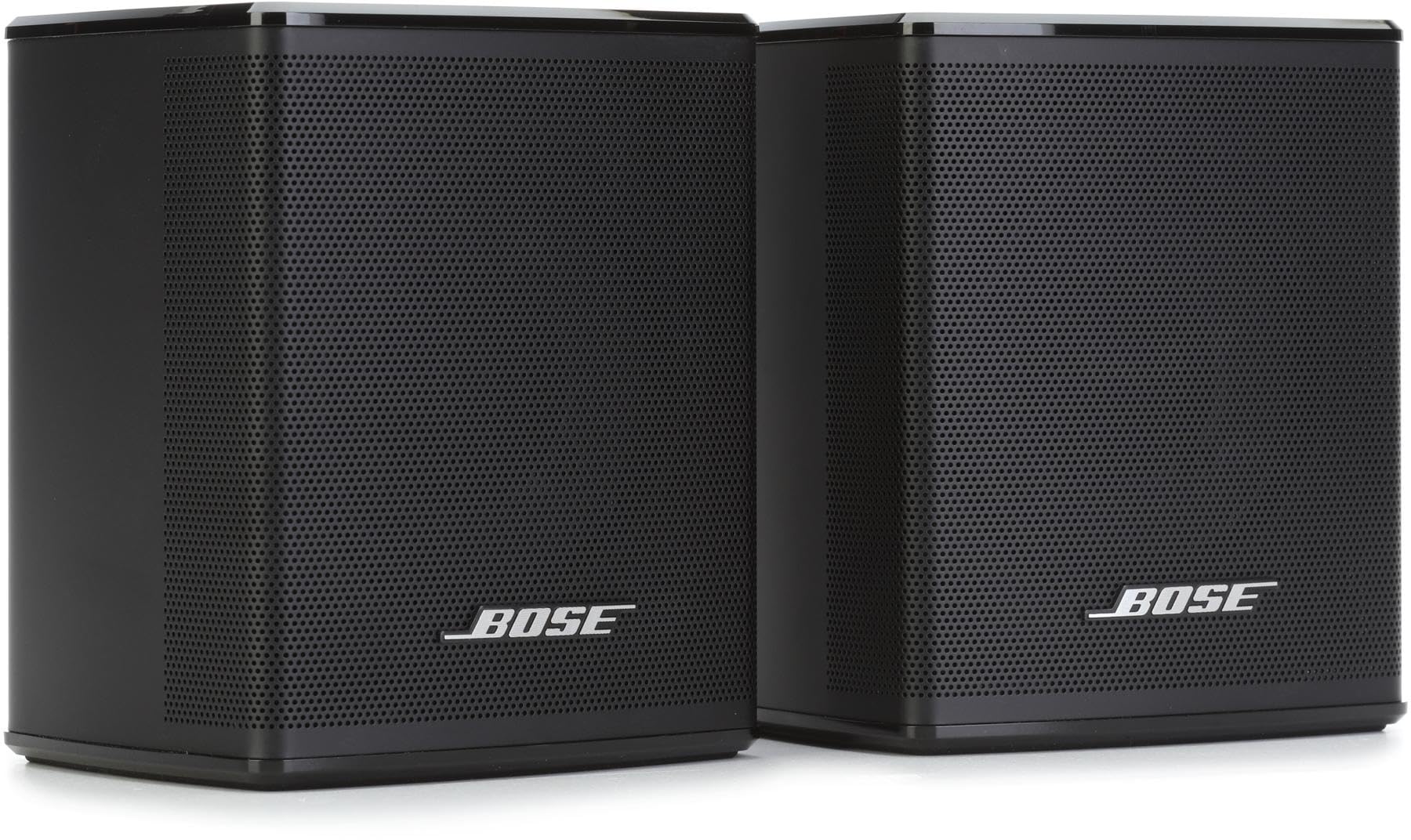
The smallest speakers in this group, designed so the focus stays on the screen, not the gear.
Bose built these as its smallest speakers, and the intent is clear: tiny cubes that disappear on a shelf or a side table, so the room still looks like a room. Inside the box you get the cube speakers, line cords, speaker wire, and the wireless receivers that carry the rear signal. You plug the receivers into power, connect them wirelessly to a compatible Bose soundbar, and you have rear channels in minutes.
A stated 30-foot wireless reach is the standout here — notably longer than the 10-meter kits on this list, so a large room is less of a fight. Bluetooth carries the link and the control method is touch. Owners mention the set complements a Bose bar well, and customers note the compact design gets its own share of the praise. At this tier you are paying for rear channels you hear and cubes you never notice on the shelf.
Setup runs through the Bose music app and is described as straightforward, which matters when tiny speakers mean careful positioning. The main thing to plan around is that this is an addition to a Bose soundbar, not a free-standing system — the bar has to be there for it to do anything. And if you want deeper bass than the cubes alone, the maker points you to the Bose Bass Module 700 as the add-on, which is a second purchase rather than something included.
What Makes It Work
- Bose’s smallest speakers — easy to hide and easy to live with
- Wireless receivers mean no cable run to the back of the room
- Stated 30-foot wireless reach suits larger rooms
- Setup through the Bose music app is straightforward
Where It Costs You
- Requires a compatible Bose soundbar to function at all
- Deeper bass needs the Bass Module 700, sold separately
- Each wireless receiver still needs its own power outlet
Right for you when: a Bose soundbar is already in the room and you want rear channels from speakers small enough to vanish.
Wrong fit if: you are not on a Bose bar, or you expect deep bass without adding the Bass Module 700.
7. NEBULA Wireless Satellite Speaker (2-Pack)

The only set here that runs on a battery, survives a splash, and works outside.
This pair is built for the yard rather than the lounge. The 8 hours of playtime means no outlet is needed once it is charged. The IP54 rating — dust protected and safe against splashes — plus a foldable stand that keeps the speakers off the dirt make it the one set built to be carried out and put down. A single power cord sets up the whole 4.1.2 surround stage, so the cable clutter of a traditional rear setup simply is not there.
The wireless link here is Wi-Fi rather than Bluetooth, with stated support for up to 25 ms latency for sync, inside a range of up to 100 ft (30 m). That is a far longer reach than the 10-meter Bluetooth kits on this list, which is the practical advantage when your seating and your screen are far apart. Dolby Audio is on the sheet, and the two speakers are sold as a matched pair with two Type-C charging cables in the box.
The hard limit is compatibility: this set works with the NEBULA X1 only. That is not a small footnote — if you own anything else, this is not the rear pair for you. It also does not come with a projector, so the X1 is a separate purchase. For the buyer already on an X1 who takes the screen outside, though, there is nothing else on this list that does what this does: a battery, a splash rating, and a 30-meter wireless range in one pair.
The outdoor case: battery playtime of up to 8 hours, an IP54 splash-and-dust rating, and a foldable stand together make this the only genuinely portable set here.
The gate to clear: it pairs with the NEBULA X1 only — any other bar or projector rules it out entirely.
Built for: a NEBULA X1 owner who wants surround sound in the yard, with a battery and a splash rating instead of a wall outlet.
Not an option if: your system is anything other than the X1 — compatibility is limited to that one model.
Know the Specs
What “wireless” really covers
On a rear speaker kit, wireless means the signal from your bar or receiver to each rear speaker travels through the air rather than down a speaker wire. It does not mean the speakers are cordless. Each one still plugs into a power outlet, and some kits use a small receiver module per speaker that also needs power. Plan outlets at the rear wall before you buy.
Bluetooth versus Wi-Fi for the rear link
Most kits here use Bluetooth, which is simple and reliable at short distance; the stated ranges run from 10 meters up to 30 feet depending on the model. Wi-Fi kits can reach further and carry more data, and one set here lists a 30-meter range with latency as low as 25 ms. The trade-off is that Wi-Fi kits can compete with your home network, so placement matters more.
Up-firing drivers and height
An up-firing driver points at the ceiling and lets the reflection come back down, which is how a rear speaker adds sound from above rather than only from behind. It depends on a hard, reflective ceiling at a sensible height. A very high or acoustically treated ceiling softens the effect, so the same speaker in two rooms can sound different.
Two-way speakers and passive radiators
A two-way speaker splits the job between a tweeter for high frequencies and a woofer for the lower end, which widens the sound and keeps detail clear. A passive radiator is a non-powered cone that moves with the air inside the cabinet to deepen bass without a separate subwoofer. Both show up on the higher-tier sets and both cost size and money.
Common Questions
Will a Samsung rear kit work with a Sony soundbar?
Do wireless rear speakers still need a power outlet?
What is an up-firing driver and do I need one?
How far can the rear speakers sit from the soundbar?
Can I use rear speakers without a soundbar?
What does IP54 mean on a rear speaker?
Is Dolby Atmos on the rear speakers worth it?
How do I mount rear speakers on the wall?
Why does my rear speaker keep dropping the connection?
Does the soundbar brand have to match the rear speakers?
The Bottom Line
The right rear pair is the one whose compatibility list names the bar you already own. If you are on Roku, the Roku Wireless Speakers are the strongest pick, with Speech Clarity, Night Mode, and the most consistent owner satisfaction of anything here. For a 2025 Samsung bar from the named list, the Samsung 9250S kit gives you true surround plus the extra rear modesand the SWA-9500S bundle adds the Atmos height layer with mount and cords in the box. Sony owners who want overhead effects should reach for the BRAVIA Theater Rear 9, where the 80 mm up-firing driver does the real work. And if the screen goes outside, only the NEBULA pair brings a battery, an IP54 rating, and a 30-meter Wi-Fi link to the yard.
One last honest point about the top pick: it earns its first-place spot on sound and dialogue tools, not on reach. Its 10-meter Bluetooth link is the shortest on this list, so a long room or a thick wall between the bar and the rear wall is the one scenario that should send you toward a kit with a longer stated range. Match the compatibility line to your bar, confirm the wireless link holds before you drill, and the rest is just placing two speakers behind your couch.
How we choose
We do not accept paid placement. Every pick is matched to a real buyer and a real use-case; we do not hands-on test units.
Sources
Specifications: manufacturer listings and product documentation. Review insights: verified customer reviews, as of November 2026. Pricing: not shown on this page (it changes often); check the current price via the retailer link.
As an Amazon Associate, Tactical Gear Guy earns from qualifying purchases. This does not affect which products we feature.