Specs are compiled from manufacturer listings and verified buyer reviews and can change over time — please confirm the key details on the product page before buying.
The hardest part of buying a wood burner stove is that two products on the same shelf can be built for completely different jobs. A folding titanium tent stove and a 280-pound cast iron heater share a fuel type and nothing else. Pick the wrong one and you either freeze in a canvas shelter or curse a stove you cannot lift. So here is the short answer: for hot-tent camping and backpacking, a collapsible titanium model wins on weight and pack size, while a steel or cast iron unit wins on burn time and whole-room heat — 8.16 lbs and 200 sq ft against 280 lbs and 2,000 sq ft. Everything below is sorted by that split.
This guide is built by comparing the manufacturers’ published specifications and the patterns across verified customer reviews, so you get each pick’s real strengths and trade-offs instead of marketing spin.
You will see firebox capacity in cubic inches and liters, coverage in square feet, and burn windows measured in hours, all explained in plain terms. The one figure that separates the campers from the home heaters is weight versus firebox volume, and that is exactly where this wood burner stove breakdown starts.
Top Picks
How To Choose The Best Wood Burner Stove
The first question is not which stove is best — it is whether the stove will sit in a tent or a building. It is where the stove will sit. A shelter with a stove jack wants a folding body, a rollable chimney, and a weight you can carry on your back. A cabin, workshop, or garage wants a heavy firebox that holds coals overnight and throws heat across a whole room. Answer that — tent jack or chimney thimble — before you look at a single spec.
Match the firebox to the space, not the photo
A firebox measured in cubic inches or liters tells you how much wood goes in at once, and that sets your refill rhythm. A small chamber means feeding the fire every hour or so; a large one lets you load up and walk away. Coverage in square feet is the other half of the pair, and it should roughly match the floor area you are actually heating rather than the whole building.
Decide how much weight you will actually carry
Titanium buys you a firebox you can lift with one hand, at the cost of a higher price per pound saved. Welded steel and cast iron buy you thermal mass that keeps radiating after the flames drop, at the cost of a two-person lift. Weigh the packed stove against the distance from your vehicle to your pitch before you fall for a big chamber.
Check what comes in the box
Chimney sections, a spark arrestor, a damper, gloves, and a carry bag are the difference between a stove you can run on night one and a parts list you chase for a month. A direct-vent design also needs a clear path for the pipe through your tent jack or wall thimble, so confirm the pipe diameter and section count before you commit.
Side-by-Side Comparison
| Model | Best For | Firebox / Capacity | Coverage | Weight | Amazon |
|---|---|---|---|---|---|
| TSG Portable TA1 Titanium Tent Stove★ Best Overall | Backpacking and hot-tent camping | 23L firebox | Up to 200 sq ft | 8.16 lbs with bag | Amazon |
| Titanium Wood Stove (Ytaoeo WT-29US-04)Best Value | Compact car camping and cooking | 16.9″L x 8.7″W x 10.8″H body | — | 11 lbs | Amazon |
| DDSS Indoor Wood-Burning Heating Stove | Rural heating plus stovetop cooking | 14.37″D x 15.55″W x 20.47″H | Up to 500 sq ft | — | Amazon |
| CAMPJOURNEY M6 Hot Tent Stove | Winter basecamp with real cooking | 2100 cu in firebox | — | 50.7 lbs | Amazon |
| Ashley Hearth AW2020-P | Whole-home and off-grid heating | 1.6 cu ft firebox | Up to 2,000 sq ft | 280 lbs | Amazon |
Detailed Reviews
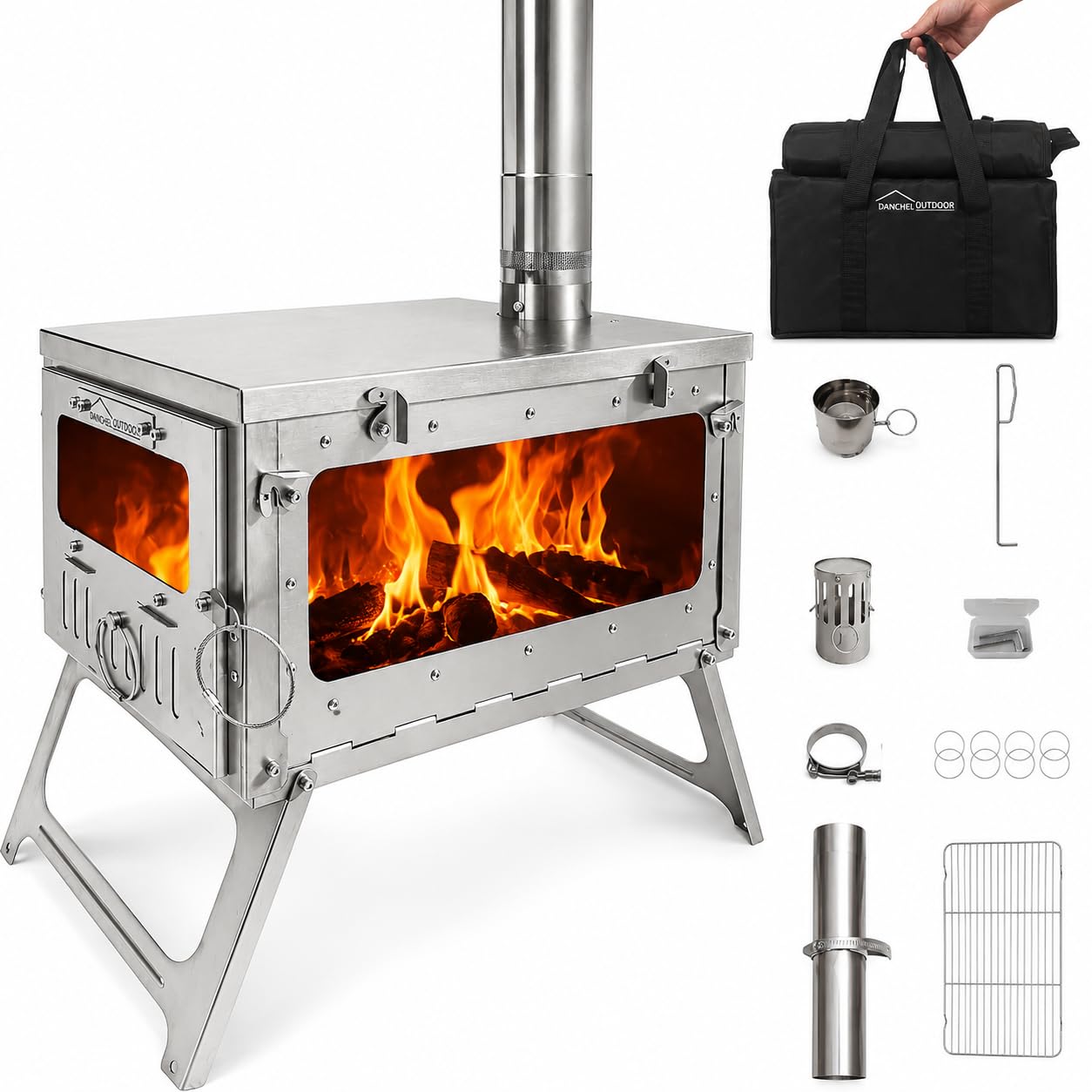
1. TSG Portable TA1 Titanium Tent Wood Stove
Our pick — 4.0+★ from 200+ verified ratings; the strongest balance of quality and price.
A 23-liter firebox you can carry one-handed at 8.16 pounds with the bag.
This is the stove to buy if your shelter has a stove jack and your car is not parked beside it. The firebox holds 23 liters of fuel, so a full load runs long enough that you are not kneeling in the snow every forty minutes. The whole thing packs to 16.9 x 10 x 8.4 inches for the firebox and sheds the legs and chimney into the same bag.
Titanium is the reason the weight figure is so low. TA1 titanium shrugs off rust and takes high heat without warping the way thinner steel can, and it is why this stove lives in a pack rather than a truck bed. The chimney itself is a Φ2.48-inch pipe running 8.2 ft across 8 rings, and a spark arrestor caps it so embers are less likely to land on your canvas.
Where this leaves the competition is firebox room. It offers 395 cubic inches more capacity than the earlier TSG version, which is the difference between feeding a fire constantly and loading it once. Seven adjustable air intakes plus a damper give you real control over the burn, and the two-plate top with its load-bearing bar holds up to 22 lbs for a pot or a pan. It heats up to 200 sq ft, so a 1–4 person hot tent is the natural fit.
Two things deserve honesty. The spark arrestor and wind-rope rings are there because a hot tent is a fabric structure, so figure your clearance before the first burn. And a side window lets you watch the fire without opening the door, but the body still gets hot enough that gloves belong in the kit.
What the price buys: A complete kit — stove, cooling rack, spark arrestor, pipe, hook, fastener, and carry bag — in rust-resistant TA1 titanium, built for cold-weather camping.
The honest catch: This is a tent stove by design. It heats up to 200 sq ft of sheltered space, so it is not the pick for a cabin or a workshop.
Reach for this if: you backpack or hot-tent camp and want real heat without a 50-pound anchor in your pack.
Look elsewhere if: you are heating a building — the 200 sq ft ceiling will leave you short.
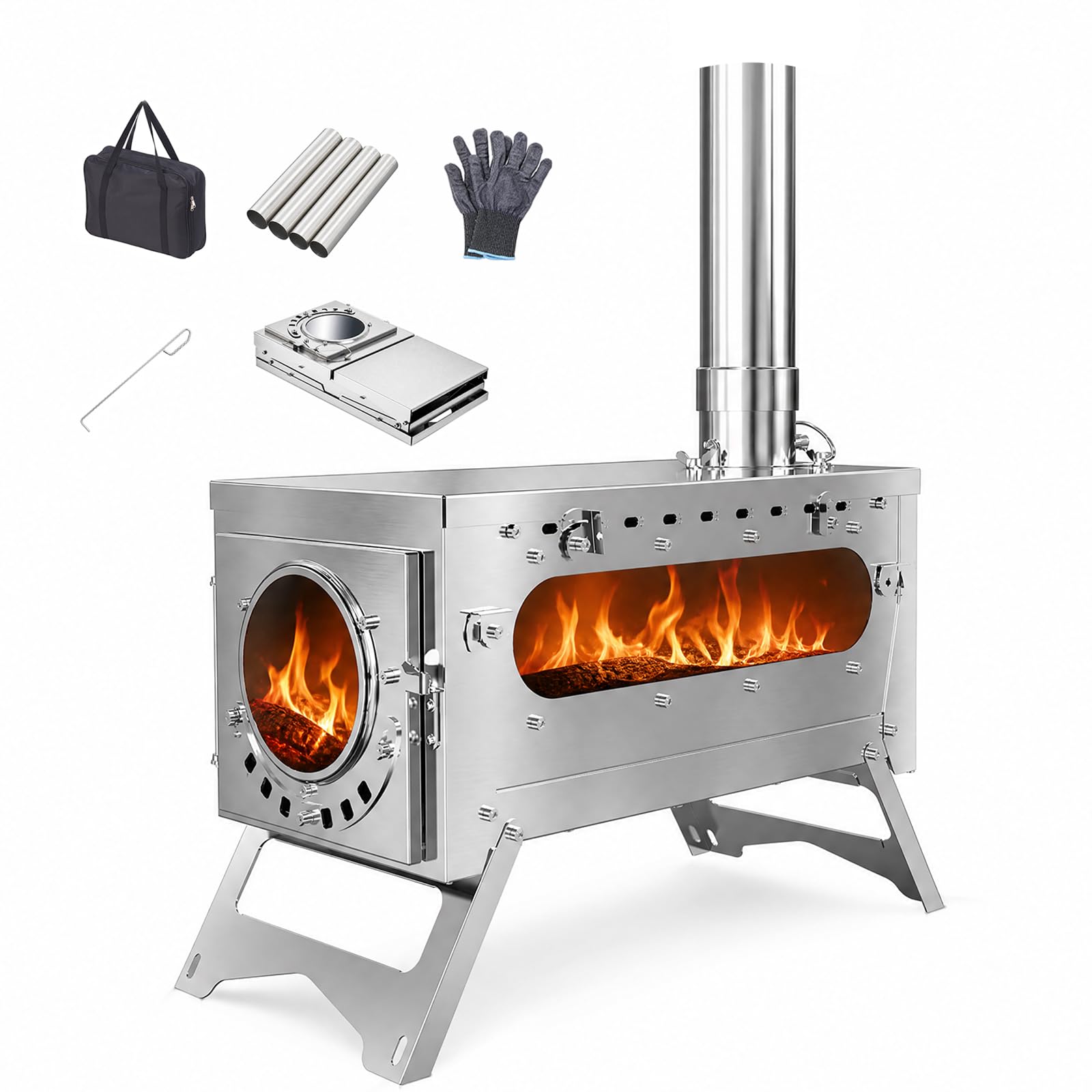
2. Titanium Wood Stove (Ytaoeo WT-29US-04)
An 11-pound titanium folder that grills as well as it heats.
If the TSG above is the expedition stove, this Ytaoeo is the one you throw in the trunk for a weekend and never think about until you need it. It folds into a 17.7 by 13.4 inch carry bag and weighs 11 lbs, which puts it firmly in one-person lift territory. The firebox body measures 16.9″L x 8.7″W x 10.8″H, compact enough to sit on a picnic table.
Cooking is where this unit earns its place. The stove-top cover doubles as a BBQ grill, and the titanium body heats quickly enough for boiling water, grilling, and straight heating. Eight sections of 2.36-inch diameter chimney pipe let you adjust stack height for different tent setups, and the spark arrestor cap does the same ember duty as on any hot-tent build.
The airflow design is worth understanding. An adjustable damper controls how much air reaches the fire, while an internal fire baffle keeps direct flame off the chimney for a more efficient burn. A large viewing window tells you when to add wood without lifting the lid. Heat-resistant gloves and an ash scraper ship in the box.
Size is what buyers like most about it — the compact footprint is the headline in its review pages, and portability and heat output both draw steady praise. The trade-off is venting: smoke control draws mixed feedback, with reports of it smoking heavily and venting poorly in some setups. Seating the chimney sections fully and keeping a fireproof mat underneath are not optional here.
Why campers warm to it
- Folds into a 17.7″ x 13.4″ bag at 11 lbs, so it rides in a trunk or a canoe without complaint
- Stove-top cover doubles as a grill and the body heats fast for boiling and cooking
- Adjustable damper plus internal fire baffle give you control over flame intensity
- Gloves and ash scraper included, so cleanup does not need a second shopping trip
Where it tests your patience
- Smoke control is the weak spot — mixed reports of heavy smoke and poor venting
- Durability feedback is mixed, so treat the door and seams with care
- Needs a fireproof mat and proper ventilation when used inside a tent
The case in one line: a compact titanium cooker that heats a small shelter and grills dinner without eating your payload budget.
Before you buy: plan your stack height carefully — venting is the one job this stove needs help with.
3. DDSS Indoor Wood-Burning Heating Stove

Thickened cast iron that burns wood or coal and cooks while it heats.
Here is the jump in scale. The DDSS heats areas up to 500 sq ft — 2.5 times the 200 sq ft the TSG tent stove covers — while standing just 14.37″D x 15.55″W x 20.47″H. That makes it a genuine room heater rather than a shelter warmer, and it fits in a corner where a bigger box would not.
The build is the argument for cast iron. The central furnace chamber is new thickened cast iron, and the top and bottom are thickened double-layer steel plates, which is how it holds heat while using less fuel. The furnace is fully welded and airtight, and a thickened smoke vent keeps the stack firm and stable.
You can feed this stove whatever fuel you have on hand, which separates it from every other stove here. It runs on firewood, branches, wood chips, and coal, so you are not locked into one supply. The multi-functional grill handles barbecue, boiling water, and straight heating. The ash box sits directly below the firebox (the chamber where the fire burns) and catches burned ash, so cleanup stays contained.
What you are buying is a straightforward rural heater with an honest price-to-coverage ratio, not a precision instrument. The direct-vent layout means you still need a proper chimney path and clearance, and the cooking surfaces are best treated as a convenience rather than a full kitchen. Buy it for 500 sq ft of heat and the freedom to burn wood, branches, wood chips, or coal, and it does that job without fuss.
Where it earns its keep: 500 sq ft of coverage plus coal as a backup fuel, in a footprint small enough for a workshop corner.
Worth knowing: the ash box and thick smoke vent are built for regular maintenance, so plan a cleanup routine from day one.
Pick this one for: a rural room, cabin, or outbuilding where you want heat and a cooktop from the same firebox.
Not your stove if: you need to carry it — this is a fixed, freestanding heater.
4. CAMPJOURNEY M6 Hot Tent Stove
A basecamp furnace that holds heat for 6+ hours so you can sleep through.
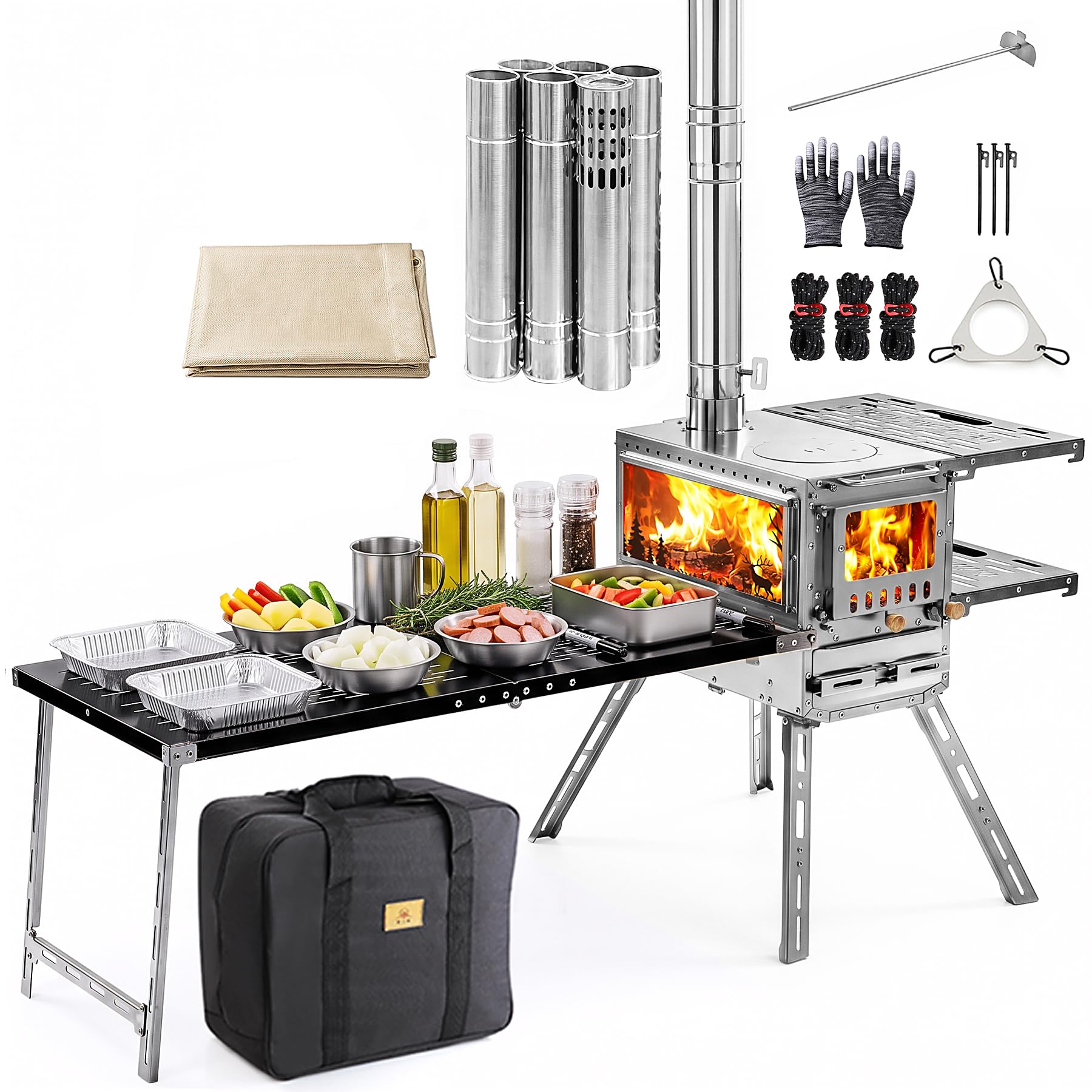
The M6 answers the one complaint every tent stove owner has: getting up at 3 a.m. to feed the fire. Its 2100 cu in firebox takes 10-inch logs and holds steady heat for 6+ hours, which is a full night of sleep in a cold-weather camp. A patterned high-temp glass window rated to 2192°F lets you check the fire without breaking the seal.
Materials are where the weight goes. A 4.8mm double-layer 304 stainless top sits over a 1.8mm body in a silver finish, built to resist warping, corrosion, and heat. All of that adds up to 50.7 lbs, which is a two-person pack-in and a very different proposition from the 8.16 lb titanium folder at the top of this list.
The cooking setup is unusually complete for a tent stove. There is a built-in oven with a thermometer, a removable circular cooktop, and an open-flame surface, and it boils 1.4L quickly — coffee and a real meal right outside the tent door. The riveted smoke-sealed body, double air curtains, front door vent, and spark arrestor all work toward keeping smoke where it belongs.
You get a full kit in the box, and it all packs inside the stove itself. That means a 98-inch six-section chimney in 2.76-inch diameter, a foldable IGT camping table, sealed ash collector, ash rake, gloves, fireproof mat, 900D bag (a heavy-duty woven fabric), guy lines, stakes, and chimney plates. If you add the separately sold pellet burner, the maker’s own instructions call for 10 chimney sections. They also say to close all air inlets and leave only the chimney damper (the flap that controls draft) open, which stops smoke leaking.
The overnight case
- 2100 cu in firebox swallows 10″ logs and holds steady heat for 6+ hours
- Built-in oven with thermometer plus removable cooktop for actual meals
- Smoke-sealed body with double air curtains, front vent, and spark arrestor
- Everything stows inside the stove, down to the IGT table and ash rake
What it asks of you
- 50.7 lbs means you haul it in with help, not on a solo hike
- Pellet burner is sold separately and needs the 10-section chimney change
- Optional chimney platform spark arrestor is also an add-on
The mic drop: 2100 cu inches of firebox and a 6+ hour burn is the closest a tent stove gets to sleeping through the night.
Know the cost in weight: at 50.7 lbs this is a vehicle-supported basecamp stove, not a backpacking one.
5. Ashley Hearth AW2020-P Wood Stove
89,000 BTUs and a 1.6 cubic foot firebox built to heat a whole house.
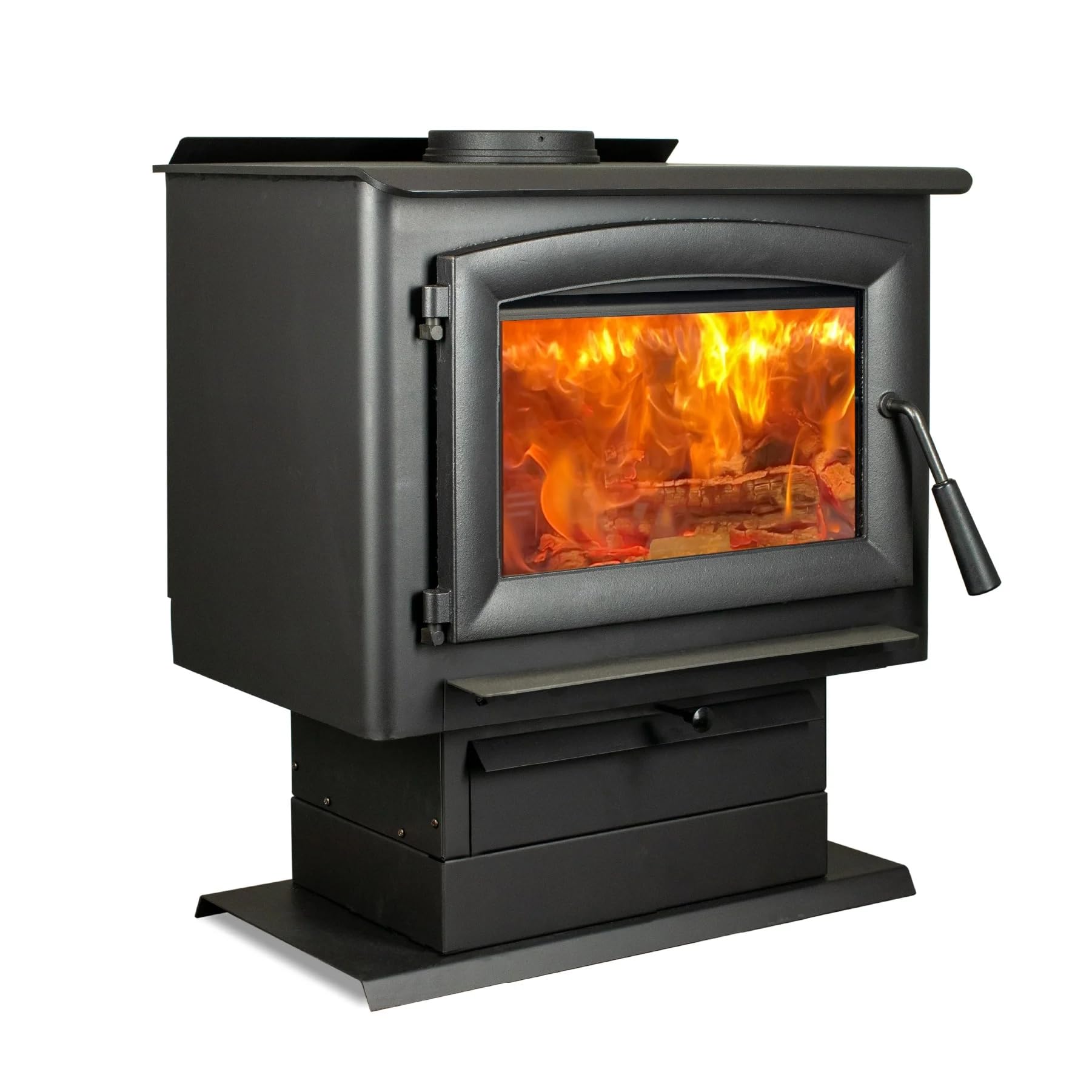
This is the only stove here that is trying to heat a home rather than a room or a tent. It produces up to 89,000 BTUs of heat for spaces up to 2,000 square feet, and its 1.6 cubic foot firebox accepts logs up to 21 inches long. Compare that to the M6’s 10-inch logs and you can see how much less splitting this asks of you.
Independence from the grid is the second half of the pitch. It needs no electricity to run, so it keeps working through an outage, and a secondary combustion system squeezes more heat out of the same wood while cutting emissions without a catalyst. The firebrick-lined interior improves combustion efficiency and adds long-term durability, and the heavy cast iron door with air-washed ceramic glass keeps the view clear.
You can set it up two ways, because both adjustable legs and a pedestal base ship with it, so you choose the stance that fits your room. Cleanup is quick thanks to an integrated removable ash pan with a built-in ash port. The unit is approved for mobile home and transportable building use in the US and Canada when paired with a fresh air intake kit sold separately. It works with a standard 6-inch chimney connector and chimney system, which is not included.
The honest weighting here is mixed. Overall quality and heat efficiency are what carry this stove — efficiency is the theme across its reviews, with owners finding it more effective than their previous models. Against that, burn time gets mixed feedback and some find starting fires difficult, and durability draws its share of gripes including a closing handle breaking. Treat it as a capable heater that rewards a clean install and a learned lighting routine.
The number that sells it: 89,000 BTUs across up to 2,000 sq ft, with no electricity needed, so the heat stays on when the grid does not.
The caveat to plan around: it ships by freight with a phone number required, and the 6-inch chimney and optional blower or fresh air intake kit are all separate purchases.
Right answer for: a house, cabin, or off-grid building where you want primary heat and are ready for a proper flue install.
Wrong answer for: anyone who wants to move the stove from camp to camp — at 280 lbs, it lives where it is set.
Know the Specs
Firebox Capacity (cu in and liters)
Firebox size is how much wood sits inside the stove at once, and it drives everything about how you use it. A 2100 cu in chamber takes 10-inch logs and holds steady heat for 6+ hours; a 23L titanium chamber in a folding stove trades some of that volume for an 8.16 lb carry weight. Bigger box, longer gaps between refills — that is the trade in one line.
Coverage (square feet)
Coverage is the floor area a stove is rated to heat, and it is the number that tells you whether it belongs in a tent or a house. A tent stove may be rated for up to 200 sq ft, a cast iron room heater for up to 500 sq ft, and a full home unit for up to 2,000 sq ft. Match it to the space you actually heat, never to the whole building.
BTU Output
BTU stands for British thermal unit, a measure of heat energy, so a higher number means more warmth delivered over time. The Ashley lists 89,000 BTUs, which is the sort of figure that heats a whole house. Camp stoves rarely publish a BTU number at all; there, firebox capacity and burn time do the talking.
Weight and Packability
Weight decides who carries the stove. Titanium folders fall in the 8.16 lb to 11 lb range and pack into a bag; stainless tent stoves run around 50.7 lbs; a cast iron home heater can weigh 280 lbs and needs freight delivery. Pick the weight band by carry distance: 8.16–11 lbs for backpacking, around 50.7 lbs for vehicle-supported basecamp, 280 lbs for a fixed install.
Venting and the Chimney
Every stove here is direct vent, meaning the smoke leaves through a pipe rather than a flue built into a wall. Chimney diameter and section count set your stack height, and both matter for draft. A spark arrestor and a damper are the two pieces that change smoke behaviour most, so check they are included before you buy.
Titanium, Cast Iron, and Steel
Titanium resists rust and takes high heat at a low weight, which is why it dominates the camping side. Cast iron and welded steel hold heat longer and radiate it steadily, which is why the home heater is the heavy one. Neither material wins in the abstract: titanium suits a stove you carry, cast iron and steel suit one that stays put and radiates overnight.
Common Questions
Can a wood burner stove be used inside a tent safely?
How long does one load of wood burn in a tent stove?
What size firebox do I need for overnight heating?
Do I need a spark arrestor on a wood burner stove chimney?
What is the difference between a tent stove and a home wood stove?
Does the Ashley AW2020-P work without electricity?
Can these stoves burn coal instead of wood?
How much does a wood burner stove weigh to carry?
What chimney diameter does the CAMPJOURNEY M6 use?
The Bottom Line
For most outdoor buyers, the wood burner stove worth buying is the TSG Portable TA1. A 23L firebox (the chamber that holds the wood), 200 sq ft of coverage, and 8.16 lbs carry weight are the rare combination that keeps you warm without weighing you down. If grilling and a compact pack matter more than raw volume, the Ytaoeo Titanium Stove brings a BBQ-ready cooktop in an 11 lb package. And if your goal is heating a building through an outage, the Ashley AW2020-P delivers up to 89,000 BTUs (British thermal units, a measure of heat output) for up to 2,000 square feet with no electricity at all.
One last nudge: across the tent stoves here, review pages keep landing on the same three points — heat output, packability, and a chimney that drafts cleanly. Match firebox volume to your shelter type — 23L folding titanium for a hot tent, 2100 cu in stainless for basecamp, 1.6 cu ft for a house — and the rest follows.
How we choose
We do not accept paid placement. Every pick is matched to a real buyer and a real use-case; we do not hands-on test units.
Sources
Specifications: manufacturer listings and product documentation. Review insights: verified customer reviews, as of November 2026. Pricing: not shown on this page (it changes often); check the current price via the retailer link.
As an Amazon Associate, Tactical Gear Guy earns from qualifying purchases. This does not affect which products we feature.