Specs are compiled from manufacturer listings and verified buyer reviews and can change over time — please confirm the key details on the product page before buying.
If your heels lift off the floor at the bottom of a squat, the fix is not more ankle stretches — it is a shoe with a raised, solid heel that will not squish under load. That is the whole game with lifting shoes: a hard platform under your feet so the power you generate goes into the bar instead of into a spongy midsole. The four picks below cover the realistic range for women lifters, from a roomy crossfit-friendly pair to a premium adidas build for heavy squat days.
This guide is built by comparing the manufacturers’ published specifications and the patterns across verified customer reviews, so you get each pick’s real strengths and trade-offs instead of marketing spin.
You will see which pair suits wide feet, which suits Olympic lifts, and which one to pick when the squat rack is the whole workout. Here is the honest breakdown of the women’s lifting shoes that earn their place in your gym bag.
Top Picks

How To Choose The Best Women’s Lifting Shoes
The wrong lifting shoe makes every squat rep feel unstable. You rock forward onto your toes, your knees cave inward, and the bar path wanders. The right pair gives you a hard, non-compressible sole with a raised heel, so your feet stay planted through the bottom of a squat. Here is what separates a good lifting shoe from a bad one.
Heel Height And Why It Changes Your Squat
A raised heel (the block of material under your back foot) tilts you slightly forward, which lets your ankles bend further without your heels peeling off the floor. That extra ankle range is what lets you hit squat depth with an upright chest. Too little lift and deep squats feel stuck. Too much and you feel tipped forward on deadlifts, where a flatter platform is usually more comfortable.
Sole Firmness: The Non-Negotiable
A lifting shoe needs a sole that does not compress. Running shoes are built to absorb impact, so under a loaded barbell they squash and waste your effort. Lifting shoes use a hard rubber or high-density midsole so the force you push into the floor travels straight up into the bar. Squeeze the sole with your thumb before you buy — if it gives easily, it is a cardio shoe, not a lifting shoe.
Straps, Laces, And Locking Your Foot Down
A hook-and-loop strap over the laces pulls your midfoot down tight so your foot cannot slide inside the shoe during a heavy pull. Laces alone can work, but the strap is what keeps your heel anchored when you drive out of the hole. Look for a strap that sits across the top of your instep, not one that pinches the side of your foot.
Sizing For Women’s Feet And Wide Toe Boxes
Most lifting shoes are sold in unisex sizing, so check the size chart carefully. If your feet are wide, going up half a size gives your toes room to spread — a cramped toe box makes you grip the floor with your toes and throws off your balance. Normal-width feet can usually take their regular daily shoe size.
Side-by-Side Comparison
| Model | Best For | Stated Weight | Closure | Sole Type | Amazon |
|---|---|---|---|---|---|
| Nordic Lifting Venja★ Best Overall | Wide feet and mixed CrossFit days | 3.28 pounds | Secure strap system | Flat non-compressible sole with improve heel | Amazon |
| Osterland Weightlifting Shoes | Breathable everyday squat sessions | — | Velcro with lace-up | Solid hard rubber outsole | Amazon |
| adidas Powerlift 5 | Improved squat form on a budget | 2.43 pounds | — | — | Amazon |
| adidas Adipower Weightlifting III | Heavy squat and deadlift days | 2.43 pounds | Hook-and-loop strap with lace-up | High-density midsole with rubber outsole | Amazon |
Detailed Reviews
1. Nordic Lifting Venja Weight Lifting Shoes
Our pick — 4.5+★ from 650+ verified ratings; the strongest balance of quality and price.
The pair that splits the difference between a squat platform and a CrossFit session.
This is the pick for the woman who lifts three days a week and does box jumps or lunges on the fourth. Nordic Lifting builds a flat, non-compressible sole (a sole that does not squash down when you load it) with a raised heel, so the floor stays solid under your feet during a heavy squat. That same raised heel tilts your ankles slightly forward, which is what lets you sit down into a deep squat without your heels lifting.
It is the heaviest shoe here at 3.28 pounds, against 2.43 pounds for the adidas Powerlift 5. That extra heft is the trade you make for the reinforced structure and the roomy toe box, which lets wide forefeet spread out instead of getting pinched. As for what wins people over: the build quality is the thing that comes up over and over in the feedback, and the stability under a loaded bar runs a close second. Fitness folks regularly report these shoes taking serious weight and holding their shape.
The honest catch is the weight and the purpose-built sole. These are stability shoes, not cushioning shoes, so they feel dead underfoot for high-impact cardio like running. If your gym day is a treadmill and a spin bike, this is the wrong tool — but for squats, leg presses, and Olympic lifts it does exactly what it was built to do.
Where It Earns Its Place
- Raised heel plus non-compressible sole keeps you planted through the bottom of a squat
- Roomy toe box suits wide feet, especially when you size up as Nordic Lifting suggests
- Secure strap system locks your midfoot down without restricting movement
- Reinforced build handles heavy loading and mixed functional training
What To Know Before Ordering
- The heaviest of the four at 3.28 pounds
- Built for stability, so it falls flat for running and high-impact cardio
- Wide-footed lifters are advised to size up, so confirm your size before you commit
Reach for this if: you want one shoe that handles Olympic lifts and functional training without changing footwear between sets.
Look elsewhere if: your training day is built around cardio machines rather than a barbell.
2. Osterland Weightlifting Shoes for Men Women
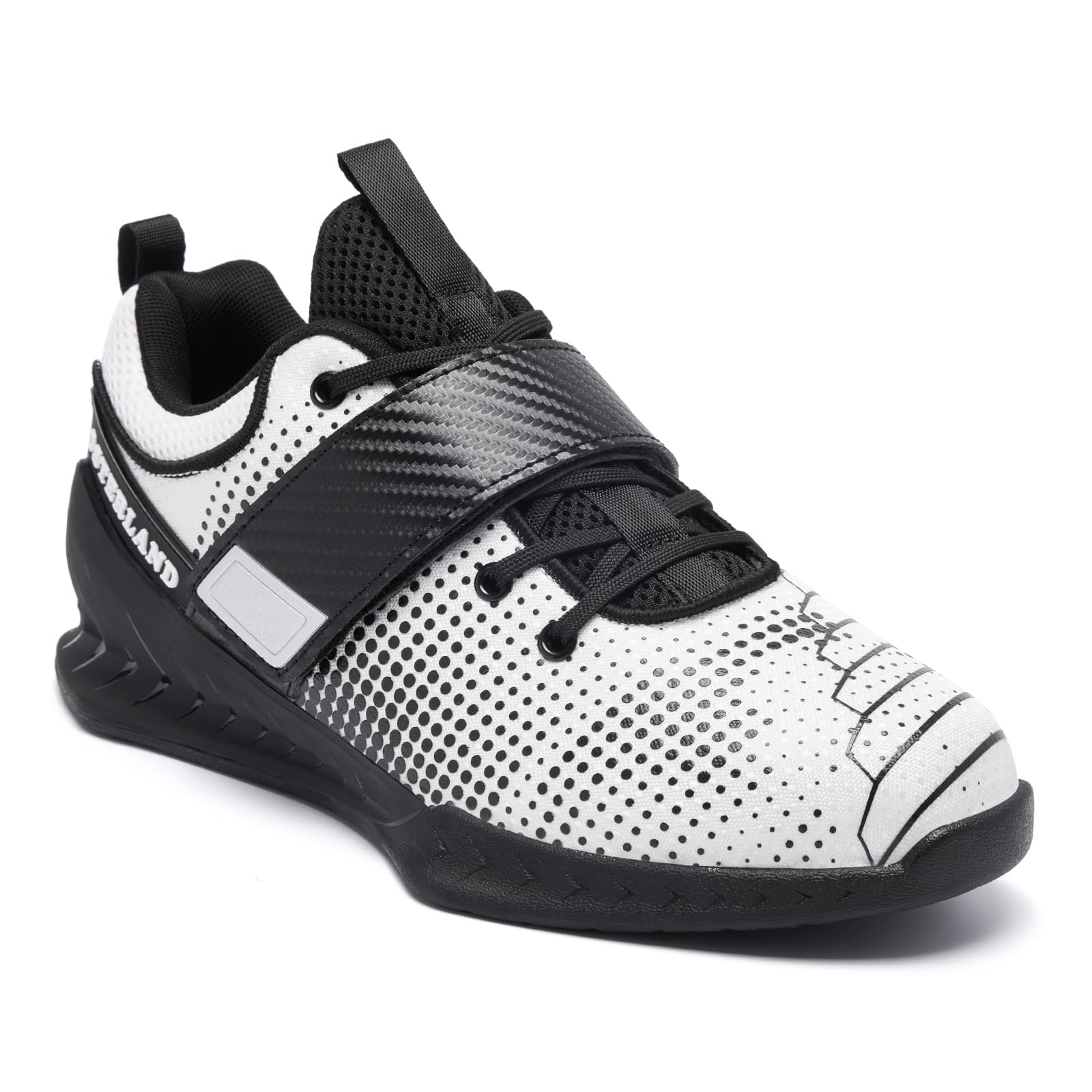
Mesh uppers that keep your feet dry through a long, sweaty squat session.
Most lifting shoes turn into ovens by the third set. Osterland solves that with a breathable mesh and microfiber upper (a woven fabric top that lets air move through), designed to wick moisture and cut down on sweat so your feet stay drier during long gym sessions. The outsole is solid hard rubber with no compression under heavy weights — the exact opposite of a soft running shoe — so your force travels up into the bar instead of disappearing into the floor.
On a percentage basis the shoe does not feel like a premium build, but the quality is where the praise lands, and lifting performance sits right behind it. Multiple reports describe feeling locked in and stable under heavy squats and deadlifts, with strong heel support. The Velcro strap layered over the laces pulls your midfoot down tight so your foot stays put when you drive out of the hole.
Then you hit the sizing question. Some lifters say these run true to US standard sizes, while others find they run a bit large. Osterland’s own advice is to go half a size up only for wide feet and otherwise take your regular daily size. That leaves a narrow band where you might want to try before a meet.
The breathability angle: a mesh upper is rare in this category, and it is the reason to pick this over a leather-feel shoe if you sweat heavily or train in a warm gym.
The sizing caveat: opinions split between true to size and slightly large — wide feet should go a half size up, normal feet should stick with their usual.
Worth it for: lifters who prioritize airflow and a hard rubber platform over cushioned comfort.
Think twice if: you are between sizes and cannot return easily, since the fit reports are genuinely mixed.
3. adidas Unisex Adult Powerlift 5 Weightlifting Shoes
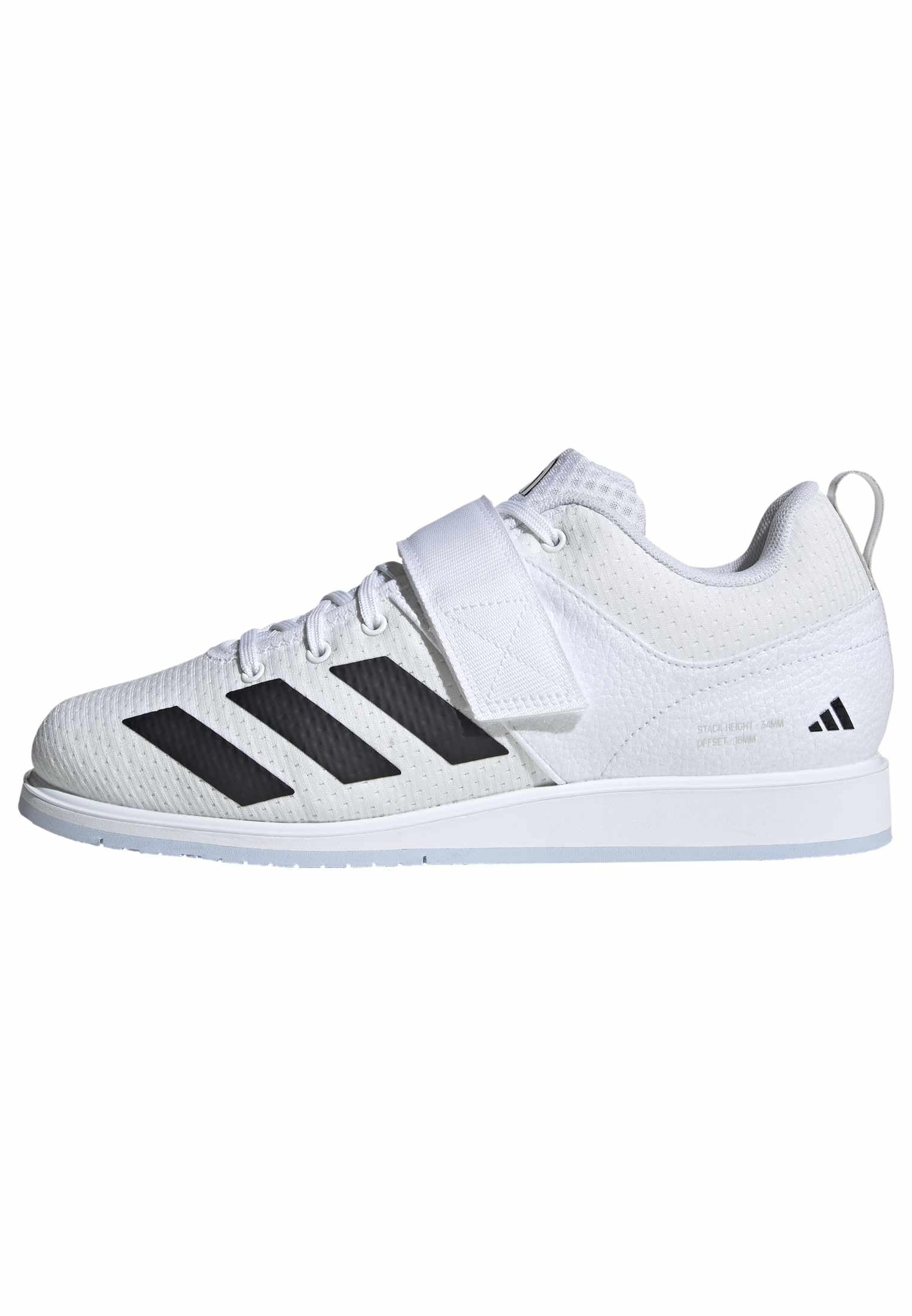
The lightweight pair that quietly fixes your squat without wrecking your footwork.
If your squat has always felt wobbly at the bottom, the Powerlift 5 is the most common place to start. At 2.43 pounds it is the lightest shoe here, so you are not dragging a brick around between sets. That 2.43-pound figure sits well under the Nordic Lifting Venja at 3.28 pounds, which matters if you are moving fast through a circuit or carrying your shoes in a gym bag every day.
What people notice first is genuine improvement in squat form, along with a stable base under the bar. The value side earns consistent praise too, and lifters describe it as a dependable compound-lift shoe rather than a specialty tool. It pairs well with a program built around squats, presses, and pulls.
The one thing to plan around is the fit. Feedback splits here, with some women reporting sizing issues, so get your size right before a competition block. It is the honest limitation of an otherwise well-liked shoe — and the reason it sits behind the Nordic Lifting pick on overall satisfaction despite feeling lighter on your feet.
Where it shines: light on the foot and built to correct the forward-leaning, heel-lifting squat that most beginners fight.
The catch: fit reports are mixed, so try these on with your actual lifting socks before trusting the size label.
Pick this one if: you want an easy, lightweight entry into proper lifting footwear and value a well-known brand name.
skip it if: you need a guaranteed fit and cannot work through a size exchange.
4. adidas Men’s Adipower Weightlifting III Shoe
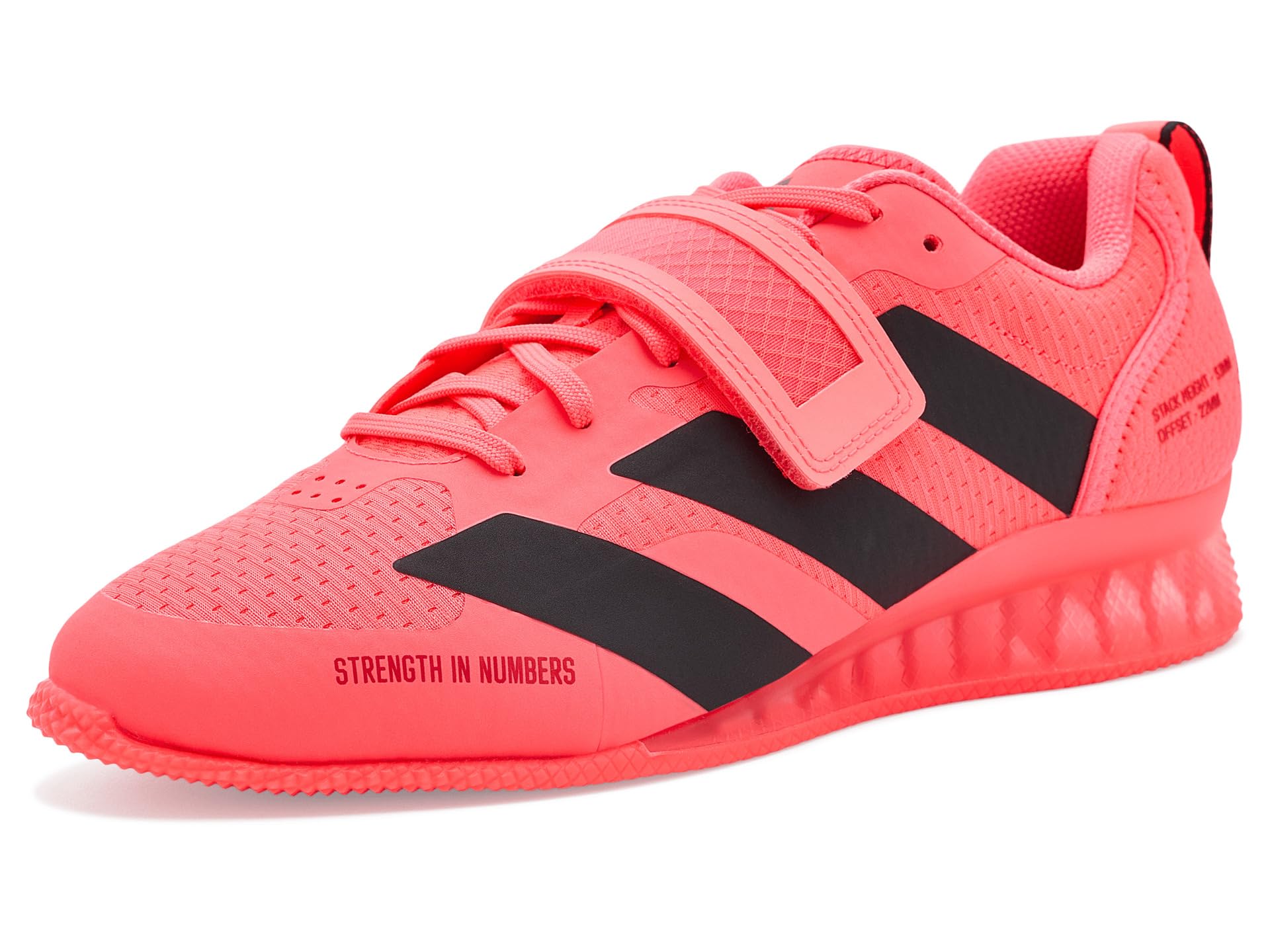
A structured, high-density platform for the days the squat rack is the whole workout.
This is the serious-lifting end of the list. The Adipower III pairs a textile and synthetic upper — a structured top that holds its shape under load — with a high-density midsole (a dense foam layer that resists squashing) so heavy loads do not crush the platform under you. A rubber outsole adds grip and keeps the profile low to the ground, which is exactly what you want when every millimeter of stability counts.
The hook-and-loop strap works with the lace-up closure to pull your foot down tight, and the removable insole lets you swap in your own orthotic or pull it out when you want a firmer feel. Build quality is the standout, with squat support close behind — lifters describe solid outer soles and heels that stay down through the bottom of a squat. It weighs 2.43 pounds, matching the Powerlift 5 but built for heavier work.
Two things to weigh honestly. Fit is the most-discussed topic here, so size yourself carefully in this unisex cut. And the density that makes it great under a barbell is the same reason it feels stiff walking around the gym. If you lift heavy and want a shoe that earns its premium tier, this is it — if you want an all-day gym shoe, look at the Nordic Lifting instead.
Why Lifters Reach For This One
- High-density midsole holds firm under heavy loads instead of compressing
- Hook-and-loop strap plus laces lock your foot down for pulls and squats
- Removable insole adds a firmer or roomier fit on demand
- Rubber outsole grips the platform and keeps a sleek low profile
The Honest Trade-Offs
- Fit is the most-discussed subject in the feedback — size carefully in a unisex cut
- The stiff, dense platform is not comfortable for walking around between stations
- Comfort opinions are mixed, so do not expect a plush trainer feel
Best for: dedicated lifters chasing a rock-solid platform under a heavy squat or deadlift.
Not for: anyone who wants one cushioned shoe to cover cardio, walking, and lifting in a single session.
Know the Specs
Heel Height And Ankle Mobility
The raised heel is the core feature that separates a lifting shoe from a flat sneaker. It tilts you slightly forward, which lets your ankles bend further when you squat, so your heels stay down and your chest stays up at the bottom of the rep. If your heels lift off the floor in a flat shoe, a raised heel fixes that heel pop directly.
Non-Compressible Versus Cushioned Soles
A lifting shoe uses a sole that does not squish under load — hard rubber or a high-density midsole. A running or training sneaker uses soft foam to absorb impact, which is exactly the wrong job under a barbell. If the sole gives when you press your thumb into it, it is a cushioned trainer, not a lifting shoe.
Common Questions
Can I wear women’s lifting shoes for running or cardio?
Do lifting shoes help you squat deeper?
Should I size up in lifting shoes if my feet are wide?
Are lifting shoes better than flat sneakers for deadlifts?
How do I know if a lifting shoe is stiff enough for heavy weights?
Can I use weightlifting shoes for CrossFit and box jumps?
Do lifting shoes run true to size?
How long should a pair of lifting shoes last?
Are these lifting shoes suitable for women specifically?
The Bottom Line
For most women, the women’s lifting shoes winner is the Nordic Lifting Venja because its improve heel, non-compressible sole, and roomy toe box cover squats, deadlifts, and functional training in one shoe — and it is the highest-rated pick here at 4.5+ stars. If you want a breathable mesh upper and a solid hard rubber platform, grab the Osterland Weightlifting Shoes. And for heavy squat and deadlift days where a dense, structured platform matters most, the adidas Adipower Weightlifting III is the one to reach for. If you are only starting and want a light, budget-friendly entry, the adidas Powerlift 5 is the easiest place to begin.
How we choose
We do not accept paid placement. Every pick is matched to a real buyer and a real use-case; we do not hands-on test units.
Sources
Specifications: manufacturer listings and product documentation. Review insights: verified customer reviews, as of November 2026. Pricing: not shown on this page (it changes often); check the current price via the retailer link.
As an Amazon Associate, Tactical Gear Guy earns from qualifying purchases. This does not affect which products we feature.