Specs are compiled from manufacturer listings and verified buyer reviews and can change over time — please confirm the key details on the product page before buying.
You are moving a person, not a box, and the board has to stay put while you do it. A good transfer board turns a two-person lift into a controlled slide you can manage alone. A bad one flexes, slips, or snags clothing halfway through. The nine picks below were chosen on real-world board behavior — grip, glide, width, and how much weight the wood or plastic actually holds.
This guide is built by comparing the manufacturers’ published specifications and the patterns across verified customer reviews, so you get each pick’s real strengths and trade-offs instead of marketing spin.
Every board here was checked for the things that actually matter during a transfer, from cutout handles to tapered ends. Here is what separates the safe boards from the shaky ones in the search for the Best Wheelchair Transfer Board.
Top Picks


How To Choose The Best Wheelchair Transfer Board
The whole job of a transfer board is to bridge a gap and stay steady while weight moves across it. Get the length, width, and capacity right and transfers stop being a strain. Get them wrong and you are back to lifting.
Measure the gap before anything else
A board has to reach from the edge of the wheelchair seat to the bed, chair, car seat, or toilet seat without tipping. Measure the widest gap you need to cross and add a few inches of overlap so both ends sit flat. A 30-inch board works for most standard home transfers, while 32 to 36 inches gives you more reach for wider seats or bariatric users. This is why taper matters — the thinnest end should slide under a thigh with almost no lifting.
Match capacity to real weight
Boards here range from 220 pounds up to 800 pounds capacity. Add a safety cushion above the actual user weight, since the load shifts as you slide across. If two caregivers are also pushing down on the board, that pressure counts toward the total.
Handles, glide, and the surface finish
Cutout handles give the caregiver leverage to hold the board level and the user something to grip while shifting. The top surface should be smooth and sealed so clothing glides and skin does not scrape. Watch for a finish that is too slick — a board that slides too freely can feel unstable, so you want smooth, not icy.
Side-by-Side Comparison
| Model | Best For | Length | Width | Weight Capacity | Amazon |
|---|---|---|---|---|---|
| Wood Slide Transfer Board with 2 Cut Out Handles★ Best Overall | Everyday transfers with a solid grip | 32″ | 10″ | 500 lbs | Amazon |
| DMI Transfer Board and Slide BoardBudget Champion | Budget-friendly standard home transfers | 30″ | 8″ | 440 lbs | Amazon |
| COW&COW 30″ Wooden Transfer Board and Belt KitBest Kit | Board and belt in one kit | 30″ | 8″ | 300 lbs | Amazon |
| Blue Jay Slide Boards for Transfers | Higher-capacity wood transfers | 30″ | 8″ | 600 lbs | Amazon |
| LOSCHEN Slide Transfer Board | Anti-slip placement on the go | — | — | 320 lbs | Amazon |
| Pinewood Transfer Board, Plus Size, XXL | Wider, longer board for bigger frames | 36″ | 12″ | 300 lbs | Amazon |
| Vive Transfer Board | Long reach and high capacity | 36″ | — | 800 lbs | Amazon |
| KMINA Transfer Board for Wheelchair to Bed | Stable ABS plastic for bath and car | 30″ | 10″ | 220 lbs | Amazon |
| Sammons Preston Bariatric Transfer Board | Bariatric transfers with extra length | 35″ | 8″ | 600 lbs | Amazon |
Detailed Reviews
1. Wood Slide Transfer Board 32 * 10 * 0.75″
Our pick — 4.5+★ from 500+ verified ratings; the strongest balance of quality and price.
Wide enough to sit steady, grippy enough to hold your hand where it lands.
Most transfer boards are 8 inches across. This one is 10 inches, and that extra width is what makes it the safest daily board on the list — it gives you more surface to slide on and less chance of a hip catching the edge. The 32-inch length crosses standard bed-to-wheelchair gaps without overhanging, and the board still holds 500 pounds. That capacity matters because weight shifts as you move, and you want headroom above the real user’s weight.
The finish is where this board earns its keep. The surface is evenly polished and sealed, so clothing glides instead of dragging, and the two cutout handles are sanded and sealed to fit a range of hand sizes. The handles are cut wide enough that both the user and the caregiver can get fingers in for leverage. Owners single out the build: the board feels solid rather than flimsy, with no reports of splinters or cracks.
The honest catch is width versus gap. A 10-inch board takes more room to lay flat, and if your transfer gap is tight against a wall or armrest, you may have to angle it. If your bed or chair sits in a cramped spot, a narrower board may fit more cleanly. For most homes with a normal 30-inch gap, this is the one to start with.
Cut-out handle grip
- 10-inch width gives a wider glide surface than the standard 8-inch boards.
- 500-pound capacity leaves room above most users’ actual weight.
- Two sealed, sanded cutout handles sized for a range of hands.
- Smooth, sealed surface that won’t snag clothing.
Narrow 32-inch span
- The 10-inch width needs a roomier gap to sit flat.
- At 5 pounds, it’s heavier to carry than the 1-pound DMI board.
Home transfers: you transfer between a standard bed and chair in a normal room and want a wide, stable slide with a handhold at arm’s reach.
Wider seats: your gap is tight against a wall — the 10-inch footprint wants clearance the DMI’s 8-inch board doesn’t need.
2. DMI Transfer Board and Slide Board made of Heavy-Duty Wood
The light, proven board that gets the job done without asking for much.
Here is a board that has been on the shelf since 2004, sized at 30 x 8 x 0.75 inches in heavy-duty wood. It holds 440 pounds. Compare it with the wider top pick: that board is 32 inches long and 10 inches wide; this one is 30 and 8, so it crosses tighter gaps and takes up less room. It also weighs just 1 pound versus the top pick’s 5 pounds, which makes it the easiest to stash beside a chair or carry to a car.
The surface is thick, sanded, sealed, and tapered at both ends, so it slides under a thigh without a sharp edge snagging on clothing. Owners rate it sturdy and effective for a simple wooden board, and better than plastic boards of similar size. It’s a caregiver’s tool, not a gadget, and it behaves that way.
The honest catch is narrowness and glide. Some users find the 8-inch width too narrow, and a few report the surface is slippery enough to make sliding feel less controlled. If you or the person you move is heavier or the transfer is a big one, the extra width of the top pick buys you stability. For light, routine transfers between a bed and chair at home, this remains a solid budget buy.
Heavy-duty wood build: at 1 pound, this is the easiest board on the list to move from room to room or throw in a bag for travel, and the 440-pound capacity still covers most users.
Daily bedside use: light daily transfers where portability counts and you want proven wood construction.
Travel carry: the user is heavier or you want a wider, more braked glide — the 8-inch width and slicker surface show up in some feedback.
3. COW&COW 30″ Wooden Transfer Board and 60″ Transfer Belt Kit
A board and a belt together, so you can pull and slide in one move.
Most boards come alone. This kit pairs a 30 x 8 inch hardwood board with a 60-inch, 2-inch wide 100% cotton transfer belt with a metal buckle. The belt is the piece that changes how a transfer feels: it gives you a firm loop to lean on and help guide the person across, instead of reaching for fabric or a shoulder. The board itself has two open hand cutouts, tapered ends that narrow to 1/8 inch, and a smooth finish.
Capacity is worth checking carefully. The board is rated to 300 pounds and the belt to 350 pounds. That is the lowest board rating in this group, so it suits lighter users or two-person assist scenarios where the board is not taking the full load alone. The belt’s own 350-pound figure is the ceiling it was built to.
The trade-off is bulk. For a home setup where you keep it beside the chair, that weight is not a problem. For someone who needs a grab-and-go board every day, a lighter single board is easier to live with.
Bed-to-chair spans: a one-stop kit when a caregiver wants the belt and board together from the start.
Small bathrooms: at 300 pounds on the board, this suits lighter users more than bariatric transfers.
4. Blue Jay Slide Boards for Transfers, 30″ Wooden
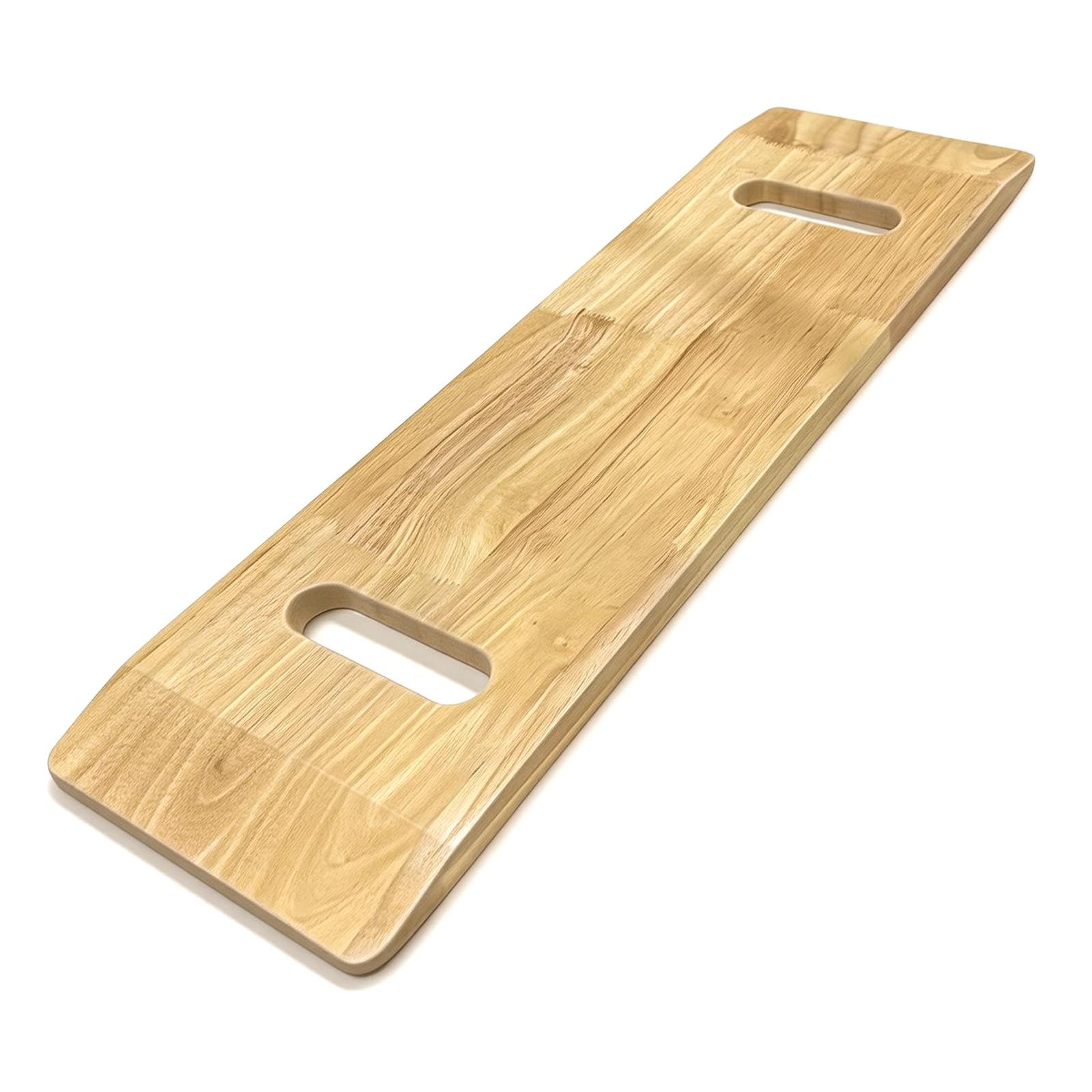
A solid-wood slide that carries a lot of weight for a mid-range board.
The number that jumps out here is 600 pounds. That is the weight this solid rubberwood board is rated to hold in its widest size, and it compares well against the 320-pound LOSCHEN below. The 30 x 8 inch size is the standard home-use length, tapered at both ends so it feeds under a thigh without a hard edge. Two cutout handles sit where a caregiver’s hands naturally fall.
Owners praise the finish first: the rubberwood reads as beautifully made for the price. The rounded corners keep sharp wood from digging into a hip or catching upholstery. The tapered ends slide under a thigh so the caregiver lifts and pivots less.
The catch to know about is durability on the wood. While many find it sturdy, a few report cracking through after use. Treat it as a board that wants gentle handling and dry storage, not one to leave outdoors or drop. If you need the most forgiving build in this group, the top pick’s sealed finish holds up better over the long haul.
Smooth wooden glide: the build and finish get the most praise — it feels like a well-made piece of furniture rather than a utility slab, and the smooth surface glides clothing without scraping.
Budget pick: you want a handsome, higher-capacity wooden board for standard home transfers and value matters.
Grip seekers: you need something you won’t have to baby — the wood has cracked for some heavy users.
5. LOSCHEN Slide Transfer Board, Patient Slide Assist Device

The board with a grippy back, so it stays put while you slide across the top.
Most boards sit flat and rely on friction alone to stay put. This one adds an anti-slip backing to the bottom, which gives you a reason to choose it for slick seats and car-to-chair transfers where a wandering board is the fear. It carries 320 pounds, has a single cutout handle, and comes with curved edges in a smooth material that won’t scratch skin.
Owners praise the smooth top surface, which lets a person slide across more easily than on shorter boards. It’s built to be placed horizontally between two surfaces and then slid across by arm force, so the smooth top and stable base do the real work.
The catch is the rating. At 320 pounds this is one of the lighter-capacity boards here — well below the Vive’s 800 and the Blue Jay’s 600. If the user is heavier, or you need the most margin for error, size up to a higher-rated board. For lighter users and slick-seat transfers, the anti-slip back is a genuine advantage.
Caregiver moves: slick seats and tight car transfers where you need the board to stay anchored.
Rougher surfaces: the user is heavier — 320 pounds leaves less headroom than most boards here.
6. Pinewood Transfer Board XXL

Built wide and long for bigger frames, then sealed for a smoother ride.
A 12-inch width is the biggest surface here, wider than the top pick’s 10 inches and every standard 8-inch board. That extra footprint is built for bigger frames: more surface for a hip to rest on means less chance of slipping off the side mid-transfer. The board is 36 inches long and made of real pinewood, rated to 300 pounds, with two cutout handholds and rounded corners.
It’s also thicker than standard boards — the maker describes it as thicker than a quarter dollar coin — which is where its stability comes from. The extra thickness keeps it from bowing under weight, and that firmness is what makes a wide board feel safe rather than springy. It’s a solid choice for car transfers and larger users who feel cramped on a narrow board.
The honest limit is two-fold. The 300-pound rating is lower than the board’s size suggests, so it suits big frames at lighter weights, not bariatric loads. And while many find the size great, a few say it’s too short for their gap — a longer board helps if your transfer spans a wide car seat. Measure your gap before you buy this one.
Simple transfers: larger frames and car transfers where a wide, thick board prevents slipping off the side.
Long-distance slides: check your gap first — the 36-inch length can feel short on wide car seats, and 300 pounds is the ceiling.
7. Vive Transfer Board – Patient Slide Assist Device
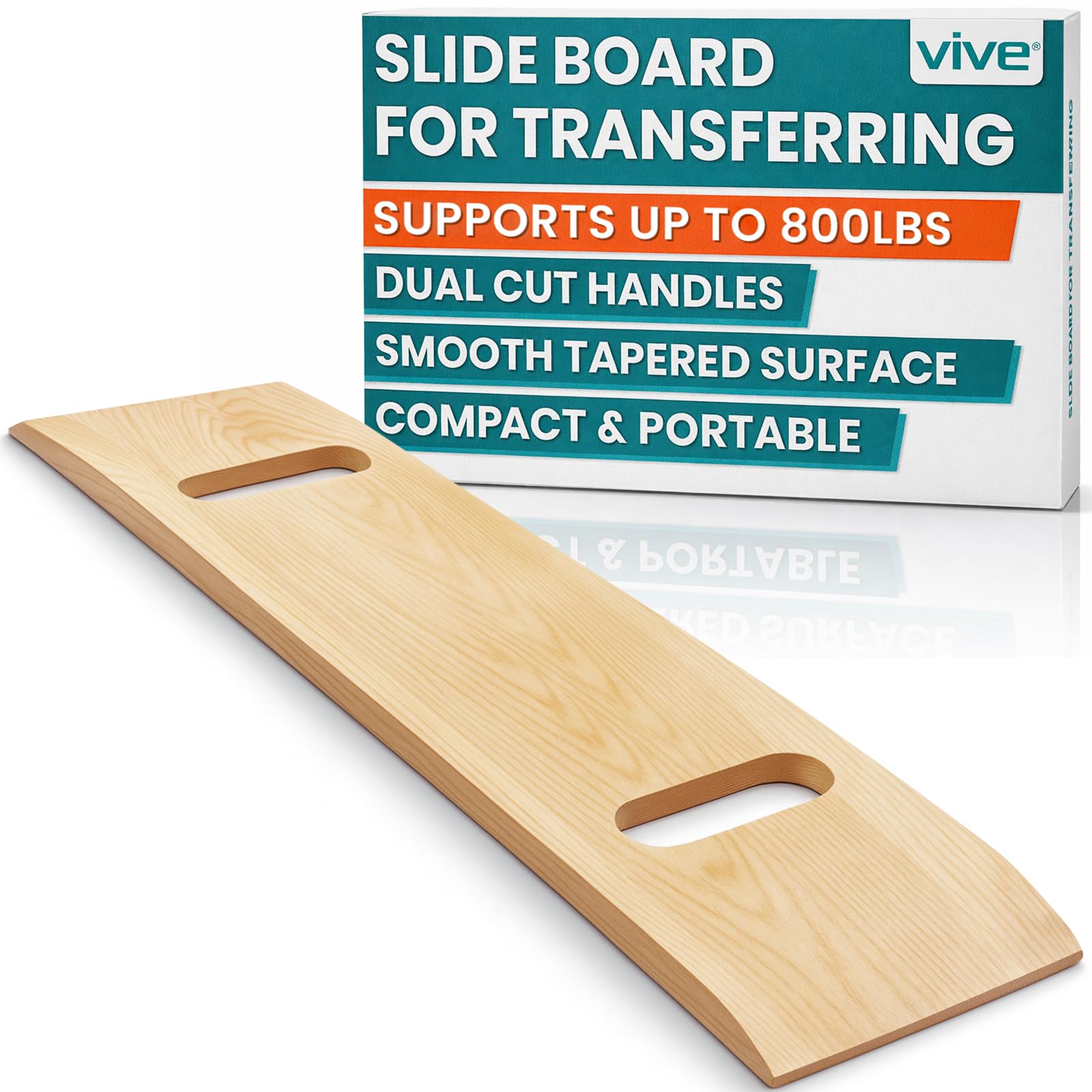
The bariatric board that carries 800 pounds and reaches across a long gap.
If weight capacity is your first question, this board answers it with 800 pounds — the highest rating in this group and well above the LOSCHEN’s 320. The 36-inch length is also among the longest reaches here, longer than the DMI’s 30-inch board, so it spans wide gaps between a bed and a chair without tipping. Two cutaway handles are gently rounded and sealed to protect hands and clothing, and the corners are rounded to protect furniture.
The wood is strong and sealed to resist cracks and chips, and the smooth surface keeps clothing from snagging as you slide. Owners cite the sturdiness and width: it’s wider than training boards, and the 36-inch length helps in chair-to-chair transfers. At just 2 pounds it stays light for its size, so a caregiver can reposition it one-handed.
The honest catch is stability, which some find mixed. A board this long and light can feel less locked-in than a shorter, heavier one, especially on soft surfaces. If you need rock-solid footing, the anti-slip back on the LOSCHEN gives more grip underneath. For high-capacity, long-reach transfers, this is the strongest performer on the list.
Sturdy capacity rating: 800 pounds is the number to remember — it covers bariatric users and leaves a wide margin for shifting loads, backed by a 36-inch reach and a 60-day guarantee.
Bariatric support: you need the highest capacity and the longest reach for heavier users or wide gaps.
Lightweight needs: the long, light board feels less anchored on soft surfaces than a heavier one.
8. KMINA Transfer Board

A smooth ABS plastic board that wraps around wheels and chair legs.
Most boards are plain wood, but this one is ABS plastic — a sturdy, stable material that won’t splinter and can be wiped down easily. It measures 30 x 10 inches and is 1.5 cm thick, which gives it real rigidity for its weight. Two holes on each side let it fit around wheelchair wheels, chair legs, and armrests, so it tucks into a spot wood boards can’t.
The design is meant for parallel transfers where the user has enough arm strength to slide themselves across. You lay it horizontally between two surfaces, sit on the edge, and move by pushing with the arms. The maximum user weight is 220 pounds, which is the lowest capacity here, so it suits lighter, more independent users.
Here is the catch that matters most: 220 pounds is a low ceiling compared with the Vive’s 800 or the Blue Jay’s 600. That’s fine for someone who can transfer with their own arm strength, but not for heavier users or full-assist transfers. If that is your situation, choose a higher-rated wooden board instead.
Plastic low-friction surface: ABS won’t absorb moisture or crack like wood, and the side holes fit around wheels and armrests — a real advantage for bathroom and car transfers.
Wheelchair to bed: you need a wipe-clean plastic board that fits around wheels and legs, for a lighter user who transfers independently.
Heavy daily loads: the user is heavier — 220 pounds is the lowest capacity in this group.
9. Sammons Preston Bariatric Transfer Board 35″

A long bariatric board built from thick birch for frequent, heavy use.
This is a board made for daily heavy use: 35 inches long, 8 inches wide, and cut from 5/8 inch thick birch plywood, rated to 600 pounds. That thickness is what makes frequent transfers reliable — it holds its shape instead of bowing. The length of 35 inches reaches across gaps that a 30-inch board can’t, and it has two hand slots, one vertical and one horizontal, so there’s a grip for carrying and a grip for leverage.
The sealed, coated birch surface slides clothing smoothly across bed, wheelchair, car, and toilet transfers. The extra length is what comes up most often — it makes wheelchair-to-passenger-seat transfers work when shorter boards fall short.
Two catches to weigh. The 8-inch width is narrower than the top pick’s 10-inch, so a wider slide feels safer for big frames. And while many find it a good deal, others consider it on the pricey side for a single board. If the widest possible surface is your priority, the Pinewood XXL’s 12 inches beats it; if long reach and a thick bariatric build matter more, this delivers.
Larger body frames: daily bariatric transfers where thickness and length keep the board steady over frequent use.
Compact spaces: at 8 inches it’s narrower than the widest boards here — go wide if the user needs more surface.
Know the Specs
Weight capacity — the number that has to hold
This is the maximum weight the board is built to support, and it should be higher than the user’s actual weight. Weight shifts as you slide, and pressing down with your arms adds load, so a board rated well above the real weight is the safe choice. Capacities here run from 220 to 800 pounds.
Length, width, and taper
Length is how far the board reaches — 30 to 36 inches here — and it has to span the gap between surfaces with overlap on both ends. Width is how much surface the person slides across; 8 inches is standard, 10 to 12 gives more room. Taper means the ends thin to a sliver, which lets you slide the board under a thigh without a sharp edge catching.
Cutout handles and surface finish
Cutout handles let the caregiver hold the board steady and give the user a grip to pull against. The finish should be smooth and sealed so clothing glides and skin doesn’t scrape. Too slick a finish can feel unstable; you want smooth, not slippery.
Wood versus plastic
Wood boards are strong and warm, but they can crack if left damp or dropped. ABS plastic won’t splinter, wipes clean easily, and can be molded to fit around wheels. Pick wood for high capacity and plastic for easy cleaning and moisture-prone spots like the bathroom.
Common Questions
How do I know what length transfer board I need?
What weight capacity should a transfer board have?
Is a wooden or plastic transfer board better?
Can I use a transfer board alone without a caregiver?
What do the cutout handles on a transfer board do?
Will a transfer board work for getting into a car?
How do I keep a transfer board from slipping?
How should I clean and store a wooden transfer board?
Do transfer boards come with a belt or handles?
What is the difference between a butt or bath transfer board and these boards?
The Bottom Line
For most homes, the wheelchair transfer board to start with is the Wood Slide Transfer Board with 2 Cut Out Handles, because its 10-inch width and 500-pound capacity give a steadier, wider slide than the standard 8-inch boards. If you need the highest capacity and longest reach, reach for the Vive Transfer Board at 800 pounds and 36 inches. And for slick car or chair transfers where you need the board to stay anchored, the LOSCHEN Slide Transfer Board and its anti-slip back are the smart pick.
How we choose
We do not accept paid placement. Every pick is matched to a real buyer and a real use-case; we do not hands-on test units.
Sources
Specifications: manufacturer listings and product documentation. Review insights: verified customer reviews, as of November 2026. Pricing: not shown on this page (it changes often); check the current price via the retailer link.
As an Amazon Associate, Tactical Gear Guy earns from qualifying purchases. This does not affect which products we feature.