Specs are compiled from manufacturer listings and verified buyer reviews and can change over time — please confirm the key details on the product page before buying.
Your parent falls in the bathroom and cannot reach a phone. That single scenario is what every device on this list exists to answer, and the differences between them decide how fast a real person responds. The short version: you are choosing between two very different systems — one that connects to a paid 24/7 monitoring center, and one that dials 911 or family directly with no subscription at all. Pick the wrong type and you either pay every month forever or lose automatic fall detection.
This guide is built by comparing the manufacturers’ published specifications and the patterns across verified customer reviews, so you get each pick’s real strengths and trade-offs instead of marketing spin.
Some pendants work on cellular networks anywhere in the country, while others need a landline sitting in the hallway. Battery life swings from a single day to several days between charges, and that gap matters when someone forgets the charger. Below you get the wearables worth your attention, sorted by what they actually do. This breakdown of the best wearable medical alert devices covers fall detection, GPS tracking, and whether you pay monthly.
Top Picks

How To Choose The Best Wearable Medical Alert Devices
Your first decision is not brand, weight, or style — it is if you want a monitoring center in the loop. A monitored device sends your button press to a trained operator, who then calls emergency services or family. A direct-dial device skips the middleman and connects the wearer straight to 911 or to a saved contact. Neither is wrong. They just cost different amounts over time and behave differently in an emergency.
Monitored versus direct-dial
Monitored systems typically charge a monthly subscription, and in exchange someone stays on the line and coordinates help. Direct-dial pendants often carry no recurring fee, but the wearer (or whoever answers) has to communicate the situation. If the person wearing it cannot speak clearly, a monitored operator adds a layer of safety. If budget is the priority and the wearer can talk, a no-fee dialer does the core job.
Fall detection: automatic help when hands cannot move
Fall detection watches for a hard impact and places the call even when the button goes untouched. This is the feature that matters most after a collapse, because reaching a pendant on a lanyard may not be possible. Check whether it is included or sold as an add-on, since some plans charge extra per month for it.
Coverage, battery, and water resistance
A cellular pendant only works where there is signal, so nationwide network coverage matters for anyone who leaves the house. Battery life per charge tells you how often the dock gets used — a device rated for a couple of days is friendlier than one needing a nightly charge. And because bathrooms are where falls cluster, water resistance on the pendant is close to essential.
Side-by-Side Comparison
| Model | Best For | Form Factor | Fall Detection | Battery Per Charge | Amazon |
|---|---|---|---|---|---|
| 321 Alert Medical Alert System for Seniors★ Best Overall | All-in-one fall detection and GPS | Necklace | Included | 3–5 days | Amazon |
| MGMini Medical Alert DeviceMarathon Battery | Longest battery in the group | Necklace or belt clip | Optional add-on | 72 hours | Amazon |
| Stride Medical Alert WatchWatch Style | Watch-style wear | Wristwatch | — | 24 hours | Amazon |
| ADT On-The-Go Mobile Medical Alert | Professional monitoring heritage | Pendant or wristband | — | 40 hours | Amazon |
| Seculife Medical Alert Pendant | Direct-to-family alerts | Pendant | Automatic | Up to 6 days | Amazon |
| Lively Mobile2 | Fast, discreet mobile help | Lanyard or clip | Optional add-on | — | Amazon |
| Help Now One-Touch Communicator | No fees, straight to 911 | Pendant | — | 3 AAA batteries | Amazon |
| Freedom Alert Landline Device | Households with a landline | Pendant | — | 24-hour backup | Amazon |
| Guardian Alert 911 Plus | No-fee wear plus fall detection | Pendant | Included | — | Amazon |
Detailed Reviews
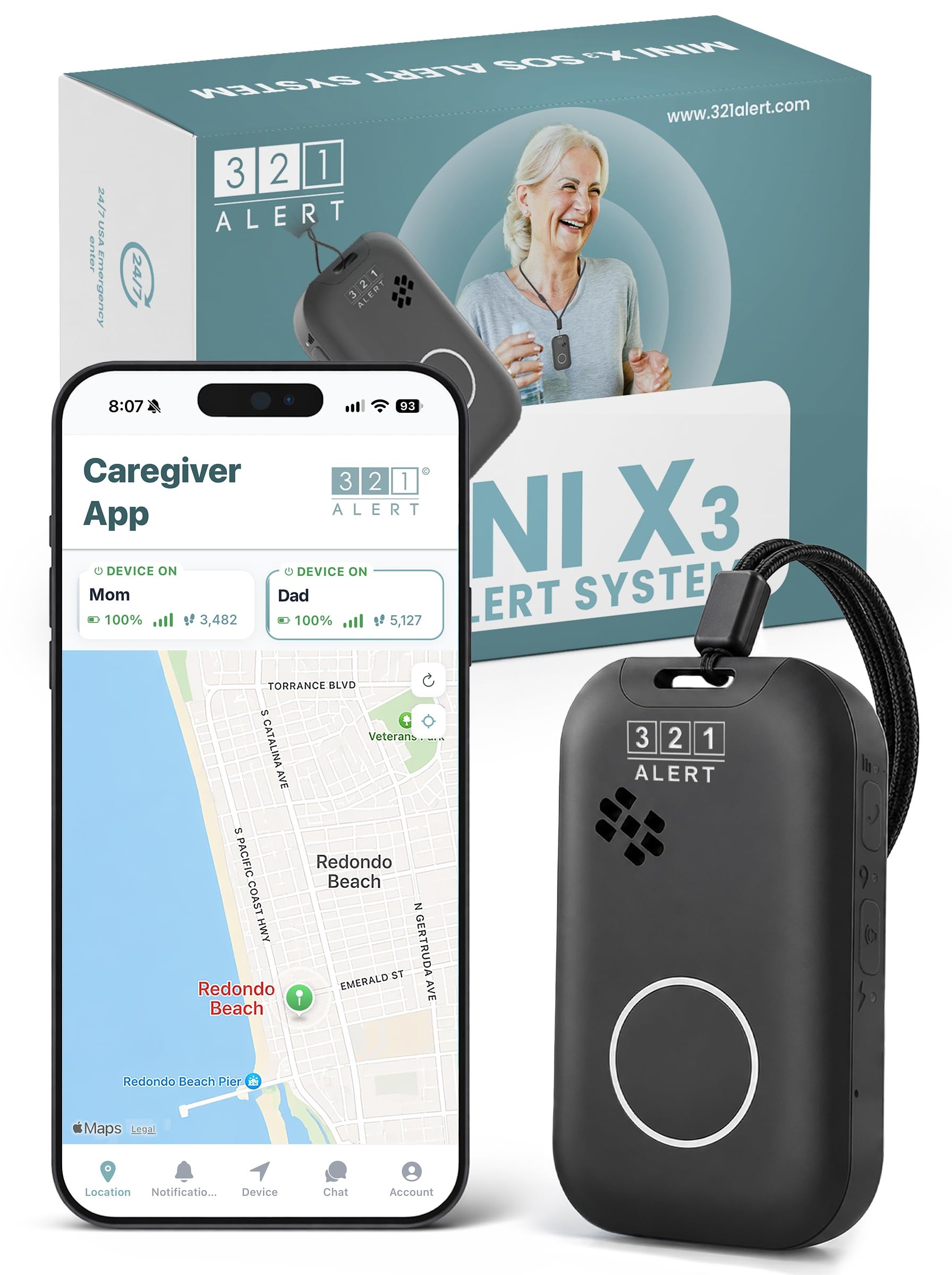
1. Medical Alert System Fall Detection GPS
Our pick — 4.5+★ from 70+ verified ratings; the strongest balance of quality and price.
A necklace that calls for you when a fall leaves you unable to press anything.
This is the pick that bundles the three things most families end up paying extra for elsewhere. Fall detection comes included, GPS and 4G LTE locate the wearer, and 24/7 monitoring is live from the moment you finish setup. Nothing here is a paid add-on at the hardware level.
The device uses a proprietary circuit board with an embedded SIM, which is a chip soldered inside that connects to the cellular network with no card to install or lose. In plain terms, it arrives ready to work. Coverage runs coast to coast wherever there is cell service, so a walk around the block is not a blind spot. The shape is deliberately chunky and easy to grip — built to be held by hands with arthritis, unlike slim pendants that slip.
Battery runs 3–5 days depending on which features you leave on, and it recharges over USB-C. The included dock has its own help button, so the bedside doubles as a second call point at night. It is water resistant for showers and rain. Reviewers consistently report that the fall detection and GPS work as advertised. One trade-off to know: this system needs an active subscription to function, so the hardware is only step one.
Where it earns its keep
- Fall detection is included, not a monthly add-on
- GPS plus 4G LTE pinpoint the wearer for responders
- Embedded SIM means no card to install or lose
- 3–5 days of battery plus a bedside dock with its own help button
What to weigh first
- Requires a monitoring subscription to operate
- Chunky grip-first body is less discreet than slim pendants
Built for: a parent living alone who needs automatic fall help and location tracking on one device.
Look elsewhere if: you want zero recurring cost — this one is a monitored system by design.
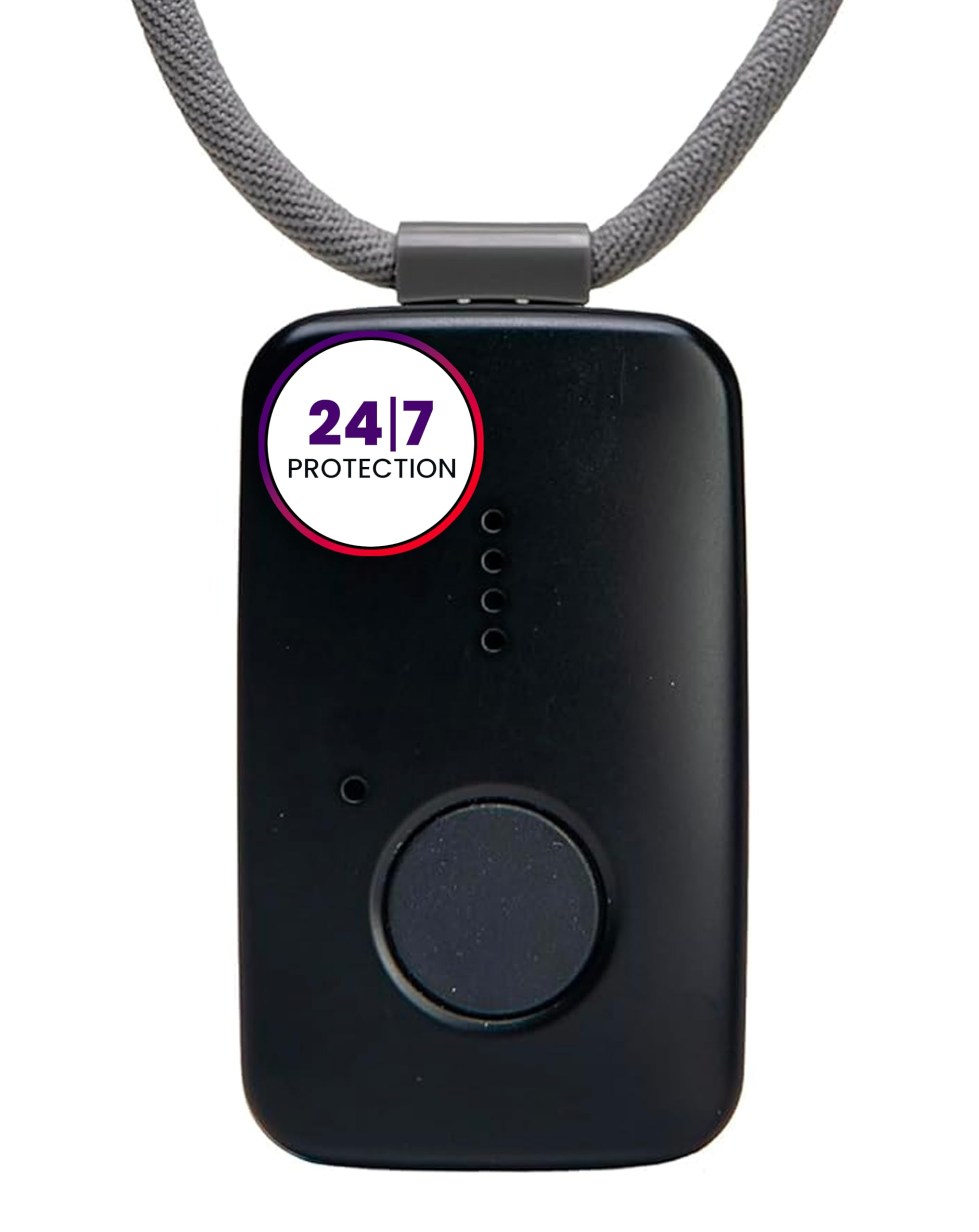
2. MGMini Medical Alert Device for Seniors | Black
Three days on one charge, so the dock stays put while your parent keeps moving.
Battery life is where the MGMini separates itself. It runs 72 hours per charge and refills in a fast 4-hour recharge, which makes it the longest-lasting pick here. For comparison, the Stride watch below runs 24 hours versus the MGMini’s 72 hours, which means far less charger babysitting. A short top-up gets you back to days of coverage rather than a single outing.
Wearing style is flexible. You get lanyards for the neck and a belt clip, so the same pendant can suit someone who dislikes anything around the throat. Press the button and a two-way speaker connects you to a monitoring team, where a trained U.S.-based operator contacts EMS, family, or friends as needed. Hourly location updates and step counting show up in the online portal or app if you want to glance in on activity.
The company behind it has built monitoring around connected safety for older adults and their care partners, and the service requires activation before first use. Fall detection is an optional add-on rather than standard. The recharge is quick, but a few days between charges still asks your parent to remember the cradle.
Longest-running pendant on the list: 72 hours between charges with a 4-hour refill beats the 24-hour watch below by a wide margin.
Activation is mandatory: service must be set up online or by phone before the device works, and fall detection costs extra per month.
Reach for this if: charging is the chore you want to minimize and a multi-day battery matters most.
Think twice if: you expect fall detection without an add-on fee — that is an upgrade here.
3. SENIOR SAFETY SYSTEM Stride Medical Alert Watch
It looks like an ordinary wristwatch, which is exactly why some wearers keep it on.
Pride is a real obstacle with medical alerts, and this watch answers it. The case is shaped to resemble a regular watch, worn on the wrist with a tang buckle and black band, so it draws far less attention than a pendant around the neck. For someone who refused a lanyard on principle, that can be the difference between wearing it and leaving it in a drawer.
Underneath the watch look sits a 4G connection to live support, plus location tracking and a press-for-help alert button. Battery is listed at 24 hours per charge with a 1-hour charge time, backed by a 580 milliamp-hour lithium polymer cell — a day of wearing on a quick refill, so the charger becomes a nightly routine. Note that this is a 24-hour figure against the MGMini’s 72 hours above, so if forgetfulness is a concern, this one asks more of the wearer.
The service runs on a monthly fee with no long-term contract and the first month of service included, so you can try it without being locked in. Reasonably priced monthly and easy to cancel is the pitch here.
Its one clear win: a watch-shaped body gets worn by people who will not put on a pendant, and the no-contract service keeps commitment low.
The honest limit: 24 hours per charge is the shortest of the cellular wearables here, and one wrong charger habit leaves it dark.
Best suited to: a wearer who will only accept something that looks like a normal watch.
Less ideal if: your relative struggles to remember nightly charging.
4. ADT On-The-Go Mobile Medical Alert System

ADT’s own U.S. monitoring centers answer the call, and the pendant is waterproof for showers.
Some families care less about gadgets and more about who picks up the phone. ADT’s calls are handled by U.S.-based, company-owned monitoring centers rather than a contracted outsource center. When an alarm goes out, agents trained for senior sensitivity pass step-by-step updates to emergency contacts, including what they hear from first responders. That relay loop is the quiet value here.
The hardware runs on the nationwide AT&T network and works with a single button press from anywhere in coverage. Battery averages 40 hours, and the device weighs 1.76 ounces — light enough to forget on a lanyard. You get a wristband as well as the pendant and cradle charger, and the wearable is waterproof for an active lifestyle, so a shower or a rainy walk is not a problem.
Setup requires a simple phone activation plus a monthly monitoring plan, offered with flexible options and no long-term contracts. The 40-hour battery sits between the shortest and longest units here, so charging every other day keeps it healthy.
The case for ADT
- U.S.-based, company-owned monitoring with senior-trained agents
- Caregivers get real-time updates during an emergency
- Waterproof pendant and wristband included
- 1.76-ounce body and 40-hour battery
Where it asks more
- Monitoring plan is required for any use
- No fall detection listed on this model
For the family that wants a known name: pick this when the monitoring relationship matters more than extras.
The catch: you are paying for professional monitoring, and automatic fall help is not part of this pendant.
5. Seculife Medical Alert Pendant
No call center in the middle — the alert lands with your own family.
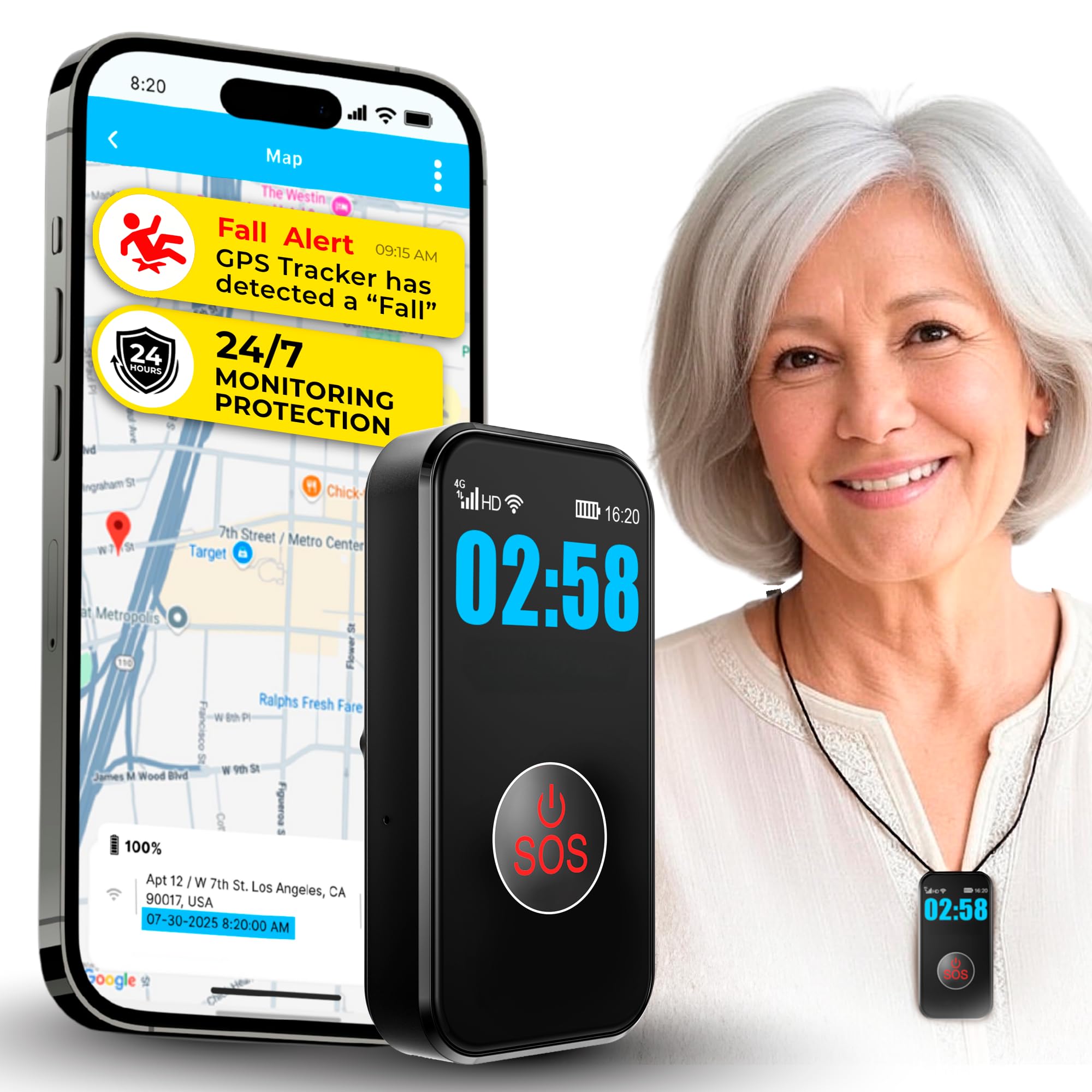
This pendant skips the monitoring company entirely. Fall detection triggers automatically and dials preselected family contacts, and the one-touch SOS button makes a two-way cellular call just like a phone. Hands-free auto-answer means a caregiver can call in and the pendant picks up without your parent touching anything. For families that want to be the first call, that architecture is the whole appeal.
You get alerts when the wearer leaves a safe zone you set — a geofence zone — and the app stores 1 year of location history. The battery is rated up to 6 days at 24-hour-interval tracking, powered by a 1000 milliamp-hour cell, so you charge it less often. The pendant is fully waterproof to IP67 (a rating that means it survives splashes, rain, and shower wear, though not deep submersion). A clear display shows time, battery, and signal, with a large SOS button for older hands.
The service runs monthly with unlimited fall alerts, live tracking, and voice minutes bundled in. Weigh the trade-off honestly: routing to family instead of a dispatcher puts the response in your hands, so someone needs to be reachable.
What the display adds: seeing time, battery, and signal at a glance means the wearer knows the device is alive without guessing.
Who it fits less well: households where no family member is reliably reachable to field the alert.
Choose this when: you want fall alerts and GPS pinging your own phone instead of an operator’s desk.
Skip the fit if: the wearer lives alone with no reachable contacts close by.
6. LIVELY Mobile2 Medical Alert Device
The response time is the headline — one touch reaches a real agent around the clock.
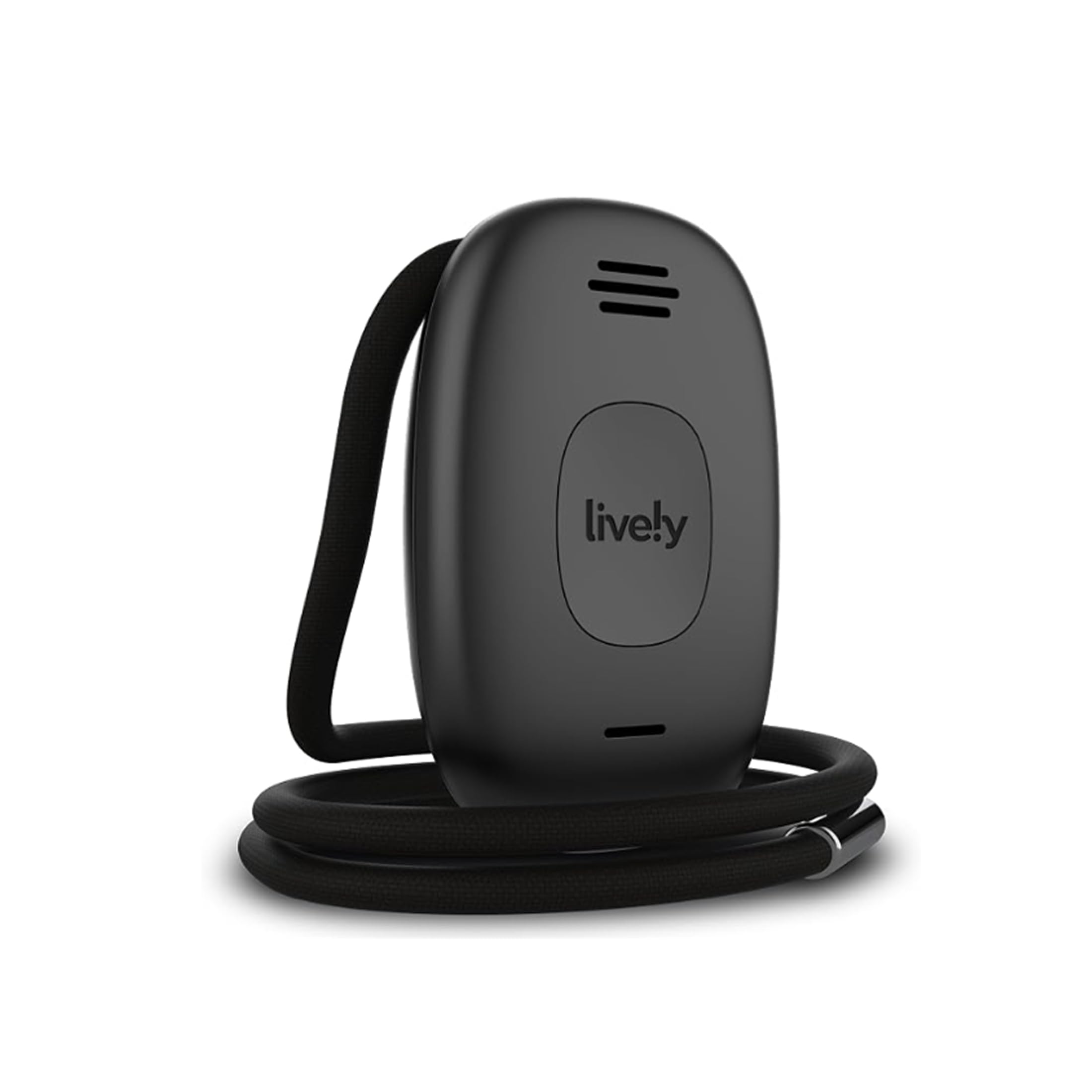
Speed is what Lively sells, and it is the reason to start here. One touch of the Urgent Response button connects to certified agents who assess the situation and coordinate help, day or night. Fall detection can join the plan for an extra monthly fee and will reach the caring team even if the wearer cannot press the button, at which point they can call a loved one or dispatch emergency services.
The design leans discreet. It is small and light, wearable on the included fall detection lanyard, clipped to a belt, or dropped in a purse — no landline or base station needed, so it travels. It is water resistant enough for the shower, the pool, or the rain. Automated notifications push to family smartphones through a caregiving app, so siblings stay in the loop without a phone tree.
The honest part: effectiveness and quick setup are what buyers praise most, but functionality and value draw split opinions — some find it dependable, others hit reliability snags. It is a strong system when it works, so treat the setup step carefully and confirm coverage at your address.
Why it lands
- Certified agents reachable on one touch, 24/7
- Small, light body wearable three different ways
- Caregiving app pushes automatic family notifications
Where to temper expectations
- Fall detection is an extra monthly add-on
- Functionality and value reviews are mixed
Strongest for: an active wearer who wants a small pendant and a fast line to a live agent.
Weigh this: fall detection adds to the bill, and reliability is the one thing to test early.
7. Help Now Emergency Communicator

Hold one button and you are talking to a 911 operator — with no bill, ever.
The whole pitch fits in a sentence: press and hold the red button and you connect directly with your local 911 operator for a two-way conversation. There is no monitoring center, no subscription, no contract, and no cancellation fee. No subscription, no contract, and no cancellation fee — it dials 911 for as long as the batteries last.
It runs on three AAA batteries and needs no landline, cellphone, or home hub. Coverage is nationwide wherever there is cell signal, so the wearer is not tied to a base station in the hallway — the pendant goes where they go. A lanyard is included for neck wear, and a removable button protection shield guards against accidental presses.
What it does not do is the important caveat. There is no automatic fall detection and no monitoring operator to coordinate responders or call family — the wearer has to be able to press and speak. What people praise most is how easy it is to use and the security of having 911 a click away. For a clear-headed wearer on a fixed budget, that simplicity is the value.
Zero recurring cost: no monthly fee and no contract means it works for years without another bill.
The trade-off built in: no fall detection and no operator in the loop — help depends on a working press and a clear voice.
Ideal for: a budget-conscious wearer who can press a button and speak to a dispatcher.
Not the one for: anyone whose main risk is falling without being able to reach the button.
8. Freedom Alert Landline Personal Emergency Device

Built for the house that still has a landline — and never charges a monthly fee.
Most of the wearables here run on cellular. This one is different by design: it uses your existing landline phone service to connect a two-way voice conversation with 911 dispatchers, police, fire, or family. If your parent already has a home phone, that is a reliable backbone that does not depend on cell signal strength in a rural or thick-walled house.
The pendant is fully two-way — the wearer hears and is heard through it — and it can be worn or left on its mount for grab-and-go access. It is rechargeable, so no hunting for batteries, and it carries a 24-hour battery backup in case the power drops. There is no monthly fee, which makes it a high-value alternative to subscription monitoring over the long run. Reliability is what owners trust most about it, and it also allows a direct call to 911 that bypasses the saved contact list.
Its dependence on a landline is the deal-closer question. If that phone line ever gets cancelled, this device goes quiet — so confirm the line stays active before you commit.
Why it endures: no monthly fee, two-way voice, and a 24-hour battery backup in one device.
Before you buy: without an active landline it will not call anyone, so this pick lives or dies on the phone line.
Made for: a home with a landline that wants no recurring fee and clear two-way talk.
Wrong pick if: the household has already gone cell-only.
9. Guardian Alert 911 Plus
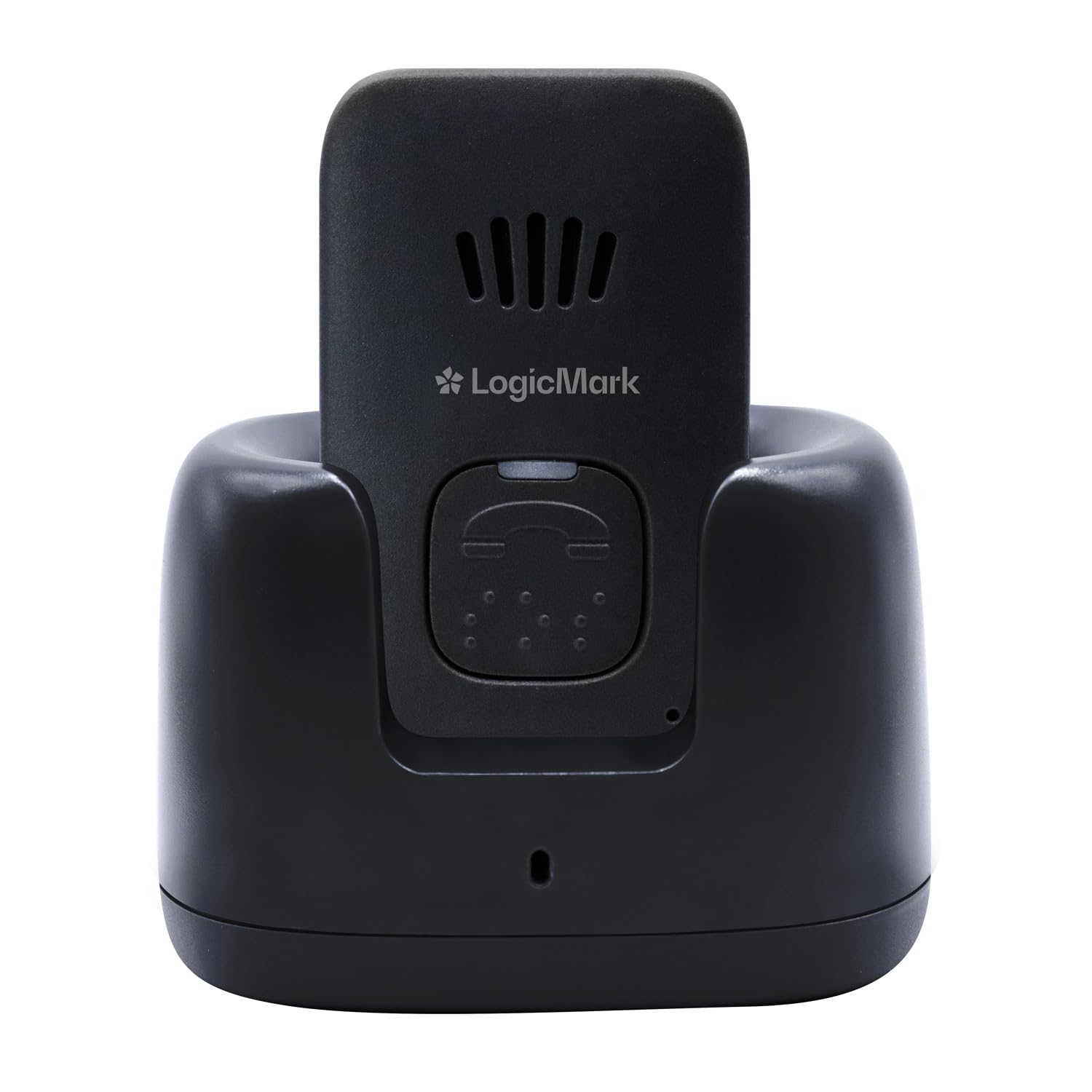
No fees and automatic fall detection together — a combination the cheaper dialers do not offer.
Most no-fee pendants make you give up automatic help. This one keeps both. Proprietary technology detects falls and sudden movements and triggers alerts to emergency services or a contact, even when the wearer cannot press the button. It connects to 911 dispatchers without any landline or phone service, using 4G LTE networks, and there is no monthly fee to operate it.
Two-way voice lets the wearer talk directly with emergency personnel who then dispatch help. The pendant is water resistant, so it stays close through showers and baths. It can be worn or left on its tabletop mount, making it useful on a nightstand. At 9.92 ounces it carries a bit more heft than a slim lanyard pendant, which is the price of the built-in fall sensing and speaker.
The honest counterweight: buyers rate its quality highly, but signal recognition draws mixed feedback, so cell coverage at the wearer’s address is worth checking first. A no-fee unit still depends on the network reaching it.
What makes it rare
- Fall detection included on a no-monthly-fee device
- Direct 911 connection without a landline
- Two-way voice and water-resistant wear
The honest caveats
- 9.92 ounces is heftier than a slim pendant
- Signal recognition feedback is mixed — check coverage at home
The pick for: a household that wants automatic fall help without a permanent subscription.
One check first: confirm reliable cell signal where the wearer lives before relying on it.
Know the Specs
Fall detection: automatic versus add-on
Fall detection is a sensor that reads a hard impact and places the call on its own, so the wearer does not have to press a button. On some devices it is standard (as on the 321 Alert and the Guardian Alert 911 Plus); on others it is a monthly upgrade (as on the MGMini and the Lively Mobile2). Because reaching a pendant after a fall is often impossible, deciding whether this is included is among the most important choices you make.
Battery life per charge
Battery life is how long the wearable runs before it needs the dock. It ranges widely here — 24 hours on the Stride watch, 40 hours on the ADT, 72 hours on the MGMini, 3–5 days on the 321 Alert, up to 6 days on the Seculife, and a 24-hour backup on the landline Freedom Alert. If your wearer forgets the charger, favor the 72-hour MGMini or the 6-day Seculife over the 24-hour Stride.
Landline versus cellular
A cellular device connects over a mobile network and works anywhere there is signal, which is why most picks here are cellular. A landline device (the Freedom Alert) relies on a home phone line, which can be steadier in some houses but fails if the line is cancelled. Confirm which you actually have before choosing.
Monitored versus direct-dial
A monitored system routes your press to a trained operator who coordinates responders and calls family. A direct-dial device connects straight to 911 or a saved contact. Monitored plans usually carry a monthly fee; direct-dial units often carry none. You pay monthly for an operator who assesses the situation and calls responders for you.
Common Questions
Do all wearable medical alert devices require a monthly fee?
Does fall detection call for help if the wearer cannot press the button?
Can a wearable alert device be worn in the shower?
What is the difference between a monitored system and a direct-dial device?
Will a landline device keep working if the home phone line is cancelled?
How often do these devices need charging?
Do cellular alert devices work outside the home?
Can caregivers get notified when an alert goes out?
Is a pendant or a watch style better for an older wearer?
Do these devices work without a smartphone?
The Bottom Line
For most families, the wearable medical alert devices winner is the 321 Alert Medical Alert System because it bundles automatic fall detection, GPS, and 4G LTE into one necklace with 3–5 days of battery. If charging is your biggest worry, grab the MGMini and its 72-hour battery with a 4-hour refill. And if a monthly fee is a hard no, the Guardian Alert 911 Plus is the one to reach for — it keeps fall detection while ditching the subscription.
How we choose
We do not accept paid placement. Every pick is matched to a real buyer and a real use-case; we do not hands-on test units.
Sources
Specifications: manufacturer listings and product documentation. Review insights: verified customer reviews, as of November 2026. Pricing: not shown on this page (it changes often); check the current price via the retailer link.
As an Amazon Associate, Tactical Gear Guy earns from qualifying purchases. This does not affect which products we feature.