Specs are compiled from manufacturer listings and verified buyer reviews and can change over time — please confirm the key details on the product page before buying.
If your storm door whistles, rattles, or lets a cold ribbon of air run across the floor, the fix is almost always a worn sweep or a flattened kerf seal — not a new door. The tricky part is that storm doors are not one standard size, and the seal you need depends on whether your door uses a slide-in kerf channel or a screw-on bottom sweep. This guide sorts the real options by door type, gap size, and material so you can match the right strip to your frame on the first try.
This guide is built by comparing the manufacturers’ published specifications and the patterns across verified customer reviews, so you get each pick’s real strengths and trade-offs instead of marketing spin.
You will see which seals close large gaps, which ones slide into an existing channel without adhesive, and which ones are built for metal doors. Every pick below is made for storm doors. Match the profile to your door’s channel or sweep rail, and the draft stops. The right weather stripping for storm doors depends on three things: channel type, gap width, and material.
Top Picks

How To Choose The Best Weather Stripping for Storm Doors
Storm doors leak in two places: around the frame where the door closes into a groove, and along the bottom where the door meets the threshold. Those are two different seals, and mixing them up is the most common buying mistake. Match the seal to the spot that is leaking first, then size it to the gap you can actually see.
Kerf seals versus bottom sweeps
A kerf seal is a strip with a rigid flange that pushes into a groove cut into the door frame — no adhesive, no nails. It seals the sides and top of the door. A bottom sweep screws or slides onto the lower edge of the door and closes the gap at the threshold. If air comes in around the edges of the door, you want a kerf seal. If it comes in under the door, you want a sweep.
Measure the gap, not the door
Thickness matters more than length. A thin insert will not bridge a wide gap, and an oversized one keeps the door from closing. Check the actual gap with the door shut — a seal rated for large gaps needs the extra depth to fill it. The Bantie 40FT kit, for example, is built for gaps from 3/10 inch to 7/8 inch, so it suits older frames with worn channels.
Match the material to your door
Foam-and-flange seals flex and cut easily with scissors. Aluminum sweeps with a rubber or brush edge hold up on doors that see daily traffic and weather. Rubber inserts restore an existing expander without replacing the hardware. Metal storm doors often use a magnetic kerf kit so the door pulls shut tight against the frame.
Side-by-Side Comparison
| Model | Best For | Type | Length | Material | Amazon |
|---|---|---|---|---|---|
| BISOTHAI 26 Feet Long Reach Kerf Strip★ Best Overall | Wide side gaps on sliding and storm doors | Kerf (slide-in groove) | 26 Feet | PU foam, PE cover, PVC flange | Amazon |
| Hooetoy Storm Door Sweep Replacement 2 PackSmart Value | Restoring Larson and Pella expander channels | Slide-in bottom insert | 39.1 inches each | Rubber | Amazon |
| Andersen Storm Door Bottom Sweep FinExact Fit | Older Andersen storm doors needing exact replacement | Bottom sweep fin | 43 inches | Plastic, rubber | Amazon |
| Bantie Kerf Weather Stripping 40FT | Large gaps in grooved door frames | Kerf (slide-in groove) | 40 Feet | PVC, PU foam | Amazon |
| Randall V-63-BR All-Season Sweep | Heavy-duty aluminum bottom seal | Screw-on bottom sweep | 36 inches | Aluminum, vinyl/rubber | Amazon |
| Randall BS-220-MF Brush Sweep | Sealing large gaps up to 1-1/2 inches | Screw-on brush sweep | 36 inches | Aluminum, polypropylene brush | Amazon |
| BSFRNF White Aluminum Sweep | 36-inch doors wanting a clean white frame | Screw-on bottom sweep | 35.5 inches | Aluminum | Amazon |
| TMH Magnetic Kerf Door Seal Kit | Full-frame reseal on metal doors | Magnetic kerf kit | 84 in x 36 in | Metal, magnet, compression | Amazon |
| Unique Home Designs Door Draft Stopper Kit | Full security-door threshold rebuild | Sweep plus threshold kit | 36 inches | Aluminum | Amazon |
Detailed Reviews
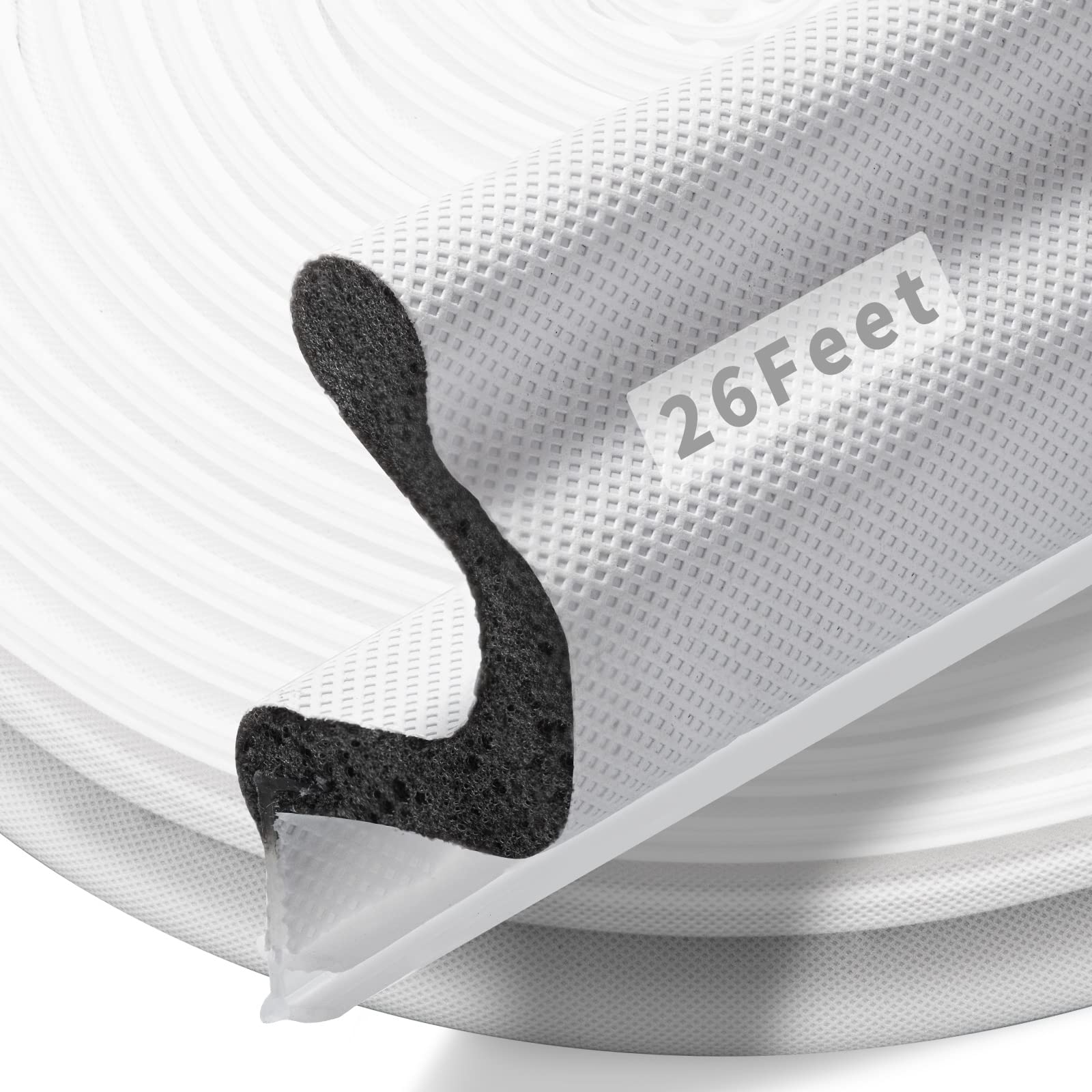
1. BISOTHAI 26 Feet Long Reach Kerf Weather Stripping
Our pick — 4.5+★ from 900+ verified ratings; the strongest balance of quality and price.
A 26-foot roll that pushes into the groove instead of sticking to the frame.
It lands at the top because of the rigid PVC flange: a stiff plastic edge that slides into the door’s kerf channel and stays put without adhesive. Most self-stick weather stripping peels loose on a storm door that slams in the wind; this one grips the channel mechanically instead. The PU foam body is covered in PE, a smooth coating that keeps it from grabbing dust and tearing.
The dimensions are what make it cover so many frames. It runs 26 feet long and 1.2 inches wide, with a 0.6-inch thickness, and it compresses to fill a wide range of side gaps. Cut it with scissors or a utility knife to length, push the flange into the slot, and the job is done — the maker says it takes under 10 minutes. That short install time is also what people talk about most, closely followed by the material quality. Owners keep praising the flange bite, which stops the strip from rolling out of the channel after repeated slams.
Know this before you order. The 1.2-inch width and 0.6-inch thickness are generous, so they fill an older jamb with a worn-out gap well. But if your channel is shallow or your door shuts tight, that same bulk can keep the door from closing all the way. Check your gap first, because this is a wide-gap filler, not a slim trim seal.
long 26 foot span
- Rigid PVC flange slides into the kerf groove and holds without sticky adhesive that gives up on a slamming door.
- 26 feet times 1.2 inches wide gives you plenty of coverage to trim to the frame and still have spare.
- PU foam under a PE coating resists tearing, heat, and wear better than bare foam strips.
- Cut-to-length with scissors or a knife makes fitting a one-person job in minutes.
bulky coil handling
- The 0.6-inch thickness can crowd a tight door if your gap is narrow.
- It is a side-and-frame seal, so it does nothing for the bottom threshold gap.
long runs: your storm door has a grooved frame and air is sneaking in around the edges rather than under the door.
short doorways: measure that side gap first — a frame that closes tight needs a thinner strip than this one.
2. Hooetoy Storm Door Sweep 2 Pack
A two-pack that saves your existing expander instead of replacing the whole bottom rail.
If your Larson or Pella storm door still has a working expander but the rubber insert has gone hard, this is the low-effort fix. It ships two black rubber inserts so you can match the original profile: Profile A measures about 0.63 inch high by 0.33 inch wide, and Profile B about 0.46 inch high by 0.27 inch wide. Each one runs 39.1 inches, which you trim to the width of the expander after it relaxes into place.
This is a notably slim insert compared with the BISOTHAI strip above — 0.33 inches wide versus 1.2 inches — because it sits inside a channel, not against a frame. Installation is a slide-in job: pull the worn rubber, clean the channel, feed the matching profile through, and follow your door’s retention method. No expander and no adhesive come in the box, so this is strictly the replaceable wear part.
What it will not do is bridge a big threshold gap. It is a trim-to-fit sleeve that restores the bottom seal when the channel and expander are still sound. For someone with a small leaking strip of rubber and a good metal rail, it is the cheapest path back to a sealed door.
Larson doors: Larson and Pella owners whose expander still works but whose rubber has gone stiff and cracked.
other brands: you want a complete sweep with a rail and screws — this is the insert alone, meant for an existing channel.
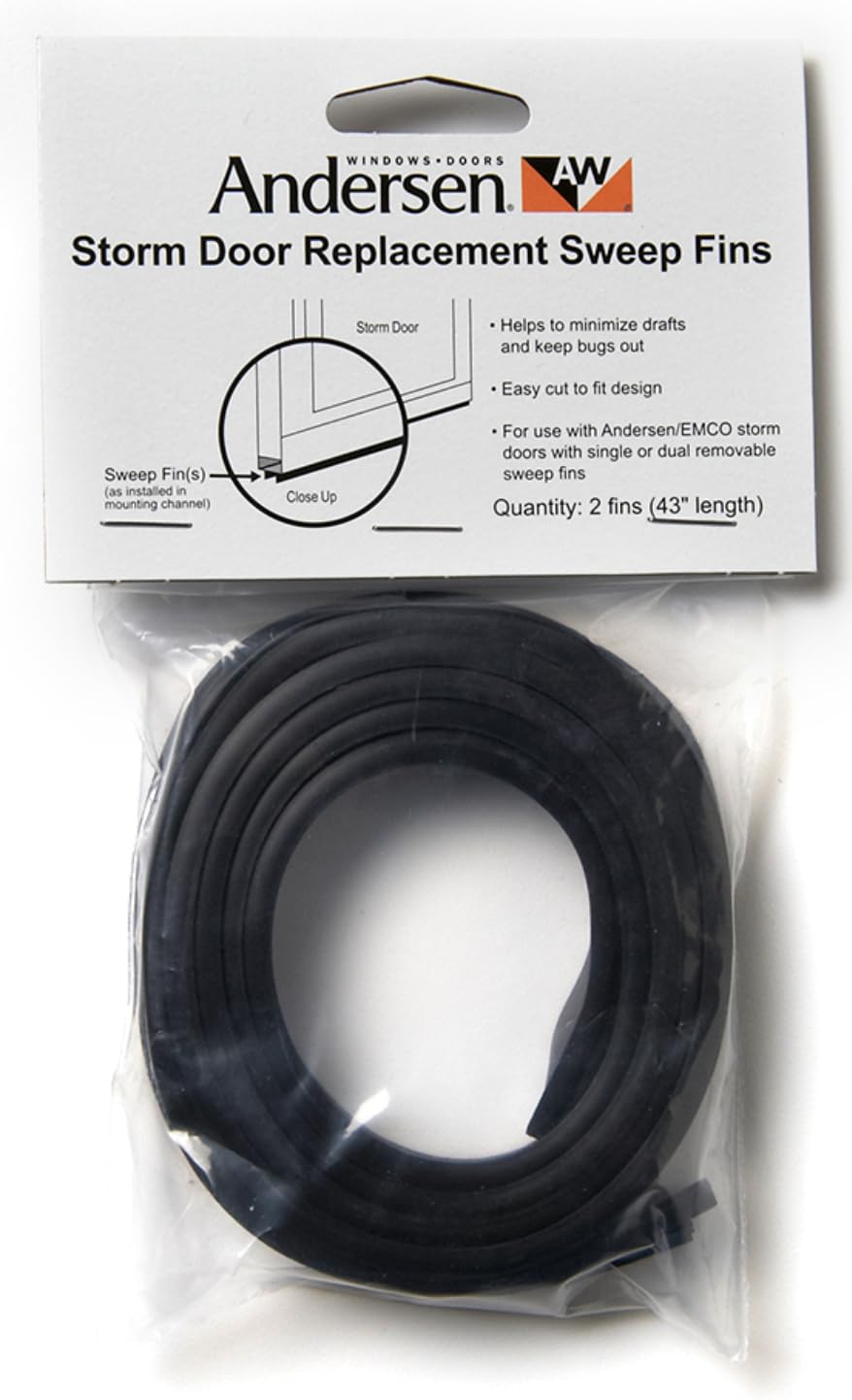
3. Andersen Storm Door Bottom Sweep Fin Weatherstrip
The genuine replacement fin for older Andersen doors, sized and shaped like the original.
When the intent is to restore a factory seal rather than improvise one, this is the part. It comes as two sweep fins, each 43 inches long, in plastic and rubber, and the profile is made to fit Andersen storm doors exactly. The maker’s own framing is modest — reduce drafts and energy loss — and that is precisely what an exact-match fin is good at.
Buyers consistently rate its build quality and exact fit, which is what an OEM-style replacement fin should deliver. It goes on an older Andersen door the way the factory piece did, so the bottom line closes cleanly and the sweep reaches the threshold without binding. The 43-inch length also trims easily to a shorter opening — cut to fit and you are set.
The honest trade-off here is fit-specific: this is built for Andersen storm doors, not a universal sweep. That is its strength — the shape matches — and its limit — it will not adapt to a door that uses a different rail profile. If your door is not an Andersen, one of the other sweeps on this list is the better match, and unlike the Hooetoy insert above this one needs no expander channel underneath.
fin seals gaps: a genuine-profile replacement that keeps wind and water on the outside, on an older Andersen door, with two fins per pack so you have a spare or two doors covered.
fin wears fast: it is shaped for Andersen storm doors, so measure against your door’s own rail before you buy to confirm the fit.
fin style doors: Andersen storm door owners who want the exact original fin rather than a universal sweep.
heavy traffic: your door is a different brand — this fin is built to one specific profile.
4. Bantie Kerf Weather Stripping for Doors, 40FT
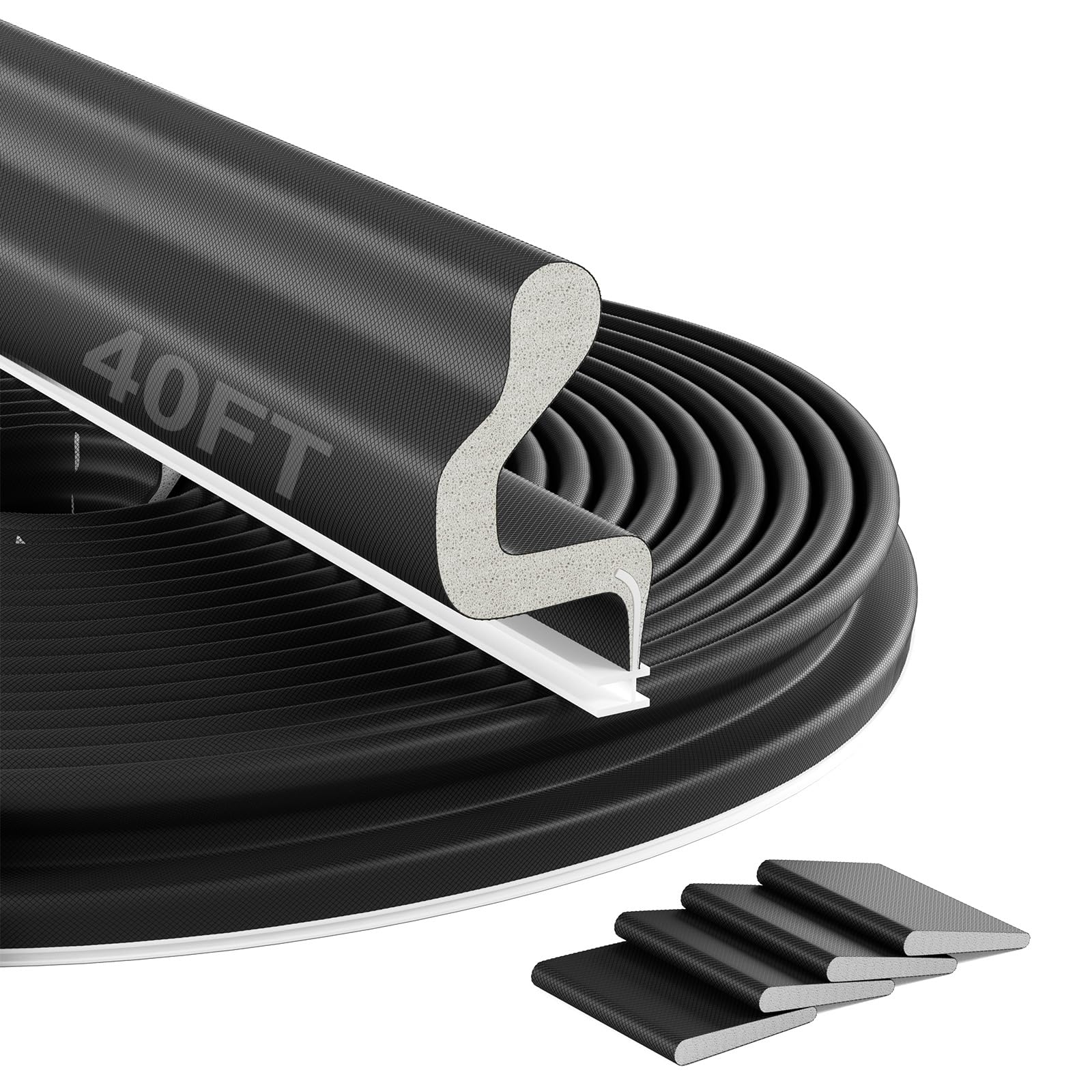
Forty feet of grooved-frame seal built for the wide gaps older doors leave behind.
This is the option to look at when your doorframe has a real gap and a standard strip just will not reach across it. The water-drop shape at the tip of the V extends the sealing area, and the strip is rated for gaps from 3/10 inch to 7/8 inch. At 40 feet it also gives you more raw length than most — the BISOTHAI roll up top runs 26 feet by comparison. It fits 1/8-inch grooves thanks to a 5/32-inch ridge on the flange, so confirm your frame groove matches before ordering.
It is built as a PE grid surface over high-density PU foam, with a PVC double-layer card slot that holds its shape without deforming. It slides into the groove with no adhesive or nails, which is why installation is so well liked, and the field of buyers who value it primarily for quality is the largest group. Four foam gaskets ship in the box too, handy if the door will not close normally and you need a shim. Buyers also note it beats the big-box version on the same job.
One thing to be straight about: several buyers report the seal itself is fine but the fit and the sealing performance landed in mixed territory for some doors. That tends to track back to a groove that was measured loosely or a frame that needed trimming. Get the 1/8-inch groove measurement right and it closes the big drafts it promises.
40 foot bulk roll
- 40 feet seals the kind of large gaps most strips cannot reach, from 3/10 inch to 7/8 inch.
- Water-drop tip design extends the seal past a plain V-shape.
- No adhesive, no nails — it slots into an 1/8-inch groove with a 5/32-inch ridge.
- Four foam gaskets included in case the door needs a shim to close normally.
trimming required
- Fit and sealing results vary, so the groove measurement must be right first.
- It is a frame seal, not a bottom sweep, so threshold leaks need a separate solution.
multiple doors: older grooved doorframes with a genuinely wide draft gap that earlier strips never closed.
single installs: you cannot measure the groove cleanly — this strip only locks in when the ridge matches the channel.
5. Randall Manufacturing V-63-BR All-Season Door Sweep

A solid aluminum rail with a thick rubber lip, screwed straight onto the door bottom.
For a bottom gap that needs real structural sealing rather than a foam insert, this sweep does the job. It is a 36-inch aluminum sweep that covers gaps up to 1 3/8 inch, with a thick vinyl-and-rubber bottom seal that conforms to the threshold. Screws are included, and the whole thing is made in the USA by Randall Manufacturing — useful to know if you prefer a domestic part for a door you use every day.
The aluminum holder gives it a clean finished look, and because it mounts to the lower face of the door with screws, it does not rely on any channel the way the slide-in options do. That makes it a candidate for a storm door whose original sweep rail is gone or damaged. Its length is also a bit shorter than some — 36 inches versus the 43-inch Andersen fin above — so on a wider storm door you may need to line it up carefully against the frame stop.
Buyers keep calling it heavy-duty, and the 11.2 ounces of aluminum and rubber back that up — this is no light foam strip. The trade-off is that mounting it means driving screws into the door face, so there is no undoing it cleanly once the holes are there. Measure twice, because the wall you are screwing into is not coming back if you move it.
all season sweep: a rugged aluminum-and-rubber sweep that covers up to a 1 3/8-inch gap and screws down solidly, for a door that needs a permanent bottom seal.
brass finish upkeep: screw-mounting means the holes are permanent, so get the position right the first time.
year round use: storm doors whose bottom rail is missing or shot and needs a screw-on aluminum replacement.
salt exposure: you want a no-tools, no-holes fix — this one goes on with screws.
6. Randall Manufacturing BS-220-MF Aluminum Brush Door Sweep

A brush sweep that adapts to sloped and uneven thresholds other sweeps skip over.
This 36-inch sweep is the one to grab when the gap under the door is big and the floor is not level. It seals gaps up to 1-1/2 inch using a 1-inch-wide aluminum holder and a 1-1/2-inch polypropylene brush, which flexes to the surface instead of needing a flat lip. For a storm door on a sloped or uneven entry, that brush edge is the difference between sealed and still-drafty.
Its strength is function: the brush wipes across the threshold to block debris, dust, and air, holding contact where a rigid lip would gap and chatter. It comes with screws for mounting to wood, metal, or fiberglass doors, and the aluminum-and-brush build is more durable than a plastic sweep. It is also made in USA by Randall Manufacturing, family-owned since 1955.
The comparison worth making is against the V-63-BR above: that one uses a thick rubber lip for a flat threshold, while this one uses a brush for an uneven one. If your storm door sits on a concrete step that slopes away, the brush wins. If your threshold is dead flat, either works, but the rubber lip may feel more final against the gap.
rough floors: pick this brush sweep when the gap under the door is wide or the threshold slopes or dips.
smooth thresholds: you want a solid rubber lip for a perfectly flat threshold — a brush is the better call only on uneven ground.
7. BSFRNF 1″ x 35.5″ White Aluminum Storm Door Sweep
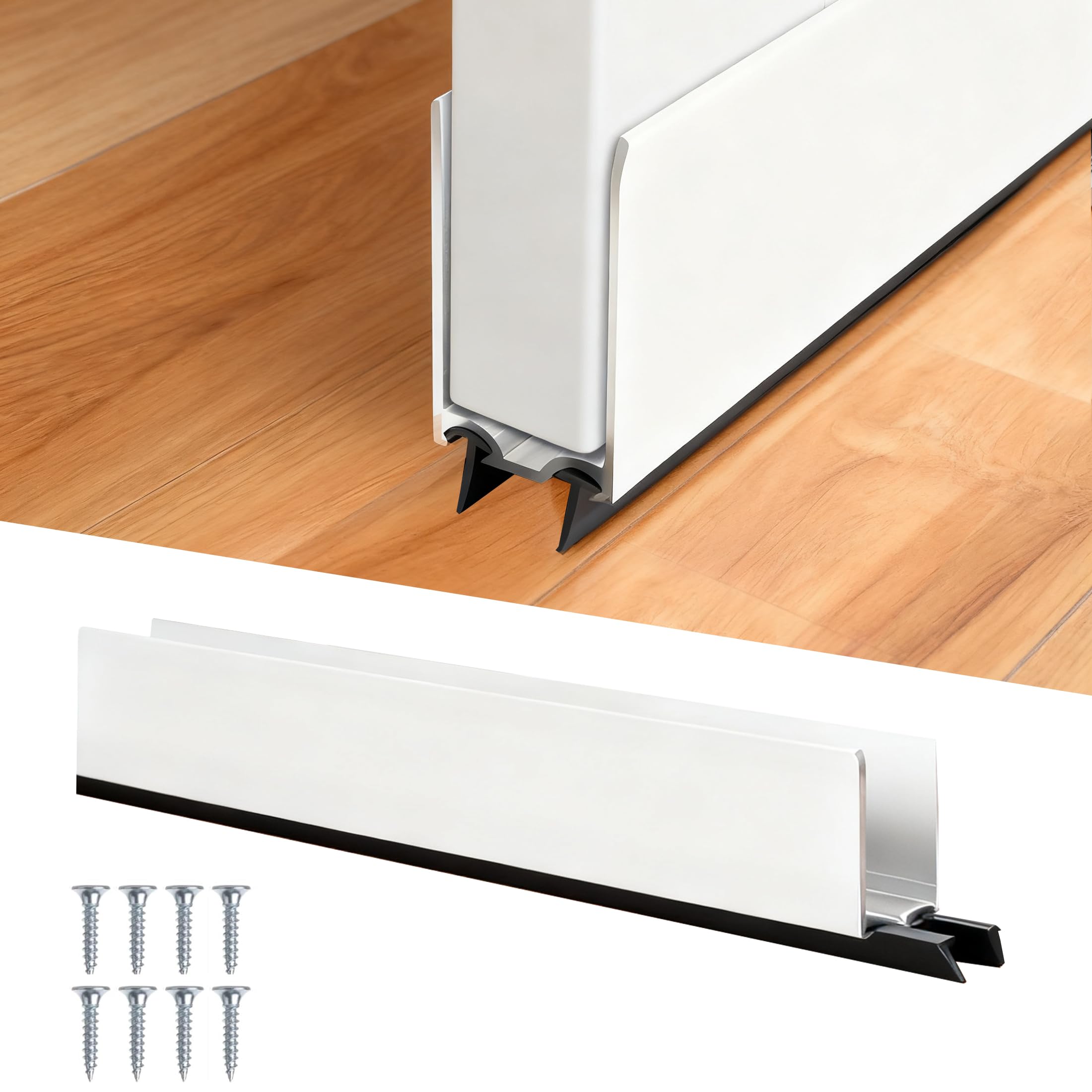
A white aluminum seal that disappears against a white door frame and holds its shape.
Finish matters on a storm door you actually look at every day, and this white aluminum sweep leans into that. It measures about 1 inch by 35.5 inches and is meant for a door bottom frame that is 1 inch thick and 36 inches wide. Aluminum holds its shape far better than foam, so it keeps a firm line against the threshold rather than sagging after a season.
Installation leans simple: it mounts to the door bottom with the eight included screws, and no special tools are needed. Plainly it does the job cleanly once it is fixed, which is what the buyers who use it tend to focus on. It is an aluminum piece, sturdy enough to keep its form and keep dust and air out over time.
The limit to plan around is that 35.5-inch length — check the exact width of your door’s bottom frame, because this is a fixed-size aluminum seal, not a cut-to-fit foam strip like the Bantie roll above. If your opening is 36 inches, it should line up; a wider or odd-sized opening may leave a short edge you have to account for.
white doors: a 36-inch-wide storm door with a white finish that wants a durable aluminum seal and eight screws ready to go.
dark frames: your door bottom frame width and thickness against the 35.5-inch by 1-inch spec.
8. TMH Metal Door Magnetic Kerf Door Seal Kit

A three-piece kit that reseals the whole metal door frame, magnet side and all.
When you want a full reseal instead of one strip, this kit covers the top and sides in one box. It ships three pieces: two at 84 inches and one at 36 inches, in white. The magnet strip sits on one 84-inch piece and the 36-inch piece. The second 84-inch piece is a compression seal with no magnet, for the hinge side. That detail matters, because you want magnets only where the door actually pulls shut.
It is built for metal doors, and the extra-strength magnet pulls the door tight against the frame so it seals firmly on the closing side. Quality and effectiveness are where it shines, and it seals up a steel door and stops drafts well. Trim it with a utility knife to fit the opening exactly. For a full-frame reseal on a metal storm door, this saves buying side and top strips separately.
Be ready for the install. The kit works, but it takes more effort than a simple slide-in strip. This is a three-piece fit that has to sit correctly on all sides, and magnetic strength and fit can feel different from door to door. Set aside an unhurried afternoon, measure the opening carefully, and trim with a sharp blade. The result is a tight, magnet-sealed metal door.
magnetic kerf kit: it is a complete top-and-two-sides kit for a metal door, with extra-strength magnets on the closing pieces and a compression seal for the hinge side.
metal door only: this is a more involved install than a single strip, and getting the fit right on all three pieces takes patience.
metal doors: a metal-frame storm or steel door that needs the whole perimeter resealed, not just one edge.
wood frames: you are sealing a single leaky side — one full-frame kit is more work than a lone strip.
9. Unique Home Designs Aluminum Door Draft Stopper Kit
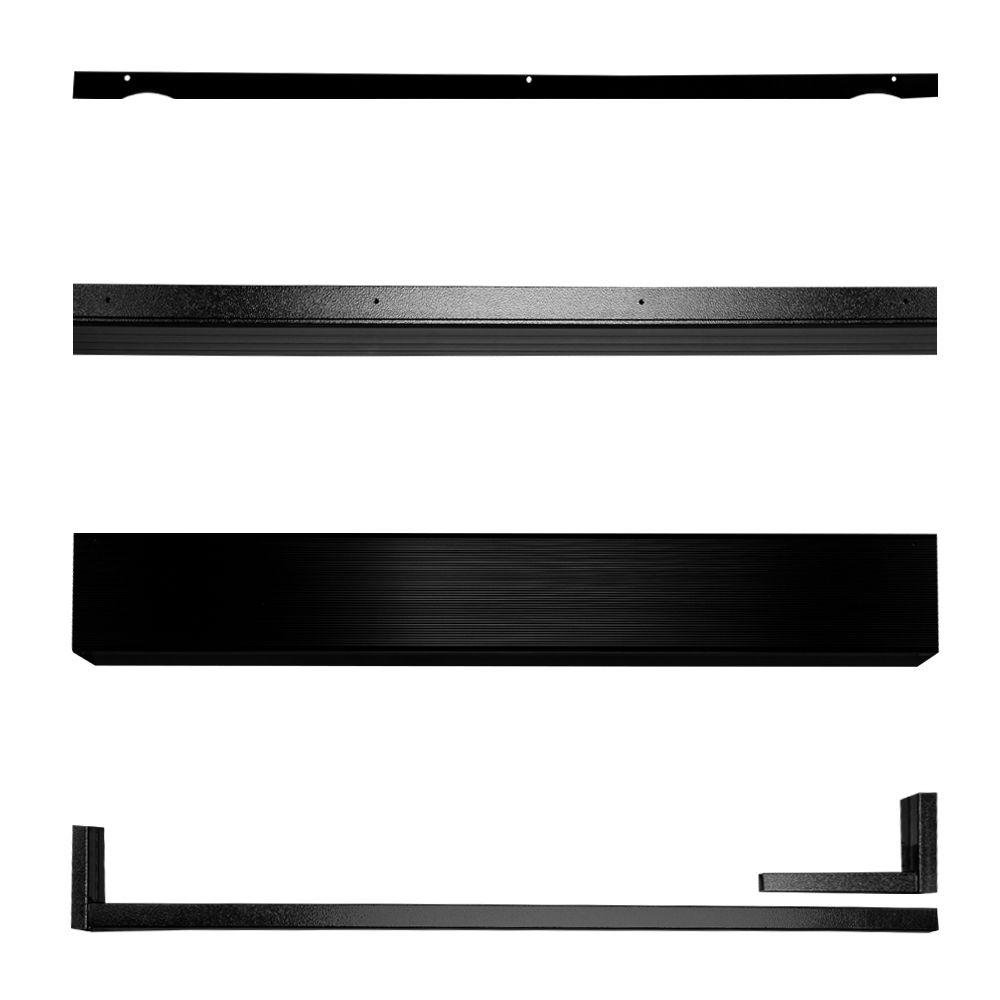
A complete threshold rebuild kit for a standard 36-inch security door, no raised sill needed.
The kit is built for standard 36-inch-wide security doors and fits homes without an improve threshold, with a black powder-coat finish. Inside you get an adjustable bottom bar, a top seal bar, a 6-inch threshold plate, and the installation hardware and instructions to retrofit any existing 36-inch security door.
The commercial-grade bug sweep is the standout part, closing the bottom against insects and pests while it helps reduce drafts. That combination of threshold plate and sweep is what a plain strip cannot offer — it handles the whole bottom assembly at once. Filling the gap at the threshold area is exactly what it does well.
The install is the honest caveat. This is a multi-part kit, so it takes more care than dropping in a single sweep. It is not quite as straightforward as it looks once you deal with the adjustable bar and top seal together. Work through the instructions step by step and it goes in fine. For a full security-door rebuild, the completeness is the whole point.
drafty entries: a 36-inch security door whose whole bottom threshold needs replacing, not just a fresh sweep.
new builds: you only have a small leak — a single sweep is less work than this full multi-part kit.
Know the Specs
Kerf versus sweep: reading the profile
A kerf seal is a strip with a rigid flange sized to press into a groove in the frame, often around 1/8 inch for a matching ridge. A sweep is a rail that mounts to the door bottom and rides against the threshold. Buy for the leak you have: edges and top call for kerf strip, the bottom calls for a sweep. A kit like the TMH covers multiple sides at once when you want a full reseal.
Gap coverage and thickness
What fills the gap is the depth of the seal, not the length of the roll. Large-gap strips are rated to a range — the Bantie kit covers 3/10 inch to 7/8 inch, and the Randall brush sweep covers up to 1-1/2 inch. Match that number to the gap you can see with the door shut. Too thin and the draft continues; too thick and the door will not latch.
Material: foam, rubber, aluminum, brush
PU foam with a PE or PVC face flexes to irregular gaps and trims with scissors. Rubber inserts restore an existing expander and resist weather. Aluminum rails with a rubber lip hold their shape on a flat threshold. Brush sweeps flex over sloped or uneven ground, which is why a brush handles the door bottom on a sloping step better than a rigid lip.
Adhesive versus mechanical grip
Self-stick strips can peel under the slam and wind a storm door takes. Flange-into-groove and screw-on designs hold mechanically instead. If your old strip kept falling off, look for a flange or a screwed rail rather than fresh adhesive. Screw-mounting is permanent, so line up the piece before driving any hardware.
Common Questions
How do I know if my storm door needs a kerf seal or a bottom sweep?
Will the Hooetoy sweep fit my Larson or Pella storm door?
Can I cut these seals to length?
What size gap can the brush sweep actually close?
How do I measure my door frame groove for a kerf seal?
Do I need the entire TMH kit or just one strip?
Is the Unique Home Designs kit for storm doors or security doors?
Will a bottom sweep stop drafts if my threshold is on a slope?
How long should the seal last on a storm door?
Do these come with screws or adhesive included?
The Bottom Line
For most storm doors with a grooved frame and a draft around the edges, the BISOTHAI 26 Feet Long Reach Kerf Strip is the pick. Its rigid PVC flange grips the channel, and its 1.2-inch width by 0.6-inch thickness fills a wide gap. If the leak is under the door on a sloped entry, reach for the Randall BS-220-MF brush sweep. It seals up to 1-1/2 inch and flexes over uneven ground. And if the whole bottom of a security door needs rebuilding, the Unique Home Designs kit handles the threshold assembly in one box. Whichever you choose, match the profile to your door first. A seal only stops the draft when it fits the groove or the sweep rail it is meant for.
How we choose
We do not accept paid placement. Every pick is matched to a real buyer and a real use-case; we do not hands-on test units.
Sources
Specifications: manufacturer listings and product documentation. Review insights: verified customer reviews. Pricing: not shown on this page (it changes often); check the current price via the retailer link.
As an Amazon Associate, Tactical Gear Guy earns from qualifying purchases. This does not affect which products we feature.