Specs are compiled from manufacturer listings and verified buyer reviews and can change over time — please confirm the key details on the product page before buying.
If you want the short answer: the Kidde Smart Smoke & CO Detector with Ring (RGCUDR-RW) is the one most people should buy. It watches for both smoke and carbon monoxide, it runs on two AA batteries so you never touch your home’s wiring, and it pushes alerts to your phone through the Ring app without a subscription. That combination is what makes a connected alarm worth owning: you find out about a problem while you’re at work, not when you walk into it.
This guide is built by comparing the manufacturers’ published specifications and the patterns across verified customer reviews, so you get each pick’s real strengths and trade-offs instead of marketing spin.
A connected alarm only helps if the app link actually holds, so this breakdown weighs detection type, power source, and alert reliability side by side. Here is the honest read on every wi-fi enabled smoke detector worth putting on your ceiling.
Top Picks
How To Choose The Best Wi-Fi Enabled Smoke Detector
Start with the one question that decides everything else: what do you want detected? A smoke-only alarm covers fire. A combination unit adds carbon monoxide — an invisible, odorless gas that comes from furnaces, water heaters, and attached garages. If your home has any fuel-burning appliance, the combination unit is the safer ceiling choice.
Power source decides where it can go
A battery-only alarm runs on AA cells, so you can mount it anywhere — a hallway, a basement stairwell, a rental where you can’t touch the wiring. A hardwired alarm ties into your home’s 120V AC line and keeps a battery backup for outages. Hardwired units fit where an old alarm already has a wired mount. Battery units fit everywhere else.
Interconnect is the multiplier
Interconnect means one alarm triggering the rest of the compatible alarms in your home. On several of these Kidde models, adding a single smart alarm to existing hardwired alarms pushes mobile alerts for the whole house. That matters more than any single spec — a siren in the basement is useless if you’re asleep two floors up.
App alerts and the subscription question
Real-time phone notifications come free on the Ring and Kidde app models here. The optional monitoring plans are separate add-ons, sold apart from the hardware. You do not need a plan to get a smoke alert on your phone — you only need it if you want a monitoring service watching for you.
Nuisance alarms are a real buying factor
An alarm that shrieks every time you sear a steak gets disabled, and a disabled alarm protects nobody. Several models here use enhanced sensing to cut false triggers from cooking compared with earlier generations. Weigh that against how close the unit sits to your kitchen.
Side-by-Side Comparison
Detailed Reviews
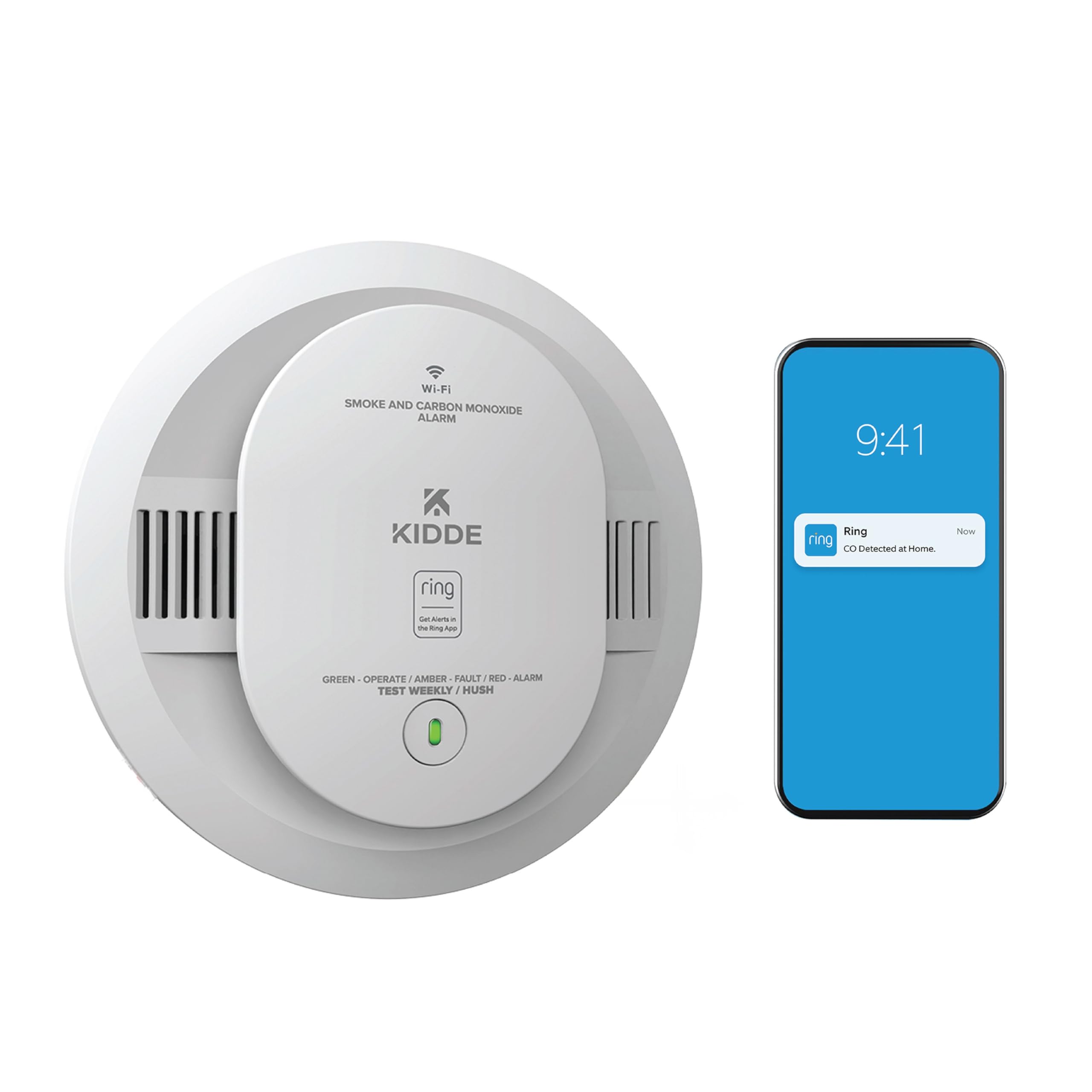
1. Kidde Smart Smoke & CO Detector
Our pick — 4.0+★ from 500+ verified ratings; the strongest balance of quality and price.
Two hazards watched by one puck-sized alarm that texts your phone when something is wrong.
This is the alarm to buy if you want one device covering the two dangers that actually threaten a house. The Kidde RGCUDR-RW detects both smoke and carbon monoxide, so a smoldering couch and a leaking furnace both reach you. It runs on two AA batteries — included — which means no electrician, no wiring, and no ceiling mount you have to plan around.
The alert system is the part that changes your day. Smoke, CO, and low-battery warnings land in the Ring app whether you’re home or away, and no subscription is needed for those. Kidde claims smoke detection over 25% faster than a leading competitor in its own internal testing. Enhanced sensing also cuts the false alarms that cooking tends to trigger, compared with earlier Kidde generations. And the wire-free interconnect means when one alarm sounds, the others do too.
What wins people over is how little thought the whole thing takes: setup on the Ring app and the fully battery-powered design get the most goodwill. The catch is connectivity: the app link goes smoothly for plenty of homes and stumbles for others, so set it up while you’re standing under it rather than a week later. Low-level CO alerts, a UL 217 listing, and Alexa notifications round out a device that behaves like a proper smart alarm rather than a beeping disc.
What earns its ceiling spot
- Detects smoke and carbon monoxide in one unit, so one device covers two hazards.
- Runs entirely on 2 AA batteries — mount it anywhere without touching wiring.
- Ring app pushes smoke, CO, and low-battery alerts with no subscription required.
- Wire-free interconnect ties every Kidde alarm in the house together.
Where it can trip you up
- The Ring app pairing behaves differently from home to home; confirm it links before you mount it.
- Only the alerts are free — 24/7 monitoring is a separate Ring subscription.
Reach for this if: you want one battery-powered unit guarding against smoke and carbon monoxide with phone alerts and no wiring job.
Look elsewhere if: your home already has hardwired alarms you want to extend — a hardwired unit keeps that loop intact.
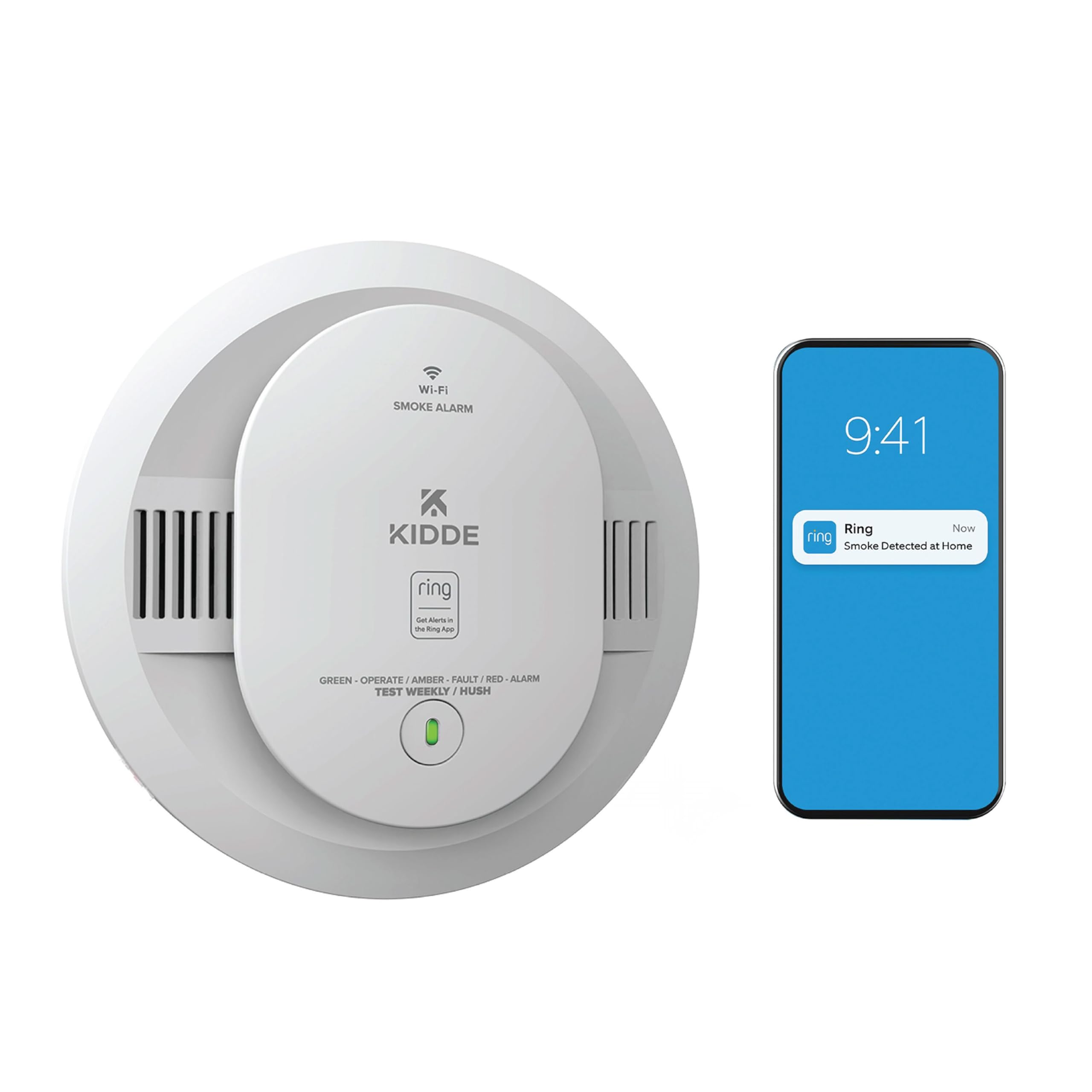
2. Kidde Smart Smoke Detector with Ring, AA Battery, RGSDR-RW
The Ring-app smoke alarm you can mount anywhere, because it runs entirely on two AA batteries.
If you have Ring cameras and want a smoke alarm without a wiring job, this RGSDR-RW is the natural fit. It detects smoke and delivers Ring app notifications for smoke and low-battery warnings with no subscription, and it runs on two AA batteries so you can mount it in any hallway or stairwell. The wire-free interconnect ties the Kidde alarms in your home together, so when one compatible alarm sounds, the rest follow.
The rest of the package matches its siblings: enhanced sensing to trim cooking-fueled false alarms compared with prior generations, Alexa notifications, and Kidde’s claim of over 25% faster smoke detection (internal testing). Setup through the Ring app is the part that earns the most goodwill — pairing goes smoothly for most homes.
The honest note is connectivity: the Ring app link goes smoothly for plenty of homes and stumbles for others, so set it up while you’re standing under it rather than a week later. Treat it as a good unit that occasionally needs attention, not a set-and-forget disc, and keep it out of the direct steam path over a stove.
Best matched to: a Ring household that wants free smoke phone alerts without any wiring work.
Check first if: you also want carbon monoxide coverage — the combination RGCUDR-RW covers both hazards in one unit.
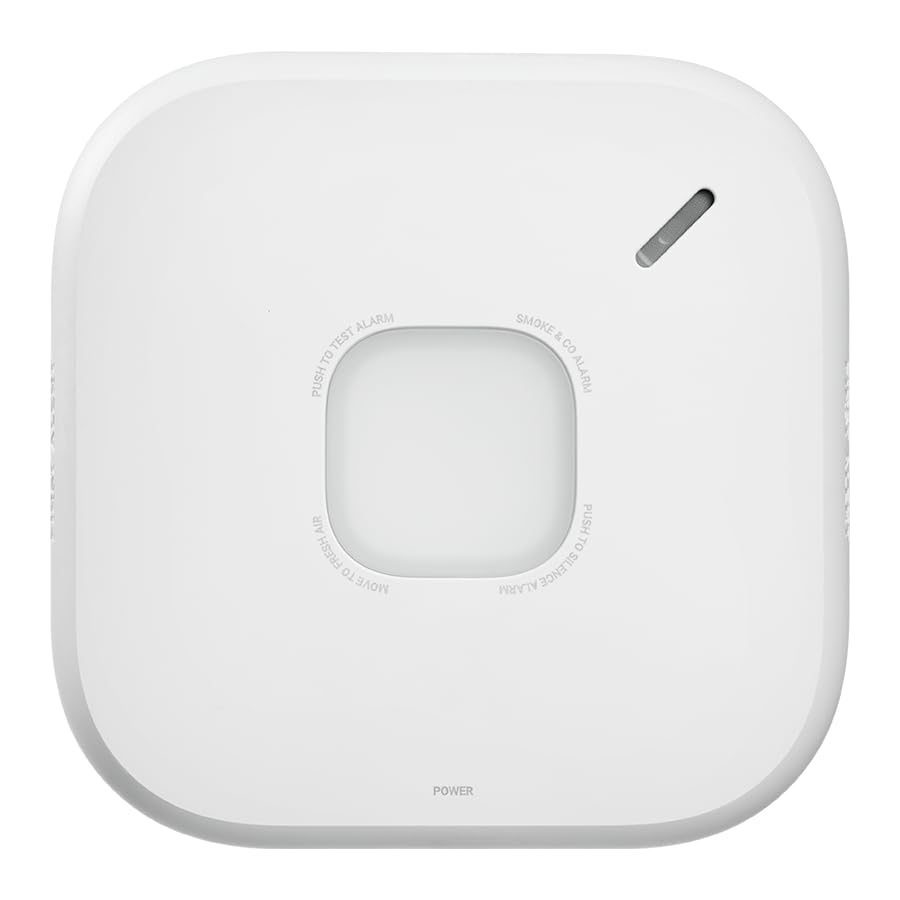
3. First Alert SC5 Hardwire Smart Smoke & Carbon Monoxide Alarm
The one to consider only if a Google Nest household is the non-negotiable requirement.
This First Alert SC5 is a hardwired combination alarm, and its defining feature is a specific one: it’s compatible with Google’s Nest Protect Alarm. If your home already runs on Nest, that compatibility is the reason to look at it. It sends smoke and CO alerts to your phone through the First Alert app, interconnects with compatible alarms so they all sound together, and keeps a 3V lithium battery backup for outages. Voice alerts with a Heads-Up warning announce the type and location of the danger.
It also takes up the most room in this lineup, at 5.75″D x 1.6″W x 5.75″H. The Kidde 20SAR-W and 30CUAR-W measure 2″D x 5″W x 5″H, so grab a tape measure before you swap this one into a tight mount.
Here’s the part we won’t soften: this model is the weakest of the group by owner feedback. Installation and Nest integration draw the positive notes, but false alarms and the inability to silence them are a recurring theme — alarms going off randomly and not quieting through the app. For a device whose whole job is trustworthy alerting, that’s a real consideration. Buy it only for the Nest tie-in, and only if you’re comfortable returning it if it misbehaves.
The case for it
- Compatible with Google’s Nest Protect Alarm for Nest-centric homes.
- Smoke and CO detection with voice alerts naming the hazard and location.
- Quick Connect Plug allows replacement with no rewiring.
What you should weigh
- False alarms and difficulty silencing them are the most-discussed problems.
- Largest physical footprint in this lineup — measure your mount first.
Only for: a committed Google Nest household where the SC5’s compatibility is the deciding factor.
For everyone else: the Kidde combination units deliver smoke-plus-CO protection with steadier record on false alarms.
Know the Specs
Smoke vs. smoke-plus-CO detection
A smoke-only alarm watches for fire. A combination alarm adds a carbon monoxide sensor, catching the odorless gas from furnaces, water heaters, and attached garages. If a room has any fuel-burning appliance, combination coverage is the choice that matters — one unit guarding two threats.
Battery-only vs. hardwired power
Battery units run on AA cells and mount anywhere without touching wiring — ideal for rentals and hallways without a wired mount. Hardwired units connect to 120V AC with battery backup, keeping detection alive through an outage and fitting where an old wired alarm already sits.
Interconnect and whole-home alerts
Interconnect makes one alarm trigger the rest of the compatible alarms in your home. Add a single smart alarm to existing hardwired units and the phone alerts can cover the whole house. When one unit detects smoke, they all sound together.
App alerts, voice warnings, and nuisance sensing
Real-time phone notifications arrive free on the Ring and Kidde app models here — no subscription needed for a smoke alert. Voice alerts announce the hazard type and location. Enhanced sensing trims the false alarms that cooking tends to trigger, compared with earlier generations.
Common Questions
Do I need a subscription to get smoke alerts on my phone?
What is the difference between a smoke-only and a combination alarm?
Can I add just one smart alarm to my existing hardwired alarms?
Will a battery-only alarm work during a power outage?
Which models work with Alexa and Google Home?
Why do some smoke alarms go off when I cook?
Can I silence a false alarm from the app?
What does interconnect mean on a smoke alarm?
How much wiring work does a hardwired alarm need?
The Bottom Line
For most homes, the wi-fi enabled smoke detector winner is the Kidde Smart Smoke & CO Detector with Ring (RGCUDR-RW) — smoke and carbon monoxide in one battery-powered unit with free phone alerts and no wiring job. If you already have hardwired alarms, reach for the Kidde 20SAR-W to push alerts across the whole house. And if a Google Nest household is the requirement, the First Alert SC5 is the one with that specific compatibility — read its false-alarm reputation before you commit. It holds 4.0+ stars across 500+ ratings, and that mix of two-hazard coverage and battery simplicity is the reason.
How we choose
We do not accept paid placement. Every pick is matched to a real buyer and a real use-case; we do not hands-on test units.
Sources
Specifications: manufacturer listings and product documentation. Review insights: verified customer reviews, as of November 2026. Pricing: not shown on this page (it changes often); check the current price via the retailer link.
As an Amazon Associate, Tactical Gear Guy earns from qualifying purchases. This does not affect which products we feature.