Specs are compiled from manufacturer listings and verified buyer reviews and can change over time — please confirm the key details on the product page before buying.
Your fastest route to a warm winter: buy a jacket with real down fill and enough of it, then match the shell to the weather you actually walk in. Everything else is detail. This guide compares eleven men’s down jackets on the things that keep you warm — fill power (how much loft each ounce of down gives you), fill type, hood, and how the outer fabric handles wind and wet — so you can pick the right one without guessing.
This guide is built by comparing the manufacturers’ published specifications and the patterns across verified customer reviews, so you get each pick’s real strengths and trade-offs instead of marketing spin.
Down jackets fail in three predictable ways: not enough loft (the trapped air that holds your heat), a shell that leaks wind, or a fit that leaves your neck and cuffs open to the cold. Below you will find each jacket’s numbers laid out side by side, plus the honest caveats owners hit — a sizing quirk here, a zipper gripe there — so the warmest down jacket for men you choose actually fits your winter.
Top Picks
How to Choose a Down Jacket That Actually Keeps You Warm
Warmth in a down jacket comes from trapped air, not from fabric weight. Loft — how much the down puffs up — creates tiny pockets that hold your body heat. Everything else on the jacket exists to protect that loft from wind, wet, and compression.
Start with fill power, then look at the shell
Fill power is a rating of how much space a set amount of down occupies. A higher number means more loft per ounce of down, so the jacket insulates with less bulk. The jackets here run from 600 fill up to 800 fill. Higher is generally warmer for the weight, but the shell and baffles (the stitched channels that hold the down in place) matter just as much for a real winter day.
Water-resistant versus waterproof — know which you need
A water-repellent finish sheds light snow and drizzle. A waterproof shell with a hydrostatic head rating (a measure of how much water pressure the fabric resists before leaking) handles sustained rain and wet snow. If your winters are dry and cold, water repellent is plenty. If you deal with slush and driving rain, look for a genuine waterproof membrane.
Hood, cuffs, and hem decide the real-world warmth
A jacket can have great down and still feel cold if wind pours in at the neck. An adjustable hood, a snug collar baffle, and cuffs that seal to the wrist change how warm the same jacket feels. Drawcord hems let you cinch the bottom to trap heat. These details are why two jackets with similar fill can feel completely different outside.
Size for your layers, not for the label
Down works by trapping air, so a jacket that is too tight compresses the insulation and loses warmth. A jacket that is far too loose lets cold air circulate. Aim for enough room for a mid-layer sweater, and read the fit notes — several jackets in this list run small in one size and large in another.
Side-by-Side Comparison
| Model | Best For | Down Fill | Fill Power | Weight | Amazon |
|---|---|---|---|---|---|
| The North Face McMurdo Bomber★ Best Overall | Cold, wet city winters | Waterfowl down | — | 2.85 lb | Amazon |
| Orolay Thickened Down JacketBest Value | Budget warmth with pockets | Down | 700+ | — | Amazon |
| The North Face Aconcagua 3Best for Layering | Layering under a shell | Waterfowl down | 600 | 1.5 lb | Amazon |
| Columbia Delta Ridge II | Lightweight everyday warmth | Responsibly sourced down | 650 | — | Amazon |
| Orolay Puff-O | Detachable-hood versatility | RDS down | — | — | Amazon |
| Helly-Hansen Tromsoe | Freezing-city daily wear | Down | — | — | Amazon |
| Marmot Stockholm | Vintage-style lofty puffer | Down | 700 | — | Amazon |
| Marmot Fordham | Windy mountain days | Down | 700 | — | Amazon |
| Rab Electron Pro | Alpine climbing and cold mountains | Down | 800 | 1.16 lb | Amazon |
| Rab Valiance | Wet, wild winter weather | Down | 700 | 1.44 lb | Amazon |
Detailed Reviews
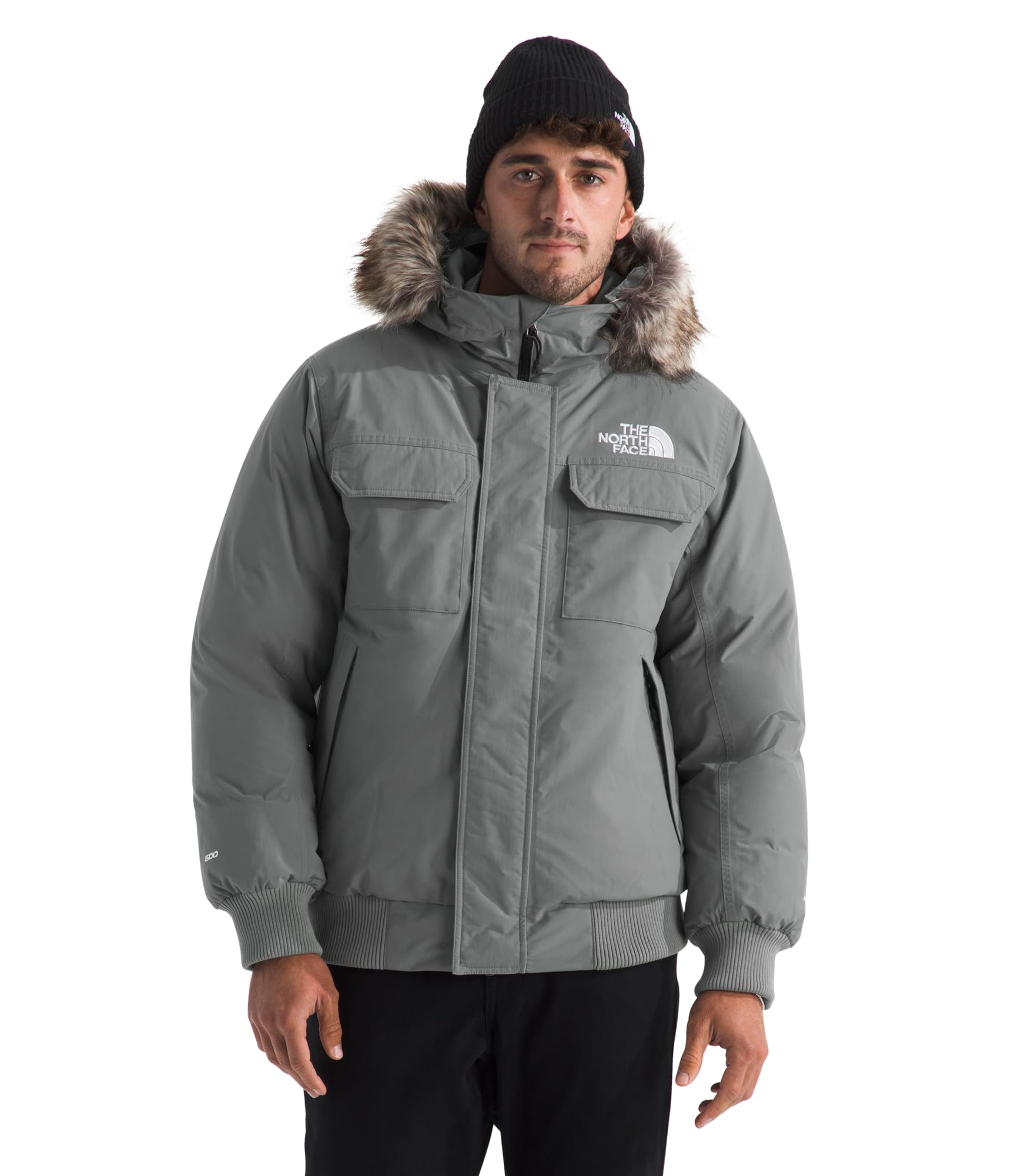
1. THE NORTH FACE Men’s McMurdo Bomber Jacket
Our pick — 4.5+★ from 300+ verified ratings; the strongest balance of quality and price.
A bomber cut with a waterproof shell and real waterfowl down — city winter, handled.
This is the jacket for the person who walks to the train in sleet and does not want to think about weather again until spring. The McMurdo pairs a waterproof outer shell with waterfowl down insulation, so snow landing on your shoulders melts and rolls rather than soaking your insulation. At 2.85 pounds it carries real heft — and that weight is the honest reason it feels so substantial. Compare it with the Aconcagua 3 below at 1.5 pounds and you are looking at a jacket built for standing still in cold, not sprinting up a hill.
What wins people over is raw warmth: it comes up more than any other topic in owner feedback, and it earns the top spot here on the strength of that reputation. The bomber silhouette stays clean enough for a commute, and the hood means you are covered when the wind picks up. The bomber silhouette reads as a real winter coat rather than a fashion layer, which is why owners reach for it on the coldest nights.
The catch is sizing. It runs small — an XL that feels like a large on some builds — so order up if you plan to layer a sweater underneath. Some owners also note the Velcro at the cuffs is a recurring annoyance. Treat those as fit-and-finish notes, not reasons to walk away. It holds a 4.5+ star rating across 300+ owners because it does the one job that matters in a cold, wet climate.
Where the McMurdo earns its spot
- Waterproof shell plus waterfowl down — wet snow does not soak through
- 2.85 lb of built-up warmth for standing in cold, not just walking through it
- Bomber styling that works for a commute as well as a weekend
- Consistent warmth feedback from a large owner base
What to plan around
- Runs small — an XL can fit like a large, so size up for layers
- At 2.85 lb it is noticeably heavier than the 1.5 lb Aconcagua 3
- The Velcro cuff closure draws recurring complaints
Reach for this if: you live somewhere cold and wet and want one coat that covers the whole winter.
Look elsewhere if: you need a packable layer for hiking — the 2.85 lb weight works against you there.
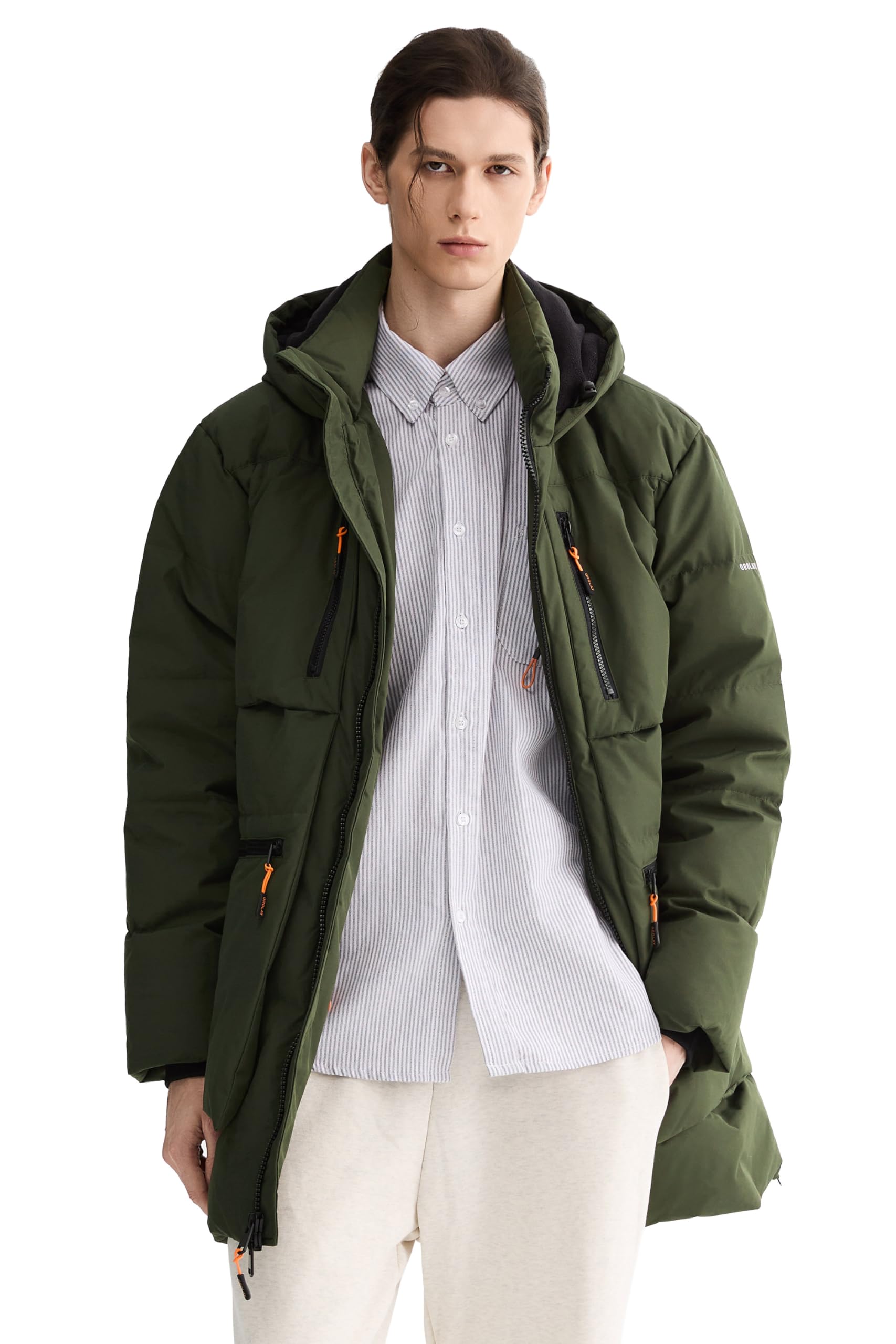
2. Orolay Men’s Thickened Down Jacket
Packs 700+ fill power and six pockets into one of the value picks of the list.
Here is the number that matters: 700+ fill power down. That rating means the down lofts generously for its weight, so the jacket traps a lot of heat without ballooning into a marshmallow. Owners in genuinely cold climates — Midwest winters come up — describe it as plenty warm for daily wear. For an entry-point down coat, that is the real win.
Appearance is what gets talked about most, and it tracks: the puffer cut looks sharper than the price tier suggests. The six-pocket layout adds practical storage you will actually use for gloves and a phone. Weight is described as light for the warmth, which makes it easy to wear into a store without overheating on the way there and back.
Two things to weigh. Fit feedback splits — some find it roomy, others say it runs large, so check the size chart carefully rather than assuming your usual. And the zipper draws real criticism: it is plastic and oriented the reverse of what most people expect, so it takes a moment to get used to. Neither is a dealbreaker at this tier, but both are worth knowing before you order.
The value math: 700+ fill power is the kind of down rating usually reserved for pricier jackets, which is why this one punches above its tier.
The honest caveat: fit runs inconsistent and the reverse plastic zipper takes some getting used to — budget a moment for both.
Go with this one if: you want maximum warmth for the money and do not mind a learning curve on the zipper.
Pass if: you want a jacket that runs true to size from the start — this one splits on fit.
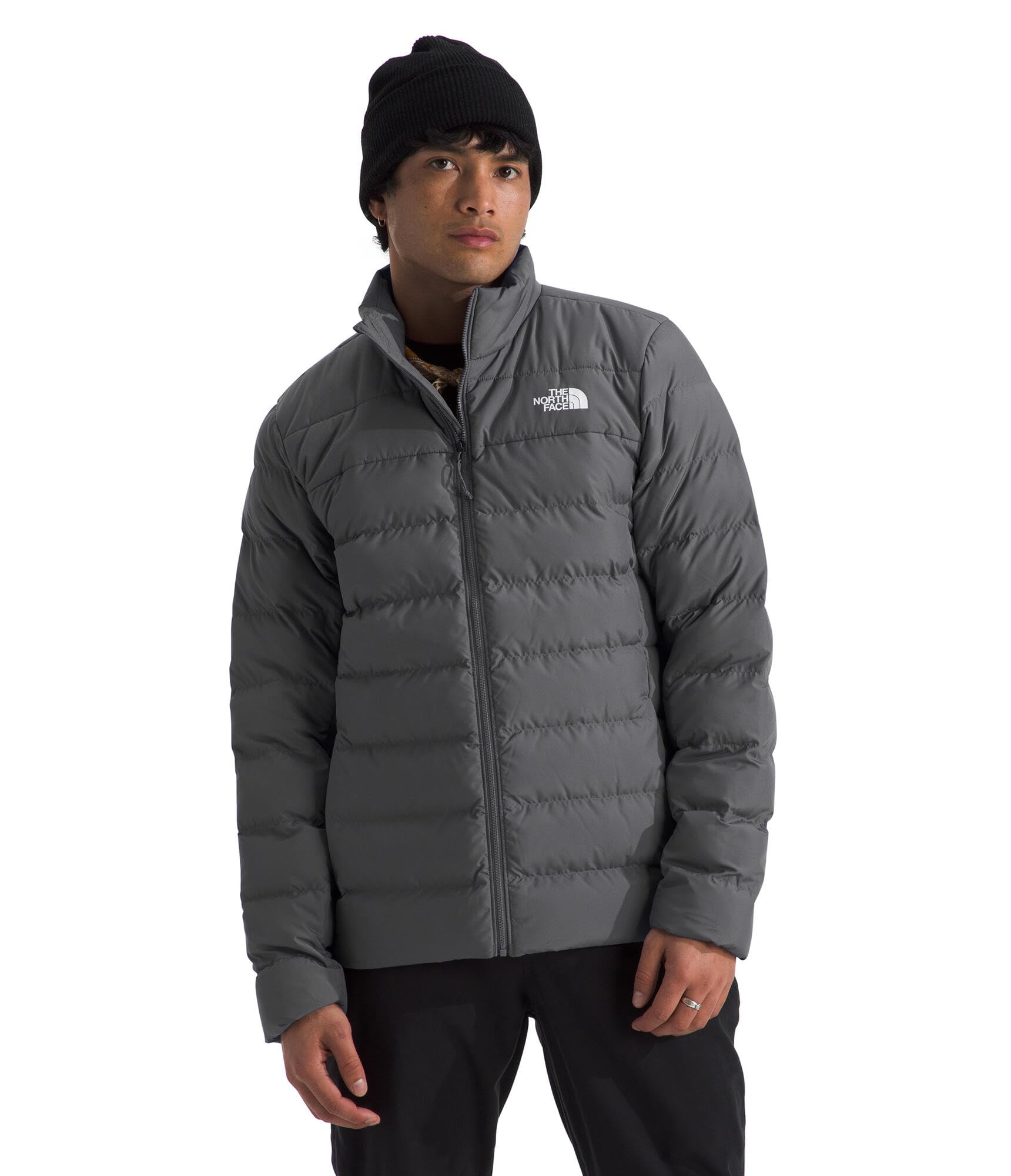
3. THE NORTH FACE Men’s Aconcagua 3 Jacket
A 1.5-pound layer with 600 fill waterfowl down — the lightest way to stay warm here.
At 1.5 pounds, this is the jacket that disappears into a backpack or under a shell. The McMurdo above weighs 2.85 pounds, so the Aconcagua 3 asks you to carry noticeably less while still packing 600 fill waterfowl down. That fill rating is solid mid-tier insulation — it lofts well but does not carry the same raw warmth ceiling as an 800-fill jacket. For layering, that is the right trade.
Owners talk about build quality more than anything else, and it shows in the finish. A water-repellent treatment shrugs off light snow and drizzle. Some buyers report it holds up down to -5C, a realistic read for a 600-fill layer under a shell. It also dresses up or down, so it works under a blazer as easily as over a hoodie.
The honest note: some find it over-sized, and value-for-money feedback splits. If you want a precise athletic fit, try before you commit or size down. It is not a stand-alone coat for brutal cold either — it is a layer, and it is a very good one.
Why it layers so well: 600 fill down plus 1.5 lb of weight keeps bulk low, so it slides under a shell without bunching at the shoulders.
Where it stops: it is a layer, not a substitute for a heavier coat — and it runs large for some builds.
Best pairing: a hard shell for ski days or a rain jacket for city commuting — this goes underneath both.
Not the pick if: you need one coat to do the whole winter alone; this wants a partner layer.
4. Columbia Men’s Delta Ridge II Down Jacket

650-fill down and a heat-reflecting lining that bounces your own warmth back at you.
The Delta Ridge II has a trick most jackets here do not: a thermal-reflective lining. That is a thin metallic layer inside that reflects your body heat back toward you, so the jacket feels warmer than its 650-fill down alone would suggest. Owners specifically call out that inner reflective material as the reason heat stays in. Combine that with stitch-free baffling — a construction that avoids needle holes where drafts sneak through — and you get a jacket that seals better than its weight implies.
It is a light jacket in the hand, and owners rate it warm and stylish in the same breath. The active fit is cut for movement, so it works for a walk, a commute, or a casual weekend without looking technical. Value feedback is positive too, which makes sense for a jacket doing double duty through fall and mild winter.
Durability feedback is mixed — a few owners have concerns about long-term wear. Treat it as a three-season jacket rather than an expedition shell. The reflective lining helps most in still, cold air; in driving wind, pair it with a windproof outer layer.
What makes it clever
- Thermal-reflective lining bounces body heat back — warmer than 650 fill alone
- Stitch-free baffling seals out drafts at the seams
- 650-fill responsibly sourced down
- Active fit that moves with you
Where it needs care
- Durability feedback splits — best suited to everyday wear, not hard alpine use
- Reflective lining shines brightest in still air, not in strong wind
The smart buy for: fall-through-mild-winter wear where you want warmth without a heavy coat.
Keep looking if: you want a jacket for sustained rain or expedition cold — this is a daily driver.
5. Orolay Puff-O Men’s Puffer Down Jacket with Detachable Hood
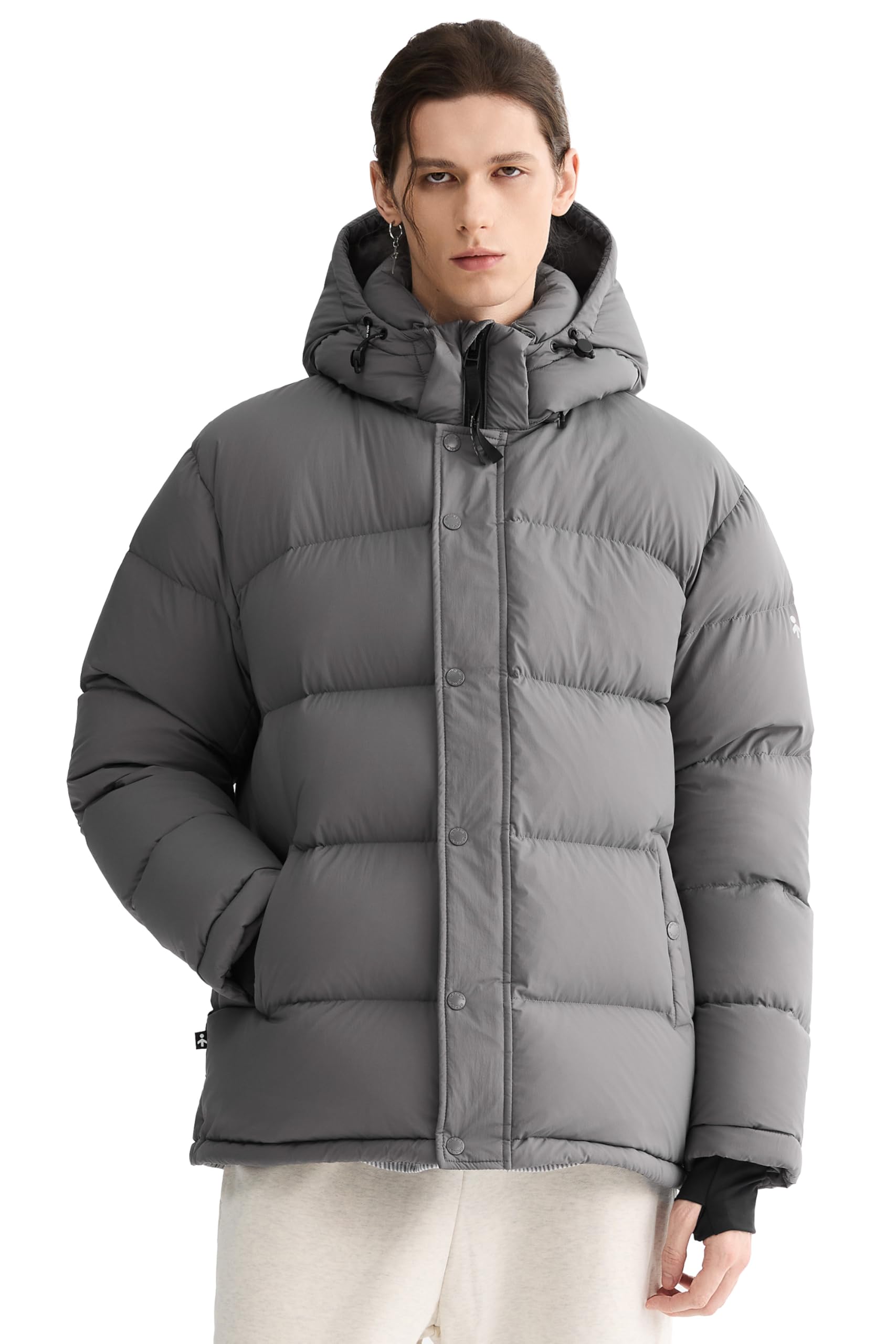
Zip the hood off for a clean look, zip it back on when the sky turns.
The feature that defines this one is the detachable hood. On a mild day you pull it off and get a clean-collar puffer; on a cold morning you zip it back on and seal up. RDS-certified down fills the jacket — that is down audited for responsible sourcing — and a zipper-plus-snap double closure gives you two ways to shut out the cold. The thumbhole cuffs are a small but real touch: they hold the sleeve down over your hands when you forget gloves.
Owners describe the quality as better than expected and call it great for daily wear. The inner zip pocket keeps valuables out of sight. Warmth feedback centers on cold mornings, which matches the everyday-commute design brief. This is a newer jacket with a thin review base, so the pattern is still forming rather than settled.
The caveat here is simple: fewer owners have put it through a full winter, so the long-term durability picture is not written yet. If you want a proven decade of feedback, the North Face or Columbia picks carry more history. If you value the remove-the-hood flexibility and like the look, this is a solid bet.
The versatility play: a detachable hood plus double closure means one jacket covers mild and cold days without a second purchase.
The unknown: a short track record — few owners have run it through multiple seasons yet.
Pick this for: an everyday winter puffer where you want the option to drop the hood.
Think twice if: you want a jacket with a long, proven durability record behind it.
6. Helly-Hansen Mens Tromsoe Down Jacket
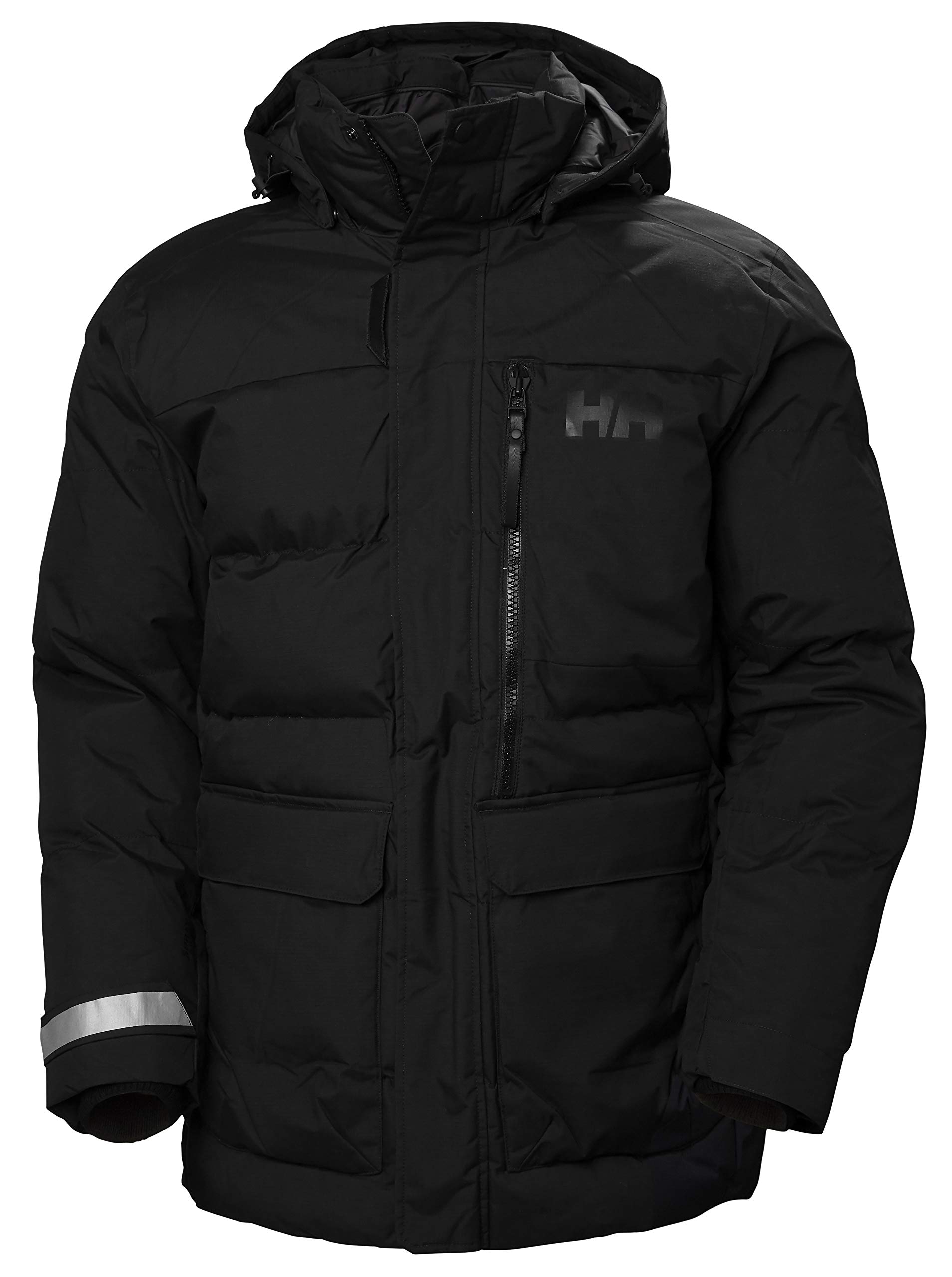
Built for freezing-town winters — button it up and be the warmest one outside.
The Tromsoe is designed around one idea: temperatures hovering at or below freezing are your normal, and you want a jacket that does not flinch. Fully closed — hood up, zips down, cuffs sealed — it is built to be the warmest jacket on the block. The down insulation has enough loft for the most frigid days while still regulating on a milder one, which is the hard balancing act this jacket is tuned for.
The Tromsoe reads as a purpose-built winter coat rather than a fashion puffer, with a full hood and cuff seal to match. For a January walk to the bus stop, the full-hood-and-cuff seal is the spec that matters — the difference between warm and merely covered.
The honest note: the warmth rides on getting that full seal. Leave the hood down or the cuffs loose and you lose much of the advantage. It is a jacket you close up properly, not one you wear open at the collar on a mild day.
The cold-weather brief: insulation tuned for around-freezing and below, with a hood and cuffs that seal the gaps where heat escapes.
The catch: the warmth depends on closing it up fully — worn open, it gives back much of its edge.
Made for: freezing commutes where you want a coat that meets the cold head-on.
Less suited to: mild shoulder-season wear where you want to leave a jacket open.
7. Marmot Stockholm Jacket

Big-baffle loft with a heritage look — 700-fill down that stays light on the move.
Marmot stuffed the Stockholm with 700-fill down, so it puffs up hard while staying surprisingly light. That lofty baffle construction is what gives it the throwback puffer silhouette, and it is why the comfort reads bigger than the jacket’s weight. Owners consistently frame this as a quality piece — construction and warmth both get strong marks — and it is the kind of coat you throw over anything from jeans to a sweater and be done.
The small details are where the daily-wear value lives. A drawcord hem lets you cinch out drafts at the waist. Adjustable hood cinches and oversized hand pockets make it practical for a commute. An internal zippered pocket handles your phone and cards. For a commute or a weekend walk, the drawcord hem and adjustable hood keep drafts out.
Fit is the thing to get right. This is the most-discussed topic on this jacket, and feedback is genuinely split — some find the fit perfect, others say it runs larger than normal. If you are between sizes or prefer a trimmer look, consider sizing down. A few owners also want an arm pocket, which this jacket does not have.
Why the look works: 700-fill down, big baffles, and a drawcord hem add up to a vintage puffer that keeps its shape and traps heat.
Size it carefully: it runs larger than normal for many — and there is no arm pocket.
Your match if: you want a lofty, heritage-styled puffer that is light enough to move in.
Look on if: you need an arm pocket for ski passes or want a guaranteed trim fit.
8. MARMOT Men’s Fordham Down Jacket

Wind-biting, blustery-day gear — 700 fill-power down with fleece-lined cuffs.
The Fordham is built for the days when the wind is the problem as much as the temperature. It wraps you in 700 fill-power down — lofty insulation that traps heat close to the body — and then seals the edges. An elastic drawcord hem locks in body heat. Velcro cuffs keep cold air and condensation from creeping up your sleeves. Micro fleece interior cuffs add another layer of warmth right at the wrist, which is where cheap jackets always lose the battle.
Two exterior chest pockets keep small gear within reach, and the hood zips off if you do not want the extra weight. It also allows plenty of room for layering, so a thick sweater underneath does not fight the shell.
Construction feedback splits: some find it well-built, others describe the feel as fragile for the tier. It is a jacket to wear hard and treat with some care rather than drag through brambles. For mountains and backcountry, that is a fair trade for the weight and packability.
The wind-and-cold setup
- 700 fill-power down with a drawcord hem that seals in heat
- Micro fleece interior cuffs block the wrist gap
- Removable hood zips off when you don’t need it
- Roomy enough for a bulky mid-layer
Before you commit
- Construction feel splits — some describe it as fragile
- Built for exposed, windy cold more than a mild urban day
Reach for it when: the forecast is wind plus cold and you want a jacket that seals the gaps.
Choose a sturdier shell if: you plan to brush through branches and rough terrain regularly.
9. Rab Men’s Electron Pro Down Jacket
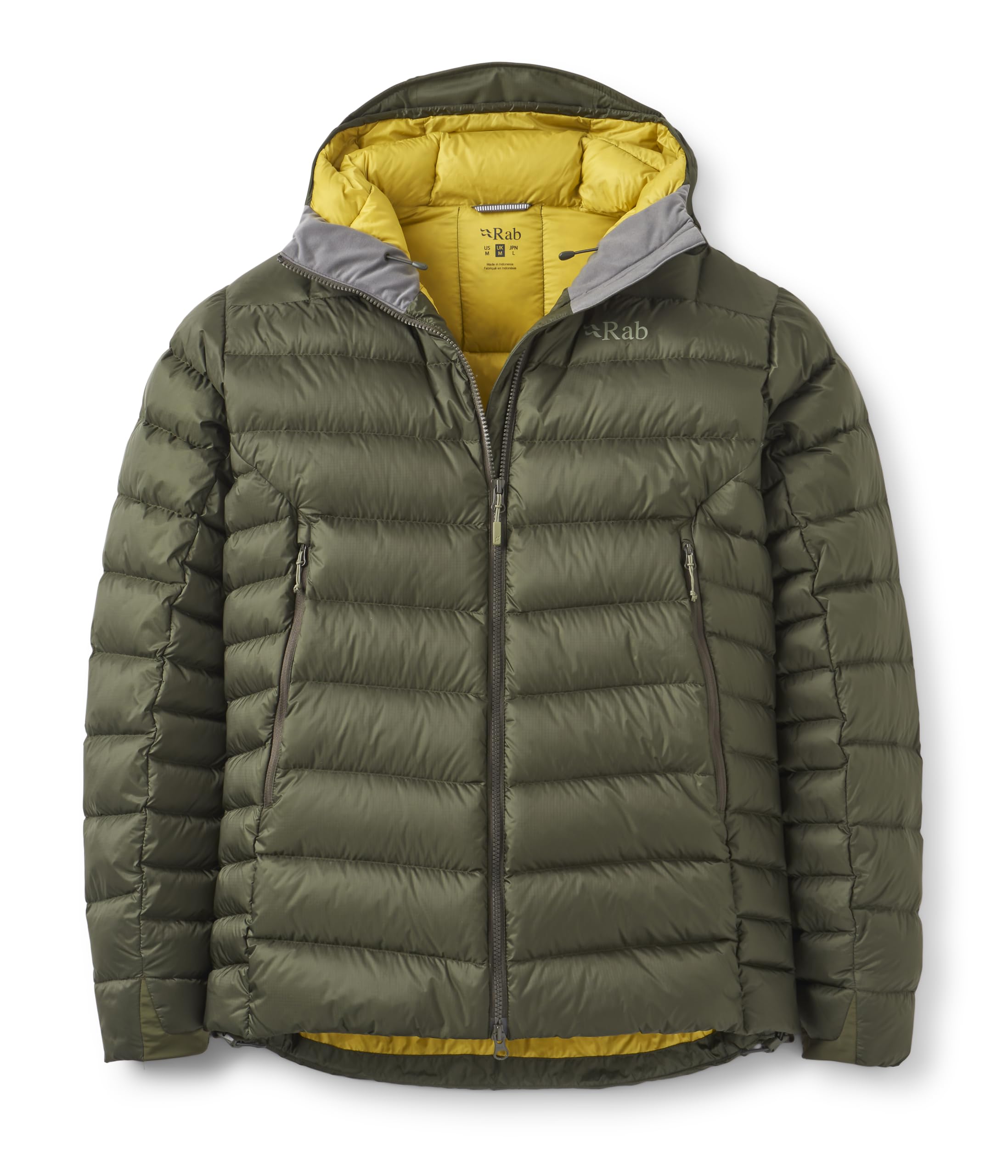
800-fill down at 1.16 pounds — alpine warmth that barely registers on your back.
Read the specs on this one and the intent is clear. The Electron Pro runs 800-fill down — the top fill rating in this group — inside a Pertex Quantum Pro outer that resists both wind and water. Zoned baffling places midi and micro baffles so warmth sits where you need it without extra bulk. And it does all this at 1.16 pounds. For a jacket built for mountain adventures, that is a remarkable warmth-to-weight ratio.
The mountain-ready details are there too: harness-compatible zippered pockets you can reach with a pack on, a two-way front zipper, and an adjustable helmet-compatible hood. Owners call the quality superb, and it handles deep cold well. This is the jacket for a climber or a serious winter hiker who wants light, lofty insulation that moves.
Two honest notes. Fit runs on the slimmer side and the cuffs are snug — some find them too tight. And warmth feedback splits, partly because a slim-cut 800-fill layer leaves no room for a bulky base layer if you size wrong. Size up if you plan to layer; the fill is superb, the cut is athletic.
The spec that leads: 800-fill down in a 1.16-pound jacket is the best warmth-to-weight ratio on this list.
Fit to watch: slim cut and snug cuffs — size up for layering or if you are between sizes.
Built for: climbers and winter hikers who want maximum loft for minimum weight.
Not for you if: you want a roomy everyday coat — the athletic cut is the point here.
10. Rab Men’s Valiance Down Jacket
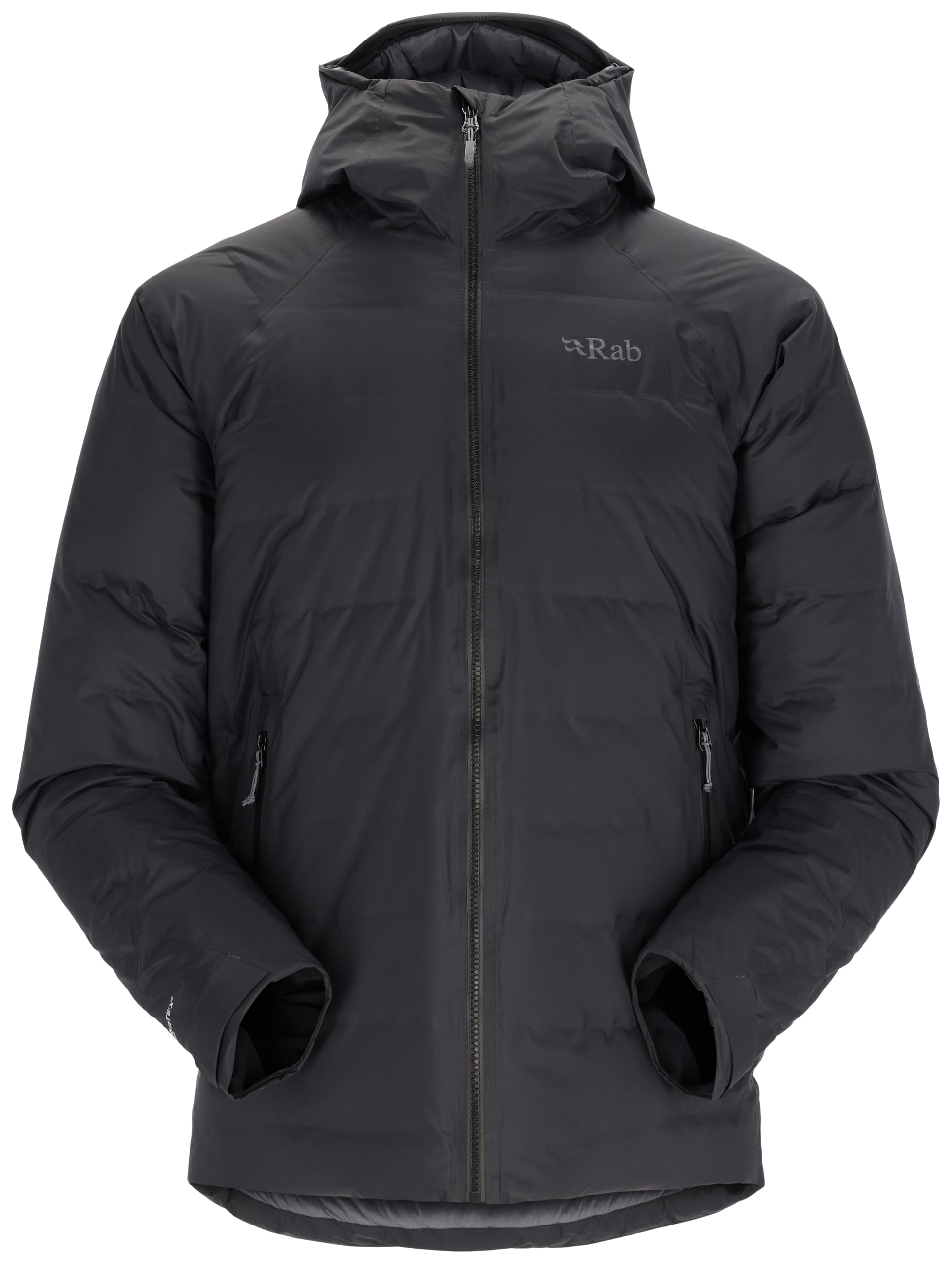
A waterproof down jacket — 700FP fill under a shell rated HH 20,000mm.
Most down jackets hate rain. The Valiance is built to ignore it. A 40D Pertex Shield outer carries an HH 20,000mm rating — hydrostatic head, a measure of how much water pressure the fabric resists before it leaks — so slush and driving rain stay on the outside. Inside, 700FP down does the warming, and stitch-through baffle construction keeps the loft boost. It is the rare jacket that pairs genuine waterproofing with real down insulation.
Drafts stay out because the sealing is thorough: a close-fitting neck baffle (a padded collar that traps heat) and internal soft stretch cuffs hold warmth in, a YKK Vislon AquaGuard front zip (a water-resistant zipper) sits behind an insulated baffle, and a two-point hood adjusts around your head. Owners describe it as warm and comfortable and note the waterproof fabric keeps rain off the face. It also earns points for being repairable, which matters for a long-term winter coat.
The catch is weight and price tier — at 1.44 pounds it is heavier than the pure alpine layers here, and waterproofing adds bulk you feel. If your winter is mostly dry cold, you are paying for protection you will not use. For wet, wild weather, it earns every bit.
The wet-weather edge: a waterproof HH 20,000mm shell over 700FP down is a combination few down jackets offer.
The trade: 1.44 pounds and extra bulk are the cost of that waterproofing — overkill in dry cold.
Your winter coat if: you face rain, slush, and wet snow and want down warmth that survives it.
Skip the waterproofing if: your cold is dry — a lighter layer serves you better.
Know the Specs
Fill Power
Fill power measures how much loft a given weight of down produces, so a higher number means more trapped air and more warmth for less bulk. The jackets here range from 600 fill up to 800 fill. Higher fill is not automatically warmer overall — a 700-fill jacket with more down in it can out-warm an 800-fill jacket with less — but for a given weight, higher fill traps more heat. When comparing two jackets, look at fill power and fill weight together.
Waterproof Rating (Hydrostatic Head)
A hydrostatic head rating, written in millimeters (mm), tells you how much water pressure a fabric resists before moisture pushes through. A jacket rated HH 20,000mm is built for sustained rain rather than a light drizzle. A water-repellent finish is different — it beads up light snow and mist but is not a waterproof membrane. Match the rating to your weather: dry cold needs only repellency, wet winters need a true waterproof shell.
Down Type and Treatment
Waterfowl down and responsibly sourced down both refer to the origin and auditing of the fill. A water-repellent treatment on the down itself helps it keep lofting when damp and dry faster. RDS-certified down means the fill is audited for responsible sourcing. These labels tell you where the down came from and how it handles moisture — they do not change the warmth math, but they matter for wet conditions and for buyers who care about sourcing.
Weight and Packability
Jacket weight in pounds tells you how much warmth you are carrying versus how easily it packs. A 1.16-pound 800-fill jacket is a packable layer; a 2.85-pound bomber is a stand-alone coat. Neither is better — they serve different days. If you will carry the jacket in a pack as backup, lighter wins. If it is your only coat for a cold commute, the extra weight buys you more insulation and a tougher shell.
Common Questions
Is 800-fill down warmer than 700-fill?
Can I wear a down jacket in the rain?
Should I size up in a down jacket?
How do I keep down from clumping after washing?
Is a hood worth having on a down jacket?
What is the difference between water-repellent and waterproof?
Whichdown jacket is warmest for really cold weather?
Will a down jacket work for skiing under a shell?
Do down jackets lose warmth over time?
Is waterfowl down different from regular down?
The Bottom Line
For most men facing a real cold, wet winter, the The North Face McMurdo Bomber is the pick that covers everything — a waterproof shell over waterfowl down, a hood, and enough weight to stand in the cold rather than hurry through it. It holds a 4.5+ star rating across 300+ owners, a higher score than the Orolay Thickened jacket despite that jacket’s bigger review base. If you want the loft-to-weight winner for the mountains, the Rab Neutrino Pro packs 800-fill down (a high fill power, meaning more loft per ounce) into 1.29 pounds. And if you need a wet-weather coat that keeps down warm through rain, the Rab Valiance with its HH 20,000mm waterproof shell (a hydrostatic head rating of 20,000mm, a measure of how much water pressure the fabric resists) is the one to reach for.
How we choose
We do not accept paid placement. Every pick is matched to a real buyer and a real use-case; we do not hands-on test units.
Sources
Specifications: manufacturer listings and product documentation. Review insights: verified customer reviews, as of November 2026. Pricing: not shown on this page (it changes often); check the current price via the retailer link.
As an Amazon Associate, Tactical Gear Guy earns from qualifying purchases. This does not affect which products we feature.