Specs are compiled from manufacturer listings and verified buyer reviews and can change over time — please confirm the key details on the product page before buying.
You want the lights, the fridge and the Wi-Fi to stay on when the grid drops, and you want rooftop solar to offset the bill the rest of the year. That combination — outage backup plus everyday bill offset — is what a whole house solar system with battery backup is for. The picks below are the real ones: inverters sized in kilowatts, batteries sized in kilowatt-hours, and honest notes on what each setup will and won’t carry through an outage.
This guide is built by comparing the manufacturers’ published specifications and the patterns across verified customer reviews, so you get each pick’s real strengths and trade-offs instead of marketing spin.
Some of these kits ship as separate boxes and some need a licensed electrician before they do anything at all — that difference matters more than any spec sheet. Read on for the whole house solar system with battery backup that fits your panel, your wiring and your outage plan.
Top Picks
How To Choose The Best Whole House Solar System with Battery Backup
The most common mistake is shopping by battery size alone. A big battery paired with a small inverter still browns out when your well pump or air conditioner starts, because starting surges draw far more than running watts. Buy the inverter for the surge, then buy the battery for the hours.
Start with your critical-load list, not the panel count
Write down what must stay on: fridge, freezer, a few lights, the router, a medical device, maybe a space heater. Add up their running watts and multiply by the hours you’d want them alive. That number, in kilowatt-hours, is your real battery target. Everything above it is comfort.
Check the output voltage before you buy anything
A 120V-only inverter runs lamps, laptops and a fridge. It will not run a clothes dryer, an electric range or a 240V well pump. Split-phase 120V/240V output is the feature that separates a backup appliance from a backup home. If your critical loads include anything 240V, this is non-negotiable.
Decide if you want a licensed install or a DIY rack
Rack-style batteries and off-grid inverters can be wired by a capable DIYer into a subpanel. All-in-one home panels from Anker and EcoFlow explicitly require a licensed electrician before they operate. Be honest with yourself about which camp you’re in, because it changes both the timeline and the total cost of the project.
Look at the certification list, not the marketing badge
UL1973 covers the battery, UL1741 covers how the inverter interacts with the grid. Seeing both named on the listing tells you the hardware has been tested for North American electrical safety. That paperwork is what your inspector and your insurer will ask for.
Side-by-Side Comparison
| Model | Best For | Storage Capacity | AC Output | Weight | Amazon |
|---|---|---|---|---|---|
| ECO-WORTHY 5120Wh / 5000W★ Best Overall | First whole-home backup on a budget | 5120 Wh | 5000 W | 133.9 lb | Amazon |
| ECO-WORTHY 1200W 24V 4.68kWh KitBest for Off-Grid | Cabins, sheds and RV hookups | 4.68 kWh | 3000 W | — | Amazon |
| ECO-WORTHY PowerMega 314Ah | Long-haul storage and cycle life | 16.1 kWh | 10000 W | 293.2 lb | Amazon |
| Anker SOLIX F3800 Plus | Renters and portable flexibility | 3,840 Wh | 6,000 W | 135.6 lb | Amazon |
| EcoFlow DELTA Pro Ultra X | Whole-home automation and scale | 12288 Wh | 12000 W | — | Amazon |
Detailed Reviews
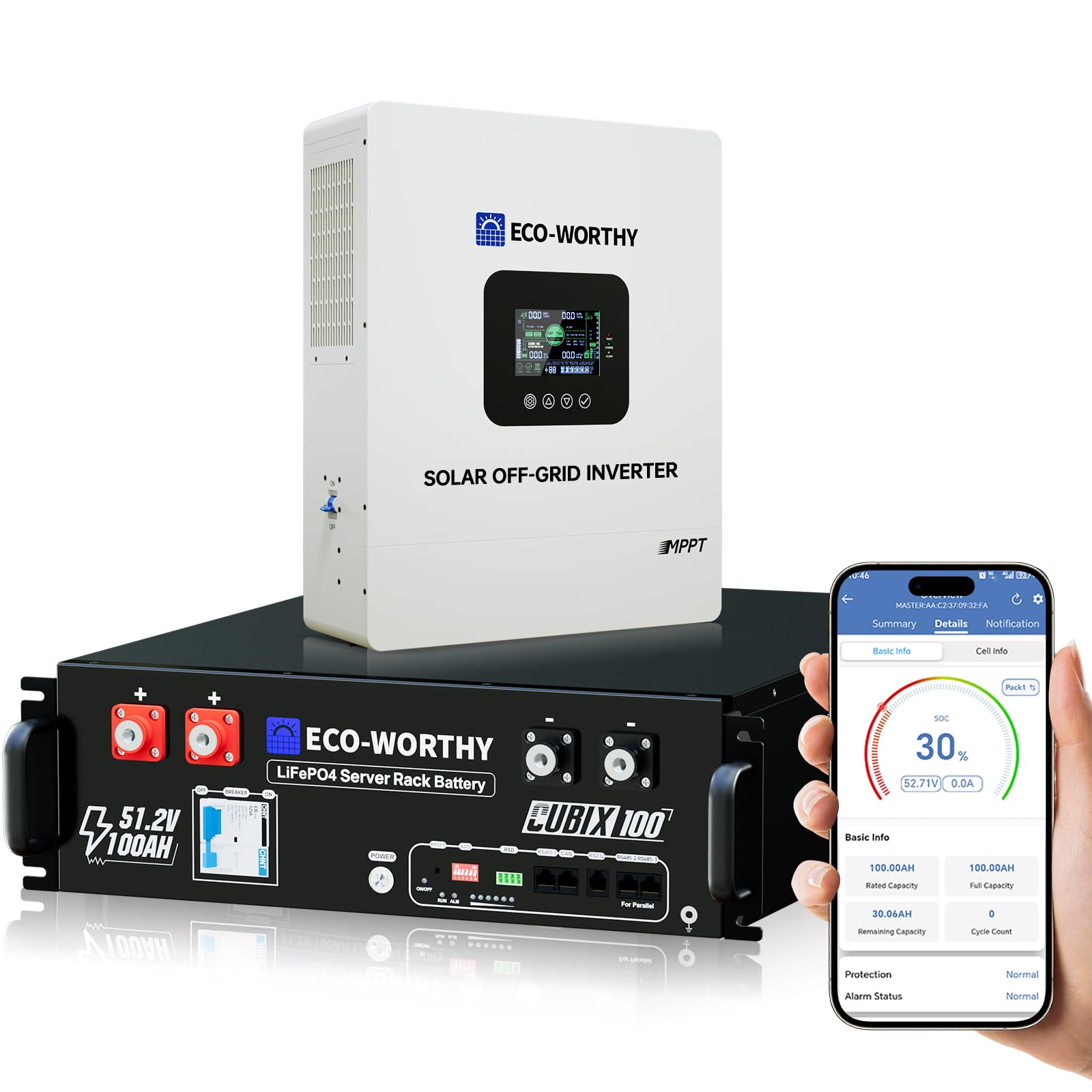
1. ECO-WORTHY 48V Home Backup Power
Our pick — 4.5+★ from 70+ verified ratings; the strongest balance of quality and price.
The entry ticket to real whole-home backup: a rack battery and a 5000W inverter in one box.
This kit earns its spot with 5120Wh of storage feeding a 5000W pure sine wave inverter. A sine wave inverter produces the same smooth AC curve your wall outlet does, so motors and electronics run without the buzz a cheap modified-wave unit introduces. You get a 51.2V 100Ah LiFePO4 battery (lithium iron phosphate — a chemistry that resists thermal runaway better than older lithium mixes) and a 3-in-1 box that combines the inverter, a 100A MPPT charge controller and a 100A battery charger. The MPPT controller squeezes the most watts possible out of your panels on a hazy afternoon, so you get more charge when the sun is weak.
What owners keep coming back to is raw performance — it does the job it was bought for, and the value story holds up next to far pricier kits. The one honest caveat is reliability, which reads mixed across the review pages: some units hum along for months, and a few have needed attention. That mixed record is typical of a first-generation rack system at this price, which is why clear warranty support from the seller matters here.
Expansion is where this kit punches above its weight. Up to 6 inverters can be paralleled for 30kW of AC output, and up to 32 batteries can stack to 163.84kWh of storage. Two or more units in parallel also open up 120V/240V output, so you can grow into a dryer or well pump later instead of buying it all at once. The battery talks to the inverter over CAN/RS485 with built-in Bluetooth and WiFi, so your phone shows state of charge without a separate shunt. Weight is the physical reality: 133.9 pounds, rack form factor, one person can move it but two should.
What earns it the top slot
- 5120Wh of LiFePO4 storage against 5000W of output — a balanced starting point for a critical-load subpanel.
- UL1973 and UL1741 tested by Intertek, plus California Energy Commission listing.
- Grows to 30kW and 163.84kWh, so the hardware you buy today isn’t the ceiling.
- Closed-loop CAN/RS485 communication with app monitoring over Bluetooth and WiFi.
Where it asks for patience
- Reliability is the mixed note in the review data — budget a little troubleshooting time.
- Ships as separate packages, so your tracking numbers arrive piecemeal.
- 133.9 pounds on a rack form factor means a planned install spot, not a closet shuffle.
Pick this one if: you want maximum storage per dollar and you’re comfortable having an electrician wire a subpanel.
Think twice if: you need 240V output on day one — a single inverter here gives you 120V only.
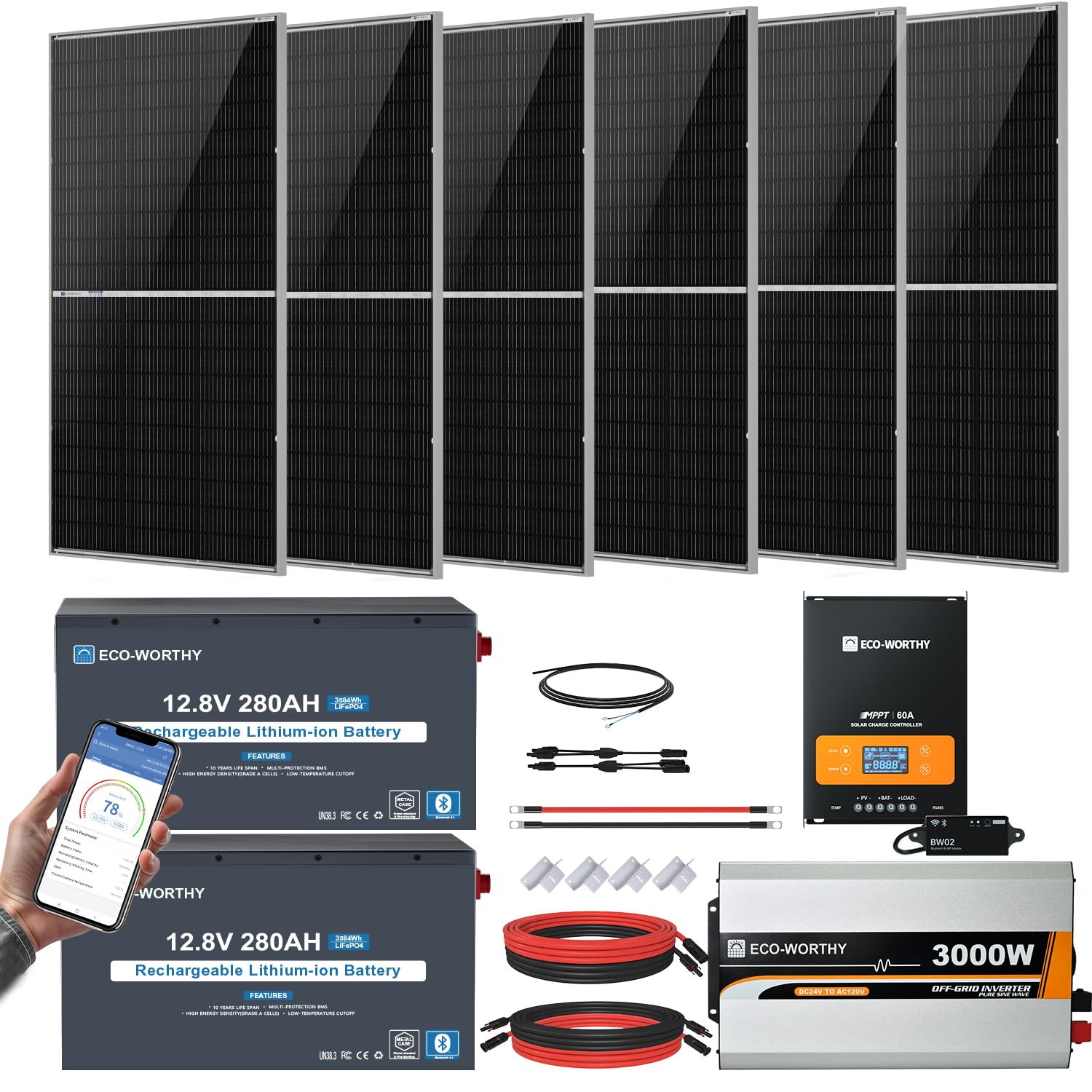
2. ECO-WORTHY 1200W 24V Solar System
The only pick here that ships with the panels — six of them, wired for partial shade.
This kit hands you the whole solar side, while the other five assume you already own an array: 6 pieces of 195W bifacial panel, a 60A MPPT charge controller, a 3000W pure sine wave inverter, and two 12.8V 280Ah LiFePO4 batteries for 7.168kWh of storage. Bifacial means the panel harvests light on its back face too, so a light-colored roof or ground mount adds yield. The anti-shade design splits each panel into 6 zones, so when a chimney or tree branch covers one zone the other 5 keep producing at full power.
Buyers praise how much this kit generates in real installations, running fans and keeping a small fridge and a wine fridge going full time. The 3000W inverter is the honest limit. Put it against the 10000W ECO-WORTHY kit further down and the gap is a 3.3x difference in inverter power — this one is built for a cabin or trailer panel, not a 240V clothes dryer. The 4.68kWh daily figure assumes about 4 hours of good sun, so a gray winter week will need the batteries to carry more of the load.
Installation is rated well, but the instructions themselves are the one recurring knock — the hardware goes together fine while the paperwork leaves people piecing steps together. Budget an afternoon and a second set of hands, and plan for the metal battery case (a step up from ABS plastic) to be the heavy lift. Three-year battery warranty, one year on the rest.
Panel math that matters: 6 × 195W gives a 1170W array, and pairing that with 7.168kWh of storage means the batteries can bank a full day of harvest. That ratio is what lets a shed or fifth-wheel run off-grid through the evening.
Reach for this if: you’re powering a trailer, cabin or shed and you want panels included rather than sourced separately.
Look elsewhere if: your loads include anything 240V — the 3000W inverter is a 120V-class machine.
3. ECO-WORTHY PowerMega 48V 314Ah
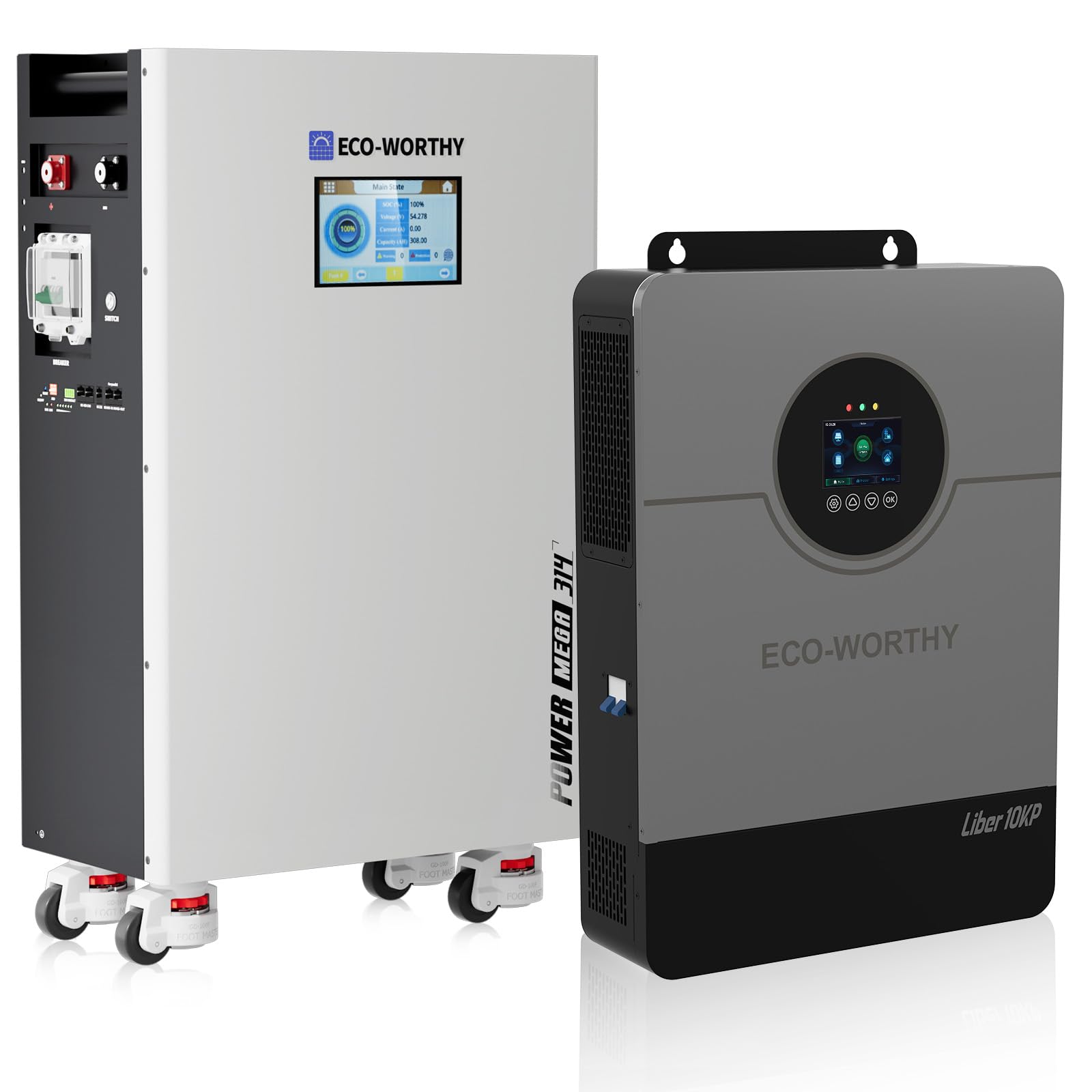
16.1kWh in a single battery, rated for 9,000+ cycles at 80% depth of discharge.
Raw capacity is the headline: one 314Ah battery holds 16.1kWh, paired with the same Liber 10KP 10kW hybrid inverter. Set that against the off-grid kit above and the PowerMega stores more than twice as much — 16.1kWh versus 7.168kWh. For a home that wants to ride out a multi-day outage without rationing, that gap is the whole purchase. The 9,000+ cycle rating at 80% depth of discharge tells you the cells are specified for daily cycling rather than the occasional blackout, and it comes with a 10-year warranty.
This one separates itself from the rack kits with its safety architecture. You get an Active Balancing Smart BMS (battery management system — the chip that keeps every cell in step so one weak cell doesn’t drag the pack down), a built-in circuit breaker, an aerosol fire suppression module and a buzzer alarm. It guards against over-charge, over-discharge, over-current, short circuit and extreme temperatures. The inverter’s MPPT efficiency is rated up to 99.9%, which means almost nothing lost between panel and battery. Reinforced casters make the 293.2-pound battery movable without a pallet jack, and the LCD screen shows live data while WiFi and Bluetooth push it to the app.
What you should know before ordering: the single-battery listing doesn’t include the parallel connection cables, so multi-battery bundles are the route if you plan to stack. Two inverter versions ship at random, differing only in appearance, and the battery arrives by truck freight on a pallet, often in more than one delivery. Lower temperature rating is listed at 32°F, so an unheated garage in a hard freeze is not where this battery wants to live.
Reasons it justifies the jump
- 16.1kWh in one enclosure — the largest single-battery figure in this lineup.
- 9,000+ cycles at 80% DoD with a 10-year warranty behind it.
- Aerosol fire suppression and an active balancing BMS on top of UL1973 certification.
Things to arrange first
- Parallel cables aren’t in the single-battery box.
- Truck freight delivery needs someone home to receive a pallet.
- 32°F lower temperature rating rules out an unheated outbuilding.
Go here for: multi-day outage coverage and a battery specced for daily charge-and-discharge.
Don’t go here for: a first-timer wanting a light, movable unit — this one arrives on a pallet.
4. Anker SOLIX F3800 Plus
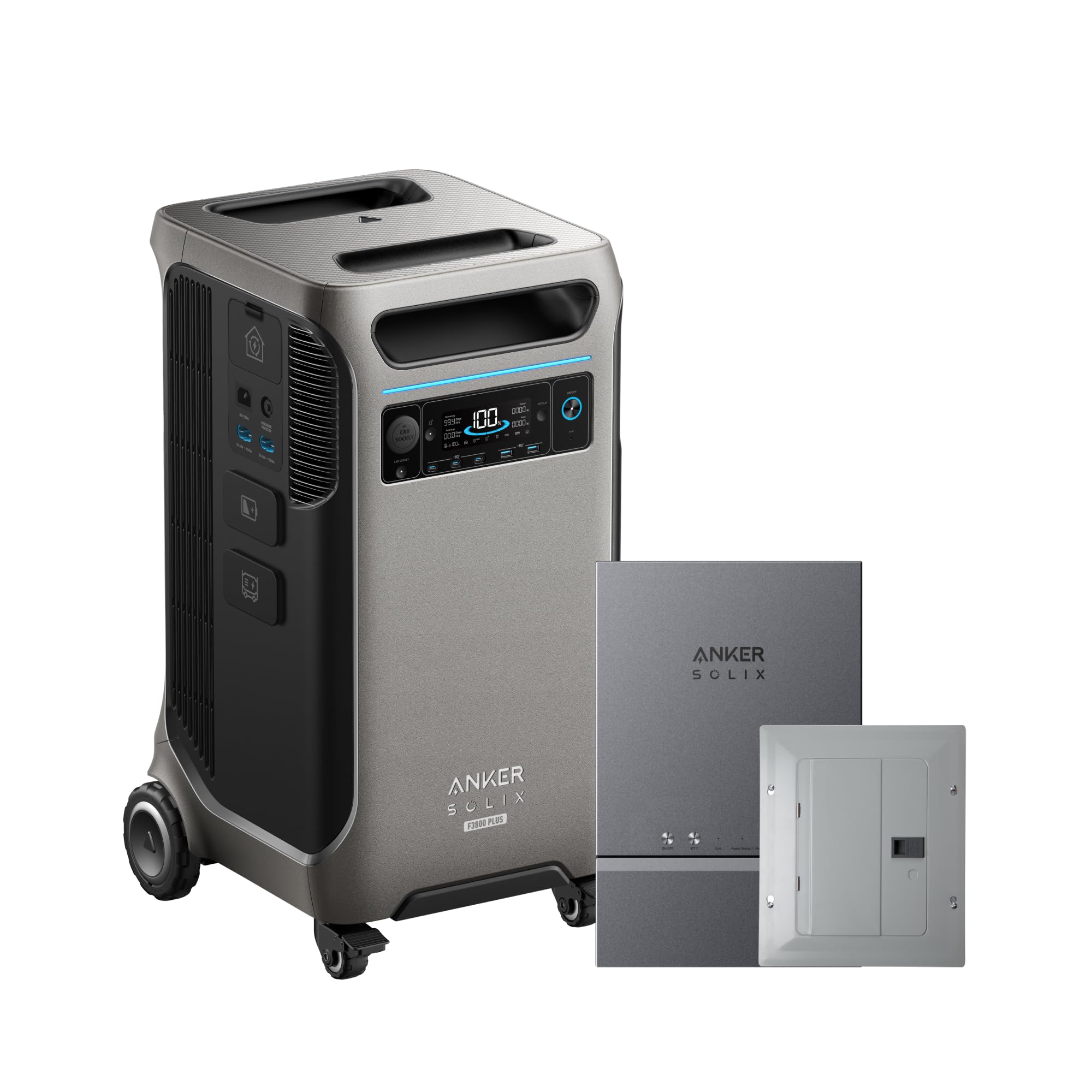
A battery you can carry to the job site and then wire into your house’s critical circuits.
The F3800 Plus breaks the rack-kit mold because it moves. 3,840Wh in the base unit, and you can add up to 6 batteries for 26.9kWh, or add 12 batteries and a second F3800 for weeks of runtime. Output is 6,000W, and pairing two units gets you 12,000W. It handles 120V and 240V, so a clothes dryer is in scope. The recharge time is the number that changes how you live with it: 63 minutes via solar and generator, with four recharge paths — solar, generator, home power panel or a wall outlet. It swallows 3,200W of solar input, and a 240V gas generator can feed it through a 6,000W bypass.
Buyers talk about quality most, and functionality right behind it — the everyday experience of running microwaves and other appliances without a fuss comes up constantly. The home power panel is the piece that makes it a whole-house solution: it routes your critical circuits through the F3800 Plus, and Anker states plainly that a standard 100A circuit breaker is required and sold separately, and that a licensed electrician must do the install. The station and the panel ship as separate packages, so expect two tracking numbers. 135.6 pounds and a 27.64-inch length make it portable in the same way a generator is portable — wheels and a plan, not a backpack.
The battery chemistry is LFP (lithium iron phosphate), the same family the ECO-WORTHY kits use, wrapped in Anker’s InfiniPower temperature management and an impact-resistant shell. A 5-year warranty pairs with a 10-year stated lifespan. Where this one wins over the rack systems is optionality: unplug it, take it to a tailgate or a job site, then plug it back into the panel for the next outage.
Why the panel matters: without the Home Power Panel, this is a very good portable station. With it, your furnace blower and fridge switch over automatically instead of you running extension cords in the dark.
Choose it when: you rent, you move often, or you want one battery that serves both the house and the road.
Know before you buy: the breaker is extra and the electrician is mandatory — factor both into your plan.
5. EF ECOFLOW DELTA Pro Ultra X

Twelve kilowatt-hours that switch over in under 20 milliseconds — faster than a blink.
The spec that sells this system is the switchover: under 20 milliseconds. Your clock radio won’t even flash. The DELTA Pro Ultra X starts at 12288Wh and scales to 180kWh, with 12–36kW of output and a 12000W AC rating at 120/240V. That’s double the 6,000W Anker, and it’s why this one can carry central AC and an EV charger rather than just the fridge and lights. The Smart Home Panel 3 is the brain — it auto-switches on grid failure, controls individual circuits to stretch runtime, and runs an hourly weather assessment to top the batteries before a storm.
What buyers praise most is build quality, with installation ease close behind. The mixed signal in the data is reliability and value — at this tier, expectations run high and a few owners have hit issues that needed support. Treat that as a reason to confirm your installer’s experience with the Smart Home Panel 3 specifically, since EcoFlow requires professional installation before the panel operates at all. The inverter, battery and panel ship in separate packages.
The flexibility angle is unusual for a permanent install: EcoFlow built it to be unplugged and moved, with no hardwiring required, and DIY solar panels or plug-and-play batteries can be added without tools or an electrician. Current Sense Transformer monitoring means surplus rooftop solar goes to the house or the EV instead of being exported at a low credit. That’s the feature that pays you back between outages rather than only during them.
The comparison that matters: against the ECO-WORTHY 10240Wh kit, this delivers 12288Wh and 12000W with automatic circuit-level switchover — you’re paying for the intelligence layer, not just the cells.
This is the one for: a homeowner who wants whole-home automation, EV charging and storm-prep logic running on autopilot.
Not the one for: anyone hoping to skip the electrician — the Smart Home Panel 3 won’t run until it’s professionally installed.
Know the Specs
Storage capacity in kWh
Kilowatt-hours measure how much energy the battery holds — think of it as the size of the fuel tank. A 5120Wh battery is the same as 5.12kWh. To size yours, add up the running watts of your critical loads and multiply by the hours you want them alive. A fridge drawing a couple hundred watts overnight plus lights and a router adds up faster than most people expect, which is why 10kWh and up is the comfortable zone for a whole home.
Inverter watts versus surge watts
Continuous watts is what the inverter can supply all day. Peak or surge watts is the short burst it can deliver when a motor starts — an air conditioner or well pump can pull several times its running watts for a second or two. A kit rated 10000W with 20000W peak has real headroom for those starts. A smaller inverter may run everything on your list until two motors kick on at once.
MPPT charge controllers
MPPT stands for maximum power point tracking — the controller constantly adjusts to pull the most watts your panels can give under current light. The ECO-WORTHY off-grid kit is rated at up to 99% tracking efficiency, which matters on hazy or hot days when panels underperform their sticker rating. A plain PWM controller leaves harvest on the table, and that lost energy is one you paid for.
Split-phase 120V/240V output
North American homes use two 120V legs to make 240V for big appliances. A split-phase inverter reproduces that, so your dryer, range or well pump sees the voltage it expects. A 120V-only inverter limits you to lights, electronics and small appliances. If any 240V load is on your must-run list, this spec decides which kits even qualify.
Common Questions
How many kWh do I need to back up a whole house?
Can these systems run a 240V clothes dryer or well pump?
Do I need a licensed electrician to install one of these?
Is LiFePO4 safer than other lithium battery types?
How long will the battery last before it needs replacing?
Can I add more batteries later instead of buying the biggest kit now?
Will a system like this lower my electric bill?
What is the difference between a rack battery kit and an all-in-one power station?
How long does it take to recharge after an outage?
Can I take the system with me if I move house?
The Bottom Line
For most homes, the whole house solar system with battery backup that makes the most sense is the ECO-WORTHY 5120Wh / 5000W kit, because it puts genuine whole-home capacity and UL-tested hardware at the entry point of this category, and its parallel expansion means the system you buy today can grow to 163.84kWh. If 240V loads are on your critical list from day one, step up to the 10240Wh ECO-WORTHY kit — twice the storage, twice the weight, and split-phase output out of a single inverter. And if you want a battery that travels between the house and the road, the Anker SOLIX F3800 Plus is the one that unplugs.
One nudge before you commit: the Anker carries 4.0+ stars across 100+ ratings, and for a category where most buyers are spending real money on a permanent install, that volume of feedback is your best sanity check.
How we choose
We do not accept paid placement. Every pick is matched to a real buyer and a real use-case; we do not hands-on test units.
Sources
Specifications: manufacturer listings and product documentation. Review insights: verified customer reviews, as of November 2026. Pricing: not shown on this page (it changes often); check the current price via the retailer link.
As an Amazon Associate, Tactical Gear Guy earns from qualifying purchases. This does not affect which products we feature.