Specs are compiled from manufacturer listings and verified buyer reviews and can change over time — please confirm the key details on the product page before buying.
Cold feet end winter rides faster than tired legs — and no amount of layering fixes a shoe that leaks or lacks insulation. The fix is a shoe built for the cold — one with real insulation, a weather-sealed upper, and a sole that grips ice when you unclip. Below you get seven picks that actually keep your toes alive through freezing commutes and snowy singletrack, sorted by how they perform.
This guide is built by comparing the manufacturers’ published specifications and the patterns across verified customer reviews, so you get each pick’s real strengths and trade-offs instead of marketing spin.
You will see what insulation each shoe uses, how the closure works with gloves on, and where the fit runs narrow. Warmth is the whole game here, so the picks below are ranked by how well they hold heat — the warmest winter cycling shoes keep your feet comfortable when the temperature drops.
Top Picks

How To Choose The Best Warmest Winter Cycling Shoes
A winter cycling shoe has one job: keeping your feet warm and dry while you pedal in freezing, wet conditions. Grip, closure, and weight matter, but only after warmth and waterproofing are settled. A shoe that fits poorly or lets water in will freeze your toes no matter how much PrimaLoft or Thinsulate it carries.
Insulation type and coverage
Insulation is the core of a winter shoe. PrimaLoft and Thinsulate are the two materials to look for — both trap body heat while staying breathable. Some boots use composite footbeds with multiple layers to block cold from the ground up, which matters just as much as the upper.
Waterproofing and breathability
A waterproof membrane keeps slush and rain out, but it must breathe or your feet sweat and get cold from the inside. Look for named membranes like GORE-TEX or DRYSHIELD, or seam-sealed booties in premium boots. A weather-resistant leather upper with minimal seams is another solid approach.
Closure systems for gloved hands
BOA dials and speed lacing are the two systems you will see. A BOA dial lets you fine-tune fit with one hand — but a small dial can be hard to grip through thick gloves, so some boots move the dial to the front of the tongue for easier access. Speed laces are quick but less adjustable on the fly.
Outsole grip for off-bike moments
You will walk in these shoes — at the start line, at a coffee stop, on icy parking lots. A Vibram or rubber outsole with aggressive lugs keeps you upright. Some boots add anti-slip tread inserts for ice, which matters if you ride in places that freeze hard.
Side-by-Side Comparison
| Model | Best For | Insulation | Waterproofing | Closure | Amazon |
|---|---|---|---|---|---|
| Five Ten Freerider EPS★ Best Overall | Flat-pedal riders in wet cold | PrimaLoft + heat-reflective footbed | Weather-resistant leather | Laces | Amazon |
| SHIMANO SH-MW501Best Value | SPD commuters on a budget | Fleece liner | DRYSHIELD membrane | Hook & Loop + speed lace | Amazon |
| Terra ARTICA X2 | Off-road riding in slush | Insulated construction | event waterproof/breathable membrane | Boa L6 dial + zippered cuff | Amazon |
| Lake MXZ303 | Fatbiking and deep winter | 3M Thinsulate liner | Pitards WR100 leather | BOA micro-cable | Amazon |
| Lake MXZ304 | Long snowy rides | Thinsulate insulation | Waterproof upper | BOA dial on tongue | Amazon |
| Fizik Tempo Artica R5 GTX | Road riding in wet cold | Insulated fleece lining | GORE-TEX membrane | Boa dial | Amazon |
| Lake MXZ400 | Extreme cold and ice | Thinsulate + six-layer footbed | Seam-taped membrane bootie | Dual BOA dials | Amazon |
Detailed Reviews
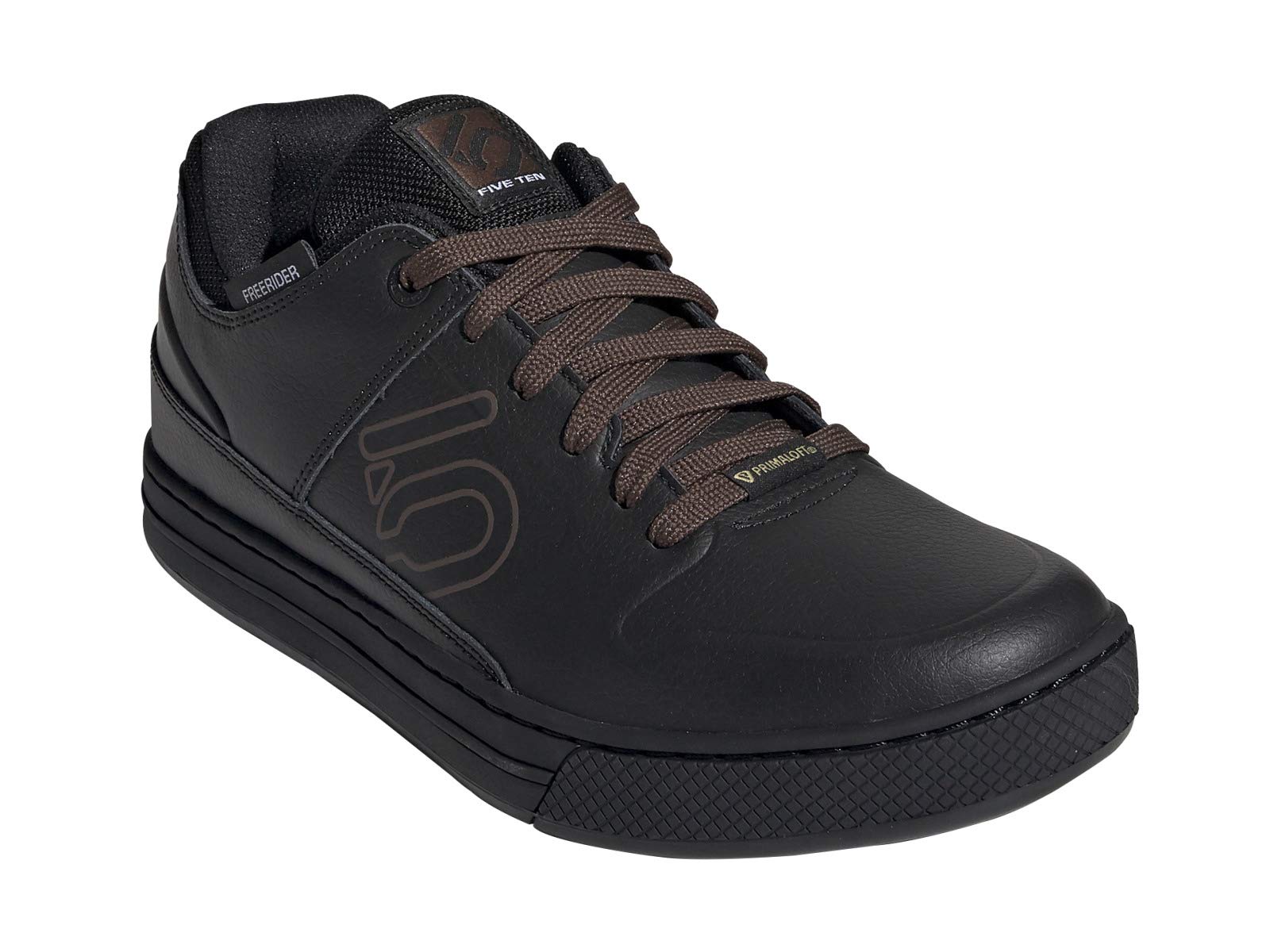
1. Five Ten Men’s Freerider EPS Mountain Biking Shoe
Our pick — 4.5+★ from 30+ verified ratings; the strongest balance of quality and price.
A flat-pedal winter shoe that keeps the classic Freerider feel with real cold-weather insulation.
The defining spec here is PrimaLoft insulation paired with an insulated, heat-reflective footbed. PrimaLoft is a synthetic fill that traps body heat even when damp, and the reflective footbed bounces warmth back up at your sole instead of letting the cold pedal metal pull it away. For flat-pedal riders who keep pedaling through damp, chilly days, that combination is what keeps your toes from going numb.
The upper is a coated, weather-resistant leather with minimal seams — fewer seams means fewer places for water to creep in. The Stealth S1 Dotty rubber outsole grips wet, slippery ground and your pedals, so you stay in control both on and off the bike. If you ride flat pedals and want the summer Freerider’s shape and Stealth S1 grip with PrimaLoft warmth, this is the one.
What wins people over is the quality and the fit — the shoe feels well-built and true to the classic Freerider shape. The honest catch: this is not a fully waterproof boot, and there is no BOA dial, just laces. If you ride in heavy rain or need SPD compatibility, look at the SHIMANO or Lake picks below instead.
Where it holds heat
- PrimaLoft insulation plus a heat-reflective footbed trap warmth at the sole.
- Coated leather upper with minimal seams keeps damp out.
- Stealth S1 rubber grips wet pedals and slippery ground.
What to know before buying
- Laces only — no BOA dial for quick glove-friendly adjustment.
- Weather-resistant, not a fully waterproof boot for heavy rain.
Grab this if: you ride flat pedals through damp cold and want the classic Freerider feel with PrimaLoft warmth.
Look elsewhere if: you need SPD compatibility or a fully sealed boot for steady rain.
2. SHIMANO SH-MW501 SPD Shoe for the Cold and Wet
The entry point into SPD winter riding, with a waterproof membrane and a fleece liner.
If you clip in and want to keep costs down, the SH-MW501 gives you the essentials. A waterproof DRYSHIELD membrane (a built-in waterproof layer) keeps rain and road spray out. A fleece liner and a lace and ankle cover work together to trap heat. The fleece insole touches your foot directly, so it feels warm the moment you slide in. A 360-degree reflective print (a pattern that bounces light back) helps drivers see you in low light, which matters on dark winter commutes.
The rubber outsole is built to keep you upright in wet and muddy conditions, and the speed lacing system makes it quick to find a secure fit. At 2.8 pounds, it carries some heft — that is the trade-off for the liner and membrane. What buyers report is genuinely split: warmth and comfort both draw mixed reactions, with some finding them toasty and others saying they do not hold heat well. That split tells you this shoe suits milder cold and wet more than deep freeze.
One recurring point worth knowing: the cleat can be felt through the sole underfoot, so a stiff pedal interface matters. If your winters are long and hard, step up to a Thinsulate boot. If you mostly fight wet and chilly mornings and want SPD compatibility without a premium spend, this is a sensible starting point.
The real-world read: DRYSHIELD waterproofing, a fleece liner, and 360-degree reflectivity make this a capable wet-weather SPD shoe for the money.
The honest limit: warmth is genuinely mixed — some riders stay warm, others do not — so treat it as a cool-and-wet shoe, not a deep-freeze boot.
Fits your plan if: you clip in with SPD and ride cool, wet mornings on a tighter budget.
Think twice if: you face hard freezes — the mixed warmth reports suggest you need heavier insulation.
3. Terra ARTICA X2
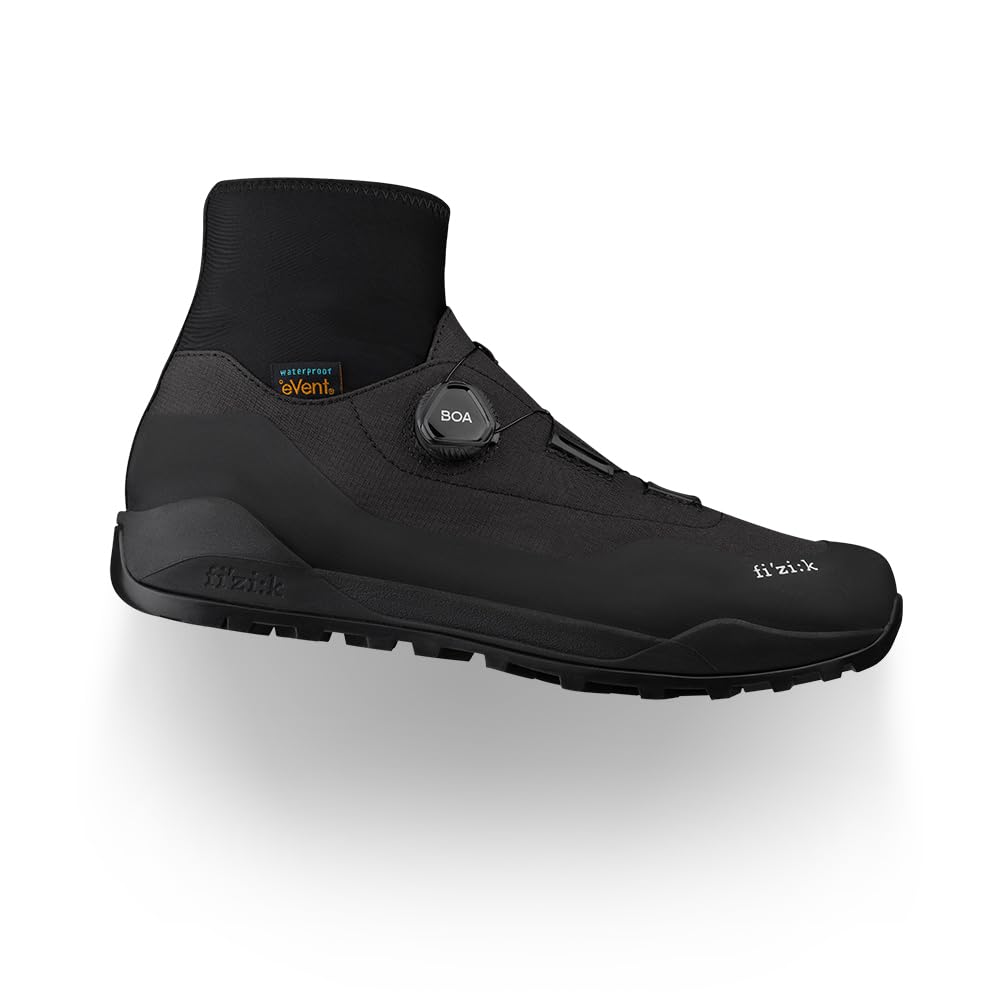
An insulated off-road shoe with a zippered cuff and Boa dial built for messy winter trails.
Where the SHIMANO leans on a fleece liner, the Terra ARTICA X2 layers an insulated construction under an event waterproof/breathable membrane — a membrane that blocks water from outside while letting sweat vapor escape. A zippered ankle cuff seals the gap where slush usually sneaks in, and the ripstop fabric upper resists tearing on brush and trail debris. The X2 outsole is tuned for grip on and off the bike.
Owners find it comfortable and well-made, and it does the core job of keeping feet warm and dry. The Boa L6 dial lets you cinch the fit without undoing the zippered cuff. The catch sits in two places: the fit runs tight to pull on, and water resistance draws mixed reports — some ride through wet weather dry, others find it not entirely waterproof. That is a fit-and-seal story, not a warmth story.
If you ride mixed-surface trails in wet cold and want an insulated, Boa-closure shoe, the X2 covers the bases well. Just size with the snug entry in mind and pair it with good waterproof socks in steady rain.
What stands out: the insulated build, the event breathable-waterproof membrane, and the zippered cuff all target the wet-cold trail rider.
Where it asks patience: entry is tight and water resistance is mixed, so a snug fit and rainy days need a little planning.
Reach for this if: you ride wet, mucky trails and want an insulated shoe with a Boa dial and sealed cuff.
Pass if: you need a roomy, easy-on entry or count on dry feet in sustained rain.
4. Lake MXZ303 Men’s Winter Boot

The dedicated deep-winter boot that turns a frozen fatbike session into a warm one.
This is where the category gets serious. The MXZ303 pairs a 3M Thinsulate temperature-regulating liner with water-resistant Pitards WR100 leather that still breathes, plus a grippy Vibram sole for icy and snowy ground. The Thermosol composite insulation focuses warmth where it matters most — the toe area that usually goes numb first. A BOA micro-cable closure spreads tension evenly to avoid pressure points and hot spots.
Owners mention feet staying toasty even on fatbiking rides in cold conditions, and they consistently praise the construction. The boot is built to be easy on and off, which matters when your fingers are stiff. At 3.94 pounds it is a substantial boot — that weight buys you a lot of insulation and a Vibram sole (a sticky rubber outsole for grip). It keeps heat in far better than a lighter shoe like the Five Ten Freerider EPS at 2.15 pounds.
The fit runs narrow for some riders, so if you have wide feet, plan accordingly or look at the wide options in the Lake line. For fatbiking and long rides through ice and snow, the MXZ303’s Thinsulate liner and Thermosol toe insulation keep the cold off your toes.
The warmth engine: 3M Thinsulate (a thin synthetic insulation), Thermosol composite insulation, and a heat-focusing toe area make this among the most cold-capable boots in the lineup.
The trade-off to size: it runs narrow for some feet and carries real weight, so wide-footed riders should plan the fit.
Build your winter around it if: you fatbike or ride through icy, snowy deep winter and want maximum heat retention.
Check your width first if: you have wide feet — the narrow fit is the one recurring snag.
5. Lake MXZ304 Winter Cycling Boot
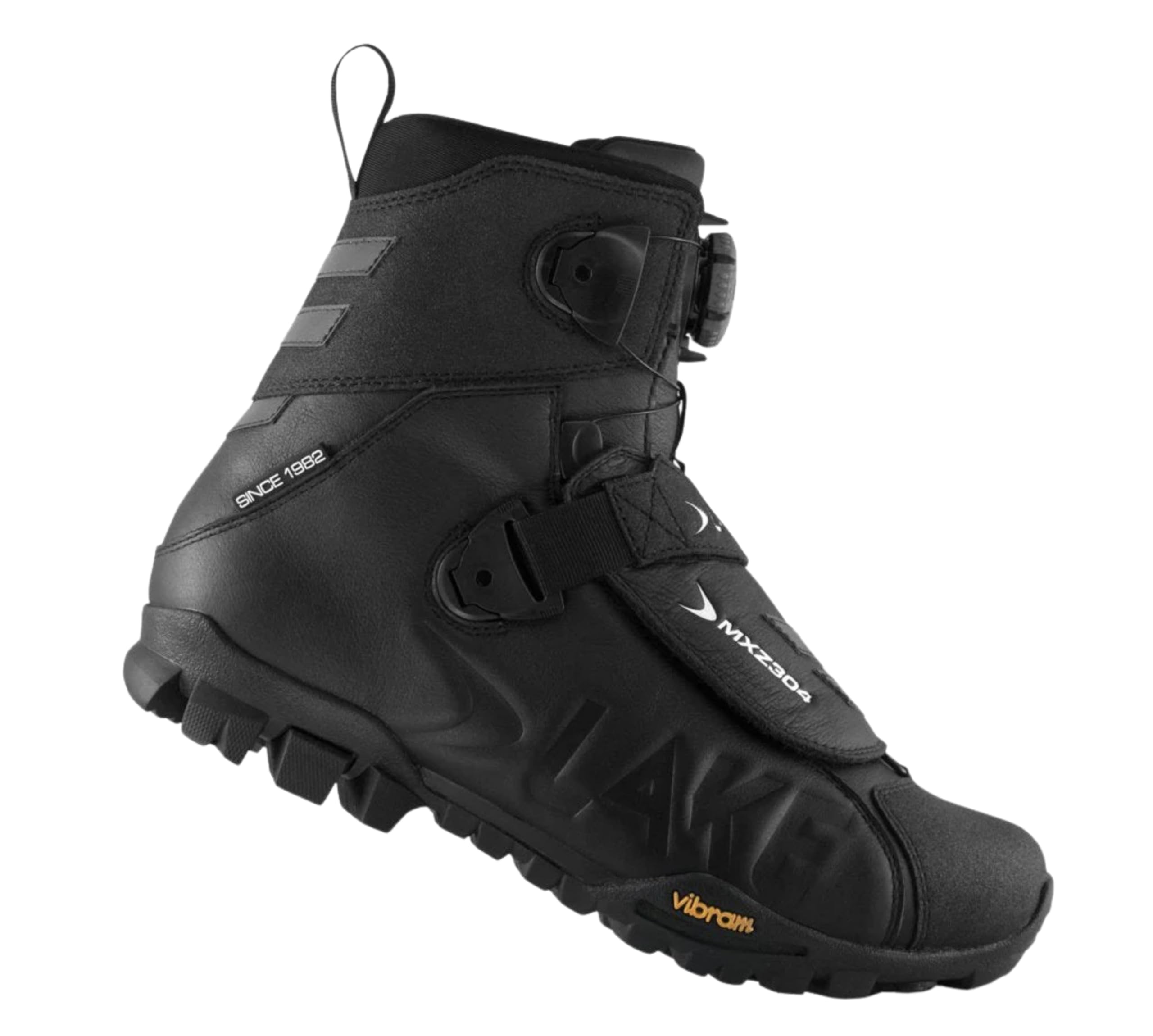
A winter boot built for hours in the snowy woods, with a BOA dial moved forward for gloved hands.
Lake helped pioneer the dedicated winter cycling boot, and the MXZ304 refines it. The Pittards leather upper molds to the shape of your foot for comfort, while a heavy-duty Vibram outsole gives traction on and off the bike. Lightweight Thinsulate insulation keeps your toes warm on long rides through the snowy woods. The smartest detail is the larger BOA dial moved to the front of the tongue — easier to grab with winter gloves on and a more even tension across the top of your foot.
Buyers keep coming back for the build quality and the warmth — feet stay warm even in snowy conditions, yet the boot does not feel uncomfortably hot in merely cool temperatures. That range matters: one boot covers late fall through deep winter. The Vibram outsole gives the same family of grip as the MXZ303 above, so the major difference between them depends on the refined dial placement and the leather fit.
The sizing is the sticking point — some riders find their size fits comfortably, others find it narrow, and the BOA mechanism can be fussy. If you ride long winter singletrack and want a Pittards leather boot that molds to your foot, the MXZ304 delivers. Just dial in the size carefully before you commit.
Why riders like it
- Thinsulate keeps toes warm on long snowy rides without overheating in cool weather.
- Pittards leather molds to your foot for comfort.
- BOA dial moved to the tongue is easier to use with gloves.
Where it can trip you
- Sizing is narrow for some riders.
- The BOA mechanism can be fussy to operate.
Best matched to: long snowy singletrack rides where a leather boot that molds to your foot is a plus.
Not ideal for: wide feet or anyone who wants a dead-simple, non-fussy closure.
6. Fizik Tempo Artica R5 GTX Road Winter Shoes

A road shoe that pairs a GORE-TEX membrane with fleece for winter rides on tarmac.
Most winter boots are mountain-bike builds. The Tempo Artica R5 GTX is for the road cyclist who wants extra warmth without swapping discipline. It uses an advanced GORE-TEX membrane — the gold-standard barrier that blocks water while venting sweat vapor — plus an insulated fleece lining for warmth and breathability. That is a targeted combo for wet, cold road rides rather than snowy trails.
The weight makes another point: at 2.15 pounds it is far lighter than a deep-winter boot like the Lake MXZ303 at 3.94 pounds. That lightness suits road riding, where you are spinning rather than slogging through snow, and less bulk on the foot means less fatigue on long tarmac efforts.
There is no customer review history recorded for this listing yet, so the pick rests on the spec sheet itself: GORE-TEX waterproofing, fleece insulation, road-shoe shape. If you ride club routes or commute on tarmac through cold and wet, it is built for exactly that. If you need to walk on ice or ride snowy singletrack, the mountain-boot picks are the better fit.
The road-focused case: GORE-TEX waterproofing and fleece insulation in a lighter road-shoe shape make it the natural pick for tarmac riders.
The reason to pause: it is a road shoe — no winter traction sole for walking on snow and ice.
Made for you if: you ride road or club routes through cold and wet and want GORE-TEX coverage.
Skip if: your winter riding happens on snowy trails or icy surfaces you have to walk.
7. Lake MXZ400 Winter Cycling Boot

The overbuilt boot for riders who refuse to quit when the temperature bottoms out.
Lake built the MXZ400 for extreme cold, starting with double the insulation of previous models. The upper is water-resistant full-grain leather plus abrasion-resistant waterproof leather, sealed with a seam-taped membrane bootie and a protective leather over-flap with reflective panels. Inside, a composite six-layer footbed forms a temperature-isolating barrier between you and the ground — so the cold cannot climb up from the sole, where so many winter boots fail.
Underfoot, the Enduro sole carries ICE LOCK anti-slip tread inserts made of micro-glass-fiber lugs for traction on icy, mixed surfaces. The 50/50 sole rating balances on-bike efficiency with off-bike comfort, meaning you can pedal hard and still walk without slipping. Fit is dialed by dual BOA dials — one on the tongue and one on the side — with dual Click-Fit quick release for easy entry and a secure heel hold that does not restrict circulation.
Owners confirm the warmth and the build quality, and it runs true-to-size for some while others find it extremely small — so check the sizing chart before you buy. For hard freezes and ice, the MXZ400 stacks double insulation, a six-layer footbed, and ICE LOCK lugs in one boot. If your winters are milder, the MXZ303 or MXZ304 do the same job with less boot.
What it does better than any other pick
- Double the insulation of previous models for extreme cold.
- Six-layer footbed isolates cold from the ground.
- ICE LOCK anti-slip lugs grip icy, mixed surfaces.
- Dual BOA dials with Click-Fit quick release for secure heel hold.
The one thing to get right
- Sizing reports conflict — some find it true-to-size, others extremely small, so verify the chart.
Choose this for: hard freezes, ice, and riders who want maximum insulation and traction in one boot.
Watch the sizing: conflicting reports mean you should confirm your size before committing.
Know the Specs
PrimaLoft vs Thinsulate insulation
PrimaLoft is a synthetic fill that traps heat even when damp — good for wet cold where rain or sweat is a factor. Thinsulate is a thin, temperature-regulating liner that packs warmth into little space, which is why deep-winter boots like the Lake series rely on it. Both work by slowing heat loss from your foot rather than adding bulk; the difference shows up in how the boot handles moisture and how much bulk it adds.
Waterproof membrane ratings
A waterproof membrane blocks liquid water from outside while letting vapor escape — the named versions include GORE-TEX, DRYSHIELD, and event. Breathability matters because sweat that cannot escape cools your foot from the inside. A seam-taped bootie (seen on the MXZ400) adds a sealed inner layer, while a coated leather upper with minimal seams is the simpler approach. None of these make a boot fully warm on its own; they keep the insulation dry so it can do its job.
BOA dial vs laces
A BOA dial is a small rotary knob that tightens a steel cable for even tension and easy one-hand adjustment — a real advantage in winter gloves. Laces are simpler and cheaper but slower to adjust with cold fingers. Some boots move the BOA dial to the front of the tongue so it is easier to reach with gloves on.
Sole grip and the 50/50 rating
Off-bike grip is often overlooked. A Vibram outsole with aggressive lugs keeps you upright on icy parking lots, and anti-slip tread inserts (like ICE LOCK micro-glass-fiber lugs) add bite on ice. A 50/50 sole rating means the shoe splits its design between pedaling efficiency and walking comfort — the higher the off-bike portion, the more confidently you can walk in it.
Common Questions
What is the warmest insulation for winter cycling shoes?
Do winter cycling shoes run narrow?
Are these shoes waterproof or just water-resistant?
Can I use road cycling shoes in winter instead of dedicated boots?
How do I size winter cycling shoes with thick socks?
What does 50/50 sole rating mean on winter cycling boots?
Are BOA dials better than laces for winter gloves?
Will insulated cycling shoes make my feet too hot in mild weather?
Do I need SPD-compatible winter shoes?
How important is the footbed for warmth?
The Bottom Line
The warmest winter cycling shoes here each solve the cold-foot problem in their own way. If you want the best all-around flat-pedal winter shoe with real PrimaLoft insulation and a heat-reflective footbed, the Five Ten Freerider EPS is the balanced pick. For the hard-freeze rider who wants every layer working — double insulation, a six-layer footbed, and ICE LOCK ice grip — the Lake MXZ400 is the boot to reach for. And if you clip in on tarmac through wet cold, the Fizik Tempo Artica R5 GTX pairs GORE-TEX with fleece for the road. Whichever you choose, verify your size against the brand chart — a snug winter boot you can wear all ride is worth more than a warmer one you cannot.
How we choose
We do not accept paid placement. Every pick is matched to a real buyer and a real use-case; we do not hands-on test units.
Sources
Specifications: manufacturer listings and product documentation. Review insights: verified customer reviews, as of November 2026. Pricing: not shown on this page (it changes often); check the current price via the retailer link.
As an Amazon Associate, Tactical Gear Guy earns from qualifying purchases. This does not affect which products we feature.