Specs are compiled from manufacturer listings and verified buyer reviews and can change over time — please confirm the key details on the product page before buying.
Your welding oxygen tank choice depends on two things: how much gas you burn in a week, and if you want to haul a heavy steel bottle or carry a light one. Everything else — valve type, hydro dates, shipping rules — follows from those two answers. The picks below range from a 20 cu ft cylinder you can lift with one hand up to a 125 cu/ft bottle that arrives already full.
This guide is built by comparing the manufacturers’ published specifications and the patterns across verified customer reviews, so you get each pick’s real strengths and trade-offs instead of marketing spin.
Every cylinder here uses the same CGA 540 valve, the standard oxygen connection, so your regulator choice stays the same no matter which size you buy. Sizes run from 20 cu ft up to 125 cu/ft, and that range is the whole story of this category. Here is how each one fits a different workshop, and what to confirm before you order a welding oxygen tank.
Top Picks


How To Choose The Best Welding Oxygen Tank
Start with the gas volume you actually burn, not the price tag. A 20 cu ft cylinder suits a hobby torch that gets used for small cuts and brazing jobs. A 125 cu/ft bottle is for a shop that runs a rosebud tip or cuts plate all day and does not want to stop work for a swap.
Gas Volume in Cubic Feet
The number on the listing — 20, 22, 80 or 125 cu/ft — tells you roughly how long the gas lasts at a given flow rate. Bigger volume means fewer trips to the supplier. Bigger volume also means more shell weight to move, and that weight difference is large: one 125 cu/ft steel bottle carries 69 pounds and one aluminum 22 cu ft bottle carries 12 pounds. Match the size to your torch time, not to your storage space alone.
The CGA 540 Valve and Your Regulator
Every cylinder in this guide arrives with a CGA 540 valve (the industry-standard connection for oxygen cylinders). Your oxygen regulator must be made for that fitting and for oxygen service only. Never attach a regulator that has touched another gas, and never let oil or grease near the valve — oxygen plus oil is the one combination that ends badly.
Hydro Test Dates and DOT Approval
A hydrostatic test is a pressure inspection of the cylinder shell, and a 10-year test date is common on the cylinders sold here. The date is stamped on the tank, often on the shoulder near the valve. Some listings state the cylinder is within 2 years of its stamped date, which matters if your local filler checks the date before refilling. Confirm your filler’s date policy before you buy anything empty.
Empty vs Full Shipments
Most small cylinders ship empty because compressed gas shipping regulations require it. One 125 cu/ft bottle in this list ships full. Empty means you arrange the fill, and gas suppliers vary in how they handle a customer-owned cylinder. A phone call to your local supplier before ordering saves a wasted tank sitting in the garage.
Side-by-Side Comparison
| Model | Best For | Capacity | Shell Material | Weight / Size | Amazon |
|---|---|---|---|---|---|
| 20 cu ft Steel Oxygen Cylinder – CGA540 Valve – DOT Approved★ Best Overall | Portable welding and cutting | 20 cu ft | Steel | 16 lb / 5.25″ x 18″ | Amazon |
| 80 cu/ft Oxygen Welding Gas Cylinder Tank CGA 540 – EMPTYTop Performer | Shop workhorse, refill locally | 80 cu/ft | Steel | 50 lb / 7″ diameter | Amazon |
| 20 cf Cylinder for Oxygen w/free shipping | Lowest-cost working cylinder | 20 cf | Steel | 13 lb / 15″ tall | Amazon |
| New 20 cu ft Steel Oxygen Cylinder with CGA540 Valve | US-stamped buyer confidence | 20 cu ft | Steel | 13 lb | Amazon |
| New 22 cu ft Aluminum Oxygen Cylinder with CGA540 Valve | Carrying to job sites | 22 cu ft | Aluminum | 12 lb / 17.1″ long | Amazon |
| 125 cu/ft Oxygen Welding Gas Cylinder Tank CGA 540 – FULL | High-volume cutting, arrives filled | 125 cu/ft | Steel | 69 lb / 7″ diameter | Amazon |
Detailed Reviews
1. 20 cu ft Steel Oxygen Cylinder – CGA540 Valve – DOT Approved
Our pick — 4.5+★ from 100+ verified ratings; the strongest balance of quality and price.
The compact steel bottle that lets a mobile welder carry oxygen in a car trunk.
This is the pick for the torch that travels — hobby welding in the garage, a repair job in a driveway, a small fabrication run at a rented shop. It holds 20 cu ft of oxygen, stands 18 inches tall with a 5.25-inch diameter, and carries a tare weight of 13.67 lb, with the listing’s item weight at 16 pounds. That makes it the smallest footprint of any steel cylinder here, so it slides into a vehicle without a wrestle. Its 4.5+ star rating across a steady base of owner reviews is the highest on this list.
What the buyers keep coming back to is fit and finish — the shell feels solid, the painted finish holds up, and the CGA540 valve arrives pre-installed and ready for an oxygen regulator. The valve uses standard 3/4″ NGT threading, and it is stamped for oxygen service only, so do not try to run any other gas through it. Service pressure is 2015 PSI. DOT approval covers transport and storage, which matters if the tank lives in your truck between jobs.
The honest catch: it ships empty. Every cylinder in this guide does except one, but that still catches out first-time buyers who expect gas on arrival. You will need a certified compressed gas supplier to fill it, and you must tell them it is a customer-owned cylinder. Some shops swap, some fill; ask first. Here is the one place this tank fights clean with a tougher neighbour: the 80 cu/ft steel bottle holds far more gas, but it weighs 50 pounds and this one weighs 16.
What earns it the top slot
- 4.5+ star rating, the highest of the six bottles here
- 20 cu ft of oxygen in a bottle just 18 inches tall
- 2015 PSI service pressure and DOT approval for transport
- Pre-installed CGA540 valve with 3/4″ NGT threading
Before you click buy
- Ships empty — you arrange the first fill
- Oxygen service only, no other gas through this valve
- Smallest gas volume here, so expect more refill trips than a shop-size bottle
Best for: the welder who moves between jobs and wants oxygen that fits in a car.
Think twice if: your torch runs long sessions — a bigger bottle will save you refill runs.
2. 80 cu/ft Oxygen Welding Gas Cylinder Tank CGA 540 – EMPTY
A shop-sized steel bottle that holds 80 cu/ft and shrugs off daily cutting duty.
If your torch lives in one place and runs for real — plate cutting, heating, a rosebud that eats oxygen — this is the size that stops the refill shuffle. It carries 80 cu/ft, which is exactly four times the 20 cu ft bottles next to it on this page, and it measures 7 inches across with a 50-pound shell weight. That weight is the trade: this bottle does not ride in a hatchback easily.
Build quality is the reason it earns a spot this high. Owners single out the thick steel shell and the green painted finish, and the feedback repeatedly calls it perfect for their shop. Thick steel, a green painted shell, a CGA 540 valve, and a DOT number stamped on the tank. Each cylinder ships with a 10-year hydrotest date stamped, and the listing states every cylinder is within 2 years of that stamped date — a detail that matters when your local filler inspects before refilling.
The other thing to know: shipping is limited to the continental US only. If you are outside the lower 48, this one is simply not available to you, and no workaround changes that. And like nearly everything on this list, it arrives empty. Weigh the haul against your routine — a 50-pound bottle bumped up a shop step twice a month is a different job than lifting a 13-pound cylinder onto a bench.
Where it wins: 80 cu/ft on tap means long cutting sessions without a swap, and the 7-inch diameter keeps the footprint tight in a crowded shop corner.
The part to plan around: 50 pounds of steel plus continental-US-only shipping means you want a fixed spot for it and a local filler already lined up.
Reach for this if: your oxygen demand is steady and shop-based rather than mobile.
Look elsewhere if: you need something you can lift into a truck bed alone.
3. New 22 cu ft Aluminum Oxygen Cylinder with CGA540 Valve

An aluminum shell that holds 22 cu ft and still weighs only 12 pounds.
Aluminum is the whole argument here. Compare that to the 125 cu/ft full steel tank at 69 pounds and the point lands: you are buying a bottle you can lift with one hand and sling into a truck without a second person. The shell is 5.3 inches in diameter and 17.1 inches long, so it stows in tight spaces.
Construction is thick-walled and described as built to stand up to a work site, and the CGA540 valve arrives installed with a.750″ UNF thread size on the valve body — that is a thread dimension, not a gas connection, so your regulator still needs to be the standard CGA 540 oxygen type. It is DOT approved for transport. It ships empty, and it ships without product or shoulder labels, which is normal for a raw cylinder heading to a filler.
The trade-off is capacity against the big bottles. At 22 cu ft it beats a 20 cu ft steel cylinder on gas by a sliver, but the 80 cu/ft steel bottle holds nearly four times as much. What you get for that sacrifice is a carry weight you do not think about. If your torch time is short bursts — a cut here, a braze there — the 12-pound shell is the one you can carry one-handed.
Why the aluminum shell pays off
- 12-pound listed item weight for a 22 cu ft cylinder
- 2 cu ft more oxygen than the 20 cu ft steel bottles
- DOT approved for transport
- Compact 5.3-inch diameter, 17.1-inch length
What you give up
- Far less gas than the 80 or 125 cu/ft shop bottles
- Arrives empty and unlabeled, so the filler does the paperwork
- Aluminum shell behavior differs from steel at the filler — confirm they will fill it
The smart pick for: mobile work where every pound in the truck counts.
Not the one for: all-day cutting, where the gas runs out fast.
4. New 20 cu ft Steel Oxygen Cylinder with CGA540 Valve
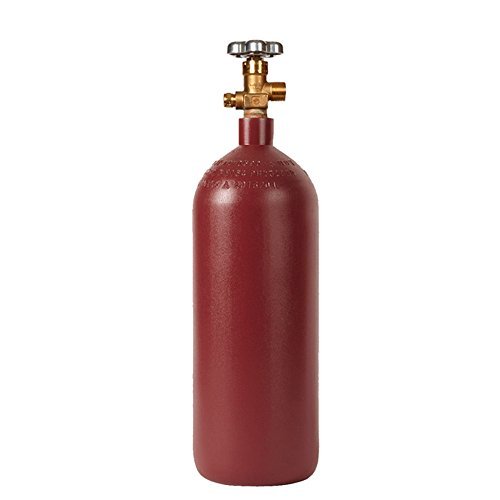
Same 20 cu ft steel formula, but stamped USA for buyers who want the paper trail.
This bottle matches the capacity of the top pick — 20 cu ft of oxygen — but it brings a marking the others do not: a UN/ISO stamp reading “USA” for use in the United States. If your filler or inspector asks for country-of-origin identification, that stamp is the answer. The valve is CGA 540 for oxygen service, and the shell ships with a 10-year hydrotest date stamped on it.
Item weight is listed at 13 pounds, and the shell is steel with a CGA-540 valve already installed. Like the other small bottles here, it arrives empty with no product or shoulder labels, and the color of the cylinder can vary from what the photo shows. None of that affects performance — it is a raw cylinder ready for its first fill.
The catch compared with the top pick is the lack of the extra spec detail: you will not find a stated service pressure or a published tare weight here beyond the 13-pound listing figure. If you want the full spec sheet in the listing, the B085874B7S cylinder above lays it out; this one leans on the USA stamp instead. If you need a published service pressure or tare weight, the top pick’s listing has them and this one does not. Confirming the fill before ordering remains the one job you cannot skip.
The real function of the USA stamp: a filler or inspector can trace origin without asking questions, which smooths out the first fill.
Small caveat: color varies and labels are absent on arrival, so do not pick this one expecting a shelf-ready green bottle.
Worth it when: you want a documented US-stamped cylinder for a small torch setup.
You can pass if: you want the fullest published spec list and are happy with the top pick instead.
5. 20 cf Cylinder for Oxygen w/free shipping

The stripped-down 20 cf bottle that ships free and does the job without extras.
Nothing here is wasted. You get a 20 cf oxygen cylinder with a CGA-540 valve, a 10-year hydrotest stamped, a cap included, and free shipping. The bottle stands 15 inches tall with a 5-inch diameter and a listed item weight of 13 pounds — the shortest steel bottle in this lineup, so it tucks into a small cabinet or under a workbench. At this price tier it is the cheapest way onto this list without dropping below a real working cylinder.
What you do not get is detail. The listing does not publish a service pressure, a tare weight beyond the 13-pound figure, or a stated DOT number. Color varies, and it ships empty with no product or shoulder labels. If your filler is picky about the exact stamp on the shoulder, call them with the listing open before you order. That is the honest limit of a stripped-down listing, and it is worth knowing up front.
Compare it to the 22 cu ft aluminum bottle on this list for the clearest read on the trade you are making. The aluminum cylinder carries 22 cu ft, and this one carries 20 cf, while the aluminum shell is the one you want if carry weight is the deciding factor. This bottle is for the buyer who wants a plain working cylinder and does not care about the paperwork trail. It ships empty, so the first fill is still a phone call away.
Why it is a genuine value: free shipping plus a 10-year hydrotest and an oxygen-ready CGA-540 valve is a lot of function for the entry tier.
The limit to accept: thin published specs, varying color, and no DOT number stated means more questions for your filler.
Choose this when: you want a bare-bones oxygen cylinder and free delivery over the rest.
Skip the hunt here if: you need the listing to state a DOT number before you commit.
6. 125 cu/ft Oxygen Welding Gas Cylinder Tank CGA 540 – FULL

The one bottle here that arrives with gas already in it, at 125 cu/ft.
This is the only cylinder in the guide that ships full, and it holds the most gas of any pick — 125 cu/ft against the 80 cu/ft empty bottle, a clear capacity lead in the shop-size tier. If you are tired of chasing refills and want a full bottle on the dock when it lands, this is the one. It measures 7 inches in diameter, matches the 80 cu/ft bottle on that diameter, and weighs 69 pounds full.
The buyer case is high volume. A bottle that holds 125 cu/ft suits a cutting torch that runs long sessions, a rosebud heating job, or a small fabrication shop where the gas flows for hours. The CGA 540 valve is the same oxygen connection as every other tank on this list. It meets DOT and/or ISO regulations, the DOT number is stamped on the tank, and the 10-year hydrotest date is stamped, with every cylinder shipped within 2 years of that stamped date.
The practical friction is where it can go. Shipping is limited to the continental US only, and 69 pounds of steel needs a spot and a plan — moving one of these by hand is a two-person job. It also ships as a full gas cylinder, so you are arranging delivery of a filled pressure vessel, not a box. If your routine is small jobs, the 50-pound 80 cu/ft bottle or a 20 cu ft cylinder is easier to live with. If your gas demand is heavy, 125 cu/ft keeps a rosebud burning for hours between swaps.
What makes the 125 cu/ft worth it
- Ships full — no first fill errand
- 125 cu/ft is the largest capacity here
- DOT and/or ISO compliant with a stamped hydrotest date
- 7-inch diameter matches the 80 cu/ft bottle footprint
What to plan for
- 69 pounds full — not a one-hand carry
- Continental US shipping only
- Filled pressure vessel delivery, so someone needs to receive it
The pick for: a high-volume torch owner who wants a full bottle delivered.
A heavy lift if: you need oxygen on the move — take a 12-pound aluminum bottle instead.
Know the Specs
Capacity in Cubic Feet
Cubic feet (written cu ft or cf) is the gas volume a cylinder holds at its rated pressure. A 20 cu ft bottle gives you a short session; a 125 cu/ft bottle gives you a long one. Bigger capacity almost always means a heavier shell, so pick the smallest size that gets you through your typical week. The 20 cu ft bottles here weigh 13 to 16 pounds; the 125 cu/ft bottle weighs 69 pounds.
CGA 540 Valve
The CGA 540 is the industry-standard oxygen valve, so a standard oxygen regulator fits every cylinder here. Every cylinder on this list uses it, so a standard oxygen regulator fits each one. The valve thread on the body is a separate number from the gas connection — match your regulator to CGA 540, and never run any gas but oxygen through it. Use oxygen-compatible regulators and fittings only, and keep oil and grease away.
Hydrostatic Test Date
A hydrotest is a pressure inspection of the shell, and a stamped date records when it was last done — 10-year tests show up on every bottle here. A filler may refuse a cylinder whose stamp is too old, so read the date before ordering and ask the supplier what they accept. Some listings state the bottle is within 2 years of its stamped date, which gives you margin at the refill counter.
DOT Approval and Service Pressure
DOT approval covers how a cylinder is built and how it may be transported, so it matters if the bottle rides in a vehicle. Service pressure is the rated working pressure — 2015 PSI is listed on the top pick here. A DOT number stamped on the tank is the proof your filler looks for. If the listing does not publish one, ask before you buy.
Common Questions
Will a standard oxygen regulator fit every cylinder on this list?
Do these welding oxygen tanks arrive filled or empty?
Can I get an empty cylinder filled at a local gas supplier?
What does the hydrotest date mean and how long is it good for?
Is a 20 cu ft oxygen tank enough for hobby welding?
Should I buy an empty 80 cu/ft tank or the full 125 cu/ft one?
Why is the aluminum cylinder lighter than a steel one?
Can I use these tanks for medical oxygen instead of welding?
Does the 125 cu/ft tank ship outside the continental US?
What is the difference between a 20 cu ft and a 22 cu ft oxygen cylinder?
The Bottom Line
For most buyers, the welding oxygen tank winner is the 20 cu ft Steel Oxygen Cylinder – CGA540 Valve – DOT Approved because it puts 20 cu ft of oxygen in the smallest footprint here at 18 inches tall, with 2015 PSI service pressure and the highest owner rating on the list. If you need a shop-sized bottle and want to give up the haul, the 80 cu/ft Steel Oxygen Tank holds four times the gas of the small cylinders at 50 pounds. And for high-volume cutting with zero fill errands on day one, the 125 cu/ft Oxygen Tank arrives full and carries the most gas here.
One last nudge: the top pick’s 4.5+ star rating is the highest here, and it pairs with 2015 PSI service pressure — if your torch time is modest, start there and save the big-bottle haul for the shop.
How we choose
We do not accept paid placement. Every pick is matched to a real buyer and a real use-case; we do not hands-on test units.
Sources
Specifications: manufacturer listings and product documentation. Review insights: verified customer reviews, as of November 2026. Pricing: not shown on this page (it changes often); check the current price via the retailer link.
As an Amazon Associate, Tactical Gear Guy earns from qualifying purchases. This does not affect which products we feature.