Specs are compiled from manufacturer listings and verified buyer reviews and can change over time — please confirm the key details on the product page before buying.
If you only read one line: buy a pack sized to your longest day out, and let a women’s-specific harness carry the weight on your hips instead of your shoulders. That single decision fixes the two things that ruin a hike: a pack that bounces and shoulder straps that dig in by mile three. This guide separates seven women’s day hiking backpacks by the load they’re built for and the fit system holding them on.
This guide is built by comparing the manufacturers’ published specifications and the patterns across verified customer reviews, so you get each pick’s real strengths and trade-offs instead of marketing spin.
You will see where a vented mesh back earns its keep, when a 22-liter shell is plenty versus when a 40-liter hauler makes more sense, and how a women’s torso cut changes the ride. The shortlist below sorts seven women’s day hiking backpacks by what each one does best on the trail.
Top Picks

How To Choose A Women’s Day Hiking Backpack
Start with the length of your typical day, not with a brand name. A pack that is too big invites you to overfill it, and an overfilled pack drags on shoulders that were never designed to carry the load. Get the volume and the fit right and the rest of the spec sheet matters less.
Match Capacity To Your Longest Day
Volume is measured in liters, and for a day hike the useful range runs roughly from the low twenties up to around 40 liters. A 21- or 22-liter shell holds water, a layer, lunch and a shell jacket for a few hours out. Step up toward 24 to 30 liters when you carry a camera, a laptop for the commute, or extra layers for changing weather. A 40-liter pack is the pick for long, gear-heavy days or a hut-to-hut route where you haul more than a single day’s kit.
Why A Women’s-Specific Fit Changes The Ride
A women’s pack is cut for a shorter torso and shaped around the hips and shoulders rather than a straight unisex frame. The payoff shows up in the hipbelt: a women’s-specific hipbelt wraps and transfers load to the hip bones so the shoulder straps only steady the pack. If a pack lists an SL or women’s fit, that is the manufacturer telling you the harness geometry was adapted, not just recolored.
Ventilation: Mesh Back Versus Close Carry
A mesh-back suspension system holds the pack slightly off your spine so air moves through, which is the difference between a sweaty back and a dry one on a climb. The trade-off is that a suspended mesh panel can feel a touch less locked-in on rough ground. A close-to-body panel sits flatter against you and moves with you, trading a little airflow for a more stable ride. Both work — pick by whether you run hot or hike technical terrain.
The Extras That Earn Their Weight
Hipbelt pockets let you grab a snack or a phone without stopping. A hydration sleeve with a hose port means you drink while walking instead of wrestling a bottle out of a side pocket. An included raincover saves you buying one later. None of these change the carry, so treat them as tiebreakers once the volume and fit are right.
Side-by-Side Comparison
| Model | Best For | Capacity | Weight | Fit System | Amazon |
|---|---|---|---|---|---|
| deuter Futura 21 SL★ Best Overall | Hot-weather day hikes | 21 L | — | Women’s SL fit | Amazon |
| Eddie Bauer Adventurer 30LBest Value | Trail-to-office crossover | 30 L | — | Women’s specific | Amazon |
| Osprey Tempest 22L | Fast, light day hikes | 22 L | 2.27 lb | Adjustable sliding yoke | Amazon |
| Osprey Sirrus 24L | All-weather day hikes | 24 L | 2.73 lb | Women’s-specific + raincover | Amazon |
| Gregory Juno 24L | Hydration-heavy hikes | 24 L | 2 lb | Women’s-specific harness | Amazon |
| Deuter Trail 28L SL | Hike-and-bike mixed days | 28 L | — | Women’s SL fit, U-frame | Amazon |
Detailed Reviews
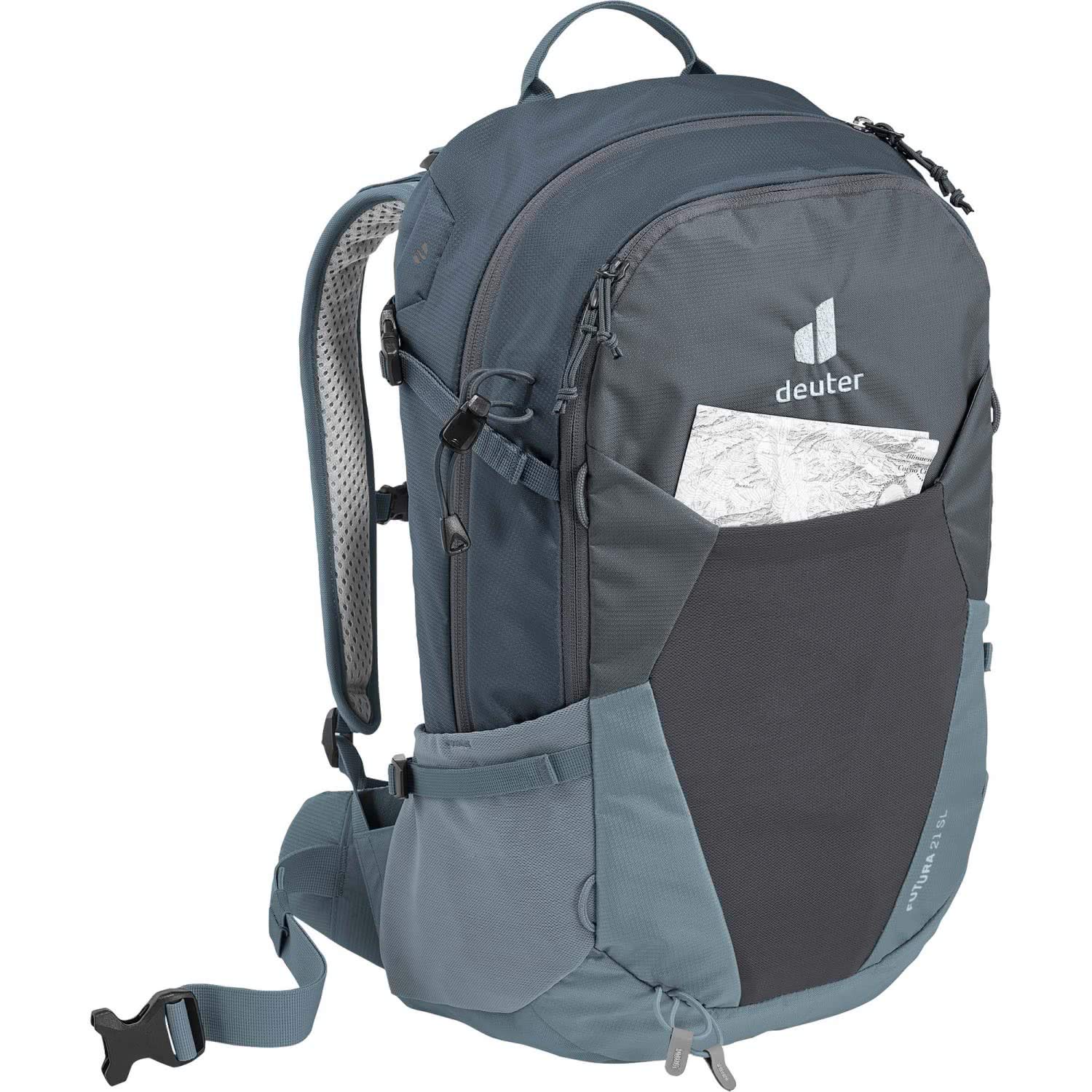
1. deuter Futura 21 SL Women’s Hiking Backpack
Our pick — 4.5+★ from 300+ verified ratings; the strongest balance of quality and price.
The small-capacity pack that turns a sweaty climb into a cool, steady carry.
If your hikes are hot, humid, or a relentless stair climb, the Futura 21 SL is built around the one thing that makes those days bearable: air. Its Aircomfort mesh-back system holds the pack off your spine so a breeze passes through the gap, and an elastic spring steel frame keeps that structure rigid while it shifts the load down onto your hips. A 21-liter shell is the sweet volume for a few hours out — water, a layer, lunch, done.
The Active Comfort Fit Back System adds movable shoulder straps so the harness follows your movement instead of fighting it, and the SL women’s fit adapts the whole geometry to the female body. A front pocket with a large organiser section keeps small gear findable instead of floating loose in the main bag. It’s hydration-ready too — there’s an attachment for a deuter Streamer 3.0 reservoir, which is sold separately.
Here is the catch worth naming: 21 liters leaves little room if you start packing for a full day with camera gear or a bulky layer. That is a fit question, not a flaw — this is a nimble day shell, not a hauler. The people who love it are the ones who pack lean and climb in heat, and they love it for exactly that balance.
What earns it the top spot
- Aircomfort mesh back plus an elastic spring steel frame — strong airflow and a load that rides the hips
- SL women’s fit shaped to the female frame, with movable shoulder straps in the Active Comfort Fit system
- Front organiser pocket keeps small items reachable; hydration attachment ready for a Streamer 3.0 reservoir
Where it asks you to compromise
- 21 liters is a lean day’s worth of kit — tight for camera bodies or bulky winter layers
- The hydration reservoir is not included, so budget for one if you want on-the-move drinking
Reach for this if: you hike in heat and want maximum airflow with a women’s-specific harness.
Think twice if: your day kit regularly spills past a lean 21 liters.
2. Eddie Bauer Adventurer 30L Women’s Backpack
One bag that commutes with a laptop on Monday and hits the trail on Saturday.
Start with the volume: 30 liters is the most capacity you get in a women’s-specific pack on this list short of the 40-liter hauler, and that headroom is the whole point. A padded side compartment holds a laptop up to 15 inches, so the Adventurer goes from trailhead to coffee shop without a second bag. A StormRepel WR finish sheds moisture off the fabric, and the FreeCool Air back panel boosts airflow to keep your back drier.
The carrying details are built for a woman’s body, with adjustable shoulder straps and a women’s-specific fit rather than a scaled-down unisex frame. Storage is generous for the capacity — a front stash pocket with a daisy chain, two side mesh pockets, and a small fleece-lined front pocket sized for sunglasses or a phone. An interior sleeve and hose portal make it hydration-bladder ready when the day turns into a real hike.
What wins buyers over here is the build — the quality of the materials and stitching is the thing that comes up again and again, with the packed-out storage layout a close second. The honest limit is the fabric weight: it’s a heavier-weight material than a featherweight day shell, so it feels stout rather than feathery on the trail. For a crossover pack, that sturdiness is usually the trade you want.
Why it earns its place: a 30-liter women’s-specific build with laptop protection, weather shedding, and enough pockets to stay organised — a genuine one-bag answer for trail and town.
The honest trade-off: the heavier-weight fabric and full storage package add bulk compared with a lean technical shell, so it shines for mixed use more than for shaving grams.
Pick this when: you want a single pack that carries a laptop and a day’s trail kit equally well.
Pass if: you are chasing the lightest possible shell on the trail.
3. Osprey Tempest 22L Women’s Lightweight Hiking Backpack
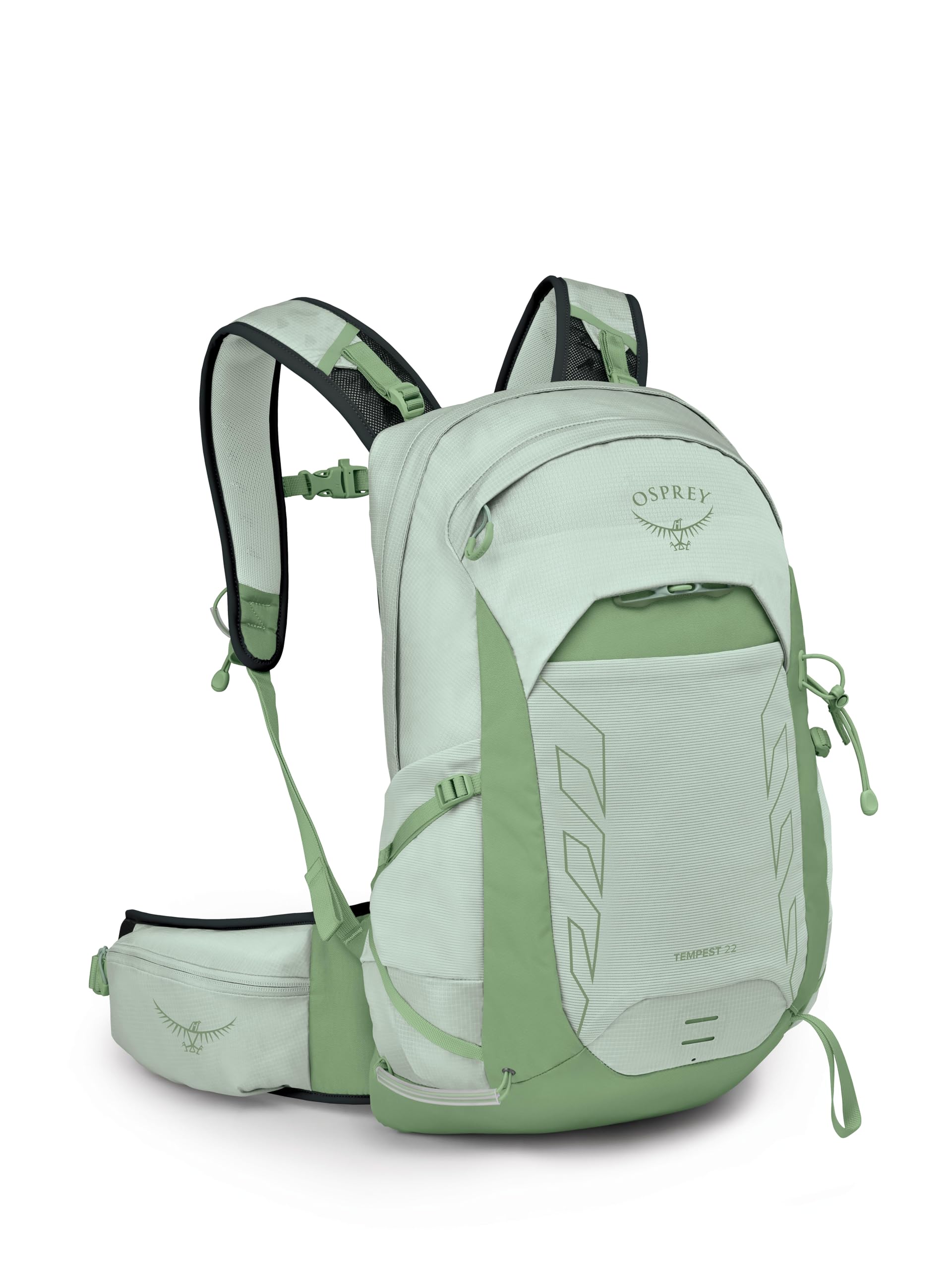
A 2.27-pound multi-sport shell that handles climbs, bikes, and scrambling alike.
At 2.27 pounds with a 22-liter body, the Tempest is the pack you grab when you want to move fast and light. The AirScape backpanel sits close to your body for a stable carry while still improving airflow to cut sweat. An adjustable sliding yoke and a BioStretch hipbelt dial the fit to your torso so the bag stays put on descents instead of swinging around your waist.
You can switch between hiking, biking, and winter climbs without swapping packs, thanks to the multi-sport hardware: a Stow-on-the-Go attachment (a strap that holds your trekking poles while you walk), a LidLock bike helmet holder (a clip on the lid for your helmet), and a tuck-away ice ax loop (a hidden loop for your ice ax). For quick-access gear, it adds dual-zippered hipbelt pockets (two zipped pockets on the waist belt), a top panel pocket, and stretch mesh side pockets for bottles. Buyers report it comfortably carried 4 liters of water on a desert hike, so the load transfer holds up under real weight.
Compare it to the Sirrus below and you see the split: the Tempest is the lighter 2.27-pound mover, where the Sirrus adds ounces and comes with an included raincover. The Tempest skips that raincover, so pack your own shell cover if the forecast turns. Buyers single out the sturdy clips and straps, which feel like they’ll take years of use.
The weight advantage: at 2.27 pounds it undercuts the Sirrus and stays close to your back with the AirScape panel — a fast-moving day shell.
What you give up: no included raincover, so wet weather means packing your own cover or accepting the damp.
Best for: hikers and bikers who want one light pack with pole and helmet attachments built in.
Look elsewhere if: you want an included raincover without adding your own.
4. Osprey Sirrus 24L Women’s Hiking Backpack

The pack that hands you the raincover instead of asking you to buy one.
Weather decides more hikes than fitness does, and the Sirrus answers that with a raincover already in the bag. The pack and your gear stay dry when the sky opens, so you are not gambling on the forecast. Behind the protection sits the AirSpeed ventilation system — an adjustable injection-molded suspension with 3D-tensioned mesh that holds the bag off your back for breathable support over long miles.
Fit range is broad here. A taller, wider frame geometry combines with a molded ladder torso adjustment system, so you can dial the harness in instead of settling for close enough. The main compartment opens wide through a burly #10 zipper for easy packing, and an internal hydration sleeve with a hose port keeps water on tap. It weighs 2.73 pounds and measures 21.7H x 13.4W x 9.4D inches — more pack than the Tempest above, and you feel that in a slightly fuller carry.
What buyers keep coming back to is the quality of the construction, with the fit and the well-planned compartments right behind it. Deep water bottle pockets and a top mesh pocket scored high marks for staying useful rather than decorative. The honest note is the extra weight versus lighter shells — this is a do-it-all day pack, not a race-weight model, and the raincover and adjustability are what you’re paying for.
Strengths that matter on a real trail
- Included raincover means gear stays dry without a separate purchase
- Molded ladder torso adjustment plus taller, wider frame geometry widens the fit range
- AirSpeed 3D-tensioned mesh keeps air moving; wide #10 zipper makes packing easy
The fine print
- At 2.73 pounds it carries more heft than the lighter Tempest 22L
- Full-featured build favors all-day coverage over minimal weight
Choose it when: unpredictable weather and a wide adjustment range top your list.
skip it if: saving every ounce outranks having a raincover on board.
5. Gregory Juno 24L Women’s Hydration Backpack

At just 2 pounds, a hydration-first pack that wraps the hips instead of pinching them.
Two pounds is the headline, and it’s the lightest 24-liter pack here. The Juno carries that low weight on a VaporSpan ventilated suspension with moisture-wicking mesh and a perimeter alloy frame, so the bag breathes while the frame keeps the shape. The harness is women’s-specific and perforated, with a sternum strap that includes an integrated safety whistle — a detail that matters more the deeper you go.
The hipbelt is where the comfort lives: a 3D cradle padded women’s-fit hipbelt with large zippered pockets, so snacks and a phone ride within reach. An internal hydration sleeve with a SpeedClip hanger is built for Gregory’s 3D Hydro reservoir, which is not included. Five pockets in all, plus a top zippered pocket and an interior mesh security pocket, keep small gear sorted.
Measured against the Sirrus at 2.73 pounds, the Juno’s 2-pound frame is the lighter option for a 24-liter day. What buyers value most is the sizing and the way it sits — comfortable, with no rubbing or pinching — which is the whole game for a pack you wear all day. The one thing to know: no reservoir ships with it, so factor in a 3D Hydro bladder if you want the full hydration setup.
The light-hydration angle: 2 pounds, a perimeter alloy frame, and a women’s-fit 3D cradle hipbelt with big zippered pockets — built to carry water comfortably.
Budget note: the SpeedClip system expects Gregory’s 3D Hydro reservoir, sold separately, so plan for the add-on.
Suits you if: hydration is the heart of your hike and you want a light, padded women’s-fit hipbelt.
Not the one if: you expect a reservoir in the box.
6. Deuter Trail 28L SL Backpack for Biking, Hiking & Trekking
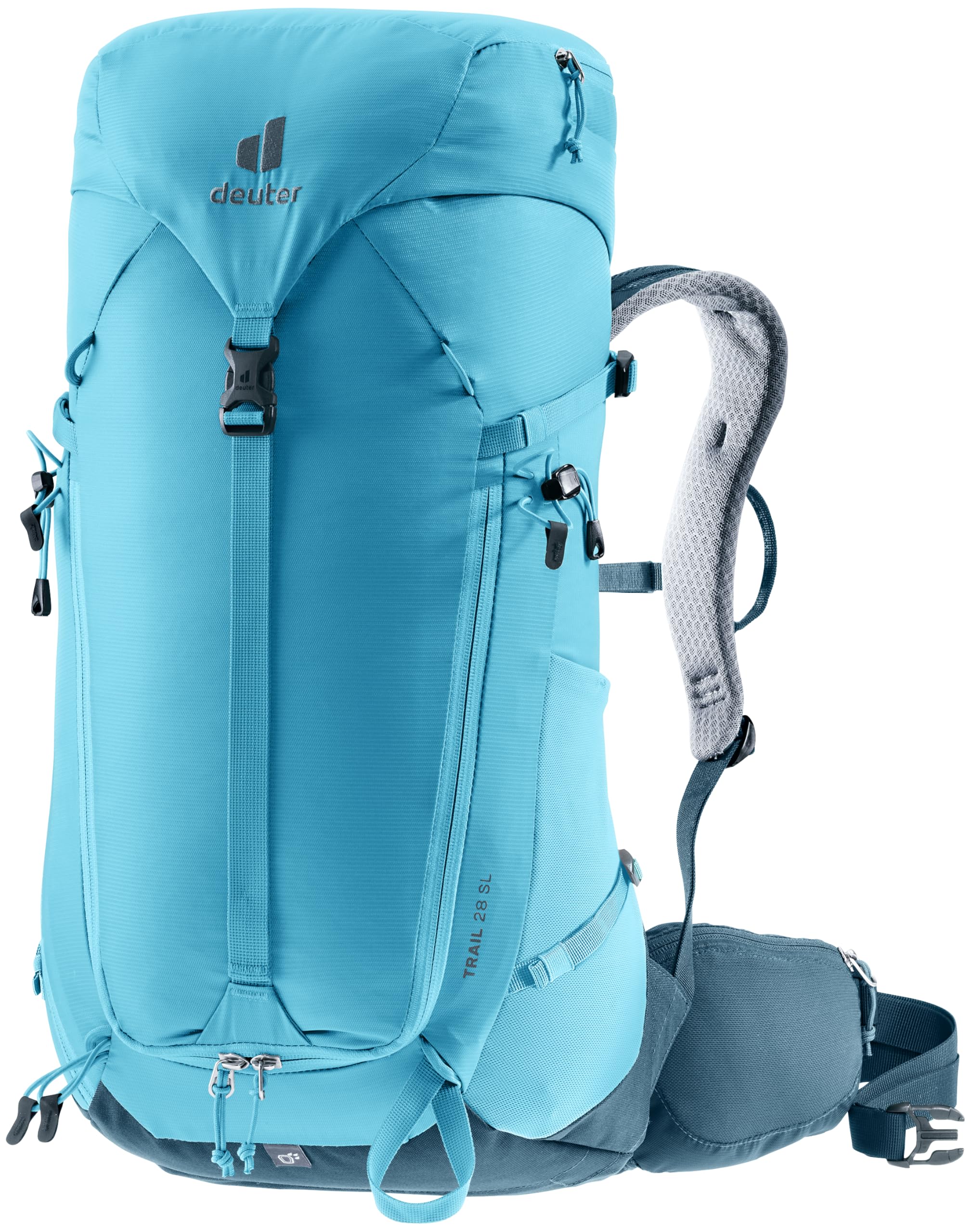
A 28-liter bike-and-hike crossover with a frame that spreads the load evenly.
The technical hook here is the Delrin U-frame, a flexible frame that spreads the weight evenly across the pack so no single point digs in. Around it sits a women’s-specific SL fit adapted to the female anatomy, with ergonomically shaped lightweight mesh hip fins and shoulder straps carrying the load. The fabric is a tough build — 600D PES and 210D PA — for a pack meant to take scrapes on rock and bike frames alike.
Details lean toward mixed-sport days. Shoulder straps include a carabiner attachment for via ferrata sets, so climbing gear stays at hand. The chest strap with a signal whistle is continuously adjustable and detachable, and the pack is set up for a deuter Streamer 3.0 hydration reservoir, which is not included. At 28 liters it sits between the nimble day shells and the 40-liter hauler, with room for layers and a lunch without turning into a load you have to manage.
Its defining trade-off is positioning rather than any defect: at 28 liters it asks you to know what you need, because there’s less spare room than the big Tempest. Go in expecting a sturdy, frame-supported carry and you’ll get a pack that moves from trail to bike route without a second bag. That flexibility is exactly why it rounds out the shortlist.
For the crossover crowd: hikers who also bike or scramble and want a U-frame carry with via ferrata and hydration provisions.
Not needed if: your day kit needs more than 28 liters of room.
Know the Specs
Capacity In Liters
Liters measure how much the bag holds, not how much you should carry. A 21- or 22-liter shell suits a lean day of water, a layer, and lunch. Move to 24 to 30 liters when you add a laptop, a camera, or changing-weather layers. Reach for a 40-liter pack on long or multi-day routes where the extra volume is genuinely filled — a bigger pack you don’t fill just rides heavy and unsettled.
Women’s-Specific Fit (SL and Similar)
A women’s-specific pack adapts the torso length, hipbelt shape, and shoulder straps to the female frame instead of using a straight unisex cut. The payoff is load transfer: a shaped hipbelt wraps the hips so they carry the weight and the shoulders only steady the pack. Makers label this a few ways — SL on deuter packs, women’s-specific on Osprey’s Sirrus and Gregory’s Juno — and the label signals adapted harness geometry, not just a colorway.
Common Questions
How do I know which liter size I need for a day hike?
What does a women’s-specific fit actually change on a hiking backpack?
Is a mesh-back backpack better than one that sits flat against my back?
Do these packs come with a hydration bladder?
Can I use a day hiking backpack for commuting with a laptop?
How heavy should a women’s day hiking backpack be?
Which pack is best if I hike in rain and want my gear kept dry?
What is the difference between the Osprey Tempest 22L and the Osprey Sirrus 24L?
How long will a women’s hiking backpack last?
Are trekking pole and bike helmet attachments worth having on a day pack?
The Bottom Line
For most hikers, the women’s day hiking backpack to start with is the deuter Futura 21 SL, because its Aircomfort mesh back and women’s SL fit make a hot day on the trail a cooler, steadier carry. If you commute with a laptop and still want trail capability, the Eddie Bauer Adventurer 30L bridges both worlds. And when the day is long and the kit is heavy, the Osprey Tempest 40L swallows the whole load.
How we choose
We do not accept paid placement. Every pick is matched to a real buyer and a real use-case; we do not hands-on test units.
Sources
Specifications: manufacturer listings and product documentation. Review insights: verified customer reviews, as of November 2026. Pricing: not shown on this page (it changes often); check the current price via the retailer link.
As an Amazon Associate, Tactical Gear Guy earns from qualifying purchases. This does not affect which products we feature.