Specs are compiled from manufacturer listings and verified buyer reviews and can change over time — please confirm the key details on the product page before buying.
Cold feet end more hunts early than bad aim does. If you have ever sat still in a treestand at first light and felt the chill climb up through the soles, you already know the problem. Rubber boots keep water out completely, but plain uninsulated rubber is a heat sink — it pulls warmth straight off your feet. The fix is a rubber shell paired with real insulation, and the warmest options here range from 200g Thinsulate (a thin synthetic fill measured in grams — more grams means more warmth) all the way up to 1600g. Our top pick, the Trudave Steel Shank boot, is the one most hunters should start with: a 5mm neoprene shell (a thick rubber-foam layer that traps body heat like a wetsuit) with a steel shank (a stiff strip under the arch that stops the sole folding on rocks) for support on long walks, and it holds 4.5+ stars across 700+ ratings.
This guide is built by comparing the manufacturers’ published specifications and the patterns across verified customer reviews, so you get each pick’s real strengths and trade-offs instead of marketing spin.
Nine rubber hunting boots follow, sorted by what each does best — deep-cold insulation, mud traction, all-season versatility, or all-day comfort on your feet. Every pick is insulated for warmth and built on a waterproof rubber shell, so the decision depends on how cold you hunt and how far you walk; this breakdown of warm rubber hunting boots covers both.
Top Picks


How To Choose The Best Warm Rubber Hunting Boots
The single biggest mistake new hunters make is buying the highest insulation number they can find and assuming it solves everything. It does not. Insulation grams tell you how much warmth the boot holds in, but a boot that is too warm for a mild October morning will leave your feet sweating by noon, and wet feet get cold fast. Match the grams to your season, then get the shell and fit right.
Match the insulation grams to your hunting season
Think of Thinsulate grams as a dial for temperature. A 200g boot is the lightest warm option here, suited to early season and active walking where you generate your own heat. A 400g boot sits in the middle for cool mornings and mixed weather. An 800g or 1000g boot is a late-season and deep-cold tool for sitting still in a blind or treestand. If you hunt ice and snow in extreme cold, the Muck Arctic Pro publishes a comfort range down to -60 °F/-50 °C, which is the coldest rating on this list.
Check the neoprene thickness, not just the grams
The rubber-foam shell around your foot is the other half of the warmth equation. Thicker neoprene holds body heat closer and flexes with your stride, which is why a 7mm or 8mm shell feels warmer than a thin one. The Trade-off is bulk: a thicker shell adds weight and takes more room inside the boot. If you walk long distances, a thinner shell with a steel shank can feel better on your feet than the thickest, warmest option.
Do not ignore fit and the shank
Rubber boots do not break in like leather, so the size you order is the size you live with. Several picks here run large or small, and a boot that is too tight squeezes circulation out of your toes, which defeats the insulation entirely. A steel shank — a stiff strip built into the sole — supports your arch and keeps the boot from folding under your foot on rough ground. Look for it if you cover miles.
Side-by-Side Comparison
All three spec columns use the same measures across every row, so you can scan down and compare warmth, shell thickness, and support at a glance.
| Model | Best For | Insulation | Neoprene Shell | Shank / Support | Amazon |
|---|---|---|---|---|---|
| Trudave Steel Shank (5mm)★ Best Overall | All-round hunting and work | 5mm neoprene, insulated | 5 mm | Steel shank | Amazon |
| R RUNFUN 8″ 200g ThinsulateEarly-Season Pick | Early season, active walking | 200g Thinsulate | — | Ankle support | Amazon |
| WOVENPAK Steel ShankMud Specialist | Value hunting and mud work | Insulated | — | Steel shank | Amazon |
| Trudave 6mm Multi-Season | Multi-season, men and women | Insulated, CR Flex-Foam | 6 mm | Steel shank | Amazon |
| Hunthor 800g Insulated | Cold-weather hunting | 800g Thinsulate | — | EVA midsole | Amazon |
| 1000G Thinsulate Camo | Deep cold in camo | 1000g Thinsulate | — | Anti-slip outsole | Amazon |
| 400g Neoprene Camo | Winter and spring hunting | 400g Thinsulate | 6 mm | Anti-slip outsole | Amazon |
| TIDEWE 800g Insulated | All-day comfort, colder weather | 800g insulation | 7 mm | Cushioned footbed | Amazon |
| MUCK Arctic Pro Tall | Extreme cold, sitting still | 8mm neoprene, fleece lined | 8 mm | Double-reinforced instep/heel | Amazon |
Detailed Reviews
1. Trudave Rubber Boots for Men with Steel Shank
Our pick — 4.5+★ from 700+ verified ratings; the strongest balance of quality and price.
A 5mm neoprene shell with a steel shank, priced like an entry boot.
This is the pick for the hunter who wants one boot to cover most of the season without spending premium money. The 5mm neoprene shell (a rubber-foam layer that holds body heat in and works a lot like a wetsuit) keeps warmth close to your foot, so a cold morning does not cut straight through. The steel shank is the detail that makes it a real walking boot — a stiff strip under the arch stops the sole from folding on rocks and ruts, so your feet do not ache after a long drag out.
What wins people over is the overall build quality, by a wide margin over every other thing people talk about in these reviews. Mud, flooded ditches, snow, and rain are all covered by the waterproof rubber shell, and the anti-slip outsole holds grip on slick ground. A hard plastic protective toe cap guards against stubs and collisions, which matters when you are working around stumps or rocks. Pull tabs make them quick to get on and off, even with gloves on.
The honest catch is consistency. These hold up well for most hunters, but a few report the rubber giving out on the inside within a month of heavy use, so treat them as a work-and-hunt boot rather than an indestructible one. Sizing also splits — some find the fit right on, others say the sizing runs off. Measure your foot against the insole chart before ordering. At 4.5+ stars across 700+ ratings, most owners are clearly happy with the balance of price and warmth.
What earns it first place
- 5mm neoprene shell traps heat like a wetsuit, so cold mornings stay tolerable
- Steel shank supports the arch and stops the sole folding on rough ground
- Hard plastic toe cap plus anti-slip outsole for mud and rocky stumps
- Strong value — this is the lowest-cost pick here and still covers most of the season
Where it asks for care
- A few buyers report the lining ripping within a month of hard use
- Sizing runs mixed — measure against the insole chart first
- Not rated for deep-winter sitting the way an 800g or 1000g boot is
The right buy if: you want one do-it-all insulated rubber boot for mixed-season hunting, farm work, and wet weather without paying premium money.
Order carefully: check the insole chart against your foot, because the fit feedback splits both ways.
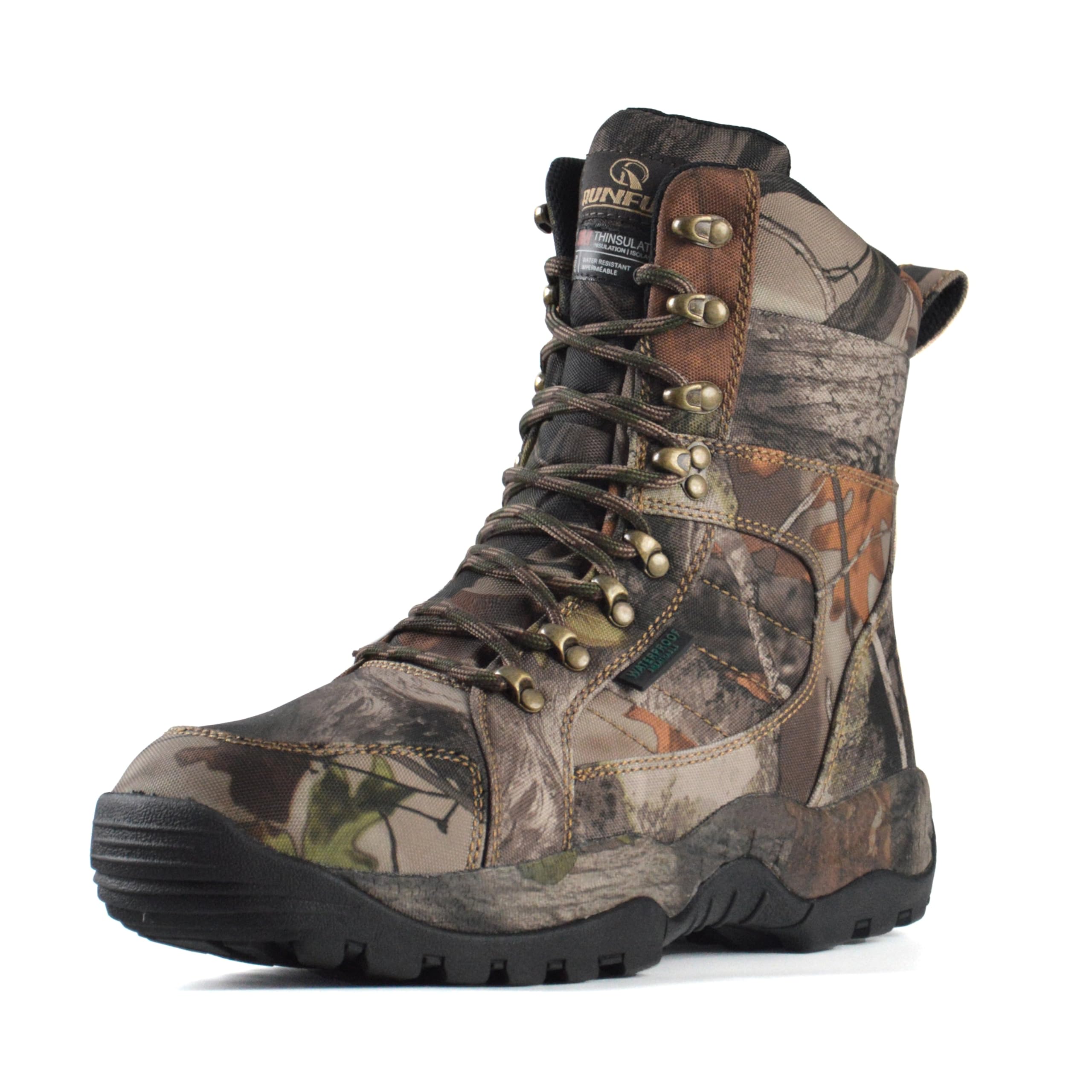
2. R RUNFUN Men’s 8″ Waterproof Insulated Hunting Boots
The light, breathable boot built for moving fast in mild weather.
If your season opens warm and you are covering ground rather than sitting, 200g Thinsulate is the right amount of warmth. That is a light insulation layer compared to the 1000g boot further down this list. Put simply, every hunting boot here saves you from a cold start, but not every one is built for a full day on the move. This one is. It laces up quick, breathes, and stays light on your feet so you are not dragging around a heavy winter boot in October.
Owners consistently praise the build quality first, with comfort close behind. Ankle support gets repeated praise from people who walk uneven ground, and the breathable lining keeps sweat from soaking your socks on a long push. The slip-resistant tread handles wet leaves and soft ground. Waterproofing works for rain and shallow puddles on the move.
Two honest limits worth knowing. The fit runs large, so a lot of buyers size down, and the water resistance is built for active weather rather than standing in deep water. Durability also divides — plenty report solid seasons in rainy conditions, while a few report them falling apart within two years of regular use. Weigh that against the value: this is one of the more budget-friendly picks and still rates a solid 4.0+ stars across 900+ ratings.
The case for it: light, breathable, quick to lace, and genuinely comfortable over distance — a smart choice for early season and warm-weather scouting where a heavy insulated boot would overheat you.
The trade-off: light insulation and a larger cut make this a warm-weather boot, not a deep-cold one. Size down and treat standing water with respect.
Reach for this if: your hunts are active, your weather is mild, and you want a light boot you can walk miles in.
Look elsewhere if: you sit still in freezing temperatures — you want the 800g or 1000g options instead.
3. WOVENPAK Rubber Boots for Men with Steel Shank
A mud-and-water work boot that earns its keep quietly.
A 4.5+ star boot across 300+ ratings with almost no dissenting voices is rare, and that is the story here. The blend of a neoprene rubber shell and a steel shank puts it in the same warm, supportive camp as the top pick, just a step up in cost. You get waterproof coverage for wet trails, muddy fields, and rain, with the shank holding your arch steady so your feet are not fighting the ground all day.
Comfort and fit are where this one shines — it slips on, sits right, and does not need a break-in period the way leather boots do. The mud boot crowd gets exactly what it needs: a boot that keeps feet warm, stays dry, and does not quit. The steel shank underfoot makes a real difference on rutted ground where a soft sole would fold.
The trade-off is data thinness. This is a newer listing, so the long-term durability record is shorter than on the older picks here. That is not a knock — what feedback exists points the right way — but if you want a decade of proof behind the build, the higher-mileage boots on this list carry more history. For most wet-weather work and moderate cold, it is a solid, comfortable choice.
Confident choice for: the hunter or farm worker who is in mud, wet trails, and rain more than they are in deep cold.
Weigh this: it is newer to market, so the long-haul durability picture is shorter than the older boots here.
4. Trudave Rubber Boots for Men & Women
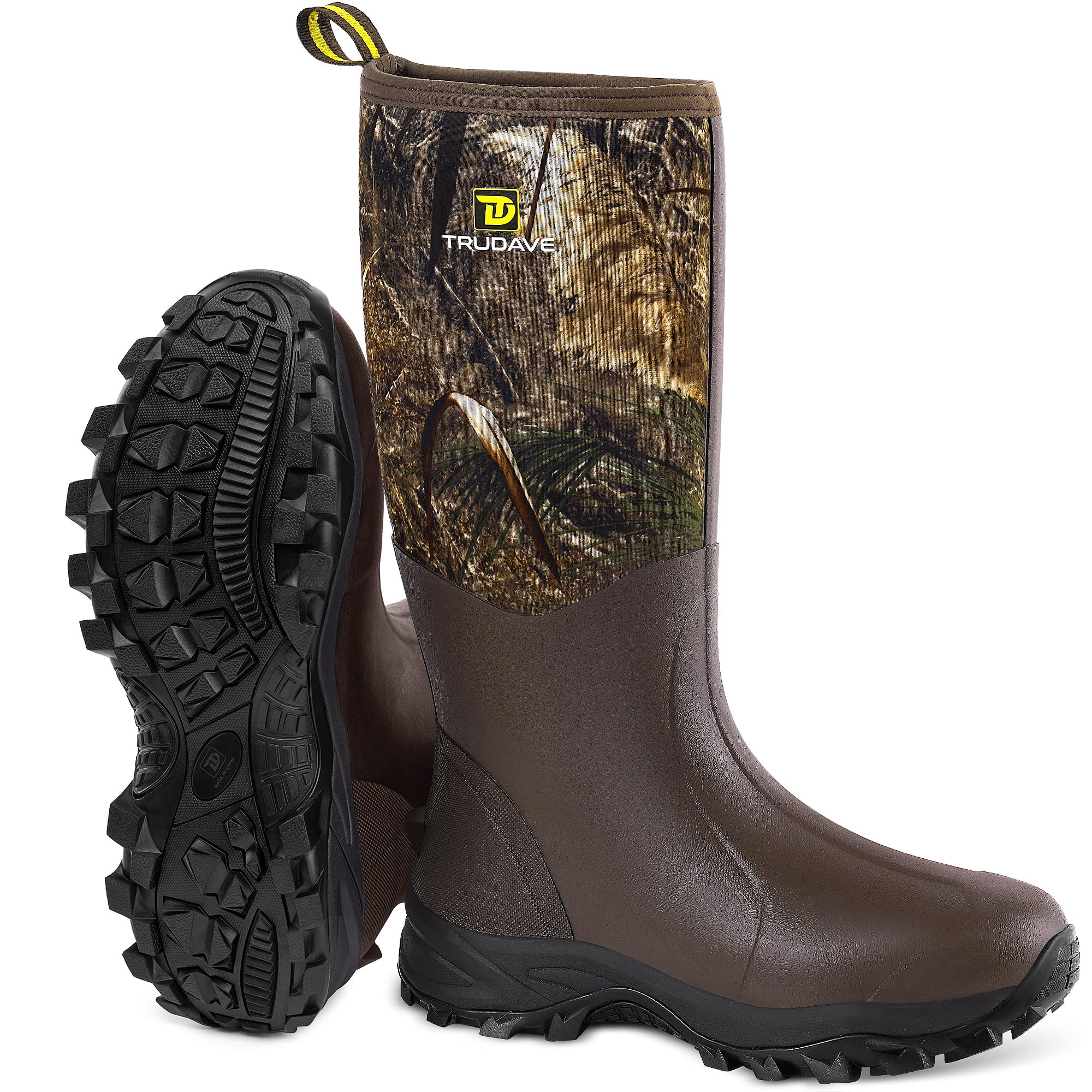
The thicker-shell Trudave that fits men and women alike.
Step up from the top pick and you get a 6mm neoprene shell instead of a 5mm one, plus unisex sizing that opens the door for a hunting partner or family member. That extra millimeter of rubber-foam holds heat in a little longer on a still morning. Trudave calls it CR Flex-Foam, and it is designed to keep body heat from escaping rather than letting it drain out through the sole.
The breathable mesh lining is the part that makes this a multi-season boot. It moves air and moisture through so your feet stay drier than in a fully sealed liner, which keeps sweat from turning cold inside the boot. A large calf opening lets you get in over pants and extra layers, and reinforced pull straps help you get them on even with cold hands or gloves. Traction shines in mud specifically — the high-grip outsole grabs where the ground is soft and slick. Owners praise the quality above all else, with comfort and fit close behind.
Fit is the one thing to nail down. Some buyers find it true to size, and others find it runs too large, so measure your foot against the insole length in the size chart rather than trusting your usual number. Weigh that against a strong 4.5+ stars across 500+ ratings and the warmth-plus-traction package is hard to argue with for a blended season.
Strong points in the field
- 6mm neoprene keeps more warmth in than the 5mm top pick
- Breathable mesh lining reduces sweat so feet stay dry inside
- High-grip outsole earns its keep in mud and soft ground
- Unisex sizes and a wide calf opening fit more people and layers
Fit notes to heed
- Sizing splits between true-to-size and too-large — measure the insole chart
- Thicker shell adds some bulk inside the boot
A strong match for: mixed-season hunters who want more warmth than a light boot and a fit that works for both men and women.
Heads up: sizes run generous for some — check the insole length before you commit.
5. Hunthor 800g Insulated Hunting Boots for Men
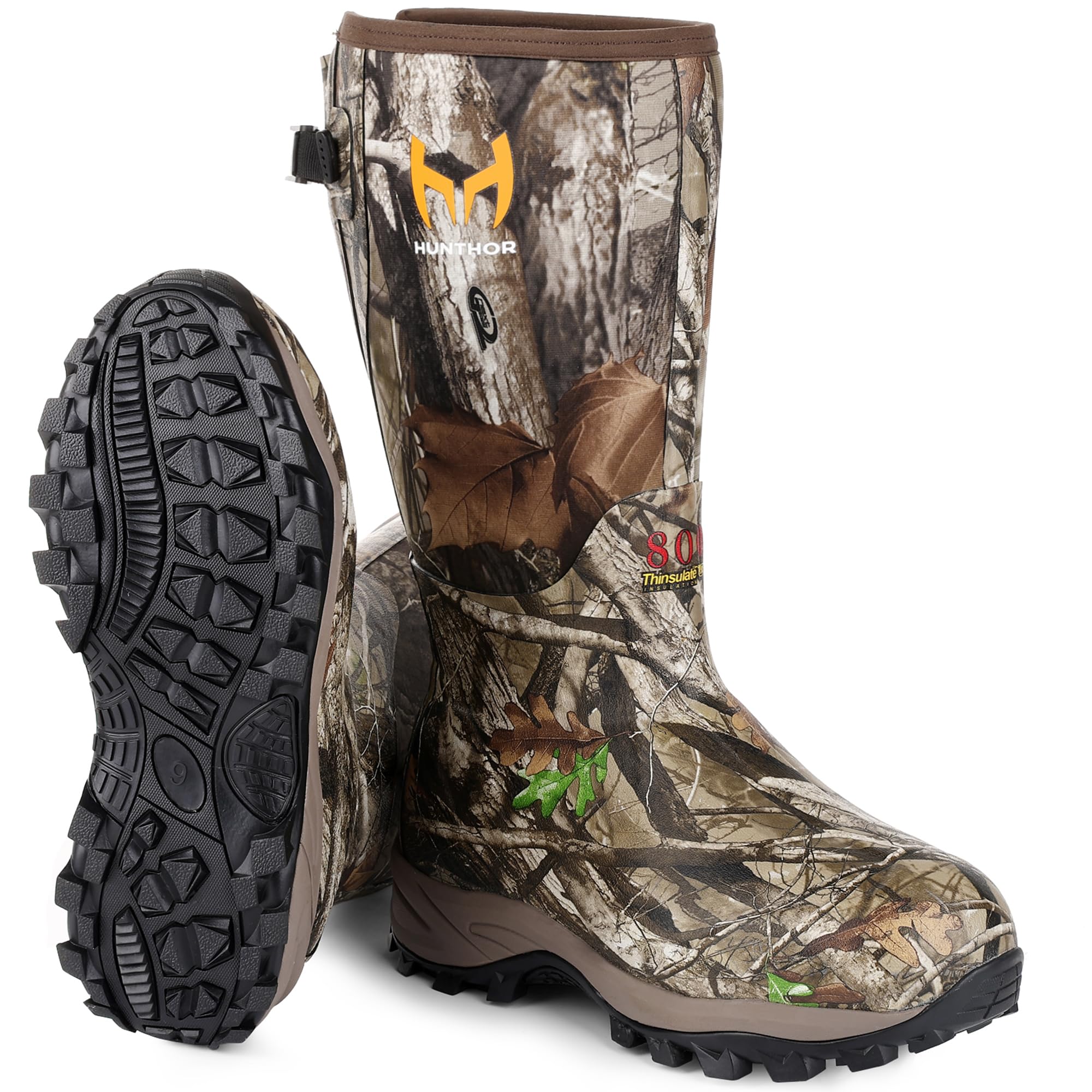
800g of insulation in a camo boot that handles real cold.
This is the jump-off point into serious cold-weather hunting. At 800g, the Thinsulate here is four times the warmth rating of the 200g boot above — a genuine step up that lets you sit still in temperatures that would freeze a light boot solid. The EVA midsole (a foam layer between your foot and the outsole) adds cushioning and a bit of extra insulation from the cold ground. The Next Camo G2 pattern blends into the woods like it should.
Warmth and comfort are where owners land again and again, and the waterproofing is fully rated so slush and wet snow do not get through. The Ice-Grip outsole is aimed at slick ground — think frozen puddles and icy logging roads — so you are not sliding on your heels in the predawn dark. It is built for hunting and work, so it stands up to farm chores as well as a treestand.
Two things to know before you order. The fit is split — some find them too big, others say the size is right on — so order with the size chart in hand. Weight is also a matter of opinion; a heavier insulated boot is not for everyone, and some find these on the chunky side. Against that strength, a 4.5+ stars across 250+ ratings score says most hunters get along well with them. For the money, the 800g warmth is a strong buy in cold country.
Standout spec: 800g Thinsulate with an Ice-Grip outsole is a real cold-weather combination — warm feet and sure footing on ice in one boot.
Fit caveat: sizing feedback goes both ways and the weight is on the heavier side, so confirm your size and expect some bulk.
Buy it for: late-season and cold-weather hunts where sitting still is part of the plan.
Look elsewhere if: you need a featherweight boot for long, warm-weather walks.
6. Rubber Hunting Boots, 1000G Thinsulate Insulated, Camo

The most insulated boot here that still laces like a conventional boot.
A 1000g Thinsulate fill puts this in the top tier of warmth on this list — five times the insulation of the 200g light boot, and enough to hold warmth through a long sit in real cold. It is built on a 100% waterproof rubber shell with an anti-slip outsole, so snow, slush, and wet ground stay outside where they belong. The camo pattern and waterproof build make it a natural fit for a stand or blind.
Owners point to quality and fit first, and a lot of them mention that the roomy cut swallows thick wool socks without pinching. That matters — a tight boot squeezes circulation and cold feet follow. Most find the warmth and the full waterproofing exactly what winter hunting calls for, and the value earns repeated praise. A few find them surprisingly light for the insulation rating, others call them bulky, so your own tolerance is the deciding factor on feel.
The honest catch is durability variety: some hunters get many seasons out of them and some report the shell splitting. That is the pattern across most rubber-insulated boots, and it is worth weighing against a strong 4.5+ stars across 250+ ratings. If you are buying for the coldest weeks of the season and want room for a heavy sock, this is a pointed choice.
Why cold-weather hunters like it
- 1000g Thinsulate for real deep-cold sitting
- Roomy interior takes thick wool socks without pinching
- 100% waterproof rubber shell with anti-slip outsole
- Strong value for the insulation level
What to weigh
- Durability feedback splits — a few report the shell splitting
- Some find the cut bulky while others find it light
Made for you if: your hunting calendar runs through the coldest weeks and you want maximum insulation plus room for a heavy sock.
skip it if: you hunt mild weather or cover long miles — this is a sit-still cold boot.
7. 400g Insulation Rubber Hunting Boots, 6mm Neoprene, Camo
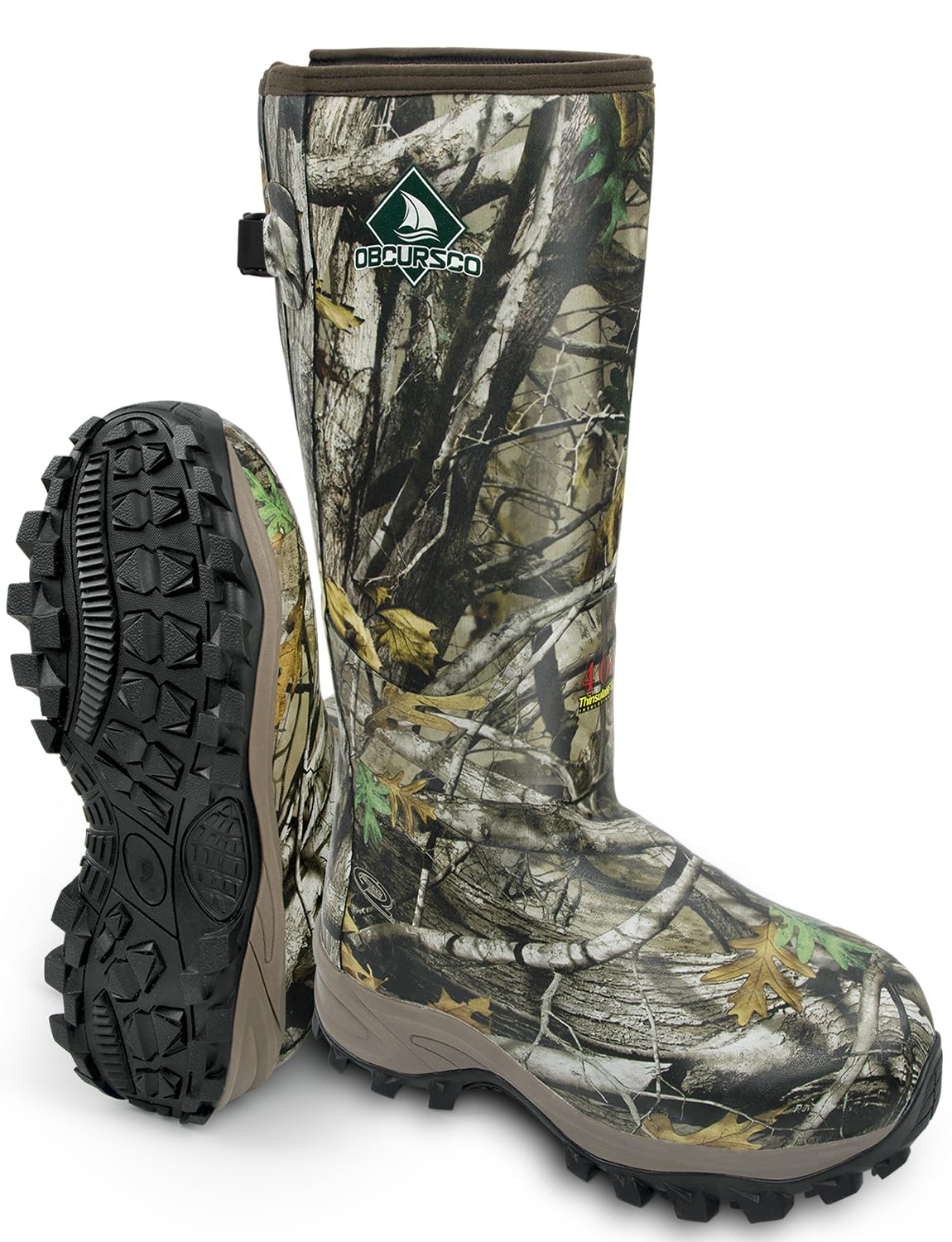
The middle ground: 400g of insulation on a 6mm neoprene shell.
If the warm boot and the deep-cold boot both seem like too much, this is the one in the middle. A 400g Thinsulate fill (a mid-weight synthetic insulation) pairs with a 6mm neoprene shell — one step up from the 5mm top pick — to cover winter and spring hunting without roasting you on mild days. It flexes with your stride and handles hiking, fishing, and farm work just as well as a stand.
The anti-slip outsole gives you grip on varied ground, and the full waterproof wrap keeps feet dry. Fit is where this boot gets the most attention and it is a genuine coin flip: some owners mention true to size, some say it runs a full size too big. Read the sizing notes carefully and measure before you order. What people agree on is the construction itself — solid, comfortable, and good value for a mid-weight insulated boot.
There is more sizing feedback on this model than on almost any other pick here, so go by the chart rather than your gut. A 4.5+ stars across 500+ ratings is a healthy mark for a boot that lands so squarely in the middle of the warmth range. It is the flexible, do-a-bit-of-everything choice.
Go for it if: you hunt winter and spring and want a mid-weight boot that will not overheat you between cold snaps.
Do this first: the sizing runs big for a fair number of buyers — order based on the chart, not your sneaker size.
8. TIDEWE Rubber Hunting Boots, Waterproof Insulated

A 7mm neoprene boot that flexes instead of fighting your stride.
The shell here is 7mm neoprene — thicker than the 5mm top pick and the 6mm all-season boot — wrapped around 800g of insulation in the Next Camo G2 pattern. But the real reason hunters reach for it is how it moves. TIDEWE built the rubber and neoprene to flex as you walk, so your foot and ankle are not locked in place the way a stiff boot forces them to be. The cushioned footbed and generous toe room add up to a boot you can wear all day without thinking about your feet.
Warmth holds up in cold weather and feet stay dry and toasty, which is exactly the point of a boot in this class. Durability earns its share of praise too, with the build lasting a full hunting season without complaint. It is one of the higher-rated picks here and the highest-mileage of the premium tier, so buyers have had a lot of hunts to form opinions on it.
Where it gets tricky is the fit and the bulk. A fair number of customers note the size guide leads them wrong, so treat the printed chart with caution and measure. Others find the boot bulky — no surprise given the 7mm shell. Against a 4.5+ stars across 900+ ratings, those are small frictions for a boot this comfortable. Walk-heavy hunts are where it shines.
what separates it: 7mm neoprene plus 800g insulation, with a flex-first build that moves with your foot instead of against it — the most walkable boot in this warmer tier.
The catch: the size guide misleads some buyers and the shell is bulky — measure carefully and expect a heavy boot.
Pick this if: you are on your feet all day and want warmth plus a boot that flexes with every step.
Be ready for: a bulky shell and a size chart that has led a fair share of buyers astray.
9. MUCK Arctic Pro Tall Rubber Insulated Men’s Hunting Boots
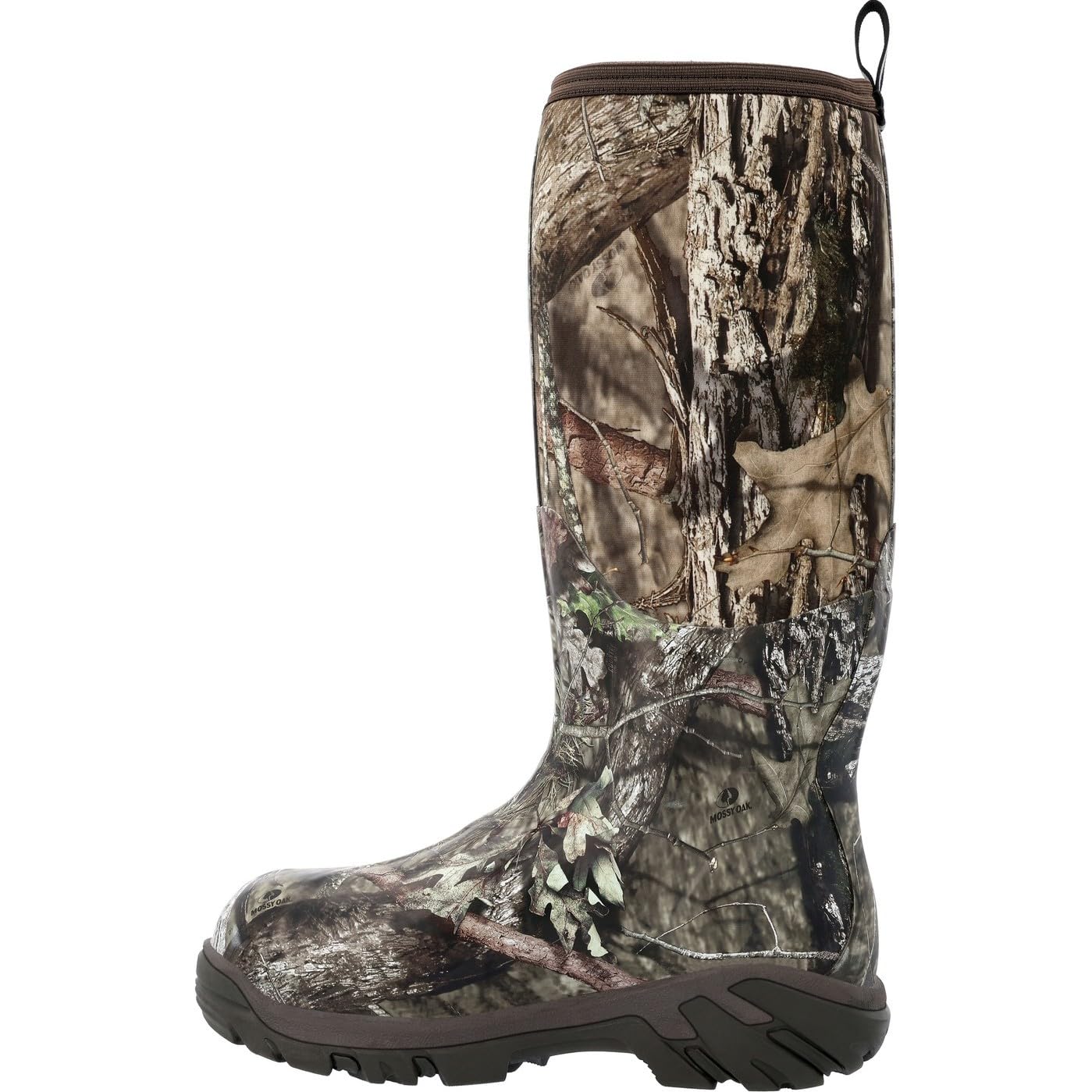
The deepest-cold boot on the list, built for the harshest sits.
When the mercury drops below anything a 400g or 800g boot can handle, this is the one that keeps going. Muck publishes a comfort range of -60 °F/-50 °C to 30 °F/-1 °C — the coldest stated rating here by a wide margin. The warmth comes from an 8mm neoprene shell (the thickest on this list, flexing to the shape of your foot and holding body heat close), a fleece lining, and 2mm of thermal foam under the footbed to keep cold from creeping up through the sole.
Beyond raw warmth, the details are built for long cold sits. A stretch-fit Comfort Topline closes snug around your calf to keep heat in and cold out. The lightweight EVA insole cushions, and double reinforcement in the instep, heel, and Achilles adds support where you need it most. The Bob-Tracker outsole is built tough for grip and durability in snow and ice. Appearance and warmth are what owners point to first — a lot of hunters just plain like how this boot looks and how warm it stays.
The size of this boot is its own story. An 8mm shell with a tall build is a heavy, roomy piece of gear, and it is designed for sitting still in brutal cold, not for sprinting through the woods in October. Durability feedback is mixed — some hunters find it holding up well, a few report it falling short. Against a strong 4.5+ stars across 250+ ratings, this is a specialist tool that excels at one job: keeping your feet alive when everything else has frozen.
Its specialty: a -60 °F/-50 °C comfort rating with 8mm neoprene, fleece lining, and thermal foam underfoot — a genuine extreme-conditions boot, not a mild-weather one.
Who it is not for: the roomy 8mm build and sit-still design make it the wrong boot for warm-weather or walk-heavy hunts, and a few report durability that does not match the warmth.
The right tool for: extreme-cold treestand and blind hunting where warmth is the entire goal.
Not your boot if: you are walking long distances or hunting mild weather — the bulk and depth of insulation work against you there.
Know the Specs
Thinsulate Grams (the Insulation Rating)
Thinsulate is a synthetic insulation, and the number in front of the “g” tells you how much of it is packed into the boot per square meter. A higher number means more warmth held in. A 200g boot suits active, mild-weather hunting. A 400g boot covers cool, mixed weather. An 800g or 1000g boot is built for sitting still in serious cold. The trap is buying the highest number for every season — over-insulated boots make your feet sweat, and wet feet lose heat faster than dry ones.
Neoprene Thickness in Millimeters
Neoprene is the rubber-foam material the shell is made from, and its thickness in millimeters sets how much body heat it traps and how much it flexes. A 5mm shell is the warm, flexible starting point. A 6mm or 7mm shell holds more warmth and suits colder weather. An 8mm shell is the thickest and warmest here, built for extreme cold at the cost of weight and bulk. More thickness is not automatically better — it depends on whether you are sitting still or covering ground.
Steel Shank and Outsole Support
A steel shank is a stiff strip under the arch of the boot. It stops the sole from folding under your foot on rocks and ruts, supporting your arch over miles of walking. Boots without one can feel wobbly on rough ground. Alongside the shank, the outsole is the tread you stand on — anti-slip and grip-focused outsoles are what keep you upright in mud, snow, and on ice, which matters more than almost anything else when you are carrying weight on slick ground.
Waterproof Shell and Breathability
Rubber and neoprene are naturally waterproof, which is why hunting boots use them — your foot stays dry no matter what you stand in. The catch is that a fully sealed boot also traps sweat. A breathable mesh lining helps move moisture out, so your feet stay dry from the inside too. If you walk hard or hunt in mild, wet weather, a breathable lining makes a real difference; for extreme cold where you sit still, warmth matters more.
Common Questions
What Thinsulate weight is warmest for hunting boots?
How do I know if hunting boots will fit before I order?
Are rubber hunting boots warmer than leather boots?
Should I size up in rubber hunting boots for thick socks?
How long do warm rubber hunting boots usually last?
Can I wear insulated rubber hunting boots all day while walking?
What is the benefit of a steel shank in a hunting boot?
Are neoprene hunting boots waterproof in deep water?
What temperature can the coldest hunting boots handle?
How should I care for rubber hunting boots so they last longer?
The Bottom Line
For most hunters, the warm rubber hunting boots choice is the Trudave Steel Shank boot — a 5mm neoprene shell with a steel shank that covers mixed-season hunting and work at the fairest value, with a 4.5+ star mark behind it. If deep cold is your season, step up to an 800g or 1000g boot: the Hunthor 800g balances warmth and price, while the 1000G Thinsulate Camo adds room for thick socks. And for extreme conditions where sitting still is the whole game, the Muck Arctic Pro with its -60 °F/-50 °C comfort range is the one to reach for.
One nudge: the top pick does not cost the most here, so if you want the smartest single-boot decision, start there and only move up in insulation grams if your calendar truly demands it.
How we choose
We do not accept paid placement. Every pick is matched to a real buyer and a real use-case; we do not hands-on test units.
Sources
Specifications: manufacturer listings and product documentation. Review insights: verified customer reviews, as of November 2026. Pricing: not shown on this page (it changes often); check the current price via the retailer link.
As an Amazon Associate, Tactical Gear Guy earns from qualifying purchases. This does not affect which products we feature.