Specs are compiled from manufacturer listings and verified buyer reviews and can change over time — please confirm the key details on the product page before buying.
You want one jacket that handles a rainy commute, a cold trailhead and a windy city block without turning you into a sweating, rustling mess. The short answer: buy a shell with a taped seam and a breathable fabric, then pick the cut that matches your winter layers. Below you will find the nine picks worth your attention, sorted so the best all-rounder comes first and the specialist shells follow.
This guide is built by comparing the manufacturers’ published specifications and the patterns across verified customer reviews, so you get each pick’s real strengths and trade-offs instead of marketing spin.
A water-repellent shell only works when the seams are sealed and the fit leaves room for a fleece, which is the whole trick to a women’s tech jacket that keeps you dry.
Top Picks


How To Choose The Best Women’s Tech Jacket
The biggest mistake buyers make is treating every hooded shell as the same garment. A rain shell and a softshell do different jobs, and the label on the tag tells you which one you are holding. Start with how wet your weather gets, then work down the list.
Waterproof shell or water-resistant softshell
A waterproof shell has a coated or laminated fabric plus sealed seams, so rain runs off instead of soaking in. That is what you want for a real downpour on the walk to the train. A water-resistant softshell uses a stretchy woven face that sheds light rain and blocks wind, which suits a dry-but-cold morning far better. Neither is “better” — they solve different days.
Fleece lining versus a bare shell
A fleece lining traps body heat, so you can wear one jacket from fall into early spring. The trade-off is bulk and warmth you cannot remove on a mild afternoon. A bare nylon shell packs down small and lets you control warmth with whatever sweater you wear beneath it — handy if you travel or commute and the temperature swings.
Fit and layering room
Measure your chest at the fullest point and check the maker’s size chart before you commit. If you plan to wear a thick sweater or a hoodie underneath, many women size up one step so the shoulders still move freely. Adjustable cuffs and a drawcord hem let you cinch out drafts once the jacket is on.
Side-by-Side Comparison
| Model | Best For | Protection Type | Lining | Pockets | Amazon |
|---|---|---|---|---|---|
| Columbia Arcadia II★ Best Overall | Everyday rain and travel | Waterproof, seam-sealed | Unlined shell | Two zippered hand pockets | Amazon |
| 33,000ft SoftshellBest Value | Cold-weather layering | Waterproof, windproof | Warm fleece lining | Four functional pockets | Amazon |
| Wantdo SoftshellBudget Champion | Budget raincoat warmth | Waterproof, windproof | Fleece lining | — | Amazon |
| G Gradual Softshell | Quiet, soft everyday wear | Water resistant, windproof | Fleece lining | — | Amazon |
| Spyder Softshell | Trail-to-city transitions | Water resistant, wind blocking | Grid fleece lining | Secure pockets | Amazon |
| Columbia Kruser Ridge III | Office-to-trail softshell | Water and wind resistant | Unlined softshell | — | Amazon |
| The North Face Antora | Full rain coverage on trails | Waterproof, seam-sealed | Unlined parka shell | Zip hand pockets | Amazon |
| Helly Hansen Crew Hooded 2.0 | Wet coastal and sailing days | Waterproof, windproof, breathable | — | — | Amazon |
| The North Face Apex Bionic 3 | Dry cold and wind | Water and wind resistant | Softshell face | Zip chest and hand pockets | Amazon |
Detailed Reviews
1. Columbia Women’s Arcadia II Jacket
Our pick — 4.5+★ from 8,500+ verified ratings; the strongest balance of quality and price.
The quiet rain shell that handles a commute, a hike and a weekend bag without weighing you down.
If you want one jacket that covers the most days of the year, this is the sensible default. The fabric is 100% nylon with a seam-sealed build, which means the stitched lines are taped so water cannot creep through the needle holes. On a wet walk the rain sits as beads on the surface instead of soaking in, and the shell still breathes so you are not stewing by the time you reach the door. It rolls into its own packable silhouette and disappears into a tote or a daypack.
What wins people over is the build quality, with the fit close behind — a good sign for a jacket worn this hard. The cut is roomy enough to pull over a sweater, and the adjustable velcro cuffs plus a drawcord hem let you shut out wind at the wrists and waist. It is the crowd favorite for good reason: 4.5+ stars across 8,000+ ratings, and plenty of women wear it through chilly Southern weather rather than just a summer shower.
The catch is sizing. Some women find it runs small, so check the maker’s chart and consider going up if you like a loose fit over thick layers. That is a fit question, not a flaw — the fabric and build hold up either way.
Reasons it earns top spot
- Seam-sealed 100% nylon keeps rain out at the stitched lines, not just the fabric surface.
- Packable silhouette stuffs into a bag for travel or a just-in-case layer.
- Adjustable velcro cuffs and drawcord hem customize the fit and block drafts.
- Two zippered hand pockets keep keys and a phone dry.
What to plan around
- Sizing runs small for some women, so measure your chest before ordering.
- The shell is unlined, so warmth comes only from what you layer underneath.
Reach for this if: you want one multi-season rain shell that packs small and covers most wet days.
Think twice if: you want built-in warmth on a freezing morning — this one is a bare shell.
2. 33,000ft Women’s Softshell Jacket
A fleece-lined softshell that shrugs off cold wind and keeps its stretch when you move.
Here is the shell for the woman who wants warmth baked in, not layered on. The fleece lining sits against your body and traps heat, while the outer face is waterproof and windproof with 4-way stretch — meaning the fabric gives in every direction so a reach or a stride does not fight back. A stand collar closes off the neck, and the smooth SBS zipper runs cleanly without snagging. Four functional pockets give you room for a phone, keys and gloves.
Owners call out the quality first and the warmth second, which tracks with a shell that is meant to work from fall into early spring. It repels water and cold wind in equal measure, and women wear it through winter in the South because it handles damp chill rather than deep snow. It is machine washable and treated to resist stains and static, so daily wear does not punish it.
The honest note: a fleece-lined softshell is warmer and bulkier than a bare rain shell, so on a mild wet afternoon you may wish you had the lighter option. Keep that in mind if you run hot.
Where it shines: the combination of a waterproof face, a warm fleece backer and 4-way stretch covers cold wet days that a plain rain shell cannot.
Layer it right: with the fleece built in, you get warmth without a separate midlayer — but it packs larger than an unlined shell.
Suits you if: you want one cold-weather jacket with warmth and stretch built in.
Not for you if: you need something that stuffs into a tiny travel pouch.
3. Wantdo Women’s Softshell Jacket
Hooded, fleece-backed and squarely built for wet, chilly weather on a modest budget.
The outer shell is a blend of 95% polyester and 5% spandex, so it holds a waterproof and windproof face while the spandex gives it a little flex across the shoulders. Underneath, a fleece lining adds warmth without the heft of a padded coat — women wear it as a raincoat that also keeps them warm on a cold drizzle. The hood is the practical extra here, and it makes this a genuine all-weather layer rather than a dry-day-only piece.
Buyers talk about the build quality most, with the fleece warmth a close second. That mix makes sense for a jacket that does double duty as a raincoat and a light winter coat. It looks good enough for errands and holds up when the sky turns, which is exactly what most people want from a hooded softshell.
Sizing is the recurring question: some women find it true to size, others find it runs too small. If you are between sizes, go up. It is a simple fix and the jacket otherwise does its job at the entry level.
The value read: waterproof face, fleece warmth and a hood together make this a strong entry-level all-weather layer.
Fit caveat: the size run is split, so measure yourself rather than assuming your usual letter size.
Choose it if: you want a hooded, warm raincoat on a tight budget.
Look elsewhere if: you only need a featherweight shell for light showers.
4. G Gradual Women’s Fleece Lined Softshell Jacket

The softshell that keeps you warm on 40-degree mornings without announcing every step you take.
What stands out first is the fabric feel. The outer layer blocks wind and water without the loud crinkle you get from a thin nylon rain shell, so it moves quietly with you through an office or a quiet street. Inside, the fleece lining adds warmth, and the whole piece stays light enough for a 40 or 50 degree morning. It fits true to size and still leaves room for a thick shirt underneath.
Build quality is the headline — women compare it to big-name brands and mean it. The fit lands cleanly, the water resistance holds on a drizzle, and comfort sits right up there with appearance. At 4.5+ stars it is one of the highest-rated softshells in this guide.
One thing to know: this is a light-to-mid layer, not a downpour parka. It handles drizzle and cold wind; a hard, sustained rain will eventually find it. That is the right jacket for most fall and spring days, and you would want a full waterproof shell for a real storm.
Why women keep reaching for it
- Quiet outer fabric — no loud rustle when you walk or move.
- True-to-size fit with room for a thick shirt underneath.
- Fleece lining adds warmth for 40 and 50 degree mornings.
- Quality that draws comparisons to big-name brands.
One thing to plan for
- Built for drizzle and cold wind, not sustained heavy rain.
The verdict: a quiet, warm softshell for the woman who wants comfort and build quality over maximum waterproofing.
Skip if: you face real downpours and need a seam-sealed waterproof shell.
5. Spyder Womens Softshell Jacket
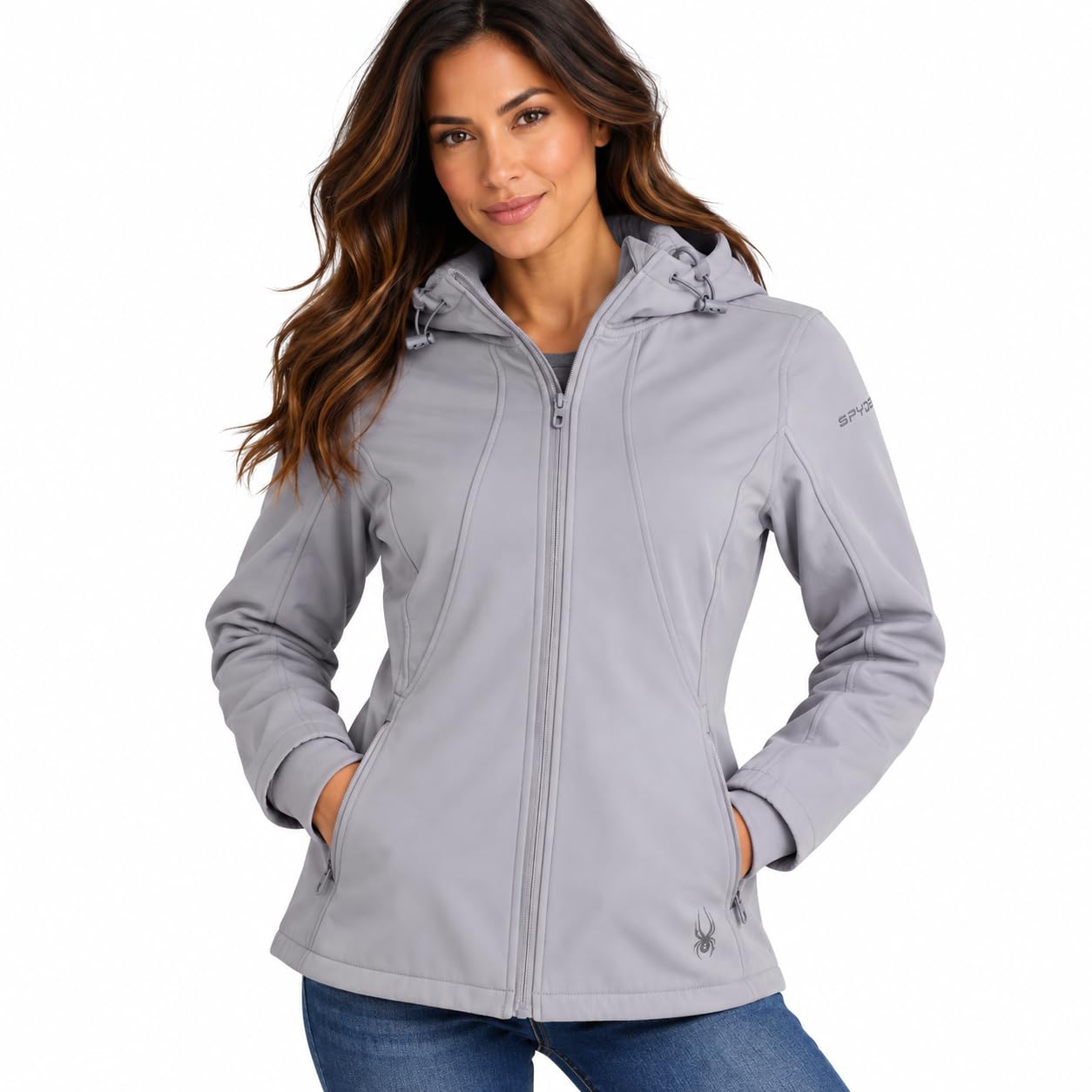
A trail-to-city shell with thumbholes, Lycra storm cuffs and a grid fleece backer.
This one is built to move. The outer shell sheds light rain and blocks gusts, and the built-in stretch lets your shoulders work when you climb or reach. Lycra storm cuffs seal the wrists, and thumbholes keep the sleeves anchored so no draft sneaks up your arm. The grid fleece lining traps heat efficiently, which makes it a layer you can wear alone in fall or zip under a heavier coat in winter.
It earns the versatile label because it works as a hiking layer and a daily commuter piece equally well. Quality gets the strongest response, with warmth close behind, and the style holds up in city wear. On a raw NYC day it keeps out cold, wind and rain together, which is exactly the three-way test a transitional jacket has to pass.
Fit is the sticking point here — some women say it fits great, others find it odd, and several report it runs too small. Order a size up if you are unsure, and treat the fit note as the one thing to sort out before you fall in love with the rest.
Built for movement: stretch fabric, storm cuffs and thumbholes make this a comfortable layer for the trail or the commute.
Sizing heads-up: the fit is the one divided point, and a good share of women find it runs small.
Pairs well with: weekend trails, commutes and anyone who wants a stretchy, warm shell.
Double-check: sizing before you buy, since the fit leans small for some.
6. Columbia Women’s Kruser Ridge III Softshell Jacket
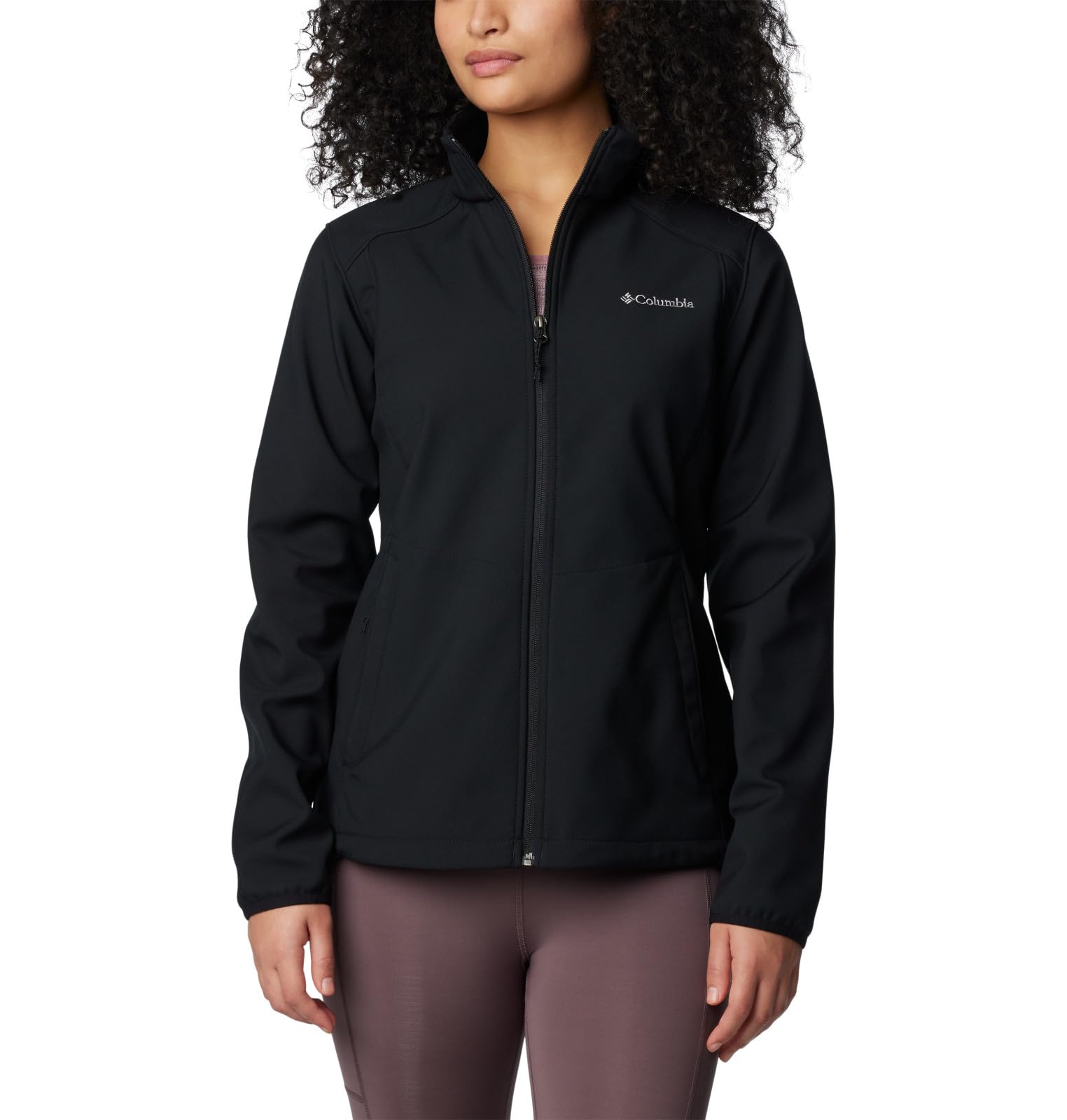
The office-friendly softshell that lets you pile a layer underneath and still look put together.
A soft yet durable shell is the whole idea here — water and wind resistant, light enough for a heated office, and clean enough to wear to work. Columbia offers it in multiple colors and sizes, including extended sizing, so more women can find a good match. The regular fit is cut for layering rather than clinging, and there is room to add a sweater underneath when the forecast turns.
Build quality is what women notice first, then the fit. It keeps you warm in a cold office and handles a breezy trailhead on the way home, which is exactly the gray zone a softshell is built for.
One heads-up: the sizing runs larger than expected for some women. If you are between sizes or prefer a trim fit, try the smaller option. With that sorted, this is a genuinely versatile piece for lining a commute or a weekend walk.
The everyday angle: water-and-wind-resistant soft shell, extended sizing and room for a layer underneath cover workdays and light outdoor wear.
Fit note: the cut runs larger for some women, so a between-sizes buyer may want to size down.
A good match for: commuters and office wearers who want a light softshell with room to layer.
Look past it if: you need a fully waterproof shell for real rain.
7. THE NORTH FACE Women’s Antora Rain Parka
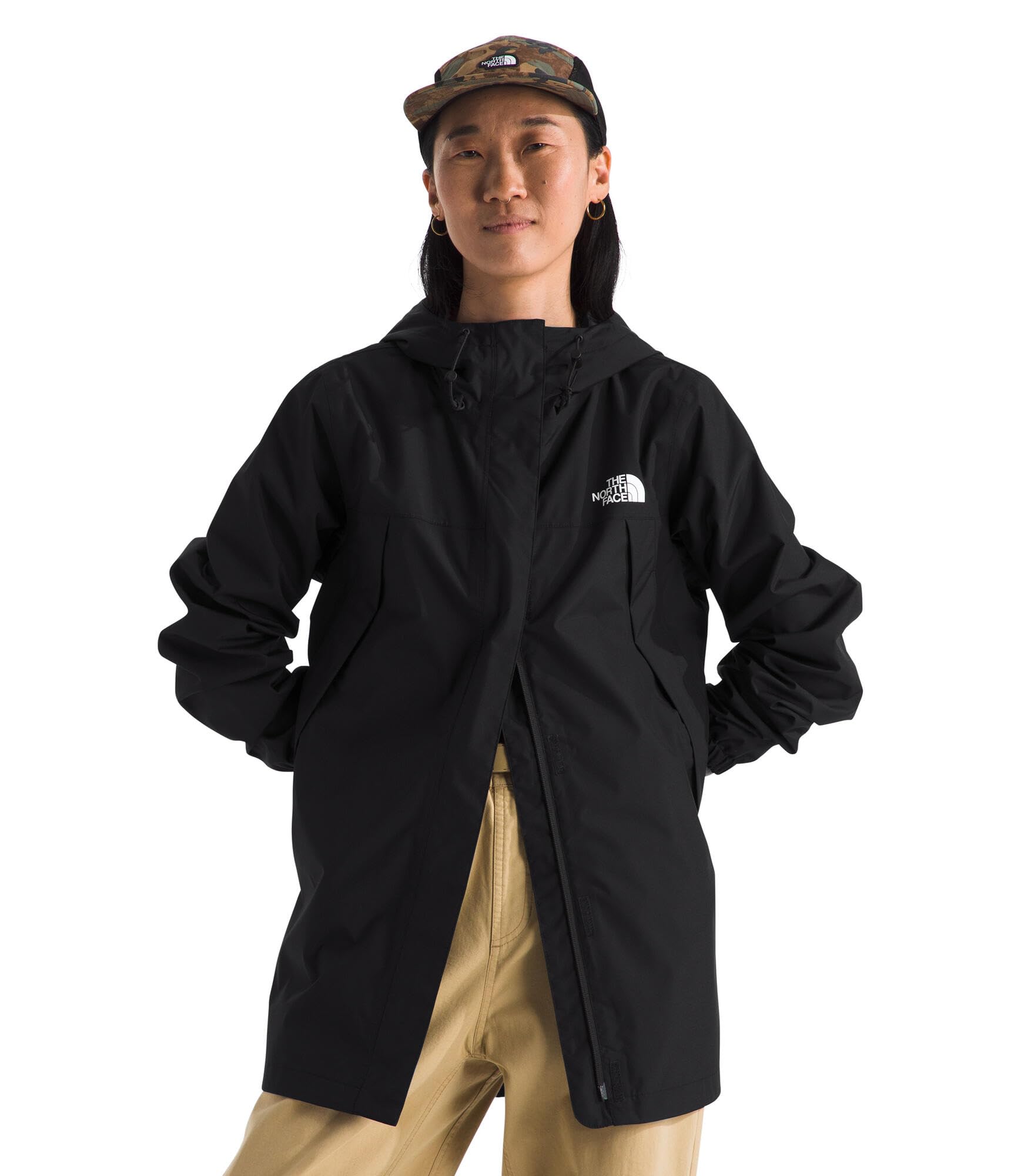
A seam-sealed parka with a longer cut that keeps your legs dry on a fast walk to the train.
When the rain is serious, coverage matters as much as waterproofing. The Antora is a proper parka with an adjustable hood, zip hand pockets and a seam-sealed waterproof shell that keeps out light and heavy rain. It is breathable too, so moisture can escape during a brisk walk. The design packs down easily, which means it can live in a bag until the sky opens. One woman notes it gives full thigh coverage — the difference between dry legs and soaked ones on a long commute.
Build quality is the top strength and fit comes second. It runs true to size with good sleeve length, and the appearance and color hold up to daily wear. The longer cut makes it the pick when a hip-length shell is simply not enough. It is a rain-first jacket, so warmth comes from the layers you add underneath.
If you want one jacket for both downpours and cold, layer a fleece under it — otherwise enjoy the dry legs.
Best when: you walk or commute in serious rain and want longer coverage that protects your thighs.
Worth knowing: warmth is not built in — bring a layer for cold days.
8. Helly Hansen Crew Hooded Jacket 2.0

A sailing shell with articulated elbows, a stowable hood and a zipper built to shrug off salt water.
This jacket is engineered for wet, windy days near water and it shows. The HELLY TECH Protection build is waterproof, windproof and breathable, and the seams are fully sealed to keep out rain. Articulated elbows and shoulders give you true freedom of movement, which matters when you are pulling ropes or reaching overhead. The hood packs into the collar when the sky clears, and the front YKK Vislon zipper is built to resist saltwater corrosion — a real detail for coastal wear.
Quality is the standout, with fit close behind. It stays dry and comfortable, style reads well on land, and there is room for warmer layers underneath on a cold crossing. Adjustable drawcords on the hood and hem fine-tune the fit so wind does not find a way in.
Value is the one split point — some women find it well worth it, others feel the ask is high. Treat that as a question of how often you will actually wear a marine shell. If you live near the water or sail often, it earns its place; on dry inland days a lighter rain shell covers most of the same ground.
The water-side pick: fully seam-sealed HELLY TECH build, articulated joints and a corrosion-resistant zipper make it a genuine coastal shell.
Value question: the price lands high, so it makes most sense for women who face water and wind regularly.
Built for: sailors, coastal walkers and anyone who wants a breathable waterproof shell with real mobility.
Only if: the wet weather is frequent enough to justify a marine-grade jacket.
9. The North Face Women’s Apex Bionic 3 Jacket
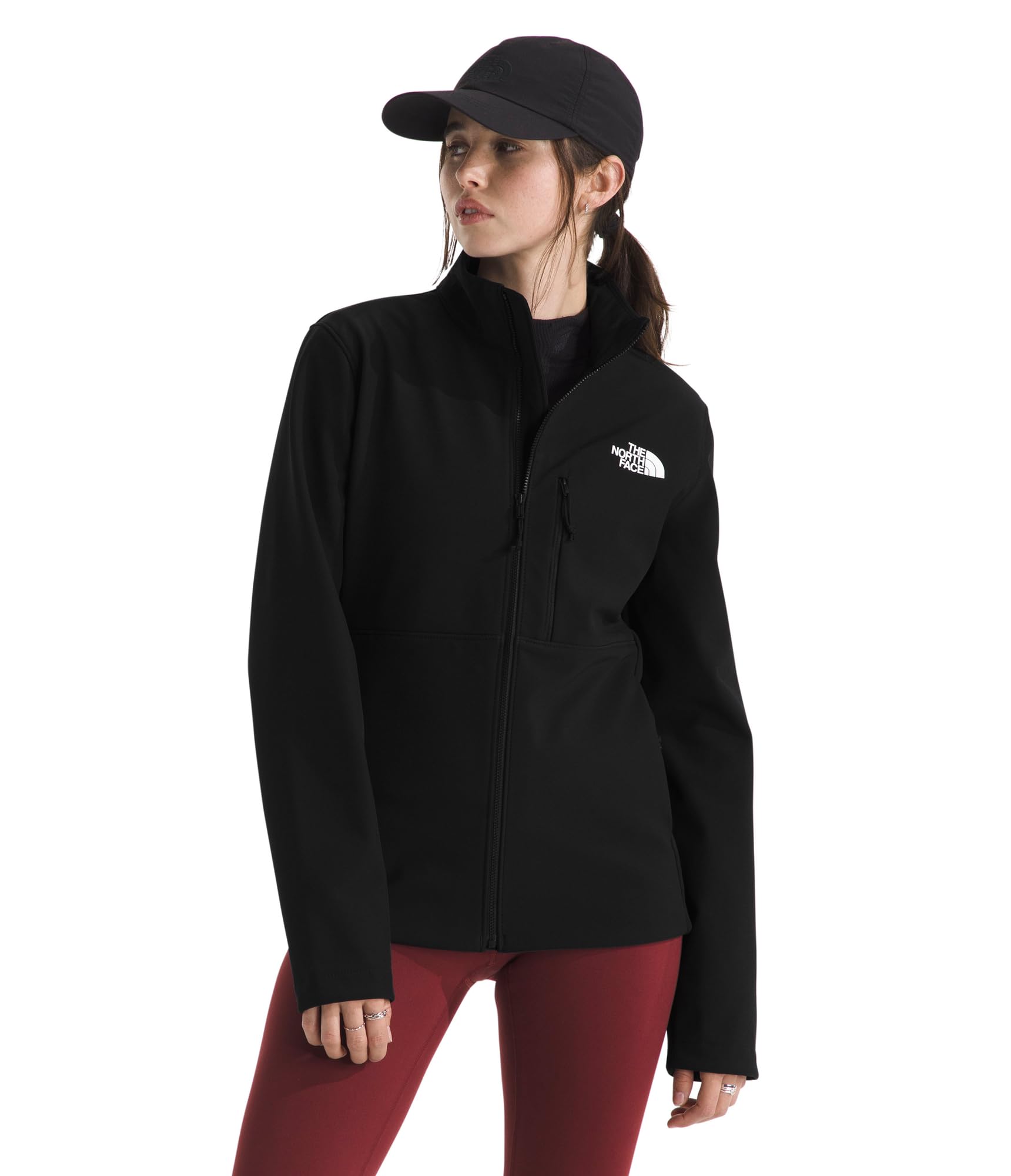
A wind-blocking softshell with a recycled build and a clean, standard fit for cold dry days.
This is the jacket for the woman who wants a sharp softshell for wind and dry cold rather than rain. WindWall Technology blocks gusts so the chill does not cut through, and a non-PFC DWR finish — a water-repellent coating made without certain fluorinated chemicals — shrugs off a light drizzle. The body is made with 50%–74% recycled or sustainable materials, which matters if you care about the footprint of your outerwear. The standard fit reads clean and there are zip chest and hand pockets plus an adjustable hem to seal out drafts.
Buyers notice the build quality first, then the warmth it holds for cooler fall and spring weather. It does not feel cheap at all, and the fit is comfortable enough for daily wear. This is a dry-day softshell that layers well over a sweater when the temperature drops.
The honest limit: it is water resistant, not waterproof, so a sustained rain will win. And at the top of the range it is the premium commitment here. If your weather is mostly cold and windy, that trade makes sense; if it is mostly wet, buy one of the seam-sealed shells above instead.
What justifies the premium
- WindWall Technology blocks gusts on cold, breezy days.
- Non-PFC DWR finish sheds light drizzle.
- 50%–74% recycled or sustainable materials in the build.
- Zip chest and hand pockets plus an adjustable hem.
The real limits
- Water resistant, not waterproof — sustained rain will get through.
- It is the highest-commitment pick in this lineup.
Top choice for: cold, windy, mostly dry weather and buyers who value recycled materials.
Steer clear if: rain is your main enemy — this one is a wind-and-drizzle layer.
Know the Specs
Waterproof versus water resistant
Waterproof means the fabric and its seams are built to keep rain out entirely — the Arcadia II, the 33,000ft, the Wantdo, the Antora and the Helly Hansen all claim it, and most use sealed seams so needle holes do not leak. Water resistant means the face sheds light rain and blocks wind but will give up in a sustained soak, which is how the G Gradual, the Spyder and the Apex Bionic 3 are built. Match the label to your weather, not to the word that sounds tougher.
Fleece lining and warmth
A fleece lining is a soft brushed layer inside the shell that traps your body heat, so you get warmth from the jacket itself. The 33,000ft, the Wantdo, the G Gradual and the Spyder all use one, which is why they work as cold-day layers. A bare shell like the Arcadia II, the Antora or the Kruser Ridge III keeps you dry but relies on your sweater for heat. Neither is better — one is warmer from the start, the other packs smaller and adapts to more days.
Common Questions
Is a softshell warm enough for a cold morning walk?
Will these jackets keep me dry in a heavy downpour?
Should I size up for layering?
Does a packable jacket wrinkle or wear out faster?
Can I wear a fleece-lined softshell in spring?
How do I keep the water-repellent finish working?
Is a hooded rain shell better than an umbrella for a commute?
What is a non-PFC DWR finish?
Can a softshell replace a winter coat?
Do these jackets have pockets I can actually use?
The Bottom Line
For most women, the women’s tech jacket winner is the Columbia Arcadia II because its seam-sealed waterproof build and packable cut cover the most wet days of the year. If you want warmth built in for cold mornings, grab the G Gradual Fleece Lined Softshell with its quiet fabric and true-to-size fit. And for real downpours where dry legs matter, the The North Face Antora Rain Parka is the one to reach for.
How we choose
We do not accept paid placement. Every pick is matched to a real buyer and a real use-case; we do not hands-on test units.
Sources
Specifications: manufacturer listings and product documentation. Review insights: verified customer reviews, as of November 2026. Pricing: not shown on this page (it changes often); check the current price via the retailer link.
As an Amazon Associate, Tactical Gear Guy earns from qualifying purchases. This does not affect which products we feature.