Specs are compiled from manufacturer listings and verified buyer reviews and can change over time — please confirm the key details on the product page before buying.
You set a camera on a scrape line, drive home, and then wait. The whole sport of a wilderness trail camera is what lands on your phone, not what hangs on a tree. This guide sorts the cellular cameras that actually deliver photos from remote ground, so you can pick the one worth strapping up this season without a second trip to check it.
This guide is built by comparing the manufacturers’ published specifications and the patterns across verified customer reviews, so you get each pick’s real strengths and trade-offs instead of marketing spin.
The features that decide whether a camera earns its spot on your tree are trigger speed, detection range, flash type, and how the signal holds up. That is the core of these wilderness trail cameras, and every pick below is measured on exactly those points.
Top Picks

How To Choose The Best Wilderness Trail Cameras
The first decision you make is whether the camera sends photos to your phone at all. A cellular camera (one that uses a mobile network instead of Wi-Fi) lets you check a ridge without walking to it. That convenience usually comes with a monthly data plan, so read the plan terms before you fall for the camera specs.
Trigger speed decides what you actually catch
A deer crossing a food plot clears the sensor in a fraction of a second, so a slow trigger fires late and catches empty brush. The Browning Defender Pro Scout Max Extreme HD fires in 0.25 seconds, while the Moultrie Edge 3 2-Pack takes 0.5 seconds. On the fastest-moving game, that gap is what separates a clean buck photo from a blur of tail.
Flash type and detection range
No-glow infrared flash means the camera throws no visible red light, so game and trespassers never see it fire. Low-glow throws a faint red glow but usually reaches farther. Detection range is the distance in feet the motion sensor can spot heat, and a longer reach covers a bigger scrape or fence line.
Power and the data plan
Most cellular cameras run on AA batteries, a rechargeable pack, or a solar panel. A solar bundle saves you repeated battery swaps on a long deployment. Every cellular camera here needs some paid data plan to send images to your phone, so compare those monthly terms right alongside the hardware.
Side-by-Side Comparison
| Model | Best For | Still Resolution | Trigger Speed | Detection Range | Amazon |
|---|---|---|---|---|---|
| Moultrie Edge 3 2-Pack★ Best Overall | Two-camera coverage on a budget | 40 MP | 0.5 s | 100 ft | Amazon |
| Moultrie Edge 2 ProVideo Specialist | Video-heavy scouting | 40 MP | — | 100 ft | Amazon |
| Stealth Cam Revolver Pro 2.0360 Coverage | Full 360-degree coverage | 40 MP | 0.35 s | 100 ft | Amazon |
| Browning Defender Pro Scout Max | Fastest trigger on moving game | 24 MP | 0.25 s | 120 ft | Amazon |
| SPYPOINT Flex-M Solar Bundle | Low-maintenance solar deployment | 28 MP | — | — | Amazon |
| GardePro X66 Pro | Rechargeable battery, no AA hassle | 48 MP | 0.1 s | — | Amazon |
| Tactacam Reveal Pro 3.0 | Beginner setup in minutes | — | — | — | Amazon |
| Tactacam Reveal Ultra | Top-tier live view and 4K photos | 4K | — | 96 ft | Amazon |
Detailed Reviews
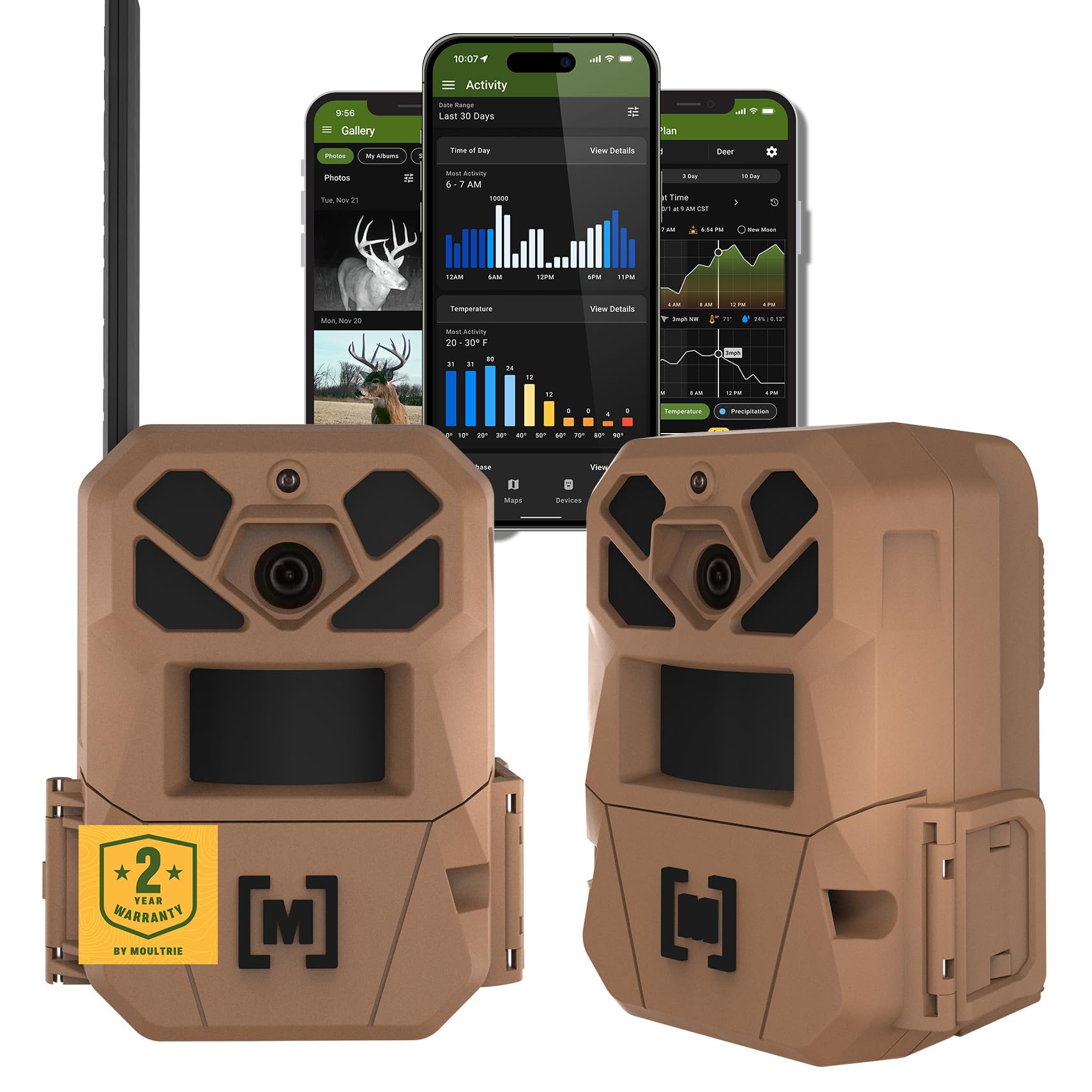
1. Moultrie Edge 3 Cellular Trail Camera 2-Pack
Our pick — 4.0+★ from 500+ verified ratings; the strongest balance of quality and price.
Two cameras in one box, so one ridge line gets double the eyes.
If you have ground to cover in more than one spot, this pair of Moultrie Edge 3 cameras covers two scrapes for the effort of setting one. Each unit shoots 40MP stills and 1080p HD video, and a low-glow infrared flash keeps night shots clear without spooking deer. The 0.5-second trigger and 100-foot detection range catch moving animals cleanly. It earns the top spot on volume: two 40MP cameras with four-carrier auto-connect for roughly the price of one premium unit.
The connectivity angle is where this camera makes its case. It auto-connects to the strongest of four major U.S. networks, with no SIM card and no manual setup. So a camera on a remote property still delivers photos to your phone even where one carrier is weak. Moultrie’s AI picks out bucks and fires an instant alert, which cuts the false alerts that clog your feed. Live Aim and built-in GPS let you preview the view before you strap it, so you are not guessing at the angle.
What wins people over is the low-glow night capture — clear infrared frames that land in the app without spooking deer. The honest catch is reliability: some units run fine for a season while others in the same batch stop sending, and signal can be spotty in the deepest timber. Battery life also depends on how often it fires, so a busy scrape drains it faster. A data plan is required to send images, sold separately through the Moultrie app.
What earns it the top spot
- Two cameras per pack, so two setups get covered in one purchase.
- 40MP photos and 1080p HD video with a low-glow flash for night.
- Four-carrier auto-connect with no SIM card and no setup fuss.
- Live Aim preview and built-in GPS map every camera in the app.
Where it can fall short
- Connectivity and reliability are the split reports — a weak-signal spot hurts delivery.
- Requires an active Moultrie data plan, sold separately.
Go for this if: you have two or more spots to watch and want both covered without buying twice.
Hold off if: your property sits in a signal dead zone with no carrier overlap.
2. Moultrie Edge 2 Pro Cellular Trail Camera
Sharper footage than its sibling, and you can pull it to your phone on demand.
If you would rather watch a buck work a scrape than stare at a still of it, this is the pick. The Edge 2 Pro shoots 1440p HD video with audio, which is a step up from the 1080p video on the Moultrie Edge 3 2-Pack. It still takes 40MP photos, and the advanced sensor holds up in low light, so dawn and dusk footage stays sharp. The 8GB of built-in memory runs alongside unlimited cloud backup, so storage never fills and you get no SD card to pull.
Part of Moultrie’s draw here is the app control. Live Aim lines the field of view up with your phone, so you place the shot without walking back and forth. Remote trigger and on-demand requests let you grab a clip from anywhere. The multi-mode menu covers Time-Lapse, Multi-Shot, and Motion-Triggered capture, so you can match it to the season or the species you are watching. Its 100-foot detection range and low-glow infrared flash mirror the rest of the line.
What wins people over is the 1440p video with audio and the low-light sensor that keeps dawn and dusk clips sharp. The field of view here is 50 degrees, a narrower window than the Stealth Cam Revolver Pro 2.0’s full 360 degrees, so you want to aim it more carefully. Value is the split point — some owners think it is well worth it, while others question the spend once the monthly plan is added. Battery life is a factor too, because heavy video requests eat power. It is a strong camera if video is the goal, less ideal if budget is the lock.
What it does best: Rich 1440p video with audio, pulled on demand straight to the app.
The honest catch: The monthly data plan and battery drain both add up, so budget for the running cost, not just the camera.
Made for: the hunter who judges a camera by its video, not its stills.
Pass it over if: you want one fixed wide-angle view — this one needs aiming.
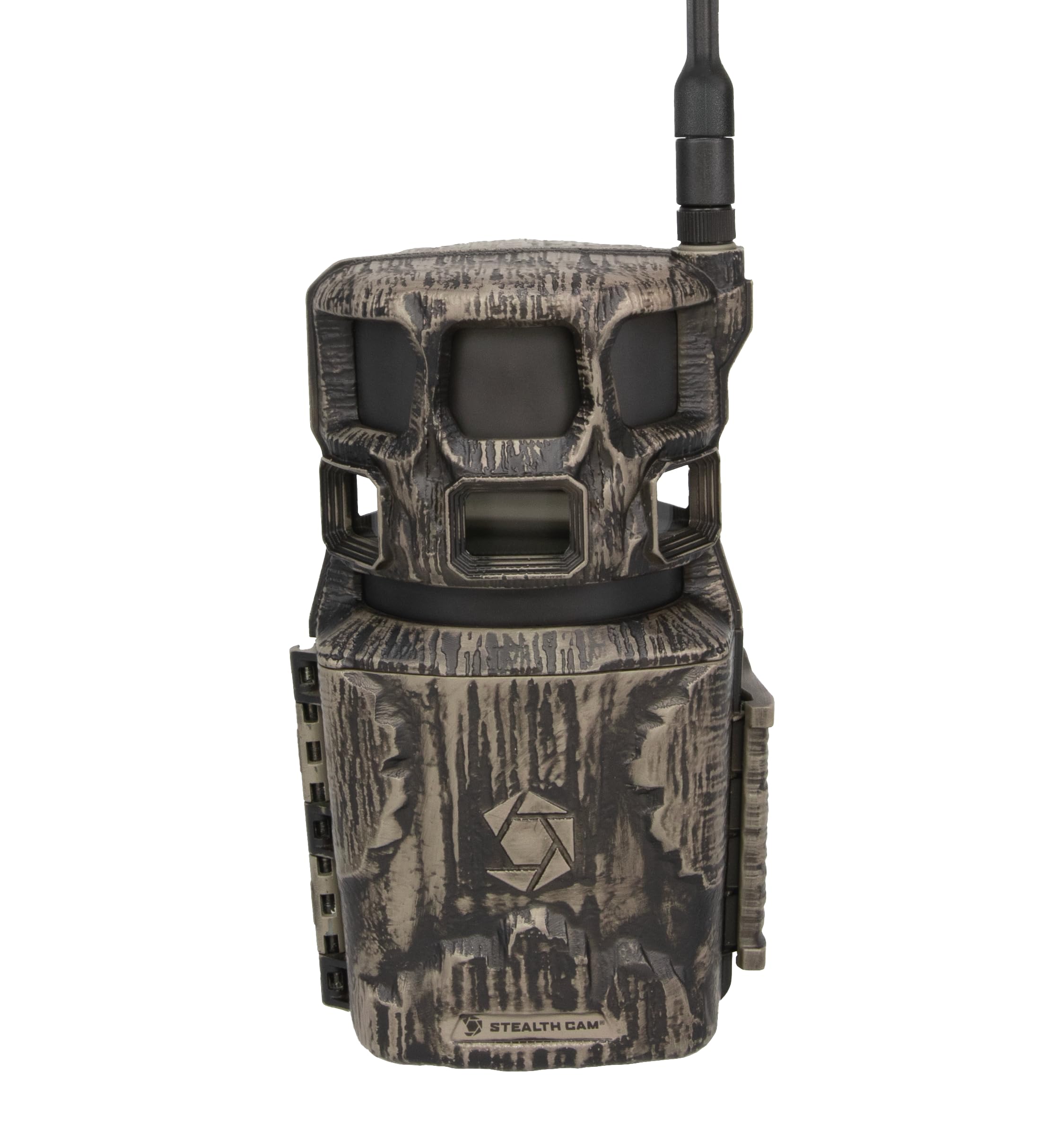
3. Stealth Cam Revolver Pro 2.0 360-Degree Cellular Camera
One camera, full circle — no blind spot left unwatched.
This is the only camera here that sees a full circle. The Revolver Pro 2.0 covers 360 degrees of field of view, where the Tactacam Reveal Pro 3.0 covers a 50-degree cone. That full sweep means you do not have to guess which direction the deer will come in. For a crossroads, a pinch point, or an open field edge, one camera covers the entire scene instead of one slice of it.
The imaging holds up too. It shoots 40MP photos (selectable down to 4MP, 8MP, or 16MP) and 1440 QHD video with audio. A 0.35-second trigger speed beats the Moultrie Edge 3’s 0.5-second trigger, so fast animals get caught more cleanly. The 100-foot detection and flash range is lit by 4 power LEDs, so low-light frames stay usable. Built-in 32GB memory is four times the 8GB on the Moultrie Edge 2 Pro, and that larger buffer matters when a busy spot fires all night before you pull the card. GPS tracking and the Command Pro App handle remote management.
Image quality is the honest split here. Some frames come back crisp while dawn shots can blur, and fogging has been a real complaint on wet mornings. So keep it on a mount that does not point into rising sun, and you cut the worst of it. Setup is a little more involved than a fixed-lens box because you aim the whole sweep. It is the right tool if a 360 view solves a real problem on your land, and overkill if you just watch one trail.
The case for the full circle
- 360-degree field of view covers a crossroads with one camera.
- 40MP stills and 1440 QHD video with audio.
- 32GB internal memory holds a long deployment.
- 0.35-second trigger beats the slower budget trigger.
Where the view gets murky
- Dawn images can blur and fogging is a wet-morning risk.
- Setup takes more care than aiming a fixed-lens camera.
Built for: a pinch point or open field where deer appear from any direction.
Not the pick if: you already know the one direction game crosses.
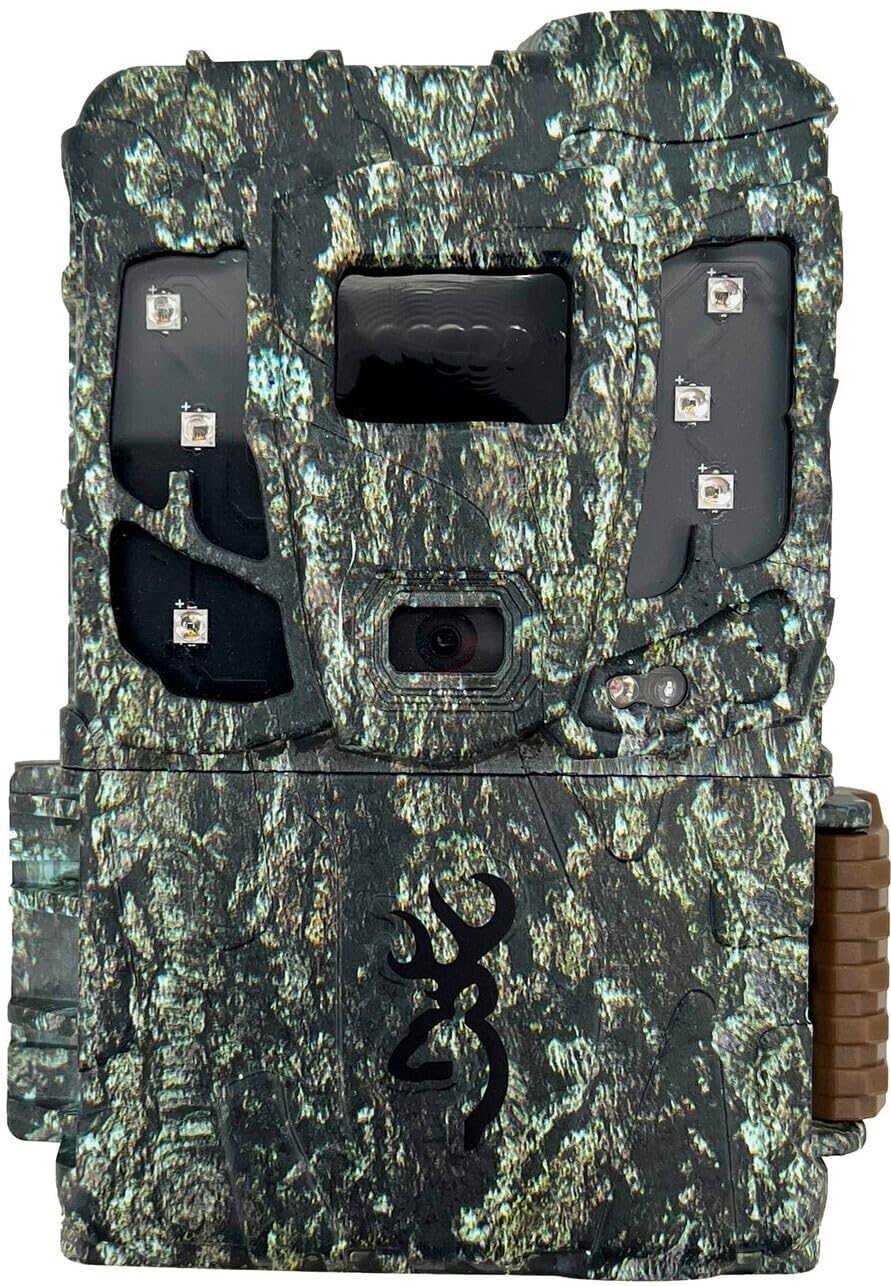
4. Browning Defender Pro Scout Max Extreme HD Cellular Trail Camera
When a buck trots through, a quarter-second trigger is what catches him.
The trigger is the headline. This Browning fires in 0.25 seconds, half the 0.5-second trigger on the Moultrie Edge 3 2-Pack. On a moving target that gap is the difference between a clean frame and an empty one. It also reaches farther than most of the pack — adjustable IR flash settings out to 120 feet, which beats the 100-foot reach on the Moultrie Edge 2 Pro and Stealth Cam Revolver Pro 2.0.
Imaging lands at 24MP stills, plus full HD 1080p video with sound and RADIANT 6 Night Illumination for the dark hours. Images carry GPS tags, so every photo tells you where it was taken. The metal housing makes it a sturdier build in the timber than a plastic-bodied box. And it ships with pre-installed AT&T and Verizon SIM cards, so you pick the carrier that works on your ground instead of buying a card.
The 24MP stills and RADIANT 6 night illumination hold up, and owners are generally pleased with both picture and function. A few report a unit that did not hold up, so buy from a seller with a clear return path. The one thing to know going in: you need a Verizon or AT&T data plan active to get photos to your phone, and on a dead-zone ridge neither carrier may reach. For hard-hitting scouting on fast-moving game, the trigger and range carry this pick.
Sharper on the draw: A 0.25-second trigger and 120-foot flash reach are the fastest, longest combination here.
The catch to size: It leans on Verizon or AT&T coverage, so a remote spot with no signal leaves you flying blind.
Pick this when: game moves fast across a wide field and you need the shutter to beat them to it.
Think twice if: your land sits off both major carrier maps.
5. SPYPOINT Flex-M Solar Bundle

The one that keeps itself charged, so you visit the woods less.
For a camera left on a far property for months, solar is the feature that actually saves you work. The Flex-M ships with the SPLB-10 compact solar panel, an installation strap, and a heavy-duty mounting arm, so the whole kit goes up at once. The FLEX-M itself takes 28MP photos with night vision and records 720p video with sound. It is IP65 water-resistant, so rain and dust do not stop it sending.
The data plan angle is where this bundle stands apart. SPYPOINT offers a free plan that sends up to 100 photos a month with no fees, and paid plans step up from there. One plan per camera, and you activate it in the app. That free tier is the easiest way into cellular scouting without committing to a monthly bill every time. The app also adds personalized maps and BUCK TRACKER AI for filtering species.
The 28MP night-vision images and the strap-and-go solar kit are what win people over. Image quality is more of a split — clear shots by day and night for most, but a few units returned nothing at all, a reminder to test it at the house before you drive out. It weighs 3.8 pounds, so hang it on a solid mount rather than a thin branch. And a 32GB microSD card is required to run, sold separately. Solar keeps the power steady, but you still need the card and a plan for delivery.
Why the solar kit earns its place
- Solar panel included, so the camera keeps running on long deployments.
- Free 100-photo monthly plan option keeps the running cost low.
- 28MP photos plus night vision and 720p video with sound.
- IP65 water-resistant housing survives rain and dust.
What to watch out for
- A 32GB microSD card is required and not included.
- At 3.8 pounds it needs a sturdy mount, not a slim branch.
Reach for this if: you want a low-maintenance camera on remote ground you visit rarely.
Look elsewhere if: you want the highest still resolution — this one sits at 28MP.
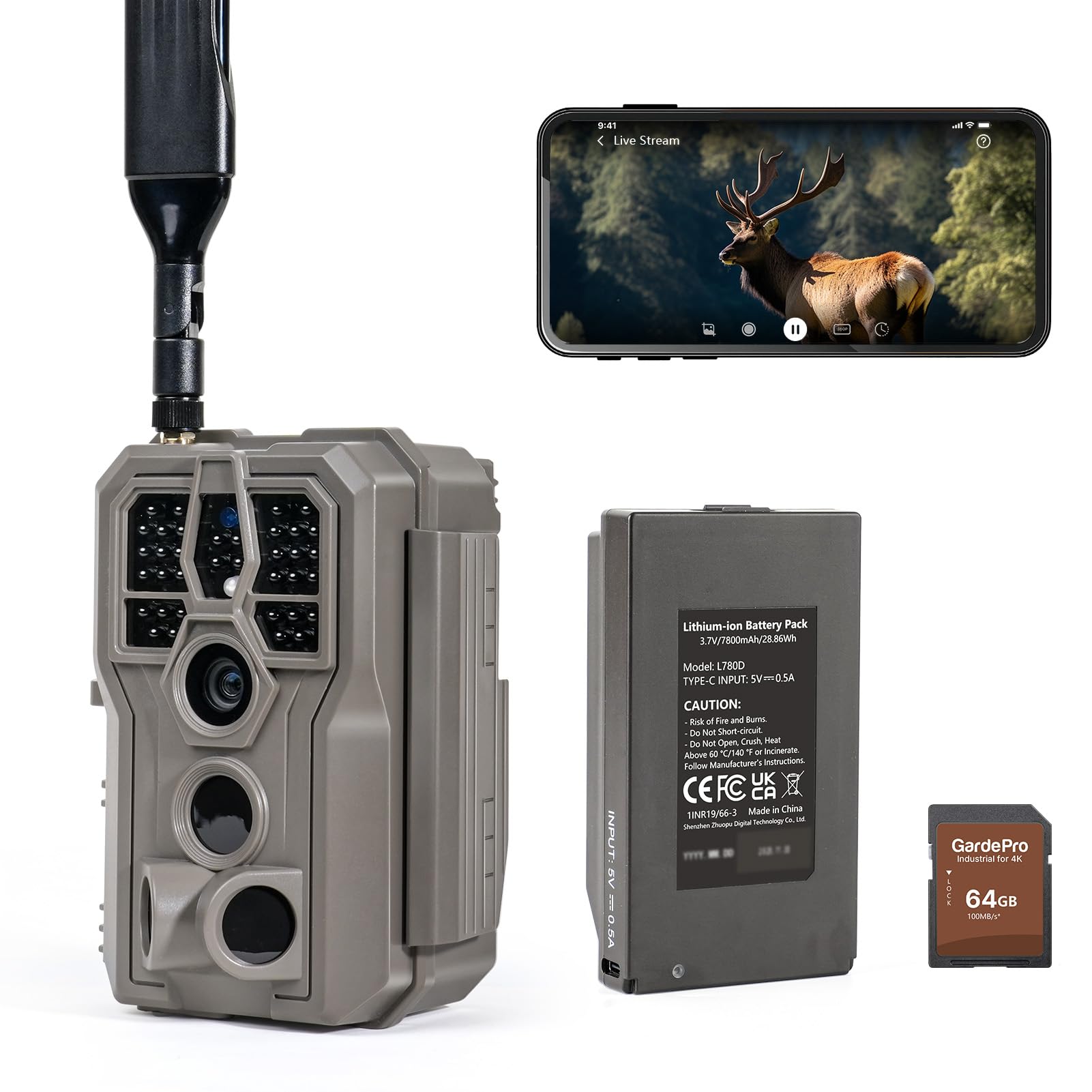
6. GardePro X66 Pro Cellular Trail Camera, Rechargeable Battery
A 0.1-second trigger and a battery you recharge instead of replace.
This is the fastest trigger on the list at 0.1 seconds. For a whitetail crossing at a trot, that number is not marketing — it is the smallest window of time between a deer entering the frame and the shutter firing. It hooks to a 3-PIR sensor system for more accurate motion detection, so the fast shutter fires on real animals, not swaying grass. For stills it climbs to 48MP, the highest still resolution here, ahead of the 40MP Moultrie Edge 3 2-Pack.
The power design is the second draw. A 7800mAh rechargeable lithium pack replaces the endless stream of AA batteries, and it swaps out easily. GardePro rates up to 2 months of operation in Instant mode at 15 daytime plus 15 nighttime photos a day. Pair it with the SP300 or SP1000 solar panels, sold separately, and it runs longer. A 64GB industrial-grade SD card comes in the box, which is a rarity, so there is no separate card to grab.
Video comes in at 1296p HD with audio, and 940nm no-glow infrared keeps the flash invisible so animals stay calm. The honest note is battery life and quality. Quality is a mixed bag across the field, and some users report the charge lasting around three weeks rather than the rated two months — the number of shots per day drives that gap. Built-in GPS syncs location at scheduled intervals, so you still find it if it gets knocked loose.
Squeezed hard on speed: A 0.1-second trigger and 48MP stills put it at the front on both counts.
One thing to plan for: Heavy shooting drains the pack faster than the rated two months, so watch your daily volume.
Best matched to: hunters tired of buying AA batteries and losing fast shots.
Steer around it if: you want a guaranteed multi-month run without checking.
7. Tactacam REVEAL Pro 3.0 Cellular Trail Camera
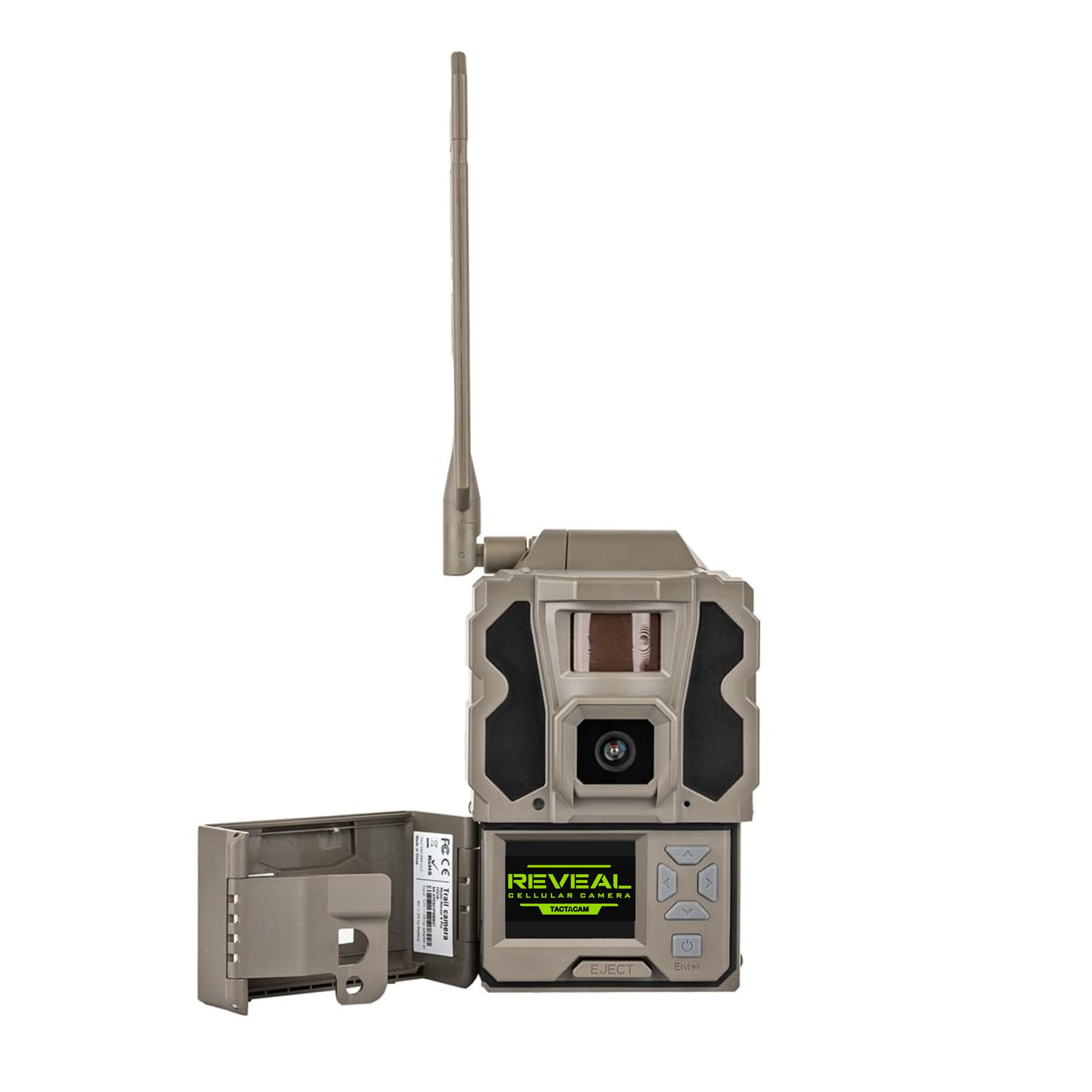
Antenna on, SIM already live, photos on your phone in minutes.
The Pro 3.0 is built for the hunter who does not want to fiddle with carrier setup. The antenna is pre-installed and the SIM card comes pre-activated, so you hang it, power it, and start getting photos. The field of view is 50 degrees, a tight window like the Tactacam Reveal Ultra, so you aim it at the trail you expect game to use. Night vision keeps the dark hours covered, and GPS tags every image so you know where it was taken.
Battery life is the slow-and-steady part here. Tactacam rates it for 6+ months of standby on a single set of batteries, with the real number shifting on usage and temperature. That is the feature that saves you the most trips into the field — one set carries you across a big chunk of the season. The data plan starts low with no long-term contract, and you manage or cancel it right in the TACTACAM app.
Once it is running, this is the easiest camera in the group to live with — pre-activated SIM, 6+ months of standby, and photos landing in the app without a carrier setup step. It runs on a 4G LTE network, so on-demand photos and video clips arrive over that signal. Class 10 or higher microSD cards up to 512GB work for backup, sold separately. Battery life and value are the split points — the 6+ month rating depends on your settings and the cold, so a hard winter pulls it down. Pair it with heavier shooting habits and it will need batteries sooner.
Set it and leave it: Pre-installed antenna and pre-activated SIM make the first setup fast, and the 6+ month standby limits field trips.
The catch to know: The 6+ month rating drops with heavy use and cold, and a memory card is not included.
Pick it for: a first cellular camera or a hunter who wants zero carrier setup.
Look past it if: you need a wide-angle view — 50 degrees is a tight cone.
8. TACTACAM Reveal Ultra Cellular Trail Camera
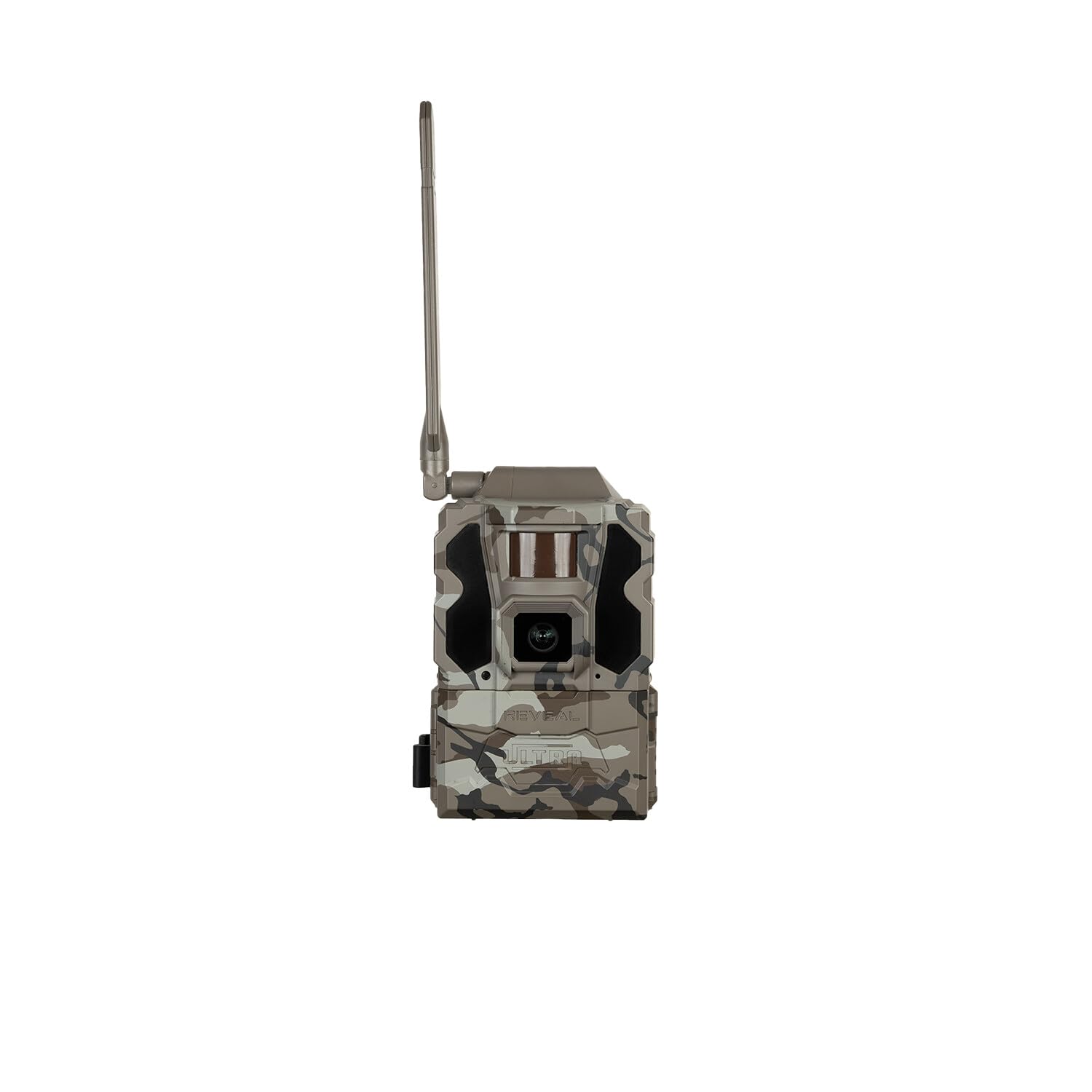
Live video on demand and 4K photos — the deep-scout camera in the Tactacam line.
This is the most loaded camera here, aimed at hunters who want to watch live and pull the sharpest images they can. It shoots 4K photos and 1080p video, and it streams live footage to your phone so you can see what is on the ridge right now. That 4K photo resolution is a step above the 40MP stills on the Moultrie Edge 3 2-Pack, and live view is a feature the fixed-shutter cameras do not offer at all.
The flash is the other standout. You can switch between a 96-foot low-glow flash and an 80-foot no-glow flash, so you match the light to the setup. A no-glow mode lets you watch a bedding area without a glow tipping off game. The camera runs on 4G LTE with no carrier setup needed — it auto-connects to the leading networks. A 2-inch LCD screen on the body lets you check settings in the field, and 16GB of internal storage holds photos until you pull them.
Picture quality is what this camera does best, with 4K stills and switchable no-glow flash that hold up even at night. Setup and connectivity are the friction points — the app is not completely intuitive to some, and a weak signal weakens live view most. Battery life runs short of the other picks, so plan on the Tactacam Solar Panel or Battery Belt, sold separately, for longer deployments. The screen and internal storage make field checks easy, but a heavier build and 2.2 pounds mean a solid mount is needed.
Why it tops the spec sheet
- 4K photos and 1080p video — the sharpest stills here.
- Live video streaming lets you watch the ridge in real time.
- Switchable 96-foot low-glow and 80-foot no-glow flash.
- 2-inch LCD screen and 16GB internal storage for field checks.
Where it asks more of you
- The app is not the most intuitive, so setup takes some patience.
- Battery life runs short of the other picks — plan on the solar accessories.
Made for: the deep-scout hunter who wants live eyes on the ridge and 4K detail in every frame.
Not the fit if: you want the longest battery run between visits.
Know the Specs
Trigger speed in seconds
Trigger speed is the delay between the sensor spotting motion and the shutter firing. A lower number catches fast animals cleanly — 0.25 seconds on the Browning Defender Pro Scout Max beats 0.5 seconds on the Moultrie Edge 3 2-Pack. On a moving deer, that gap is the difference between a clear photo and an empty frame, so treat it as a head-to-head deciding spec.
Detection range in feet
Detection range is how far the motion sensor can spot a warm body. A 100-foot range on most Moultrie cameras covers a full scrape or fence line, while the Browning Defender Pro Scout Max reaches 120 feet. A longer reach means the camera fires earlier and shows more of the scene around the animal, so you get context, not just a close-up.
No-glow versus low-glow flash
You can keep the camera hidden from game and trespassers with a no-glow infrared flash (an invisible light that shows no red glow when it fires). A low-glow flash shows a faint red glow but usually reaches farther. The Tactacam Reveal Ultra lets you switch between a 96-foot low-glow and an 80-foot no-glow mode, so you match the light to the spot and the season.
The cellular data plan
A cellular camera sends photos over a mobile network, so you check a camera without walking to it. That needs a plan: the SPYPOINT Flex-M offers a free option that sends up to 100 photos a month, and paid plans step up from there. Read the plan terms and the per-camera limits before you buy, because the monthly running cost is part of the camera’s real price.
Common Questions
Do I need a monthly data plan for a cellular trail camera?
What trigger speed should I look for on a wilderness trail camera?
Is no-glow flash better than low-glow for deer hunting?
How long do trail camera batteries last on a cellular camera?
Does a cellular trail camera need Wi-Fi?
Will a wider field of view miss less than a narrow one?
What SD card does a wilderness trail camera use?
Can I run my trail camera on solar power?
Do these trail cameras have GPS to find them again?
What is the highest photo resolution in this group?
The Bottom Line
If you have more than one spot to watch this season, the Moultrie Edge 3 2-Pack is the strongest starting point for most hunters on wilderness trail cameras. One purchase gets you two working cameras, four-carrier auto-connect (it links to the strongest signal on four carriers by itself), and 40MP stills (40-megapixel photos with plenty of detail to zoom in on). If fast-moving game on a wide field is your challenge, reach for the Browning Defender Pro Scout Max and its 0.25-second trigger. And if you want live eyes on the ridge and 4K detail (four times the pixels of standard HD video), the Tactacam Reveal Ultra is the top-tier pick.
The one honest nudge before you buy: the Moultrie Edge 3 2-Pack carries the strongest rating in this group at 4.0+ stars across 500+ owners, so the crowd backs the top pick even against the premium names.
How we choose
We do not accept paid placement. Every pick is matched to a real buyer and a real use-case; we do not hands-on test units.
Sources
Specifications: manufacturer listings and product documentation. Review insights: verified customer reviews, as of November 2026. Pricing: not shown on this page (it changes often); check the current price via the retailer link.
As an Amazon Associate, Tactical Gear Guy earns from qualifying purchases. This does not affect which products we feature.