Specs are compiled from manufacturer listings and verified buyer reviews and can change over time — please confirm the key details on the product page before buying.
A warm-weather tent has one job: keep the bugs off you while the air keeps moving. A tent that traps heat turns a mild July night into a sauna, and one with poor mesh lets mosquitoes treat you like a buffet. The picks below all pass that test — each is a 3-season design built for ventilation, with rain protection for the afternoon storm and enough mesh to sleep without sweating through your shirt.
This guide is built by comparing the manufacturers’ published specifications and the patterns across verified customer reviews, so you get each pick’s real strengths and trade-offs instead of marketing spin.
You will see how floor area, mesh coverage, and waterproof ratings change the sleep you actually get, so you can match a shelter to your trip instead of guessing from a photo. Every pick here is a genuine 3-season design, and the guide below ranks them so you can find the right warm weather tents without reading a dozen listings yourself.
Top Picks


How To Choose The Best Warm Weather Tents
The mistake most first-time buyers make is shopping by person count. A tent labeled for four can still leave you cramped once four sleeping pads and a duffel bag are inside. What actually decides whether you sleep cool and dry is ventilation, waterproofing, and usable floor space — in that order.
Ventilation is the whole ballgame
Warm nights condense moisture fast, and a tent with only a small vent will leave the inside of the rainfly wet by morning. Look for large mesh walls, mesh roof panels, and low vents that pull cool air in from ground level while hot air escapes up top. A double-layer design — an inner mesh body with a separate rainfly over it — lets you leave the fly partly open for airflow while the mesh still keeps insects out.
Read the waterproof number, not the word
Waterproofing is measured in millimeters of hydrostatic head, which is simply how much water pressure a fabric holds before it starts to seep. A 1200mm coating handles steady rain; 2000mm to 3000mm coatings shrug off heavier downpours. Seam taping matters just as much as the fabric rating, because seams are where water gets in first. If a listing says “waterproof” with no number, assume it is a fair-weather shelter.
Square footage beats “sleeps four”
Person counts assume you are lying shoulder to shoulder with no gear. Real camping needs room for bags, shoes, and a place to change. A queen air bed needs roughly 60 square feet of floor, and a family of four with gear wants considerably more. Check the actual floor dimensions in feet and the center height in inches if you want to stand up or sit upright without hunching.
Frame type sets your setup time
Freestanding aluminum-pole tents pitch in a few minutes and let you pick the tent up and reposition it before staking. Pop-up hub tents use pre-attached poles that lock into place in around a minute, which is wonderful in the rain and heavier to carry. Pick the pop-up if you drive to your site; pick the pole frame if you hike in.
Side-by-Side Comparison
| Model | Best For | Floor Area | Packed Weight | Setup Time | Amazon |
|---|---|---|---|---|---|
| Coleman Sundome with Rainfly★ Best Overall | First tent, car camping | 63 sq ft | — | 10 minutes | Amazon |
| Kelty Grand MesaTrail Favorite | Backpacking two-up | 30 sq ft | 4 lbs 7 oz | 5 minutes | Amazon |
| Naturehike Mongar 2Fastest Pitch | Fast-pitch hiking shelter | 30+ sq ft | 5.3 lbs | 3 minutes | Amazon |
| Vidalido 3-4 Person | Family cabin camping | 60.84 sq ft | 17.9 lb | 6 minutes | Amazon |
| Naturehike Cloud Up 3 | Three-person backpacking | 42.6 sq ft | 6.3 lbs | Under 2 minutes | Amazon |
| FanttikOutdoor Alpha C4 | Instant camp setup | 61 sq ft | — | 60 seconds | Amazon |
| OneTigris JOVIAN | Four-person base camp | 53.24 sq ft | 12.3 lb | Minutes | Amazon |
| The North Face Stormbreak 3 | Ventilation in storms | 39.72 sq ft | 5 lbs 15 oz trail | Minutes | Amazon |
| CORE Lighted Cabin | Family comfort camping | 99 sq ft | — | 60 seconds | Amazon |
Detailed Reviews
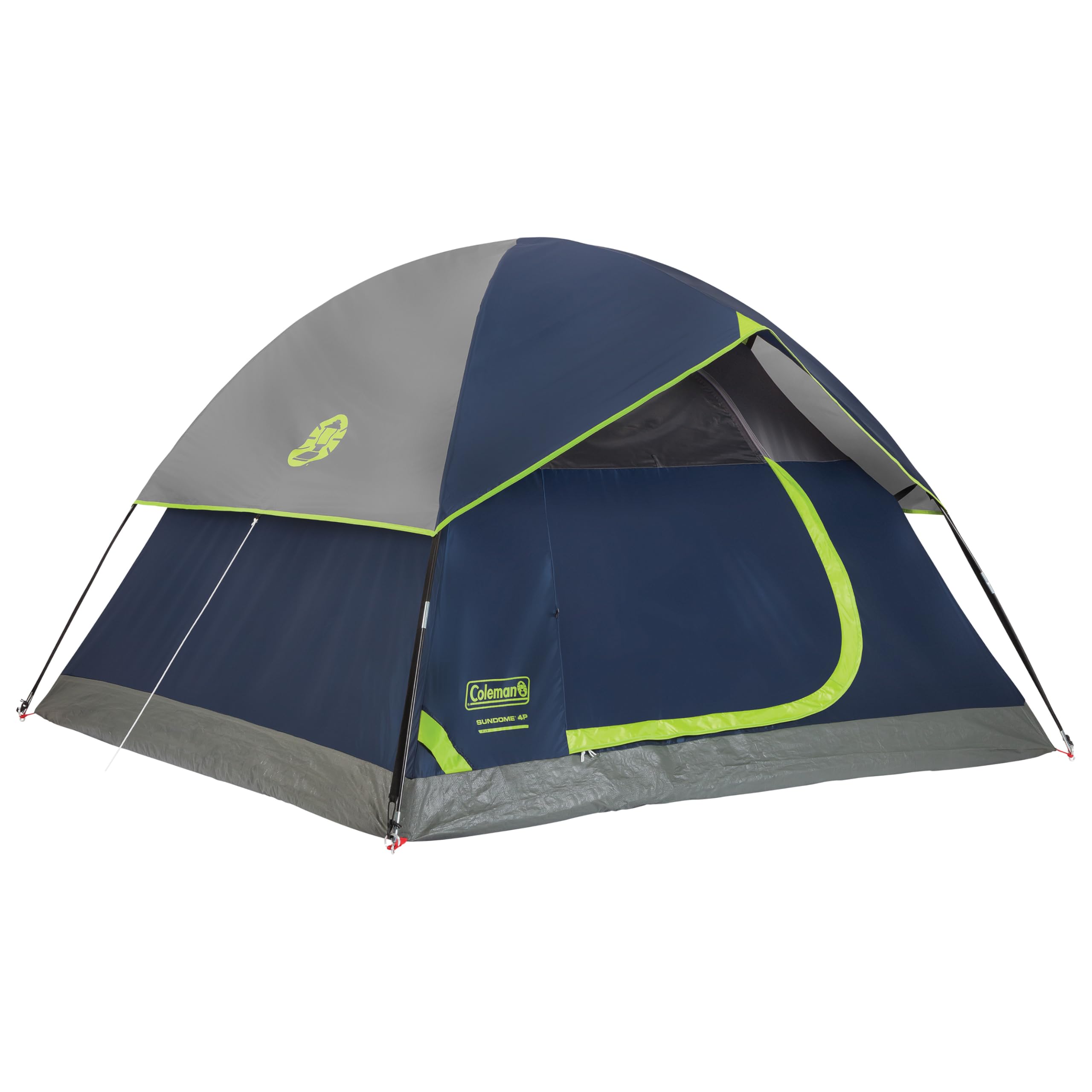
1. Coleman Sundome Camping Tent with Rainfly
Our pick — 4.5+★ from 23,000+ verified ratings; the strongest balance of quality and price.
A 63-square-foot dome that fits a queen air bed plus bags, backed by 23,000+ owner reviews.
Start with the space: 63 square feet of floor over a 9 by 7 foot footprint is enough for one queen-size air bed plus bags, which is the real-world layout most people set up on a weekend trip. Compare that with the 30 square feet you get inside the Kelty Grand Mesa two-person backpacker below. Two large windows and a ground-level vent pull air through the tent, so a muggy night does not turn into a condensation bath.
The frame is rated to hold up in 35+ mph winds, and the included rainfly adds a second waterproof layer over the mesh roof. An E-Port lets you run an extension cord inside for a lamp or phone charger without cracking the door open — a small thing until you are trying to charge a headlamp at 10 p.m. Coleman lists setup at 10 minutes, and the dome design means one person can do it without help.
The honest catch is the fit: a 4 foot 11 inch center height means most adults cannot stand, and a full-size adult lying near the wall will brush the sloped sides. Treat it as a sleeping and changing tent, not a hangout room. The venting also depends on you opening the windows, so in a hard sideways rain you will be closing them and the airflow drops with it.
What owners rave about
- Build quality is the most-praised trait by a wide margin, holding up season after season
- Setup is quick enough for one person, listed at 10 minutes
- 837 shoppers specifically call out its water resistance in rain
- 63 square feet fits a queen air bed with room left for gear
Where it asks you to compromise
- 4 ft 11 in center height rules out standing inside
- Sloped dome walls cut usable space for a tall sleeper along the edges
- Ventilation depends on windows being open
Go this route for: a first tent or a festival, backyard, and car-camping shelter where the site is a short walk from the trunk.
Think twice about: backpacking — the roomy dome trades packability for floor space.
2. Kelty Grand Mesa Backpacking Tent
A four-and-a-half-pound trail shelter that pitches freestanding, so you can pick it up and shuffle it into the perfect spot.
If you are carrying the tent on your back, weight is the number that runs your whole trip. The Grand Mesa packs to 4 lbs 7 oz, versus 12.3 lbs for the OneTigris JOVIAN four-person shelter further down this list, and far easier to shoulder on a climb. Two aluminum pressfit poles make the frame, and the freestanding design means you can set it down, step back, and shift it before driving a single stake.
The 68D polyester floor and rainfly are fully seam-taped, and the EZ-Zip vestibule gives you a covered spot outside the sleeping area for wet boots and a pack. Kelty Quick Corners hold the poles in place while you clip the body on, and the color-coded clips take the guesswork out of the fly. Interior space runs 85 by 57 inches with a 44 inch peak height and 30 square feet of floor — fine for two people who like each other, tight for two who do not.
The trade-off shows up in sizing honesty. Thirty square feet versus the Coleman Sundome’s 63 square feet, and the size question pulls both ways in the reviews: plenty of buyers call it perfectly sized while others say it is too tight for two full-grown adults with pads. The Shark Mouth stuff sack helps on pack-up day, but you will still be wrestling a fly.
What wins people over: the construction — the fabric and stitching read as gear that outlasts a cheap big-box tent, and the weight is the next thing buyers bring up.
The sizing question: plan on two narrow sleeping pads rather than two wide ones, and keep your pack in the vestibule instead of on the floor.
Pick it when: you hike to your site and count ounces, but still want a real rainfly and taped seams.
Leave it on the shelf if: you want room to spread out gear or stand up inside.
3. Naturehike Mongar 2 Person Backpacking Tent
A Y-frame shelter that goes up in three minutes flat, versus six minutes for the Vidalido family tent.
Rain protection here is serious for a two-person tent: the 210T polyester fly and floor both carry a 3000mm waterproof rating, and the high-density B3 mesh inner keeps insects out while letting air through. That mesh is the part warm-weather campers care about most. The rainfly can be pegged fully closed in a downpour or left partly open for cross-breeze and shade, and two doors plus two vestibules mean you are not climbing over your tentmate at 2 a.m.
The whole set including a free groundsheet weighs 5.3 lbs and packs to a 19.7 inch length with a 5.9 inch diameter, so it straps to a bike rack or drops into a pack without a fight. Instructions are sewn inside the stuff sack, so you are not hunting for a paper sheet in the dark. Floor space runs 82.7 by 53.2 inches with 41.3 inch height — enough for two 25-inch sleeping pads side by side.
Where it flexes is durability over the long haul: the fabric is light by design, and a few owners have noted wear after heavy use. It is a fair trade for the weight, but it means you treat the floor with a footprint rather than dragging it over gravel. Double-check the color listing too — the title says forest green while the spec field reads navy blue.
Why it earns the spot: setup speed and 3000mm waterproofing in one packable shell
What to keep in mind: the light fabric rewards a groundsheet, and the listed color does not always match the photo.
Best matched to: hikers, cyclists, and moto-campers who value a fast pitch on a wet evening.
Not your tent if: you want a burly floor you can drag across rocks without care.
4. Vidalido 3-4 Person Tent
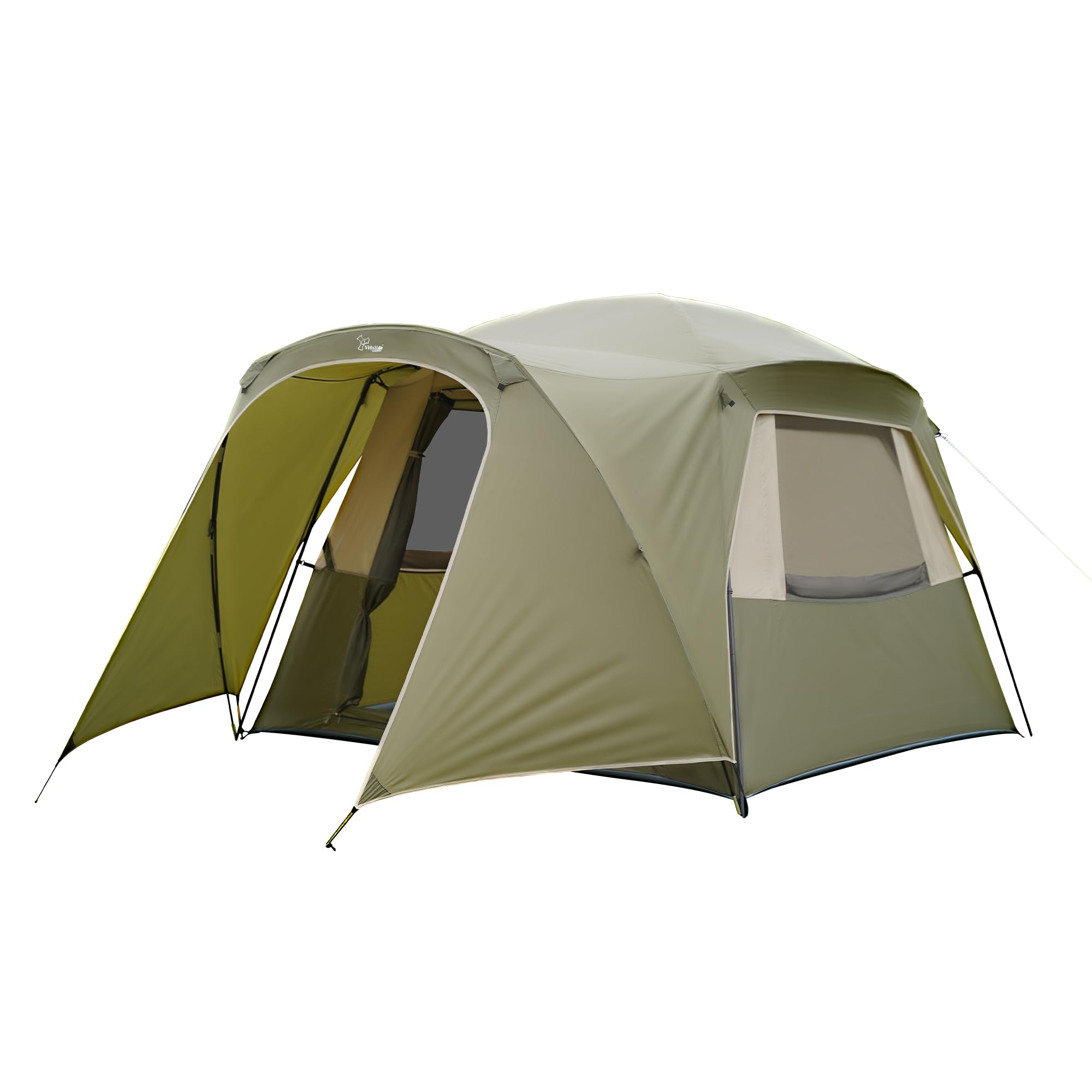
A mesh-roof cabin tent that lets you fall asleep counting stars while the bugs stay outside the screen.
The footprint is where this one shines: 7.8 feet by 7.8 feet gives 60.84 square feet of floor with a 70.8 inch peak height, so you can stand up to change clothes and still fit a queen air mattress or three to four sleeping bags. Its floor is wider than the Coleman Sundome’s 7 feet, even though it gives up some length. One mesh door, two large mesh windows, and the mesh top work together to pull breeze through the cabin on a still night.
The 190D polyester and 150D Oxford fabric carry a 1200mm polyurethane coating, which handles steady rain but is not a monsoon rating. Setup takes two people around six minutes, and the full kit includes 12 stakes and 6 guylines — more anchoring than most tents this size ship with, which matters when the wind picks up across an open field.
One spec note you should not skip: the door itself is not rainproof. In wind-driven rain you need to face the door away from the weather or water will find its way in. The 17.9 lb carry weight also rules out hauling it any distance, so this is a park-and-pitch family tent, not a backpacking shelter.
The star feature: a full mesh roof plus two mesh windows — the most living space per dollar in the cabin class here.
The honest caveat: that 1200mm coating and non-rainproof door ask you to be weather-smart about which way you orient the entrance.
Made for: families who drive to the site and want to see the sky from their sleeping bags.
Pass on it if: you camp in exposed spots where storms arrive sideways.
5. Naturehike Cloud Up 3 Person Backpacking Tent with Footprint
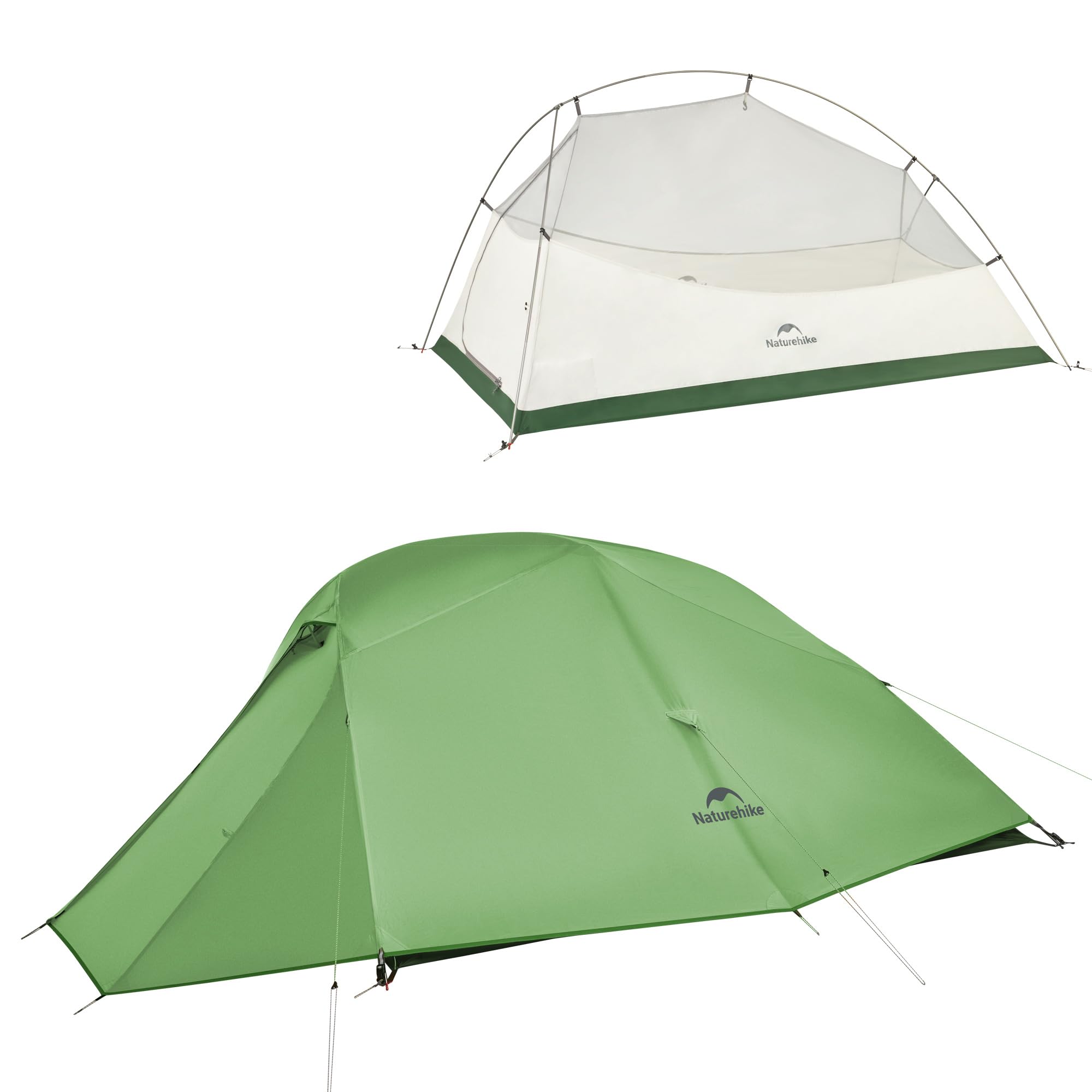
A three-person backpacking tent with the groundsheet already in the box, so you are not buying protection separately.
Inside, you get a 116.1 by 82.7 inch floor with 45.3 inches of height — enough to fit three sleepers or two people who want to spread out their gear. The outer tent and floor both use 210T ripstop polyester with a PU 3000mm waterproof coating, and all corners and seams are taped. The included footprint steps up to a PU 5000mm coating and weighs 12.7 ounces, so the floor underneath you gets a tougher second skin.
The double-Y pole structure stands the tent up freestanding without a single stake, and Naturehike claims a pitch in under two minutes. Upgraded buckles replace the old strap attachments, which cuts abrasion at the pole connections over many trips. Ventilation comes from the B3 mesh inner body and a larger, higher front door that makes getting in and out easier when the fly is on.
The whole package — tent, poles, footprint, 15 stakes, and 6 guy lines — weighs 6.3 lbs and packs to 16.9 by 6.7 inches. That is heavier than the Kelty Grand Mesa’s 4 lbs 7 oz, which is the price you pay for a third berth and a free footprint. One detail to watch: the spec sheet lists 42.6 square feet of floor area while the listed dimensions are far larger, so measure your pads against the raw numbers before counting on three full-size sleepers.
Reasons it holds up
- Footprint included — one less purchase before your first trip
- PU 3000mm fly and floor with fully taped seams
- Freestanding double-Y frame pitches without stakes
- Buyers report it fits two adults and two large dogs
Reasons to check the numbers
- 6.3 lbs is heavy for a solo haul
- Floor area spec and floor dimensions do not line up
- Tighter for three adults than the name suggests
The right call for: two-person trips where you want a third berth as breathing room and gear storage.
Look elsewhere if: you are splitting weight three ways and want the lightest possible load.
6. FanttikOutdoor Alpha C4 Ultra Camping Tent

A boxy hub tent that unfolds and locks in 60 seconds, with an 80 inch ceiling tall enough to stand up straight.
The pop-up X-frame is the headline: integrated eave poles lock into place with no tools and no separate pole bag to lose, so setup takes about a minute even in the rain. The 94 by 94 inch floor gives 61 square feet with four vertical walls instead of sloped ones, which means the corners are actually usable — you can put a cot or a chair in them. That vertical-wall design is also what makes the 80 inch center height feel as roomy as it measures.
Every side carries three double-paned windows plus rollable eaves, so you can open the tent up for cross-breeze and natural light on a hot afternoon. The rainfly and stakes are included, seams at the doors and windows come sealed, and the 300D bottom fabric resists wear better than the thinner floors on cheaper tents. The packing length is 57.8 inches, notably shorter than typical tents for easier transport and storage. The fabric is also PFAS-free per the maker.
The catch is long-term toughness: durability, zipper quality, and water resistance all land in mixed territory in buyer feedback. Plenty of owners ride out storms without trouble, while others have found seams and bottom sections that gave way in heavy rain. Treat the rainfly and stakes as mandatory every trip, not optional, and it does what it says.
Where it delivers: the fastest pitch on this list paired with standing height and square corners — a true drive-up family shelter.
What to stay on top of: the mixed durability reports mean you should inspect seams after each wet trip rather than assume they are fine.
Reach for this if: you want to pull into a site and be set up before the rain starts, with room to stand.
skip it if: you expect years of hard backcountry use from one tent.
7. OneTigris JOVIAN 4 Person Camping Tent

A four-person shelter with a 5000mm floor that keeps condensation and wet ground from ruining a summer night.
Water protection is split between layers here: the 210T taffeta outer tent carries 2000mm waterproofing while the 210D Oxford floor and included floor mat step up to 5000mm — a much heavier barrier than the Vidalido’s 1200mm coating. That floor mat is the piece that matters on damp summer grass, because groundwater soaks up through a thin floor before a top-down leak ever happens.
The 7.8 by 6.8 foot floor gives 53.24 square feet with a 4.9 foot peak, and owners routinely report it fits cots and camp chairs with room left over. Breathability is the standout: buyers describe no condensation issues and superb airflow, the two things a tent needs when the night stays above 70 degrees. The full setup kit includes inner tent, outer tent, footprint, frame, stakes, and guy lines in one grab-handled stuff sack.
The honest trade is weight and bulk. At 12.3 lbs packed into a 9 by 9 by 19.6 inch bag, this is a tent you carry from the truck, not one you hike in with. The dome shape also means the 4.9 foot center height is a floor-sitting tent rather than a stand-up one, so tall campers will hunch.
What buyers keep coming back to: the dry, fresh-air sleep — a 5000mm floor and free-flowing mesh that handle humid summer nights without condensation.
Size it right: it is a base-camp tent for vehicle trips, so plan the space for four campers plus cots, not a pack-in shelter.
Fits best: car campers and bushcrafters who want a family shelter that shrugs off wet ground.
Better options exist if: you need to carry the tent more than a few hundred yards.
8. The North Face Stormbreak 3 Three-Person Camping Tent

Mesh walls and high-low venting that keep air moving even with the rainfly buttoned down.
The reason this tent belongs on a warm-weather list is the ventilation design: breathable mesh walls paired with high and low vent openings that keep air circulating with the fly fully on. That is the scenario where most tents turn stuffy — fly on for rain, windows shut, and by midnight you are breathing your own moisture. Two large doors stuff into adjacent mesh pockets so you never wrestle with rolled-up doors, and two twin-zip vestibules cover your gear and give you a dry spot to shed muddy boots.
A waterproof rainfly and seam-taped floor handle storms, and the fabric carries a non-PFC durable water repellent finish — the kind that makes water bead and roll rather than soak in. The floor runs 39.72 square feet across an 88 by 65 inch footprint, with 46 inches of headroom for sitting up. Trail weight lands at 5 lbs 15 oz, which is manageable when a group splits the load, and the fastpack weight drops to 4 lbs 5 oz if you leave the body behind and pitch fly-only.
Two practical notes. The footprint is sold separately, and the floor area is modest for three sleepers — think three narrow pads with almost no room for bags inside. The 4.0+ rating reflects mostly high quality and rain-resistance feedback, but the sample here is smaller than the big-box alternatives. If ventilation is your priority in humid weather, it is worth the trade.
Why ventilation wins
- High-low vents move air even with the fly fully on
- Two doors and two vestibules cover gear and muddy boots
- Seam-taped floor with a non-PFC DWR finish
- Fastpack weight of 4 lbs 5 oz for fly-only pitching
Buyer need-to-knows
- Footprint is sold separately
- 39.72 sq ft is snug for three adults with bags
- Smaller review base than mainstream alternatives
Choose it when: humid nights and a fly-on-the-whole-trip forecast make airflow your deciding feature.
Not for you if: you pack three adults with duffels and no gear overflow plan.
9. CORE Family Camping Instant Lighted Cabin Tent

A 99 square foot cabin with lights built into the ceiling poles, so you never fumble for a lantern in the dark.
The scale here is the whole pitch: 11 by 9 feet of floor across 99 square feet with a 72 inch center height. CORE lists it as sleeping three with gear or up to six without. Pre-attached poles lock into place for a setup in 60 seconds or less, so a family with tired kids can be inside fast.
Standout extra: three levels of LED lighting — high, low, and a night light — run off a wall switch on the ceiling poles. That one detail turns a dark cabin into a place you can read, find your shoes, or calm a child without a flashlight in your teeth. Weather protection comes from H20 Block Technology with 1200mm fabric, a fully taped rainfly, sealed seams, and fully zipped windows, plus guylines and steel stakes for stability.
Ventilation is handled by lower vents that pull cool air in at ground level and a mesh ceiling that lets hot air rise out — the right setup for warm summer nights. The honest limit is durability, which draws mixed reports, so inspect seams and zippers each season rather than assuming they will hold for a decade.
The feature nobody else has here: ceiling pole LEDs with three brightness levels — genuinely useful after sunset with kids.
The reality check: the 60-second setup and 99 square feet come with a tent that rewards careful packing and seasonal seam checks.
It is the one for: families and festival groups who want the biggest floor, instant setup, and light without a lantern.
Different tent needed if: you want a compact pack or expect expedition-grade durability.
Know the Specs
Hydrostatic Head (the mm Number)
Waterproof fabric is graded in millimeters — the height of a water column the fabric can hold before it leaks. A 1200mm coating like the Vidalido and CORE tents carries handles steady rain. A 2000mm to 3000mm coating like the OneTigris or Naturehike tents carries you through heavier downpours. Seam taping matters alongside the number, because water finds seams before it finds fabric.
Mesh and High-Low Ventilation
Mesh walls let body heat and moisture escape instead of condensing on the fly. High-low venting pairs a low intake near the floor with a high outlet near the roof, so cool air enters low and warm, damp air leaves high. That airflow is what keeps a warm night from turning your tent into a wet-sided sauna, even with the rainfly sealed.
Floor Area vs. Person Count
Manufacturer person counts assume sleepers lying shoulder to shoulder with no gear. Actual floor area in square feet is the honest measure. A queen air bed needs roughly 60 square feet of floor. Add bags, shoes, and a place to change, and a four-person trip wants well over that.
Packed Weight and Freestanding Frames
Packed weight decides whether you can carry the tent or must drive to it. Aluminum-pole freestanding tents like the Kelty and Naturehike models pack small and let you shift the tent before staking. Pop-up hub tents like the FanttikOutdoor and CORE set up in about a minute but carry more bulk.
Common Questions
What makes a tent a 3-season tent for warm weather?
Will a queen air mattress fit inside a 63 square foot tent?
How much rain can a 1200mm waterproof rating handle?
Is a freestanding tent or a pop-up tent better for summer camping?
How do I stop condensation inside a tent on a warm night?
Can I stand up inside a warm-weather tent?
What is the difference between trail weight and total weight on a tent?
Do I need a footprint under a camping tent?
How long does setup take on these tents?
Is a heavier canvas-style tent better in heat than a nylon tent?
The Bottom Line
For most campers, the warm weather tents pick to grab is the Coleman Sundome with Rainfly — it pairs 63 square feet of floor with large windows, a ground vent, and a 35+ mph frame rating, and it carries the strongest track record here at 4.5+ stars from 23,000+ owners. If you want a tent that pulls cool air even with the fly sealed, the North Face Stormbreak 3 is the ventilation specialist. And for humid ground and no condensation, the OneTigris JOVIAN with its 5000mm floor and included mat is the shelter to reach for.
How we choose
We do not accept paid placement. Every pick is matched to a real buyer and a real use-case; we do not hands-on test units.
Sources
Specifications: manufacturer listings and product documentation. Review insights: verified customer reviews, as of November 2026. Pricing: not shown on this page (it changes often); check the current price via the retailer link.
As an Amazon Associate, Tactical Gear Guy earns from qualifying purchases. This does not affect which products we feature.