Specs are compiled from manufacturer listings and verified buyer reviews and can change over time — please confirm the key details on the product page before buying.
If you ski, you already know the worst feeling on the mountain: you dress warm, sweat on the first run, then freeze solid on the lift. The fix is not a thicker jacket — it is a merino or fleece-lined base layer against your skin. A wool or fleece-lined base layer moves sweat away from your body and holds warmth even when it gets damp, so a synthetic tee or a cotton top is the one thing you should leave at home. Below are the nine women’s ski base layers worth packing, sorted by what they actually do on the hill.
This guide is built by comparing the manufacturers’ published specifications and the patterns across verified customer reviews, so you get each pick’s real strengths and trade-offs instead of marketing spin.
A ski base layer is only as good as its fabric and its fit under your shell. This breakdown covers temperature regulation, seams, and sizing so you can pick the right women’s ski base layer before your next lift ticket.
Top Picks
How To Choose The Best Women’s Ski Base Layer
The layer against your skin decides whether a cold day feels manageable or miserable. Get the merino weight and the flatlock-seam fit right and your shell does less work. Here is what actually matters when you are standing in the lodge deciding.
Fabric first: merino wool versus synthetic fleece
Merino wool comes from merino sheep, and its fibers naturally regulate temperature and resist odor. That means you can wear it for several days of skiing without it smelling like a gym bag. Synthetic fleece-lined sets cost less and dry fast, but they pick up odor quicker. Neither is wrong — wool suits multi-day trips and changing conditions, fleece suits budget-minded weekend skiers.
Weight: midweight versus lightweight
Fabric weight tells you the temperature range a top is built for. A midweight merino layer (often around 250g fabric) suits cold lift rides and low activity. A lighter layer around 175g works better when you ski hard and build up heat. If you only buy one, a 250g midweight merino covers more of the season.
Fit and seams under your shell
A base layer should sit close to your skin without squeezing. Look for flatlock seams — stitched flat so they do not rub under a pack strap or a helmet. Long sleeves that reach your wrists and bottoms long enough to tuck into socks stop cold air from creeping in at the gaps.
Side-by-Side Comparison
| Model | Best For | Fabric | Set or Top | Weight Class | Amazon |
|---|---|---|---|---|---|
| Merino.tech Quarter Zip★ Best Overall | All-round ski days | 100% Merino Wool | Top | Midweight | Amazon |
| Spyder Thermal SetBudget Champion | Budget weekend skiers | Fleece-Lined Synthetic | Set | — | Amazon |
| Ekouaer Thermal SetLayering Staple | Layering under uniforms | Synthetic Blend | Set | Thin | Amazon |
| MERIWOOL 250g Half Zip | Cold lift rides | 100% Merino Wool | Top | Midweight 250g | Amazon |
| Icebreaker 175 Everyday | Hard-charging skiers | 100% Merino Wool | Top | Lightweight 175g | Amazon |
| MERINNOVATION Merino Set | Multi-day trips | 100% Merino Wool | Set | Midweight | Amazon |
| Minus33 Tanana Crew | Extreme cold | 100% Merino Wool | Top | Expedition 400 G/M2 | Amazon |
| LAPASA Merino Set | Full-body coverage | 100% Merino Wool | Set | — | Amazon |
| Helly Hansen LIFA Merino | Wet, active skiing | 57% Merino, 43% Polypropylene | Top | Medium Weight | Amazon |
Detailed Reviews
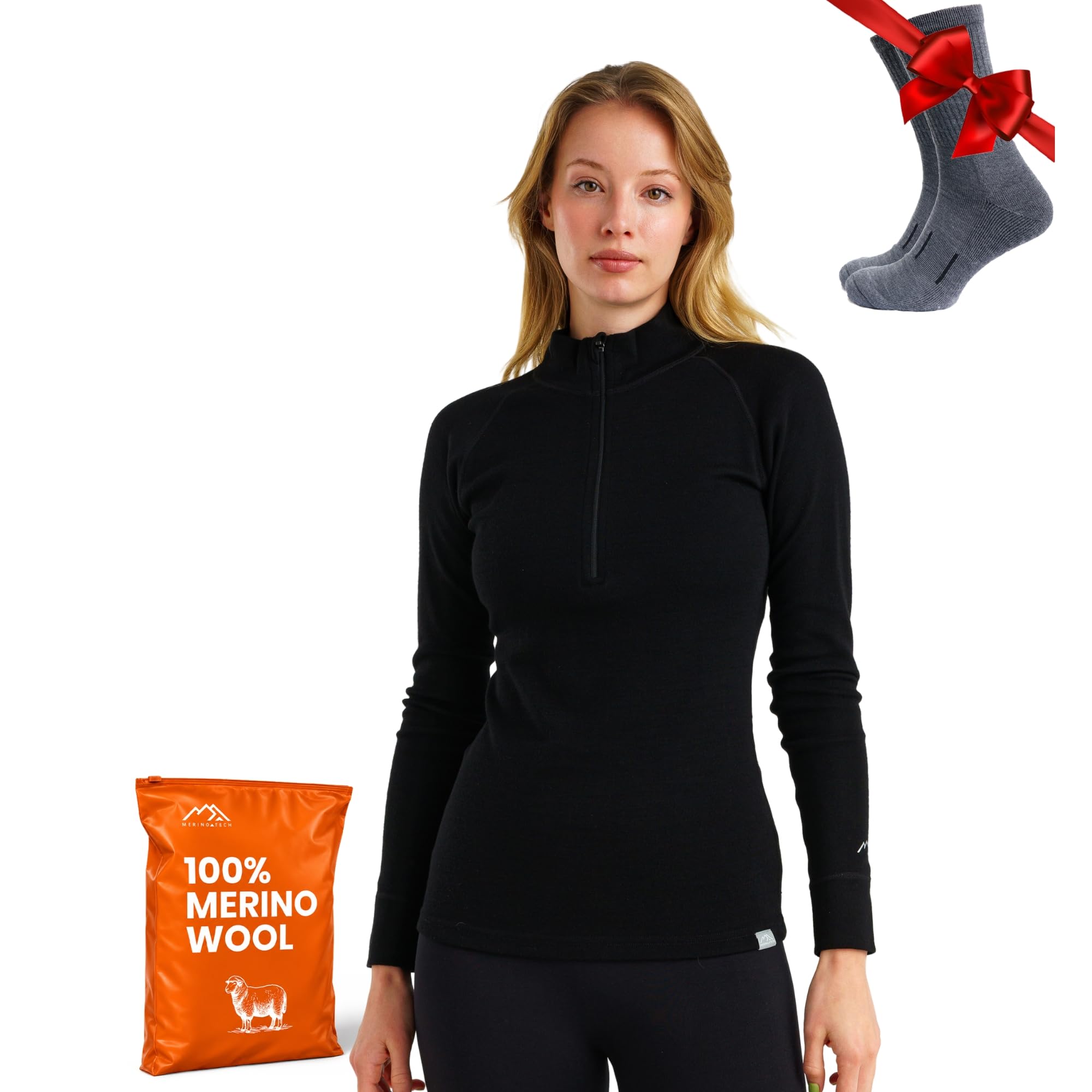
1. Merino.tech 100% Merino Wool Quarter Zip Sweater Women
Our pick — 4.5+★ from 950+ verified ratings; the strongest balance of quality and price.
The quarter zip you can vent on the climb and seal on the lift.
What makes this the pick for most skiers is the zip neck. A quarter zip is a short zipper at the collar — you pull it down when you are hiking the bootpack and sweating, then seal it up when you sit down on a cold chair. That one piece of hardware does more for temperature control than any jacket feature.
The rest is 100% merino wool at 4.8 ounces, and this is the lightest top on this list. Merino is the natural fiber from merino sheep, and it regulates your body temperature and resists odor on its own. You can wear it several ski days running without it picking up a smell, which is exactly what you want on a multi-day trip where laundry is not happening.
Warmth is what wins people over here, with fit right behind it — the cut follows your body without squeezing under a shell. Upper-body protection is rated UPF 50, which blocks sun on bright spring days. Sizing is the one mixed signal: some skiers find it true to size, others note the free socks that ship with it run very large. Order your normal top size and treat the socks as a bonus.
What Works On The Mountain
- Quarter zip vents heat fast on the climb and seals on the lift
- 100% merino wool resists odor across multiple ski days
- Lightest top here at 4.8 ounces, so it disappears under a shell
- UPF 50 blocks sun on high-altitude spring days
Where It Needs Care
- Merino holds up best with hand wash and lay-flat drying
- Free socks run large, so do not count on them as part of the fit
Grab it if: you want one top that vents, insulates, and skips the stink on a multi-day trip.
Handle with: hand washing — machine cycles wear merino out faster.
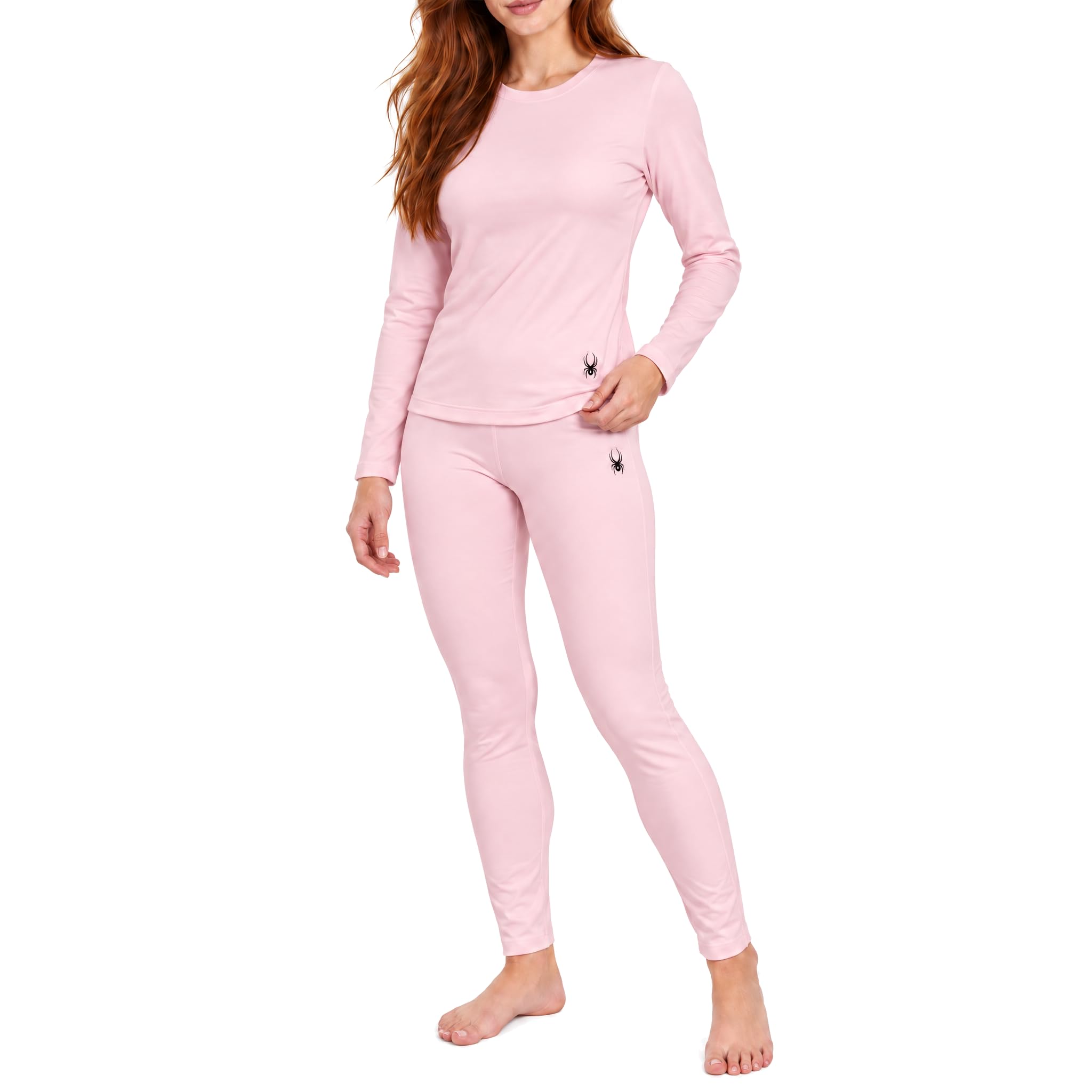
2. Spyder Womens Thermal Underwear Set
A full fleece-lined top-and-bottom set for the price of a single wool top.
If you want both pieces covered in one purchase, this is the set to look at. Fleece lining is a soft brushed inner surface that traps a layer of warm air against your skin — it feels cozy the second you pull it on. It keeps you warm without the bulk of a heavy sweater, and it does not ride up under your clothes, which is the annoying adjustment most base layers force on you mid-run.
The set runs true to size and is lightweight enough to slip under ski pants without a fight. Sizes run Small through X-Large. Warmth leads the feedback, with fit close behind and value following, which tracks with what a fleece-lined set is built to do: get you warm on a budget.
The trade-off is the material. Fleece-lined synthetics do not breathe or resist odor the way merino does, so you are not getting multi-day wear out of one set. For a two- or three-day weekend trip with a wash in between, that is a fair deal. For a week-long trip with no laundry, wool is the safer call.
Reach for this if: you want a complete top-and-bottom set without spending merino money.
Look elsewhere if: you need one layer to survive a full week of skiing between washes.
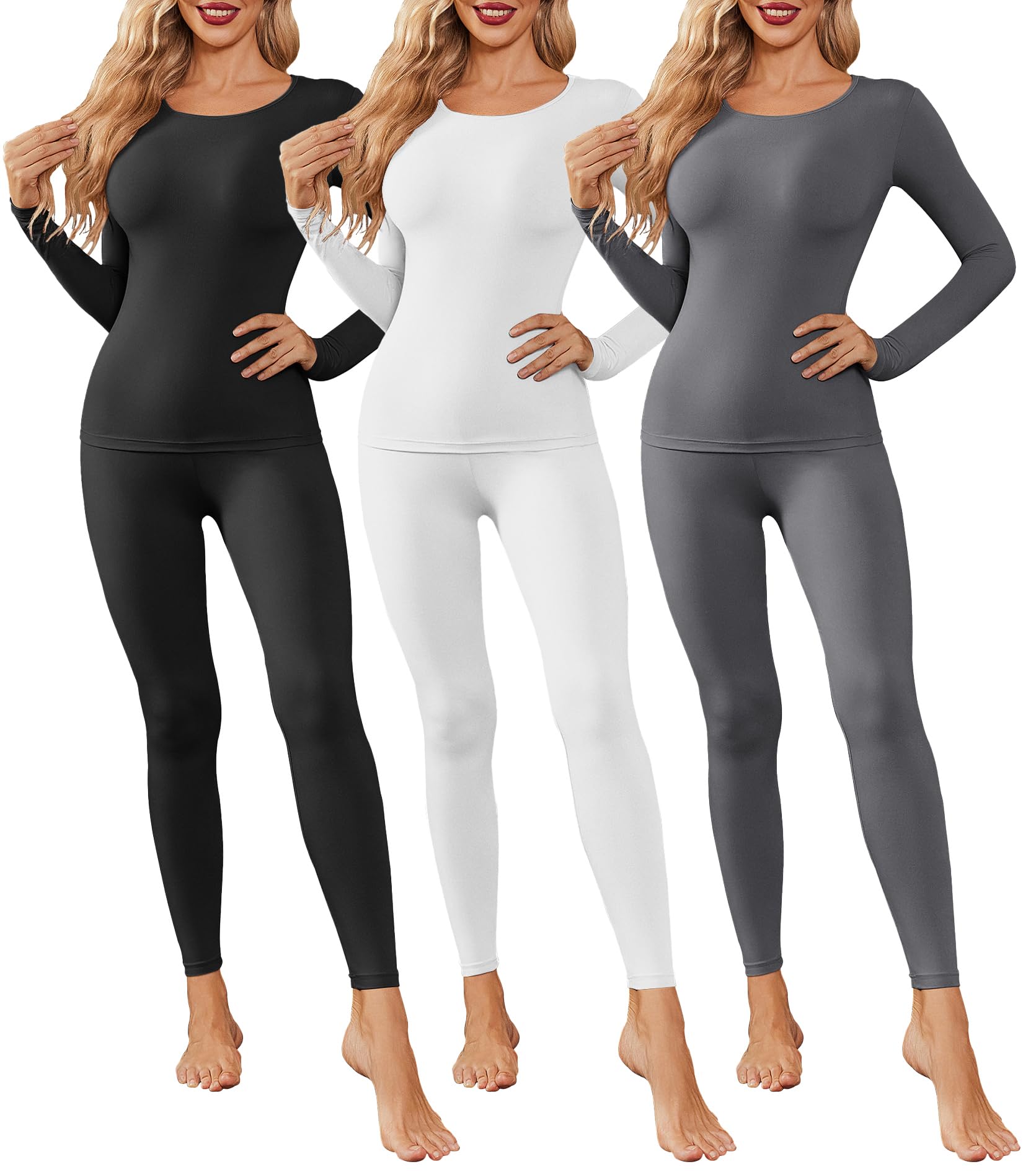
3. Thermal Underwear for Women Long Johns
Thin enough to vanish under ski pants, stretchy enough to bend with you.
This set is built around movement. Four-way stretch means the fabric gives in every direction, so you can crouch into a turn or hike a bootpack without the fabric pulling tight across your knees and shoulders. The top and pants fit close and stay put — no bunching at the waist under your shell.
Fabric thickness is the quiet hero here. It is thin, but it is not so thin that the warmth goes out the window; the brand describes it as breathable and lightweight on purpose. It also wicks sweat and dries quickly, so a hard run does not leave you clammy at the base station.
At 7.05 ounces, it packs down small enough to live in a boot bag as a backup layer. Bottom sizing is the recurring gripe — the tops tend to fit true to size while the pants can come up large, so check the size chart before you commit on the bottoms. Layering is what this set is for, and it handles the job under ski gear or a work uniform alike.
Why Skiers Like It
- Four-way stretch moves with you in a crouch or a climb
- Thin, breathable fabric layers cleanly with no bunching
- Wicks sweat and dries fast after a hard run
- Light at 7.05 ounces, easy to stash as a backup
The Fit Note
- Bottoms can run large compared with the tops
- Synthetic fabric picks up odor faster than merino
Best for: skiers who want a stretchy, thin set that layers under anything and moves freely.
Check first: the size chart for the pants — they can come up bigger than the top.
4. MERIWOOL Womens Base Layer Half Zip

The 250g wool that treats sub-zero lift rides as a normal Tuesday.
Here is where fabric weight earns the money. This top is midweight merino at 250g — a 250-gram fabric weight is a midweight knit, thicker than a lightweight layer and built for genuinely cold days. If you ski in single digits and stop a lot, this is the weight to buy.
It is 100% merino wool, so it breathes, resists odor, and regulates temperature without a synthetic component. The half zip lets you dump heat on a climb and close back up on the chair. The fit is noted for landing just below the sternum, which tells you the cut runs body-hugging rather than slouchy — good under a shell, less ideal if you want something loose.
Quality is the thing that repeats in the feedback, followed by fit and comfort, and softness holds up well for a wool layer this thick. Sizing carries a mixed note, so measure your chest rather than grabbing your usual letter. For a cold-weather merino top you will reach for every season, the 250g weight holds its place.
Weight that pays off: 250g midweight merino suits genuinely cold ski days, and the half zip lets you vent fast on the climb.
The trade-off: a body-hugging cut to just below the sternum runs less forgiving on sizing, so measure rather than guess.
Make it yours if: you ski in real cold and want a thicker wool layer with a venting zip.
Think twice if: you prefer a loose fit — this cut hugs the body through the torso.
5. Icebreaker Merino Womens 175 Base Layer

A thin, rib-knit wool crew that works as hard on the hill as it does at the bar.
Start with the weight. The “175” in the name is the fabric weight in grams — a lightweight merino knit, thin enough to sit under a shell without adding any bulk. That lightness is why it suits skiers who generate a lot of heat on the way down and do not want a sauna under their jacket.
It is 100% merino wool in a rib-knit weave, which gives it a flattering slim fit that hugs the body. Rib-knit means the fabric has vertical ridges running through it, and that structure stretches with you and adds a bit of give. It is non-itchy against the skin and breathable, and the natural odor resistance means it does not need a wash after every wear.
Versatility is the real draw — it is cut nicely enough to wear on its own off the mountain, and long enough in the body to pair with jeans or leggings. Durability is the one mixed note: a thin lightweight knit is the most delicate weight Icebreaker makes, so treat it like a base layer and not a burly outer top. Quality and fit lead the praise, and the slim cut is well suited to layering.
The right call for: skiers who run hot and want a trim, lightweight wool that doubles as a casual top.
Know going in: the thin 175g knit needs gentler handling than heavier weights.
6. 100% Merino Wool Base Layer Set Women
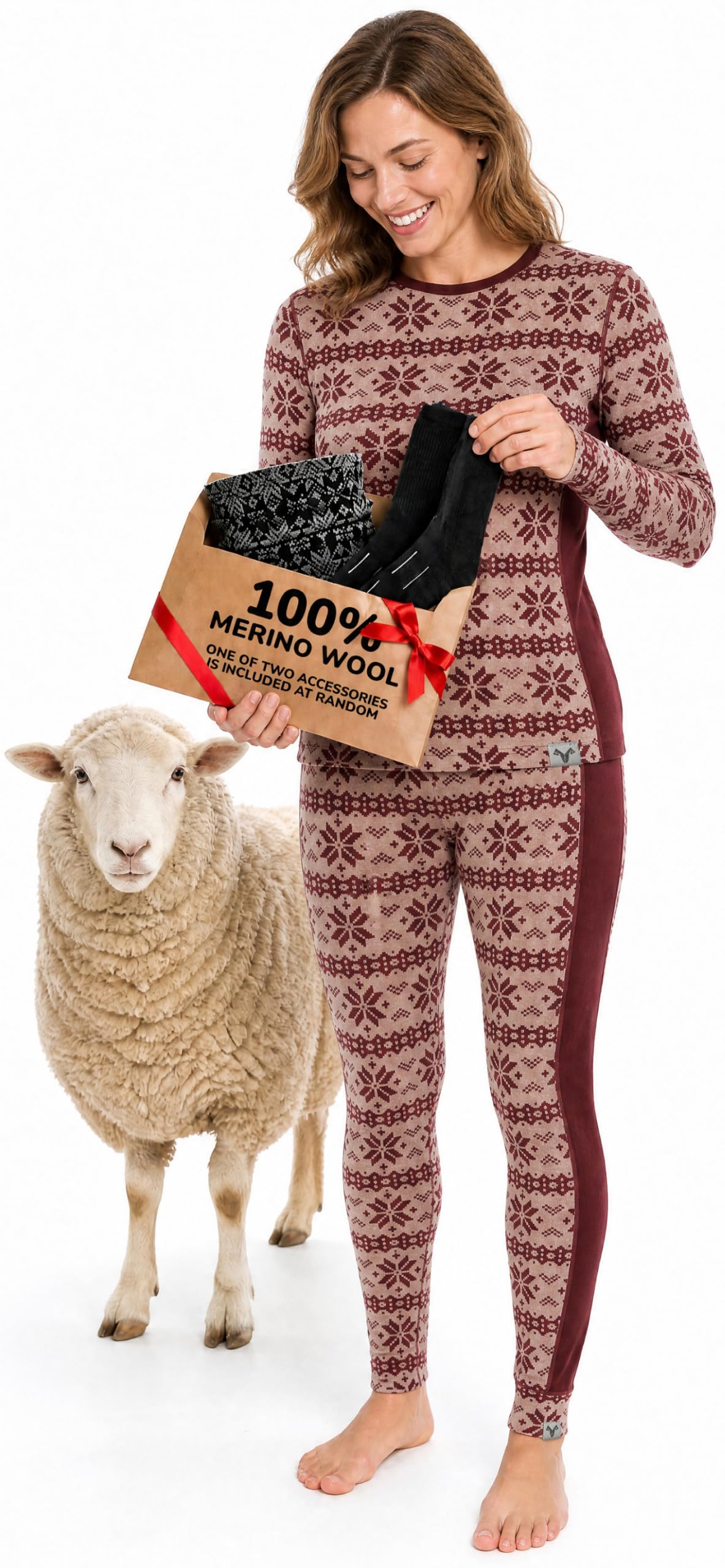
A matched merino top and bottom that stays tucked into your boots.
The leg length is the detail that separates this set from the pack. The bottoms are cut long enough to stay tucked into your socks, which closes the gap at the ankle where cold air and snow sneak in. The slim athletic silhouette lies flat under ski pants or work trousers without visible seams.
You get a long-sleeve top and a full-leg bottom, both 100% merino wool. The tops and bottoms work as a matched layer or separately on milder days when you only need one. Merino is naturally odor-resistant and handles moisture on its own, so a cold morning trail and an afternoon indoors do not force a wardrobe change.
Fabric thickness lands in a sensible middle — not so thin that the warmth disappears, not so thick that it bulks up your shell. Warmth and quality lead the feedback, and the set is heavy enough at 14 ounces that you will notice it in your bag but still light on your body. The main thing to note is care: merino wants gentle washing, so budget for that.
Where it earns its keep: the long bottoms stay tucked into socks, and the slim cut lies flat under ski pants with no bunching.
The honest catch: a full merino set at 14 ounces carries some heft in the bag, and it wants gentle washing to last.
Pick this one if: you want a matched wool top and bottom that layers clean under ski pants.
Weigh the bulk: a full set at 14 ounces takes up more boot-bag space than a single top.
7. Minus33 Tanana Merino Wool Base Layer

Designed for the skier who still heads out when the forecast turns nasty.
The fabric weight is the whole story: 400 G/M2 interlock knit in 18.5 micron merino wool. Interlock is a double-knit construction that is denser and warmer than a plain jersey knit, and 400 grams per square meter is a heavy expedition-weight fabric. The brand rates it for high activity from 0°F to 30°F and low activity from 30°F to 0°F.
Merino wool handles moisture well here — it absorbs up to 30% of its weight in moisture before it feels wet or clammy, which is why it keeps insulating even when you sweat. It also carries a UPF rating of 50+ for sun on bright days. Flatlock seams lie flat to reduce rubbing, and the top is tagless for comfort.
This is not the top for a mild spring ski day — 400 G/M2 is a lot of insulation. It is the layer for deep winter, snowshoeing, and shoveling snow in the cold. Warmth and quality lead the praise here, with fit and comfort close behind. If you run hot, drop down to a lighter weight and leave this one for the coldest days on the calendar.
Built For Brutal Days
- 400 G/M2 interlock knit is expedition-weight warmth in a single layer
- 18.5 micron merino wool is fine enough to wear against skin
- Absorbs up to 30% of its weight in moisture before feeling wet
- Flatlock seams and tagless construction cut down on rubbing
Know Before You Buy
- Too warm for mild spring skiing — this is a deep-winter top
- Heavier and bulkier under a shell than a lightweight layer
Suits you if: you ski or snowshoe in genuine cold and want one layer that handles it.
Not for you if: you ski mostly in mild spring conditions where this weight will overheat you.
8. LAPASA Womens 100% Merino Wool Base Layer Set L58/L91/L127

One purchase covers top and bottom in pure merino for the whole season.
Two pieces, one buy, both 100% merino wool. That is the argument here — you are not hunting down a matching bottom separately, and you are not mixing fabrics between top and legs. The set keeps you warm without the scratchy feel people expect from wool, and the merino regulates temperature as you move between a cold lift and a warm lodge.
It is designed to work in extreme cold, and the fabric is lightweight enough to layer without a fight. Softness and quality both hold up well, and the set is built to be worth what you spend on it. Weight sits on the light side for a full set, which helps when you are packing a boot bag.
Fit and sizing carry mixed notes, and the fabric quality gets a split verdict too — so the smart move is to check the size guide carefully before you order. Customers who dialed in the fit report a warm, comfortable set they trust in the cold. Get the size right and this merino top-and-bottom set is a strong all-season pair of layers.
Worth it for: skiers who want full top-and-bottom merino coverage in one purchase.
Do this first: check the size guide closely — fit and sizing come back mixed for some skiers.
9. Helly Hansen LIFA Merino Midweight Crew

Merino on the outside, a moisture-moving synthetic layer underneath.
Most base layers here are pure wool. This one is a two-layer build: 57% merino wool with 43% polypropylene. Polypropylene is a synthetic fiber that moves moisture away from your skin very quickly, so the wool exterior gives you warmth and odor control while the synthetic inner layer handles sweat.
The LIFA construction is the brand’s name for that pairing, and it is designed for active outdoor use — skiing, hiking, camping, mountaineering. The fabric is classified as medium weight, the fit is slim, and it is sold as true to size. Flatlock seams reduce irritation and the fabric is non-itch against the skin.
One thing to know before you buy: this fabric has no stretch. That matters on a ski hill because you are crouching and reaching, and a non-stretch layer gives less give at the shoulders and knees than a knit merino top. It suits a steady tour or a day on the slopes at moderate effort better than aggressive bump skiing. The blend also makes it a solid choice if you sweat hard, because that synthetic inner layer is built exactly for that.
The blend advantage: 57% merino plus 43% polypropylene moves sweat fast while the wool exterior keeps you warm and controls odor.
The stretch caveat: the fabric is non-stretchable, so it gives less at the shoulders and knees than a knit merino top.
Choose this if: you sweat hard and want a moisture-moving blend for active ski days.
skip it if: you want fabric that stretches with you in a deep crouch — this one is non-stretchable.
Know the Specs
Merino Wool and Micron Count
Merino wool comes from merino sheep, and micron count measures how fine each fiber is — a lower number means a softer, less itchy fabric against your skin. The Minus33 top here uses 18.5 micron wool, which is fine enough to wear directly on the body. Merino regulates temperature, absorbs moisture before it feels wet, and resists odor, which is why it holds up across multi-day trips. It also wants gentler washing than a synthetic blend.
Fabric Weight in Grams
Fabric weight is measured in grams per square meter or as a garment weight, and it tells you the temperature range a layer suits. A layer around 175g is lightweight and best for skiers who run hot; 250g is midweight and covers most of the cold season; 400 G/M2 is expedition weight built for deep winter. Pick your merino weight by the coldest day you plan to ski, not by the warmest.
Zip Necks and Venting
A quarter or half zip adds a short zipper at the collar so you can dump heat on a climb and seal it back up on a chair. If you ski hard enough to sweat, a quarter or half zip is the most useful feature on a base layer. A crewneck works fine for low-effort days but gives you no adjustability once you start moving.
Seams and Fit Under a Shell
Flatlock seams are stitched flat so they lie against the fabric instead of rubbing your skin under a pack strap. A base layer should sit close without squeezing, with sleeves long enough to reach your wrists and bottoms long enough to tuck into socks. That tuck closes the ankle gap where cold air and snow creep in.
Common Questions
Is merino wool or fleece-lined synthetic better for skiing?
What fabric weight should I choose for a ski base layer?
Will a quarter zip base layer really keep me warm on the lift?
How should I wash a merino wool base layer?
Do merino base layers itch?
Can I wear a ski base layer more than once between washes?
Should I size up or down in a merino base layer?
Is a top-and-bottom set worth it over a single top?
Will a non-stretch base layer restrict my movement when skiing?
Does merino wool dry fast enough after a sweaty run?
The Bottom Line
For most skiers, the women’s ski base layer winner is the Merino.tech Quarter Zip because the venting zip, 100% merino build, and low 4.8-ounce weight cover most days on the mountain. If you want a complete top-and-bottom set without spending merino money, the Spyder fleece-lined set is the budget-friendly choice. And for the deepest cold on the calendar, the Minus33 Tanana crew at 400 G/M2 delivers expedition-grade warmth when the forecast turns serious.
How we choose
We do not accept paid placement. Every pick is matched to a real buyer and a real use-case; we do not hands-on test units.
Sources
Specifications: manufacturer listings and product documentation. Review insights: verified customer reviews, as of November 2026. Pricing: not shown on this page (it changes often); check the current price via the retailer link.
As an Amazon Associate, Tactical Gear Guy earns from qualifying purchases. This does not affect which products we feature.