Specs are compiled from manufacturer listings and verified buyer reviews and can change over time — please confirm the key details on the product page before buying.
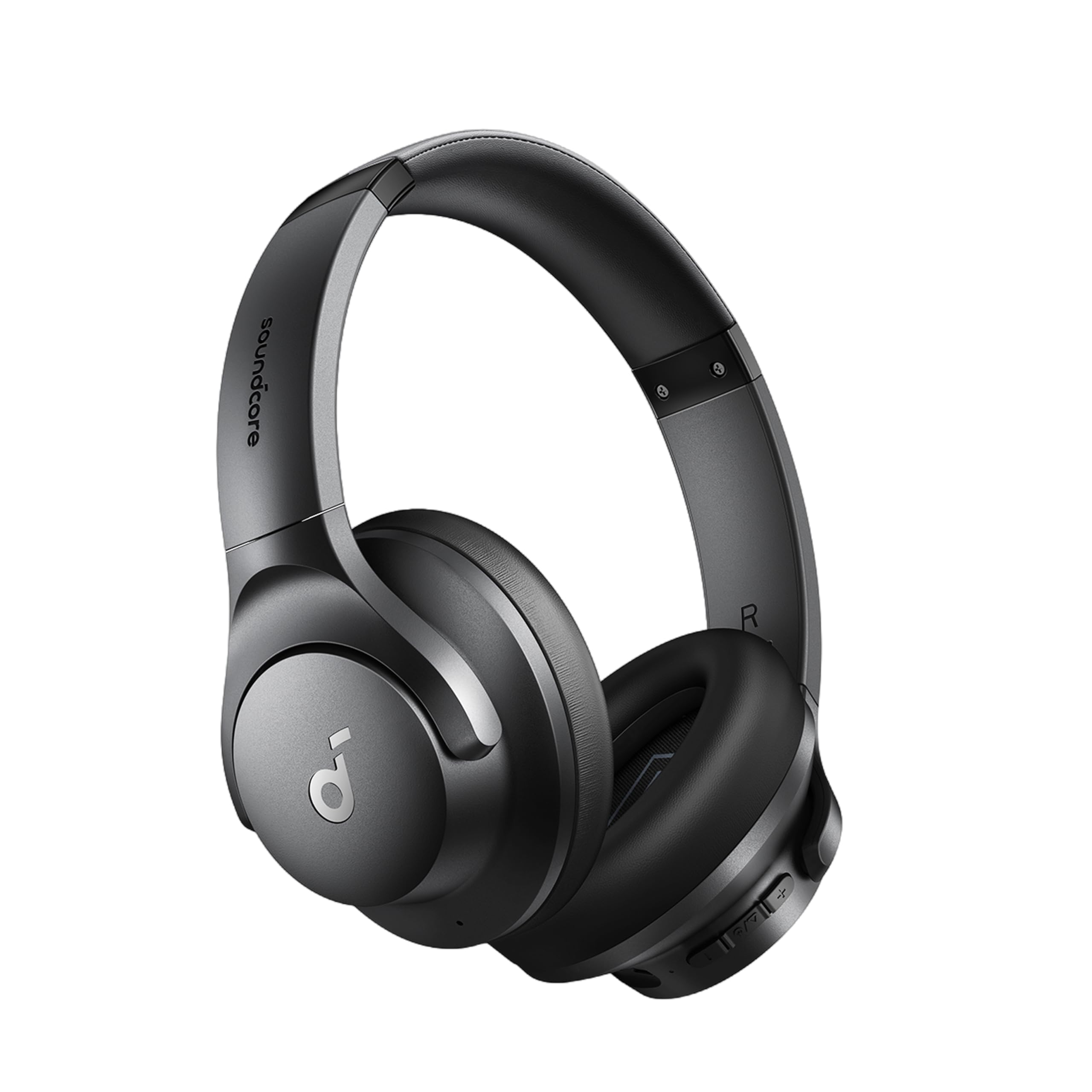
You want one pair of over-ear wireless headphones that sounds good, stays charged through a whole week, and doesn’t make your ears ache by hour three. The one I’d buy first is the soundcore Q20i: it gives you active noise cancelling (mics that cancel room noise), 40 hours of listening with it switched on, and a five-minute top-up that buys you four more hours when you’re already out the door. Every other pick here trades one of those three against the others.
This guide is built by comparing the manufacturers’ published specifications and the patterns across verified customer reviews, so you get each pick’s real strengths and trade-offs instead of marketing spin.
Below you’ll find the specs that actually change how a headset feels on your head and in your bag, plus the honest catch on each one. The aim is simple: pick the right wireless stereo bluetooth headset the first time and stop re-shopping next month.
Top Picks


How To Choose The Best Wireless Stereo Bluetooth Headset
Most people shop by brand logo first and driver size second. Reverse that order. The driver is the little speaker cone inside each earcup, and its size in millimeters tells you how much air it can move. That’s why almost every pick here runs a 40mm driver, so the bass feels physical rather than thin.
Match the playtime number to how you actually listen
A headset rated for 70 hours is usually quoting a best-case figure with noise cancelling switched off. Switch ANC on and that number often drops by a third or more. If you commute daily, weight the ANC-on figure; if you mostly listen at a desk, the headline number is the one you’ll live with.
Decide if you need real noise cancelling or just quiet cups
Passive isolation is the padding in the earcup physically blocking sound. Active cancelling adds microphones that listen to the room and play an opposing signal. On a busy train the active version wins clearly; in a quiet office you may never notice the difference. Pay for ANC only if you have a noisy place to use it.
Check how it charges before you fall in love with it
Fast charging is the spec that saves you on a bad morning — five minutes at the wall buying hours of playback. Look for that number specifically, because a big total playtime figure is useless if a flat battery takes a full afternoon to recover.
Side-by-Side Comparison
| Model | Best For | Battery Life | Driver Size | Bluetooth | Amazon |
|---|---|---|---|---|---|
| soundcore by Anker Q20i★ Best Overall | Everyday all-rounder | 60 hours | 40 millimeters | 5 | Amazon |
| BERIBES 65H 6EQBudget Champion | Budget long-haul listening | 65 hours | 40 millimeters | 6.0 | Amazon |
| KVIDIO Hybrid ANCQuietest Under Budget | Noise blocking on a budget | 70 hours | — | 5.3 | Amazon |
| OneOdio A70 | Studio and DJ work | 72 hour | 40 millimeters | 5.3 | Amazon |
| JBL Tune 730BT | Marathon battery, light carry | 76 hours | 40 millimeters | 6.0 | Amazon |
| Sony WH-CH520 | Colour choice and light wear | 50 hour | 12 millimeters | 5 | Amazon |
| JBL Tune 780NC | ANC plus spatial sound | 76 hours | 40 millimeters | — | Amazon |
| Bose QuietComfort | Quietest commute | 24 hours | 30 millimeters | 5.1 | Amazon |
| Beats Studio Pro | Lossless USB-C listening | 40-hour | — | — | Amazon |
Detailed Reviews
1. soundcore Q20i Headphones
Our pick — 4.5+★ from 80,000+ verified ratings; the strongest balance of quality and price.
Forty hours of quiet with the cancelling on — that is the promise that carries this one.
The Q20i runs a 40mm dynamic driver in each cup, which is the spec that gives you that thick, punchy low end without the vocals getting buried. Four built-in microphones handle the noise cancelling, and they work on the room around you rather than on your music — so a packed train carriage gets quieter while the track stays loud. You get a rated 60 hours of battery in total, with 40 of those hours available while the cancelling is switched on.
Charging is where it earns its place at the top of this list. A five-minute plug-in returns four hours of playback, so a flat battery on the way out the door stops being a crisis. The Q20i also holds two devices at once and hops to whichever one needs you, which is the difference between answering a work call cleanly and fumbling through your phone’s settings mid-meeting.
One catch is worth naming: fit divides people. Plenty of listeners wear these for hours without complaint, but the headband does not suit every head shape. A loose fit quietly ruins noise cancelling, because the seal is what makes it work. If you have a small head or wear glasses, the seal may not be as tight as the spec sheet implies. Also note that noise cancelling switches off when you use the AUX cable.
What earns it the top slot
- 40 hours of playback with active noise cancelling switched on, not just in eco mode
- Five minutes of charging returns four hours — the single most useful number here
- Dual-device connection so a call never means digging through settings
- App control for EQ presets and switching between cancelling, normal and transparency
Where it asks you to compromise
- Fit is the split opinion — a looser seal weakens the noise cancelling
- Noise cancelling is unavailable in AUX-in mode
Reach for this if: you want one headset for commuting, desk work and calls without juggling two pairs.
Look elsewhere if: you need a guaranteed snug clamp on a small head.
2. BERIBES Bluetooth Headphones
Six sound modes and a 500mAh cell behind 65 hours — this is the value pick that behaves like a bigger spend.
Where the Q20i gives you one tuned sound, the BERIBES hands you six. The 40mm dual dynamic units let you flip between balanced, extra bass and mid-treble emphasis, which is genuinely useful if you move between podcasts, rock and jazz in a day. Bluetooth 6.0 handles the pairing, and the stated 1-3 second boot-to-paired time means you are not staring at a blinking light.
These weigh 0.38lb, the lightest build in this lineup. That low weight is why the memory protein earcups and adjustable headband get through a full workday without a pressure hotspot behind the ears. The battery follows the same logic: a 500mAh cell (the battery’s capacity) rated at more than 65 hours of playback and over 950 hours of standby. A 3.5mm cable backs it up, so a dead battery becomes a wired session rather than silence.
What wins people over here is the personality of the sound, with the sheer clarity of these drivers drawing the most consistent praise. The honest caveat is noise cancelling — some listeners find it does real work and others find it barely there, so treat it as a bonus rather than the reason to buy. If you need the room genuinely silenced, the KVIDIO two rows down is the better-tuned answer.
Where the money goes: you are paying for drivers and battery, not for a brand. Six EQ modes at this tier is unusual, and the foldable frame plus Type-C charging cover the practical bases.
The trade to accept: colour is listed as orange red, which is a bold choice for an office, and the noise cancelling is the weak link in an otherwise strong spec sheet.
Best for: listeners who want to shape their own sound and hate charging cables.
Think twice if: blocking out a loud room is your main reason for buying.
3. KVIDIO Hybrid Active Noise Cancelling Headphones Over Ear
Seventy hours in standard mode, forty with the cancelling on — and a hybrid ANC setup meant to swallow the room.
KVIDIO’s headline claim is that the active cancelling blocks out up to 95% of ambient noise, and that figure is the reason to look here rather than at a cheaper passive pair. The headline battery number is 70 hours in standard music mode; switch to wireless active cancelling and it settles at up to 40 hours. Those are two different figures on the same headset, so buy against the one that matches how you listen.
Against the Q20i, the KVIDIO is the slower charger and the shorter listener with cancelling engaged. The verified numbers put it at 2.5 hours to full charge versus 2 hours for the Q20i, and 70 hours total playback versus 60. In plain terms: the KVIDIO plays longer on paper and refills slower on the wall. Both give you the five-minute top-up that returns four hours, so the gap only bites if you regularly drain one flat and then rush out.
Bluetooth 5.3 is the piece that makes the calls work. There is a DSP (digital signal processing) stage that sharpens voice for conference calls and phone conversations, plus a transparency mode that lets traffic and train announcements back in without removing the cups. The soft earpads wrap the ears rather than pressing on them, which is what the comfort praise tends to circle back to.
What the spec sheet is really saying: hybrid cancelling with a transparency mode, Bluetooth 5.3, and a foldable frame that travels easily. The jump from the BERIBES above is measurable — 40 hours with cancelling on versus a mode you cannot fully rely on.
Pick this one when: the noise in your day is the problem and you want it handled without spending big.
The limitation: a full charge takes 2.5 hours, so slow refills are the cost of the bigger playtime.
4. OneOdio A70 Headphones

The only headset here built to share one song with a second pair of headphones plugged straight into the cup.
Two audio cables ship in the box — 3.5mm to 6.35mm and 3.5mm to 3.5mm — and that 6.35mm jack is the tell. This is a studio and DJ tool that happens to work wirelessly, not a commuting accessory that happens to sound decent. Custom-made aluminum fascia over 40mm neodymium drivers gives it a heavier, more solid feel than the plastic builds higher up this list, and the rotatable foldable structure means one cup swivels for single-ear monitoring.
Battery is 72 hours, which puts it above the Q20i’s 60 and just under the JBL numbers. The real trick is the share function: pair the main headphones over Bluetooth, then plug the 6.35mm jack into the main set and the 3.5mm into a friend’s headphones, and two people hear the same film or game. There is also a jack lock on the aux plug so the cable does not work loose mid-session.
Buy the A70 for studio and gaming duty and it delivers; buy it for quiet commuting and you will be disappointed, because it has no noise cancelling and the aluminum build adds heft to your bag. The Bluetooth version stated is 5.3, which is a step ahead of the Q20i’s 5, though that gap shows up more in connection stability than in audio quality.
Why studio users gravitate here
- 72 hours wireless, or wired mode that never runs dry
- Two included cables including the 6.35mm studio jack
- Share function lets a second pair of headphones join the session
- Jack lock keeps the aux connection seated
Who this is not built for
- No noise cancelling at all — traffic comes straight through
- The aluminum-heavy build is bulkier in a bag than the plastic options
Made for: DJs, gamers and anyone mixing who wants to hand a second listener a cable.
The deal text: silence is not on the menu here — buy it for sound work, not for the train.
5. JBL Tune 730BT Headphones

Seventy-six hours on a charge, and a five-minute top-up that hands you another five hours of sound.
That 76-hour figure is the biggest number in this lineup, and it is not a spec-sheet typo. It is what a 40mm JBL driver plus Bluetooth 6.0 gets you when the radio sips power instead of gulping it. Bluetooth 6.0 is the newer wireless standard here, and the practical payoff is lower latency (less audio delay), so lip-sync stays tight when you watch a film rather than just play music. Two beamforming mics on each earcup (mics that focus on your voice) capture you and push background noise down, so a call in a busy café does not turn into a shouting match.
Multi-point is present and useful: pair the phone and the tablet, watch a film on one, and still catch the boarding call from the other. The frame folds flat for a bag and the cups and padded headband are built for a long listen rather than a short burst. Fast Pair handles Android and Swift Pair handles Windows 10 and 11, both without a trip through menus.
Here is the thing to know before you buy: there is no charging cable in the box, because JBL chose to leave it out. Any standard USB-C cable will charge it, but if you do not own one already, budget for it — a headset that arrives unable to charge is a frustrating first ten minutes. There is also a caveat on the longevity side: the battery feedback on this model splits between people who get the stated hours and people who run dry sooner.
The number that matters: 76 hours of playback and a five-minute charge that returns five more. For a long-haul traveler or someone who resents a nightly cable, that is the whole case.
What you give up: no noise cancelling, and no cable in the box. This is a sound-and-stamina purchase.
Go for it if: your priority is going a week between charges on a light, foldable set.
Look elsewhere if: you want the room quietened — there is no ANC here.
6. Sony WH-CH520 Headphones

A light on-ear set with swivel cups, six colours to choose from, and a 50-hour battery behind the whole thing.
One spec on this sheet stands out and it is not the battery: the driver is listed at 12 millimeters, which is dramatically smaller than the 40mm units everywhere else on this page. That is the physical reason the CH520 sounds lighter on bass than the JBL or the KVIDIO — it is an on-ear set, not an over-ear one, and the cups sit against your ears rather than around them. If you want a light on-ear set for short walks, it fits; if you want deep bass, it does not.
Where it does hold its own is stamina and control. Up to 50 hours with quick charging and a USB-C cable in the box covers a multi-day trip without a wall socket. The Sony Headphones Connect app gives you EQ Custom, DSEE upscaling for compressed files, multipoint for two devices, and Google Fast Pair that pings a missing headset by sound or shows its last known location.
Comfort and connection are the honest split here. Some listeners find the on-ear clamp comfortable for a full day; others report ear pressure after a few hours. Because the cups sit on the ear rather than over it, that pressure is the trade you make for the smaller footprint. If you know you hate on-ear contact, the over-ear picks above are the safer call.
The case for it: light, swivel-cupped, available in six colourways including blue, and backed by an app that is more capable than most at this price.
The catch: a 12mm driver and on-ear cups mean less bass and more pressure than an over-ear set.
Suits you if: you want a small, light pair with colour choices and app control.
Not for: bass-led listening or anyone who dislikes on-ear contact.
7. JBL Tune 780NC Headphones

The first pair here that pairs real noise cancelling with a spatial-sound trick and the full 76-hour figure.
The 780NC takes the 40mm driver from the 730BT and adds adaptive noise cancelling with Smart Ambient, so the cancelling adjusts to what it hears instead of staying fixed. JBL Spatial Sound is the other headline — it pushes sound around your head so a film feels wider than the two earcups in front of you. If you want more detail than wireless can carry, the included USB-C to 3.5mm cable gives you a wired Hi-Res path to the source.
The battery has a nuance the 730BT does not: 76 hours with ANC off and Bluetooth on, but expect up to 50 hours with the cancelling engaged. Both figures appear on the same spec sheet and neither is wrong — one is best case, one is real life. A five-minute speed charge returns five hours, and a full top-up lands around two hours.
Those two beamforming mics and the Personi-Fi 3.0 setup in the JBL Headphones app are the extras you notice after a week rather than on day one. The app shapes the sound to your hearing profile rather than making you pick a preset from a list. What wins the room over is the combination of quiet and clarity, and the recurring note is that the cancelling really does the job rather than just softening the edges.
Strong points that hold up
- Adaptive ANC with a Smart Ambient mode you can dial in
- Up to 50 hours with noise cancelling on, 76 with it off
- Spatial Sound and a wired Hi-Res route through the included cable
- Personi-Fi 3.0 hearing-profile tuning in the app
Small print to read first
- The 76-hour number only holds with the cancelling switched off
- Charging cable is not in the box
Worth it for: travellers who want serious cancelling and a week between charges on one headset.
The caveat: the biggest battery number requires ANC off, so plan against the 50-hour figure.
8. Bose QuietComfort Headphones

Twenty-four hours is the smallest number on this page, and it is attached to the quietest pair.
The QuietComfort runs a 30mm driver and, more importantly, a noise-cancelling system combined with the passive padding of plush over-ear cushions — so the silence comes from two directions at once. Two listening modes let you toggle: Quiet for full cancelling, Aware for full awareness of the room. The toggle is the feature I would miss most on a commute, because you can hear the platform announcement and then drop straight back into silence.
Battery is the flip-side of everything else here. Twenty-four hours on a charge compares with 70 hours for the KVIDIO and 76 for the JBL. But a 15-minute USB-C top-up returns up to 2.5 hours of playback, so the refill is generous even when the total is modest. Bluetooth 5.1 with multipoint (two devices connected at once) lets you switch between them without unpairing and re-pairing. The included audio cable with in-line microphone means the set still works when the battery is empty.
Value is the honest caveat. The QuietComfort is the most expensive model in this lineup and hands you the shortest playtime. You are paying for the cancelling quality and Bose’s adjustability, not for longevity: bass, mid-range and treble are all yours to dial in through the app. Some buyers feel the spend is justified; others do not, and both positions are reasonable.
What you are actually buying: near-silence with a one-touch Awareness switch, plus a wired fallback with an in-line mic for when the cell is flat.
The trade: 24 hours is a short leash on a long trip, and the price is the highest on the list.
Buy it for: the quietest commute and a mode switch you will use every single day.
Pass if: you measure a headset by hours per charge rather than by silence.
9. Beats Studio Pro Headphones

The one set here that plays lossless audio through a USB-C cable — and charges fast when it empties.
Lossless USB-C audio is the standout capability. Most wireless headsets compress your music before it reaches the driver; the Studio Pro lets you plug a USB-C cable straight in and carry the file at full quality. The 3.5mm cable is also in the box for a standard analog listen, and the travel case plus charging cable come with it. Class 1 Bluetooth is the rating that governs range and stability, so dropouts across a room are less likely.
Battery sits at up to 40 hours, and Fast Fuel is the number that buys you breathing room: ten minutes on the cable returns up to four hours of playback. On the listening side you get active noise cancelling with a Transparency mode, plus spatial audio with personalized dynamic head tracking, which turns a film into a 360-degree experience rather than a flat stereo track.
Here is what you should weigh against the Bose above. The Studio Pro gives you longer battery and a lossless wired path, while the Bose gives you its stronger noise cancelling. The Studio Pro’s own sound and cancelling are also the more contested part of its story — some listeners hear rich, balanced audio and effective silence, while others find the bass light and the cancelling short of expectations. The fit splits the same way: comfortable over the ears for some, too tight a clamp for others.
Arguments in its favour
- Lossless audio over USB-C, a rarity in this group
- Up to 40 hours and a 10-minute Fast Fuel charge worth 4 hours
- Spatial audio with dynamic head tracking
- Class 1 Bluetooth for steadier connections
The honest reservations
- Bass and noise cancelling divide listeners — check your priorities
- The clamp is tight on wider heads
Made for: listeners who care about wired fidelity and film-friendly spatial sound.
Be wary if: you need the deepest possible bass or the loosest clamp.
Know the Specs
Driver size and why it changes the sound
The driver is the speaker cone inside each cup, measured across in millimeters. A bigger cone moves more air, which is why 40mm drivers tend to give you a fuller low end while the 12mm unit in the Sony produces a lighter, smaller sound. It is not a measure of quality — a well-tuned small driver can beat a sloppy large one — but it does tell you roughly how much bass weight to expect before you ever put the set on.
Playtime figures and the ANC-on catch
Almost every headset here quotes a big battery number and a smaller one beside it. The big figure assumes noise cancelling is off; switch it on and the runtime drops, sometimes sharply — the JBL 780NC’s 76 hours becomes up to 50 with cancelling engaged. Read both figures and buy against the one that matches how you listen. Fast charging matters just as much: a five-minute top-up that returns hours of playback covers a lot of forgotten cables.
What multipoint actually does for you
Multipoint lets one headset stay connected to two devices at once and hop to whichever needs you. In practice it means watching a film on a tablet while staying available for a phone call, without unpairing anything. If you work at a laptop with a phone on the desk, this feature earns its keep daily. If you only ever pair with one device, multipoint adds nothing.
Noise cancelling versus passive padding
Passive isolation is the physical padding of an over-ear cup blocking sound. Active noise cancelling adds microphones that listen to the room and play an opposing signal to cancel it. The two work best together: the Q20i uses built-in mics, while the Bose layers its cancelling on top of plush passive cushions. Which you need depends on how loud your commute or office actually is.
Common Questions
Will a wireless stereo Bluetooth headset work with both my phone and my laptop?
Does noise cancelling make the battery drain faster?
Is a 40mm driver better than the 12mm driver in the Sony WH-CH520?
Can I use these headphones with a cable when the battery runs out?
What does fast charging actually get me?
Will over-ear headphones fit over my ears or press on them?
Do I need a charging cable in the box?
Can two people listen to the same thing on one headset?
Which is better for calls, the soundcore Q20i or the Beats Studio Pro?
Is lossless USB-C audio worth it on a Bluetooth headset?
The Bottom Line
The wireless stereo bluetooth headset to buy is the soundcore Q20i. It is the rare set that gives you real noise cancelling, 40 hours of listening with it engaged, and a five-minute charge that hands you four more hours. If silence on a commute is the whole point, the Bose QuietComfort is the quieter pair, and its mode toggle beats anything here for daily use. If you want the longest leash between charges with spatial sound on top, the JBL Tune 780NC covers it. One last thing worth weighing: the Q20i is the crowd favourite of this group by a wide margin, and that depth of real-world use is exactly why it makes the safest first buy.
How we choose
We do not accept paid placement. Every pick is matched to a real buyer and a real use-case; we do not hands-on test units.
Sources
Specifications: manufacturer listings and product documentation. Review insights: verified customer reviews, as of November 2026. Pricing: not shown on this page (it changes often); check the current price via the retailer link.
As an Amazon Associate, Tactical Gear Guy earns from qualifying purchases. This does not affect which products we feature.