Specs are compiled from manufacturer listings and verified buyer reviews and can change over time — please confirm the key details on the product page before buying.
The biggest mistake first-time buyers make with women’s track spikes is picking a shoe built around the wrong event. A sprint shoe and a distance shoe look almost identical on a shelf, yet the spike plate under the forefoot — the hard plate the pins screw into — is shaped completely differently. Buy the wrong one and you will feel it in the last 100 meters of every race.
This guide is built by comparing the manufacturers’ published specifications and the patterns across verified customer reviews, so you get each pick’s real strengths and trade-offs instead of marketing spin.
Below you will find six spike shoes sorted by event type, spike count, and how they fit a women’s foot — the three things that decide whether a shoe helps you or fights you. Each one is broken down in plain English so you can match a shoe to your race distance, not to a photo. Our shortlist of the women’s track shoes with spikes covers every common event distance and budget tier.
Top Picks
How To Choose The Best Women’s Track Shoes with Spikes
Track spikes are not one product — they are a family of shoes split by race distance. A shoe tuned for the 100m feels stiff and unforgiving over a mile. A distance shoe feels mushy and slow in a sprint. Getting this one call right matters more than any other decision you will make.
Match the plate to your event
The plate is the stiff layer under your forefoot that the pins screw into. Sprint plates are short and rigid so your energy goes straight into the track. Distance plates are longer and more forgiving so your foot can roll through a mile without cramping. If you run 400m or shorter, look for a sprint plate. If you run 800m and up, look for a distance plate.
Count the pins
Six-pin and 8-pin configurations are the two common layouts here. An 8-pin shoe puts more metal on the track for aggressive grip on the straightaway and out of the blocks. A 6-pin shoe is lighter and grips fine on most track surfaces while being easier on the legs during longer efforts. Either way, check that your shoe ships with extra pins — they wear down and disappear.
Get the women’s fit right
Many track spikes are listed as unisex, which usually means a men’s last (the shaped mold the shoe is built on). Several of the picks here note that sizing runs small, so measure your foot in centimeters against the brand’s own chart before you order. A spike shoe should feel snug with a little room at the toe — not roomy like a trainer.
Side-by-Side Comparison
| Model | Best For | Spikes | Plate Type | Event Focus | Amazon |
|---|---|---|---|---|---|
| THESTRON 8 Spikes Racing Sneakers★ Best Overall | All-round buyers first | 8 spikes | Rubber outsole, adjustable nails | Sprint, jump, run | Amazon |
| TURAFO Elite Track SpikesMulti-Event Pick | Multi-event girls and women | 8-point | 8-point titanium spike plate | Sprints, jumps, middle distance | Amazon |
| adidas Adizero Distancestar | Middle and long distance | 6-pin | Extended 6-pin TPU plate | 400m to mile and beyond | Amazon |
| Nike Zoom Rival Sprint | Pure sprinters on a budget | 6 replaceable | Updated 3/4-length plate | Sprints | Amazon |
| Nike Zoom Rival Sprint DC8753 | High school sprint programs | — | Forefoot plate | Sprints | Amazon |
| adidas Adizero Sprintstar | Competitive sprinters | 6-pin | Updated 6-pin TPU plate | Sprints | Amazon |
Detailed Reviews
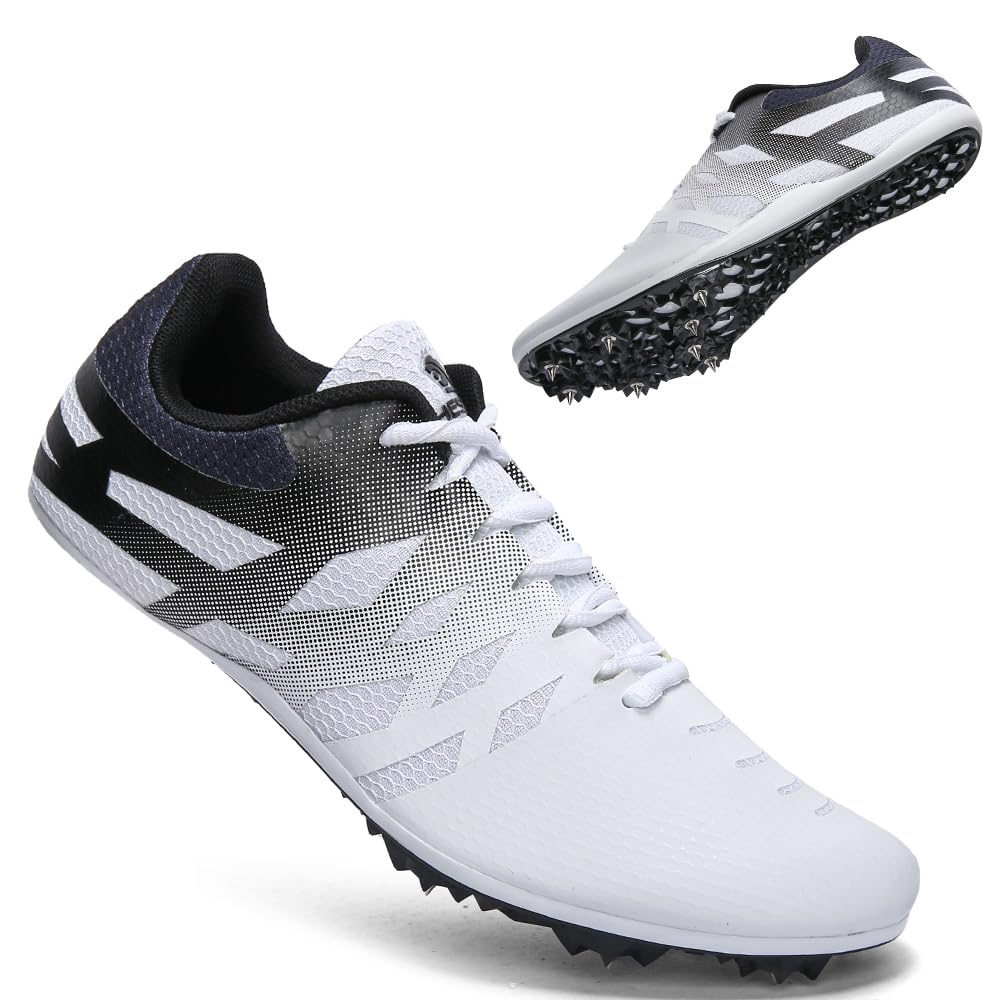
1. THESTRON Track and Field Shoes 8 Spikes
Our pick — 4.5+★ from 350+ verified ratings; the strongest balance of quality and price.
Eight pins up front and a color for every team kit — the crowd favorite for a reason.
What you get here is a shoe that covers the broadest ground in this list: a full 8-nail front plate (the row of metal pins that digs into the track) combined with a rubber outsole that holds up to sprinting, jumping, and general running. That versatility is why it sits first. It also runs across a size range from US1 to US12, and the size range runs from US1 up to US12 (Euro 34–45), so smaller women’s and kids’ sizes are covered.
What wins people over is the build quality — it is the thing buyers talk about more than anything else in this shoe’s feedback, and the appearance draws praise too. The breathable mesh upper (a woven panel that lets heat out) keeps feet from cooking in hot-season meets. You also get extra spikes in the box for replacements, which matters because pins wear flat and vanish into the track over a season.
The catch is sizing. This shoe has drawn mixed feedback on fit, with a recurring note that it runs smaller than expected — so order by your centimeter measurement, not by your everyday sneaker size. If you run 800m or longer as your main event, a dedicated distance plate like the adidas Distancestar below will treat your legs better over multiple laps.
What earns it the top spot
- 8-pin front plate gives aggressive grip out of the blocks and through turns.
- 14 color options and a US1–US12 range that includes women’s sizes.
- Extra replacement spikes included in the box.
- Build quality and looks are the two things buyers rate highest.
Where it asks you to be careful
- Fit runs smaller than expected for several buyers — measure in centimeters first.
- Rubber outsole and 8 pins lean sprint-and-jump rather than long-distance comfort.
Reach for this one if: you want a single spike shoe that handles sprinting, jumping, and general track work without overthinking the event.
Look elsewhere if: your race calendar is mostly 800m and up, or you want a shoe that matches your exact measured size from the start.
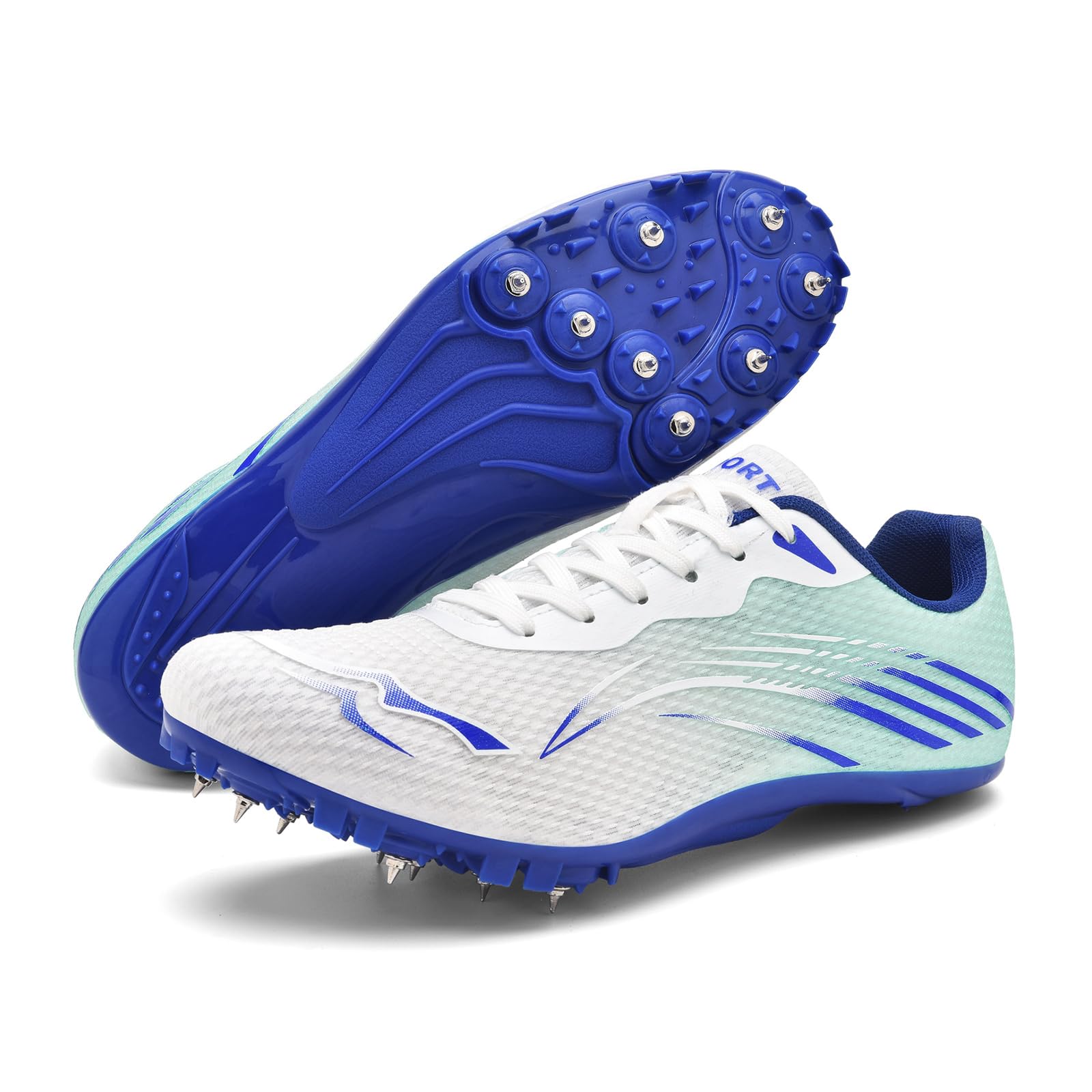
2. TURAFO New Upgrade Track and Field Shoes with 8 Spikes
One plate built to handle jumps and sprints on the same afternoon.
The piece that decides this shoe is the 8-point titanium spike plate — a rigid layer under the forefoot with eight screw-in pins that transfers your push straight into the track. Titanium holds its shape under load, so the plate stays rigid instead of flexing away from you on an explosive start or a corner. That stiffness is what makes the shoe work for jumps as well as sprints.
Airflow is the other part worth naming. The maker calls the upper AeroVent Active Cooling — in plain terms, a mesh panel positioned to move heat and moisture away from your foot across a full meet. If you run heats in the morning and a final in the afternoon, that airflow is the difference between a shoe you forget about and one you want off by noon.
It is listed as a women’s department shoe, which is a genuine advantage over the unisex options here — you are less likely to be slipping around inside a men’s last. Quality is what buyers rate highest, with value close behind. The honest trade-off is that this is a leaner listing than the big brands: buyer feedback here is thin on long-term durability, so treat the 12-hour support promise as the maker’s stated commitment rather than a proven track record.
The event-versatility angle: an 8-point titanium plate gives you the rigid platform jumps want and the secure ride sprints and middle distances need, from one pair of shoes.
What to accept going in: buyer feedback here centers on quality and value rather than long-term durability reports, so check the centimeter size chart carefully and expect a newer-model gamble.
Fits your season if: you compete across events — long jump one week, 200m the next — and want one pair that does not need swapping.
Think twice if: you want a long track record of verified owner feedback before you commit.
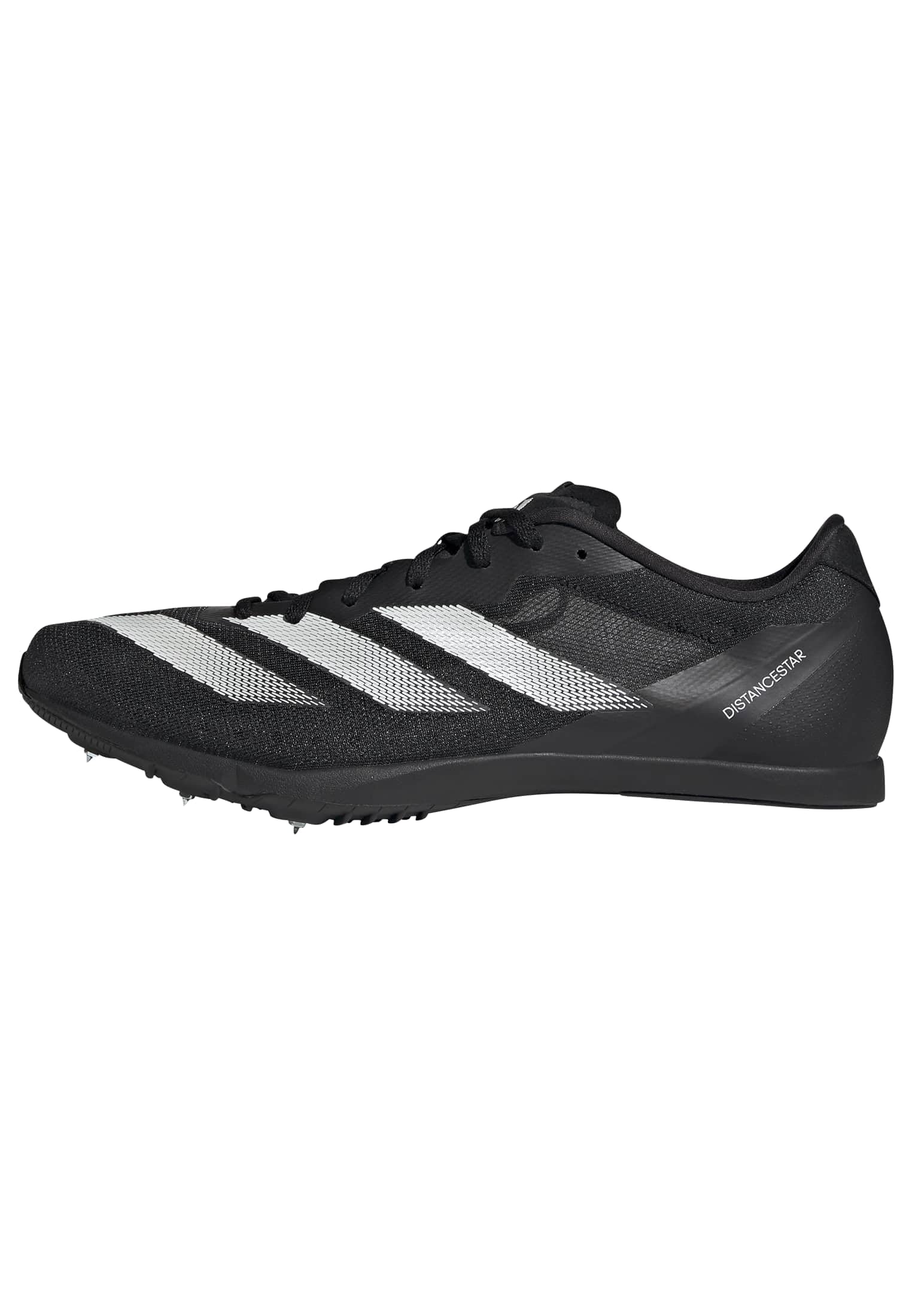
3. adidas Unisex Adult Adizero Distancestar Track and Field
The shoe for the mile, not the 100 — an extended plate that rolls with you.
Here is the direct contrast you need: the Distancestar uses an extended 6-pin TPU plate, while the sprint-focused Adizero Sprintstar in this list runs an updated 6-pin TPU plate tuned for acceleration. Same pin count, different intent. The Distancestar’s plate extends further under the foot so your stride rolls through instead of stopping dead at the ball — which is exactly what you want over 400m to a mile.
Under the forefoot sits Lightstrike Pro cushioning, a responsive foam placed where your foot actually loads during a distance race. Lightweight molded EVA (a firm, springy foam) runs from heel to toe to give you a balanced platform rather than a wall of stiff plastic. If your events are 800m or 1500m, that combination is the point of the whole shoe.
Be clear on the trade-off before you buy: this is a distance build, so a pure 100m or 200m sprinter will find it too forgiving and not direct enough off the line. It is also a unisex listing, which means a men’s last — check your centimeter size. Fewer verified owner reviews sit behind this model than behind the Thestron above, so you are buying on the strength of the design rather than on a long feedback trail.
Why distance runners should care: the extended plate is the mechanical difference between a shoe that keeps rolling and one that punishes you in lap three.
The catch: forgiving plates are slow plates. Sprinters lose the sharp pop off the starting blocks that a dedicated sprint shoe delivers.
Made for: 400m through mile racers who want their shoe to work with the stride rather than against it.
Wrong tool if: your entire season is 60m, 100m, and 200m.
4. Zoom Rival Sprint

One pound on the scale — the featherweight of this whole shortlist.
Start with the number that changes races: this shoe’s listed package weight is 1 pound, against 2.4 pounds for the adidas Distancestar above. That is the kind of difference your legs register in the final 20 meters of a 200m. Every extra ounce is mass your legs have to accelerate with each stride.
The build backs up the weight saving. You get an updated 3/4-length plate that stays light and responsive, so you can stay up on your toes through the drive phase. Six replaceable spikes — made from lightweight ceramic aluminum — sit under the forefoot for traction across track surfaces. Heel rubber adds cushioning for your footstrike and for braking after the line, and a midfoot band gives you dynamic lacing plus arch support.
Reinforced forefoot mesh is the last piece: breathable enough to dump heat, durable enough to survive a season of starts. The thing to understand going in is that this is a sprint tool with a snug, containment-first upper. It is a unisex listing, so women should size by centimeter measurement. If you want a shoe you can also jog easy days in, this is not that shoe.
Pick it if: you race 100m or 200m and want the lightest foot possible off the blocks.
Not the one if: you need cushioning for longer efforts — this is built to be minimal on purpose.
5. Nike Zoom Rival Sprint Track and Field Shoes DC8753

A reinforced upper and a forefoot plate built for attacking the turn.
Read the description and one word keeps coming back: containment. The upper is reinforced yet lightweight, which in plain terms means it holds your foot in place when you lean into a curve at speed. That is what stops your foot sliding sideways inside the shoe and wasting the energy you just put into the ground.
The forefoot plate is the second half of the story. It is the stiff section under the ball of your foot that gives you something to drive against when you rise onto your toes and sprint for the line. Without a plate, your foot flexes and absorbs your own push. With a plate, that push goes into the track.
This is the same sprint family as the lighter Zoom Rival above, so pick between them on weight preference rather than event. It is a men’s-listed department shoe, so women should work from centimeter measurements when choosing a size. It is also the newest listing here, which means buyer feedback is still thin — you are choosing it on the design, not on a mountain of reviews.
The sprint-role read: containment plus a forefoot plate is the combination that lets a sprinter lean into a corner without their foot rolling inside the shoe.
Best matched to: high school and club sprinters who want a secure upper they can trust through the curve.
Skip if: you need proven feedback history or a women’s-specific last.
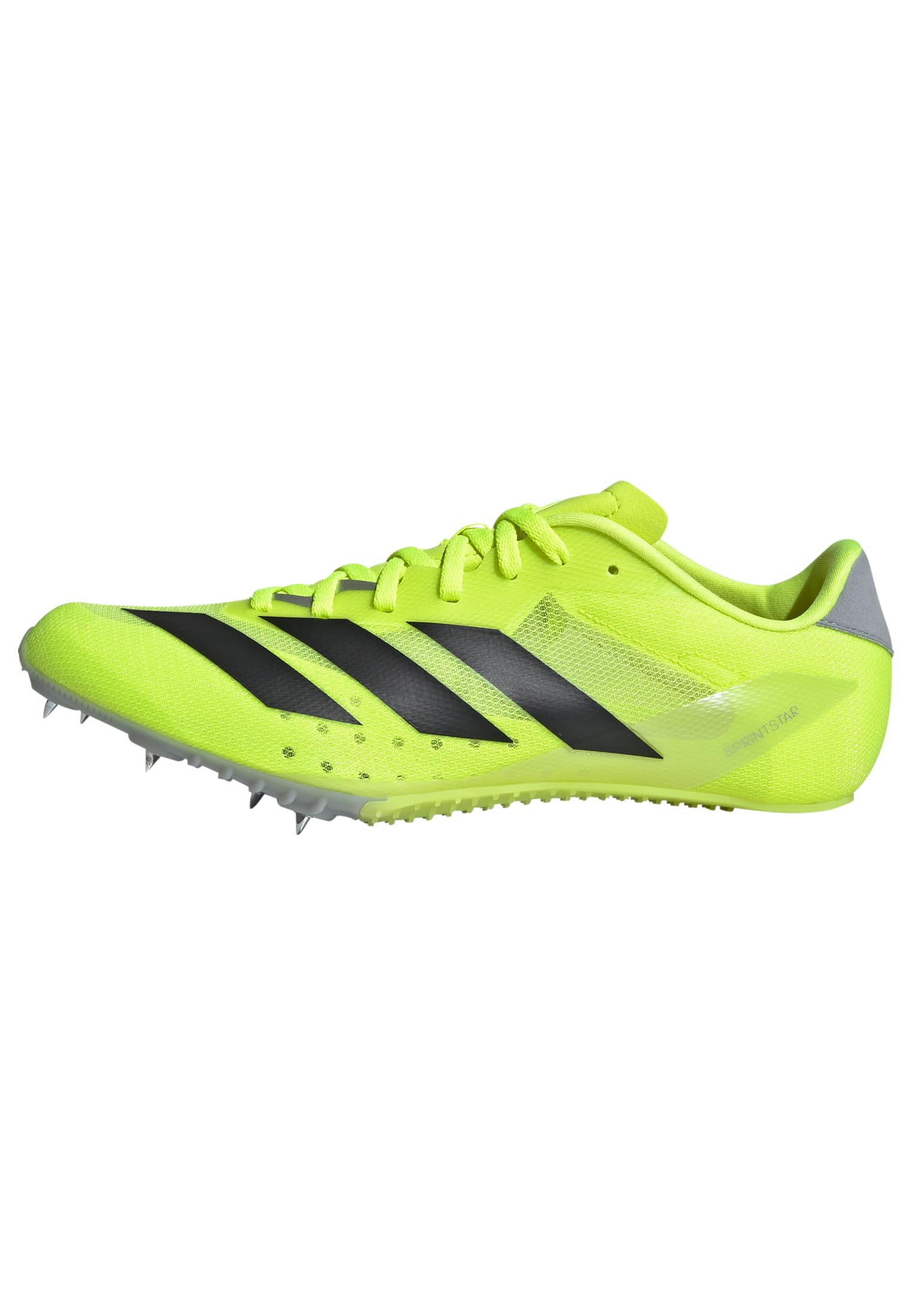
6. Adidas Unisex-Adult Adizero Sprintstar Track and Field
Six pins that dig in hard and convert every push into forward speed.
Where the Distancestar above stretches its plate for distance roll, this Sprintstar keeps its updated 6-pin TPU plate short and aggressive. The pins bite into the track surface and the plate holds firm, so the force from an explosive start goes forward instead of being soaked up by a flexing foot. That rigid, short plate is why it belongs in the sprint column.
Rubberized outsole sections sit in the high-wear zones — the areas that scuff first when you drag through the blocks — so the shoe holds together across a season. Lightweight molded EVA runs heel to toe for just enough shock absorption without killing the direct ground feel sprinters actually want. The breathable synthetic mesh upper keeps air moving while the laces lock your foot down so it does not slide mid-race.
One thing to plan for: fit feedback on this model is mixed, with a recurring note that it runs small. Since it is a unisex build, women should go by centimeter measurement against adidas’ own chart rather than assuming a standard size. Quality is what buyers rate highest — that is the strongest signal in this shoe’s feedback.
Signals that it performs
- 6-pin TPU plate tuned for aggressive starts and curve transitions.
- Rubberized outsole in high-wear zones for season-long use.
- Build quality is the strongest thing in its buyer feedback.
- Made with recycled materials without dropping the sprint build.
Plan around these
- Fit feedback is mixed, with a pattern of running small.
- Unisex last — women need a centimeter-based size check.
The call is easy if: you are chasing personal records in sprint events and want a plate that transfers power without flex.
Hold off if: you want a roomy, forgiving fit — this one wants a snug, measured size.
Know the Specs
Spike count and why 6 vs 8 matters
A spike count is simply how many metal pins sit under the forefoot of the shoe. Eight pins put more contact points on the track for aggressive grip out of the blocks and around tight turns. Six pins shave weight and are easier on your legs over longer efforts while still gripping most track surfaces. Neither is better — match the count to how hard you want the shoe to bite.
Plate type and event matching
The plate is the stiff layer under your forefoot that the pins screw into. A short, rigid sprint plate sends your energy straight into the track, which is what sprinters want. An extended distance plate lets your foot roll through the stride so your legs survive multiple laps. Reading the plate description is the fastest way to know which events a shoe was designed for.
Upper mesh and heat management
The upper is the fabric part that wraps your foot. Track shoes typically use a breathable mesh panel — a woven material with small openings — so heat and sweat escape during a full meet. A reinforced version of that mesh adds structure, which keeps your foot from sliding inside the shoe when you lean into a curve at speed.
Fit, sizing, and the unisex trap
Many track spikes are listed as unisex, which usually means a men’s last — the shaped mold the shoe is built on. Women often need to size down or measure their foot in centimeters against the brand’s chart. A spike shoe should feel snug with a little toe room, not roomy like a training sneaker. Getting this wrong is the most common reason a spike shoe gets returned.
Common Questions
Are track spikes with metal pins allowed on a standard running track?
Should a woman buy a unisex track spike in her normal size?
How often do I need to replace the spikes themselves?
Is an 8-spike shoe better than a 6-spike shoe?
Can I use sprint spikes for distance races?
Do track spikes come with the pins already installed?
What is a spike plate and does it really change how the shoe feels?
How tight should a track spike feel on my foot?
Are these shoes suitable for high school athletes new to track spikes?
How should I care for track spikes between meets?
The Bottom Line
For most buyers, the smartest pick among these women’s track shoes with spikes is the THESTRON 8 Spikes Racing Sneakers. It covers the widest range of events with its 8-pin front plate, comes in 14 colors across a US1–US12 size range that includes women’s fitment, and includes spare replacement spikes in the box. Just measure your foot in centimeters before ordering — the sizing note is the one thing to respect here.
If your events are 400m and up, the adidas Adizero Distancestar is a better mechanical match thanks to its extended 6-pin plate and Lightstrike Pro cushioning. For pure sprinters who want the least mass on their feet, the Nike Zoom Rival Sprint comes in at 1 pound against 2.4 pounds for the Distancestar — a real weight gap for a 200m. And if you compete across multiple events and want one pair to cover all of them, the TURAFO Elite with its rigid 8-point titanium plate is built for exactly that.
Whichever you choose, match the plate to your race distance first. Get the plate right for your distance and the pins do the rest.
How we choose
We do not accept paid placement. Every pick is matched to a real buyer and a real use-case; we do not hands-on test units.
Sources
Specifications: manufacturer listings and product documentation. Review insights: verified customer reviews, as of November 2026. Pricing: not shown on this page (it changes often); check the current price via the retailer link.
As an Amazon Associate, Tactical Gear Guy earns from qualifying purchases. This does not affect which products we feature.