Specs are compiled from manufacturer listings and verified buyer reviews and can change over time — please confirm the key details on the product page before buying.
Wet feet ruin a run faster than tired legs. A waterproof membrane (the thin liner that blocks rain but lets sweat vapor out) is the whole game here, and one pick gets it right: the Salomon Speedcross 6 GTX, the crowd favorite at 4.5+ stars from 200+ owners, pairs a Gore-Tex liner with a lugged outsole that keeps its bite in mud. Below you get six honest picks, from technical trail shoes to orthopedic-friendly walkers, sorted by what they actually do well.
This guide is built by comparing the manufacturers’ published specifications and the patterns across verified customer reviews, so you get each pick’s real strengths and trade-offs instead of marketing spin.
Not every waterproof shoe is built for the same trail, so the picks below split cleanly between mud-hungry racers and cushioned daily walkers. This breakdown of the water resistant running shoes for men covers membrane type, fit quirks, and durability so you can pick fast.
Top Picks

How To Choose The Best Water Resistant Running Shoes for Men
The single hardest call in this category is membrane versus airflow. A waterproof liner keeps rain and puddles out, but it also traps heat and sweat vapor, so your feet can end up soaked from the inside. Knowing which trade-off you can live with decides the shoe before fit and grip even get a look.
Membrane Type: Gore-Tex vs Generic Waterproofing
A named Gore-Tex membrane works like a one-way door: raindrops can’t get in, but sweat vapor escapes. Generic waterproof uppers tend to be a sealed layer that blocks water on both sides, so they can run warmer on a humid day. If you run in steady rain and short sessions, either works. If you run long distances in damp heat, the breathable membrane matters more.
Grip on Wet Roots and Loose Gravel
Wet weather turns trail grip into a safety issue. Deep lugs cut channels into mud and let water escape, which is why aggressive trail models have taller, spaced-out lugs than road shoes. A lugged outsole also gives you a fighting chance on slick wooden bridges and wet rock slabs.
Sizing and Width: Where These Shoes Mislead You
Fit is the biggest complaint pattern in this category. Several picks here run narrow or half a size small, so a waterproof liner that feels snug in the store only gets tighter once you add a thicker sock. If you have a wide foot or you are between sizes, size up rather than trusting the label.
Side-by-Side Comparison
| Model | Best For | Waterproof Upper | Listed Weight | Stated Terrain | Amazon |
|---|---|---|---|---|---|
| Salomon Speedcross 6 GTX★ Best Overall | Muddy technical trails | Gore-Tex, breathable | 3 pounds | Wet and muddy conditions | Amazon |
| Adidas Terrex Tracefinder 2 ClimaproofTrail Ready | Multi-use trail and rain | CLIMAPROOF, waterproof | 2.43 pounds | Varied terrain, all-direction grip | Amazon |
| New Balance Dynasoft Nitrel V6 Gore-Tex | Wide feet on wet trails | Gore-Tex, waterproof | — | Trail running | Amazon |
| OrthoComfoot Orthopedic Waterproof Trail Shoe | High arch and heel support | Waterproof | — | Trail, hiking, gym | Amazon |
| Men’s Orthopedic Waterproof Trail Shoe | Cushioned walking and cross training | Waterproof | — | Hiking, tennis, walking | Amazon |
| Men’s Trail Running Waterproof Hiking Sneakers | Budget weekend hikes | Waterproof | — | Trails, daily walks, gym | Amazon |
Detailed Reviews
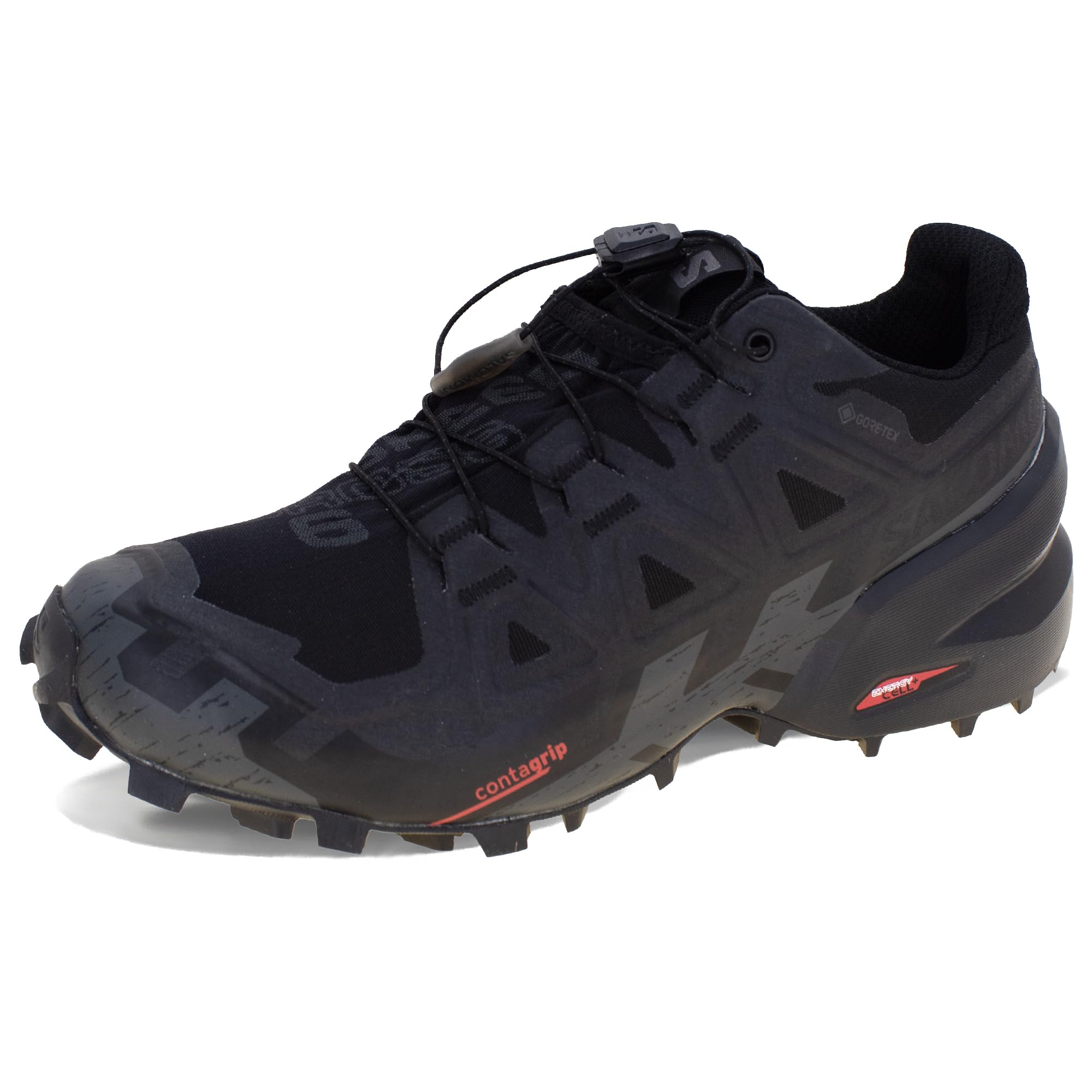
1. Salomon Mens Speedcross 6 GTX
Our pick — 4.5+★ from 200+ verified ratings; the strongest balance of quality and price.
The mud shoe that already knows the answer before the trail does.
If you run on trails that turn to soup in the rain, this is where the list should start. The Speedcross 6 GTX wraps the foot in a waterproof and breathable Gore-Tex membrane, which matters most when you are splashing through puddles and still want your socks dry at the car. It is a genuinely wet-weather shoe first and a fast shoe second.
What wins people over is the build quality, but the fit and comfort are what keep them coming back — the shoe is described as comfortable with a near-perfect fit from the start. The outsole grips aggressively and clears mud quickly, so a slippery descent does not turn into a skating contest. It also stands tall among this group: at 3 pounds and 14 x 9 x 5 inches per the listing, it is the bigger, burlier shoe next to the Adidas Terrex Tracefinder 2 at 2.43 pounds and 8 x 4 x 7 inches.
The trade-off is honest and worth knowing. The bottoms can wear out fast on hard-packed surfaces, which is the price you pay for sticky rubber tuned to soft trail. If your weekly miles run down wet streets or concrete paths rather than dirt, a road-leaning shoe will outlast it.
Where It Wins
- Gore-Tex liner blocks rain and puddle splash while letting sweat vapor out
- Aggressive lugs bite into mud and clear it fast on steep descents
- Comfort and fit both land as praise in the customer feedback
Where It Costs You
- Outsole rubber wears quickly on pavement and hard-packed paths
- The heaviest listed shoe in the group at 3 pounds
Buy it for: wet, soft, technical trails where grip and a dry sock decide whether the run is fun.
Think twice if: most of your miles are on concrete, where the sticky rubber will wear down sooner.
2. Adidas Mens Terrex Tracefinder 2 Climaproof Trail Running
The lightest listed shoe here, built to move between rain and trail without fuss.
Adidas builds this one around CLIMAPROOF, a waterproof and wind-resistant layer designed to lock out storms while still letting sweat escape. That suits a runner in drizzle on mixed gravel and grass who wants a light, flexible shoe rather than a stiff one. The durable upper is listed as waterproof yet breathable, which is the point here.
Weight is the standout number: 2.43 pounds and 8 x 4 x 7 inches, which makes it much tighter and lighter on the shelf than the 3-pound Salomon up top. The LIGHTMOTION midsole gives step-in comfort through varied ground, and the lugged outsole is described as offering all-direction grip. Owners back up the durability and the water resistance alike, which is a good sign for a shoe that has to handle both.
Fit is the dividing line. Some runners find it true to size, while others find it too tight — so if you have a wider foot, treat the listed size with suspicion and size up. A few also find the shoe warmer than they expected, which is the usual cost of a sealed-out-weather build.
The weight story: at 2.43 pounds versus the Salomon’s 3 pounds, this is the easier carry for longer mixed-terrain days.
Where it pinches: the fit runs tight for some, so wide-footed runners should plan to go up a size.
Reach for this if: you want a lighter waterproof trail shoe for rain-soaked multi-use routes.
Look elsewhere if: your foot runs wide and you want a shoe that fits generously from the first lace-up.
3. New Balance Dynasoft Nitrel V6 Gore-Tex

A Gore-Tex trail shoe that wide-footed runners can actually call theirs.
This New Balance picks up the same Gore-Tex waterproofing as the Speedcross, which is why it lands high on a wet-trail list. But the appeal here is shape rather than aggression. The fit gets split feedback, and the part that sticks is that wide-footed runners find it close to perfect, which is rare in a category where most shoes run narrow.
Traction and durability are mixed in the feedback. Some owners call the grip amazing, while others find the shoe stiffer than average. That stiffness points to a firm, trail-focused ride that rewards rougher ground rather than soft, springy road miles.
The sizing question is the one to settle before you buy. The fit leans half a size small for some, so your safest move is to go up rather than gamble on the label. If you have a normal-to-wide foot and want Gore-Tex waterproofing without a narrow toe box, this is the pick.
The right foot for it: a wider foot that wants Gore-Tex waterproofing without a narrow toe box.
The snag: it can run half a size small and feel stiffer underfoot than a soft road shoe.
4. OrthoComfoot Men’s Orthopedic Waterproof Trail Running Shoes
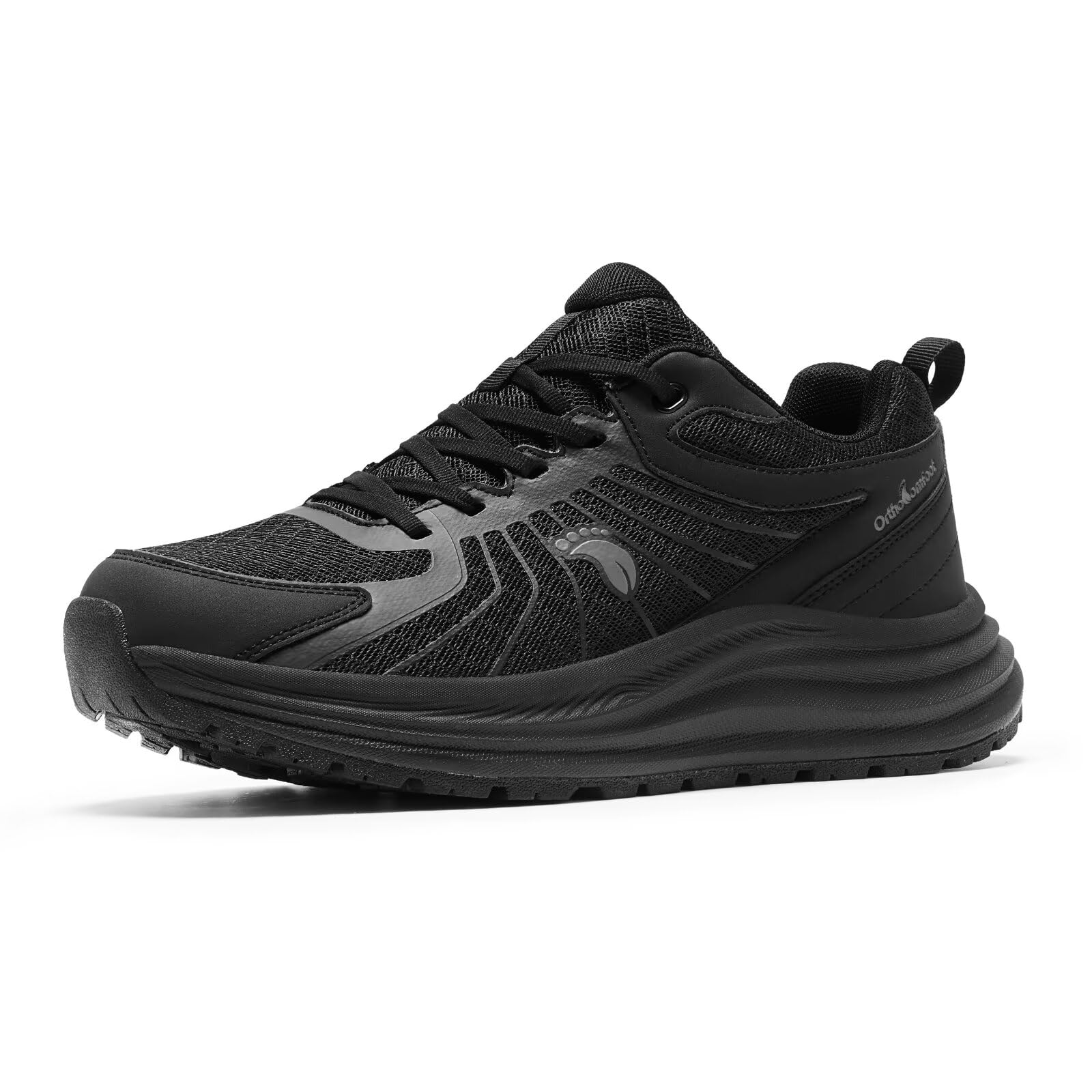
Built for the runner whose arch, not the weather, is the daily hurdle.
This shoe takes the waterproof idea and adds a molded orthotic insole, so it is aimed at men with high arches, flat feet, or heel and arch discomfort who still want to get out on wet trails. Comfort is the headline in owner feedback, with the insole’s foot support close behind.
Where a dedicated trail shoe chases grip, this one chases support. It is listed for trail running, hiking, and gym use, and the high-buffering insole is the part that softens long days on your feet. Buyers report that knees and ankles do not ache while wearing it, which is the feedback a support-first buyer cares about.
The caveat is durability, and it is worth hearing clearly. Owners mention that the shoes fell apart within a year of use. That is a real concern for a shoe built on an insole, because the upper and the outsole take the wear. If you want hard-wearing build over cushioning, look elsewhere. If arch support matters more to you than long-term durability, it fits the job.
The support case: a built-in orthotic insole and arch support set it apart from the pure trail runners above.
The honest limit: durability is the weak spot, with buyers reporting the shoes broke down inside a year.
Best match: a runner with arch or heel discomfort who wants waterproofing and cushioning together.
Not the pick for: a runner who plans to log hard trail miles for years and needs a tougher build.
5. Men’s Orthopedic Waterproof Trail Running Shoes

A cushioned, waterproof all-rounder for men who walk more than they run.
This is the pick for the guy whose “run” is really a fast walk, or a mix of tennis, hiking, and gym sessions in wet weather. The waterproof build handles the weather, and the arch-support insole is the hook for anyone with flat feet or foot discomfort. Owners praise the cushioning first and the arch support second.
Its versatility is the practical win. The shoe is listed for hiking, tennis, walking, and cross training, and the high-buffering insole is aimed at long days on your feet. For a rainy walk to the gym or a damp gravel loop, that combination is more useful than racing lugs you never touch.
The trade-offs are real and specific. The fit runs small for a portion of buyers, and the durability feedback is split, with buyers reporting the laces breaking within months. That lace point is a small, fixable issue, but it tells you to treat the shoe gently. Cushioning is the other mixed area, so if you need a firm, responsive ride, this soft-feeling build may not be it.
Good call when: you want a waterproof, comfortable shoe for walking, gym, and light trail use in one pair.
Check first: the sizing runs small for some, and the laces have been a weak point for buyers.
6. Men’s Trail Running Shoes Waterproof Hiking Sneakers

The weekend wet-weather shoe for hikers who count their steps, not their splits.
This is the entry-level pick, and it earns its place by being genuinely easy to live with. A waterproof construction keeps wet weather out, and a breathable mesh upper promotes airflow, so the shoe does not turn into a hot box on a humid hike. It is also a slip-on, which cuts down the fuss when you are pulling them on at the trailhead.
Value is the through-line: buyers see it as a solid, well-made shoe for the money, and the lightweight build cuts bulk on long days. It is suited for weekend hikes, daily walks, and relaxed runs in the woods, which is the right expectation for a shoe at this end of the list. Appearance also gets consistent praise, so it does not look cheap on the foot.
The catch is width. The fit is split, and the recurring note is that it runs small in width, so a wide-footed runner should size up or try before committing. The upper is also a basic waterproof mesh rather than a named membrane, so do not expect the same rain performance as the Gore-Tex picks above.
The value read: easy slip-on entry, a waterproof mesh upper, and a light feel for weekend trail work and gym trips.
The caveat that matters: it runs narrow for some, so wide feet should plan on going up.
Pick it for: budget-conscious weekend hikers who want a waterproof, lightweight, easy-on shoe.
Pass if: you need a named membrane for sustained rain, or you have wide feet and want a generous fit.
Know the Specs
Gore-Tex vs Generic Waterproof Membranes
Gore-Tex is a named breathable membrane: it blocks rain but lets sweat vapor pass, so your feet stay drier on a longer, harder effort. A generic waterproof upper blocks water too, but without that vapor channel it can hold heat and moisture in. On short wet walks, both work. On sustained rain runs, the named membrane has the edge.
Listed Weight and What It Means
Weight is one of the few apples-to-apples specs here. The Salomon lists 3 pounds, while the Adidas Terrex lists 2.43 pounds, so the Adidas is the lighter shoe on paper. Lighter tends to feel quicker on long days, while heavier often goes with more structure. Use the number as a starting point, then let fit and grip decide.
Lugged Outsoles and Wet Grip
Lugs are the raised teeth on the bottom of the shoe. Deep, spaced lugs dig into mud and give water somewhere to escape, which keeps you upright on soft, wet ground. Aggressive lugs come with a penalty on pavement: they wear faster and feel lumpy on hard surfaces. Match the outsole to where you actually run.
Orthotic Insoles and Arch Support
Some shoes in this list, like the OrthoComfoot pair, include an orthotic insole and arch support rather than pure trail grip. That extra support helps men who want cushioning under a high arch or flat foot. The trade-off is that a support-first shoe can be softer and less aggressive on rough ground than a dedicated trail runner.
Common Questions
Do water resistant running shoes really keep your feet dry in heavy rain?
Is Gore-Tex better than a generic waterproof upper for running?
Should I size up in water resistant running shoes for men?
Can I run on pavement in a trail shoe with a waterproof upper?
What is the difference between the OrthoComfoot trail shoe and a standard trail runner?
How long should waterproof running shoes last?
Are these shoes good for plantar fasciitis and flat feet?
Does a waterproof upper make a running shoe too hot for summer?
Can I wear these trail shoes for hiking and gym sessions?
What does water resistant mean versus waterproof on a running shoe?
The Bottom Line
For most men shopping for water resistant running shoes for men, the pick is the Salomon Speedcross 6 GTX, because it pairs a breathable Gore-Tex liner with mud-clearing lugs that make wet, soft trails fun instead of risky. If you want a lighter waterproof shoe for mixed terrain and rain, the Adidas Terrex Tracefinder 2 Climaproof lists at 2.43 pounds versus the Salomon’s 3 pounds. And if arch support and cushioning matter more than trail bite, the OrthoComfoot Orthopedic Trail Shoe is the one to reach for.
Weigh the fit first, because several of these run small or narrow. Get the size right and the membrane and outsole handle the wet weather and the grip.
How we choose
We do not accept paid placement. Every pick is matched to a real buyer and a real use-case; we do not hands-on test units.
Sources
Specifications: manufacturer listings and product documentation. Review insights: verified customer reviews, as of November 2026. Pricing: not shown on this page (it changes often); check the current price via the retailer link.
As an Amazon Associate, Tactical Gear Guy earns from qualifying purchases. This does not affect which products we feature.