Specs are compiled from manufacturer listings and verified buyer reviews and can change over time — please confirm the key details on the product page before buying.
If your home already has a boiler or a hot-water heating loop, the smartest upgrade is a radiator that taps that existing hot water instead of burning electricity to make new heat. That single choice is why the picks below all circulate hot water rather than use electric resistance heat, though the fan-assisted Quiet-One still needs a wall outlet for its fan, and it is also why they run silently and never dry out the air in a bedroom. The list starts with the unit that best balances 4,200 BTU of output, a hidden toe-kick footprint, and steady owner satisfaction.
This guide is built by comparing the manufacturers’ published specifications and the patterns across verified customer reviews, so you get each pick’s real strengths and trade-offs instead of marketing spin.
A hot-water radiator moves heat through metal panels or fins, so there is no fan noise and no blown dust. Below you will find the sizing numbers, pressure ratings, and mounting realities that decide whether a unit actually fits your room — the full picture on the best warm water radiator.
Top Picks

How To Choose The Best Warm Water Radiator
The first question is not which radiator looks nicest — it is whether your home has hot water to feed it. A warm water radiator is a passive metal panel or fin stack that gets hot because hot water circulates through it from a boiler or central heating system. No boiler loop, no heat. So before you compare panels and paint finishes, confirm what your system runs on.
Match BTU output to the room, not to the brochure
BTU (British Thermal Unit) is simply a measure of how much heat a unit can put out. A higher number warms a bigger space. The panels here range from a compact unit rated at 2,176 BTU in a hot-water system up to a 12-panel wall model rated at 7,000 BTU. A small bathroom or a tight kick space in a kitchen wants the lower figure; an open bedroom or a chilly basement wants the higher one. Overshooting wastes surface area; undershooting leaves you cold in January.
Steam versus hot water — read the label twice
Some cast iron units are built for both steam and hot water, and the specs will tell you the output for each. Others are explicitly hot-water only. One wall panel in this list carries a “not suitable for steam” note in its own description, and that is not a small detail. Piping a hot-water-only radiator into a steam line can damage it. Check the fuel type and the pressure rating before you buy.
Wall-mounted versus floor and kick space
Wall-mounted aluminum panels free up floor space and suit rooms with limited vertical room. Kick space heaters tuck under a cabinet or a toe-kick where nothing else fits. Cast iron models are freestanding and heavy but hold heat for a long stretch after the boiler cycles off. Decide where the unit is going before you decide which one you want.
Side-by-Side Comparison
| Model | Best For | Heat Output | Mounting | Footprint | Amazon |
|---|---|---|---|---|---|
| Twin-Flo III K42★ Best Overall | Hard-to-heat kick spaces | 4,200 BTU | Floor mount | 16.8 x 14 x 5.5 in | Amazon |
| AB Wall-mounted 6-PanelBest Value | Small to medium rooms | 3,461 BTU | Wall-mounted | Not listed | Amazon |
| Steam Radiators Cast Iron (8 Section) | Hallway or kitchen around 100 sq. ft. | 3,072 BTU steam / 2,176 BTU hot water | Freestanding | 14 x 4 x 19 in | Amazon |
| Quiet-One 2000 Series KS2004 | Tight toe-kick installs | 4,000 BTU | Floor mount | 15.98 x 13.5 x 4.02 in | Amazon |
| Q-Hillstar 12-Panel | Large rooms needing max output | 7,000 BTU | Wall mount | 3.66″D x 34.25″W x 22.36″H | Amazon |
| Oswald Supply Cast Iron 4-Tube | Water or steam replacement | Not listed | Freestanding | 35 in length | Amazon |
Detailed Reviews
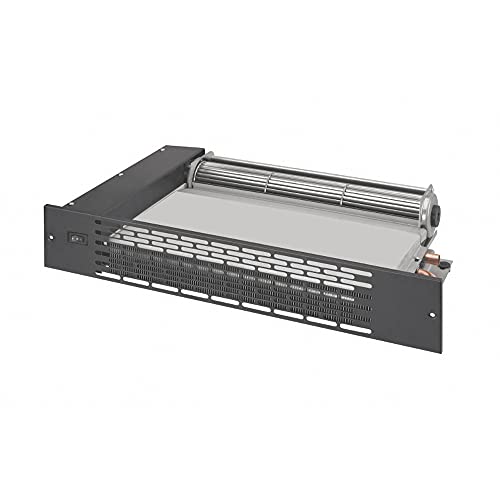
1. Twin-Flo III K42 4,200 BTU Hot Water Kick Space Heater
Our pick — 4.0+★ from 50+ verified ratings; the strongest balance of quality and price.
The under-cabinet heater that turns a dead toe-kick into real warmth.
Most kitchens and bathrooms do not lack heat — they lack floor or wall space for a full radiator. This Beacon Morris unit solves that by sliding into a kick space, and it delivers 4,200 BTU while doing it.
It is built for hot water only, and the model number makes the “not electric” part explicit. So this is purely a hydronic unit: it needs your boiler loop, and it will not run from a plug. At 10.1 pounds it is light enough to handle during install, and the compact body measures 16.8 x 14 x 5.5 inches so it tucks into narrow openings.
Owner feedback is steady rather than enthusiastic, and a production run listed since July 2010 says more about durability than any single review. The thing to understand before you buy: this is a problem-solver for a specific gap, not a whole-room showpiece. If you have the toe-kick space and the hot water line, it earns its place.
Where it earns the top spot
- 4,200 BTU beats the AB 6-panel’s 3,461 BTU from a smaller, hidden footprint
- Pure hot water design means no electric element and no fan noise
- 10.1 pounds keeps installation manageable for one person
- Kick space mounting frees wall and floor space entirely
What to weigh first
- Needs an existing boiler loop — it cannot run on its own
- Kick space clearance is essential; measure before ordering
- Reviews are thinner than the wall-panel picks, so fewer voices to learn from
Reach for this if: you have a cold kitchen, bath, or sunroom with a toe-kick gap and a live hot water line.
Look elsewhere if: your system is steam-fed or you have no boiler to connect to.
2. AB Wall-mounted Radiator Heater with 6 Panels
A slim six-panel wall radiator that heats a small room without touching the floor.
For a bedroom, kitchen, or greenhouse that needs a modest boost, the AB puts 3,461 BTU on the wall and asks nothing of your floor. The aluminum body is scratch-resistant and coated in baked paint, which means a quick wipe with water keeps it looking clean. It is worth knowing that this unit is 3,461 BTU versus the Q-Hillstar 12-panel’s 7,000 BTU — so it suits smaller spaces rather than open-plan living areas.
The engineering holds up. The welded body went through a 24-hour pressure test and carries a working pressure recommendation of 1.2-1.8 MPa, with a maximum of 2.0 MPa. The multi-layer fins spread heat across the room, and the side vents help air circulate so the wall behind it does not discolor. Buyers report strong heat output, with the space-heating performance drawing the most praise.
The honest catch is twofold. Mounting takes load-bearing brick or concrete — hollow, light partition, and gypsum board walls are out. And the setup itself splits opinion: some find it straightforward, others find it a real project. Clear the right wall type and a free afternoon, and it is a sensible choice.
Heat where it matters: the 3,461 BTU rating and pressure-tested body make it a credible small-room heater for anyone with a solid wall to hang it on.
The wall caveat: hollow or gypsum walls rule it out, so check your wall build before you fall for the slim profile.
The right call when: you want quiet, dry-air-free warmth on a small budget and you have masonry to anchor to.
The wrong call when: your walls are hollow or your room is large enough to need the higher-output pick.
3. Steam Radiators Cast Iron (8 Section)

A dual-fuel cast iron column that works with steam or hot water alike.
Most radiators pick a lane. This one does not. Hook it to a steam system and it puts out 3,072 BTU; run it on hot water and it settles at 2,176 BTU. Either way, the manufacturer sizes it for a hallway or kitchen of about 100 square feet. That flexibility matters if your home has an older steam line you would rather not disturb.
At 19 inches high, 4 inches deep, and 14 inches long, the 8-section body stands on the floor and warms the space around it. This one is 14 inches long and the Oswald 4-tube is 35 inches long. It is a compact footprint for a cast iron unit.
Understand what you are buying: a bare, no-frills column with no coating, no paint finish, and no wall bracket. You are paying for the metal and the dual-system versatility, not presentation. For a basement or a back hallway, that trade is fine. For a finished living room where looks count, think about it first.
Why the dual rating matters: 3,072 BTU on steam or 2,176 BTU on hot water means one unit covers both common systems, sized for roughly 100 square feet.
Suits: older homes with steam lines, or anyone wanting to keep options open between steam and hot water.
Not for: rooms bigger than roughly 100 square feet, where the output would come up short.
4. Quiet-One 2000 Series Hydronic Kickspace Heater
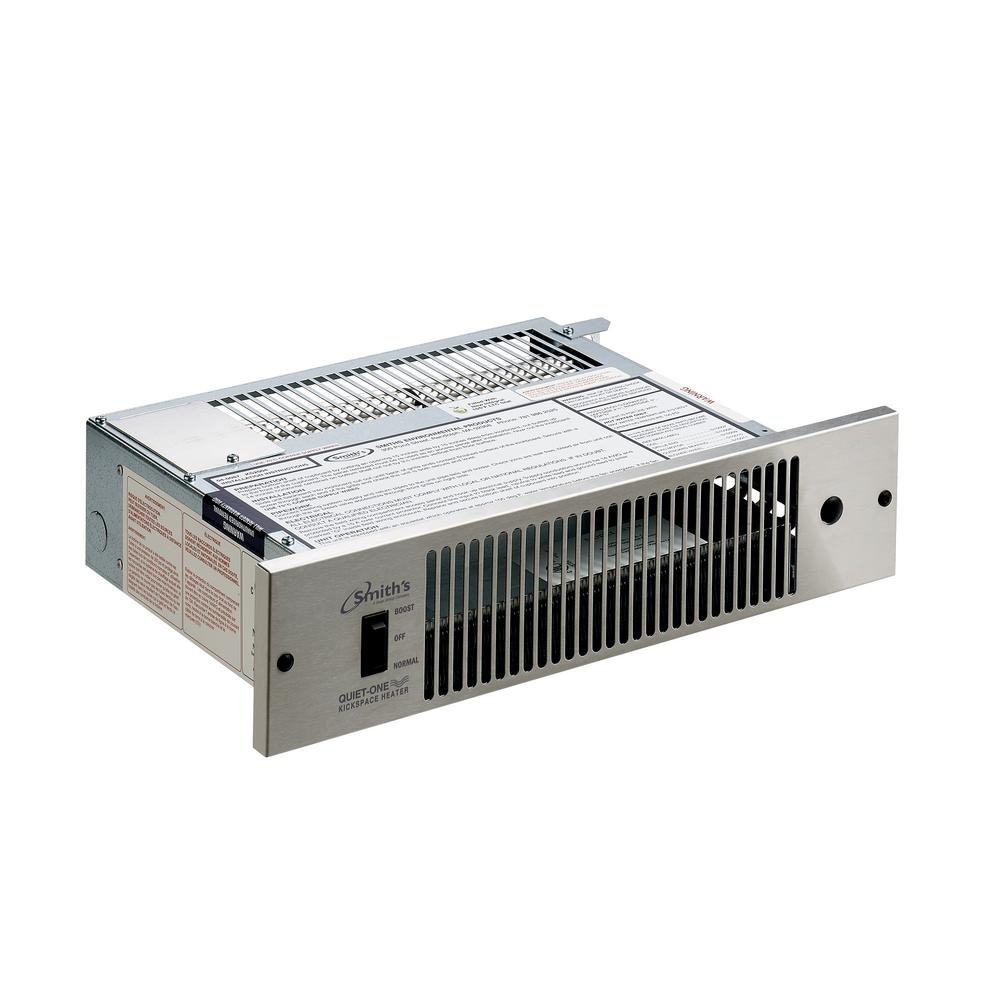
Built to disappear under a cabinet and be heard only as silence.
The Quiet-One lives up to its name in one specific way: it pairs a highly efficient header-type coil with a low-noise, low-vibration fan. So instead of a passive panel, you get a fan pushing warm air out of a hidden floor spot. The output is 4,000 BTU, which sits close to the Twin-Flo’s 4,200 BTU but comes with that active fan doing the air-moving work.
The install angle is where it really wins. It needs no screws and ships with integral anti-slip floor mountings, so it drops into a tight gap without a mounting project. The chassis measures 10-7/8 inches deep, 13-7/8 inches wide, and 3-1/2 inches high, and the whole thing weighs 9.25 pounds. Deep under a bathroom vanity is exactly the kind of spot it was drawn for.
One spec deserves a second look: the listing names a corded electric power source at 110 volts. For a hydronic unit, that is the fan’s power, not the heat’s — the water still does the warming. If your boiler loop is ready, this is the lowest-fuss kick space heater here.
Why installers favor it
- No screws needed thanks to integral anti-slip floor mountings
- 9.25-pound body drops into tight, hard-to-heat gaps
- Low-noise, low-vibration fan keeps the room calm
- 4,000 BTU matches the bigger panel outputs from a hidden spot
The fine print
- Needs a hot water loop and a 110-volt outlet for the fan
- Active fan means moving parts a passive panel does not have
- Kick space clearance still dictates whether it fits at all
Best for: a bathroom or mudroom where a hidden heater is the only option and you have an old-school floor gap.
skip it if: you want a pure silent passive radiator with zero moving parts.
5. Q-Hillstar 12-Panel Wall-Mounted Aluminum Radiator
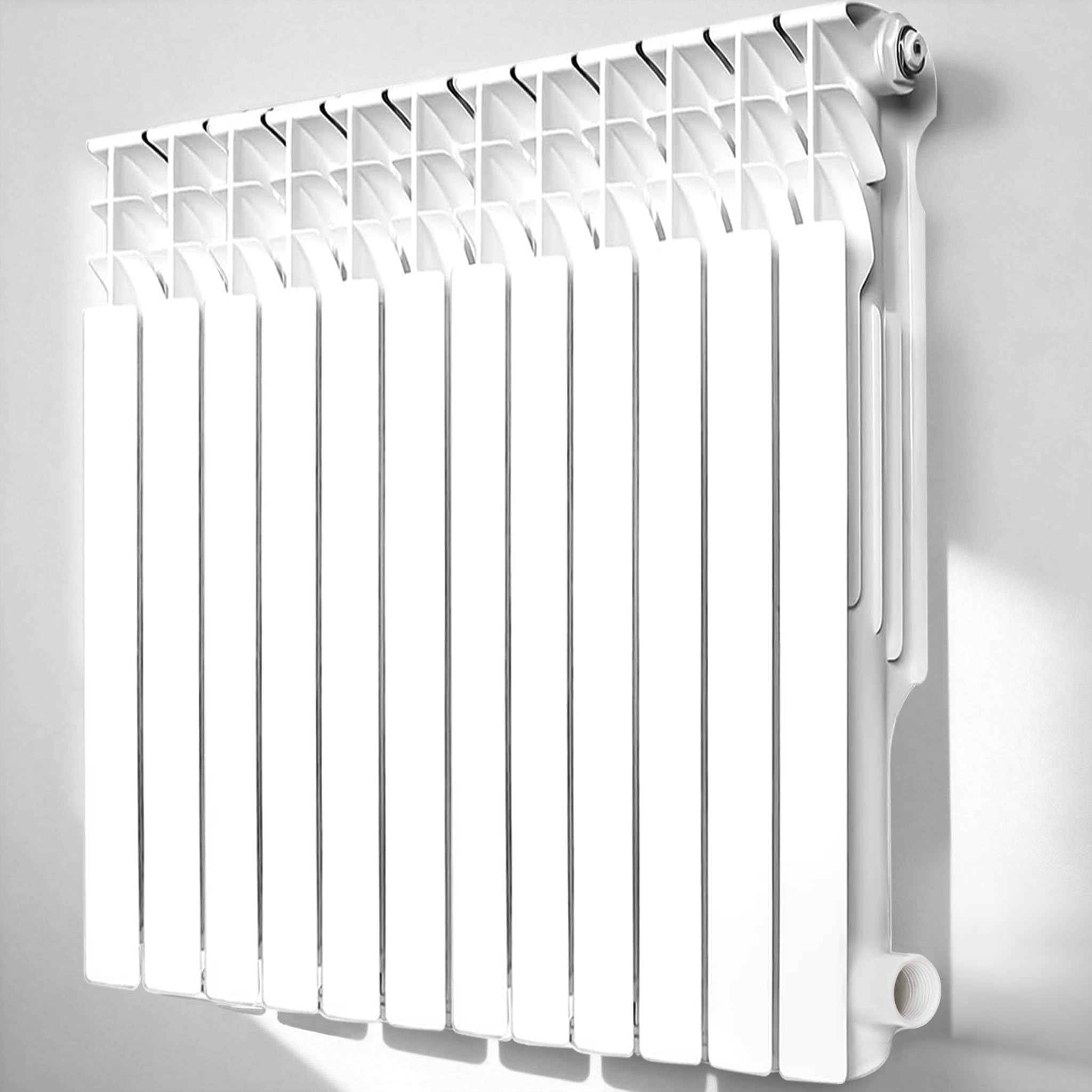
The big-output wall panel that warms a large room without moving a whisper of air.
Seven thousand BTU from a wall-mounted plate is real heating muscle. It is 7,000 BTU versus the AB 6-panel’s 3,461 BTU, which is why this is the pick for a big bedroom, an open bathroom, or a commercial front room. The twelve aluminum panels and side baffles push air evenly across the face, so the heat spreads instead of pooling at the top edge. And because the panels work by radiating rather than blowing, your skin and eyes stay comfortable rather than dried out.
The plumbing details are specific enough to plan a real install around. Water flows up to 8.77 GPH and the body tolerates working pressure of 174-261 PSI, so ordinary residential loops sit comfortably inside that range. It runs purely off your boiler — no gas, no heating element, no electricity — and it pairs naturally with renewable heat sources. One thing you must do before use: open the air vent plug so trapped air bleeds out of the radiator.
At 3.66 inches deep, 34.25 inches wide, and 22.36 inches tall it is a sizeable panel, and checking wall space first is the whole game. Compared to the Quiet-One kick space heater, it is a broad, prominent wall fixture rather than a hidden one. Mount it on a wall with the 34.25-inch width to spare and it heats the room silently, with no fan and no moving air.
What the output means for you: this radiator puts out 7,000 BTU (British thermal units, the standard measure of heat output), the highest figure in this whole group. It also handles pressure up to 174-261 PSI (pounds per square inch, a measure of how much pressure the pipes push), so it holds up on a loop that runs hard.
What you must handle: a sizable 34.25-inch-wide wall footprint and bleeding the air vent before first use.
Choose it for: rooms where nothing smaller gets the job done and you have the wall space for a broad panel.
Pass on it for: a tight corner or a small bath where the size simply will not apply.
6. Oswald Supply Cast Iron Radiator, 4-Tube

Cast iron that holds its heat long after the boiler clicks off.
This is the pick for a traditional home or a renovation where the radiator should look like it belongs to the architecture. Cast iron is dense, so the body keeps radiating warmth well after the water stops circulating — the lingering heat is why people still seek these out. It runs on water or steam applications, and the radiant heat works together with convected heat to shield outer walls and windows, which helps cut the cold air creeping into a room.
The frame is 19 inches high, 4-7/16 inches deep, and 35 inches long in the four-tube build. That 35-inch length outruns the 8-section Steam Radiators Cast Iron unit’s 14 inches, so it makes a longer horizontal statement along the wall. The listing carries a 20-section size designation alongside the 4-tube spec, so confirm the exact section count you want before ordering.
It is freestanding, so there is no wall bracket and no masonry drilling — but cast iron is heavy, and you will not move it easily once placed. If you are swapping out an old freestanding radiator and want the period look, this is the honest choice.
Why it endures: cast iron construction and a 35-inch four-tube length make it a long-lived, freestanding heater for water or steam systems.
Right for: period homes and anyone replacing an old freestanding radiator who wants heat retention and a classic look.
Think twice if: you need something light to move or your room will not take a 35-inch freestanding body.
Know the Specs
BTU output and room size
BTU is the simplest way to read how much heat a radiator can deliver, and a bigger number warms a bigger space. The panels and heaters here run from 2,176 BTU on a compact cast iron unit in hot-water mode up to 7,000 BTU on the 12-panel wall model. Match the figure to the square footage you are heating, and lean higher for a room with a cold outer wall.
Working pressure ratings
Working pressure tells you how much water pressure a radiator is built to tolerate in normal use. One wall panel here is rated for a working pressure of 1.2-1.8 MPa with a 2.0 MPa maximum, and another handles 174-261 PSI. These figures exist to reassure you the body will hold up on an ordinary residential loop, not to wow you — check them against your system if you are unsure.
Common Questions
Does a warm water radiator work without a boiler?
Can I connect a hot-water radiator to a steam system?
What wall type do I need for a wall-mounted radiator?
Do these radiators dry out the air like a space heater?
How many panels or sections do I need for my room?
Will a warm water radiator make noise?
Do I need to bleed the radiator before first use?
What kind of clearance do kick space heaters need?
Can I use a warm water radiator with renewable heating like a heat pump?
The Bottom Line
Got a live boiler loop and a hidden toe-kick gap? The Twin-Flo III K42 turns a dead corner into real heat, with 4,200 BTU of output from a 10.1-pound body. Heating a large room and have the wall to spare? The Q-Hillstar 12-Panel gives you the highest figure here at 7,000 BTU. Warming a hallway or kitchen around 100 square feet on an older steam line? The Steam Radiators Cast Iron 8-Section works on both steam and hot water.
How we choose
We do not accept paid placement. Every pick is matched to a real buyer and a real use-case; we do not hands-on test units.
Sources
Specifications: manufacturer listings and product documentation. Review insights: verified customer reviews, as of November 2026. Pricing: not shown on this page (it changes often); check the current price via the retailer link.
As an Amazon Associate, Tactical Gear Guy earns from qualifying purchases. This does not affect which products we feature.