Specs are compiled from manufacturer listings and verified buyer reviews and can change over time — please confirm the key details on the product page before buying.
If you only remember one thing, make it this: the shoe that keeps you upright on a wet root is the one with real lug depth and a locked-in heel — not the lightest pair on the shelf. A trail shoe that feels feathery in the store can turn sketchy the moment the ground goes sideways. So this guide sorts the field by what actually keeps you moving: grip underfoot, room in the toe box, and how the shoe behaves when the trail turns rocky and steep.
This guide is built by comparing the manufacturers’ published specifications and the patterns across verified customer reviews, so you get each pick’s real strengths and trade-offs instead of marketing spin.
Below you get nine women’s trail runners split by how they actually run — cushioned cruisers, zero-drop ground-feel models, and nimble climbers. The short answer: match the shoe to your terrain first, then to your foot shape. That order is exactly how this list of women’s lightweight trail running shoes is put together.
Top Picks


How To Choose Women’s Lightweight Trail Running Shoes
The mistake most first-time trail buyers make is shopping weight alone. A very light shoe saves you a few ounces on the climb, but if the outsole can’t bite into wet rock, you lose far more time tiptoeing down the far side. Start with terrain, then cushioning, then fit.
Start with your trail, not the shoe
Hardpack and gravel roads want shallower, denser lugs that roll smoothly and don’t squirm. Loose dirt, mud, and rocky scrambles want deeper, spaced lugs that dig in and shed muck. Shoes with aggressive lug designs, like the ones built for steep terrain in this list, feel clumsy on pavement but confident the moment the ground gets loose.
Understand heel-to-toe drop
Drop is the height difference between the heel and the forefoot, measured in millimetres. A zero-drop shoe puts your heel and forefoot at the same distance from the ground, which encourages a flatter, more natural landing — the Lone Peak 8 runs at 0mm and 25mm stack. A 5mm drop shoe like the Topo Ultraventure 4 sits closer to a traditional running feel and is easier on calves that aren’t used to flat landings.
Fit the toe box to your foot shape
Women’s trail runners are cut on a women’s-specific last, so check that the listing says so before you buy. A roomy toe box lets your toes splay on descents, which reduces rubbing and black toenails. A snugger, performance cut feels faster and more locked-in but punishes wide feet.
Weigh cushioning against ground feel
High-stack shoes soak up rocks and let you run longer without foot fatigue. Lower-stack shoes keep you connected to the trail so you feel where you’re stepping. Long, mild trails favour cushioning; technical, twisty singletrack often favours a lower, more nimble platform.
Side-by-Side Comparison
| Model | Best For | Lug / Outsole | Heel Drop | Weight | Amazon |
|---|---|---|---|---|---|
| Skechers Go Run Trail Altitude 2.0★ Best Overall | All-day comfort on mixed trails | — | — | — | Amazon |
| Nike Juniper Trail 2 Next NatureBudget Champion | Everyday trail grip on a budget | ATC all-terrain rubber | — | — | Amazon |
| New Balance Dynasoft Tektrel V1Most Versatile | Suede-styled gravel and road walking | Aggressive lug design | — | 2.1 pounds | Amazon |
| Saucony Peregrine 15 | Mud runs and technical terrain | 5mm lugs | — | — | Amazon |
| Merrell Agility Peak 5 | Ultra-distance cushioning | — | — | 1.5 pounds | Amazon |
| Topo Athletic Ultraventure 4 | Long runs on mild terrain | Vibram XS Trek EVO | 5mm | 8.7 oz (W7) | Amazon |
| ALTRA Lone Peak 8 | Wide feet and zero-drop runners | MaxTrac with TrailClaw | 0mm | 10.7 oz / 303 g | Amazon |
| New Balance Fresh Foam X Hierro V9 | Wet-weather grip and rock protection | Vibram Megagrip, 6mm lugs | — | 2.1 pounds | Amazon |
| Hoka Speedgoat 7 | Technical terrain and all-day comfort | Vibram Megagrip with Traction Lug | — | — | Amazon |
Detailed Reviews
1. Skechers Women’s Go Run Trail Altitude 2.0 – Ravine
Our pick — 4.5+★ from 400+ verified ratings; the strongest balance of quality and price.
A cushioned trail runner buyers wear for 8-12 hour standing shifts as readily as for a jog.
Comfort is what buyers praise most, which is why many of them treat it as a walking shoe as much as a running one. The traction is built to stop slipping on loose ground, so gravel paths and packed dirt feel secure instead of slippery. If you want a first trail shoe that won’t punish your feet on gravel and packed dirt, this is the safest landing spot on the list.
Your foot stays steady through the midfoot, which is what you want on uneven ground where a sloppy fit turns into a rolled ankle. Buyers use this pair for standing all day as readily as for a jog — one customer calls them “perfect for standing for 8-12 hours.” That tells you the shoe is built on cushioning first and speed second.
Durability has held up across repeated trail use, and the look earns its share of compliments — the blue-and-pink colorway in particular gets singled out. On the flip side, this is not a race-day shoe: it’s cushioned and comfortable rather than snappy, so if you’re chasing a fast 5K on technical singletrack, it will feel soft underfoot. Treat it as your everyday trail and gravel companion, not your hill-repeat weapon.
Why it takes the top spot
- Comfort leads the field — buyers wear it for 8-12 hour standing shifts and still come back smiling.
- Traction is built to stop slipping on gravel and packed dirt.
- Support through the midfoot keeps your foot steady on uneven ground.
- Good value for a first proper trail shoe.
Where it gives ground
- Cushioning-first build feels soft, not fast, on snappy technical descents.
- No published lug depth or drop figure to compare against the spec-heavy picks below.
Reach for it if: you want a comfortable, grippy first trail shoe you can also stand in all day.
Think twice if: you’re training for a technical race and need a firmer, snappier platform underfoot.
2. Nike Women’s Juniper Trail 2 Next Nature
Nike’s entry ticket to the trail, with grip that punches above its station.
The defining piece of hardware is the Nike Trail All Terrain Compound outsole — a rubber blend Nike builds specifically to hold grip across mixed ground. In plain terms, that’s the bottom of the shoe designed to bite on dirt, gravel, and rock rather than skate across them. Pair that with the full-length foam midsole, which runs cushioning from heel to toe, and you get a soft, forgiving ride on easy trails.
The upper is a durable mesh, which is the breathable fabric shell that also holds your foot in place. That matters on warm-weather runs where a stiff leather or heavy synthetic shell would trap heat. The build quality is what buyers single out most, and the look earns its share of compliments too — people describe these as cute, which is not a word most trail shoes get.
The honest catch: this is Nike’s value trail model, so you’re getting reliable grip and comfort rather than elite lug depth or a technical racing platform. For green trails, park loops, and gravel paths it’s a confident buy. If you’re heading into proper mountain terrain, the deeper-lugged picks further down this list are the better tool.
Best for easy trails: The ATC rubber outsole and full-length foam midsole make it a comfortable, grippy choice for park loops and gravel paths.
What you trade: No published lug depth or drop, so serious technical terrain is better served by the deeper-lug options later in this list.
Good match for: new trail runners who want Nike build quality without going deep into a premium spec sheet.
Not your shoe if: your trails are steep, wet, and rocky enough to demand aggressive lugs.
3. New Balance Women’s Dynasoft Tektrel V1 Suede
A suede trail shoe that looks like a sneaker and grips like a lugged runner.
You get a street-ready look from the suede upper, which sets the Tektrel apart from every other mesh shoe in this guide. New Balance built it around three things: an aggressive lug design (the raised tread pattern) for grip, a dynamic midsole (the cushioning layer under your foot) for comfort, and that stylized suede shell. The suede is the love-it-or-leave-it part. It gives a more structured feel around the foot, but it’s less breathable than the knit and mesh builds further down the list.
Comfort is the headline — buyers describe feet that never hurt, and the shoe shows up as much on gravel-road walks and everyday errands as on trail runs. Traction earns solid marks for slip resistance, and that aggressive lug pattern is what gives it the confidence to step off pavement. Weighing 2.1 pounds, it’s the heavier end of this list; the Merrell Agility Peak 5, as a comparison, comes in at 1.5 pounds, so expect a more substantial feel on your foot.
The one real question mark is fit. Buyers split on it — some find the cut narrow through the forefoot, and arch support and cushioning draw mixed feelings. If you have a medium-to-narrow foot and want a trail shoe that doubles as a casual sneaker, this suede model is a smart pick.
Style meets grip: The suede upper gives it a distinct look, while the aggressive lug design handles gravel and loose dirt with real composure.
The fit question: Buyers disagree on width, with narrow forefoot feedback recurring — try your size before committing if you have wide feet.
Weight reality: At 2.1 pounds it carries more mass than the Merrell Agility Peak 5 at 1.5 pounds.
Worth it for: medium-to-narrow feet that want one shoe for gravel trails, dog walks, and casual wear.
Look elsewhere if: you have a wide forefoot or need a featherweight build for long climbs.
4. Saucony Women’s Peregrine 15 Sneaker
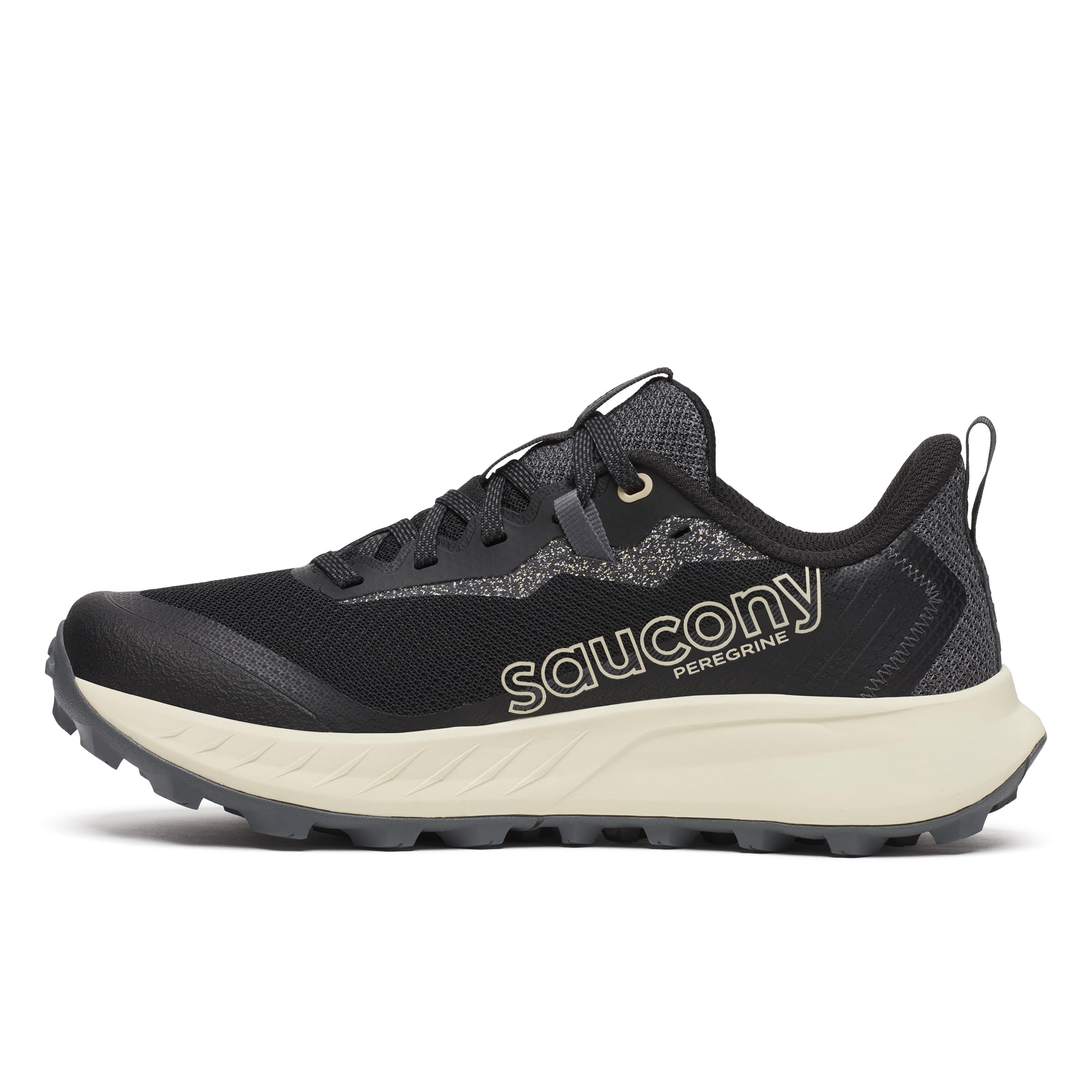
A low-profile technical shoe with 5mm lugs and Saucony’s PWRRUN foam underfoot.
The number to know is 5mm — that’s the lug depth on the Peregrine 15, and it’s the figure that tells you this shoe is built for terrain that fights back. Deeper lugs dig into mud, loose dirt, and soft ground instead of skimming the surface. Saucony pairs that with its PWRRUN cushioning system, a foam platform tuned to absorb impact without deadening the ride, all packed into a low-profile silhouette.
There’s also real protection built in — the shoe is designed to keep dirt and debris out, which is the difference between a clean run and a sock full of grit on a muddy day. Buyers report it handles trails and mud runs well, and traction and stability are the qualities that come up most. For a shoe that’s built around grip and control, that’s exactly the feedback you want to see.
Two caveats worth knowing. Fit is split — some runners find it true to size, others find the forefoot too narrow. And the cushioning is polarizing: some love it, others find it too soft, so if you like a firm, ground-feel ride, this isn’t your platform. For a confident technical shoe that shines in wet conditions, though, it earns its place.
The mud-run specialist: 5mm lugs and PWRRUN cushioning make this the pick for soft, loose, and wet ground.
Fit warning: Buyers split between true-to-size and too-narrow feedback — go half a size up if you’re between sizes.
Pick this one for: wet, muddy, technical trails where lug depth matters more than feathery weight.
Skip if: you prefer a firm, minimal-cushion ride or have a wide forefoot.
5. Merrell Women’s Agility Peak 5 Trail Running Shoes
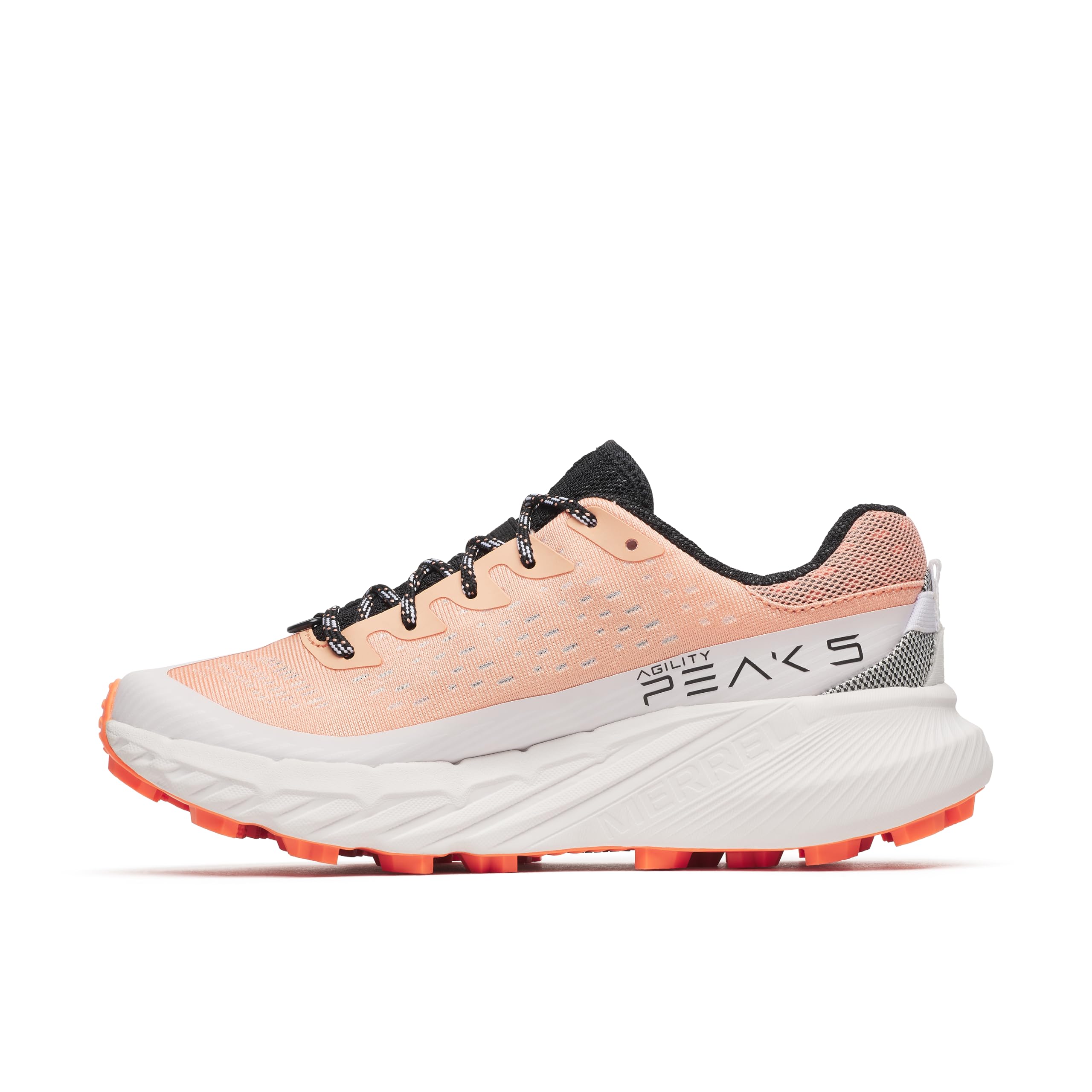
Under 10.6 ounces with maximum cushioning, a bigger rocker, and a sculpted heel cup.
Merrell’s update cuts weight to less than 10.6 ounces while keeping the maximum cushion and comfort the Agility Peak line is known for. There’s a bigger rocker this time around — that’s the curved sole that rolls you forward from heel to toe — and a sculpted heel cup that hugs the back of your foot so it doesn’t slide. That heel lock is the difference between a confident downhill and a shoe that rubs your heel raw by mile five.
The paper spec undercuts the competition. Where the New Balance Tektrel V1 suede weighs 2.1 pounds, this Merrell comes in at 1.5 pounds, so you feel noticeably less shoe on your foot over a long run. The look is what buyers notice most, though — people get compliments on these daily, which is a rare compliment for a trail runner.
Merrell says these work well on the golf course too, which tells you how versatile the traction is. The fit and durability draw mixed feedback, though: some find them true to size and tough, others find them small and report they start falling apart. Size up if you’re between and you’ll dodge most of the fit gripes. For a cushioned, lighter-feeling shoe that doubles as a trail-to-town runner, it’s a strong middle-of-the-list choice.
What earns the label
- Under 10.6 ounces — noticeably lighter than the 2.1-pound New Balance Tektrel V1.
- Bigger rocker rolls you heel-to-toe for an easier stride.
- Sculpted heel cup holds the back of your foot to reduce slip.
- Compliment-magnet looks for a trail shoe.
The honest read
- Fit runs split — owners mention it running small as often as true to size.
- Durability is a mixed bag, with some units coming apart sooner than expected.
Pair it with: long, cushioned trail runs where heel hold matters on the descent.
Leave it on the shelf if: you’re between sizes and don’t want the hassle of an exchange.
6. Topo Athletic Women’s Ultraventure 4
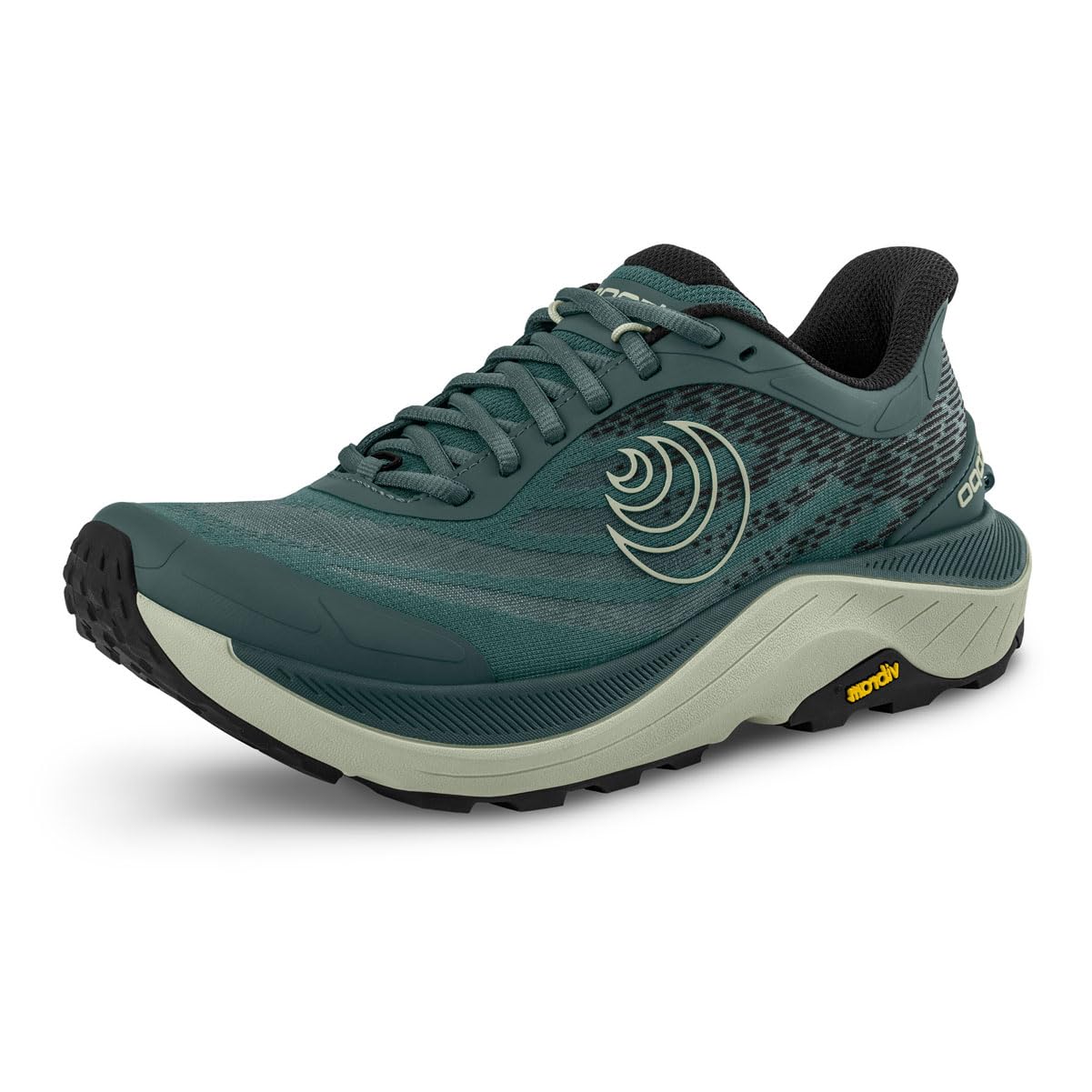
A 35 x 30 mm ZipFoam cruiser with Topo’s anatomical toe box for long runs on mild terrain.
Topo built the Ultraventure 4 for long runs on mild-to-moderate terrain, and the platform tells you how. It’s a 35 x 30 mm stack (heel height x forefoot height) with a 5mm drop, which is the height gap between heel and toe — a moderate, easy-to-adjust-to number that doesn’t force a new stride on you. The ZipFoam midsole is a proprietary compound Topo says is springier than standard EVA foam, the common cushioning material most running shoes use.
Your toes get room to spread naturally, thanks to Topo’s anatomical toe box (the front section shaped to match your foot). It’s the second most talked-about quality on these shoes — plenty of room for toes on rocky descents. The upper is recycled mesh with strategically placed PU print, a hard-wearing printed layer that adds structure in the spots that rub. The Vibram XS Trek EVO outsole (the rubber bottom) holds multi-surface traction when you move from trail to road.
Now the honest part. The bottoms wear out faster than most — durability is the one attribute buyers flag negatively. Some report blisters on the backs of their heels, which is usually a fit or sock issue rather than the shoe’s build. The upside for a cushioned shoe is the 8.7 oz weight in the women’s size 7. If you want cushioning and toe room on easy trails and don’t plan on running the same pair hard for years, this is a comfortable, roomy choice.
Room-to-spread comfort: The anatomical toe box is what buyers love most, and the 35 x 30 mm ZipFoam platform keeps long mild-terrain runs cushioned.
Wear watch: Outsole durability is the recurring weak point — expect to replace the pair sooner than a heavier trail shoe.
Suits you if: your toes feel cramped in most trail shoes and you log miles on mild, moderate terrain.
Not the pick for: high-mileage runners who need the outsole to last several seasons.
7. ALTRA Women’s Lone Peak 8 Trail Running Shoe
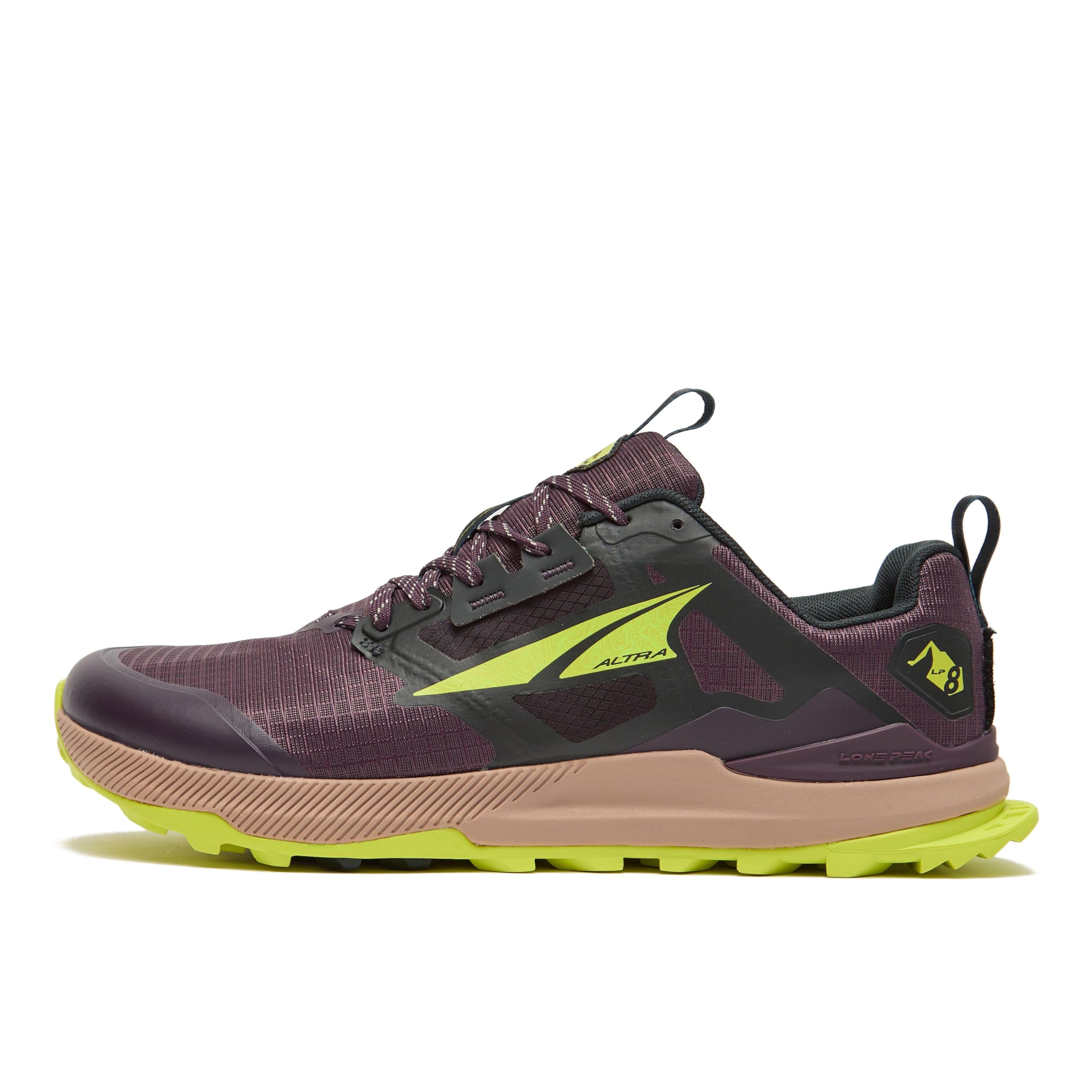
Zero drop and a 25mm stack, with the roomiest toe box in this guide.
Two numbers define the Lone Peak 8: 0mm drop and 25mm stack. Zero drop means your heel and forefoot sit at the same distance from the ground, so you land flat and your foot does the work instead of the foam. The 25mm stack gives you mid-level cushion, and combined with Altra’s Balanced Cushioning platform, the shoe is designed to promote better alignment and a low-impact landing. If you’ve never run zero drop before, this isn’t a shoe to race in on day one — break it in gradually.
Your foot gets a sticky grip on loose ground from the MaxTrac outsole with TrailClaw — canted lugs (angled tread blocks) placed under the metatarsals (the long bones behind your toes) for extra bite. The upper is a ripstop mesh, a woven fabric with a grid of reinforcing threads that resists tears better than plain mesh. The FootShape toe box is Altra’s signature. It’s shaped to account for the difference between men’s and women’s feet, and it’s the widest of the whole field here.
Your feet never hurt and your toes don’t get pinched, customers note, and there’s no break-in period needed. That wide toe box accommodates extra-wide feet that no other shoe on this list can. It’s also the roomiest-to-fit shoe in this guide by consensus, which tells you it’s built for people whose feet were miserable in narrow trail runners. The one compromise: at 10.7 oz it’s not the featherweight in this lineup, so if pure lightness is your priority, look at the Merrell instead.
Why wide-footed runners love it
- Roomiest toe box in this guide — it accommodates extra-wide feet no other pick can.
- 0mm drop and a 25mm stack for a natural, low-impact landing.
- MaxTrac outsole with TrailClaw canted lugs for grip on loose ground.
- No break-in period — comfortable from the start.
What to know before you buy
- At 10.7 oz it’s heavier than the featherweight picks here.
- Zero drop takes calf adjustment if you’re used to a raised heel.
Ideal for: wide-footed runners or anyone whose toes have been pinched by every other trail shoe.
Consider the alternative if: you want a raised heel or a lighter build for climbing.
8. New Balance Women’s Fresh Foam X Hierro V9
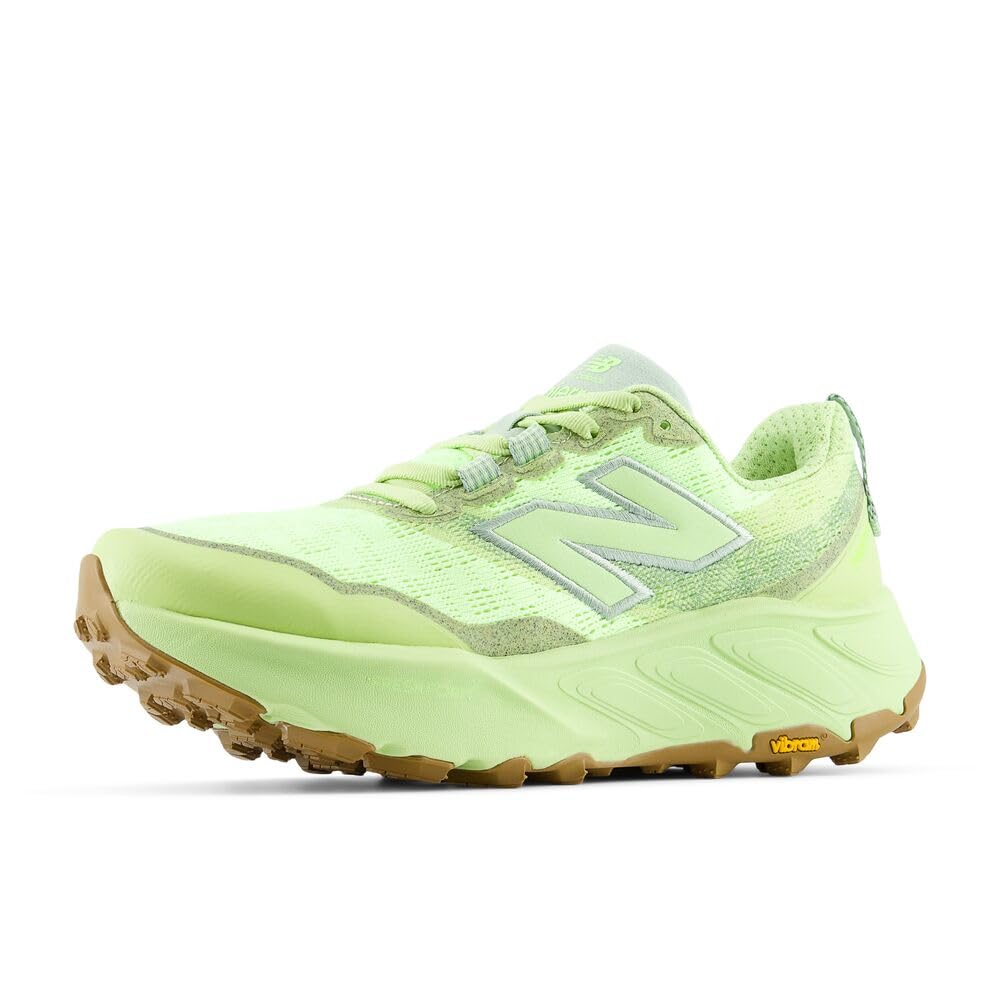
Vibram Megagrip with 6mm lugs and a Toe Protect shield for wet rock and loose dirt.
The Hierro V9 leads with grip numbers. The Vibram Megagrip outsole — Vibram’s sticky rubber compound built for mixed wet and dry ground — carries Traction Lug technology and 6mm lugs. That’s deep enough to bite into wet rock and loose dirt, so slippery roots and greasy descents stop being a tiptoe exercise. Toe Protect adds a reinforced shield over the toe box to deflect rocks and roots, which matters on rocky singletrack where a stubbed toe ends the day.
The upper is a breathable knit with a gusseted tongue — that’s a tongue attached to the shoe on both sides so it won’t slide sideways and no debris sneaks in through the gap. The dual-density Fresh Foam X midsole pairs plush comfort with a stable underfoot feel, so cushioned doesn’t mean wobbly. Buyers describe the cushioning as a cloud-like ride, and it draws plenty of praise for arch support.
Where this shoe fits: daily walks and occasional trail hikes, per buyers who use it. It’s a heavier 2.1-pound shoe like its New Balance Tektrel sibling, so if you want a race-weight trail runner, this isn’t it. But if you want to be confident in wet weather and want a rock shield underfoot, it’s the most protective pick here.
The wet-day weapon: Vibram Megagrip with 6mm lugs and Traction Lug gives it the most aggressive grip spec on this list.
Protection where it counts: Toe Protect and a gusseted tongue keep rocks and grit out on rough ground.
Weight trade: At 2.1 pounds it’s on the heavier side — better for protective trail days than race-day speed.
The right call if: you run in wet, rocky conditions and want maximum grip and toe protection.
Not the one if: you want a featherweight race shoe for dry, fast trails.
9. Hoka Womens Speedgoat 7
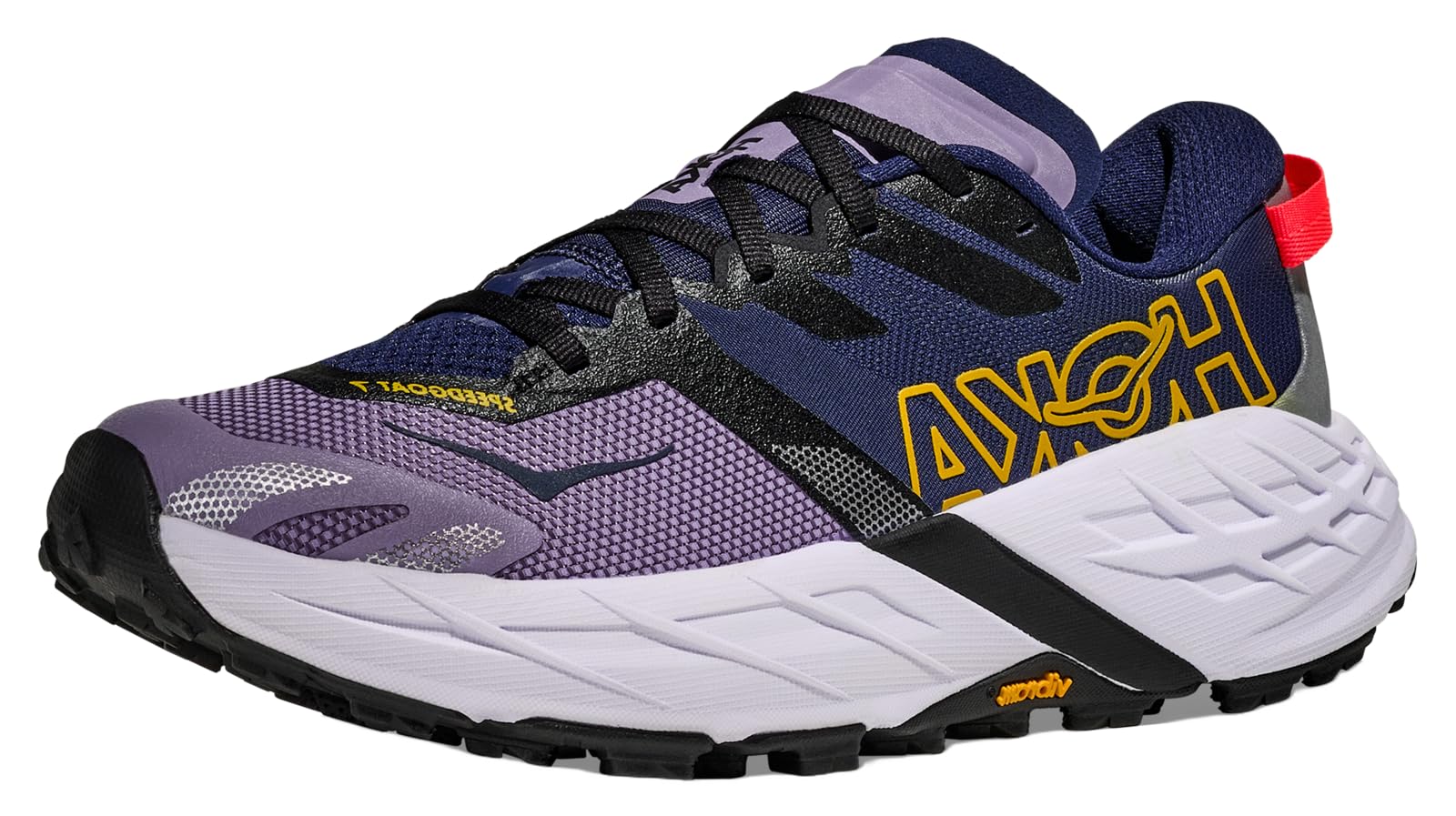
The premium end of the market, built to fend off debris and eat technical ground.
Hoka’s Speedgoat line has a cult following for a reason, and the Speedgoat 7 refines the formula. It leads with a new SCF midsole — super-critically foamed EVA, a foam processed to be lighter and more responsive than standard EVA — and Hoka says it amps up energy return. The Vibram Megagrip outsole with Traction Lug carries a lug orientation updated for mixed terrain, so you get grip across rock, dirt, and gravel rather than one surface only.
The convenience features are where it pulls away from the pack. There’s a lay-flat tongue with a dual gusset (attached on both sides so it won’t wander), a stretchy dynamic vamp that adapts to your foot, a heel pull tab, and reflective details for early or late runs. The gaiter integration is a small but smart touch — it lets you clip on a gaiter, the protective cuff that keeps grit out of your shoe on dusty or muddy trails.
This is the premium tier, and buyers confirm the comfort — “very cushy and soft” is the recurring description, and the fit holds up. It’s also on the newer side of the market with a smaller body of reviews than the established picks, so you’re buying a newer platform. If you want the most feature-loaded, debris-fighting trail shoe on this list, the Speedgoat 7 is the one.
The feature leader: SCF midsole foam, Vibram Megagrip with Traction Lug, gaiter integration, and reflective details make it the most equipped shoe here.
The honest read: It’s the newest platform in this guide, and buyers describe the cushioning as very soft — great for comfort, but not a firm, ground-feel ride.
The pick for you if: you want premium cushioning, debris-fighting features, and a gaiter-ready design for technical terrain.
Wait and see if: you prefer a firmer, more minimal platform or want a longer track record of real-world miles.
Know the Specs
Lug Depth and Outsole Rubber
Lugs are the raised knobs on the bottom of the shoe — the deeper they are, the more they bite into mud and loose ground. A 5mm lug like the Saucony Peregrine 15 or a 6mm lug like the New Balance Hierro V9 is built for soft, wet terrain. The rubber compound matters just as much: Vibram Megagrip and MaxTrac are made to stay sticky on wet rock, while harder compounds last longer but hold less grip. Shallower lugs roll smoother and are fine for hardpack and gravel.
Heel-to-Toe Drop
Drop is the height difference between the heel and forefoot in millimetres. Zero drop, like the Altra Lone Peak 8, puts heel and toe at the same level and encourages a flat, natural landing. A 5mm drop, like the Topo Ultraventure 4, sits closer to traditional running shoes and is easier on your calves. If you’re new to zero drop, break in gradually — your calf muscles need time to adjust.
Stack Height and Cushioning
Stack is the thickness of foam under your foot in millimetres — more stack means more cushioning and rock protection, but less ground feel and slightly more instability. A 25mm stack is a moderate, versatile level. High stack with a rocker, like the Merrell Agility Peak 5, keeps you rolling forward on long days. Lower stack keeps you connected to the trail for quick, technical footwork.
Toe Box Width and Fit
A roomy toe box lets your toes splay on descents, cutting rubbing and black toenails. A snug, performance last feels faster and more locked-in but punishes wide feet. Buy a women’s-specific last — that’s a shoe shaped around a woman’s foot rather than a scaled-down men’s shoe. If you need the widest fit, the Altra Lone Peak 8 is the most accommodating on this list.
Common Questions
What lug depth do I need for trail running?
Is zero drop better for trail running?
How often should I replace trail running shoes?
Should I size up in trail running shoes?
Are these shoes good for hiking as well as running?
What is a gusseted tongue on a trail shoe?
Can I wear these trail runners on the road?
What does heel-to-toe drop actually change about my running?
The Bottom Line
Most women should start with the Skechers Go Run Trail Altitude 2.0, because it leads on the one thing that matters most on easy-to-moderate trails: comfort across a full day, backed by traction that stops slipping. If you run wide, the Altra Lone Peak 8 gives you the roomiest toe box and a zero-drop platform (heel and toe at the same height) no other shoe here matches. And for wet, rocky, debris-heavy trails, the New Balance Hierro V9 packs 6mm lugs (the depth of the tread blocks) and a toe shield that make it the most protective option on this list. Start with your terrain, then your foot shape — that combination lands you on the right pair.
How we choose
We do not accept paid placement. Every pick is matched to a real buyer and a real use-case; we do not hands-on test units.
Sources
Specifications: manufacturer listings and product documentation. Review insights: verified customer reviews, as of November 2026. Pricing: not shown on this page (it changes often); check the current price via the retailer link.
As an Amazon Associate, Tactical Gear Guy earns from qualifying purchases. This does not affect which products we feature.