Specs are compiled from manufacturer listings and verified buyer reviews and can change over time — please confirm the key details on the product page before buying.
Buying the wrong relief valve for a well tank is a cheap part that turns into an expensive week. You need to match two things before anything else: the pressure rating stamped on the valve (the PSI number, meaning pounds per square inch) has to line up with your tank’s own setting, and the thread size has to screw into the tapping you already have. Get those two right and the job is a fifteen-minute swap. Get them wrong and you are either dripping water or dead-ending a thread that will not seal.
This guide is built by comparing the manufacturers’ published specifications and the patterns across verified customer reviews, so you get each pick’s real strengths and trade-offs instead of marketing spin.
Below you will find the pressure rating, thread size, and body material for every pick, sorted so you can match one to your tank in seconds. Every option here is a real brass or bronze cold-water valve, and the differences that matter are all in the numbers, which is exactly what this well relief valve breakdown puts side by side for you.
Top Picks
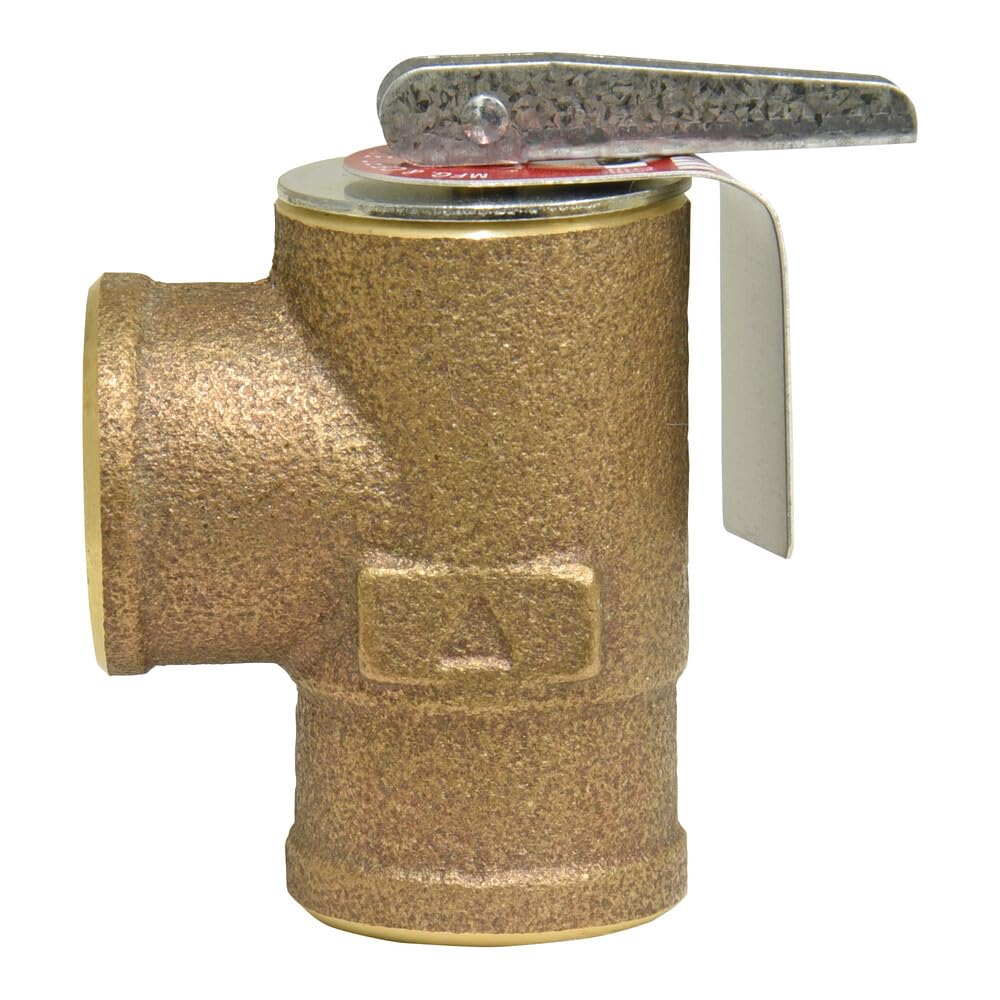

How To Choose The Best Well Relief Valve
A relief valve on a well system is a safety part, not a performance upgrade. Its one job is to open and dump water before pressure inside the tank or piping climbs past what the tank can hold. That means the buying decision is almost entirely about matching numbers, not about brand loyalty or finish quality.
Start With The PSI, Not The Brand
The pressure rating is the number that decides whether the valve protects your tank or sits there doing nothing. A 30 PSI valve opens at 30 PSI; a 100 PSI valve waits until the system reaches 100 PSI. Match the valve to the setting your pressure switch and tank are actually running, because a valve set higher than your tank’s limit gives you no protection at all. If you are unsure what your system runs at, check the pressure gauge on the tank before you order anything.
Then Match The Thread Size
Threads on these valves are listed as NPT (National Pipe Tapered), which is the standard tapered thread used on well and plumbing fittings. You will see sizes written as 1/2″ and 3/4″, and you will see MNPT (male) and FNPT (female) ends. The male end screws into your tank or tee; the female end accepts the pipe running to the drain. Measure the tapping you are screwing into, not the old valve, since a swapped part may already have been the wrong size.
Cold Water Only — Read That Twice
Every valve in this list is built for cold-water systems. Several are explicitly marked as not for use with water heaters. Putting a cold-water relief valve on a hot line is the kind of mismatch that ends with a failed part and water where you do not want it. Keep these on well tanks, pumps, and cold plumbing, and choose a valve rated for the temperature if your application runs hot.
Body Material And The BTU Figure
Brass and bronze bodies with stainless steel springs are the norm here, and several picks are made from no-lead brass for drinking-water lines. The BTU number, where a listing gives one, is the heat-load rating of the valve. If a valve carries a BTU figure, that is the manufacturer telling you it has been rated for that thermal load — worth checking if your system is anything other than a plain cold-water tank.
Side-by-Side Comparison
| Model | Best For | Pressure Rating | Inlet Size | Body Material | Amazon |
|---|---|---|---|---|---|
| Watts 0342691 30 PSI, 3/4″ 335 M2-030★ Best Overall | Low-pressure tanks and BTU-heavy setups | 30 psi | 3/4″ | Bronze | Amazon |
| Merrill PRVNL50100 1/2″ Brass, 100 PSINo-Lead Pick | Half-inch cold-water lines needing no-lead brass | 100 psi | 1/2″ | No Lead Brass | Amazon |
| Legend Valve 111-302NL T-50, 1/2″ | Dialing in a custom pressure setting | 75–150 psi adjustable | 1/2″ | Brass body, stainless spring | Amazon |
| Merrill PRVNL75 Brass, 75 PSI, 3/4″ | Standard 3/4″ cold-water well tanks | 75 psi | 3/4″ | Brass | Amazon |
| Merrill PRVNL75100 3/4″ Brass, 100 PSI | 3/4″ systems running at 100 PSI | 100 psi | 3/4″ | Brass | Amazon |
| PLUMB eeze Brass Relief Valve, 1/2″ 100 PSI | Cold-water tank protection with a bronze body | 100 psi | 1/2″ | Brass, bronze body | Amazon |
| Boshart-Style 3/4″ 100 PSI No-Lead Brass | No-lead replacement on a 3/4″ tank tee | 100 psi | 3/4″ | No Lead Brass | Amazon |
Detailed Reviews
1. Watts 0342691 30 PSI Pressure Relief Valve
Our pick — 4.5+★ from 800+ verified ratings; the strongest balance of quality and price.
The low-pressure specialist that opens at just 30 psi — half the ceiling of most valves here.
If your tank runs a low-pressure setting, this is the valve that actually protects it. A 30 PSI rating means the valve starts relieving at 30 psi, so a system set well below the usual 75 or 100 psi gets real protection instead of a valve that never opens. The pressure gap versus the Watts 0342691’s nearest rival in this article is stark — 100 psi on the Pressure Relief Valve 3/4″ 100 PSI tank model against this unit’s 30 psi.
The body is bronze, not brass, and it carries a 510,000 BTU rating — the heat-load figure the maker has rated the valve for. Both inlet and outlet are 3/4″, so it threads into a standard 3/4″ tank tee with a 3/4″ drain line behind it. Buyers praise its reliability most, and the install is called easy and quick, with a leaking system fixed in under 15 minutes.
The honest catch is leakage and longevity. Some units seal cleanly and others weep from the front, and the durability feedback is mixed — a few valves give up inside a week. Treat this as a part you keep an eye on after install rather than one you bury and forget. It is also the biggest valve physically in this lineup at 3 x 2.3 x 1.8 inches, against the much smaller MFG PRVNL75100 at 1.45 x 1.05 x 2.47 inches, so check clearance around the tee before you commit.
Where it earns its keep
- 30 psi opening pressure — the right match for low-pressure tanks that would never trip a 100 psi valve
- Bronze body with a 510,000 BTU rating for heavier thermal loads
- 3/4″ inlet and 3/4″ outlet, both standard NPT, for a straight swap onto a 3/4″ tee
- Install is the easy part — a reported fifteen-minute fix on a leaking system
What to watch after you fit it
- Leakage is a split verdict — some seal dry, some weep from the front face
- Durability feedback is mixed, with early failures reported inside a week
- The bulkiest body here, so tight tee clearances deserve a measurement first
Reach for this if: your tank runs a low pressure setting and you need a bronze valve rated for a serious heat load.
Look elsewhere if: your system runs at 75 or 100 psi — this valve would never open on it.
2. PRVNL50100 1/2″ Brass Pressure Relief Valve
No-lead brass, a 100 psi ceiling, and a half-inch body that fits where a 3/4″ valve will not.
Half-inch lines are the whole reason this valve exists. The inlet measures 0.5 inches against the 0.75-inch inlet on the bigger Pressure Relief Valve 3/4″ 100 PSI tank model, so if your tee is tapped at 1/2″, this is the piece that threads in without an adapter. It runs 1/2″ male NPT on one end and 1/2″ female NPT on the other, so the drain pipe hangs straight off the back.
Two things matter in the spec sheet here. The body is no-lead brass with a stainless steel control spring, and it is IAMPO certified — the certification body for plumbing products — which is why it is a sensible choice on a line feeding household water. The 100 psi maximum operating pressure means it opens when the system pushes past that figure.
The trade-off is scope. This is a cold-water valve and the listing says plainly it is not for use with water heaters, so any hot-side application is out. The California Prop 65 warning on the listing is about chemical exposure and is printed on the packaging, not a performance issue. Buyers cite its leak-proof seal alongside functionality as the reason they keep coming back. Buyers praise functionality most, with fit a close second.
The fit that decides it: a true 1/2″ valve with 0.5-inch inlet and outlet, no-lead brass, and a stainless spring — the combination you want on a half-inch cold-water tee.
The boundary to respect: cold water only, and the Prop 65 warning sits on the listing — neither is a fault, but both narrow where this part belongs.
The right call for: a 1/2″ cold-water well line that needs a no-lead, certified valve at 100 psi.
Not your part if: your tee is tapped 3/4″ or you are working on a hot-water loop.
3. Legend Valve 111-302NL T-50 Pressure Relief Valve

One valve that covers a whole range, adjustable from 75 all the way to 150 PSI.
Fixed valves force a decision: 30, 75, or 100 psi, pick one and live with it. The Legend Valve 111-302NL does not — it is adjustable across 75 to 150 PSI, so the same part serves a tank that changes or a system where the setting is not nailed down yet. The body is brass with a stainless steel spring, and it is built as a no-lead replacement for protection against excessive pressure.
Build quality draws the most praise, with functionality close behind, fit called easy, and value called fair. Buyers who installed two side by side call it a quality replacement that arrived exactly as described.
The honest wrinkle is the factory setting. It ships set at 75 PSI, which catches a few people out when they assumed it arrived at the top of its range — expect to adjust it to your target before install. Leakage is the other thing worth watching; it is the most-discussed negative on this valve and worth a careful seal. Note the listing’s 50-piece count is a packaging detail, not what lands at your door — you are buying one valve.
Why it earns the adjustable label: a genuine 75 to 150 PSI range, a brass body, and a stainless steel spring, all in a 1/2″ fitting.
The bit nobody tells you: it arrives set at 75 PSI, so budget a few minutes with the adjustment before you open the water.
Pick this if: you want one valve that can be dialed anywhere from 75 to 150 PSI rather than a fixed-pressure part.
Skip the adjustability if: you already know your exact setting and would rather not touch a factory-set valve.
4. MFG PRVNL75 Brass Pressure Relief Valve 75 PSI, 3/4″

The standard 3/4″ tank valve at 75 psi — the middle setting most well systems actually run.
Most well tanks sit somewhere around a 75 psi ceiling, which makes this the valve that fits the widest slice of systems. It goes 3/4″ male NPT into the tank or tee and 1/2″ female NPT out to the drain, so it handles the mismatch between the two sizes in one piece. Brass body, stainless steel control spring, IAMPO certified, and rated to a 75 psi maximum operating pressure.
Buyers praise its build quality most, with functionality a close second. Easy install and fair value round out the picture on this one. It is the same body family as the 100 psi MFG PRVNL75100 above — same 3/4″ inlet and the same brass construction — just set to open at 75 psi instead of 100 psi.
The trade-off is durability and seepage. Durability gets a split verdict, with the honest low point a valve reported failing after 50 days, and leakage is the most-discussed negative on the listing. Neither is universal — plenty of these valves run dry for years — but a valve this cheap is worth a look every few months. As with every pick here, it is cold water only and not for water heaters.
What makes it the safe default: 75 psi, 3/4″ male in, 1/2″ female out, brass body, stainless spring, IAMPO certified — the exact spec most cold-water well tanks call for.
The reason to look twice: leakage is the most-discussed downside and one valve reportedly failed at 50 days, so treat it as a part you check, not one you forget.
Matches best with: a standard 3/4″ well tank running a 75 psi setting on cold water.
Wrong pick for: a 100 psi system — the valve would open at 75 and bleed water you want to keep.
5. MFG PRVNL75100 3/4″ Brass Pressure Relief Valve

The 3/4″ valve for systems that run all the way up to 100 psi.
When a tank is set to 100 psi, a 75 psi valve is the wrong part — it opens early and dumps water you wanted. This one holds until the system reaches 100 psi, which is the setting it is matched to. The inlet is 3/4″ male NPT and the outlet is 1/2″ female NPT, so it steps down to a half-inch drain line in a single fitting. Brass body, stainless steel control springs, IAMPO certified, cold water only.
Buyers rate functionality and build quality almost equally.
Here is the physical difference worth knowing before you order. This valve is the smallest of the group in its packaging at 1.45 x 1.05 x 2.47 inches, against the bulkier Watts at 3 x 2.3 x 1.8 inches — so it tucks into a tight tee where the bronze valve would not. The drawback is the same as its siblings: it is cold-water only and must not go on a water heater, and the listing carries the California Prop 65 warning, so read the label before you install it near drinking water.
Where it clicks: 100 psi protection on a 3/4″ tank tee with a 1/2″ drain, in a compact brass body that fits tight spaces.
The fine print: cold water only, no water heaters, and the Prop 65 exposure warning sits on the listing.
Best suited to: a 3/4″ cold-water tank running a 100 psi setting where space around the tee is tight.
Not the one for: a 75 psi system, or any hot-water application.
6. Brass Pressure Relief Valve 1/2″

A bronze-bodied half-inch valve with a stated 140F temperature ceiling.
The temperature rating is the number that jumps off this listing. It states a 140F maximum operating temperature, which is a figure the other picks here simply do not publish. That does not make it a hot-water valve — it is still a cold-water system part — but it does tell you the maker has rated the body to that temperature, which is useful if your install sits somewhere warm.
Beyond the rating, the construction is bronze body with a stainless steel spring and retaining screw, sized 1/2″ inlet at 100 psi maximum operating pressure. It is recommended for all cold-water system installations and built to protect piping and pressure tanks from damage.
The catch is fit. A 1/2″ inlet means it only goes onto a half-inch tapping; a 3/4″ tee will not take it without an adapter. Match that against your tank before ordering, because the bronze body is worth having only if it screws in first time.
The one spec that matters: a bronze body rated to a stated 140F maximum operating temperature, with a stainless steel spring and retaining screw at a 1/2″ inlet and 100 psi.
Check before you buy: 1/2″ inlet means a half-inch tapping only — no 3/4″ tank tee will take it straight on.
Buy it when: you have a 1/2″ cold-water tank tapping and want a bronze body with a published 140F temperature rating.
Step away when: your tank tee is 3/4″ — order a 3/4″ valve instead.
7. Pressure Relief Valve 3/4″ 100 PSI

Full 3/4″ in and out at 100 psi, made from no-lead brass.
Two 3/4″ connections is the defining feature here. The 3/4″ male thread screws straight into the tank or tank tee, and the 3/4″ female thread on the other end accepts the plumbing running to the drain. That is a full-bore 3/4″ path, unlike the MFG PRVNL50100 above, which starts at 0.5 inches — this one stays 0.75 inches at both ends.
The body is lead-free brass, and it is recommended for all cold-water system installations, protecting piping and pressure tanks against damage. The maximum operating pressure is 100 psi, so it opens once the system pushes past that figure.
The thing to weigh up is fit. A 3/4″ female outlet is generous but it means your drain pipe has to match; a half-inch drain line will need an adapter. Beyond that, this is a straightforward no-lead brass valve at 100 psi with no published temperature rating on the listing, so keep it on cold water like the rest.
Why it earns its place: a matching 3/4″ male inlet and 3/4″ female outlet at 100 psi, made from no-lead brass for cold-water systems.
One thing to plan: a 3/4″ outlet wants a 3/4″ drain run — a 1/2″ line will need an adapter.
Worth grabbing if: you have a 3/4″ tank tee running 100 psi and want a no-lead brass valve with matching 3/4″ connections at both ends.
Think twice if: your drain line is 1/2″ — you would be building in an adapter step.
Know the Specs
Pressure Rating (PSI)
PSI means pounds per square inch, and on a relief valve it is the point where the valve opens and starts dumping water. A 30 psi valve opens at 30 psi; a 75 psi valve waits until 75. Match the number to the setting your tank actually runs, because a valve rated higher than your tank’s limit never opens and protects nothing. A valve rated lower opens early and wastes water.
Thread Size and NPT
NPT stands for National Pipe Tapered — the standard tapered plumbing thread. Sizes appear as 1/2″ or 3/4″, and the ends are listed as MNPT (male, screws into the tank) or FNPT (female, accepts the drain pipe). Measure the tapping on your tank before ordering, so the valve threads in without an adapter and seals on the taper.
BTU Rating
BTU is a heat-load figure, and where a listing gives one it tells you the maker has rated the valve for that much thermal load. The Watts 0342691 carries a 510,000 BTU rating. If your system is anything other than a plain cold-water tank, check that the valve publishes a rating before you install it.
Body Material: Brass, Bronze, No-Lead
Brass and bronze are the durable metals used for these valve bodies, and both pair with a stainless steel control spring. No-lead brass is the version made without lead for lines that feed household water. Bronze shows up on heavier-duty picks. All are built for cold-water systems, and none of these should go on a water heater.
Common Questions
What PSI relief valve do I need for my well tank?
Will a 3/4″ relief valve fit a 1/2″ tank tapping?
Can I use a cold-water relief valve on a water heater?
What does MNPT and FNPT mean on a relief valve?
Is the Legend Valve 111-302NL factory set at 75 PSI?
Why does the relief valve keep leaking from the front?
What is a BTU rating on a pressure relief valve?
Does a no-lead brass relief valve matter on a well system?
How long does a well relief valve last?
The Bottom Line
The winner for most people is the Watts 0342691 30 PSI — it is the crowd favorite at 4.5+ stars across 800+ ratings, and its bronze body with a 510,000 BTU rating is the most heavily rated construction on this list. If your system runs at 100 psi instead, the MFG PRVNL75100 3/4″ puts that rating on a 3/4″ tee with a compact body. And on a 1/2″ no-lead cold-water line, the Merrill PRVNL50100 fits straight on without an adapter. Order after you read your tank’s gauge, not before.
How we choose
We do not accept paid placement. Every pick is matched to a real buyer and a real use-case; we do not hands-on test units.
Sources
Specifications: manufacturer listings and product documentation. Review insights: verified customer reviews, as of November 2026. Pricing: not shown on this page (it changes often); check the current price via the retailer link.
As an Amazon Associate, Tactical Gear Guy earns from qualifying purchases. This does not affect which products we feature.