Specs are compiled from manufacturer listings and verified buyer reviews and can change over time — please confirm the key details on the product page before buying.
Finding a trail shoe that is genuinely wide — not just a roomier version of a narrow last — is the whole problem. Most women’s trail runners squeeze the toes on descents and rub the little toe raw on long climbs. The seven shoes below all come in a true wide fit and are built for dirt, rock, and root, not pavement. The Skechers Go Run Trail Altitude 2.0 is the one to buy first if you want the safest all-round pick: it is the crowd favorite at 4.5+ stars across 400+ ratings, and comfort is what owners talk about more than anything else.
This guide is built by comparing the manufacturers’ published specifications and the patterns across verified customer reviews, so you get each pick’s real strengths and trade-offs instead of marketing spin.
Toe box width, drop, lug depth, and cushioning are the four things that decide whether a wide trail shoe works for you. Below you’ll find those specs side by side, plus the honest caveats that only show up after real miles — everything you need to judge the women’s wide trail running shoes on this list.
Top Picks

How To Choose The Best Women’s Wide Trail Running Shoes
A wide trail shoe has to do two jobs at once: give your toes room to spread on the downhills, and keep your foot locked over the sole so you don’t roll an ankle on loose rock. Those two goals pull against each other, which is why so many wide trail shoes end up sloppy in the midfoot. The picks below solve it in different ways.
Start with the toe box, not the size number
Toe box shape matters more than the width letter. Some shoes are wide only at the ball of the foot; others, like the Altra Lone Peak 8, are roomy from the midfoot all the way forward. If your problem is a bunion or a wide forefoot, look for a shoe that stays wide through the whole front half, not one that pinches at the little toe.
Match the drop to your ankles
Drop is the height difference between heel and toe, measured in millimeters. A zero-drop shoe like the Lone Peak 8 sits your heel and forefoot at the same height, which some runners find keeps their feet stable on uneven ground. A higher drop like the 5MM on the Topo Ultraventure 4 puts your heel slightly above the toe, which many wide-footed runners prefer on long descents because it takes load off the calf.
Lugs and outsole grip decide wet-rock confidence
Lugs are the raised bumps on the bottom of the shoe. Deeper lugs bite into mud and loose dirt; a sticky rubber compound grabs slick rock. The New Balance Hierro V9 runs deeper 6mm lugs with a Vibram Megagrip outsole, while the Skechers Go Run leans on a simpler tread that owners say keeps them from slipping on everyday trails. Neither is wrong — it depends on whether you run groomed paths or proper mountain terrain.
Cushioning is a distance decision
More foam means more comfort over long miles but less feel for the ground under you. A high-cushion shoe like the Topo Ultraventure 4 is built for long runs on mild to moderate terrain. If you want to feel the trail and move fast, a lower, firmer platform serves you better. Think about your longest regular run before you chase the softest shoe.
Side-by-Side Comparison
| Model | Best For | Weight | Heel-to-Toe Drop | Outsole / Lugs | Amazon |
|---|---|---|---|---|---|
| Skechers Go Run Trail Altitude 2.0★ Best Overall | All-round everyday trail | — | — | — | Amazon |
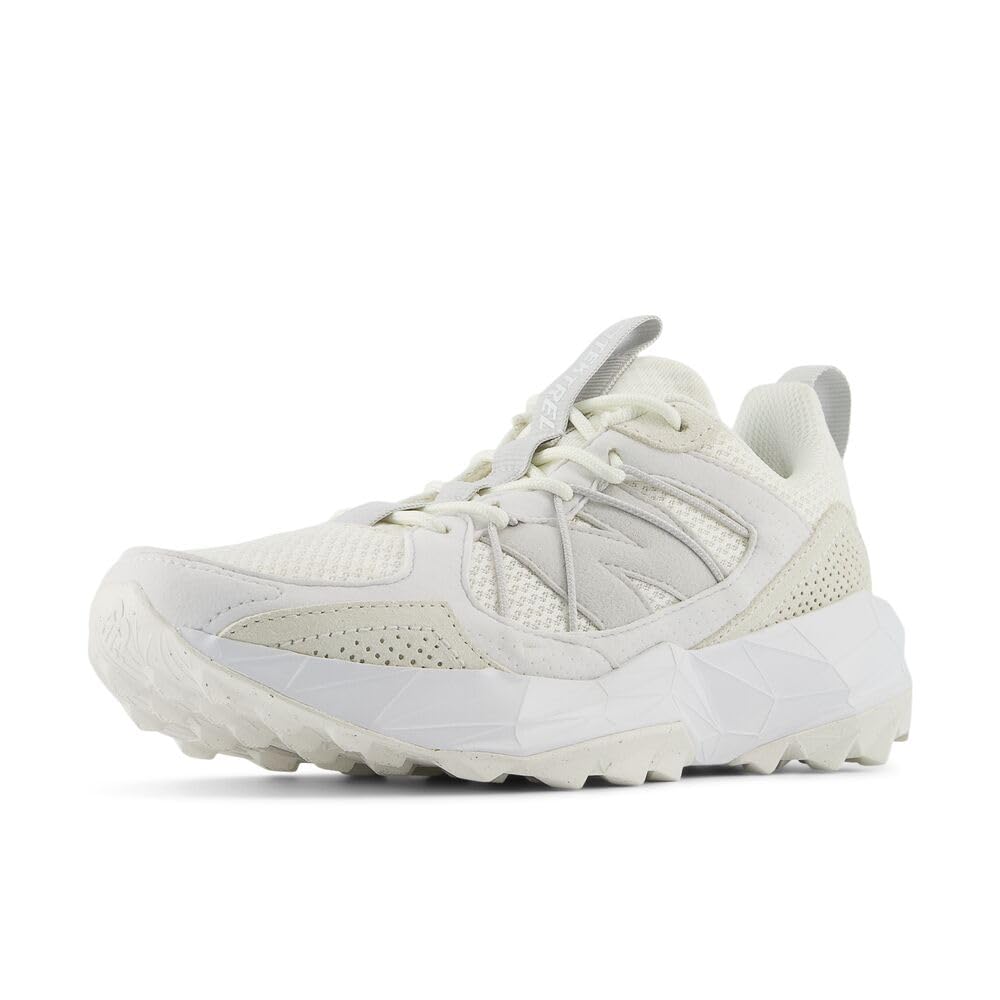
| New Balance Dynasoft Tektrel V1 SuedeBest for Gravel Roads | Gravel roads and walking | 2.1 pounds | — | Aggressive lug design | Amazon |
| Merrell Antora 4 | True-to-size trail comfort | 1.5 pounds | — | — | Amazon |
| ALTRA Lone Peak 8 | Extra-wide feet | 10.7 oz / 303 g | 0 mm | MaxTrac with TrailClaw | Amazon |
| Topo Athletic Ultraventure 4 | Long cushioned runs | — | 5MM | Vibram XS Trek EVO | Amazon |
| New Balance Fresh Foam X Hierro V9 | Rugged wet-weather terrain | 2.1 pounds | — | Vibram Megagrip, 6mm lugs | Amazon |
| Hoka Speedgoat 6 | Technical terrain, max cushion | 3 pounds (package) | — | Revised lug orientation | Amazon |
Detailed Reviews
1. Skechers Women’s Go Run Trail Altitude 2.0 – Ravine
Our pick — 4.5+★ from 400+ verified ratings; the strongest balance of quality and price.
The shoe that treats a wide forefoot as normal and still keeps a grip on loose dirt.
If you want the simplest answer to which wide trail shoe to buy, this is it. Comfort is what wins people over — it’s the thing owners bring up far more than any other quality, and it’s why this pair tops the list at 4.5+ stars across 400+ ratings. That matters on the trail because a wide shoe that fits from the first mile needs no break-in and no blister tape in your pack.
The fit pulls into second place in owner feedback, and that’s the piece that should interest you most as a wide-footer: the shoe runs true to its wide sizing rather than pinching across the ball of the foot. Traction gets its own steady praise for preventing slips, which is what you want on packed dirt and wet roots. Support and durability also come up repeatedly, and several owners wear them for long standing shifts as well as trail days — the kind of shoe that crosses over from hike to work without complaint.
Where it earns the top spot
- Comfort is the runaway strength — owners bring it up more than every other quality combined
- Genuine wide fit that holds true rather than squeezing at the ball of the foot
- Tread that stops slipping on packed dirt and wet roots
- Support and durability both hold up over repeated trail days
What to weigh before you buy
- No listed lug depth or drop figure, so serious technical terrain suits a shoe with published specs better
- Best for everyday trails and long standing days more than steep rock scrambling
Go for it if: you want a wide trail shoe that fits well out of the gate and handles daily dirt paths, gravel, and long hours on your feet.
Look elsewhere if: your runs are mostly steep, wet rock where you want a published lug depth and a sticky rubber compound to judge.
2. New Balance Women’s Dynasoft Tektrel V1 Suede
Built for the trail less travelled, with lugs that bite and a suede upper that takes a beating.
The Tektrel is New Balance’s answer for the runner who splits time between gravel roads and uneven singletrack. Its defining feature is an aggressive lug design paired with a dynamic midsole and a stylized upper — translated, the bottom grips, the foam absorbs, and the top looks good enough to wear off the trail. Comfort and appearance are the two qualities owners talk about by a wide margin, with comfort leading the pack. Versatility shows up next, and that fits the brief: this is a shoe that walks gravel roads and handles energetic activity without feeling out of place.
Here’s an honest comparison the spec sheet makes for you. Dimensions read 12.7 x 7.9 x 4.5 inches against the Antora’s 12 x 8 x 4.5 inches. If low weight on long climbs is your priority, the Merrell is the lighter option; if you want more shoe underfoot on rough ground, this is the one to pick.
The catch is fit. Some wide-footed runners find this shoe runs narrow, and arch support and cushioning both draw mixed feedback. The suede upper also asks for more care than a mesh shoe when it gets wet and muddy. That doesn’t make it a bad shoe, but if a bunion or very wide forefoot is your reason for shopping, try it against a true extra-wide shoe first.
Owner-dominant strength: Comfort and appearance dominate owner feedback, with comfort the clear leader and versatility a steady third — the shoe looks as good as it feels on gravel and trails.
The fit warning: Some wide-footed runners report it runs narrow, and durability gets mixed reviews, so it rewards a try-on before a long trip.
Made for: the runner who wants a grippy, good-looking trail shoe for gravel roads and mixed terrain where weight is secondary to grip.
Hands off if: you need the widest forefoot fit available — a suede upper and a mixed fit report won’t suit an extra-wide foot.
3. Merrell Women’s Antora 4 Trail Running Shoes
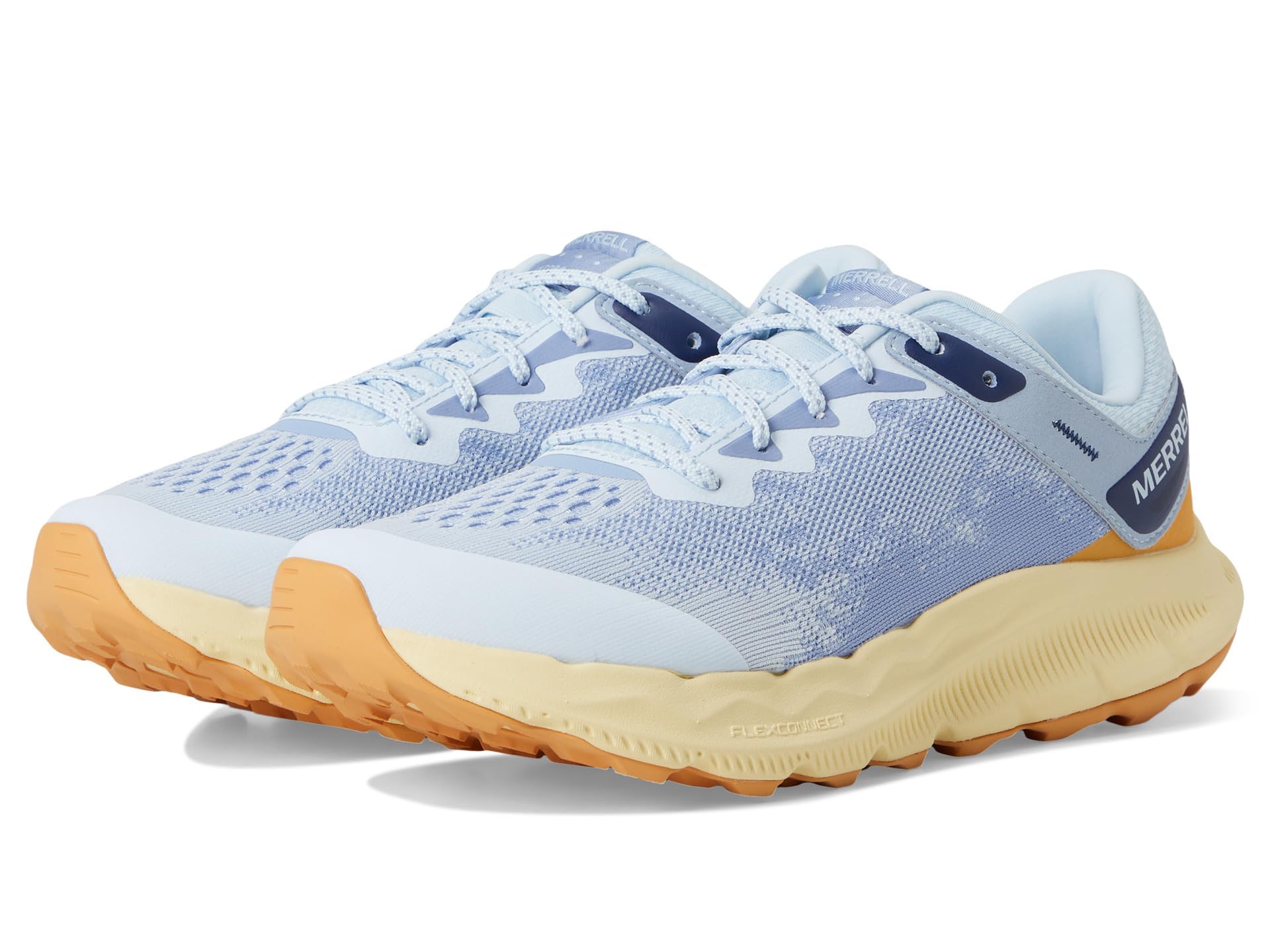
At 1.5 pounds, this is the lightest shoe on the list and it still leaves room in the toe.
Merrell’s best-selling trail shoe gets a clean athletic redesign here, and the weight is the headline: 1.5 pounds against the New Balance Tektrel’s 2.1 pounds. That’s a real difference over a long day — the spec sheet puts the Tektrel at a 40% gap heavier, which is the kind of weight you feel in the last mile. If you’re comparing the two directly, this one wins on lightness and toe room.
Comfort and quality lead owner feedback, with fit a strong third and arch support close behind. Buyers report it runs true to size with plenty of toe room, which is exactly what you want from a wide-fit trail shoe: room up front without the heel sliding. The toe lift gets its own mention for helping prevent trips over rocks, a small design detail that pays off on rooty trails. Stability and versatility round out a well-rounded picture across color and value as well.
Why owners stick with it
- 1.5 pounds — lighter than the New Balance Tektrel’s 2.1 pounds
- True-to-size fit with real toe room and a heel that stays put
- Toe lift that helps prevent tripping over rocks
- Comfort, quality, and stability all draw strong owner feedback
The trade-off to know
- No published drop or lug depth, so technical-terrain shoppers should look at the Altra or Hoka for those numbers
- Lighter build means less foot protection on sharp rock than the heavier New Balance shoes
Best suited to: the wide-footed runner who wants a light, true-to-size shoe for daily trail miles without paying for a heavier build.
Think twice if: you need a published lug depth and drop spec — this listing doesn’t give you those numbers.
4. ALTRA Women’s Lone Peak 8 Trail Running Shoe

The shoe built around toe room from the ground up — a wide forefoot and a zero-drop platform.
Altra’s whole design philosophy is about letting your foot sit the way it naturally wants to, and the Lone Peak 8 delivers it with a zero drop (0 mm between heel and toe) and the brand’s signature FootShape toe box. The published spec is 25 mm stack height in the midsole, and the shoe comes in at 10.7 oz / 303 g. The upper is a ripstop mesh, and the outsole is a MaxTrac compound with TrailClaw lugs — canted lugs placed under the metatarsals for grip on the ball of the foot.
What wins people over here is the toe box. Quality and comfort lead owner feedback, and toe box praise sits right behind them as a stand-alone highlight, with fit and arch support also strong. Owners with extra-wide feet report plenty of room without pinching, and feet feel stable on uneven ground because the zero drop keeps the heel and forefoot level. There’s no break-in to speak of, and the lugged tread holds grip across surfaces. Cushioning is the one mixed note — some find it firmer than they expected, which is consistent with a shoe built for ground feel rather than plushness.
If you’ve been squeezing into standard-width shoes and calling them fine, the Lone Peak 8’s FootShape toe box will change your mind. It’s the widest toe box in this group, and its weight of 303 g is the published figure you can compare against other shoes. The trade-off is that zero drop and firm cushioning reward you on technical terrain but demand a gradual transition if you’ve been running in higher-drop shoes.
The extra-wide answer: Toe box wins here above everything but raw quality and comfort — extra-wide feet get real room without pinching, and the zero-drop platform keeps them stable.
Firm, not plush: Cushioning draws mixed feedback because the midsole is built for ground feel, so don’t expect a soft ride.
Reach for these if: your forefoot is genuinely extra-wide and you want a zero-drop, grippy shoe with the roomiest toe box in this lineup.
Reconsider if: you want a soft, high-cushion ride or you’re new to zero drop — this platform wants a gradual transition.
5. Topo Athletic Women’s Ultraventure 4
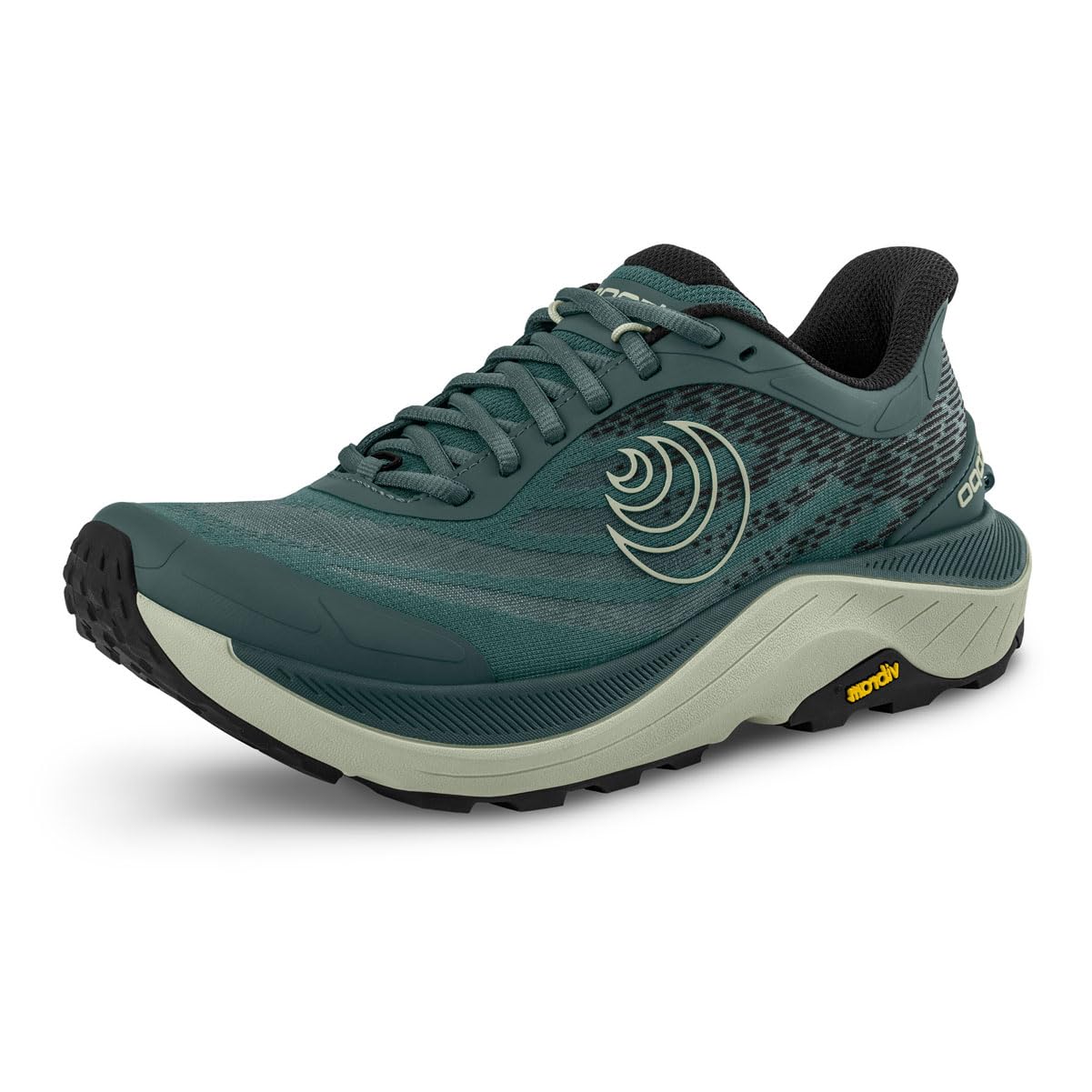
A high-cushion trail runner with a roomy toe box and a grippy Vibram outsole for long days.
Topo built the Ultraventure 4 for long runs on mild to moderate terrain, and the numbers back it up: a 35 x 30 mm platform, a 5MM heel-to-toe drop, a ZipFoam midsole for a springy ride, and a Vibram XS Trek EVO outsole for multi-surface traction. The recycled mesh upper gets PU print in high-abrasion areas for durability. In plain terms, the ZipFoam midsole absorbs long-mile impact and the Vibram outsole grips rock and road alike.
Quality and toe box are the two qualities owners talk about most, and both suit a wide-footed runner who wants cushioning without giving up room up front. The anatomical toe box lets toes spread naturally, and owners consistently praise the room. Traction and arch support also get steady credit, and the deep heel cup is a design detail owners notice. The outsole is the real selling point: Vibram rubber that grabs on rock and transitions cleanly from trail to road.
The honest catch: durability is the one area that draws negative feedback, and comfort is genuinely mixed — some owners mention blisters on the backs of the heels. Value also gets mixed reviews. On the positive side, the 5MM drop is less demanding on the calf than the zero-drop Altra Lone Peak 8, so if you’re stepping down from a higher-drop shoe, this is an easier transition than the Altra. Expect to break in the heel area before long days.
The long-run case
- ZipFoam midsole on a 35 x 30 mm platform for a cushioned, springy ride
- 5MM drop — easier on the calf than the zero-drop Altra
- Vibram XS Trek EVO outsole grips on rock and road
- Anatomical toe box gives wide feet real room
The honest limits
- Durability is the recurring negative — the outsole wears faster for some
- Heel blisters and mixed comfort for some owners; break-in helps
Fits the bill for: the wide-footed runner logging long, mild-to-moderate trail miles who wants cushioning and a roomy toe box.
Pass if: you need maximum outsole life — durability is where this shoe draws its loudest criticism.
6. New Balance Women’s Fresh Foam X Hierro V9

Dual-density foam and 6mm lugs built for wet rock, roots, and whatever the trail throws at you.
New Balance’s Hierro V9 is the technical all-rounder of this group. The spec list reads like a trail runner’s wishlist: a dual-density Fresh Foam X midsole that pairs plush comfort with stable underfoot support, a Vibram Megagrip outsole with Traction Lug technology and deeper 6mm lugs for grip in wet and dry conditions, and Toe Protect shielding against rocks and roots. The breathable knit upper with a gusseted tongue (a tongue sewn to the shoe on both sides, so debris can’t sneak in) keeps the trail out of the shoe.
Arch support and cushioning are the qualities owners talk about most, with the Fresh Foam X compared to running on clouds. They’re a favorite for daily walks and occasional trail hikes, and durability gets consistent credit for holding up through repeated use. If you want one shoe for a morning trail run and an afternoon dog walk, this cushioned build covers both.
The one number that should ground your expectations is weight: 2.1 pounds, the same published figure as the New Balance Tektrel and noticeably heavier than the 1.5-pound Merrell Antora 4. All that foam and rubber adds grams. On flowy singletrack the Hierro’s 2.1 pounds may feel like more shoe than you need; on wet roots and loose rock, the 6mm lugs and Megagrip earn the weight.
Where it excels: 6mm lugs and Vibram Megagrip give it wet-condition grip the lighter shoes on this list can’t match, and dual-density Fresh Foam X keeps it stable.
Where it costs you: at 2.1 pounds it’s the heaviest type of build here, so it suits rugged days more than fast ones.
Choose this when: your trails are rugged and often wet, and you want deep lugs, a sticky outsole, and toe protection over a feather-light feel.
skip it if: you mostly run fast, dry, flowy trails where a 2.1-pound build will feel like extra baggage.
7. Hoka ONE ONE Women’s Speedgoat 6

Hoka’s cushioning stacked on a grippy trail sole — soft landings with real bite underneath.
The Speedgoat 6 takes Hoka’s trademark cushioning and wraps it around aggressive traction and ultralight materials, with a refined woven textile upper, an internal chassis that hugs the foot, and a plusher dual gusset tongue. The lug orientation is even designed after the hoof of a goat — the idea being that the sole grabs in the direction your stride pushes on climbs and descents.
What owners highlight most is quality, with cushioning a clear second. Arch support and appearance follow close behind, and the shoe handles both pavement and uneven trails. For a wide-footed runner who wants a soft, supportive ride on mixed terrain, that combination works — the padded, supported feel is exactly what makes it a favorite for hiking and walking outside.
The part to weigh is fit. Size and fit both draw mixed feedback, with some wide-footed runners finding the shoe runs differently from an extra-wide model, and value for money is also mixed. That’s the honest picture of a premium-cushioned shoe with a sculpted, foot-hugging cut: great when it suits your foot, but check the wide sizing carefully before committing. This is the one on the list where trying the fit first matters most.
The cushioning case: Cushioning is the second-most-highlighted quality with arch support close behind, so long days on mixed terrain stay comfortable.
The sizing caution: Fit and size both draw mixed feedback and value is debated — check the wide sizing carefully before you commit.
Right for: the trail hiker and mixed-terrain runner who wants maximum cushioning and support and will take the time to dial in the width fit.
Not ideal if: you want a frictionless fit guarantee from the start — sizing is the one area where this shoe draws mixed feedback.
Know the Specs
Heel-to-Toe Drop
Drop is how far your heel sits above your toe inside the shoe, measured in millimeters. A 0 mm shoe like the Altra Lone Peak 8 keeps the two level, which can encourage a more natural midfoot landing and steadier footing on uneven ground. A 5MM drop like the Topo Ultraventure 4 lifts the heel slightly, which eases load on the calf and suits runners stepping down from a taller shoe.
Lug Depth
Lugs are the raised bumps on the outsole. Deeper lugs bite harder into mud, loose dirt, and wet rock; shallower tread rolls more smoothly on pavement. The New Balance Hierro V9 runs deeper 6mm lugs with a Vibram Megagrip outsole, aimed at wet-and-dry grip on rugged terrain. If you run groomed dirt paths, a simpler tread like the Skechers Go Run’s is plenty.
Toe Box and FootShape Fit
The toe box is the front section of the shoe where your toes sit. A wide or anatomical toe box gives toes room to spread instead of stacking, which reduces rubbing. Altra’s FootShape design and Topo’s anatomical toe box both aim at that spread, and a true wide width keeps the room there from the midfoot forward rather than only at the ball of the foot.
Cushioning and Stack Height
Stack height is the total foam under your foot. More foam means softer landings but less feel for the ground. The Topo Ultraventure 4 uses a 35 x 30 mm platform, and the Altra Lone Peak 8 runs 25 mm of stack. The trade-off is simple: more cushioning suits long, mild trails and long standing days; less foam suits fast runs where you want to read the terrain through your feet.
Common Questions
How do I know if a trail shoe is truly wide?
What is the difference between zero drop and a 5MM drop trail shoe?
Will a wide trail shoe feel sloppy in the midfoot?
How much lug depth do I need for muddy trails?
Can I use a wide trail running shoe for walking and hiking?
How long should trail shoes last before the outsole wears?
Is the Hoka Speedgoat 6 good for a wide foot?
Does a heavier trail shoe protect my feet better?
Do wide trail running shoes need a break-in period?
What should I look for in a trail shoe for long runs?
The Bottom Line
For most women shopping women’s wide trail running shoes, the Skechers Go Run Trail Altitude 2.0 is the smart buy because it fits wide feet well, grips everyday trails, and draws the strongest comfort feedback of the group. If your forefoot is truly extra-wide, the ALTRA Lone Peak 8 gives you the roomiest toe box and zero-drop stability. And for wet, rugged terrain where grip matters most, the New Balance Hierro V9 with its 6mm lugs is the one to reach for. At 4.5+ stars across 400+ ratings, the Skechers Go Run Trail Altitude 2.0 is the safest first buy for a wide-footed trail runner.
How we choose
We do not accept paid placement. Every pick is matched to a real buyer and a real use-case; we do not hands-on test units.
Sources
Specifications: manufacturer listings and product documentation. Review insights: verified customer reviews, as of November 2026. Pricing: not shown on this page (it changes often); check the current price via the retailer link.
As an Amazon Associate, Tactical Gear Guy earns from qualifying purchases. This does not affect which products we feature.