Specs are compiled from manufacturer listings and verified buyer reviews and can change over time — please confirm the key details on the product page before buying.
If your heels lift off the floor at the bottom of a squat, the fix is not more ankle stretching — it is a shoe with a raised, rigid heel. That rigid raised heel is what separates a real squat shoe from a cushioned gym sneaker, so check it first. Below are five pairs that put a solid platform under your feet, sorted by what each one does best.
This guide is built by comparing the manufacturers’ published specifications and the patterns across verified customer reviews, so you get each pick’s real strengths and trade-offs instead of marketing spin.
You will see which pairs lock your foot down, which run narrow, and which heel actually helps you hit depth. Read on for the picks that make the most sense for women’s squat shoes.
Top Picks

How To Choose The Best Women’s Squat Shoes
The mistake most women make is buying a cross-training sneaker and expecting it to feel like a squat shoe. A cushioned midsole squashes under a loaded barbell, so your foot sinks and your knee drifts. A proper squat shoe holds firm instead, so the force you drive into the floor transfers up the bar.
Start with the heel, not the colorway
A raised heel is the whole point. It tilts your shin forward slightly, which lets you reach depth without your heels peeling up. That matters most if you have stiff ankles or a longer femur. Every shoe on this list uses a raised heel, but they differ in how much structure surrounds it.
Check the lockdown, then the width
Heavy squats punish a loose midfoot. Velcro straps or a firm laced upper keep your foot from sliding sideways as you brace. Width is the second half of the story: lifting shoes tend to run narrow, so a wider forefoot often needs a half size up. Several picks here call that out directly, and it is the single most common reason a pair gets returned.
Side-by-Side Comparison
| Model | Best For | Heel Type | Lockdown | Weight | Amazon |
|---|---|---|---|---|---|
| Nordic Lifting Venja★ Best Overall | All-around lifting and CrossFit | improve, non-compressible | Secure strap system | — | Amazon |
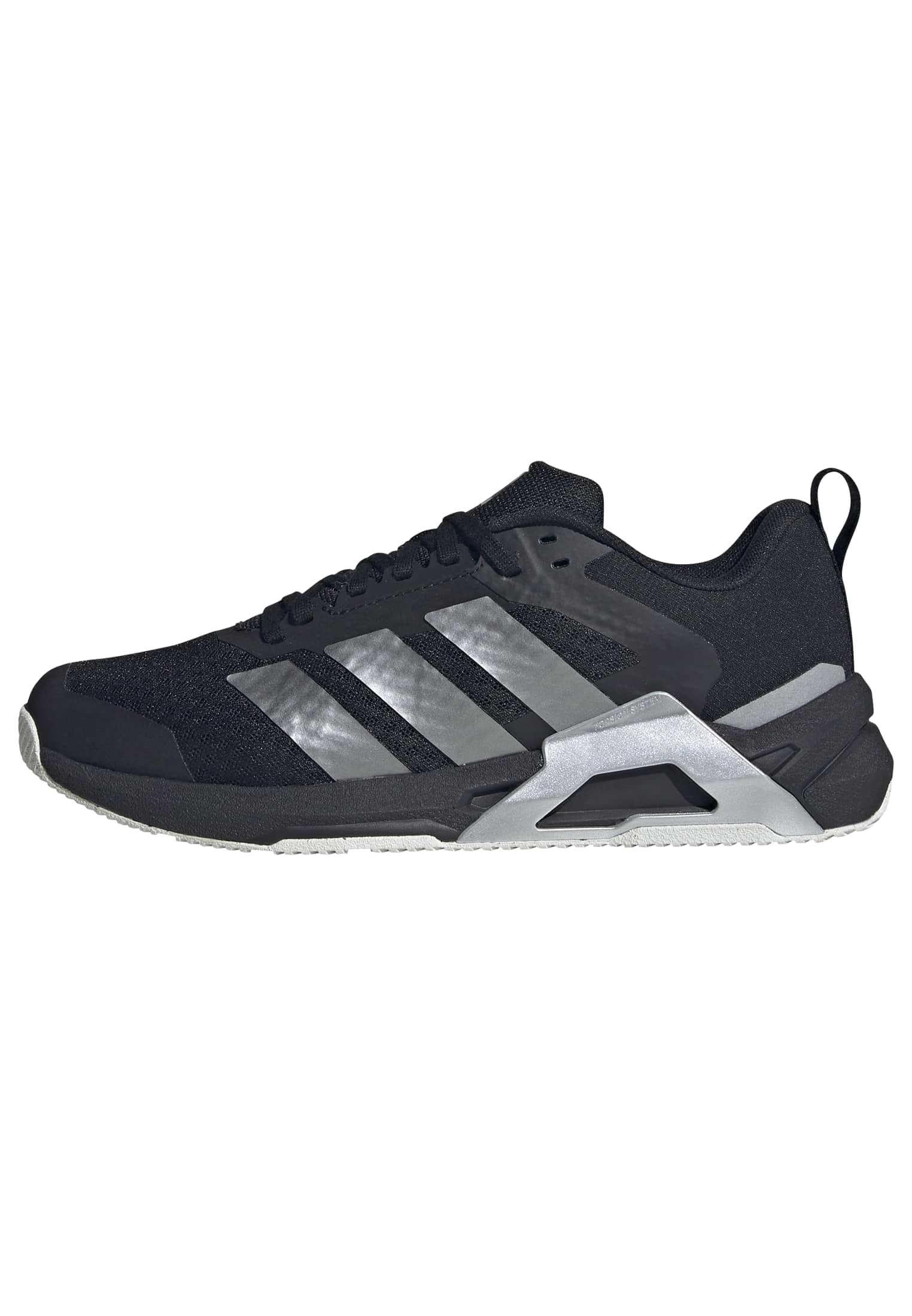
| adidas DROPSET Control Trainer WBest Value | Strength work plus warmups | Solid anti-compression midsole | Mesh upper with TPU torsion | 2.43 lb | Amazon |
| Osterland Weightlifting Shoes | CrossFit and leg day | Raised lifting heel | Double adjustable Velcro | — | Amazon |
| adidas Powerlift 5 | Squats and deadlifts | Lifting heel | Locked-in foot hold | 2.43 lb | Amazon |
| Nike Metcon 5 | Lifting plus high-impact work | Hyperlift insert included | Traction-focused outsole | — | Amazon |
Detailed Reviews
1. Nordic Lifting Venja Shoes
Our pick — 4.5+★ from 650+ verified ratings; the strongest balance of quality and price.
The all-rounder that turns a shaky squat into a planted, confident rep.
This is the pair to start with if you want one shoe for squats, deadlifts, and the rest of a CrossFit session. The sole is flat and non-compressible, which means it will not squash down when you load the bar. That flat platform is what stops the sideways wobble that soft sneakers allow. A raised heel tilts you forward just enough to help stiff ankles reach depth, so your chest stays up and your heels stay down.
What wins people over here is the build quality — it is the thing praised most in the feedback, with fit running a close second. Buyers describe roomy toe boxes with no cramping or squeezing, and owners have put them under serious weight, with 450lb lifts getting through without complaint. Owners also report the sole and straps stay intact through months of heavy squats.
It is also built for stability rather than cushioning, so high-impact cardio like running is not its job. When owners talk about durability, the note is mixed rather than glowing — treat this as a shoe that lasts best when you keep it in the rack and off the road.
Where It Wins
- Raised heel and flat, non-compressible sole for a stable squat base
- Secure strap system locks the midfoot without pinching
- Grippy outsole handles box jumps, lunges, and functional work
- Roomy toe box with no reported cramping
What To Know First
- Wide feet should size up for comfort
- Not built for high-impact cardio like running
Pick it if: you want one shoe that covers Olympic lifts, squats, and CrossFit without a second pair for the gym floor.
Look past it if: you plan to run or do high-impact cardio in the same shoe — this is a stability-first build.
2. adidas Women’s DROPSET Control Trainer W
Built for the lifter who warms up, squats heavy, then finishes on the floor.
At 2.43 pounds this is among the lightest shoes here, and that difference shows up in how quickly you can move between stations. The midsole is designed to resist compression, so it will not collapse under a loaded barbell the way running shoe foam does. That keeps you connected to the ground through squats, deadlifts, and overhead presses.
adidas put a wide fit on this one so your foot can spread naturally, which gives you more ground contact at the bottom of a lift. The TPU torsion system through the midfoot adds support during lunges and lateral moves, and a breathable mesh upper keeps air moving when you go straight from heavy compound lifts to a metabolic finisher.
The catch is sizing. Owners split on whether it runs true to size, and the recurring note is that it is not the friendliest shape for a wide forefoot — so try it against a wide-width pair before you commit. Buyers are clearly happy with the construction and the look, but the fit question is the one to settle first.
Ground-Feel Priority: the anti-compression midsole and wide platform mean your foot stays flat and connected, which is exactly the feel a deep squat needs.
Settle Sizing First: the fit feedback is genuinely mixed, so if your forefoot runs wide, order with a size-up plan in mind rather than assuming your usual pair fits.
Worth it for: women who want a lighter, breathable trainer that still holds firm under a barbell for strength blocks.
Think twice if: you have a wide forefoot — the shape is the one thing owners flag.
3. Osterland Weightlifting Shoes for Men Women
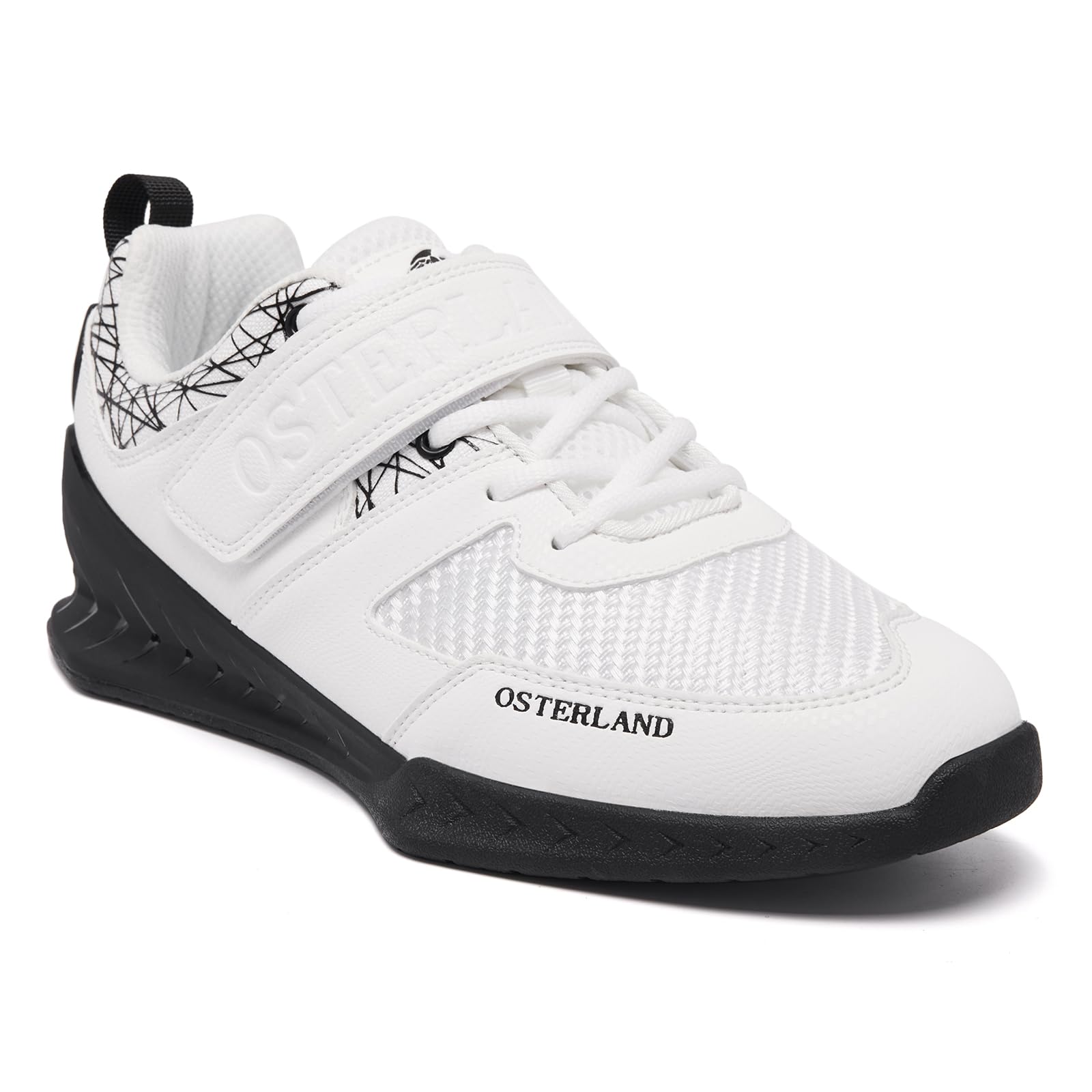
Two wrap-around straps and a raised heel for lifters who want their foot bolted down.
The lockdown is the reason to look here. Osterland uses double adjustable Velcro straps with a wrap-around design, which pull your foot tight in two places instead of one. That means less sliding inside the shoe on a heavy squat set. The raised heel helps with ankle flexibility and lets you sit into a deeper squat, and a slip-resistant sole keeps you steady on the gym floor.
Construction is where this pair earns its keep, with lifting performance right behind it in the feedback. Buyers report feeling stable under heavy loads and well supported around the heel. The breathable mesh upper keeps things from getting swampy during a long leg-day session, and the shoe is pitched as versatile enough for CrossFit, strength work, and daily gym use.
Sizing needs a decision from you up front. The brand says the shoe fits true to US standard size, but recommends a half size up for wide feet — and some owners find it runs a bit large anyway. The honest read: normal-width feet can pick their usual size, while wide feet should take the brand’s half-size-up advice and accept that the shoe may feel roomy.
Lockdown Is The Story: the double wrap-around Velcro straps are a genuine upgrade over a single strap, and they are the feature that gives you a locked-in feel on heavy sets.
Size With Care: the fit advice points in two directions — true to size for a normal foot, a half size up for a wide one — so match the order to your own foot shape.
Reach for this if: you want maximum strap lockdown and a breathable upper for CrossFit and heavy leg days.
Skip past it if: you want a snug, dialed-in fit right from the start and dislike a roomier feel.
4. adidas Unisex Adult Powerlift 5 Weightlifting Shoes
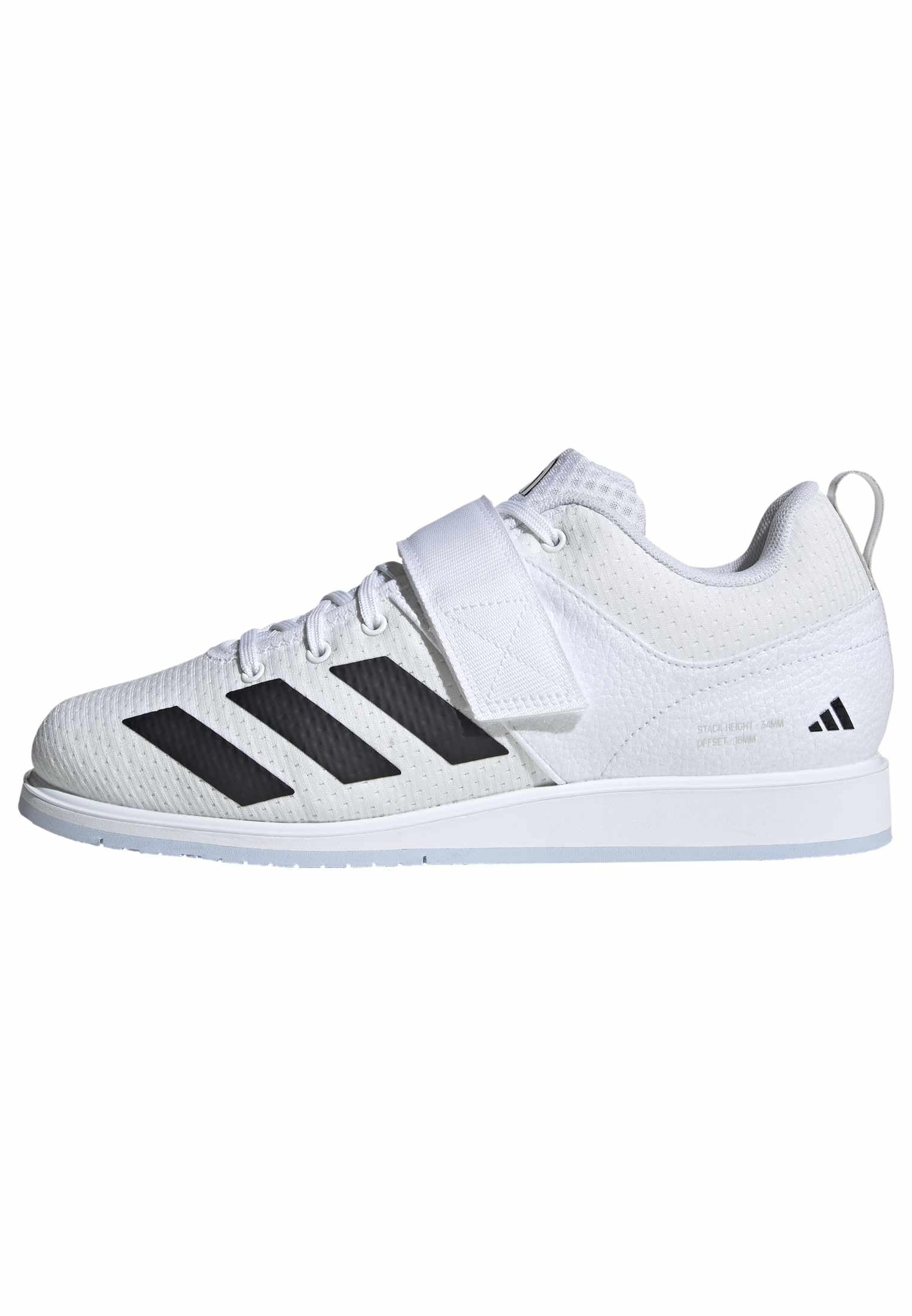
A squat-and-deadlift specialist that locks your feet in place and stays out of the way.
If your training is mostly the barbell and not much else, this is the pair to take seriously. The Powerlift 5 is built around locking the foot down for squats and deadlifts, and owners mention that it does exactly that under load. It weighs 2.43 pounds, the same as the adidas DROPSET above, so it stays reasonably light while keeping a firm base under the heel.
What earns it a spot is straight build quality, followed by how it performs on the lift itself and on squats specifically. Owners describe it as comfortable under the bar and say it steadies their squat and deadlift sets. That stability-under-load and rack comfort are why it ranks high here for pure barbell work.
Two honest notes. The fit feedback is mixed rather than consistent, so treat sizing as something to confirm rather than assume. And durability gets a similarly split read — this is a shoe people are happy with, but it is not described as indestructible. Keep it for the platform and the rack and it will serve you well.
Why It Earns A Place
- Locks feet firmly in place for squats and deadlifts
- Comfortable enough for long sessions under the bar
- Customers note a real difference in their workouts
- Unisex sizing broadens who can wear it
What Needs Checking
- Fit feedback is mixed, so confirm your size
- Durability reads are split rather than uniform
- Built for the barbell, not for cardio or running
Best matched to: women whose training is dominated by squats, deadlifts, and heavy compound work.
Less ideal for: anyone who wants one shoe for mixed cardio and lifting — this one is a barbell specialist.
5. Nike Women’s Metcon 5 Training Shoe
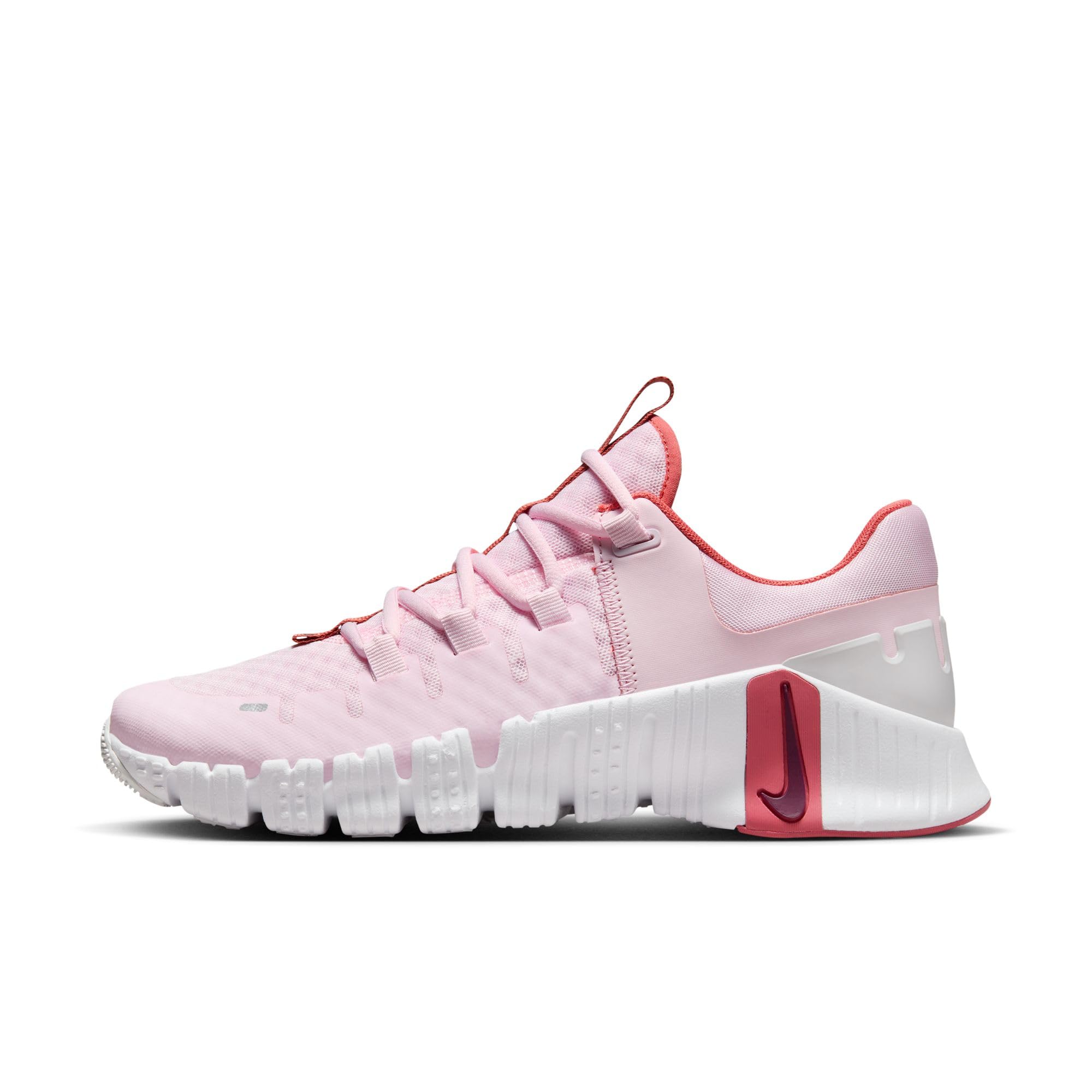
The premium crossover — a squat shoe that can also take a beating in a conditioning class.
The Metcon 5 is the most versatile pick here, and the Hyperlift insert is what makes it work for lifting. Drop that insert in and you get a raised, stable platform for squats; pull it out and you have a trainer for high-impact work. It is the only shoe on this list that includes an insert like that, and it stays compatible with earlier versions of the Metcon.
Stability under load is the thing women praise most, backed by a build that holds firm while you push heavy weight. The outsole puts durable rubber where it wears fastest, and owners regularly compliment the looks.
The warning that comes up most is sizing: this one tends to run small, so it is worth going a half size up to be safe. Value also draws a mixed read — it is the premium pick here, and some owners question whether the extra spend earns its keep. That is a fair question to weigh against how much you value the removable insert.
The Insert Is The Edge: the included Hyperlift insert gives you a lifting platform and a training shoe in one, which no other pick here offers.
Order Up: size runs small, so a half size up is the safer call rather than trusting your usual number.
Choose it when: you want a single premium shoe that shifts from heavy squats to high-impact conditioning without a swap.
Second-guess it when: you want pure squat performance and nothing else — the versatility is the reason to pay more here.
Know the Specs
Raised Heel and Non-Compressible Sole
The heel lift tilts your shin forward, which helps stiff ankles reach depth with your heels planted. A non-compressible sole is the other half — it refuses to squash under a loaded barbell, so the power you push into the floor travels up the bar instead of sinking into foam. Together, these two details are what make a squat shoe different from a cushioned trainer.
Lockdown and Weight
Strap systems and firm uppers keep your midfoot from sliding sideways on heavy sets. A double wrap-around Velcro setup, like the one on the Osterland, gives you two points of tension rather than one. Weight matters too: a heavier shoe in the three-pound range feels planted, while a lighter one in the two-and-a-half-pound range is easier to move around the gym. Neither is wrong — it depends on whether you prefer a solid anchor or a quicker feel.
Common Questions
Do squat shoes actually help you go deeper?
Can I wear squat shoes for running or cardio class?
Should women size up in weightlifting shoes?
What is the difference between a squat shoe and a cross-training sneaker?
How tight should the straps be on a lifting shoe?
Do I need a raised heel if I already squat with flat shoes?
Can men and women wear the same weightlifting shoe?
How long do weightlifting shoes usually last?
Is the Nike Metcon 5 worth it over a cheaper squat shoe?
The Bottom Line
For most women, the women’s squat shoes winner is the Nordic Lifting Venja because it pairs a raised, non-compressible heel with a strap lockdown and enough versatility for squats, deadlifts, and CrossFit. If you want a lighter trainer that still holds firm under the bar, the adidas DROPSET Control Trainer W is the one to reach for. And for a single premium shoe that shifts from heavy squats to conditioning work, the Nike Metcon 5 is worth a close look — just order a half size up.
How we choose
We do not accept paid placement. Every pick is matched to a real buyer and a real use-case; we do not hands-on test units.
Sources
Specifications: manufacturer listings and product documentation. Review insights: verified customer reviews, as of November 2026. Pricing: not shown on this page (it changes often); check the current price via the retailer link.
As an Amazon Associate, Tactical Gear Guy earns from qualifying purchases. This does not affect which products we feature.