Specs are compiled from manufacturer listings and verified buyer reviews and can change over time — please confirm the key details on the product page before buying.
Wireless IEM earbuds are in-ear monitors with the cable cut — a Bluetooth link replaces the wire that used to run down to your phone or audio interface. The quick answer: if you want the most silence per dollar and the deepest feature set in one box, the Status Pro X is the pick to beat, and it is the one that earns the top slot here. If clear speech in calls matters more than bass, the Soundcore Liberty 5 Pro Max is the specialist. And if you are buying for a console or a gaming desktop, the ASUS ROG Cetra and the SteelSeries Arctis GameBuds are built for that job specifically. Everything below sorts the nine strongest options by what they actually do well, so you can stop reading spec sheets and start narrowing to two.
This guide is built by comparing the manufacturers’ published specifications and the patterns across verified customer reviews, so you get each pick’s real strengths and trade-offs instead of marketing spin.
Tip seal and codec support shape daily use more than driver count, so this guide leads with the specs you actually feel. Below you will find a comparison table, nine full breakdowns, and a plain-English explainer on the specs that matter for wireless iem earbuds.
Top Picks

How To Choose The Best Wireless IEM Earbuds
An in-ear monitor is designed to sit deep in your ear canal and seal it, which is why these buds lean on tip selection more than any other type of earbud. A correct seal delivers bass without extra volume, blocks outside noise passively, and lets the ANC do its job. A bad seal makes any bud here sound thin and sit loose, which is why so many low scores trace back to tip fit rather than the drivers.
Start with the tips, not the driver
The Sennheiser IE 100 Pro lists four earpiece adapters in silicone and foam, and explicitly points out that a mismatched tip size can wipe out both sound quality and call performance. That is a category truth, not a brand complaint: foam tips seal harder and cut more noise, silicone tips go in faster and feel less obtrusive. If a bud creeps out mid-walk, try a different tip size before swapping the earbud.
Decide if you need silence, speech, or speed
Noise cancelling depth is measured in decibels (dB) — a bigger number means more of the room filtered out before it reaches your ear. The Status Pro X lists 52dB of hybrid ANC against 45dB on the Nothing Ear (a), and that gap is the difference between a subway rumble fading and disappearing. Call clarity is a separate system entirely: microphone arrays, beamforming, and AI voice isolation do that job, and the Soundcore Liberty 5 Pro Max leans hardest on it.
Match the wireless mode to where you listen
Bluetooth is the flexible choice — it pairs with a phone, a laptop, and a tablet, and newer versions add multipoint so two devices stay connected at once. A 2.4 GHz dongle mode cuts latency for gaming but limits you to the platforms it supports, which is why both gaming picks here list their compatible consoles. Check the version number too: Bluetooth 5.3 appears on most of this list, while the Soundcore lists 6.1 and the IE 100 Pro sits at 4.
Side-by-Side Comparison
| Model | Best For | Battery Life | Bluetooth Version | ANC Rating | Amazon |
|---|---|---|---|---|---|
| Status Pro X★ Best Overall | Deepest silence and the widest feature set | 8 hrs (32 hrs with case) | 5.3 | 52dB | Amazon |
| Soundcore Liberty 5 Pro MaxCall Specialist | Call clarity and meeting notes | 12 hours | 6.1 | — | Amazon |
| Sennheiser MOMENTUM True Wireless 5Audiophile Pick | Audiophile streaming and a replaceable battery | Up to 40 hours | — | — | Amazon |
| Sony WF-1000XM6 | Adaptive noise cancelling on the move | 8 hrs (24 hrs with case) | 5.3 | — | Amazon |
| ASUS ROG Cetra True Wireless SpeedNova | Console and PC gaming with a 2.4 GHz dongle | 46 hours | 5.3 | Adaptive | Amazon |
| SteelSeries Arctis GameBuds | Xbox gaming with audio presets | 10 hours | 5.3 | 4-mic hybrid | Amazon |
| Sennheiser IE 100 Pro Wireless | Stage and studio use with a detachable cable | 10 hours | 4 | — | Amazon |
| Nothing Ear (a) | Long playtime on a modest outlay | 42.5 hours | 5.3 | 45dB | Amazon |
| Beats Solo Buds | Pocketable everyday listening | 18 hours | — | — | Amazon |
Detailed Reviews
1. Status Pro X Wireless Earbuds
Our pick — 4.0+★ from 850+ verified ratings; the strongest balance of quality and price.
Three drivers per ear, 52 decibels of silence, and a codec most rivals skip entirely.
Fifty-two decibels of hybrid noise cancelling is the loudest cancellation figure on this list — the Nothing Ear (a) sits at 45dB by comparison. In practice that is the difference between a train carriage turning into background hum and it disappearing altogether. The driver stack backs that up: a 12mm dynamic driver for the low end plus dual Knowles Balanced Armature drivers (small, precise drivers that handle detail and treble) for the mids and highs. LDAC then carries a higher-bitrate stream over Bluetooth, so the detail survives the wireless trip instead of being squeezed out.
What wins people over is the sound itself — it is by far the most-discussed strength here, and the customizable EQ gets steady praise alongside it. Fit ranks second in owner discussion, which matters because an in-ear monitor only performs when it seals. The hardware list is unusually complete for a wireless IEM: Bluetooth 5.3 with Multipoint (pairs two devices at once), LE Audio (low-energy audio), LC3 (efficient codec), and Auracast (broadcast audio), six beamforming mics with Voiceloom AI for calls, IP55 dust and water resistance, Qi wireless charging, and Find My Earbuds support. IP55 means it shrugs off sweat and rain but not a swim.
The catch is endurance and long-term reliability — battery life and reliability both come in mixed, and 8 hours per charge (32 with the case) trails the Soundcore’s 12-hour figure. A small number of units reportedly stop working after a month. Weigh that against the highest rating on this list and it reads as a risk to accept rather than a reason to walk away. At 7.4 ounces for the set it is also the heaviest package here — 1.18 ounces on the Beats Solo Buds is the other end of that scale.
What earns it the top slot
- 52dB hybrid ANC plus an Ambient Aware mode — the deepest noise blocking reviewed here
- 12mm dynamic driver with dual Knowles Balanced Armature drivers and LDAC streaming
- Bluetooth 5.3 with Multipoint, LE Audio, LC3, and Auracast built in
- Six beamforming mics with Voiceloom AI for calls, plus IP55 and Qi wireless charging
- Customizable EQ that owners single out as a genuine strength
Where it asks you to compromise
- 8 hours per charge, 32 with the case — shorter than several cheaper picks
- Battery and reliability feedback is mixed, with a few units failing early
- 7.4 ounces makes it the heaviest set on this list
Buy it for: anyone who wants the most silence and the most features in one pair of wireless IEMs.
Think twice if: you need marathon battery or you have been burned by early failures before.
2. Soundcore Liberty 5 Pro Max by Anker
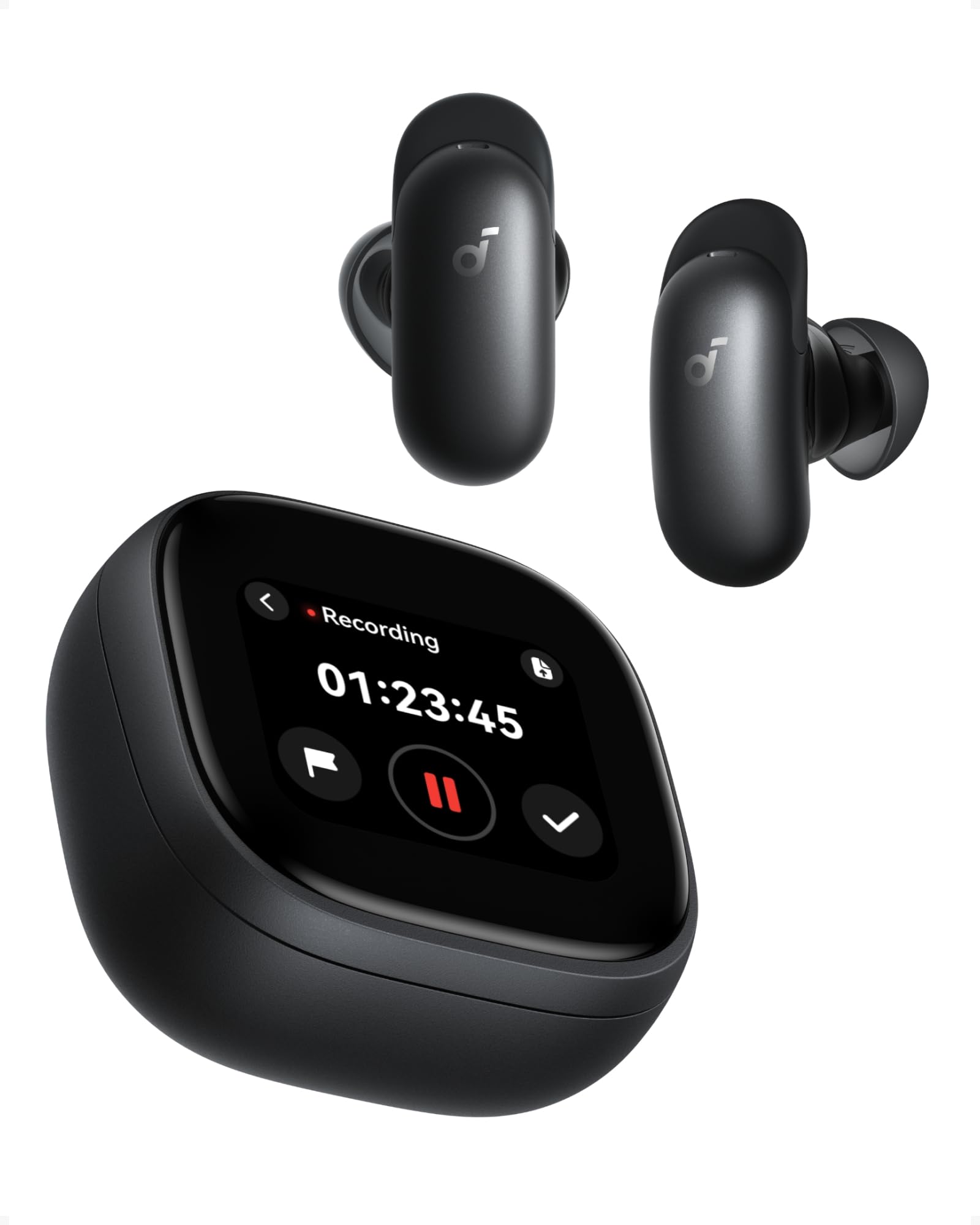
A charging case that takes meeting notes, and a mic array built for noisy rooms.
This is the only pair here that records in-person meetings through a mic built into the charging case, then transcribes them and generates AI summaries with key points and action items. That is a genuinely different job from music playback, and it explains the business-grade privacy stack behind it — local AES-256 encryption on the audio, plus ISO 27001/27701, SOC 2 Type 1, HIPAA, EN 18031, EN 303645, and NIST IR 8425 compliance listings. If you sit in interviews or client meetings all day, that combination is the reason to pick this one over the Status Pro X.
The calling side is equally well worked. Ten sensors paired with the Thus AI Chip hold your voice together in 100 dB+ noisy environments, and call quality and call clarity both land as clear strengths in owner feedback. Music holds up too: sound quality is the most-discussed positive, with the hybrid noise cancelling behind it. Bluetooth 6.1 is the newest version on this list by a clear margin, HearID 5.0 tunes the EQ to your ears, and 20 built-in voice commands run offline with no processing delay.
Two honest limits. The note-taking only captures in-room audio — it does not record online meetings, video calls, or phone calls, so remote work does not benefit. And the free Starter Plan covers 120 min/month of AI transcription for 24 months; beyond that you are on a paid plan. Fit splits opinion, with some finding the ear tabs secure and others reporting they work loose, so try the supplied fins before deciding. Battery runs 12 hours, dropping to 6.5 with ANC on.
The reason to buy: it is the only wireless IEM here that doubles as a meeting recorder with encryption and compliance listings behind it.
The fine print: transcription is in-room only, the free allowance is capped, and ANC cuts battery from 12 hours to 6.5.
Reach for these if: calls and meeting capture are your actual job.
Look elsewhere if: you only want music and will never touch the note-taker.
3. Sennheiser MOMENTUM True Wireless 5
A 7mm driver, aptX Lossless streaming, and a battery you can swap out yourself.
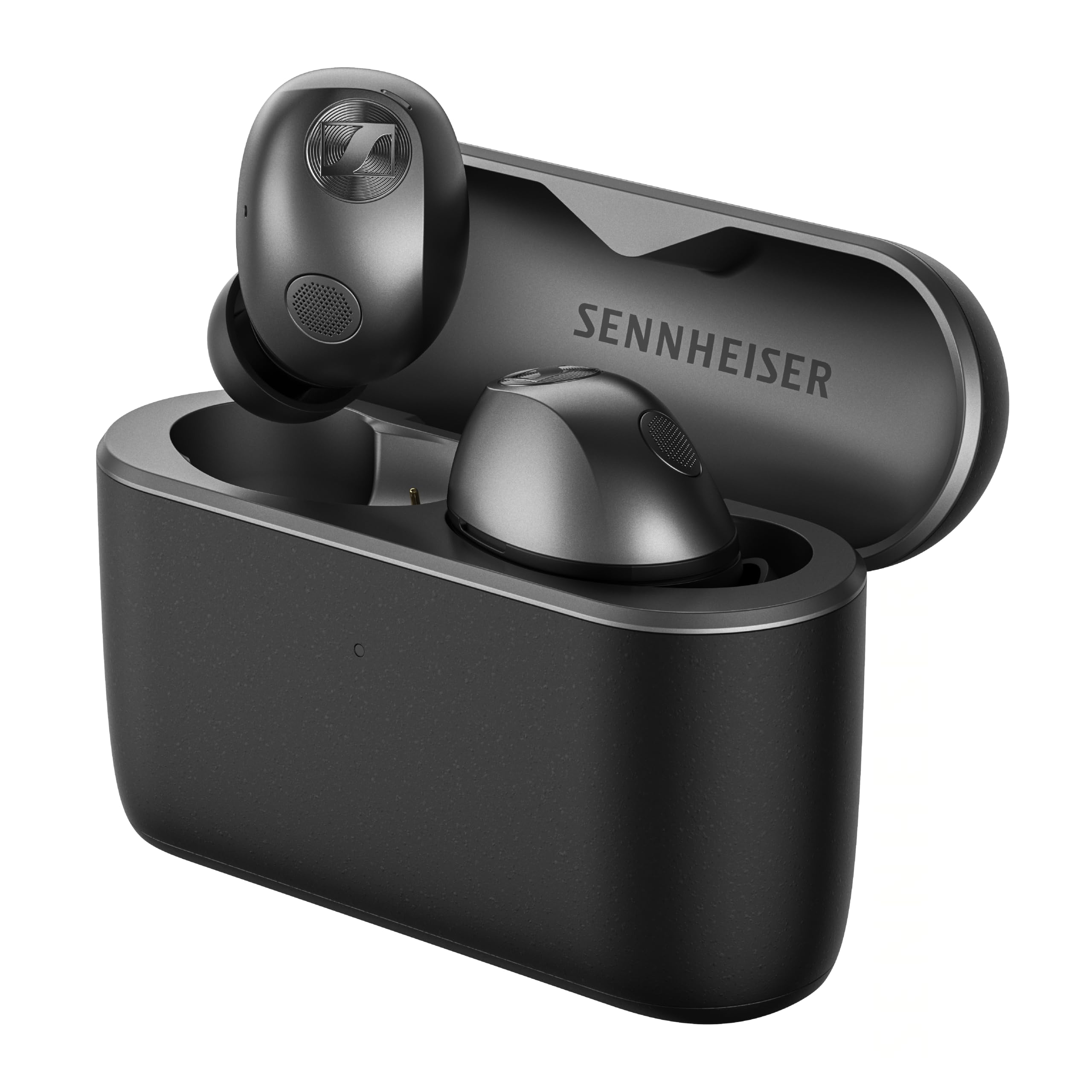
Sennheiser’s 7mm TrueResponse driver is the smallest driver on this list, and that is deliberate — a smaller driver tuned well tends to move fast and stay clean at volume rather than thump. Pair it with aptX Lossless, aptX Adaptive, and AAC support and you have the most codec-forward set of the group, aimed squarely at people who stream high-bitrate audio and can hear the difference. Up to 40 hours of total playtime with the case puts it near the top of the list for endurance.
What makes this pair unusual is the replaceable battery, supplied with a battery replacement tool in the box. Most true wireless buds become landfill when the cell dies, and this one does not — owners consistently point to that as the standout feature, and it is the single strongest argument for paying more here. You also get IP54 dust and splash resistance, four silicone tip sizes from XS to L, and a bone conduction mic plus beamforming mics with AI voice isolation for calls.
Set against its price tier, the division is stark: some listeners find these fantastic and others rank them among the weakest Sennheisers they have owned. The 7mm driver rewards a good seal and punishes a bad one, so tip fit is the variable to control. If you want one pair to last years instead of replacing dead cells, the user-swappable battery is the entire argument.
Arguments in its favour
- Replaceable battery with a tool in the box — rare for true wireless
- aptX Lossless, aptX Adaptive, and AAC codec support
- Up to 40 hours of playtime with the case
- IP54 dust and splash resistance plus four tip sizes
What you give up
- Opinion splits hard on the sound signature at this price
- The 7mm driver needs a solid seal to deliver its detail
Made for: listeners who keep gear for years and stream lossless from a compatible source.
Not the one: if you want a set that flatters any track without tuning the fit first.
4. Sony WF-1000XM6
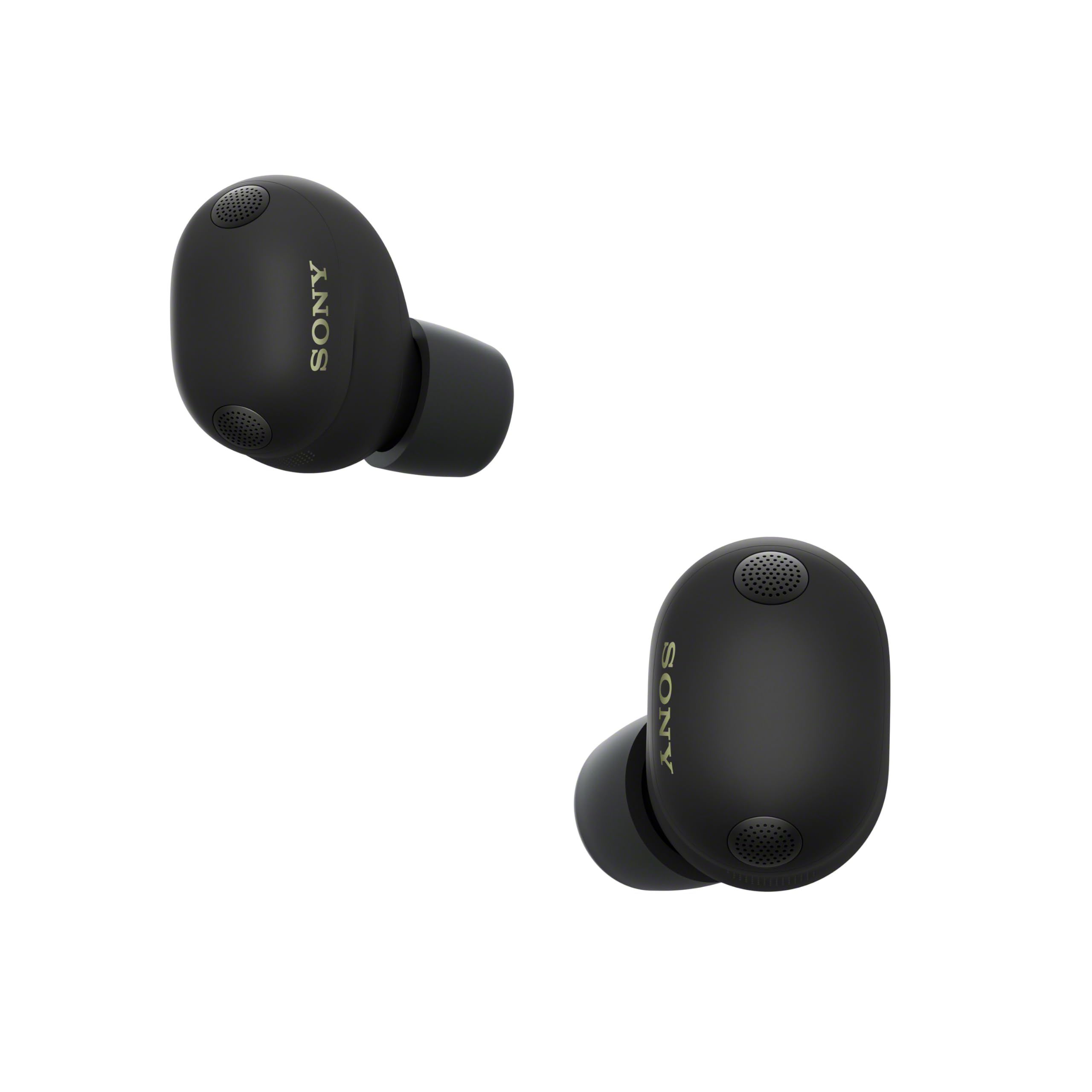
Eight mics that re-tune the silence as you walk from a quiet room into traffic.
Sony’s approach to noise cancelling is adaptivity rather than a fixed number. Eight adaptive microphones track the room while the HD Noise Cancelling Processor QN3e adjusts the cancellation profile in real time — and Sony states the QN3e runs 3x faster than the QN2e inside the WF-1000XM5. An 8.4mm dynamic driver handles playback, and three Auto Ambient Sound modes balance music against announcements or a conversation without you pulling a bud out.
The call system is unusually layered: dual beamforming mics, a bone conduction sensor that picks up your voice through vibration rather than air, and AI noise reduction that targets wind. For commuting, the practical figures are 8 hours in the buds and 16 in the case for up to 24 hours total, with a five-minute quick charge returning up to an hour of playback. The Sound Connect app adds EQ adjustment, Adaptive Sound Control, and a Battery Care setting to slow wear.
Here is where you need to be clear-eyed. The 3.5+ rating is the lowest on this list, which for a set at the top of the price ladder is a real caution rather than noise. Multipoint and multipoint pairing are listed, and the foam tips come in four sizes — those tips do a lot of the sealing work, so give them a proper trial before you judge the cancelling. Buy it for the QN3e adaptive cancelling, not for owner consensus.
What it does better than most: the QN3e processor and eight-mic Adaptive NC Optimizer adjust to your surroundings continuously instead of holding one fixed profile.
The honest caution: the lowest rating on this list sits on among the most expensive pairs — read the fit advice before committing.
Choose it for: commuters who move between loud and quiet spaces all day and want the cancelling to keep up.
Pass if: you want broad owner consensus backing an expensive purchase.
5. ASUS ROG Cetra True Wireless SpeedNova

A 2.4 GHz dongle for lag-free console play, plus Bluetooth for everything else.
Dual-mode wireless is the headline: a 2.4 GHz SpeedNova dongle for low-latency gaming and Bluetooth 5.3 for your phone, with Hybrid Multipoint letting both run at once so a call interrupts your match instead of missing you. The dongle covers PC, Mac, Android, Nintendo Switch, PlayStation 4, and PlayStation 5 — which makes this the more console-flexible of the two gaming sets here, since the SteelSeries Arctis GameBuds is built around Xbox. In 2.4 GHz mode you get 24-bit/96kHz audio with Dirac Opteo processing for positional detail.
Endurance is the standout: up to 46 hours in Bluetooth mode with RGB lighting off, and a five-minute in-case charge returns up to an hour of play. The case charges wirelessly or over USB-C. Bone-conduction AI microphones isolate your voice from room noise, adaptive ANC adjusts to how the bud actually sits in your ear, and Aura RGB lighting is there if you want the look.
The trade-off is consistency. Sound quality draws split reactions — some find it excellent, others rank it poorly — and connectivity is the second most-debated topic, with disconnection reports mixed in alongside praise for the Bluetooth link. Durability has its own negative thread. The 2.4 GHz path is the reason to buy this; if you will only ever use Bluetooth, the flexibility argument evaporates.
The set for you if: you play across PlayStation and PC and want one dongle that covers both.
Skip the dongle and this pick if: Bluetooth is all you need — you would be paying for a mode you never use.
6. SteelSeries Arctis GameBuds

Console-first buds that trade music polish for game-specific audio tuning.
SteelSeries built these around the Xbox, with high-speed 2.4 GHz wireless for console and PC plus Bluetooth 5.3 for mobile. The Arctis Companion App carries 100+ game audio presets designed to pull critical sounds — footsteps, reloads, callouts — forward in the mix. Neodymium magnetic drivers feed a 360° spatial audio stage, and 4-mic hybrid ANC with a transparency mode lets you stay aware of the room when you need to.
Battery is 10 hours per charge with a Qi charging case adding 3x extra charges for up to 40 hours of use. The app-driven control scheme means most of the setup lives on your phone rather than the buds themselves, which suits players who like tuning once and leaving it.
This is the lowest-rated pick on the list and you should treat it as a specialist, not an all-rounder. Sound quality splits sharply — some players rate it highly, others report high-pitched screeching and garbled voice issues — and reliability and durability both attract criticism. The platform list is also narrower than the ASUS ROG Cetra’s: Xbox, PC, PS5, Switch, and mobile, with the Xbox path being the one it is designed for. Buy it for the 100+ Xbox presets; look elsewhere for music.
Where it makes sense: 100+ presets in the companion app are genuinely useful for competitive console play.
What to weigh: mixed sound feedback and durability concerns put this in specialist territory.
The right call for: Xbox players who want game-tuned audio and spatial positioning.
Wrong call for: anyone wanting a set that also serves as a daily music companion.
7. Sennheiser Pro Audio IE 100 Pro Wireless

A real in-ear monitor that goes wireless when you want it and wired when you do not.
This is the closest thing here to a true stage monitor, because it ships as a 2-in-1 bundle: a Bluetooth module for wireless connection to phones, PCs, or tablets with a built-in mic for calls, plus a standard 3.5mm jack-plug cable you can swap in. The detachable cable is the point — if the wireless module or the cable fails, the earpieces live on. tune earpiece shape with silicone and foam attachments gives the isolation a monitor needs, and four earpiece adapters cover different ear sizes.
The numbers tell the story of an older, simpler design. Bluetooth 4 is the oldest version on this list by a wide margin, and 10 hours of continuous use from the rechargeable battery trails the 42.5 hours the Nothing Ear (a) claims by a factor of more than four. Bluetooth range is listed at 10 meters, charge time at 1.5 hours, and the package includes a protective case and USB-A to USB-C cable.
Owner feedback is genuinely split on sound and fit, and durability carries a negative thread — not the profile you want if reliability is your priority. If you want modern Bluetooth and long playtime, look up the list.
Built for working musicians
- 2-in-1 design with a Bluetooth module and a 3.5mm cable in the box
- Detachable cable means the earpieces survive a broken lead
- Four earpiece adapters in silicone and foam for a proper monitor seal
Living with the older tech
- Bluetooth 4 is the oldest version on this list
- 10 hours of playback and a 1.5-hour charge time
- Mixed sound and fit feedback, with durability drawing criticism
Worth it for: performers and engineers who want a wired-or-wireless monitor with serviceable parts.
Not worth it for: anyone who wants current Bluetooth and all-day playtime.
8. Nothing Ear (a) Wireless Earbuds

Forty-two and a half hours of playtime with 45dB of cancellation — the endurance leader here.
Nothing’s 11mm dynamic driver sits in a chamber with two new vents to improve airflow, which the maker says cuts distortion and lifts clarity. Smart Active Noise Cancellation runs up to 45dB and re-checks the seal between bud and canal every time you put them in, then applies more cancellation to compensate for any leak. That auto-correction is the clever part — it means the cancelling adapts to your ear rather than shipping one fixed profile.
Playtime is where this pair separates from the field: 42.5 hours with ANC off, against 10 hours on the Sennheiser IE 100 Pro. Fast Charge returns 10 hours of music from a 10-minute top-up, and the 2-hour full charge is quick for a case this size. Bluetooth 5.3 with Dual Connect pairs two devices at once, an 11 millisecond low-lag mode suits gaming and video, and Clear Voice Technology adds a dedicated talk mic plus an airway on the stem to let wind pass through.
Quality and sound quality are the two things this set gets praised for most, and value for money follows close behind — a strong showing for the least expensive pick here. Fit is the divide: plenty find the seal snug, while others report the buds working loose during movement, so try all the included tips. Treat the longest battery figures as ANC-off numbers and you will not be disappointed.
The value read: 45dB adaptive cancellation, 11ms low-lag mode, and 42.5 hours of playtime in one of the least expensive sets on this list.
The follow-up question: how well the seal holds during exercise — fit is the one area where opinion splits.
Pick these if: maximum playtime per unit of spend is your main filter.
Look past them if: you need a bud that stays locked in through heavy movement without a tip swap.
9. Beats Solo Buds True Wireless Earbuds

The lightest set on this list, in the smallest case Beats has ever built.
At 1.18 ounces for the set, these are the featherweight of the group — 6.3 times lighter than the Status Pro X at 7.4 ounces. That lightness plus a pocket-ready charging case is the entire design brief: something you can carry without noticing and pop in without fuss. Dual-layer, axial-aligned drivers aim sound directly down the ear canal to cut distortion, and four ear tip sizes from XS to L with laser-cut vents are there to relieve pressure through a full day of wear.
Battery is 18 hours of listening on a single charge, and Fast Fuel gives you 1 hour of playback from just 5 minutes on the charger. Class 1 Bluetooth is the longer-range class, so dropouts should be rarer than on standard links. Each bud carries a microphone with a noise-learning algorithm for calls, and one-touch pairing works on iOS and Android with no app needed to start.
One quirk to plan around: there is no power adapter or cable in the box, because the case plugs directly into a phone, tablet, or laptop over USB-C. Convenient on the move, but you will want a cable at home. Sound quality, fit, and comfort divide opinion here more than on most of this list — some find them the best they have owned and others find the fit poor. Go in expecting an everyday carry pair rather than a reference monitor, and try the tip sizes before judging.
Best for: commuters and gym-bag carriers who want the smallest, lightest set they can forget about.
Not ideal if: you want deep noise cancelling — it is not part of this design.
Know the Specs
ANC depth in decibels
Noise cancelling depth is quoted in decibels (dB) — a measure of how much sound pressure the system removes before it reaches your ear. Higher numbers mean more of the room filtered out. The Status Pro X lists 52dB and the Nothing Ear (a) lists 45dB; both are hybrid systems, meaning they use microphones inside and outside the bud. A deeper rating tends to matter most on planes, trains, and busy streets, while in a quiet office the difference is small. Seal quality still decides how much of that figure you actually feel.
Playtime and charging speed
Battery figures on wireless IEMs are usually quoted with ANC off, which is why the numbers look generous. The Nothing Ear (a) claims 42.5 hours total with noise cancelling off; the Soundcore Liberty 5 Pro Max claims 12 hours, dropping to 6.5 with ANC on. Those two figures cannot be compared directly because the conditions differ. Watch for the fast-charge line instead — 10 minutes for 10 hours on the Nothing, 5 minutes for 6 hours on the Liberty 5 Pro Max — because that is what saves you on a rushed morning.
Common Questions
What makes an earbud an IEM rather than a normal earbud?
Do wireless IEM earbuds work with an iPhone?
How do I stop earbuds falling out during a run?
Is a 2.4 GHz dongle better than Bluetooth for gaming?
Can noise cancelling make earbuds sound worse?
How long should a wireless IEM battery last before it degrades?
What does an IP rating actually protect against?
Can I use wireless IEMs for live performance?
What is multipoint and why does it matter?
Do I need a hi-res codec to hear a difference?
The Bottom Line
For most buyers, the strongest package in wireless iem earbuds is the Status Pro X, because 52dB of hybrid cancellation, a triple-driver LDAC setup, and Bluetooth 5.3 with Auracast come together in one pair. If your days are calls and meetings rather than music, the Soundcore Liberty 5 Pro Max earns its place with the in-case note-taker and ten-sensor call array. For PlayStation and PC play, reach for the ASUS ROG Cetra and its 2.4 GHz dongle. And if you want years of service from one purchase, the replaceable battery on the Sennheiser MOMENTUM True Wireless 5 is the argument no other set here makes.
How we choose
We do not accept paid placement. Every pick is matched to a real buyer and a real use-case; we do not hands-on test units.
Sources
Specifications: manufacturer listings and product documentation. Review insights: verified customer reviews, as of November 2026. Pricing: not shown on this page (it changes often); check the current price via the retailer link.
As an Amazon Associate, Tactical Gear Guy earns from qualifying purchases. This does not affect which products we feature.