Specs are compiled from manufacturer listings and verified buyer reviews and can change over time — please confirm the key details on the product page before buying.
Cold air finds every gap in a jacket at speed, and that is exactly what separates a real winter riding jacket from a summer shell with a liner tossed in. If you want the short answer: the Milwaukee Leather MPM1730 is the strongest all-round pick here, pairing a thick 1300D nylon shell with a zip-out liner and vents you can open when the sun comes back. Below you will find eleven jackets that actually hold warmth on a cold morning commute, sorted so you can match one to your riding style, your climate, and how much armor you want built in.
This guide is built by comparing the manufacturers’ published specifications and the patterns across verified customer reviews, so you get each pick’s real strengths and trade-offs instead of marketing spin.
You will learn which shells block wind, how removable liners change a jacket’s season, and where CE-rated armor actually sits. The right winter biker jacket keeps your core warm on a cold morning without locking out the venting you need on a milder afternoon.
Top Picks


How To Choose The Best Winter Biker Jacket
The single mistake most riders make is buying a jacket that only works in one temperature band. A winter biker jacket earns its place by covering cold mornings, milder afternoons and everything in between, so the layer system matters more than any single number on the label. Here is what to weigh before you pick.
Start with the liner system, not the shell
A zip-out thermal liner is the heart of a cold-weather jacket. It traps body heat on a frosty ride, then unzips when the temperature climbs so you are not sweating through your base layer. A 3-in-1 design takes this further — the IRON JIA’S and FXR Boost FX both let the insulating layer work on its own or stay fixed inside the shell. If you ride through genuinely hard winters, a fixed high-loft insulation with a waterproof laminate is the safer call. If your seasons swing widely, removable always wins.
Understand what CE armor actually protects
CE-rated armor means the shoulder and elbow pads have been tested to a recognized impact standard, and Level 2 armor (as on the RIDEIRON) is graded above the base Level 1 pads found on several jackets here. Check three zones: shoulders, elbows and back. Some jackets ship with a soft EVA foam back pad and a pocket to upgrade to a proper CE protector — the Vance Leather does exactly this. Armor adds bulk, so a slim-cut jacket with pads installed often needs one size up.
Match shell fabric to your roads
Shell material decides abrasion resistance and wind blocking. Thick 1300D nylon on the Milwaukee MPM1730 puts a dense layer between you and the road, while 500 denier mesh panels on the Vance breathe far better in mild weather but block less wind. Buffalo leather on the COMMUTER runs 1.2 to 1.3 mm thick and blocks wind naturally, with a heft you feel on the hanger. Mesh-heavy jackets need their thermal liner to hold heat; leather and dense nylon hold it on their own.
Waterproofing and vents are a pair
A waterproof rating blocks rain from the outside; vents dump heat from the inside. The FXR Boost FX carries a 10,000mm waterproof laminate with snowproof chest and side vents — a number that describes how much water column the fabric resists before it soaks through. On jackets without a stated rating, treat water resistance as splash-level and layer a rain shell over the top. Zippered chest, arm and back vents let you regulate temperature without stopping to strip layers.
Side-by-Side Comparison
| Model | Best For | Shell Material | Thermal Liner | Armor | Amazon |
|---|---|---|---|---|---|
| Milwaukee Leather MPM1730★ Best Overall | All-round winter riding | 1300D Nylon/Textile | Full-sleeve zip-out | — | Amazon |
| Vance Leather VL1624Budget Armor Pick | Budget all-season protection | 500 denier textile + mesh | Removable thermal | CE shoulders and elbows | Amazon |
| IRON JIA’S 3-in-1 HoodieMost Versatile | Year-round versatility | Water-repellent polyester | Detachable insulated | CE shoulders and elbows, EVA back | Amazon |
| RIDEIRON Winter Jacket | CE Level 2 armor priority | Oxford Fabric | Removable zip-out | CE Level 2 shoulders and elbows, EVA back | Amazon |
| ILM JAM1 | Cold-weather ventilation | Mesh + 600D oxford | Detachable waterproof thermal | CE elbow, shoulder and back | Amazon |
| COMMUTER Buffalo Leather | Leather classic on a budget | 1.2–1.3 mm Buffalo leather | Removable quilted | 5PC CE armor | Amazon |
| Milwaukee Leather LKM1710 | Old-school scooter style | Leather | Removable thermal | — | Amazon |
| First Mfg Co Raider | Cold-weather leather with storage | Thick leather | Zip-in liner | Armor-ready pockets | Amazon |
| Alpinestars Andes V3 Drystar | Wet touring rides | Drystar waterproof build | — | — | Amazon |
| First Mfg Co Vendetta | Cold-weather leather cruiser | Leather | Removable thermal | Armor pockets | Amazon |
| FXR Men’s Boost FX 2-in-1 | Harshest cold, worst weather | Polyester with HYDRX PRO laminate | Removable 175g Thermal Flex | — | Amazon |
Detailed Reviews
1. Milwaukee Leather MPM1730 Motorcycle Jacket
Our pick — 4.5+★ from 500+ verified ratings; the strongest balance of quality and price.
The dense-shell workhorse that holds heat without turning into a sweatbox.
What makes this the pick for most riders is what earns the most praise from owners — the build quality. That quality comes from a 1300D nylon/textile shell, a dense weave that puts a real layer of material between you and the road while blocking cold wind. A front zipper closure and a collarless design with a padded collar keep the neckline comfortable on a long cold ride. Reflective skull embroidery and reflective piping run across the chest, arms and back, so you stay visible when the winter light fades early.
Temperature control is where this jacket does its best work. A full-sleeve zip-out liner handles the cold, and a ventilation system with 2 chest, arm and back vents opens up when the afternoon warms. Zippered cuffs with a snap button strap close the wrists tight against wind, and action back shoulder panels and side hip zipper openings give you room to move in the riding position. Genuine YKK zippers add the durability you want on the main closure.
The practical extras push it ahead of lighter competitors here. Two outside lower pockets and two chest pockets, all zippered, manage gloves and keys, while dual inside left and right storage pockets can pull duty as concealed carry or plain large storage. The honest trade-off is sizing — the fit is generally right, but a size bigger can still run a little small for some builds, so check the size chart against your chest measurement before ordering.
Where it earns its keep
- 1300D nylon shell resists abrasion and blocks cold wind at speed
- Full-sleeve zip-out liner plus 2 chest, arm and back vents handle wide temperature swings
- Dual inside storage pockets work for concealed carry or everyday gear
- Reflective skull embroidery and piping run front, arms and back for low-light visibility
Worth knowing before you buy
- Fit can run small for some builds — check the size chart against your chest
- Collarless design leaves the neckline more open than a tall padded collar
Go for it if: you want one jacket that covers cold rides and milder days without adding layers — the 1300D shell and vent system do both.
Think twice if: you ride in driven rain; this shell is built for wind and abrasion, so pair it with a rain layer for a downpour.
2. Vance Leather Motorcycle Jacket
CE-rated protection at the entry-level end of the shelf, with mesh that breathes off the bike.
For a rider watching the budget but refusing to give up armor, this is the smart stack. A 500 denier textile shell blends in airflow mesh panels, and CE-rated protectors come installed at the shoulders and elbows. A removable back protector pad slides out, with a pocket ready for an optional CE protector if you want to upgrade the spine zone. Two waist-level outer pockets, a gun pocket and a zippered interior pocket cover storage.
The liner story is what qualifies it as a cold-weather pick. A removable thermal liner traps warmth on a cold ride, and it carries a pocket for an audio device on the liner itself. Zippered sleeve adjusters with hook and loop, plus an adjustable hook and loop waistband, let you dial in a custom fit over the armor. Reflective trim front and back helps in low light, and the chest sizes step from S at 42 up to 5XL at 58 so a broad range of riders can find their number.
The mesh trade-off: Because the shell leans on mesh paneling, airflow is strong and warmth lives entirely in the liner. That makes it a great cool-morning jacket but a lighter wind blocker than a solid 1300D shell when temperatures dive.
Fit reality: The adjustability earns praise, but sizing runs mixed for some riders, so lean on the chest-size chart rather than your usual letter size.
Pick the Vance when: armor at the shoulders and elbows for a modest spend is the priority, and you want mesh that vents well on warmer rides.
Look past it if: you ride deep winter routinely and need a solid wind-blocking shell rather than a mesh-and-liner combination.
3. IRON JIA’S Winter Motorcycle Jacket
A hoodie-shaped winter jacket that turns into a lighter shell once the liner comes out.
The selling point here is a 3-in-1 build that reads like streetwear and works like gear. The outer shell is water-repellent polyester, built for wind resistance and durability, and it handles spring, summer and fall on its own. A soft, skin-friendly liner adds insulating warmth for winter and can be worn on its own off the bike. When cold arrives, you attach the liner with concealed buttons at the sleeves and hem to transform it into a warm winter riding jacket, and the detachable hood comes off too.
Protection lines up with the CE Class A certification (0598/PPE/25/5881). CE-certified armor sits at the shoulders and elbows, and a removable EVA back protector adds coverage for the spine. A reflective stripe down the design keeps you seen at night, and side zippers let you flex the size and add ventilation. What owners value most is the overall quality, followed closely by the cold-morning warmth — this jacket is built around those early and late rides when the air bites.
Two things to plan for. First, the cut is slim-fit and fitted, so the maker recommends one size up when you wear armor or the liner. Second, the hoodie silhouette means the collar is hooded rather than a tall riding collar, and some riders find it takes a moment to zip up over a thick base layer. The dual-layer zippered pockets are generous, and the hook-and-loop chest patch lets you add your own patch for a personal touch.
Why it earns a spot: Three jackets in one — an outer shell, a standalone liner and a combined winter setup — with CE armor and a removable back pad, at a friendly mid-range figure.
The honest catch: It runs small and slim by design, so order a size up if you plan to wear armor or layer underneath.
Best fit: commuters who want one hooded jacket that already looks like everyday wear and still carries CE armor and a winter liner.
Only if you size up: the slim, fitted cut punishes anyone who orders their usual letter size and then adds armor.
4. RIDEIRON Winter Motorcycle Riding Jacket

Removable Level 2 shoulder and elbow armor, plus a MOLLE panel for gear.
If armor grade is the deciding factor, this one moves up the list. It ships with removable CE Level 2 armor at the shoulders and elbows — a higher protection grade than the base Level 1 pads on several jackets here — and a removable EVA back protector for spine coverage. The liner zips out to give you access to the armor pocket, so you can adjust the pads without fighting the lining. Certification sits at CE Class A (0598/PPE/25/5661).
The cold-weather side is handled by a removable liner with a zipper design, so you strip it for milder rides and add it back for winter. An Oxford fabric shell with a straight, aviator-style cut is insulated and windproof, and a band collar keeps the neckline close. Adjustable cuffs and hem let you seal out wind, and the practical storage includes functional side pockets and asymmetrical 3D chest pockets. A MOLLE system across the front gives you a spot to attach accessories, and a 3D embroidered collar logo finishes the look.
Two honest notes. The fit runs mixed — some riders find it spot on while others say it runs small — and the jacket is a slim-fit cut, so the maker advises a size up when you wear armor or the liner. The zipper quality also draws mixed feedback, so zip it deliberately rather than yanking it shut.
What stands out
- CE Level 2 armor at shoulders and elbows, a step above base Level 1 pads
- Removable EVA back protector for spine coverage
- Removable zip-out liner handles winter warmth and milder rides
- MOLLE system and 3D chest pockets add practical, customizable storage
Trade-offs to weigh
- Fit runs mixed and the cut is slim — size up for armor or liner
- Zipper quality draws mixed feedback; treat it with care
The rider it suits: anyone who rates protection above all and wants Level 2 armor with a removable back pad on a cold-weather jacket.
The caveat: the slim cut and mixed sizing mean you should measure rather than guess your usual size.
5. ILM JAM1 Motorcycle Riding Jacket

Mesh that moves air on a warm ride, backed by a liner that seals out cold and rain.
Here is the jacket that handles the widest temperature swing in this group. Extensive, high abrasion-resistant mesh sits where you need airflow, giving strong ventilation in warm weather. Thickened 600D oxford fabric at the shoulders and elbows adds abrasion resistance where a slide would hit first, so the mesh does not mean soft protection. CE protectors at the elbow, shoulder and back provide impact and abrasion coverage, and a removable waterproof and warm thermal liner adapts the jacket to cold, wet rides.
The fit controls matter for cold-weather use. An adjustable hem lets you dial the length to suit your riding position, and the cuffs tighten to keep gravel and wind out. Storage is practical: 2 outside zippered pockets and 2 inside pockets cover gloves and a phone. Riders consistently flag the quality and the fit as the strongest parts, with the cold-weather warmth and breathability close behind — this jacket is built to manage both ends of the ride.
The thing to watch is sizing, which runs mixed, and the pockets, which some riders find smaller than expected. The good news is the removable liner does double duty: it is waterproof, so a light wet ride with it buttoned in is far more comfortable than on a jacket with a plain liner. Take a size up if you plan to wear the thermal layer plus armor together.
Reach for this if: you ride in a climate that swings from warm afternoons to cold, wet mornings and you want one jacket that vents and seals.
Consider the fit: sizing runs mixed and pockets are on the smaller side, so check the size guide and travel light.
6. COMMUTER Buffalo Leather Motorcycle Jacket
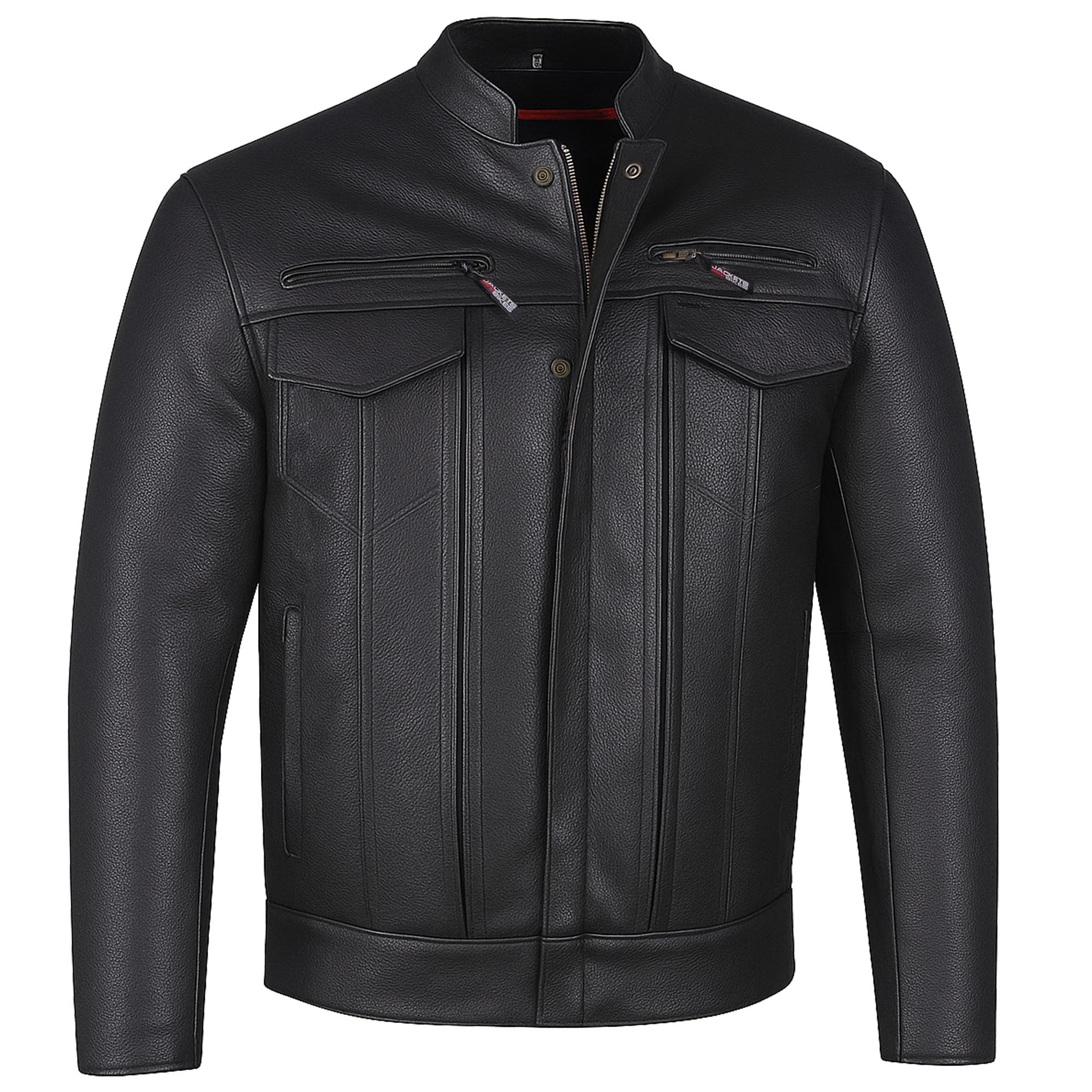
Thick buffalo leather with five CE armor pads for riders who want the classic hide.
For a rider who wants the feel of real leather without the top-tier spend, this jacket delivers the material story. The shell is premium natural buffalo leather at 1.2 to 1.3 mm thick — soft and supple, yet rated for maximum durability and flexibility, and resistant to normal wear and tear. Five-piece CE armor comes pre-installed, and a large leather back panel is ready for patches and customization. It weighs in as a heavyweight garment, which is exactly what that hide implies.
You stay warm when the temperature drops thanks to a removable thermal quilted liner. That liner zips out, so you can open the ventilation zippers — two on the chest and two on the back — for airflow in summer. Eight utility pockets, four outside and four inside, include two spacious secure pockets and an interior cell phone pocket. Original YKK metal zippers (a durable brand of zipper), a full-sleeve zip-out liner, action back (a stretch panel across the shoulders for reach), zippered cuffs, a mandarin collar and grommets under each arm round out the details. The fit is a true American cut with regular sizing.
What makes this one stand out is the leather-to-price balance. Owners praise the quality, fit and leather in large numbers, and the jacket accommodates a broad range of builds — one wearer noted it fits a 6ft 6in, 230 lb frame. The honest note is heft: at heavyweight, this is a jacket you feel on your shoulders, which is a feature in cold wind and a consideration on a hot day.
The leather value: A 1.2–1.3 mm buffalo hide shell with five-piece CE armor, eight pockets and a zip-out quilted liner makes this one of the strongest leather buys in the group.
Plan around the weight: The heavyweight leather shell keeps you warm but adds noticeable load — fine for cold rides, heavier than a textile shell for daily carry.
The jacket for you: a leather loyalist who wants a thick hide, CE armor and a removable liner without leaping to premium leather pricing.
The honest limit: the heavyweight build and textile-free shell mean it is warmer and heavier than a vented nylon jacket on a mild day.
7. Milwaukee Leather LKM1710 Leather Motorcycle Jacket

Old-school scooter style in leather, with a removable liner for winter mornings.
This is the one for a rider who wants the classic biker look rather than a techy textile shell. The leather build earns the most praise for its quality and material, and owners describe a well-made jacket that feels built to last. A removable thermal liner handles the cold-weather part, so you can layer it up for winter rides and pull it for milder days. Leather blocks wind naturally and ages with character, which is the whole appeal of this scooter-style shell.
Weigh the heft before you commit. This jacket comes in at 6 pounds, the heaviest garment in this group, so it is a jacket you feel the moment you lift it off the hook. For some riders that weight is the point — heavy leather feels substantial and blocks cold air. For others it is a daily-carry consideration. The cut is a classic scooter silhouette, and buyers describe an old-school biker vibe that pairs well with a cruiser.
Fit is where you should pay attention. Sizing and fit draw mixed feedback here, so measure your chest and check the size chart rather than assuming your usual letter size. Owners consistently call it a great value given the leather, with several noting it feels more premium than the price tier suggests.
What riders like
- Leather shell with a classic scooter silhouette and old-school biker styling
- Removable thermal liner adds cold-weather warmth
- Well-made build with a material quality owners notice first
What to plan for
- At 6 pounds, it is the heaviest jacket in the group
- Fit and sizing draw mixed feedback — measure before ordering
Made for: cruiser and scooter riders who want classic leather style with a removable liner for cold seats.
Double-check: the heavy leather weight and mixed sizing — confirm your chest measurement first.
8. First Mfg Co Raider Leather Jacket
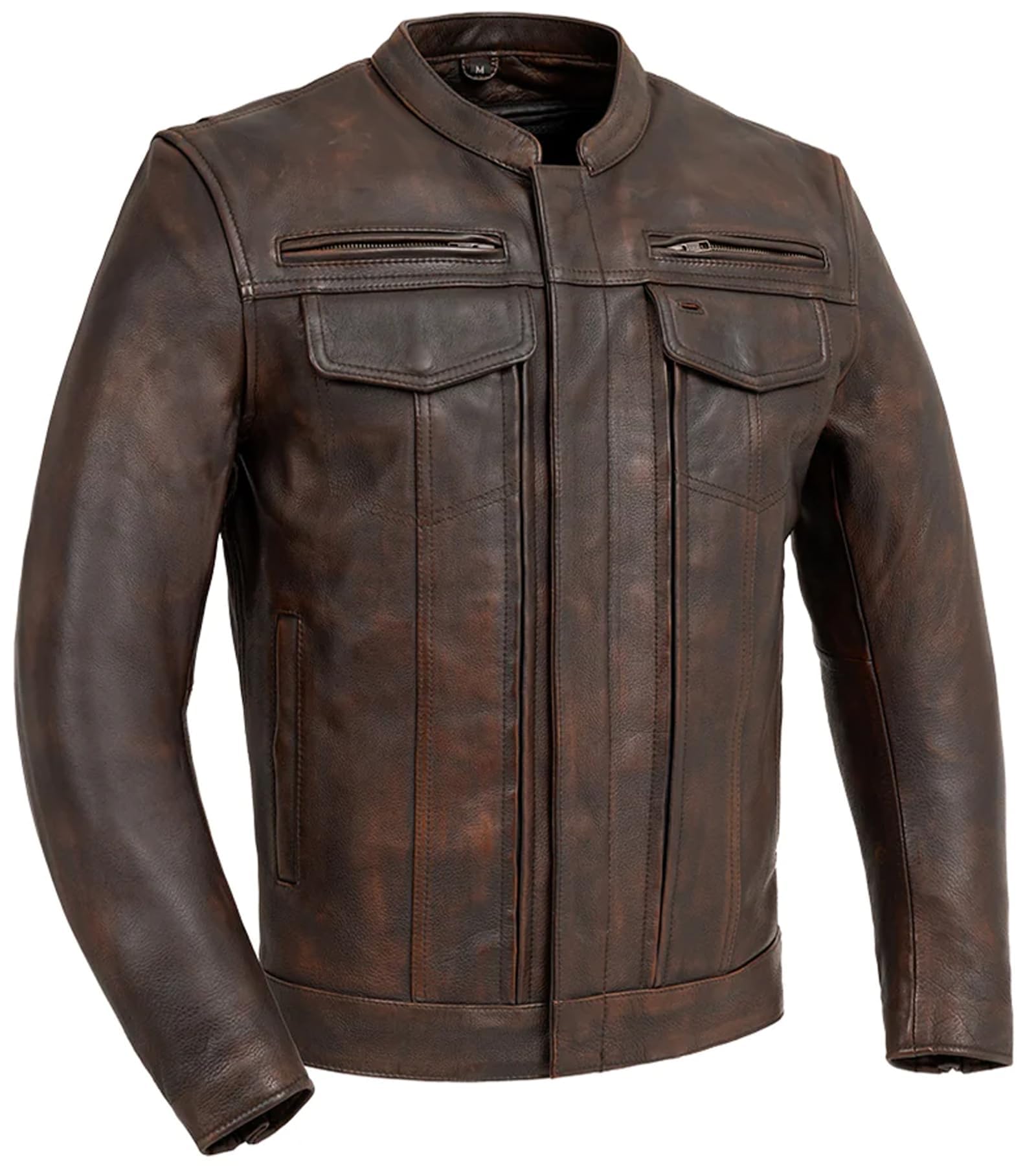
A thick leather jacket with storage and a zip-in liner for genuine cold weather.
Leather riders who want a bit more polish should look here. The hide is thick and genuinely handsome, according to the owners who wear it, and it fits well over a light hoodie. A zip-in liner handles cold-weather duty, with owners noting it provides real cold-weather protection for winter commuting. That thickness blocks wind the way leather does best, so the shell works hard before you even zip in the liner.
Where this jacket separates itself is storage and armor-readiness. Owners talk about tons of storage, and the armor pockets align well with aftermarket pads — the Phantom Tripleflex armor pads fit the pockets as designed, so upgrading the protection is painless. That means you can add proper armor later rather than paying for it up front. The overall quality, fit and leather lead the owner feedback, with value close behind.
The catch is sizing, which draws negative feedback — order carefully and confirm your chest measurement rather than trusting the label size. If you can nail the fit, this thick leather jacket layers over a hoodie, blocks winter wind and carries more gear than most cruiser jackets.
Lean toward this if: you ride a cruiser, want thick leather and useful storage, and plan to add your own armor pads.
Watch out for: sizing that runs off for some buyers — measure first so the leather fits like it should.
9. Alpinestars Andes V3 Drystar Jacket
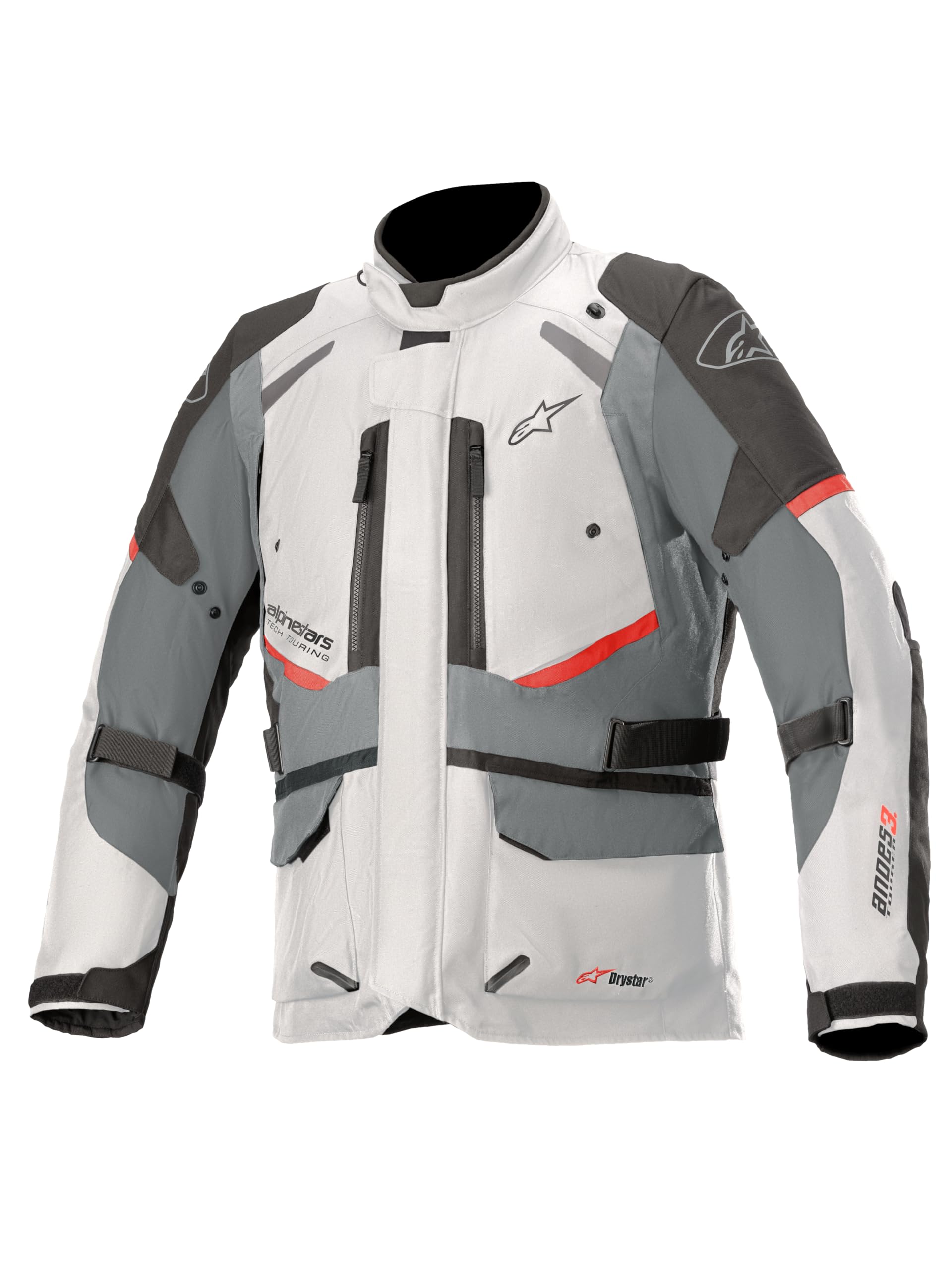
A waterproof touring shell built to keep you dry when the sky turns on you.
When the forecast is questionable, this is the jacket that earns its keep. The Drystar build is designed to keep rain out while the touring cut covers your back in the saddle. Owners describe it as exceeding expectations, with weather protection that keeps them dry in cold, wet conditions — exactly the scenario a winter commuter fears most. Comfort and fit earn consistent praise alongside the weather protection.
Alpinestars has built racing and riding gear since 1963, and that background shows in the jacket’s finish. The manufacturer positions it as road gear combining safety tech with comfort and style, and the touring focus suits long days rather than quick errands. For a rider logging winter highway miles, the Drystar shell’s weather sealing matters more than styling.
The one real hitch: sizing runs small, and plenty of riders say so. If you are between sizes, take the larger one. Pick this over a prettier jacket if staying dry is the job — the Drystar build is the most weather-focused shell in this lineup.
Why it earns the touring nod: The Drystar waterproofing is the headline, and the owner feedback on staying dry in cold conditions backs it up.
True to size, it is not: Sizing runs small, so order a size up if you are unsure.
Best for: touring riders who face rain and cold on long highway stints and need a shell that seals out weather.
Before you order: size up — this jacket consistently runs small.
10. First Mfg Co Vendetta Leather Motorcycle Jacket
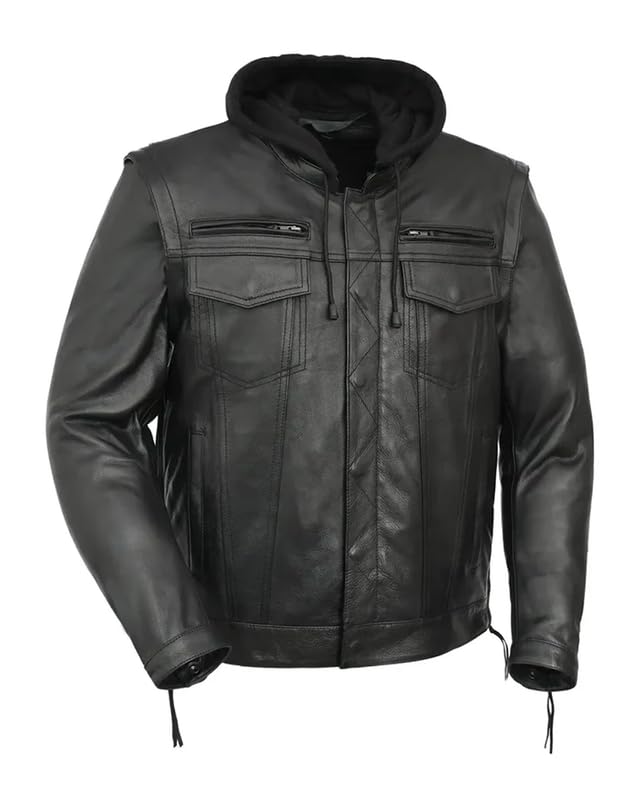
Leather warmth rated for cold rides, with armor pockets ready for pads.
For a rider who wants leather that holds heat, this jacket is built around cold-weather comfort. Owners describe it as warm and well-made, with comfort that holds down into the low 30s. The removable thermal liner is the reason it works there, trapping warmth while the leather shell blocks wind. Appearance and fit earn consistent praise, and the armor pockets let you slide in pads when you want protection without buying it up front.
Construction is a highlight — owners note the build quality, and the jacket feels substantial in the hand. Value lands well too, with buyers feeling the leather-to-price balance is fair. The material question is the one to note: feedback is mixed, with some calling it genuine leather while others question the quality of what arrived. Inspect what you receive and you can judge the hide for yourself.
If you ride cold and want a leather cruiser jacket with a removable liner and room for armor, this is a strong option. If leather authenticity is a hard requirement, order carefully and check the return window.
What you get: A warm leather jacket with a removable thermal liner that owners ride into the low 30s, plus armor pockets for adding pads.
The material caveat: Feedback on the leather itself is mixed, so inspect the hide on arrival.
Choose this if: you want a warm leather jacket with a removable liner and the flexibility to add armor pads.
Look elsewhere if: leather authenticity is non-negotiable and mixed material feedback makes you want to inspect in person first.
11. FXR Men’s Boost FX 2-in-1 Jacket (Black/Char – 3X-Large)
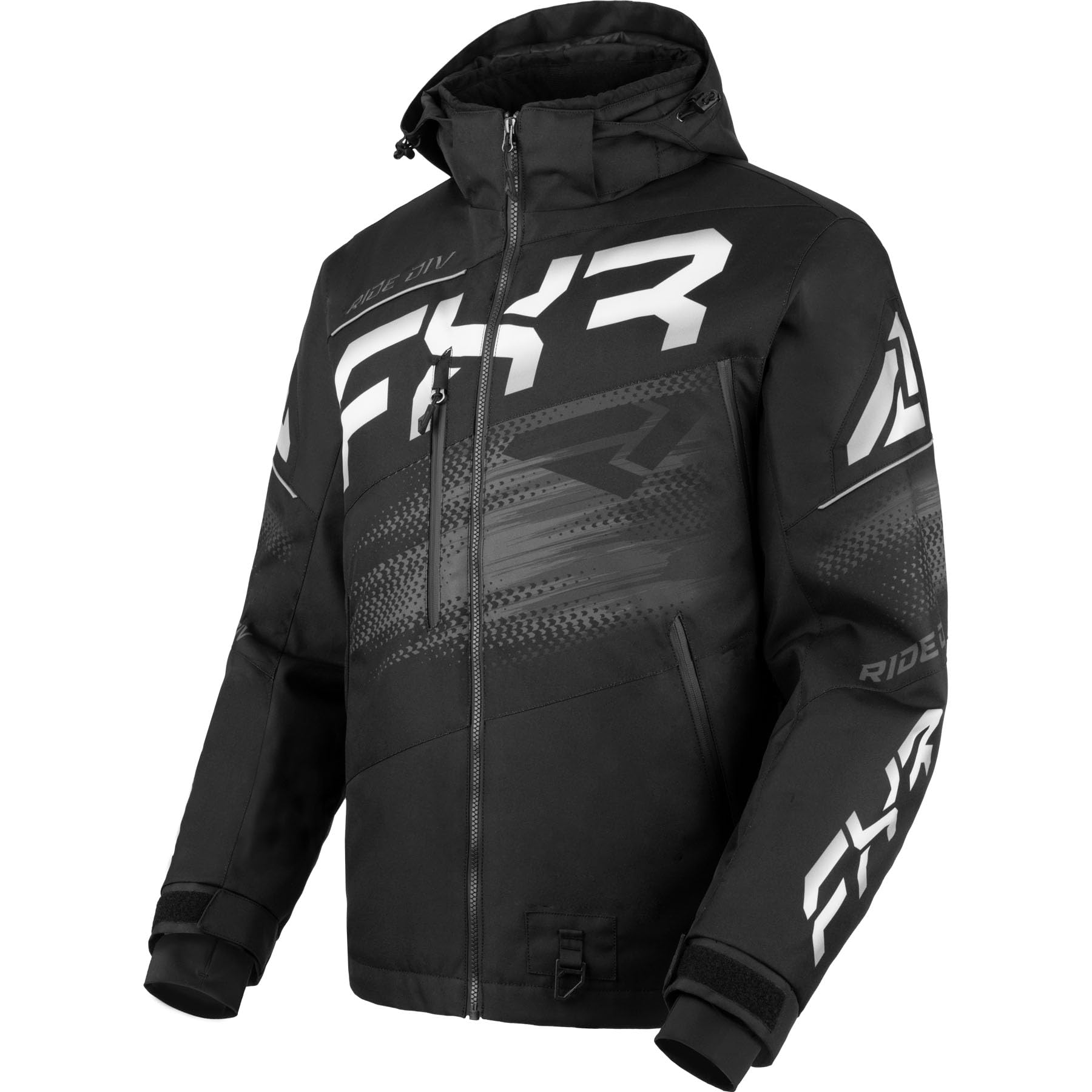
The full winter weapon: a waterproof laminate, 175g liner and a vent system built for snow.
When the season is genuinely brutal, this is the jacket to reach for. A removable thermal liner with 175g Thermal Flex insulation turns one jacket into two distinct layers, so you can run it insulated for deep cold or stripped down as weather shifts. The HYDRX PRO laminate carries 10,000mm waterproofing and 8/m² breathability — it blocks external moisture while letting internal perspiration escape during hard riding. F.A.S.T. 3.0 insulation adds 90g of warmth in the outer shell body, with perforated zones at the vents for airflow.
The venting and sealing system is built for the worst days. The FXR Dry Vent System runs snowproof chest and side body vents that work with a quick-dry mesh lining to dump heat and wick moisture. A YKK AquaGuard front zipper and heavy-duty #8 waterproof zippers throughout seal out snow and wind, while adjustable cuffs with lycra extensions, a windskirt, and a shock-cord collar and hem fine-tune the fit. Built with extreme cold in mind, it is the most cold-focused jacket in this group by a wide margin.
It is also the bulkiest and one of the heavier builds — 5.9 pounds — so it suits a rider who faces real winter rather than a mild one. Quality and warmth take the top marks from owners, and the waterproof sealing separates it from the leather and mesh jackets here. If you ride through snow and driving rain, this is the one that was built for it.
Built for the deep freeze
- 10,000mm waterproof laminate with 8/m² breathability blocks rain, releases sweat
- Removable 175g Thermal Flex liner plus 90g F.A.S.T. 3.0 insulation in the shell
- YKK AquaGuard and #8 waterproof zippers, windskirt and shock-cord collar seal out snow
- Snowproof chest and side vents with quick-dry mesh lining dump heat
The trade-offs
- At 5.9 pounds it is a heavy, bulky jacket for milder days
- Built for extreme cold — overkill for a mild fall commute
The hard-winter pick: riders who face snow, rain and deep cold and want the most weather-sealed, insulated jacket in this lineup.
Not for you if: your winters are mild — the 5.9-pound build and extreme-cold insulation are more than a light commute needs.
Know the Specs
Shell Fabric Denier and Leather Thickness
Denier describes the density of a textile weave — a higher number means a thicker, more abrasion-resistant fabric. The 1300D nylon on the Milwaukee MPM1730 packs a denser barrier than the 500 denier mesh blend on the Vance, which is why it blocks more wind but breathes less. On leather jackets, thickness works the same way: the COMMUTER’s 1.2 to 1.3 mm buffalo hide is a substantial layer that blocks wind naturally. Match the shell to your roads — dense nylon and thick leather for cold, fast riding; lighter mesh for warm-weather airflow.
Waterproofing Ratings and Thermal Liners
A waterproof rating like the FXR’s 10,000mm describes how much water column the fabric resists before moisture passes through, so a higher number means better rain protection. Thermal liners are the warmth half of the equation, and removable ones let one jacket cover multiple seasons. Insulation is often described in grams, as with the FXR’s 175g Thermal Flex liner, where a higher figure means more loft and warmth. Pair a waterproof shell with a warm liner and you cover both wet and cold; pair a vented shell with a light liner and you cover mild and cool.
Common Questions
Will a winter biker jacket keep me warm on a 40-degree morning commute?
<
Do I need to size up in a winter motorcycle jacket?
What is the difference between CE Level 1 and CE Level 2 armor?
Is mesh or textile better for a winter riding jacket?
Can I wear a leather riding jacket in winter?
What does the 10,000mm waterproof rating on a riding jacket mean?
How do I adjust a riding jacket so it stays quiet at highway speed?
Do these jackets have pockets for armor upgrades?
Will a winter biker jacket work for summer too if I remove the liner?
How do I care for a leather winter riding jacket?
The Bottom Line
For most riders, the winter biker jacket winner is the Milwaukee Leather MPM1730 because its 1300D nylon shell, full-sleeve zip-out liner and 2 chest, arm and back vents cover cold rides and mild afternoons without swapping jackets. If you want a leather hide with CE armor built in, grab the COMMUTER Buffalo Leather. And for the worst of the season, the FXR Boost FX is the one to reach for, with its 10,000mm waterproof laminate and 175g Thermal Flex liner.
The Milwaukee MPM1730 is the crowd favorite at 4.5+ stars across 500+ owners, a rating that reflects how well its build quality and fit hold up ride after ride. Before you order any of these, measure your chest and check the maker’s size chart; several of the strongest picks here run slim, and the right size is what makes a winter jacket actually work.
How we choose
We do not accept paid placement. Every pick is matched to a real buyer and a real use-case; we do not hands-on test units.
Sources
Specifications: manufacturer listings and product documentation. Review insights: verified customer reviews, as of November 2026. Pricing: not shown on this page (it changes often); check the current price via the retailer link.
As an Amazon Associate, Tactical Gear Guy earns from qualifying purchases. This does not affect which products we feature.