Specs are compiled from manufacturer listings and verified buyer reviews and can change over time — please confirm the key details on the product page before buying.
Buying ballroom shoes online is a gamble because the two things that decide whether you can actually dance in them — the sole material and the heel height — are the two things you cannot feel through a screen. Get the sole wrong and you will stick on a spin or slide where you meant to plant. Get the heel wrong and your calves will tell you by the second hour of class. Below are nine pairs that real dancers wear to lessons, socials, and performances, so you can match a shoe to how you actually move.
This guide is built by comparing the manufacturers’ published specifications and the patterns across verified customer reviews, so you get each pick’s real strengths and trade-offs instead of marketing spin.
The picks below sort by what each shoe does best rather than by price tag. Every entry states its heel height in inches and its sole type, because those two numbers decide whether a pair suits a beginner’s practice night or a performance floor — and that is the whole basis for choosing among these women’s ballroom dance shoes.
Top Picks


How To Choose The Best Women’s Ballroom Dance Shoes
Start with the floor you dance on most. A suede sole — the soft brushed leather bottom found on nearly every shoe here — is designed to slide and pivot on a smooth wooden studio floor. Wear that same suede sole onto carpet or pavement and it will grab and wear down fast. Match the sole to the room first, then work out the heel.
Heel height decides which dances feel natural
A 1.5-inch heel keeps you close to the ground, which most beginners find steadier for tango, waltz, and long practice sessions. A 2.5-inch heel lifts the arch and lengthens the leg line, which suits Latin and salsa styling and performance work. Neither is better — they solve different problems. If you are new to partnered dancing, start lower and move up once your balance settles.
The closure changes how the shoe holds your foot
Lace-up shoes let you dial in width across the whole top of the foot, which helps if your feet are narrow in the heel but wider across the ball. Elastic panels slip on fast and flex with the foot during turns. A buckled strap gives a locked-in feel for performance, but it takes longer to put on and the buckle position matters for comfort. Think about whether you are changing shoes in a studio lobby or at home before a social.
Side-by-Side Comparison
| Model | Best For | Heel Height | Sole | Closure | Amazon |
|---|---|---|---|---|---|
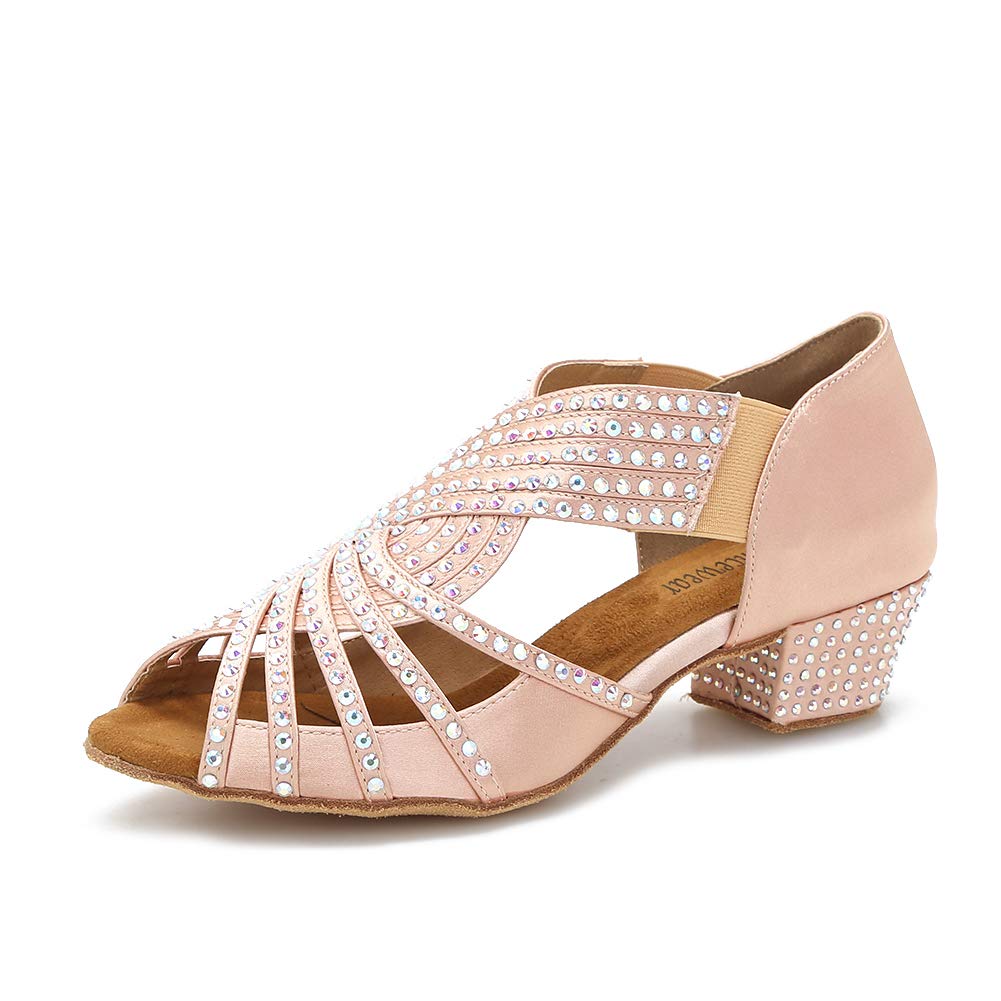
| TTdancewear Rhinestone Performance★ Best Overall | Performance sparkle | 2.5 in | Suede | Dual elastic | Amazon |
| RoseMoli Latin Lace-UpBest for Practice | Practice and teaching | Low heel | Split suede | Lace-up | Amazon |
| Low Heel ZB14Beginner’s Pick | Beginners on a budget | 1.5 in | Suede | Buckle strap | Amazon |
| YYTing YT26 Closed Toe | Closed-toe social dancing | 1.5 in | Suede | Elastic | Amazon |
| Yokala S04 Practice Sandal | All-evening comfort | Low heel | Suede | Buckle | Amazon |
| TTdancewear Sparkly DS888 | Extended wear comfort | 1.5 in Cuban | Suede | Elastic | Amazon |
| YYTing YT06 Crystal | Wedding and formal events | 2.5 in | Suede | Elastic | Amazon |
| Bloch Annabella Leather | Arch support and leather feel | — | Suede | Self-locking buckle | Amazon |
Detailed Reviews
1. TTdancewear Women Rhinestone Dance Shoes
Our pick — 4.0+★ from 950+ verified ratings; the strongest balance of quality and price.
The rhinestone pair that carries a two-and-a-half-inch heel without making turns feel like a balancing act.
If you want one shoe that works for a showcase and a Saturday social, start here. The heel measures 2.5 inches — a thick heel built to hold your weight steady while you move through Latin and salsa styling. That is 1.5 inches taller than the low-heel ZB14 further down this list, so it lifts your leg line for performance in a way the practice shoes simply cannot. What wins people over, though, is the sparkle: the rhinestone finish is the single most-praised thing about this shoe, and it reads as stage-ready rather than craft-project.
The closure is a dual elastic panel, which means you slip them on and off without lacing or buckling — handy when you are changing in a crowded studio lobby between classes. Dance-wise, the shoe is reported to hold up through turns and spins rather than fighting you. The maker describes the padding as close to bare-foot comfort, and reviewers largely agree.
Here is the honest catch. The fit is genuinely divisive: plenty of dancers find their normal size right, and a real share find it runs small. Order a half size up if you are between sizes, and check the return window before you commit to a colour. Rhinestone shedding is mentioned often enough to treat these as event shoes you handle with a little care, not beaters you toss in a dance bag loose.
What earns the top spot
- 2.5-inch thick heel gives stability while still lifting your line for Latin and performance work
- Rhinestone finish is the most-praised feature — it looks the part on a showcase floor
- Dual elastic panels mean no laces or buckles to fight with mid-class
- Reported to stay controllable through turns and spins
Where to slow down
- Sizing splits the room — some find it true, others find it small
- Rhinestones can shed with rough handling
- A taller heel than beginners usually want for their first month of classes
Reach for this if: you have a performance, showcase, or dressy social on the calendar and want a heel that looks the part without wobbling under you.
Hold off if: you are brand new to partnered dancing and still building ankle strength — the 1.5-inch practice shoes below will serve you better first.
2. RoseMoli Women’s Latin Dance Shoes
A lace-up practice shoe that hugs the foot like a glove and stays breathable through a two-hour drill night.
Teachers and students who spend hours on the floor need a shoe they can adjust, and this is the one that does it best. The lace-up closure lets you tighten across the whole top of the foot, so a narrow heel and a wider ball can both find a locked-in fit. The upper is a synthetic mesh fabric — the open weave lets air move — and inside it is lined with microfibre that pulls sweat away so your feet stay drier through back-to-back classes.
The sole is a split suede design, meaning the suede is cut into two sections so the shoe bends with your arch instead of resisting it. That flexibility is the whole point of a practice shoe, and comfort is what dancers notice most here, with the shoe reported to contour to the foot without pinching. The maker also builds in padding around the rim with a hand-stitched cushion to cut down on rubbing at the edges of the foot.
The fit runs snug by design — the brand says so plainly, and recommends sizing up if you like room to move your toes. That is the trade-off of a lace-up that hugs: comfort for some, tightness for others. Treat it as a feature you tune with the laces, not a fault.
On the floor: the split suede sole is what makes this a genuine practice shoe rather than a dress shoe — it flexes under the ball of the foot so long drills do not fight your arch.
One thing to plan for: the snug fit is intentional, so order your usual size knowing it may feel tight at first, or go up half a size if you have wide feet.
Suits you best if: you teach, take multiple classes a week, or want a shoe you can fine-tune with laces for an exact fit.
Think twice if: you hate lacing up before every session and prefer to step into a shoe and go.
3. Low Heel Ballroom Dance Shoes ZB14
A 1.5-inch heel that beginners describe as feeling like slippers, at a price that makes a first pair low-risk.
Your first ballroom shoe should not be a commitment — it should be a cheap way to learn what your feet actually want. This pair sits 1.5 inches off the floor, low enough that most new dancers feel steady within a session or two. It is one full inch lower than the rhinestone TTdancewear at the top of this list, which matters if you are still finding your balance in waltz or tango.
Comfort is the standout, with dancers calling it slipper-like, and the low price makes it a low-risk first pair. The brand publishes a detailed size chart that maps US sizes to foot length in both centimetres and inches — from a 4.5 at 21.5cm up to a 12 at 27.8cm — and tells you exactly how to trace your foot on paper at home. Use that chart rather than guessing.
The honest limitation is width. Fit feedback is genuinely split: some find these true to size, others find them too narrow across the ball of the foot. The buckle strap also draws mixed reviews, and foot support is not this shoe’s strength. If you have a wide forefoot, measure carefully and expect to size accordingly.
Value read: this is the pair to buy when you are not yet sure ballroom is for you — the low heel builds confidence and the published foot-length chart takes the guesswork out of ordering.
Know before you order: the shape runs narrow for some dancers, so a wide forefoot may need a size change or a pass.
Pick this if: you are booking your first block of lessons and want a low, forgiving heel without spending much.
Look elsewhere if: you have a wide foot or need firm support under the arch for long sessions.
4. Women Swing Latin Ballroom Dance Shoes YT26

The closed-toe option for dancers who want their toes covered and a suede sole that spins on cue.
Not everyone wants an open sandal on the floor — cold studios, toe-trodden socials, and personal preference all push dancers toward a closed toe. This shoe covers the front of the foot and drops to a 1.5-inch heel, so it stays in the stable, beginner-friendly range. The suede sole is the part dancers single out: suede is built to slide and pivot on a smooth wooden floor, and it makes turns feel fluid rather than sticky.
Comfort and ankle support both draw praise, and the low heel is described as well-judged for dancing. Reviewers also note it needs no break-in period, so you can wear it to a first class without blisters. The finish looks good enough for socials, and the padding holds up through a full evening.
Here is what to weigh. The elastic closure splits opinion: some dancers find these quick to slip on, while others find them genuinely hard to get over the foot. If you have a high instep, that opening may be a struggle. The brand’s size chart runs in foot-length measurements from a 5.5 at 23cm to an 11 at 27cm, so measure rather than assume.
Why dancers keep these in the bag
- Closed toe protects the front of the foot on busy social floors
- Suede sole pivots cleanly on wooden dance floors
- No break-in needed — comfortable from the first wear
- 1.5-inch heel stays in the stable, easy-to-dance range
The part to think about
- Elastic opening is hard to pull on for some foot shapes
- A high instep may fight the closed design
- Fit runs mixed, so the published foot-length chart is essential
Best matched to: dancers who want their toes covered for socials and cold studios, with a suede sole that turns without drag.
Second-guess it if: you have a tall instep or simply prefer to pull a shoe on without effort.
5. Yokala Ballroom Latin Salsa Dance Shoes S04
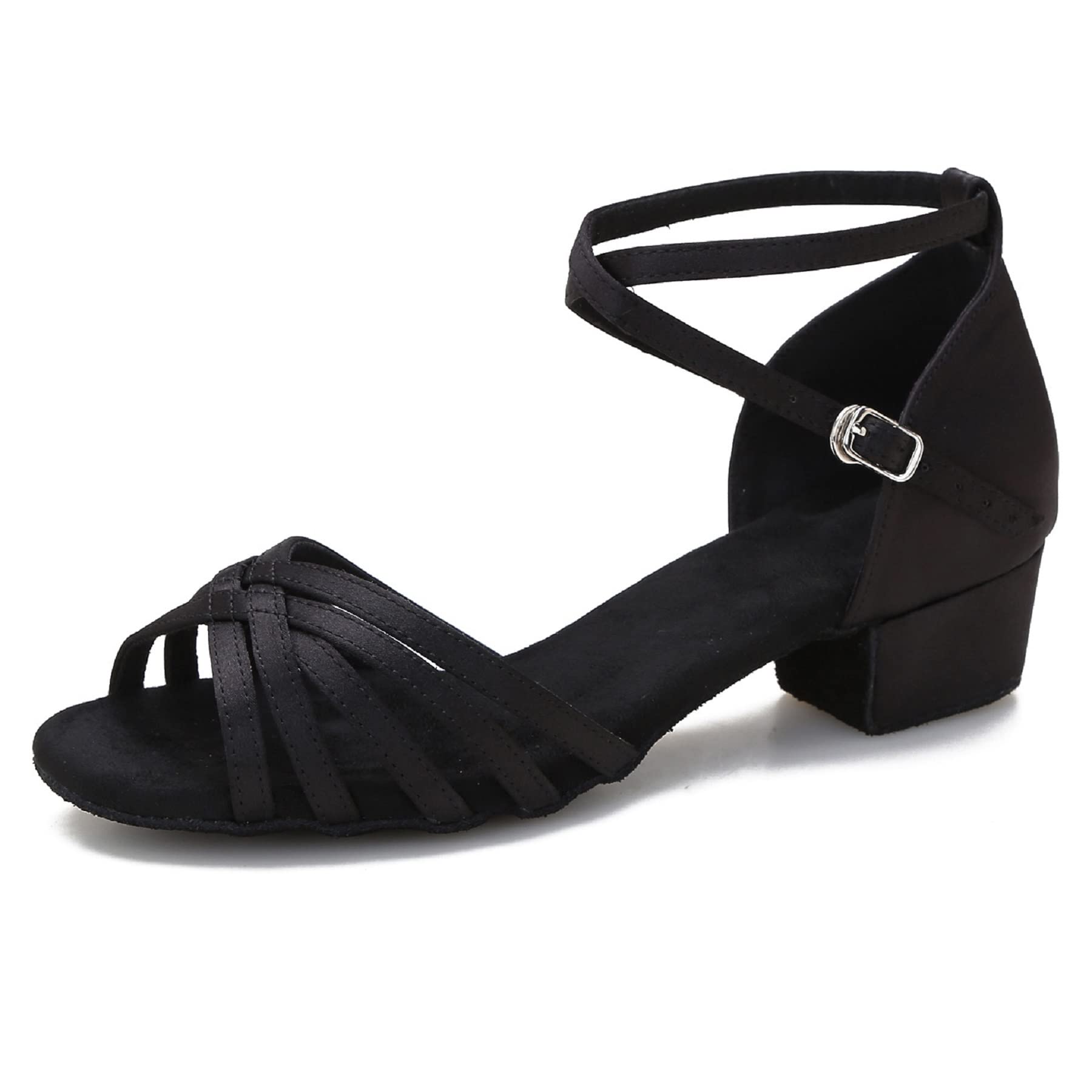
Built around a generous toe box, this is the pair dancers reach for when they want to stay on the floor all evening.
Shoe comfort is the whole game when a social runs three hours, and this sandal is designed for exactly that. Dancers report wearing it all evening without pain, with no sore feet the next morning. The low heel keeps your weight grounded, and the true-to-size fit with a large toe box is what separates it from the narrower shoes on this list.
The roomy front genuinely matters if you have bunions or a wide forefoot: a toe box with space lets your toes sit flat instead of being squeezed. Combined with the low heel, it makes for a stable, forgiving shoe for first-time ballroom dancers. Quality also draws steady approval, and the shoe is well regarded for actual dancing rather than just standing around in it.
Two things to note. The buckle is the weak point — it draws more criticism than anything else about this shoe, so check it is fastened securely before you take the floor. Durability is also mixed, so treat these as a social-dance workhorse rather than a shoe you expect to last for years. The brand’s size chart runs from a 5 at 21.9cm to an 11 at 27cm, so measure your foot length and compare.
What makes it different: the wide toe box and true-to-size fit mean dancers with bunions or broad feet can stay in these for a whole evening rather than switching to flats by the second song.
Keep an eye on: the buckle fastening is the recurring gripe — give it a firm check each time you put them on.
Made for you if: you have a wide forefoot or bunions and want a low-heel sandal you can wear from the first lesson to the last dance.
Not your pair if: you need a shoe that will take heavy punishment night after night.
6. TTdancewear Women Ballroom Dance Shoes

A 1.5-inch Cuban heel under a heavily padded insole — the pair for dancers who plan to stay on their feet.
A Cuban heel is a slightly wider, blockier heel than a straight stiletto, and it gives you more surface to balance on. At 1.5 inches it keeps you low and stable for salsa, bachata, and long performance nights. The insole carries thick padding from heel to toe, and that cushioning is what dancers praise most — you feel it in hour two, not just minute one.
The upper is a luxury satin with glitter detail, which gives you the sparkle without the rhinestone shedding problem of a stone-covered shoe. The 2.5-inch wide thick heel option in this same family provides extra stability if you want to go taller later. Build quality draws strong approval, and the shoe is seen as good value for what you get.
The catch is the fit. Sizing is mixed here, so use the luck of a return window and order carefully — a wrong size will fight you through every song. Stability also draws some divided feedback, so if you are prone to rolling an ankle, the lower, wider-heel option is the safer bet.
Why it earns its place
- Thick heel-to-toe padding is the feature dancers praise most
- 1.5-inch Cuban heel gives a wider, steadier base than a stiletto
- Satin and glitter finish sparkles without loose rhinestones
- Comfort holds through extended wear, not just short sets
The fine print
- Sizing is inconsistent, so measure your foot before ordering
- Stability gets mixed feedback — note if you roll ankles easily
- Glitter finish needs a little care to keep it looking fresh
Go for this if: you have long rehearsals or all-night socials and want cushioning you can actually feel from heel to toe.
Look again if: you need a guaranteed-to-fit pair on the first try and have no room for a size exchange.
7. Rhinestones Ballroom Dance Shoes YT06

A crystal-studded 2.5-inch heel made for gowns, wedding floors, and dancing until the lights come up.
Some shoes are for practice; this one is for the occasion. The 2.5-inch heel lifts your line the same way the top pick does — the same height, in fact — but the crystal finish and its match with formal wear is what this shoe is really about. Dancers report pairing it with gowns and dancing the night away, and the compliments come thick enough that it reads as a statement shoe rather than a wallflower.
The upper carries half or full iridescent rhinestones, which catch light from different angles as you move. Comfort and foot support both draw praise, so the sparkle does not come at the cost of a shoe you can barely walk in. Indoor use is the intended setting, which suits a wedding reception or ballroom floor.
The catch: rhinestones can come loose with heavy wear, and several dancers find the shoe runs small. The size is the bigger issue — order up if you are between sizes. Treat these as a special-event shoe you keep in a dust bag rather than a weekly practice pair.
When it shines: a wedding, a gala, or a formal social where the dress matters as much as the dance — the crystals and the 2.5-inch heel pair with a gown in a way a practice shoe never will.
Set your expectations: this is not a practice workhorse, and the sizing runs tight enough that you should order with room to spare.
The right call if: you have a special event and want a crystal shoe that matches a formal dress and still supports you through the night.
Not the right call if: you need an everyday practice shoe that shrugs off weekly wear.
8. Bloch Dance Women’s Annabella Leather Ballroom Practice Shoe

Supple leather and real arch support, from a dance brand that has been making technical shoes since 1932.
If your feet want cushioning and support rather than just sparkle, this is the pair that delivers. The strappy leather upper is described as supple, meaning it softens to your foot rather than cutting into it. Arch support is the feature dancers notice most, steadying your balance when a slow waltz holds you on one foot for a beat. The suede outsole is reported to be less slippery than rubber, so it glides on a wooden floor without catching.
Comfort holds through a full night, with dancers reporting no blisters. The self-locking buckle gives a custom fit and is quick to fasten, so you are not fumbling at the start of a lesson. Bloch has been making technical dance shoes since its founding in Sydney in 1932, which is a long track record in this category.
The honest picture: this is the priciest shoe on the list, and it earns that with leather and support, not with rhinestones. If you want a shoe for the dance floor’s practical demands rather than a photo, it is money well placed.
What you pay for: supple leather, real arch support for balance, and a suede sole that glides — a technical shoe from a brand that has been making exactly this since 1932.
The consideration: it is the most expensive pick here, and its appeal is support and leather feel rather than sparkle, so go in knowing what you are buying.
Choose this if: arch support, balance, and supple leather matter more to you than a low heel or a crystal finish.
Look for something else if: you want a lightweight practice shoe at a friendlier tier, or a sparkly shoe for a performance.
Know the Specs
Suede sole versus rubber sole
Suede is a soft brushed leather that grips a smooth wooden floor just enough to pivot cleanly. It lets you turn without sliding out from under yourself, which is why nearly every shoe on this list uses it. Rubber soles grab, which can stop a turn dead — fine for the street, wrong for a ballroom floor. Protect a suede sole by keeping it off pavement and carpet until you are actually dancing.
Heel height in inches
Heel height changes how your weight sits over your foot. A 1.5-inch heel keeps you low and close to the ground, which most beginners find steadier for long practice. A 2.5-inch heel raises your arch, lifts your leg line, and suits performance and Latin styling. Pick the height for the dance and the session length, not the look alone — your calves and ankles will tell you the difference in hour two.
Common Questions
Should ballroom dance shoes fit tighter than normal shoes?
How do I measure my foot for ballroom dance shoes?
Can I wear ballroom dance shoes outdoors or on carpet?
What heel height should a beginner choose?
Is a split suede sole better than a full sole?
Do I need different shoes for Latin and for ballroom?
What is a Cuban heel on a dance shoe?
Why do rhinestones fall off dance shoes?
How much arch support do ballroom shoes offer?
Are leather ballroom shoes better than synthetic ones?
The Bottom Line
For most dancers, the women’s ballroom dance shoes winner is the TTdancewear rhinestone pair, because its 2.5-inch thick heel gives you performance height without the wobble, and the sparkle earns the loudest praise of any shoe here. If you want a practice shoe you can fine-tune to your exact foot, the RoseMoli lace-up with its split suede sole and breathable mesh is the one to reach for. And if a wide forefoot or bunions are your concern, the Yokala S04 is the pair dancers wear all evening without pain. When the ankle strength is still building, start low with the ZB14 and move up to the rhinestone heel once you are ready.
How we choose
We do not accept paid placement. Every pick is matched to a real buyer and a real use-case; we do not hands-on test units.
Sources
Specifications: manufacturer listings and product documentation. Review insights: verified customer reviews, as of November 2026. Pricing: not shown on this page (it changes often); check the current price via the retailer link.
As an Amazon Associate, Tactical Gear Guy earns from qualifying purchases. This does not affect which products we feature.