Specs are compiled from manufacturer listings and verified buyer reviews and can change over time — please confirm the key details on the product page before buying.
You want a trail shoe that stays light on your foot, not one that drags by mile three. That is the whole game with women’s lightweight hiking shoes: enough grip and protection for real terrain without the stiffness that wears your legs out. The picks below cover every budget tier, and each one is a women’s-specific fit rather than a shrunken-down men’s shoe.
This guide is built by comparing the manufacturers’ published specifications and the patterns across verified customer reviews, so you get each pick’s real strengths and trade-offs instead of marketing spin.
Weight, traction, and width run the show here, so every pick is broken down on those terms. Below you’ll find the honest rundown of the Women’s Lightweight Hiking Shoes worth your money this season.
Top Picks

How To Choose The Best Women’s Lightweight Hiking Shoes
Most people buy a trail shoe on looks and regret it once the trail turns loose and wet. The three things that actually decide whether you finish the day happy are weight on your foot, how much room your toes get, and whether the outsole holds on wet rock and loose gravel.
Weight in ounces, not in adjectives
Every extra ounce rides on your foot with every step, and over a full day of hiking it adds up fast. A shoe listed around 10 oz is a genuinely light trail shoe. A shoe listed around 1.5 pounds (roughly 24 oz in the listing’s own measurement) sits at the other end — that is a supportive all-day build, not a speed build. Neither is wrong. You just need to know which one you are buying.
The toe box decides your comfort more than the cushioning
Toes swell on a long descent, and a narrow box turns that into a hot spot. Models built around a roomy or wide toe box let your toes splay and push off naturally. If you normally size up in everyday sneakers to get width, this is the spec to check first — notes on fit and toe box room tell you more than any cushioning claim.
Waterproofing is a trade, not a free upgrade
A waterproof membrane keeps dew, puddles, and wet trail splash out of the shoe. The trade is airflow — a sealed shoe runs warmer on a hot climb. If your hikes are mostly dry summer days, a breathable non-waterproof upper can be the smarter pick. If you walk the dog through wet grass or hike in shoulder season, the membrane earns its place.
Traction comes from the outsole, so learn the names
An outsole is the rubber bottom of the shoe, and its lug pattern is what bites into dirt. Sticky rubber compounds and canted lugs placed under the ball of your foot give you grip on the push-off. On wet pavement and roots, a softer rubber compound grips better than a hard one. Read the outsole description before you read the colour options.
Side-by-Side Comparison
| Model | Best For | Stated Weight | Waterproofing | Fit Notes | Amazon |
|---|---|---|---|---|---|
| Columbia Women’s Vertisol Trail★ Best Overall | Everyday trail and town wear | — | Not stated | Roomy width and toe box | Amazon |
| Columbia Women’s Konos TRSBest Wet-Grip Traction | Wet-or-dry traction on mixed terrain | — | Not stated | Runs narrow for some | Amazon |
| Skechers Go Run Trail Altitude 2.0Best All-Day Comfort | Long days standing and walking | — | Not stated | Reported true to fit | Amazon |
| New Balance Dynasoft Tektrel V1 Suede | Aggressive lug grip on rough trail | 2.1 lb | Not stated | Runs narrow for some | Amazon |
| Merrell Speed Strike 2 | Fast hiking with a roomy toe box | 1.5 lb | Not stated | Roomy toe box, fits thick socks | Amazon |
| ALTRA Lone Peak 8 | Wide feet and zero drop | 10.7 oz | Not stated | Roomiest toe box, 25 mm stack, 0 mm drop | Amazon |
| KEEN Hightrail Low Waterproof | Fast day hikes in wet weather | — | Waterproof leather | Runs about one size small for some | Amazon |
| Merrell Moab 3 Waterproof | All-day support and durability | — | Waterproof | Fits orthotics, no break-in needed | Amazon |
| OUTJET Waterproof Quick Laces | Budget travel and wet-weather walking | 10.1 oz | Waterproof membrane | Quick-lock buckle and bungee lacing | Amazon |
Detailed Reviews
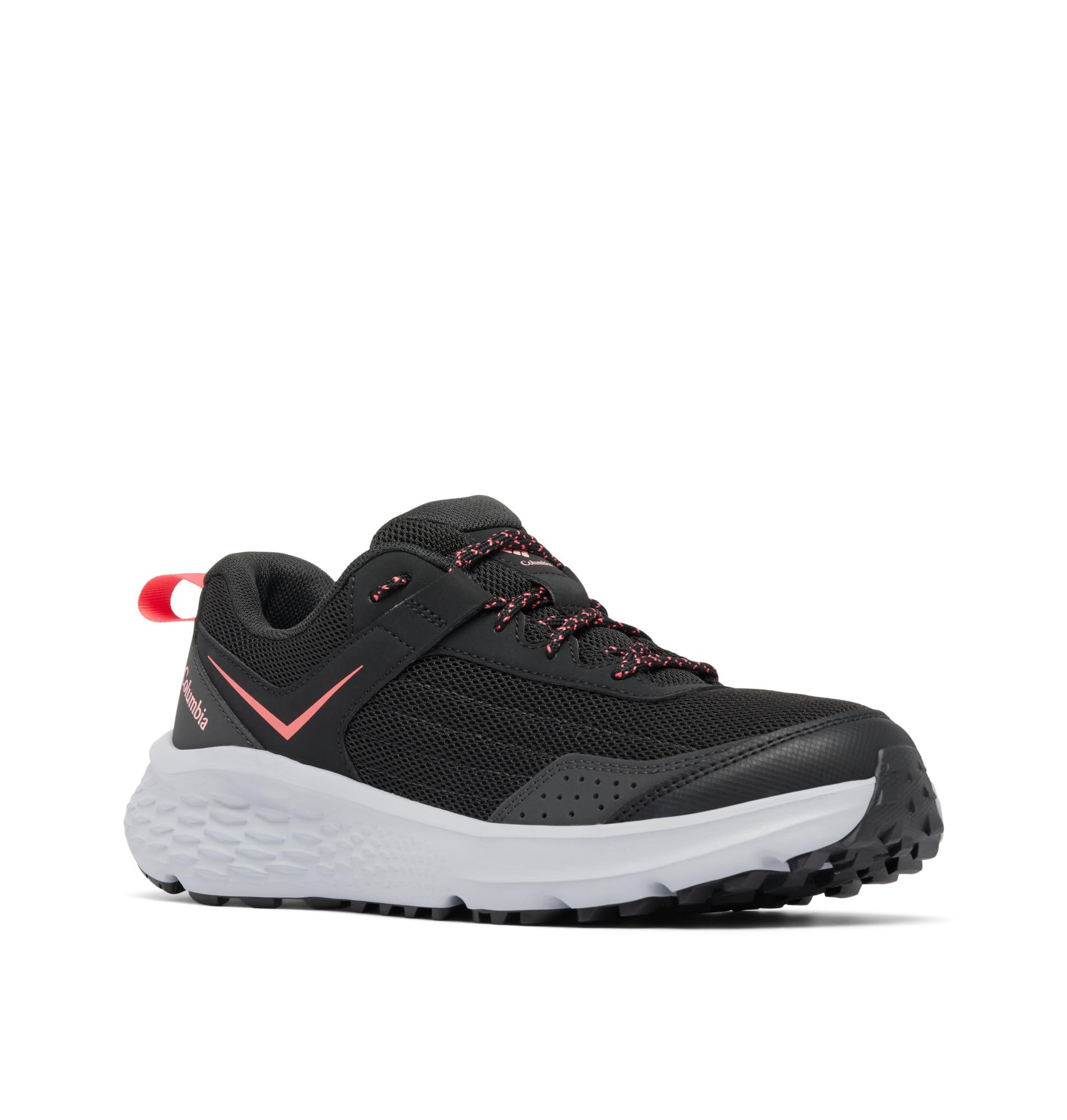
1. Columbia Women’s Vertisol Trail
Our pick — 4.5+★ from 900+ verified ratings; the strongest balance of quality and price.
The do-it-all trail shoe that walks you through town, then climbs with you.
This is the pick for the woman who wants one pair for the gravel path on Saturday and the school run on Monday. The shoe is built around an engineered underfoot system — the midsole layer that handles comfort, side-to-side stability, and spring-back — so you get a supportive ride underfoot without a stiff boot feel. A traction rubber sole is the rubber bottom that keeps you planted when the ground turns loose and uneven.
What wins people over here is the build quality, followed closely by how much room your foot gets. The width and the toe box are genuinely roomy, and the shoe stays wearable for hours rather than needing to come off after an hour. Traction and lightness round out the picture — buyers take them on everything from town errands to Utah hiking trips and report they hold up in both settings.
One thing worth knowing: plenty of people are quietly surprised that these don’t look like a medical or orthopaedic shoe. That is real, and it matters if you want a trail shoe you can wear straight to a café without changing. Bear in mind no weight or waterproofing figure is published for this model, so if gram-shaving or a sealed membrane is your top priority, look further down this list.
Where it earns its place
- Roomy width and toe box that suit wide feet and long days
- Engineered underfoot system for comfort, stability, and rebound
- Traction rubber sole for loose, uneven ground
- Looks like a normal sneaker, not a specialty shoe
What to know before you buy
- No published weight figure, so weigh it in-store if ounces are critical
- No waterproofing claimed for this model
- Trail bite is solid rather than specialised for steep, technical ground
Made for: the one-pair buyer who wants a versatile trail shoe that doubles as everyday footwear.
Go elsewhere if: you need a stated waterproof membrane or a published, featherweight number.
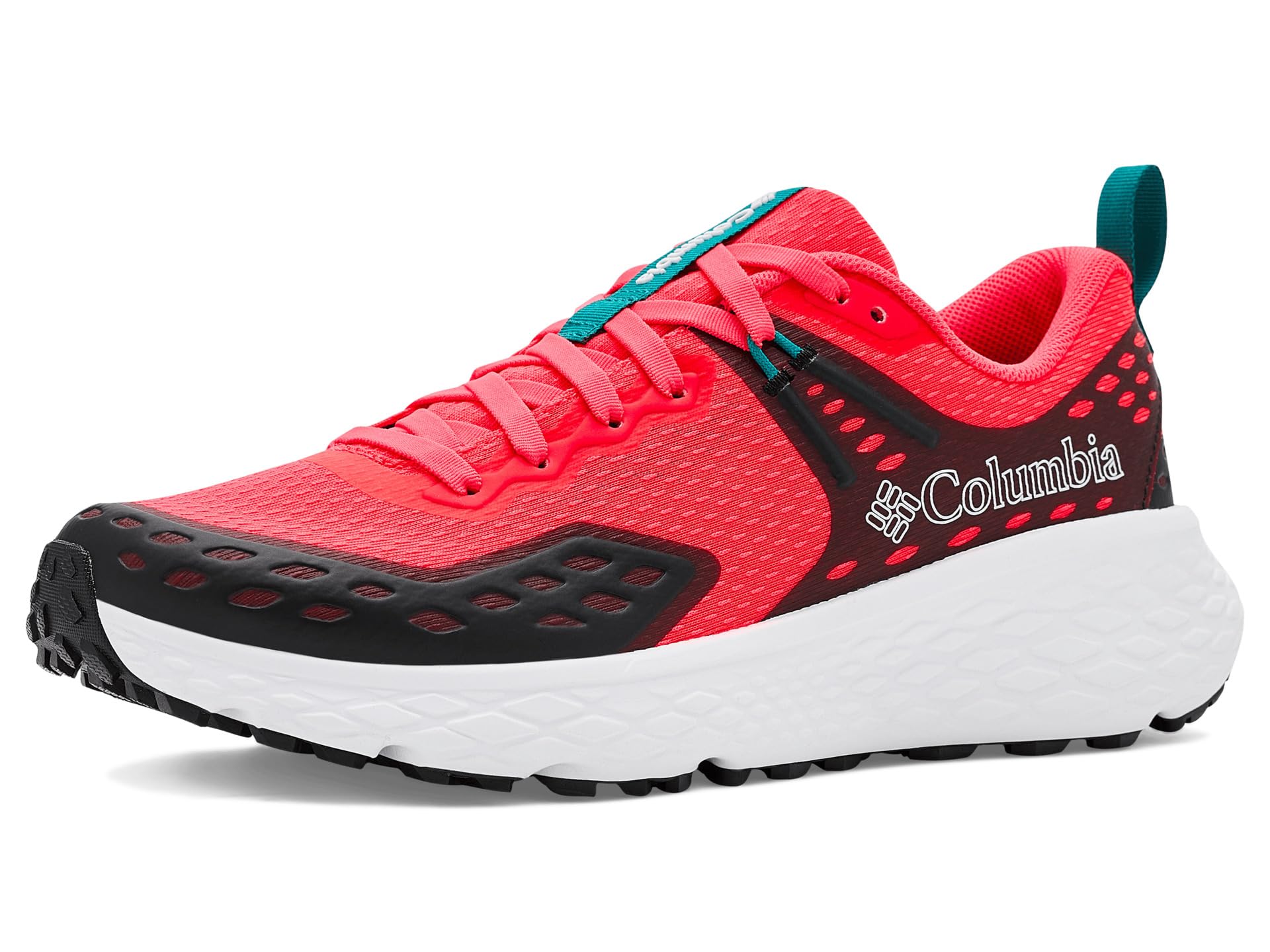
2. Columbia Women’s Konos TRS
Built for the hiker whose trail turns slick the moment it rains.
Wet roots and damp rock are where most lightweight hikers quietly give up grip, and this is the pair aimed squarely at that problem. The underfoot system is tuned for wet-or-dry traction — the grip holds whether the surface is soaked or dusty. A mesh upper with no-sew overlays gives you a breathable top with reinforced structure, so the shoe stays light without feeling flimsy.
Comfort is the headline in what people report back. Long, strenuous days pass without foot pain, and the cushioning and arch support both get steady approval. The grip earns its own reputation too — buyers describe the bottom as very grippy, with no slipping on the descents they were worried about.
The catch is width. Fit is the one split point on this shoe, and a clear share of buyers find it too narrow. If you already know your feet run wide, order carefully or plan to size up. For a mid-width foot, the trade is worth it — you get wet-or-dry traction and breathable mesh in a shoe far lighter on the foot than the bulky leather hikers further down this list.
Grip where it counts: if your local trails stay damp, pick this over the Vertisol Trail. Its wet-or-dry outsole (a rubber sole built to hold on both wet and dry ground) is tuned for soaked ground, and buyers report it never slips.
The honest trade: narrow-footed buyers are fine; wide-footed buyers should treat the sizing chart as a starting point, not a promise.
Worth grabbing if: your hikes regularly involve wet rock, wet roots, or rain-soaked trail.
Look at the wide-toe options instead if: you need guaranteed room across the forefoot.
3. Skechers Women’s Go Run Trail Altitude 2.0 – Ravine
The shift-length shoe that still feels fine after hour twelve.
If your day involves standing behind a counter, pacing a ward, or working a festival, this is the trail shoe that behaves like a work shoe. Comfort is what people talk about most, and it holds up over a full 8-12 hour stretch on your feet rather than fading by mid-afternoon. Fit runs true, so you can order your normal size with reasonable confidence.
Traction and support are both present without being the star of the show. The outsole prevents slipping on the surfaces you actually walk, and the foot support keeps you stable through a long shift. Durability has held up for the buyers putting real mileage on them, and hikers report they handle trail duty too, not just pavement.
What you give up is the aggressive trail bite of a dedicated lugged hiker — think of this as a trail-capable running shoe rather than a mountain shoe. For mixed use across town and easy trail, that is a fair trade. Colourways get their own fans, with the blue-and-pink build singled out as a favourite.
Why it keeps selling
- Comfort holds through 8-12 hour days on your feet
- Fit runs true to size for most buyers
- Non-slip outsole for daily walking surfaces
- Doubles as a trail shoe for easy paths
Where it steps back
- No published weight or waterproofing spec for this model
- Not built for steep, loose, technical terrain
- Lug depth is modest compared with dedicated trail hikers
Reach for this if: you want a lightweight trail shoe that moonlights as a comfortable all-day work shoe.
Think twice if: your hikes are steep scree or wet rock scrambles where you need maximum lug depth.
4. New Balance Women’s Dynasoft Tektrel V1 Suede
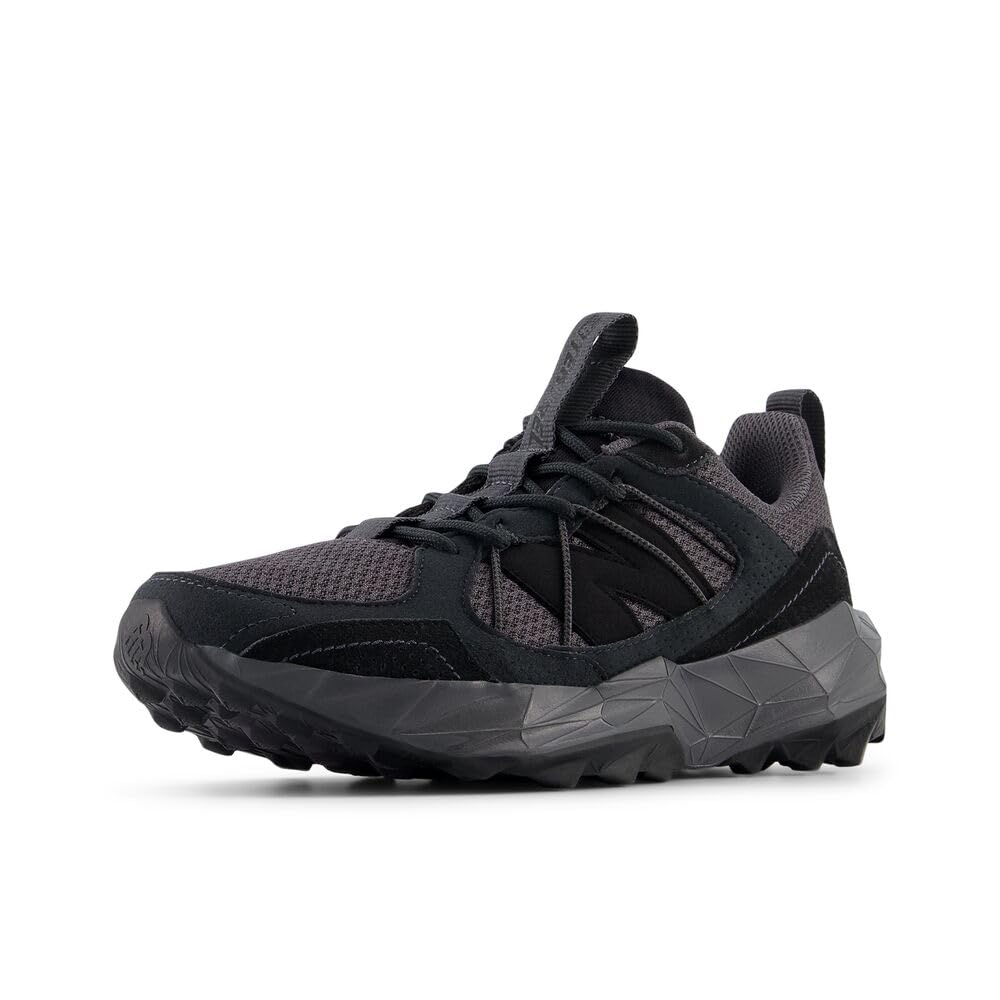
An aggressive lug pattern for the trail less travelled — and it carries some heft.
The Tektrel’s defining feature is the aggressive lug design on the outsole — the raised rubber teeth that dig into dirt — paired with a dynamic midsole and a stylised suede upper. That lug bite is built for gravel roads and energetic off-road days, and it earns its keep: slip resistance gets singled out as exceptional, and versatility runs right alongside it. This shoe is comfortable enough that feet don’t ache after a long outing.
Here is the number that separates it from the Merrell Speed Strike 2 below. This shoe is listed at 2.1 pounds, while the Speed Strike 2 comes in at 1.5 pounds. That is the real cost of the beefier, more protective build — you feel the difference on a long climb. If you want maximum lug grip and protection underfoot, the weight is the price. If your priority is speed over miles, the Merrell is the better call.
The suede upper also means you should not expect this to shrug off a soaking the way a waterproof membrane will. Fit is split — some find it too narrow — and arch support and cushioning draw mixed reactions. Order with that in mind, and size accordingly if your foot runs wide.
Where the weight goes: the 2.1 lb build buys you aggressive lugs and a protective ride; it does not buy you speed.
Buy it if: you want a grippy, suede-finished trail shoe for gravel and rough ground and don’t mind carrying a bit more on your foot.
Suits: hikers who rate traction and protection above all-out lightness.
Skip the wide-foot order if: you know this last runs narrow on you — sizing up is the safer move.
5. Merrell Women’s Speed Strike 2
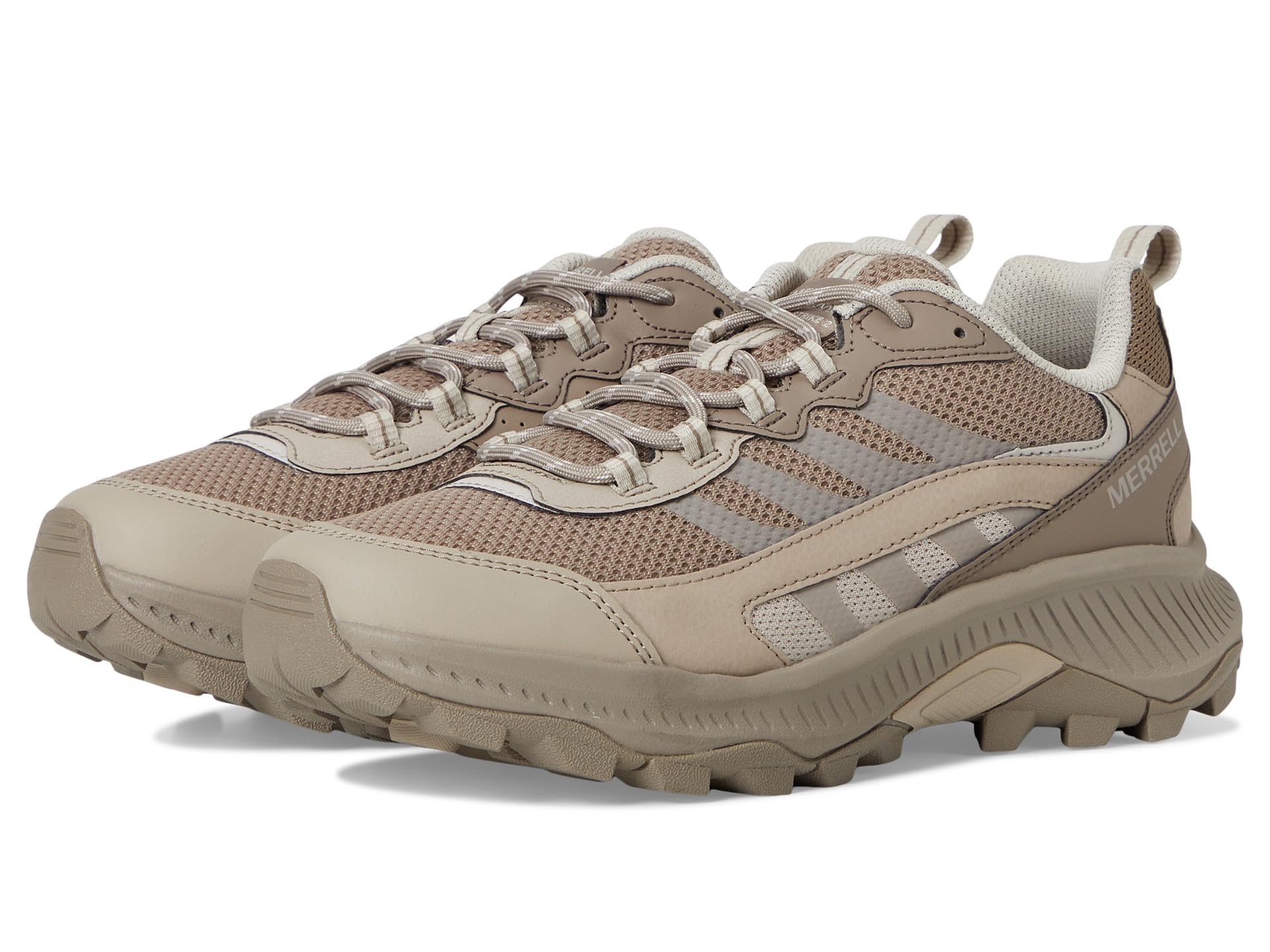
Hiking-shoe protection at 1.5 pounds, with a toe box that takes thick socks.
You get the protection of a hiking shoe without the slow feel of a traditional hiker. At 1.5 pounds it comes in lighter than the 2.1 lb Tektrel above, and that lower number is why it feels quicker on the climb. The toe box (the front section around your toes) is roomy enough to swallow thick socks without pinching.
Arch support draws quiet approval, and people wear these for both trail days and everyday walking. Feet don’t hurt after long days in them. The materials story is real too — 100% recycled content runs from the laces and webbing through the mesh lining and footbed cover, with a 50% recycled removable EVA foam footbed. That footbed is removable, so you can swap it for your own orthotic if you have one.
Durability is the split point. Some report the fabric around the ankle wearing through faster than they’d like, while others say the shoe holds up fine. Grip and comfort get mixed reactions as well, so treat this as a lightweight trail shoe rather than a technical scrambler. If you want a fast, roomy, recycled build for trail and town, it fits the bill.
What makes it fast
- 1.5 lb build, listed lighter than the 2.1 lb Tektrel
- Roomy toe box that fits thick socks
- Removable EVA foam footbed you can swap for an orthotic
- 100% recycled laces, webbing, mesh lining, and footbed cover
Where it asks patience
- Ankle fabric wear-through reported on some pairs
- Grip and comfort draw mixed feedback
- No waterproofing claimed
It wins on: the best weight-to-protection balance in this guide, at 1.5 pounds, with a toe box built for thick socks.
Only if not: you demand long-term fabric durability or a sealed waterproof upper.
6. ALTRA Women’s Lone Peak 8 Trail Running Shoe
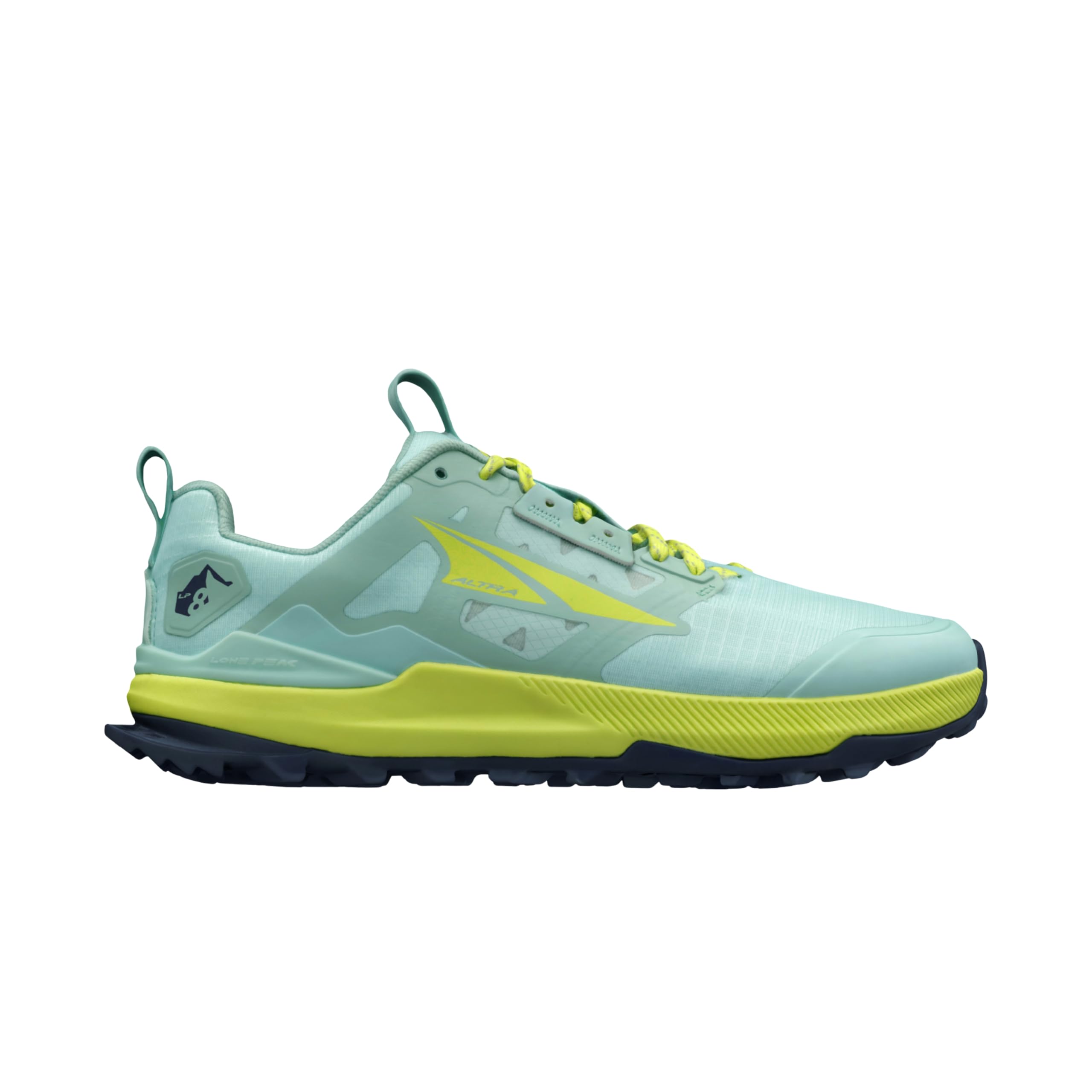
The roomiest toe box here, sitting on a flat platform that lets your foot land naturally.
If your feet have ever felt crushed in a trail shoe, this is the pair that fixes it. ALTRA’s FootShape design gives you the roomiest toe box in this guide, with space through the midfoot so your toes move freely. Zero drop — meaning the heel and forefoot sit at the same distance from the ground — pairs with a 25 mm stack height (the cushioning under your foot) and Balanced Cushioning to encourage a low-impact landing. At 10.7 oz it stays genuinely light for a shoe this roomy.
The comfort consensus is strong, and it comes with no break-in period. No toe pinching, no hurting feet after long days, and the lugged MaxTrac outsole grips on whatever surface you find. TrailClaw — canted lugs positioned under the metatarsals — gives extra bite where you push off. The ripstop mesh upper holds up to brush and rock without tearing.
Zero drop is the detail that catches people out. If you have always worn a shoe with a raised heel, your calves and Achilles will feel the change over the first few outings. Cushioning also draws mixed reactions from people who want a softer underfoot feel. Give yourself a few short walks to adapt, and the flat platform becomes a real advantage on rough ground.
The fit story: extra-wide feet finally get a trail shoe built for them — the toe box is the widest in this guide, and owners mention no pinching.
The adaptation cost: zero drop and 0 mm of heel rise demand a gradual ramp-up if you’re new to it.
Pick this one if: you have wide feet, want zero drop, or you’re tired of toe pressure on long descents.
Not the first pair for you if: you’ve never worn zero drop and you need a soft, highly cushioned ride out of the gate.
7. KEEN Women’s Hightrail Low Waterproof Hiking Shoe
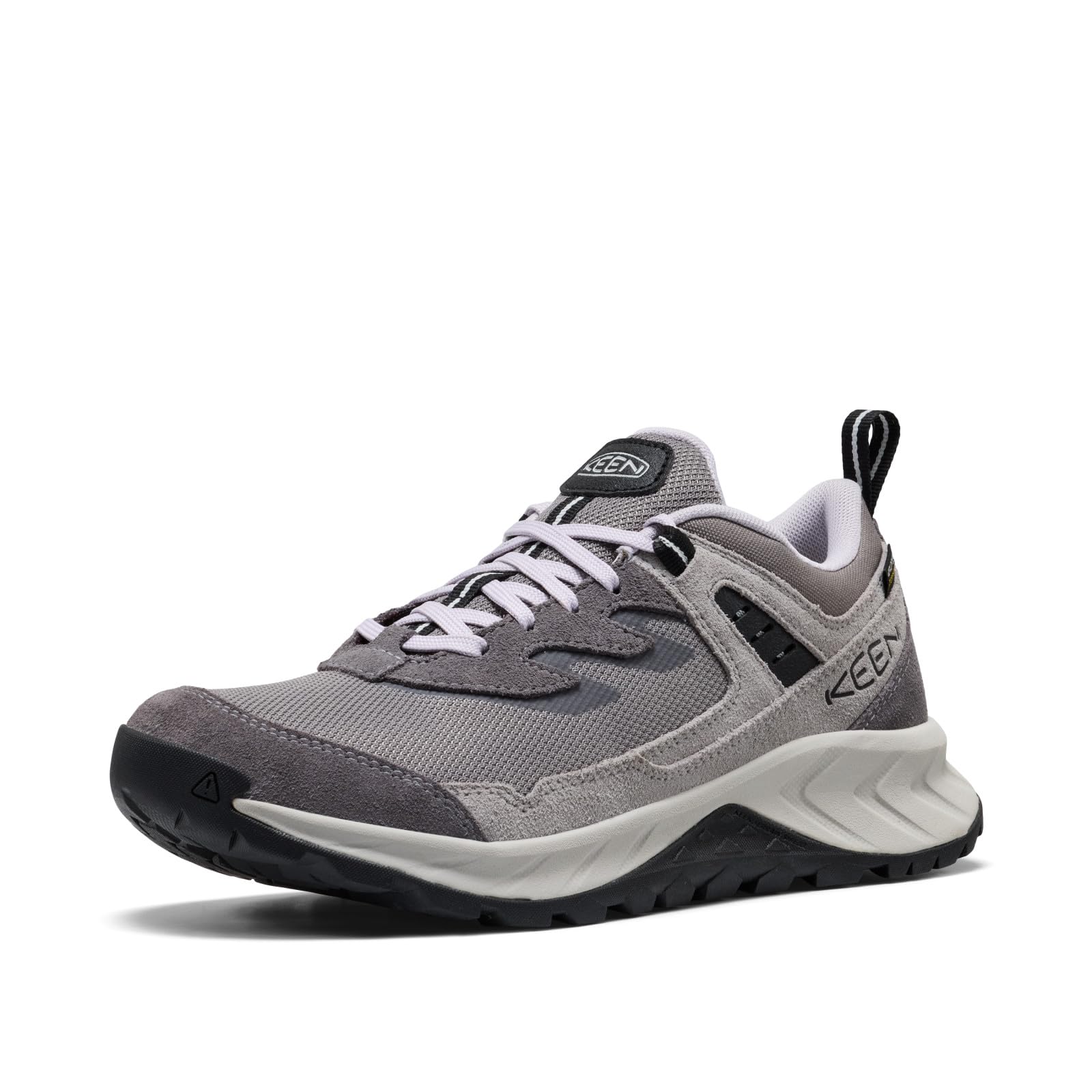
Leather durability with a sneaker’s pace, sealed against wet weather.
This is the shoe for the woman who wants classic leather toughness but refuses to lug around a boot. Water-resistant leather brings the durability, a sneaker-style shape brings the speed, and KEEN’s Contoured Fit — a last shaped to curve with the natural line of your foot — brings a more secure hold. It is built for fast day hikes and weekend trips where the weather does not cooperate.
What people keep coming back to is the fit and the comfort together, with waterproofing getting its own steady praise. Feet stay dry through wet grass and puddles, and the shoe handles both city pavement and trail without complaint. Light weight gets a mention too, which is impressive given the leather build.
The sizing is the thing to plan around. A real share of buyers find it runs about one size small, so ordering up is the smart move if you’re between sizes. Stiffness and arch support also split opinion, with some finding the shoe firm underfoot and light on arch. If you want a leather waterproof hiker that moves fast, this is the one — just budget a little break-in time and size up.
The reasons to choose it
- Water-resistant leather keeps feet dry in wet grass and puddles
- Contoured Fit curves with the foot for a secure hold
- Handles city pavement and trail in the same day
- Sneaker-like speed from a leather hiking shoe
The things to plan for
- Runs about one size small for a good share of buyers
- Firm underfoot with modest arch support for some
- Leather needs a break-in period
Best match for: wet-weather day hikers who want leather toughness without boot weight.
Order with care if: you’re between sizes — this one tends to run small.
8. Merrell Women’s Moab 3 Waterproof Hiking Shoe
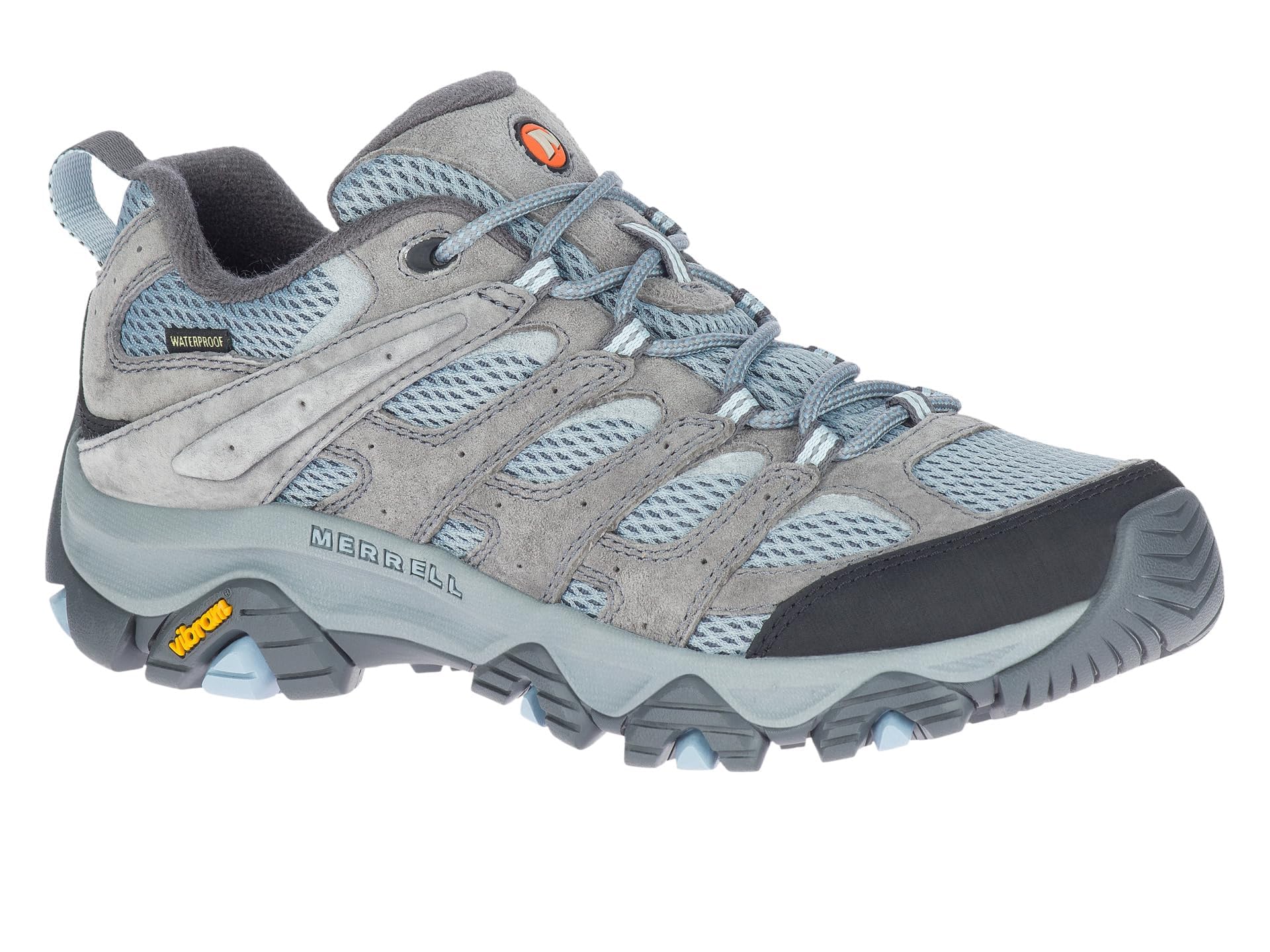
The built-to-last choice when you’d rather buy once and wear them for years.
This one trades lightness for longevity, and it does so deliberately. Version 3 brings a more supportive insole, a softer more cushioned midsole, a grippier Vibram outsole, and partially recycled fabrics. The Vibram bottom is the sticky rubber that bites on wet rock and loose dirt.
Comfort shows up right away — you can wear them from the start with no break-in. Fit earns its own following for having room for orthotics, so custom-footbed wearers are covered. Durability is the reason people choose it: customers note at least a year of regular use, including wet conditions. Water resistance and arch support both add to the case, and buyers consider them worth the premium.
The honest trade is weight. This is a waterproof leather-and-mesh hiker, not a featherweight trail runner, so it does not belong in the same conversation as the 1.5 lb Merrell Speed Strike 2 above. If your goal is a shoe that survives seasons of wet trail abuse and feels supportive every step, the extra ounces buy real substance. If you want a fast, airy summer shoe, look higher up this list.
Where the money goes: Vibram grip, a supportive insole, and a cushioned midsole — a package built for years of wet-trail abuse rather than a summer season.
The trade in plain words: this is not a light shoe, and that is the point of buying it.
Right call for: hikers who want one waterproof pair that lasts multiple seasons and takes orthotics.
Wrong call for: anyone chasing the lowest possible weight or a quick-drying summer shoe.
9. OUTJET Women’s Waterproof Hiking Shoes with Quick Laces

Waterproof and just 10.1 oz, with laces you twist instead of tie.
Travel days and wet-weather dog walks are where this budget pair makes sense. At only 10.1 oz it stays light on your foot, which is the whole reason heavy shoes cause fatigue by late afternoon. The quick-lock buckle and adjustable bungee system replace traditional laces, so you’re in and out of them in seconds on a busy morning. The reinforced upper is rated to 100,000 flex cycles without cracking.
Wet ground is handled by a waterproof membrane that blocks moisture from dew, puddles, and wet trails while keeping the shoe breathable. It is lab-tested to ≤25% water absorption, so the upper takes on little water in wet grass. The smooth lining is rated to 25,600 Martindale rubs, a wear test that counts abrasion cycles, to cut friction inside the shoe.
Underfoot there’s a cushioned EVA midsole that absorbs impact, plus a non-slip outsole for wet pavement, gravel, and uneven terrain. Reports back confirm the tread grips on broken ground and feet stay dry. Where it falls short is breadth of experience: this is a value-priced travel-oriented build, so serious technical hikers should look to the Altra or Moab above. For everyday walking, commuting, and wet-weather trips, it covers a lot for the money.
What you get for less
- 10.1 oz build that keeps steps feeling light
- Waterproof membrane rated for ≤25% water absorption
- Quick-lock buckle and bungee lacing for fast on and off
- Reinforced build rated to 100,000 flex cycles
What it isn’t
- Not a technical mountain shoe for steep, rocky terrain
- Bungee lacing gives less fine-tuned tension than traditional laces
- Built as a travel and everyday shoe rather than a dedicated trail hiker
Grab it if: you want waterproof, featherweight, quick-on footwear for travel and daily walks without stretching the budget.
Hold off if: you need a shoe for steep, rocky, technical trails.
Know the Specs
Weight in ounces and pounds
Trail shoe weight is listed either in ounces (oz) or pounds (lb) depending on the brand, so convert mentally to compare fairly. An ounce figure of around 10 oz is a light trail shoe. A listing that says 1.5 pounds is a heavier, more protective build; 2.1 pounds is heavier still. Every extra ounce rides with you on each step, so pick the number that matches your hike length, not the lowest one on the page.
Zero drop and stack height
Zero drop means the heel and the forefoot sit at the same height off the ground, so your foot lands flat rather than on a raised heel. Stack height is how much material sits under your foot — a 25 mm stack gives you a mid-level cushion. Zero drop encourages natural alignment, but if you have always worn a raised heel, ease in with short walks first. Your calves will notice the change.
Waterproofing versus breathability
A waterproof membrane is a thin layer inside the shoe that blocks water from dew, puddles, and wet trails. Look for a stated water absorption figure such as ≤25% — lower is drier. The trade is airflow: a sealed shoe runs warmer on a hot climb. If your hikes are dry summer days, a breathable non-waterproof upper may serve you better.
Outsole rubber and lug design
The outsole is the rubber bottom of the shoe, and the lugs are its raised teeth. Aggressive lugs bite into loose gravel and dirt; sticky rubber compounds hold on wet rock. Some outsoles place canted lugs under the ball of the foot for extra push-off grip. Read the outsole description before the colour options — it is the single biggest factor in whether you feel sure-footed on the descent.
Common Questions
How light is light enough for a women’s hiking shoe?
Do zero drop hiking shoes take getting used to?
Are waterproof hiking shoes too hot for summer trails?
Which hiking shoe is best for wide feet?
Do these shoes fit orthotic insoles?
How long should a lightweight hiking shoe last?
Should I size up in a hiking shoe?
Is a waterproof hiking shoe better than a non-waterproof one?
Can I wear trail running shoes for hiking?
Are quick-lace systems on hiking shoes reliable?
The Bottom Line
For most hikers, the winning pair among these women’s lightweight hiking shoes is the Columbia Women’s Vertisol Trail. It balances a roomy toe box, sturdy build quality, and trail-ready traction, so you don’t have to choose between town wear and trail days. Want the lightest protective shoe in the guide? Grab the Merrell Speed Strike 2 at 1.5 pounds with a roomy toe box. For wide feet or a natural zero-drop platform, reach for the ALTRA Lone Peak 8. One honest nudge: the pair you’ll actually love is the one that matches your foot width and your weather, so start there before you chase the lowest weight number.
How we choose
We do not accept paid placement. Every pick is matched to a real buyer and a real use-case; we do not hands-on test units.
Sources
Specifications: manufacturer listings and product documentation. Review insights: verified customer reviews, as of November 2026. Pricing: not shown on this page (it changes often); check the current price via the retailer link.
As an Amazon Associate, Tactical Gear Guy earns from qualifying purchases. This does not affect which products we feature.