Specs are compiled from manufacturer listings and verified buyer reviews and can change over time — please confirm the key details on the product page before buying.
If you already wear a hard hat on site, your helmet has to piggyback on it without wobbling, fogging, or pinching your forehead by lunch. That narrow requirement is the whole game here, and it is why so many standard welding hoods simply will not work for you. This list sticks to hoods that attach over or work alongside an approved hard hat, and each pick below is a real, current product — not a resized version of something else. Match the shell to your work area and the lens to the puddle clarity you need.
This guide is built by comparing the manufacturers’ published specifications and the patterns across verified customer reviews, so you get each pick’s real strengths and trade-offs instead of marketing spin.
Tight fab work and pipe racks punish a bulky hood, so the picks below are ordered by how well they balance clearance, lens clarity, and headgear fit. Start with your working space, then match the filter to your process using this guide to the best welding helmets for hardhats.
Top Picks
How To Choose The Best Welding Helmets for Hardhats
The first thing to get straight is that a hardhat hood is not just a helmet with a bigger headband. The mounting point, the shell shape, and the weight distribution all change once the hood has to sit over a hard hat instead of directly on your skull. Get those three right and only the lens is left to choose.
Confirm the hardhat approval before anything else
Some hoods carry a stated approval for use with an approved hard hat, and some do not. The 3M Speedglas models in this list both publish an ANSI Z89.1 approval when paired with an approved hard hat, so that is your clearest green light. If a hood only lists eye and face protection standards with no hardhat line, do not assume it clips on — check the maker’s own mounting documentation first.
Weight and shell profile decide how long you can work
A hood that feels fine for ten minutes becomes a neck ache at hour three. The 3M 9002NC weighs 1.1 lbs and the 16-ounce 9100 shell weighs 16 ounces. Shell width matters just as much overhead. The 9002NC runs a 9.29-inch shield width, which makes a real difference when you are stuffing your head into a pipe rack or welding above your shoulder line.
Auto-darkening versus a fixed-shade flip front
An auto-darkening filter (ADF) is a lens that darkens the moment the arc strikes, so you can keep the hood down and still see your surroundings between welds. A fixed-shade flip front keeps a set dark lens and lets you lift the whole front plate for prep. The ADF is more convenient for tack-heavy work; a flip front is simpler and has fewer electronics to fail. Which one wins depends on how much of your day is prep versus arc time.
Fogging and airflow deserve real attention
Heat trapped inside a hood fogs your lens and kills visibility at the worst moment. Vents in the shell help, and a coating that deflects heat lowers the interior temperature. Look for either a stated vent design or a heat-reflecting coating, and if you wear a respirator under your hood, check that the headgear shape was designed to accommodate one.
Side-by-Side Comparison
| Model | Best For | Filter Type | Weight | Hardhat Approval | Amazon |
|---|---|---|---|---|---|
| 3M Speedglas 9002NC★ Best Overall | All-day clarity in tight spaces | Auto-darkening, natural color | 1.1 lbs | ANSI Z89.1 with approved hard hat | Amazon |
| 3M Speedglas 9100XXi | Precision work with peripheral awareness | Auto-darkening, 9100XXi | 16 ounces | ANSI Z89.1 with approved hard hat | Amazon |
| Jackson Safety PL280 | Pipeline and overhead work | Fixed shade 10, lift front | — | — | Amazon |
| Fibre-Metal Tigerhood Classic | Simple, tough spark protection | Fixed shade 10, flip-up lid | — | — | Amazon |
Detailed Reviews
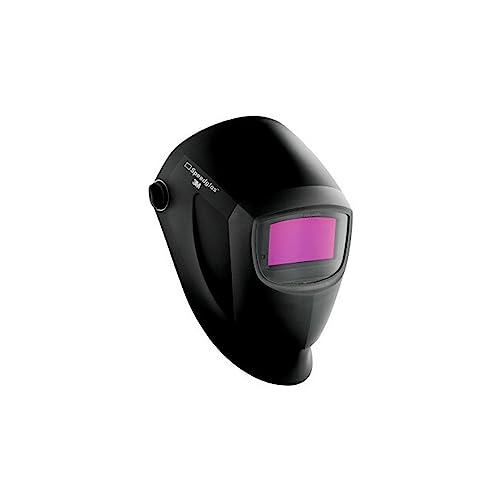
1. 3M Speedglas Welding Helmet 9002NC
Our pick — 4.5+★ from 300+ verified ratings; the strongest balance of quality and price.
The slim, light shell that keeps its cool when you are jammed into a pipe rack.
The 9002NC is the pick for the welder who works head-down in tight spots and needs to actually see the puddle. Its natural color auto-darkening lens is built to give a lighter, brighter, more realistic view of the work, which is the whole reason it sits at the top here. At 1.1 lbs (17 ounces) it is light enough to keep on through a long shift, and the 9.29-inch (23.6 cm) shield width lets you slide into cramped areas that swallow a wider hood.
What wins people over is the build quality, which is the most-praised thing about this hood by a wide margin. The color and clarity of the view come up again and again too, and the shade 3 light state draws specific praise for how much you can see before the arc even fires. If your work is tack, fit-up, and TIG where a clear read on the puddle decides a pass or a fail, this lens is the reason to buy it.
The honest catch is the electronics. The auto-darkening (the lens darkens itself when the arc strikes) and overall function draw a split reaction — plenty of hoods run perfectly, but a share of buyers report inconsistent behavior over time. That is not unusual for any ADF (auto-darkening filter) hood in this class, and it is why 3M publishes a full standard list: ANSI Z87.1-2015 for eye and face protection, ANSI Z89.1 when used with an approved hard hat, and CSA Z94.3. Note the maker’s own label — this is for industrial and occupational use only, not consumer sale.
What earns it the top slot
- Natural color ADF gives a brighter, more realistic read on the puddle and the surrounding work
- 1.1 lbs keeps neck strain down over a full shift
- 9.29-inch shield width slips into tight spaces a wider hood will not
- Built-in exhaust vents help cut lens fogging
- Ratchet suspension tightens smoothly even with welding gloves on
Where it asks patience
- Auto-darkening performance draws a mixed reaction rather than uniform praise
- Marked for industrial and occupational use only
- Natural color optics are the premium part of the price
Reach for this if: you want the clearest natural-color view in a light, narrow shell and you weld in confined spaces most of the day.
Look elsewhere if: you want a hood with zero electronics and the simplest possible upkeep — a fixed-shade flip front below suits that better.
2. 3M Speedglas Welding Helmet 9100
Side windows that let you spot a coworker before you swing the stinger.
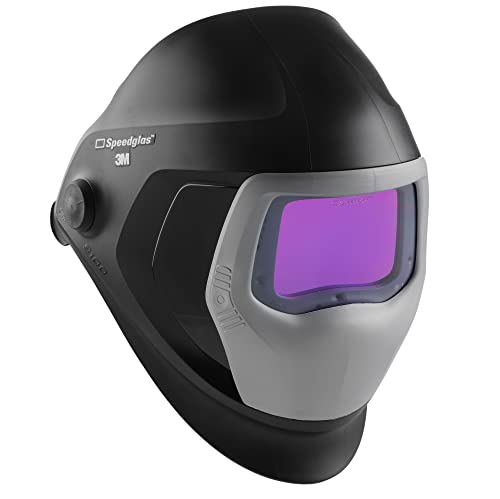
Here is where the 9100XXi separates from the 9002NC above: the expanded peripheral vision. Side windows open up your field of view so obstacles and the people working next to you stay visible while the hood is down. The 9100XXi filter itself is tuned for more realistic color and contrast, so the weld pool reads with more precision instead of washing into a green blur.
The controls are the other standout. The silver front panel puts grinding and memory access on the outside, so you switch without pulling off your gloves or lifting the hood. Two memory modes let you lock in your own darkness shade, light-to-dark sensitivity, and dark-to-light delay, then jump between setups with a push button. Auto-on technology picks up the last setting you used, so grabbing it and striking an arc is one motion.
What you trade for that glass is heft and complexity. It also ships as a fuller kit — welding cap, carry bag, and starter kit included — which is useful but pushes it firmly into premium territory. On standards it mirrors its sibling: ANSI Z87.1-2010 for impact and ANSI Z89.1 when used with an approved hard hat. It also carries the same industrial and occupational use note.
Best fit for overhead and crew work: the side windows let you see coworkers and obstacles without lifting the hood, and the external controls let you switch modes with your gloves on. That makes this the hood for welders who share a space and change settings often — your eyes stay on the job.
What a buyer should weigh: a pancake respirator fits underneath, which matters if you weld coated or fume-heavy material, but the 9100XXi shell weighs 16 ounces, versus 1.1 lbs for the 9002NC.
The case for it: you want maximum awareness and glove-on control changes, and the extra weight does not bother you.
Think twice if: you work in genuinely tight pockets where a slimmer shield wins — the 9002NC above is the better reach there.
3. Jackson Safety PL280 Welding Helmet

A compact bucket hood built to slide into the gaps a full shell cannot reach.
The PL280 is a traditional bucket style, and that shape is deliberate: it gets your head into small spaces and tight areas that a wide auto-darkening shell fights against. It is molded from Super Tuff Nylon, which is lighter than fiberglass, and Jackson builds it for overhead welding work specifically. If your day is spent under a pipe rather than on a bench, this is the geometry you want.
What owners single out most is the build quality, and value follows close behind. The spring-loaded lift front is the practical feature that wins people over — it lets you flip the front plate up for pre and post prep instead of dragging the whole hood off your head between passes. The “Super Kool” coating sheds sparks and spatter and is rated to reduce heat buildup by up to 30% on overhead runs. Inside sits a 2” x 4.25” Shade 10 filter behind a high impact polycarbonate window.
The headgear deserves a mention for fit. It runs Jackson’s patented 370 Speed Dial ratcheting setup with a “Qwik-Fit” rear swivel headband and an “Easy Grip-Easy Turn” adjuster knob. The shell shape was designed to work alongside cartridge respirators, so a half-mask does not fight the hood. It meets ANSI Z87.1+ and CSA Z94.1, and the lens retention system makes loading a new filter or cover plate straightforward. Fair warning on the view: this is a fixed shade 10, so you get a set dark lens and a lift front instead of auto-darkening convenience.
Pick this one for: pipeline, overhead, and confined work where a compact bucket and a fast lift front beat a fancy filter.
Downside to know: fit and adjustability split opinion — the headgear has real range, but it rewards a few minutes of dialing in rather than a grab-and-go fit.
4. Fibre-Metal Tigerhood Classic Welding Helmet

The heat-resistant workhorse for anyone who wants sparks deflected, not a circuit board.
The Tigerhood Classic goes the other direction from the Speedglas pair: no auto-darkening, no electronics, just a molded Thermoplastic Noryl shell (a tough heat-resistant plastic) built for high heat resistance. The smooth, smooth design is made to deflect sparks and spatter and cut the risk of burn-through, and it meets ANSI Z87.1 and CSA Z94.3 for protection. If you want a hood with nothing to fail and you weld in heavy spatter, this is a sensible starting point.
The shell shape is more thoughtful than it looks. A combined straight and curved front extends throat protection while blocking fumes and smoke, and the design still allows air circulation so any smoke that seeps in gets cleared. The molded-in glass holder carries a flip-up 2 x 4 1/4″ telescoping lid that also seals against light leak, and a shade 10 welding lens comes included. It is roomy enough to wear glasses or a respirator underneath, which many fixed-shade hoods are not.
A silver coating that exceeds standards for abrasion, adhesion, and weathering protects the finish and deflects heat to lower the interior temperature. The molded-in color means it will not chip, peel, or fade the way a painted shell does. Fit comes from ratchet-style 3-C headgear with multiple adjustments for comfort and glassholder positioning, and free-floating arms balance the shell while spreading pressure away from hot spots. Reliability and value are what keep owners coming back; the trade-off is that you are choosing a lift lid and a fixed shade over hands-free darkening. It is also the lightest-hassle hood here to own, since there is nothing electronic to fail.
Why it holds up on site
- Thermoplastic Noryl shell takes high heat and deflects spatter
- Extended throat protection blocks smoke and fumes at the neckline
- Silver coating resists abrasion and lowers interior heat
- Molded-in color will not chip, peel, or fade
- Accommodates glasses and respirators underneath
Trade-offs that come with the price
- Fixed shade 10 lens means lifting the lid instead of hands-free darkening
- No hardhat approval stated in the listing, so confirm mounting before you buy
- Pull-on closure rather than a ratchet dial
Built for: the welder who wants proven spark and heat protection with nothing to recharge, recalibrate, or replace electronically.
Check first: confirm your hardhat mounting setup, since this shell does not publish an ANSI Z89.1 hardhat line the way the Speedglas hoods do.
Know the Specs
Auto-Darkening Filter and Shade Numbers
An auto-darkening filter (ADF) is a lens that darkens the instant the arc starts, then clears when it stops. Shade numbers describe how dark that lens goes — a higher shade blocks more light, so shade 3 as a light state lets you see your surroundings while shade 10 is a common welding dark state. A hood with a fixed shade 10, like the Jackson PL280 or the Fibre-Metal Tigerhood, gives you one set darkness and relies on a lift front for prep work. An ADF hood like the 3M Speedglas models lets you work with the hood down the whole time.
Hardhat Compatibility and Standards
Hardhat compatibility is not automatic. Look for a hood that publishes an approval for use with an approved hard hat — the 3M Speedglas models both list ANSI Z89.1 when paired with one, alongside ANSI Z87.1 for eye and face impact protection. A hood that only lists ANSI Z87.1 with no hardhat line may still work with the right adapter, but confirm the maker’s own mounting documentation before you rely on it. Weight and shell width follow from this: a hood mounted over a hard hat sits further from your face, so a lighter shell and a narrower profile pay off in comfort and clearance.
Common Questions
Will these welding helmets actually fit over my hard hat?
Is auto-darkening worth it over a fixed shade 10 hood?
Can I wear a respirator under these hoods?
How do I stop my lens from fogging up?
What does the difference between shade 3 and shade 10 actually mean for me?
Are these hoods approved for eye and face protection?
Do I need a wide hood or a compact bucket shape?
Can I change settings without lifting the hood?
Is a heavier hood better built?
The Bottom Line
The crowd favorite here is the 3M Speedglas 9002NC at 4.5+ stars across 300+ ratings, and it earns that spot on the combination that matters most for hardhat work: a natural-color view that keeps the puddle readable, a 1.1-lb shell that does not wear your neck out, and a 9.29-inch profile that slips into tight spaces. The honest note is that its electronics draw a split reaction, so if you want a hood with nothing to fail, the Fibre-Metal Tigerhood Classic is the simpler, tougher alternative. If peripheral awareness and glove-on mode changes are what you are after, the 3M Speedglas 9100XXi is the one to reach for. And for pipeline and overhead work where a compact bucket and a fast lift front win, grab the Jackson Safety PL280.
How we choose
We do not accept paid placement. Every pick is matched to a real buyer and a real use-case; we do not hands-on test units.
Sources
Specifications: manufacturer listings and product documentation. Review insights: verified customer reviews. Pricing: not shown on this page (it changes often); check the current price via the retailer link.
As an Amazon Associate, Tactical Gear Guy earns from qualifying purchases. This does not affect which products we feature.