Specs are compiled from manufacturer listings and verified buyer reviews and can change over time — please confirm the key details on the product page before buying.
A gas wall oven is a one-time purchase you live with for years, so the thing that decides whether you end up happy is not the brand badge. It is whether the cutout in your cabinet actually matches the unit you buy. Get that wrong and a beautiful oven sits on a pallet in your garage. Get it right and the oven drops in cleanly, with a cavity that browns evenly and a burner that responds the way gas should.
This guide is built by comparing the manufacturers’ published specifications and the patterns across verified customer reviews, so you get each pick’s real strengths and trade-offs instead of marketing spin.
Each pick below lists its exact cutout numbers and cavity capacity, so you can match one to your cabinet opening before you buy. If you only read one line, make it this: measuring your opening twice is the whole game, and the right gas wall oven for you is the one that fits before it cooks.
Top Picks

How To Choose The Best Gas Wall Oven
Start with your cabinet opening, not with the product photo. A wall oven slides into a rectangular hole in your cabinetry, and that hole is called the cutout. Every pick below lists its own cutout numbers, and those numbers are the first thing you should tape-measure. An oven that is a quarter-inch too deep for your opening is a return shipment, no matter how good the convection fan is.
Match the cutout before you match the style
The outside width of a “24 inch” oven is usually a bit more than 24 inches, because the door and trim need to overlap the cabinet face. What you care about is the opening the body drops into. Measure the width, the height, and the depth of your current opening and write all three down. Then check those three figures against the pick you want.
Decide if you want a convection fan
Convection means a fan pushes the heated air around the cavity instead of letting heat sit still. That moving air helps reduce hot and cold spots, so a tray of cookies on the upper rack browns closer to the same as the lower rack. If you mostly reheat and broil, a plain radiant gas oven does the job. If you bake bread, roast whole chickens, or cook on two racks at once, the fan earns its place.
Check your gas type and your power outlet
These ovens run on natural gas, and the electronic ignition, display, and fan need a 120V outlet to work. Gas supplies the flame; the wall plug supplies the brain. Confirm both before the delivery truck arrives, because an oven that has no outlet nearby will not light.
Think about the door and the cleaning
A drop-down door gives you a shelf to slide a heavy roasting pan onto. Some doors lift off the hinges entirely, which makes reaching the back of the cavity much easier. Enamel interiors wipe down more easily than bare metal, and a removable door turns a fifteen-minute scrub into a two-minute one.
Side-by-Side Comparison
| Model | Best For | Capacity | Cutout Size | Weight | Amazon |
|---|---|---|---|---|---|
| Empava 24″ Natural Gas Single Wall Oven★ Best Overall | Trial runs and weeknight roasting | 2.3 cubic feet | 23.6″H x 23.42″W x 22.83″D | 80 pounds | Amazon |
| ThermoMate 24 Inch Gas Wall Oven | Renovations that need a proven fit | 2.12 cubic feet | 23.23″H x 22.2″W x 23.62″D | 78.7 pounds | Amazon |
| Summit 24″ Wide Gas Wall Oven | Filling an existing 34-inch opening | 2.92 cubic feet | 34 1/8″H x 22 3/8″W x 23″D | — | Amazon |
Detailed Reviews
1. Empava 24″ Natural Gas Single Wall Oven
The one that hands you a spit, a tray, and a grill rack on day one
Here is the number to start with: a 360° rotisserie spit rotates your meat so it browns on every side without you turning it. That spit, a grilling rack, and a baking tray all ship in the box. For a gas wall oven this size, being able to roast a whole chicken on a turning spit from the first evening is unusual, and it is why this pick takes the top spot.
The cavity gives you 2.3 cubic feet of cooking space, and a convection fan moves the heated air around inside it to cut down hot and cold spots. So a sheet of cookies on the top rack and a tray of vegetables on the bottom get closer to the same result than they would in a still-air oven. You set it with tactile knobs and read the temperature on a clear LED display, which means no swiping through menus with wet hands.
Where it earns trust is the everyday cooking: the knobs, the even browning, and the drop-down door are what buyers keep coming back to. The door drops down flat so you can slide a heavy pan straight off the rack. The outside is 18-gauge stainless steel, which is thicker sheet metal that resists scratches, and the temperature range runs from 250°F to 480°F with a 120-minute timer. CSA certification covers the safety side. The honest limit: that rotisserie spit and the meat on it need clearance inside a 2.3 cubic foot cavity, so a very large bird will feel tight.
What sells this oven
- A 360° rotisserie spit, grilling rack, and baking tray come in the box, so roasting starts immediately.
- The convection fan pushes air through 2.3 cubic feet of cavity to reduce hot and cold spots.
- Tactile knobs plus an LED display keep setup simple — no nested menu system.
- 18-gauge stainless steel exterior and a 2-year US-based manufacturer warranty.
Where it asks more of you
- The cutout is 23.6″H x 23.42″W x 22.83″D, so an odd-sized existing opening will not accept it without cabinet work.
- A whole rotisserie bird eats most of the 2.3 cubic foot cavity.
- It needs a 120V outlet for ignition, display, fan, and light — gas alone will not run it.
Worth it if: you want to roast, bake, and grill without buying a single extra accessory, and your opening is close to the listed cutout figures.
Think twice if: your cabinet hole is a tight legacy size — this one wants the full 23.42 inches of width.
2. ThermoMate 24 Inch Gas Wall Oven
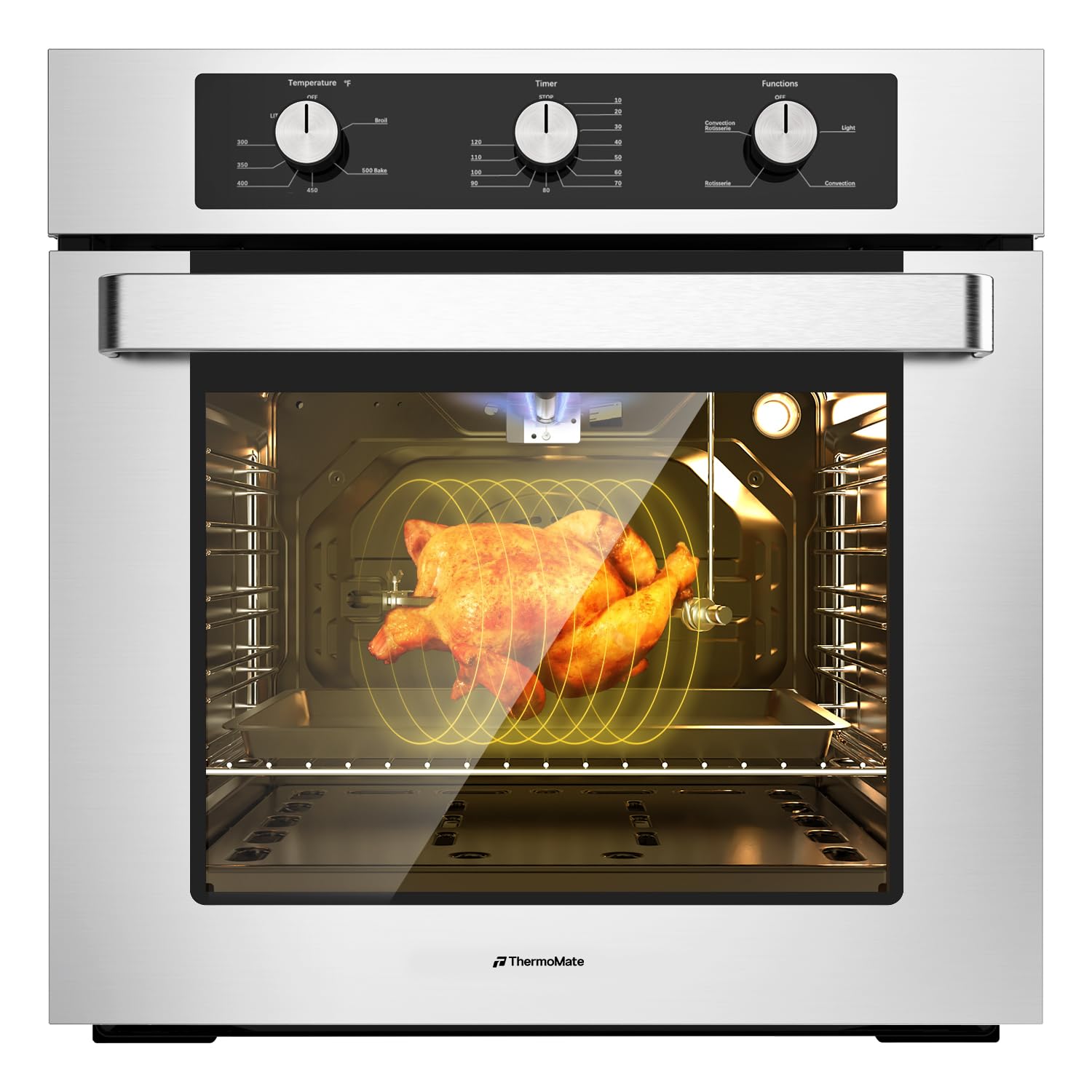
The renovation workhorse that tells you its cutout size before you buy
A 22.2-inch-wide cutout is the figure that makes this oven attractive to anyone replacing an older unit in a tight cabinet run. In a retrofit where the opening already exists, that margin is often the difference between a straightforward drop-in and paying a carpenter.
Inside, the cavity holds 2.12 cubic feet — the smallest of the three picks — and a convection system circulates heated air over, under, and around your food. The door is the part that deserves attention: a 3-layer hollow tempered glass panel, 1.4 inches thick, that holds heat in and shields you from hot steam. It is also detachable, and the enamel interior wipes down easily, so cleaning the back wall is not a contortion act.
Cooking runs through 5 modes covering roast, broil, bake, and grill, with a sensor probe that monitors internal food temperature and a ceiling of 500℉. Buyers report the 3-layer glass door reads as a modern upgrade in an older kitchen and holds heat in during daily use. The catch is capacity: at 2.12 cubic feet it is the tightest of the three, so a big holiday roast leaves little room around it. It is also note the 78.7-pound body is close to the Empava’s 80 pounds, so plan for two people on install day.
The case for it: a documented 22.2″W x 23.23″H x 23.62″D cutout, ETL certification for third-party safety testing, a removable door, and a sensor probe that takes the guesswork out of roast temperatures.
The trade-off: 2.12 cubic feet is the smallest cavity here, so batch baking and large birds get crowded. If volume is your priority, this is not the one.
Reach for this if: your existing opening is narrow and you want one this size that slides in cleanly with a door that comes off for scrubbing.
Look elsewhere if: you regularly cook for a crowd and need the extra cubic feet.
3. Summit 24″ Wide Gas Wall Oven, Stainless Steel – TTM7212BKW
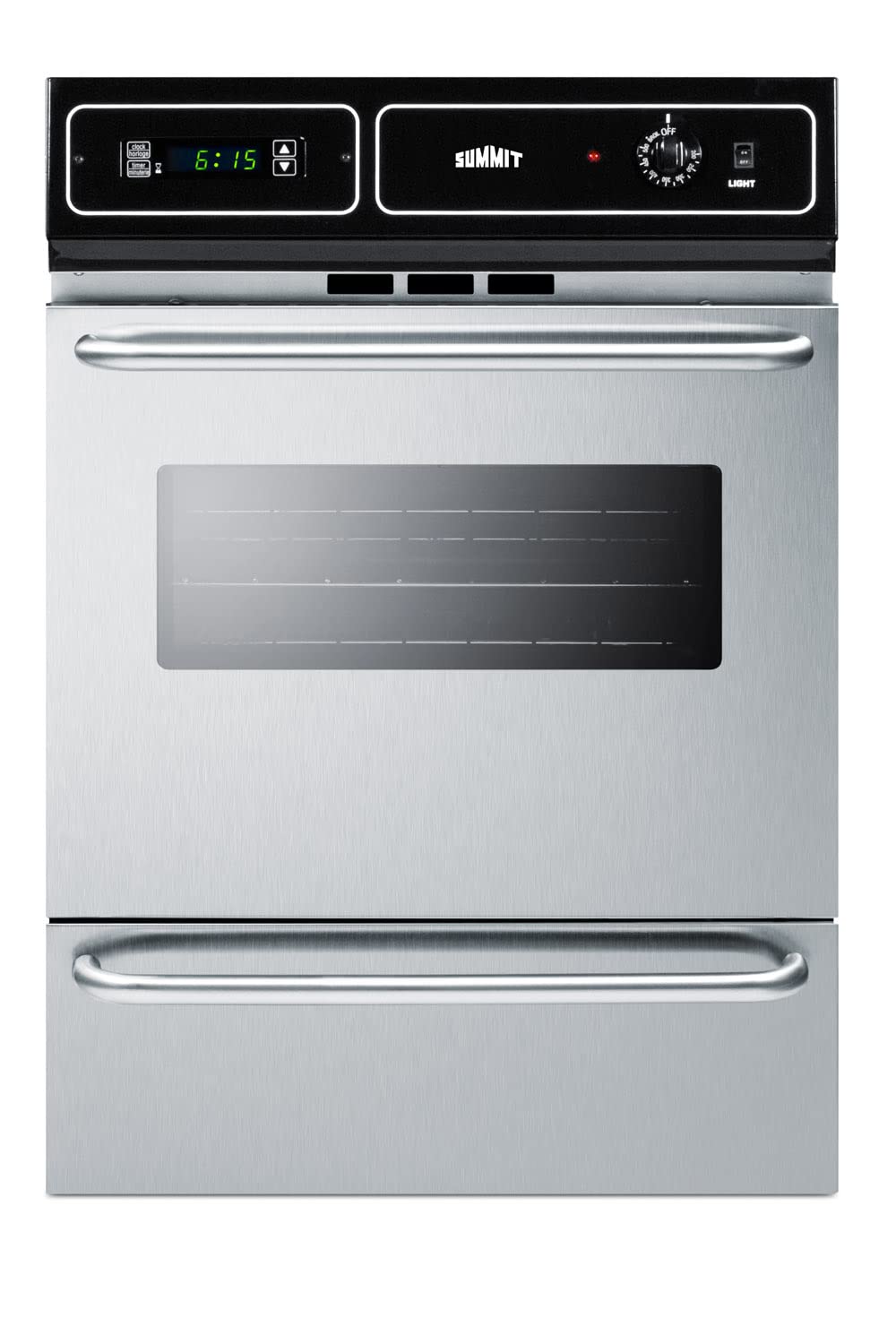
Nearly three cubic feet of cavity built for a 34-inch cabinet hole
Start with the capacity, because it is not close. The Summit gives you 2.92 cubic feet against the ThermoMate’s 2.12 cubic feet — that is 38% more space inside the cavity. Two full trays of cookies, a turkey with room to breathe, or a big batch roast all fit where the smaller ovens force you to cook in waves. If you bake in volume, that gap is the whole reason to read this pick.
What comes with the space is a specific installation requirement. The cutout is 34 1/8″ high by 22 3/8″ wide by 23″ deep, and that height is the number that decides everything. This oven is designed to fill a tall opening in a cabinet tower, not the shallow square hole a 24-inch drop-in uses. Note the outside footprint runs 34″H x 22″W x 23″D, and an optional trim kit in black (TKW700) or stainless (TKW700SS) stretches the height to 39″ so it can sit against taller cabinetry. There is also a lower broiler compartment, and the door wears a professional towel bar handle.
It is made in the USA with electronic ignition, and the 2.92-cubic-foot cavity is the strong suit — it holds a turkey with room to spare. Reliability is the split opinion, with some units performing well and others needing attention, so buying from a seller with a solid return path is smart here. Compare the dimensions to the Empava’s 22.83″D x 23.43″W x 23.62″H and the shape difference is obvious: these two ovens are cut for different holes entirely.
The volume argument: 2.92 cubic feet is the largest cavity of the three, and the optional trim kit extends height to 39″ for taller cabinet openings.
Measure first, then fall in love: the 34 1/8″ height requirement rules this oven out of standard shallow openings, so confirm your cutout before anything else.
Built for: kitchens with a tall cabinet opening under four feet that want maximum usable cavity space.
The one requirement: a 34 1/8″H x 22 3/8″W x 23″D cutout — without it, this oven will not seat.
Know the Specs
Capacity in cubic feet
This number tells you how much food fits inside the cavity. A larger figure means more racks can hold a full batch without crowding. A 2.92 cubic foot cavity holds noticeably more than a 2.12 cubic foot one, and that difference shows up when you bake two trays at once or slide in a large roast. Match the capacity to how you actually cook — a 2.12 cubic foot cavity is tight for batch baking, while 2.92 cubic feet handles two full trays.
Cutout dimensions
These are the height, width, and depth of the hole in your cabinetry that the oven body drops into. They are not the same as the oven’s outside dimensions, which are usually wider than the cutout so the trim can overlap the cabinet face. Confirm the cutout figures for your specific pick against your opening with a tape measure. A cutout mismatch is the single most common reason a wall oven gets returned.
Convection versus radiant heat
Radiant heat comes from the burner and rises through the cavity on its own. Convection adds a fan that blows the heated air around, which evens out spots that would otherwise run hot or cool. For baking and multi-rack roasting, the fan is a real advantage. For simple broiling and reheating, a radiant burner does the job without the fan.
Gas rating and the 120V plug
Every oven here runs on natural gas, which feeds the flame. The ignition, display, fan, and light need a 120V outlet, so the appliance needs both a gas line and a wall socket. Some models list a maximum cavity temperature, like 500℉ on the ThermoMate and a 250°F–480°F range on the Empava, which sets the ceiling for high-heat roasting.
Common Questions
Will a 24 inch gas wall oven fit in my existing cabinet opening?
Do I need a 120V outlet for a gas wall oven?
Is convection worth it in a small gas oven?
What is the difference between a wall oven cutout and the oven’s own dimensions?
How much food fits in a 2.12 cubic foot oven compared to a 2.92 cubic foot one?
Can a gas wall oven go under a cooktop?
How do I clean the inside of a gas wall oven?
What does ETL or CSA certification mean on a wall oven?
Can a wall oven be used as a rotisserie?
How heavy is a 24 inch gas wall oven to install?
The Bottom Line
You can cook on the Empava 24″ Natural Gas Single Wall Oven the day it is installed, because the rotisserie spit and full accessory set come in the box with no extra purchases. That makes this gas wall oven the one to shortlist first. Its 2.3 cubic foot convection cavity (a fan that blows hot air around the food for even browning) is the core of the deal. If your opening is narrow, the ThermoMate 24 Inch Gas Wall Oven gives you a documented cutout (the exact hole size the maker publishes for installers), plus a detachable door and a sensor probe (a temperature probe you leave in the meat). For a tall cabinet tower that needs the largest cavity of the three, reach for the Summit 24″ Wide Gas Wall Oven — as long as its 34 1/8-inch height fits your hole.
How we choose
We do not accept paid placement. Every pick is matched to a real buyer and a real use-case; we do not hands-on test units.
Sources
Specifications: manufacturer listings and product documentation. Review insights: verified customer reviews, as of November 2026. Pricing: not shown on this page (it changes often); check the current price via the retailer link.
As an Amazon Associate, Tactical Gear Guy earns from qualifying purchases. This does not affect which products we feature.