Specs are compiled from manufacturer listings and verified buyer reviews and can change over time — please confirm the key details on the product page before buying.
Your feet are the tool you use most on the job, and the wrong pair makes every shift feel twice as long. The picks below are sorted by what actually matters on the job — toe protection, break-in time, weight on your feet and how the soles hold up after months of concrete. Start with the Ariat Rebar Lift if you want the strongest all-round balance of cushioning, support and protection.
This guide is built by comparing the manufacturers’ published specifications and the patterns across verified customer reviews, so you get each pick’s real strengths and trade-offs instead of marketing spin.
Some boots here are built for a wet, muddy jobsite and some are built for a fast shift on a concrete shop floor. That difference decides which one you should buy, so read the fit notes before you commit to work boots and shoes.
Below you will find nine pairs sorted by real-world job, from composite-toe sneakers that look like skate shoes to a six-inch leather boot that shrugs off rain.
Top Picks
How To Choose The Best Work Boots and Shoes
Most bad work-shoe purchases come down to three things: the toe cap you picked, the weight you carry all day, and whether the sole is built for the surface you stand on. Get those three right and the logo on the side barely matters. Get them wrong and no amount of cushioning saves your feet by the end of week two.
Composite toe versus steel toe
A composite toe is a non-metal safety cap built into the front of the shoe. It keeps weight off your toes and stays warmer in cold weather than a steel cap. Steel is the traditional choice and tends to feel more rigid underfoot. If you pass through a metal detector or fly regularly, composite is the friendlier option — the Airwalk Deuce and the KEEN picks here are metal-free.
Why the weight number on the listing matters
Boot weight is listed per shoe or per pair, and the difference between a heavy leather six-inch boot and a work sneaker is what your knees notice by hour eight. A pair listed at 5.5 pounds puts far more on your feet than a pair listed at 3.48 pounds. If you cover serious distance on concrete, lean lighter.
Waterproof leather versus breathable mesh
Waterproof leather keeps rain and puddles out but traps heat. Breathable mesh lining — like the wicking liner in the New Balance Cremorne — lets heat escape so your feet stay drier in warm shops. Match the upper to your climate: waterproof leather for rain and puddles, breathable mesh for hot indoor shops.
Side-by-Side Comparison
| Model | Best For | Toe Type | Listed Weight | Waterproof | Amazon |
|---|---|---|---|---|---|
| Ariat Rebar Lift 6″★ Best Overall | Best Overall | Composite | 5.5 lb | Yes | Amazon |
| Georgia Boot Eagle LightLight Leather Pick | Light Leather Pick | Not stated | 4.5 lb | Not stated | Amazon |
| Airwalk DeuceLight-Duty Sneaker | Light-Duty Sneaker | Composite | — | No | Amazon |
| New Balance Cremorne | Fresh Foam Comfort | Composite | 3.48 lb | No | Amazon |
| New Balance Quikshift | Wide-Fit Option | Composite | — | No | Amazon |
| Timberland PRO Pit Boss | Workhorse Pick | Steel | 1.83 lb | Yes | Amazon |
| KEEN Kenton Mid | Work-to-Play | Composite | 3 lb | No | Amazon |
| KEEN Evanston 6″ | Wet Jobsites | Carbon Fiber | 25.3 oz per boot | Yes | Amazon |
Detailed Reviews
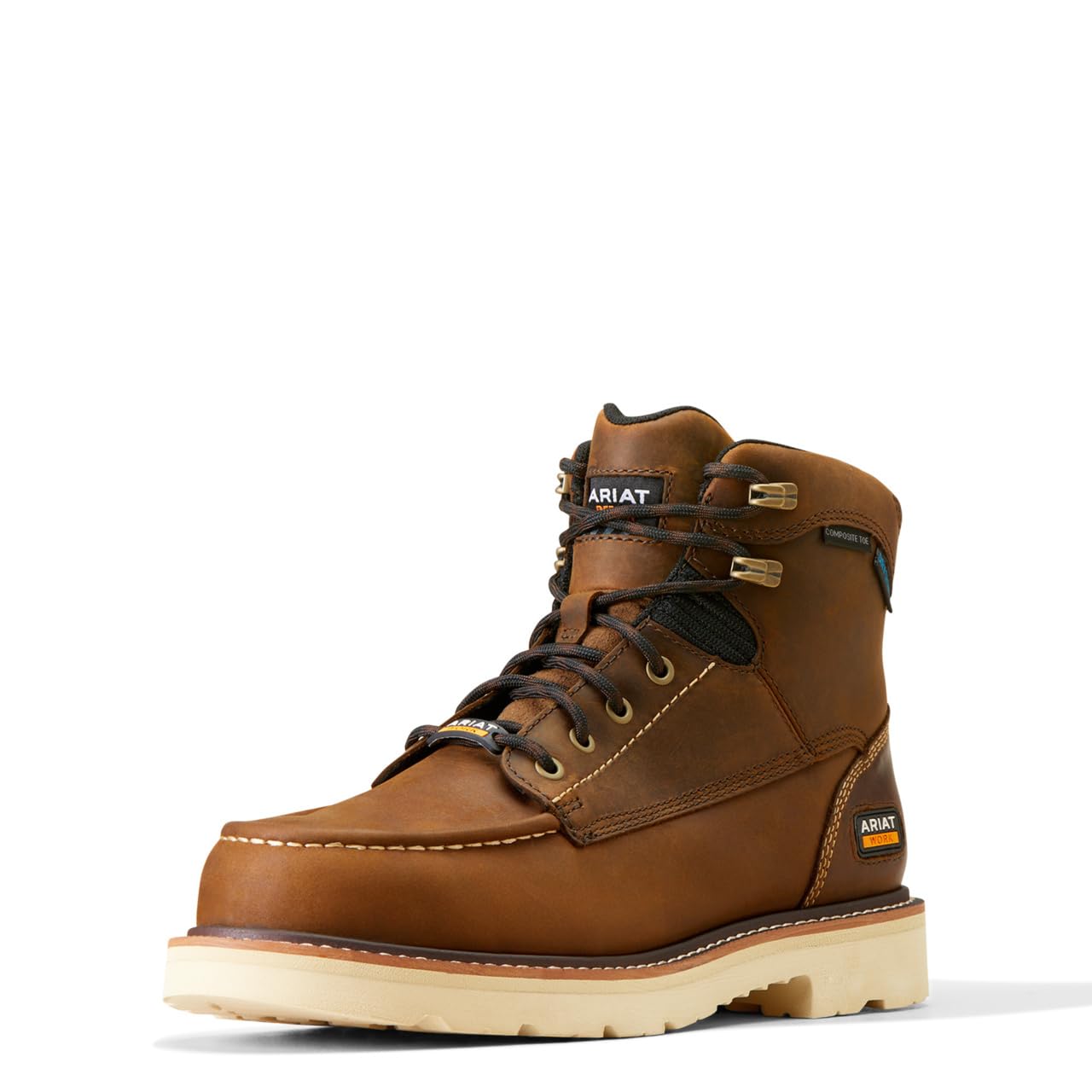
1. Ariat Men’s Rebar Lift 6″ Waterproof Composite Toe Work Boot
Our pick — 4.0+★ from 450+ verified ratings; the strongest balance of quality and price.
The six-inch waterproof boot that cushions a long shift without costing you your ankles.
The Ariat Rebar Lift is the pick here for most people because it balances the two things that ruin a work day: sore feet and a wet sock. It is a six-inch boot, meaning the collar rises above your ankle for support, and it is waterproof, so a puddle or a rainy site does not soak through. Inside sits a composite toe, a non-metal safety cap that protects your toes without adding the cold, heavy feel of steel.
What wins people over is the build. Ariat’s owners keep coming back to the quality of the construction and the comfort of the cushioning and support underfoot, and the foot support itself gets singled out. The elastic ankle panel lets the six-inch collar flex when you squat and kneel, so it stops digging into your shin. The listed weight is 5.5 pounds, and the boot measures 18 x 14 x 5 inches, so it is a substantial leather boot, not a slip-on sneaker.
The honest catch is durability. Buyers report the soles peeling apart and the boots breaking down after a couple of months, which is the loudest recurring gripe in the reviews. Fit and water resistance also split opinion, so try your normal size first. Treat these as a comfort-first boot for moderate duty and inspect the soles regularly.
What Earns Its Keep
- Waterproof build keeps rain and puddles off your feet
- Composite toe protects without steel’s cold, heavy feel
- Elastic ankle flexes so you can squat and kneel comfortably
- Cushioning and foot support are the standout comfort traits
Where It Asks For Care
- Sole peeling is the most-reported durability issue
- Fit runs mixed, so sizing can take a try or two
- At 5.5 pounds it is a heavier boot on long walks
Reach for this if: you want a waterproof six-inch boot with real cushioning for mixed indoor and outdoor work.
Look elsewhere if: you need a featherweight sneaker for a fast concrete shift.
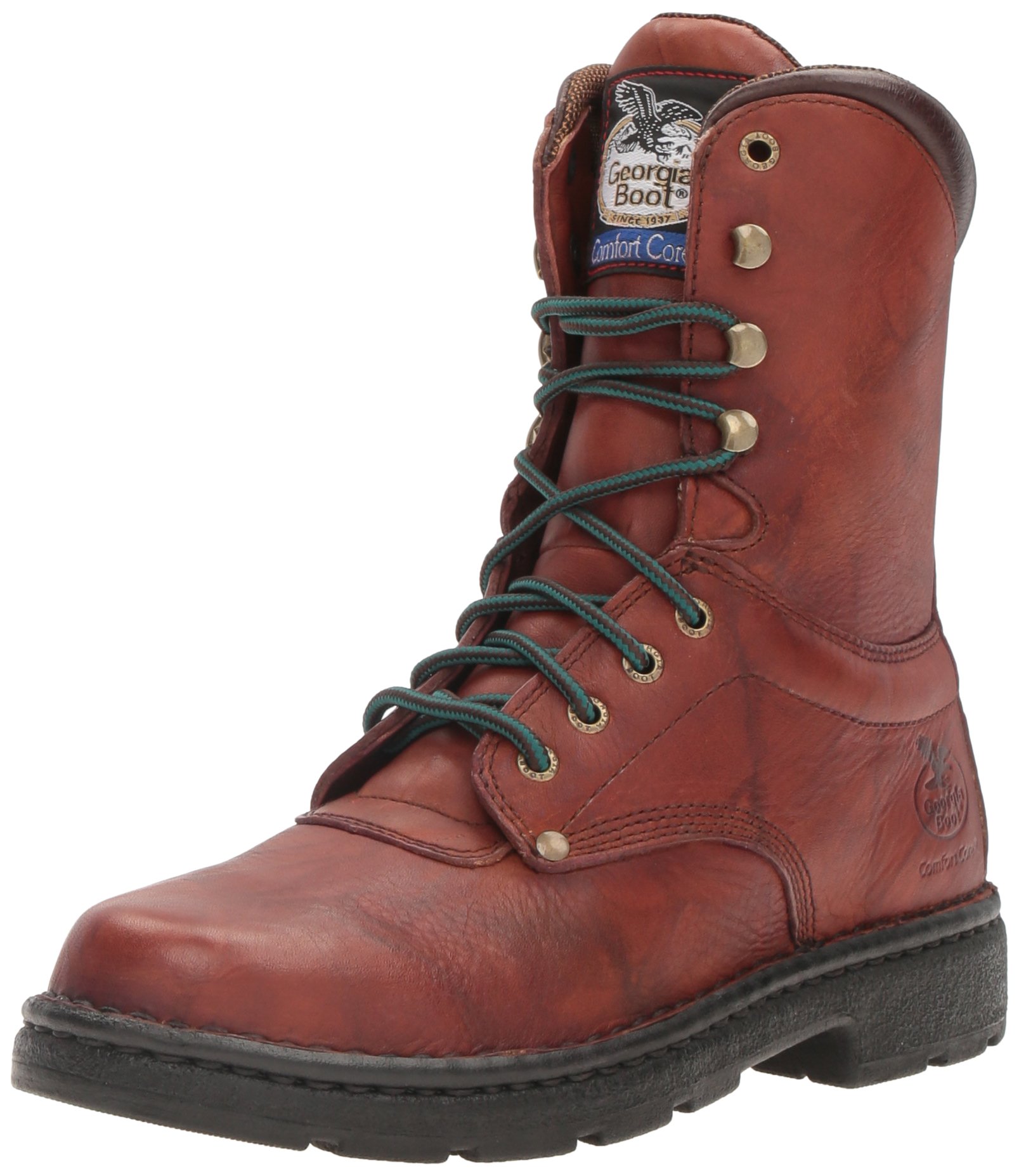
2. Georgia Boot Eagle Light Work Boot
Soft leather and a 4.5-pound build that breaks in fast on a farm or a framing crew.
If you want a leather boot that feels broken in on day two rather than week three, this is the one. The Georgia Eagle Light is built around soft leather and a great fit, and owners consistently describe it as comfortable right away. The listed weight is 4.5 pounds, which keeps it noticeably lighter on your feet than the Ariat above at 5.5 pounds.
Owners praise the build most — the leather, stitching and finish read as a boot made to be worn hard. Its lightweight design and appearance round out the appeal, so it works on a jobsite and does not look out of place off it.
Durability is where feedback splits. Some pairs last a long time; others come apart within 8 months, and water resistance draws the most negative notes. The value question also divides owners. This is a fair-weather leather boot for dry work, not a wet-site solution.
Best fit for: dry-site work, farm and ranch use, and anyone who hates a stiff break-in period.
Worth knowing: soft leather trades some toughness for that comfort, so keep them out of standing water.
The soft-leather shortcut: a comfortable leather boot that skips the break-in, as long as your site stays mostly dry.
Think twice if: you work in rain or standing water all day.
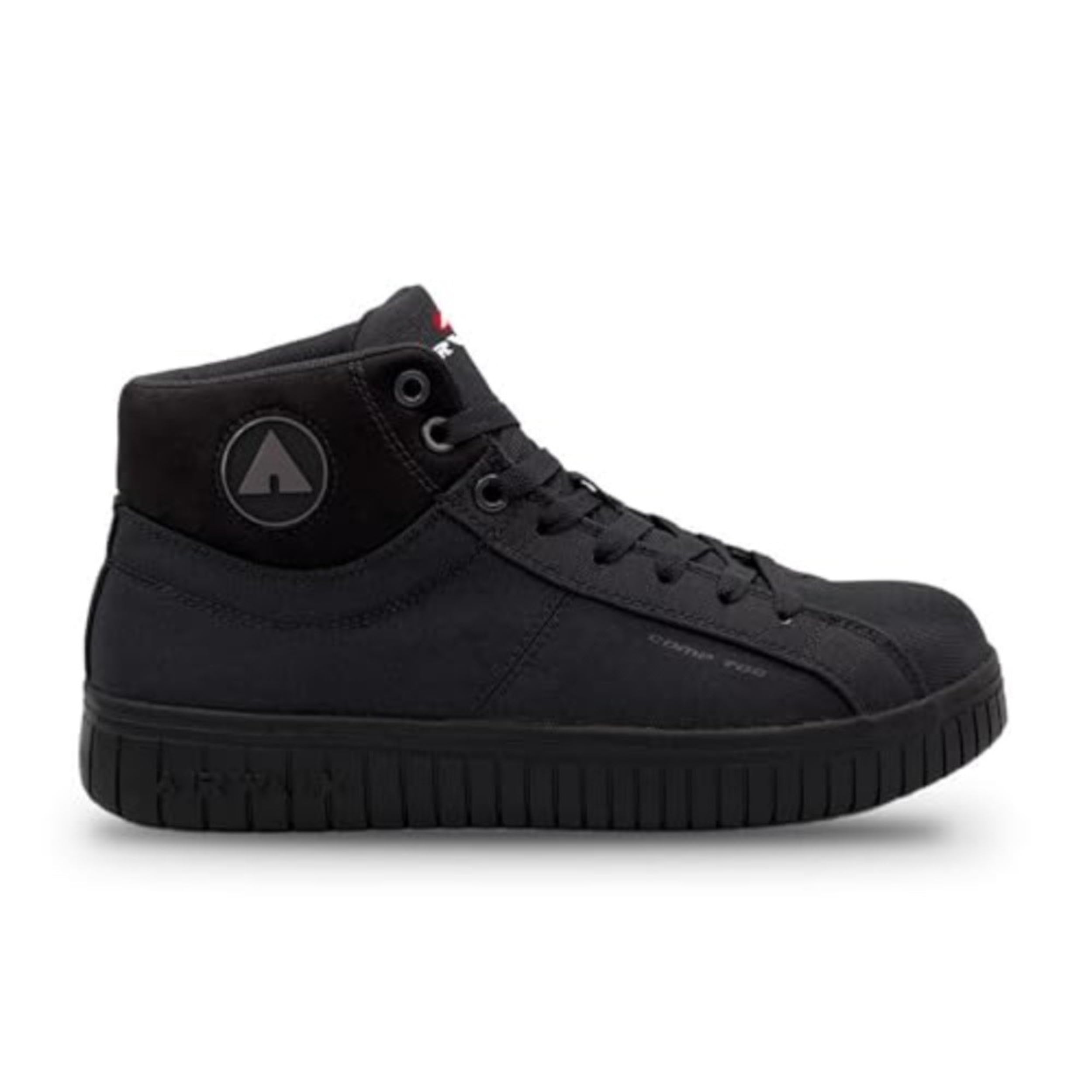
3. Airwalk Deuce Composite Toe Shoes for Men
Skate-shoe looks with a safety toe tucked inside, built for light-duty shop work.
Here is a work shoe that does not announce itself as one. The Airwalk Deuce wears like an ordinary skate shoe, but hides a composite toe, a non-metal safety cap that protects your toes without steel’s weight. The outsole is slip and oil resistant, which helps on a greasy shop floor, and the shoe carries electrical hazard protection — extra shielding when an outsole touches a live circuit.
Comfort is the headline. The dual-density PU insole, a two-layer foam pad under your foot, absorbs shock through a long standing shift. A breathable, moisture-wicking lining keeps your feet cooler as the day runs on. The shoe is metal-free and TSA security friendly, so it passes a scanner without a second look. Owners describe it as a nice hybrid of a boot and a shoe for work.
The trade-off is that this is a light-duty shoe, not a heavy jobsite boot. Durability, fit and slip resistance all split opinion, so try a pair on before relying on it for brutal conditions. For warehouse, retail or light maintenance work, though, it is a comfortable and versatile pick.
Pick this for: warehouse, retail, maintenance and light-duty indoor work where you want sneaker comfort with a safety toe.
Skip it for: heavy construction or wet, muddy ground that demands a taller boot.
4. New Balance Cremorne Composite Toe Work Shoes
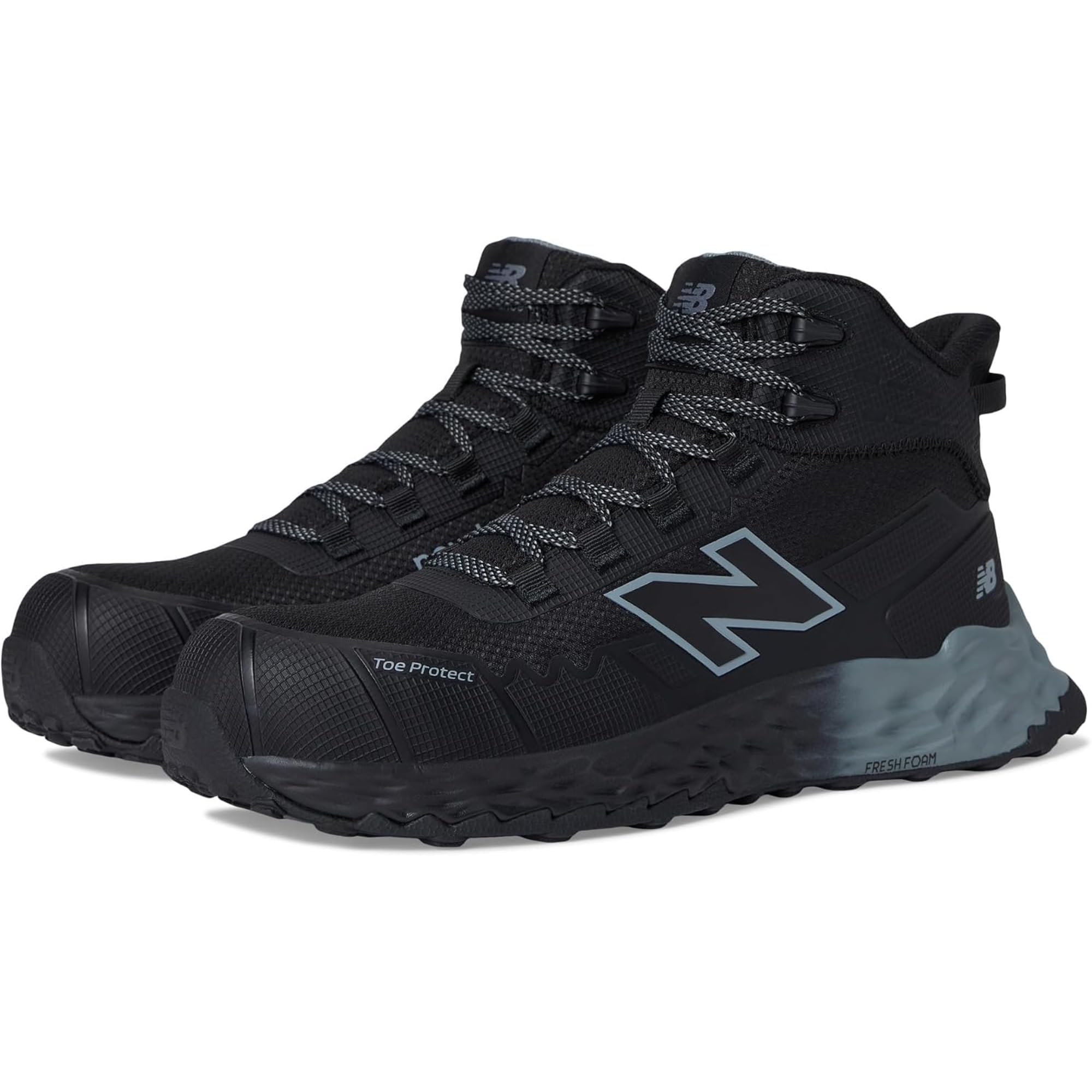
Fresh Foam padding at 3.48 pounds, built for the long walk through a big warehouse.
Fresh Foam is New Balance’s soft, springy cushioning foam, and the Cremorne wraps a safety toe around it for all-day comfort. The composite safety toe and a feature called Toe Protect guard your toes without the weight of steel. The shoe also carries slip-resistant outsoles, electrical hazard resistance and heat resistance for hot work surfaces.
At 3.48 pounds it is a genuinely light work shoe. Compare that to the Timberland PRO Pit Boss listed at 1.83 pounds and the KEEN Evanston at 25.3 ounces per boot, and you start to see how the weight classes stack up. The wicking mesh lining keeps your feet drier on a hot shift, and the construction is debris-free so grit does not work its way in.
Comfort is the strongest draw. Owners bring up how well the shoe keeps sand, water and scuffs at bay, with the dark brown shade hiding marks well, and the ankle stability gets steady praise. Fit and traction are more mixed, and this is an athletic-style shoe rather than a tall, heavy-duty boot. If you stand and walk a lot indoors, it earns its place.
What stands out: Featherweight Fresh Foam cushioning with composite toe protection and a breathable mesh lining.
The open question: traction is a mixed report and the shoe is not a tall leather boot, so rough wet sites want something heavier.
Best for: warehouse, distribution and indoor work where comfort over distance matters most.
Not for: heavy outdoor sites that demand waterproof leather and deep tread.
5. New Balance Quikshift Composite Toe Work Shoes
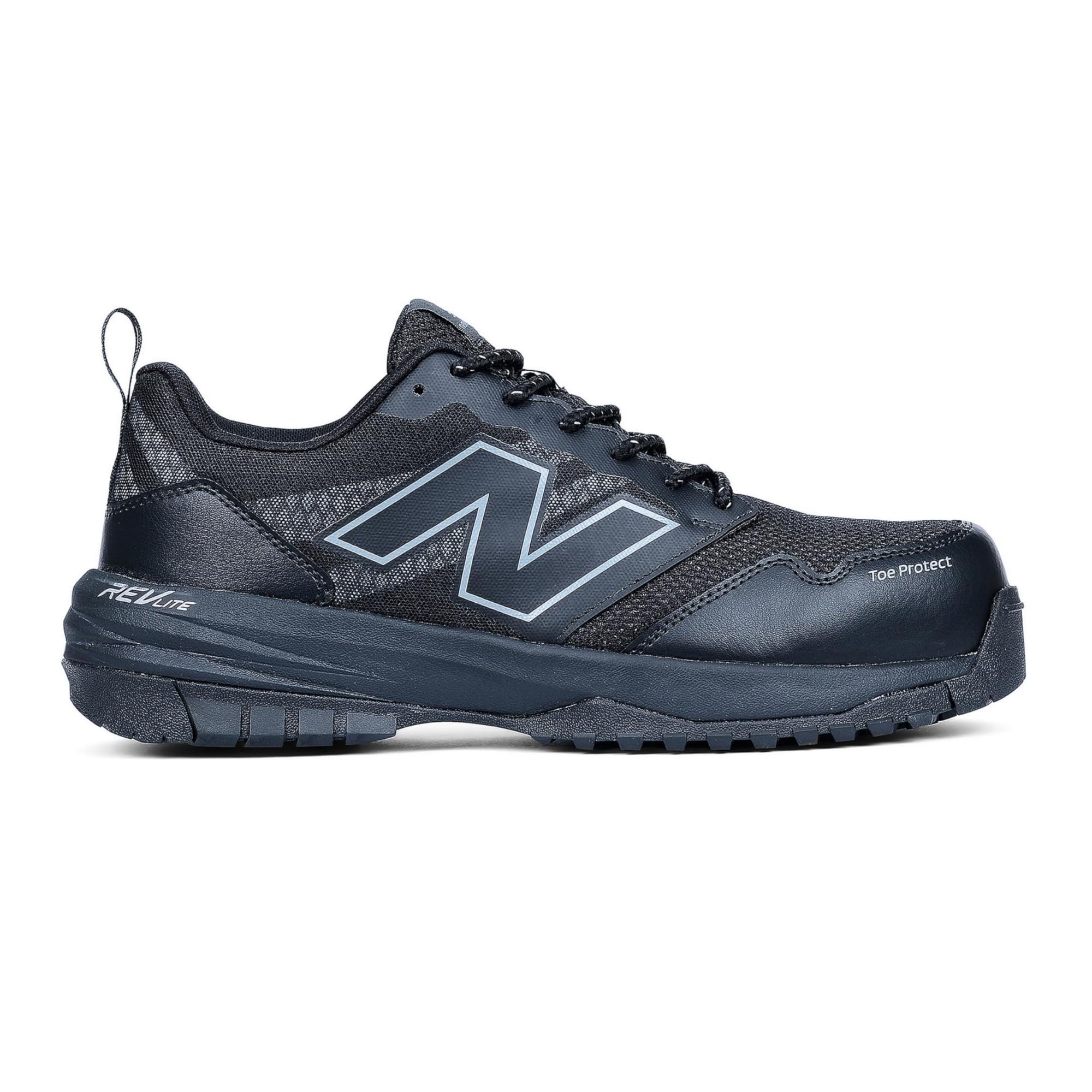
Three widths and sizes up to 18 make this the fit-first pick for hard-to-fit feet.
If standard work shoes pinch across the forefoot, start with this one. The Quikshift comes in 3 widths and is available up to size 18, which covers a lot of feet that other models ignore. The composite toe and slip-resistant outsole handle everyday jobsite safety, and the shoe meets ASTM F2413-18 EH safety standards for electrical hazards.
Underfoot sits a REVlite midsole, a lightweight foam layer built to cushion without adding bulk, paired with an EVA insert. A heel counter adds stability, and pull tabs on the heel and tongue make the shoe quick to get on and off. It carries New Balance’s familiar athletic look, which owners like for both work and the walk home.
The honest split: durability, traction and cushioning all get mixed reports. Some pairs last about 2 years, others come apart after 6 months, and some find them grippy on shop floors while others call them too slippery. The three widths are the real reason to choose it over a leather boot.
Go with this if: you need a wide, athletic-fitting safety shoe and want an easy on-and-off in a hurry.
Only if you accept: mixed traction, so break them in on your own floor first.
6. Timberland PRO Pit Boss 6 Inch Steel Safety Toe Work Boot

A steel-toe leather stalwart with a roomier toe box and grip for wet concrete.
The Pit Boss is the classic leather work boot, and the steel toe here meets ANSI safety standards, the recognized benchmark for protective footwear. That steel cap sits in a roomier toe box than many boots, which matters if you have wide toes and hate the pinch of a narrow boot after a long shift.
Traction is built for wet, slippery surfaces, and the boot offers electronic hazard protection to keep you safe from open circuits. A removable sock liner lets you swap in your own insole, which helps on blister-prone feet. The nylon shock-diffusion plates add support and torsional rigidity, meaning the sole resists twisting on uneven ground. It is a heavy leather boot at heart, listed at 1.83 pounds, so it is built to be tough rather than featherweight.
Durability is the honest dividing line: some owners say these hold up well, while others report them breaking down within months. For everyday industrial use where you want proven leather construction, it is a solid choice.
Why It Fits The Job
- Steel toe in a roomier toe box than many boots
- Traction designed for wet and slippery surfaces
- Electronic hazard protection for open circuits
- Removable sock liner for your own insole
What To Weigh
- Heavy leather build is not a light shoe
- Durability reports split, with some breaking down sooner than expected
Take this route if: you want traditional steel-toe protection in a tough leather boot for industrial work.
Look lighter instead if: you cover long distances and want less weight on your feet.
7. KEEN Utility Men’s Kenton Mid Composite Toe Work Sneakers

A casual work sneaker at 18.3 ounces per shoe that slips from the job to the weekend.
The Kenton Mid is built for the worker who does not want to change shoes between the shift and the drive home. It is a mid-height sneaker, so it rises a touch above the ankle, and it takes a composite toe for non-metal protection. KEEN builds it on a traditional wider form, which suits feet that feel cramped in a standard last. Each shoe weighs 18.3 ounces (519 grams), which keeps it light on a long standing shift.
KEEN pitches this for light-duty work in assembly lines, maintenance, manufacturing, warehousing and distribution. The leather comes from tanneries certified by the Leather Working Group (LWG), a body that grades environmental standards in leather production. Removable insoles mean you can swap in your own for a better fit.
The durability note is worth knowing: owners mention some uppers splitting after two months, while others find the shoes built to last. That is a mixed report, not a pattern. Fit and value also split opinion. Still, for light indoor work the comfort and skate-shoe look earn steady praise.
The everyday draw: Light, wide-fitting comfort that goes from warehouse floor to weekend cookout without a costume change.
Where it can fall short: upper durability splits opinion, so heavy-duty users should look at the Evanston instead.
Suits you if: you do light-duty indoor work and want one shoe that fits off-duty life too.
Pass on it if: your work needs a heavy-waterproof, high-durability boot.
8. KEEN Utility Evanston 6″ Composite Toe Waterproof Work Boots
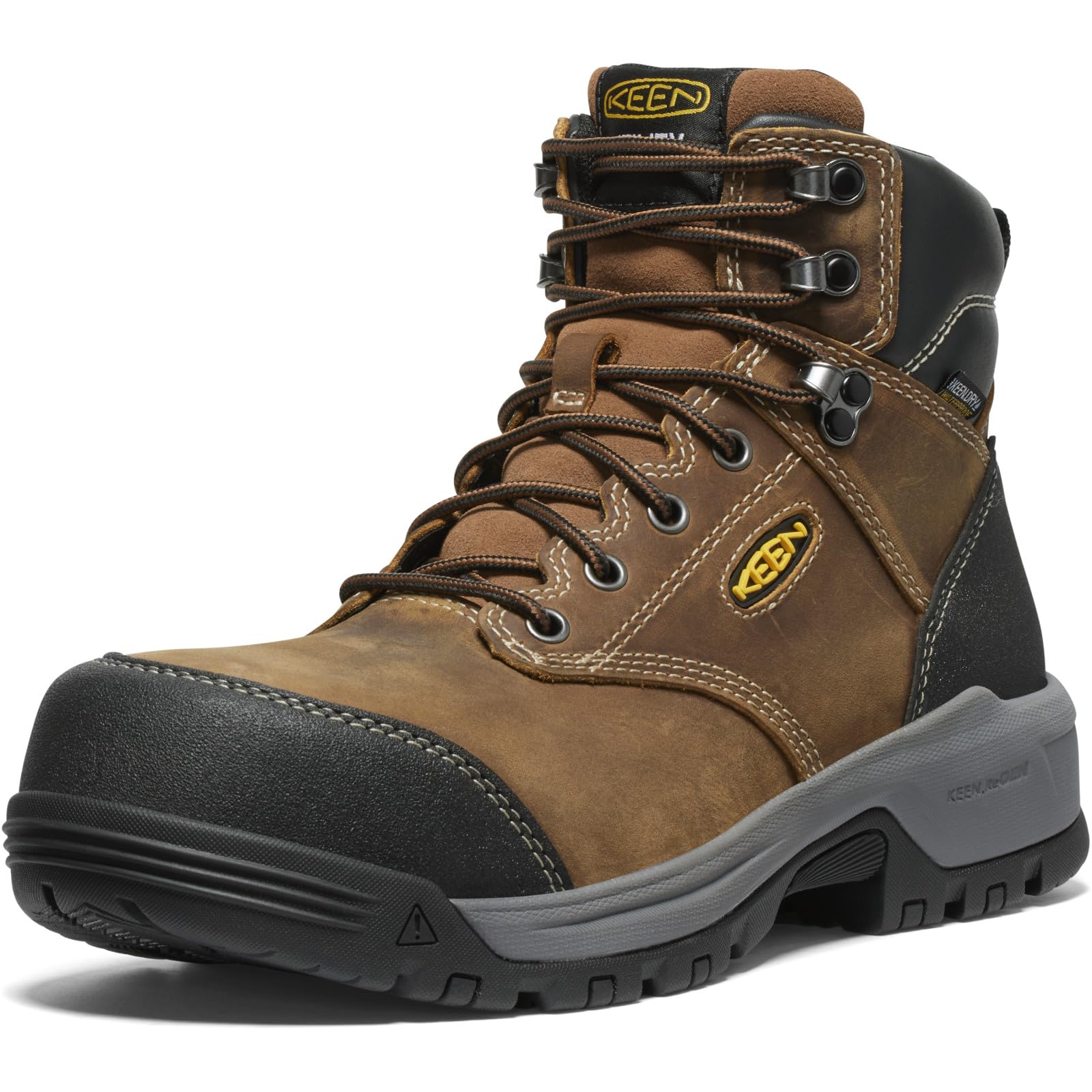
A waterproof six-inch boot with barnyard-resistant leather and an energy-returning midsole.
The Evanston is built for wet, messy medium-duty work. The barnyard-resistant waterproof leather uppers keep water out while you wade through a muddy site, and a KEEN.ReGEN midsole returns energy as you walk, which eases a long day on your feet. A carbon toe keeps the front lighter than steel, and the 90-degree heel with an internal shank adds stability on uneven ground. Each boot weighs 25.3 ounces (720 grams).
KEEN builds these on its traditional wider form and includes removable insoles, so you can dial in your own fit. The brand pitches the Evanston for medium-duty work in construction, utilities, landscaping, transportation, maintenance and manufacturing. The leather again comes from LWG-certified tanneries.
Owners value the comfort and the water resistance, and the fit works for wide feet — there is plenty of room across the front. Durability is the honest split: some pairs last up to a year, others do not hold up well. It is a solid wet-weather boot that rewards a bit of care on the roughest sites.
The wet-site answer: Waterproof leather and a stable heel for muddy, uneven ground.
What to expect: durability reports vary, so treat it as a medium-duty boot and keep it dried and conditioned.
Made for: construction, utilities and landscaping crews working wet, uneven ground.
Not the pick if: you only need light indoor work and would rather carry less weight.
Know the Specs
Composite Toe vs Steel Toe
A composite toe is a non-metal safety cap built into the front of a shoe. It keeps weight off your toes and stays warmer in cold weather. Steel is heavier and colder but often feels more rigid. Both protect the same way; the difference is what you feel after eight hours. Composite models here include the Airwalk Deuce, both New Balance shoes and all three KEEN picks.
Electrical Hazard and Slip Ratings
An electrical hazard (EH) rating means the shoe offers a secondary layer of protection if an outsole touches a live circuit. It is not a guarantee, so treat it as one safety layer among several. Slip ratings like ASTM F2913-19 and F1677-96 are test standards for grip on slick surfaces; the KEEN Gibson lists both. If your floor is oily, look for these numbers on the listing.
Waterproof Leather vs Water-Resistant
Waterproof means water should not pass through, as on the Ariat Rebar Lift and KEEN Evanston. Water-resistant means the leather repels some moisture but can soak through in standing water, as on the KEEN Gibson. For puddles and rain, choose waterproof. For damp ground and occasional spray, water-resistant is enough.
Reading Listed Weight
Boot weight is listed per shoe or per pair, so compare like with like. A pair at 5.5 pounds puts far more load on your feet than a shoe at 3.48 pounds. Lighter shoes ease your knees on long concrete walks; heavier leather boots hold up better on rough sites. Match the weight to how far you actually walk on a shift.
Common Questions
Are composite toe work boots as safe as steel toe?
How long does it take to break in leather work boots?
Can I wear work shoes with a composite toe on a construction site?
What does electrical hazard protection actually cover?
Why do work boot soles peel apart?
Should I size up for a composite toe work shoe?
Is a work sneaker enough for warehouse work?
How do I stop my feet getting hot in waterproof boots?
What is the difference between water-resistant and waterproof leather?
Do slip-resistant soles really stop slips on a greasy shop floor?
The Bottom Line
For most people, the strongest pick in work boots and shoes is the Ariat Rebar Lift 6″, because it balances waterproof protection, a composite toe and real cushioning for a long shift. If you want a lighter shoe that keeps a safety toe for indoor work, reach for the New Balance Cremorne and its Fresh Foam cushioning at 3.48 pounds. And if your daily hazard is a slick, oily floor, the KEEN Gibson backs its grip with two ASTM slip standards. To commit, pick the pair whose toe type and listed weight match the distance you actually walk on a shift.
How we choose
We do not accept paid placement. Every pick is matched to a real buyer and a real use-case; we do not hands-on test units.
Sources
Specifications: manufacturer listings and product documentation. Review insights: verified customer reviews, as of November 2026. Pricing: not shown on this page (it changes often); check the current price via the retailer link.
As an Amazon Associate, Tactical Gear Guy earns from qualifying purchases. This does not affect which products we feature.