Specs are compiled from manufacturer listings and verified buyer reviews and can change over time — please confirm the key details on the product page before buying.
You want a coat that keeps you warm on a cold jobsite, sheds a bit of weather, and survives being thrown in a truck bed. That is the whole job. All eight coats below do it. What separates them is how the shell (the outer fabric layer) is built, how warm the lining is, and how they fit over the layers you actually wear to work.
This guide is built by comparing the manufacturers’ published specifications and the patterns across verified customer reviews, so you get each pick’s real strengths and trade-offs instead of marketing spin.
Below you will find a full breakdown of shell materials, insulation, fit quirks, and pocket layouts, plus an honest read on each coat’s weak spot so you know exactly what you are getting into. This is the straightest breakdown of the best work coats for men you will find, built for people who need a coat that earns its keep.
Top Picks

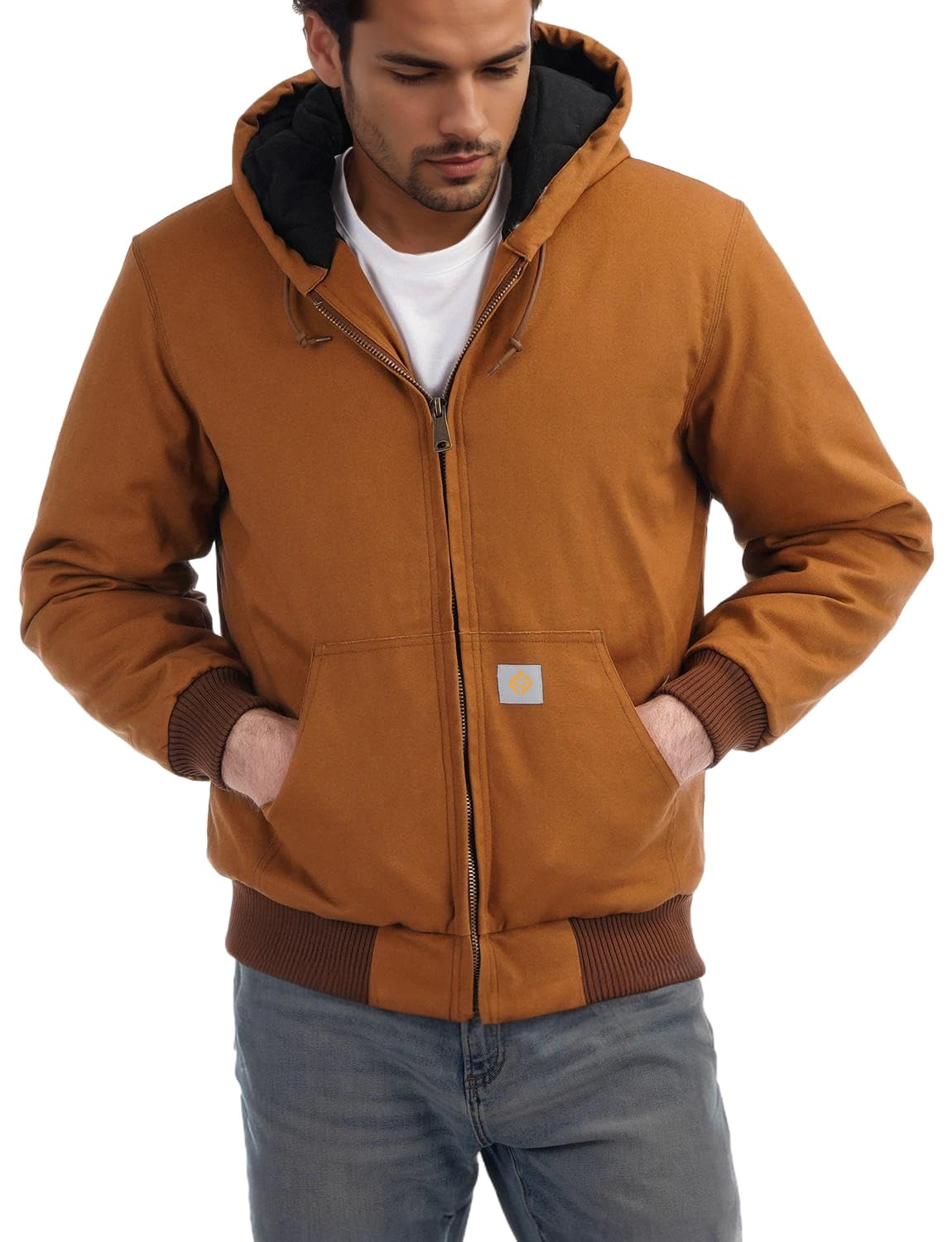
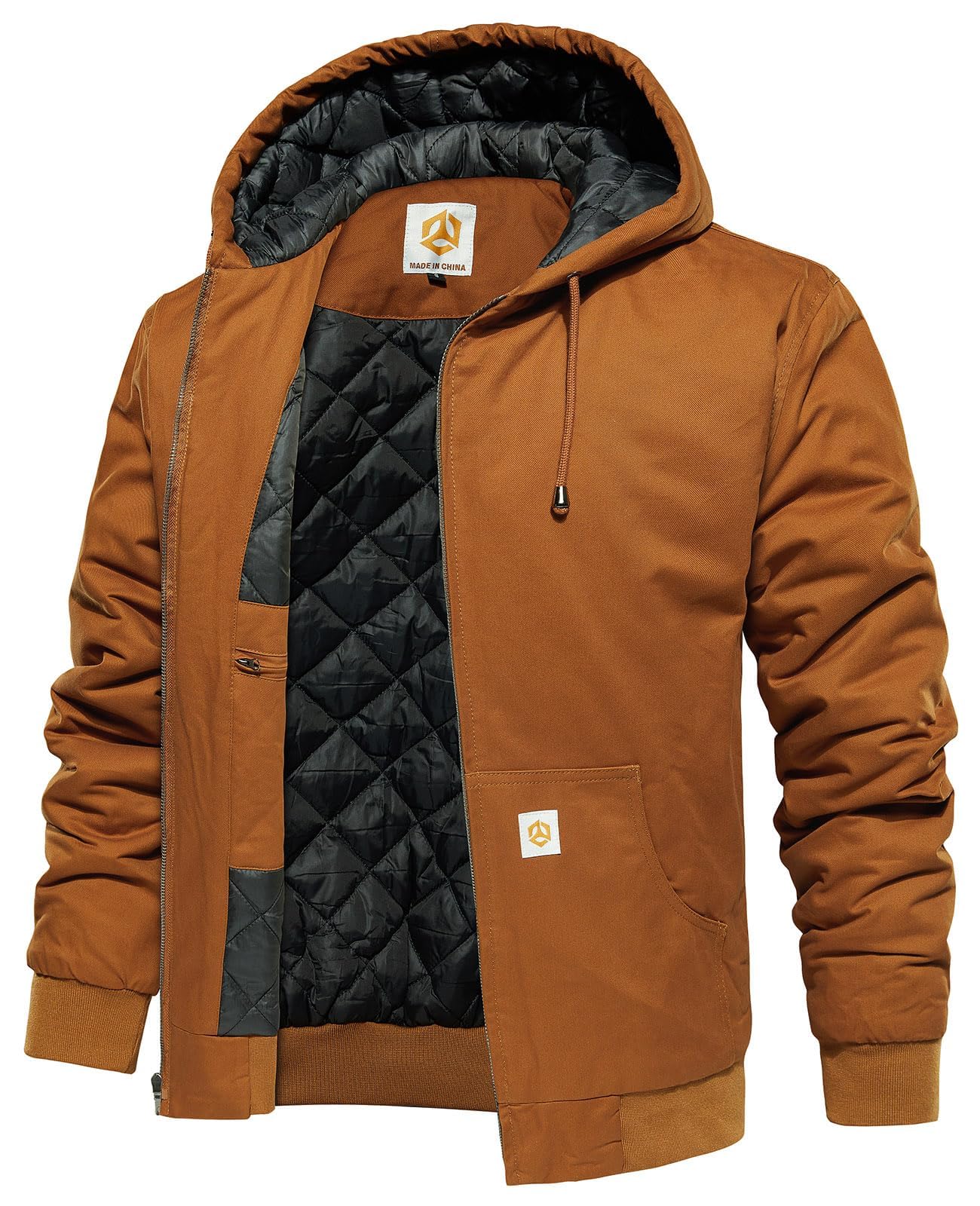
How To Choose The Best Work Coats for Men
Picking a work coat is not the same as picking a fashion jacket. You are buying a tool you wear. Three things decide whether it holds up on a cold morning: the shell fabric, the insulation, and the fit over your layers. Get those right and the rest is details.
Shell Fabric: Duck Canvas vs. Nylon
Duck canvas is a tightly woven cotton fabric, and it is the traditional work-coat material. It blocks wind well and takes a beating, but it is heavy and stiff at first — some buyers describe a break-in period. Nylon shells, like the 500-denier Cordura on the Carhartt Yukon, are lighter for the same strength and handle rain better with a durable water repellent finish (a coating that makes water bead up and roll off). If you work outside in wet, windy weather, nylon is the smarter shell. If you want the classic feel and breathability of cotton, go duck canvas.
Insulation and Lining Types
Quilted lining is the lightest option and works for fall through mild winter. Fleece and sherpa linings add warmth without much bulk. For real cold, look for a coat with dedicated insulation — the Yukon uses 150g 3M Thinsulate, which is a synthetic fill rated by weight. More grams means more warmth, but also more bulk. Match the lining to your coldest typical workday, not the once-a-year cold snap.
Fit and Sizing
Work coats are cut to go over layers, so they tend to run roomier than fashion jackets. That room is deliberate — it is cut to fit a hoodie or flannel underneath. But some brands run small and some run big. Read the sizing notes in each review below carefully, and when a coat has a roomy cut, do not size up further unless you plan to wear heavy layers.
Pockets and Practical Details
A good work coat has at least two large front pockets you can get a gloved hand into, plus a chest pocket for a phone or small tools. Storm cuffs (ribbed inner cuffs that seal at the wrist) keep cold air from shooting up your sleeves. A storm placket (a flap over the zipper) blocks wind and rain from getting through the zipper teeth. Storm cuffs and a storm placket are what keep wind off your wrists and chest on a cold morning.
Side-by-Side Comparison
| Model | Best For | Shell Material | Lining | Weight | Amazon |
|---|---|---|---|---|---|
| Carhartt Firm Duck Traditional Coat★ Best Overall | All-around jobsite warmth | Firm duck canvas | Quilt-lined | — | Amazon |
| TUAOVA Quilted Flannel Lined JacketBest Value | Budget waterproof warmth | 100% polyester tricot | Quilted flannel | 2.43 pounds | Amazon |
| CARWORNIC Hooded Active JacketBest for Layering | Layering over a hoodie | — | Quilted | — | Amazon |
| TUAOVA Washed Duck Fleece Lined Coat | Soft, broken-in feel | 100% cotton washed duck | Fleece | 2.43 pounds | Amazon |
| TBMPOY Hooded Work Cotton Coat | Cold-weather warmth on a budget | Cotton duck | Fleece flannel | — | Amazon |
| HISEA Sherpa Work Jacket | Cold, dry winter workdays | Canvas | Sherpa | — | Amazon |
| Carhartt Yukon Extremes Insulated Coat | Extreme cold and wind | 500-denier Cordura nylon | 150g Thinsulate | — | Amazon |
Detailed Reviews
1. Carhartt Men’s Firm Duck Traditional Coat
Our pick — 4.5+★ from 300+ verified ratings; the strongest balance of quality and price.
The classic duck-canvas workhorse that has been keeping men warm on job sites for generations.
This is the coat most men picture when they think of a work coat, and for good reason. The firm duck canvas shell is a tightly woven cotton that blocks wind and takes abrasion without complaint. It is quilt-lined for warmth and treated to be water-repellent, so light rain beads up and rolls off. Carhartt calls it their warmest insulation, and the build quality is the thing that wins people over most — the canvas feels like it will outlast you.
Where this coat really earns its keep is in the fit. It is cut to go over a flannel or a light hoodie without feeling like a sleeping bag. The lining is quilted, which keeps bulk down compared to a sherpa or fleece lining, so you can actually move your arms on a ladder. The pockets are generous and placed where your hands naturally fall.
The honest trade-off: the canvas starts out stiff. A few buyers describe it as needing a break-in period before it drapes comfortably. The size also runs a touch big for some, and the zipper can be stiff to operate when the coat is new. These are normal quirks of a heavy duck coat, not defects — but if you want something that feels broken-in from day one, a washed-duck or fleece-lined coat will suit you better.
What makes it the top pick
- The firm duck canvas shell is built to take years of abuse on a jobsite.
- Quilt-lined insulation keeps you warm without the puffy bulk of a down jacket.
- Water-repellent finish sheds light rain and snow.
- Carhartt’s reputation for durability is backed by the build — triple-stitched seams and heavy hardware.
What to know before you buy
- The canvas is stiff at first and takes time to break in.
- Some buyers find it runs big — consider your layering before sizing up.
- The zipper can be hard to operate when new.
Reach for this if: you want a proven, heavy-duty duck coat that will handle cold, wind, and light weather on a jobsite or farm.
Look elsewhere if: you need a coat that feels soft and broken-in immediately, or you want maximum warmth for extreme cold — the Yukon below is the better call there.
2. TUAOVA Men’s Quilted Flannel Lined Waterproof Jacket
A waterproof hooded jacket that punches well above its budget-tier price tag.
If you work outside in wet weather and do not want to spend premium money, this is the coat to beat. The shell is 100% polyester tricot, a smooth synthetic fabric that handles rain, and it is backed by a breathable membrane so sweat can escape. The quilted flannel lining adds warmth without much weight — the whole coat comes in at 2.43 pounds. The storm placket over the zipper blocks wind and rain from finding the teeth, and the drawstring hood stays put when you are moving.
What buyers like most is the quality-to-price ratio. Owners who have worn it in the cold say it handles 20-degree weather, and the cut leaves room for a thin sweater underneath. The waffle-knit thermal lining traps heat well, and the rib-knit cuffs and waistband seal in warmth at the openings. The kangaroo pocket is handy for gloves or a phone.
The catch is the zipper. It earns more complaints than any other feature on this coat, and the durability of the shell is a mixed bag — the polyester is tough but not as abrasion-resistant as duck canvas. If you are hard on your gear and drag it across concrete, a canvas coat will last longer. For wet-weather work where staying dry matters more than bombproof fabric, this is the smarter buy.
The waterproof advantage: a breathable membrane and storm placket mean you can work through drizzle and sleet without the coat soaking through — something the cheaper canvas coats below cannot claim.
The zipper caveat: it is the weak link on an otherwise strong budget coat. Treat it gently and it will serve you well; yank it and you may be looking at a replacement.
Best for: wet-weather workdays where staying dry matters and you want to keep the spend modest.
Not the pick if: you need a coat that shrugs off serious abrasion — go canvas instead.
3. CARWORNIC Men’s Winter Hooded Active Jacket
A roomy hooded work jacket that leaves space for a hoodie underneath on bitter mornings.
This coat is built for the guy who layers up. It has room inside for a hoodie, which is exactly what you want when the temperature drops and you need one more layer. The quilting adds warmth without much bulk, and the satin lining is a small detail that matters — debris and sawdust slide off instead of clinging to the inside. Buyers who have worn it say it handles 40-degree-plus weather.
The hood is warm and the elastic hem and cuffs seal out drafts. There are two inner pockets and two front pockets, which gives you places for a phone, gloves, and a wallet without stuffing everything into one spot. Quality is the thing buyers praise most here.
The big warning: this coat runs very small. Multiple buyers flag the sizing, so read the size chart carefully and consider sizing up — especially if you plan to wear a hoodie underneath. The zipper also draws several complaints. Neither is a dealbreaker if you get the size right, but it is the kind of thing you want to know before you order.
The layering edge: a cut that leaves room for a hoodie and a satin lining that sheds debris make this a smart choice for cold-weather jobsite work.
Size matters: this coat runs small — order with your layering plan in mind or you will be sending it back.
Pick this if: you layer heavily and want a hooded coat with room for a hoodie underneath.
Think twice if: you are between sizes — the small sizing is the most common complaint.
4. TUAOVA Men’s Washed Duck Fleece Lined Workwear Coat
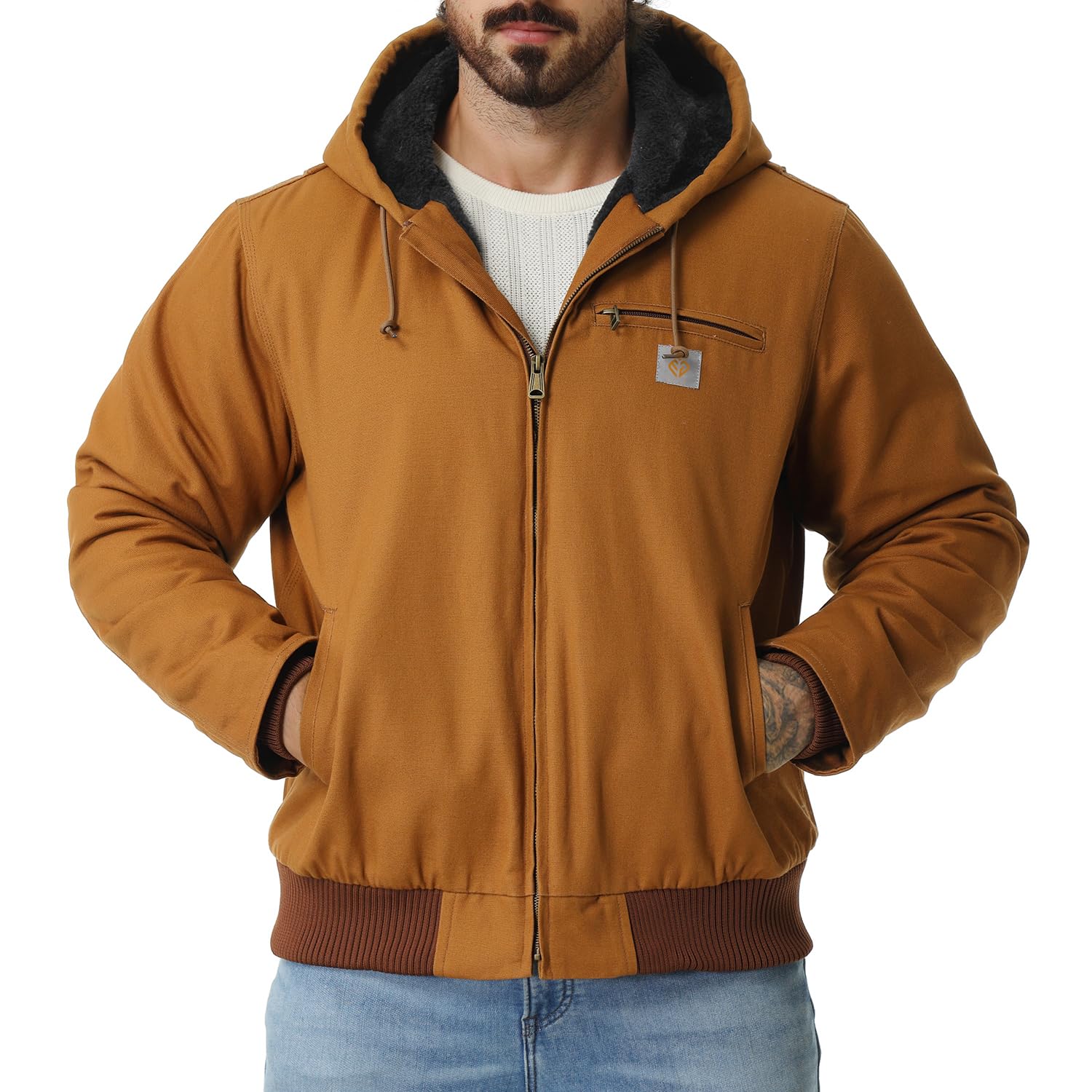
The washed-duck coat that skips the break-in period and feels soft from day one.
Washed duck canvas is the answer for anyone who wants the toughness of cotton duck without the stiff, cardboard feel of a new coat. This one is made from 100% cotton washed duck fleece — the washing process softens the fabric before it ever reaches you. It is warm and thick for chilly days, and it weighs 2.43 pounds, which is light enough to wear all day without feeling weighed down.
Buyers consistently praise the quality and value here. The fit is solid, with the arm length coming out just right for many owners, and the coat is comfortable enough to wear over a shirt without bulk. The adjustable hat rope on the hood is a nice touch for cinching it down in wind. There are plenty of pockets for everyday carry.
The honest limits: the zipper gets mixed feedback — some find it smooth, others describe it as rough. The pockets are also a point of contention, with some buyers finding them too small for gloved hands. And while the coat is warm, it is not built for extreme cold — this is a fall-through-mild-winter coat, not a deep-freeze piece.
Why it stands out
- Washed duck canvas is soft and broken-in from the first wear.
- Fleece lining adds warmth without heavy bulk.
- At 2.43 pounds it is light enough for all-day wear.
- Adjustable hood and generous pocket layout.
Where it falls short
- The zipper is a mixed bag — some find it rough.
- Pockets may be too small for thick gloves.
- Not warm enough for extreme cold.
Go with this: if you want the classic duck-canvas look and feel without the stiff break-in period.
Pass if: you work in deep winter cold or need oversized pockets for heavy gloves.
5. TBMPOY Men’s Hooded Fleece Lined Duck Coat
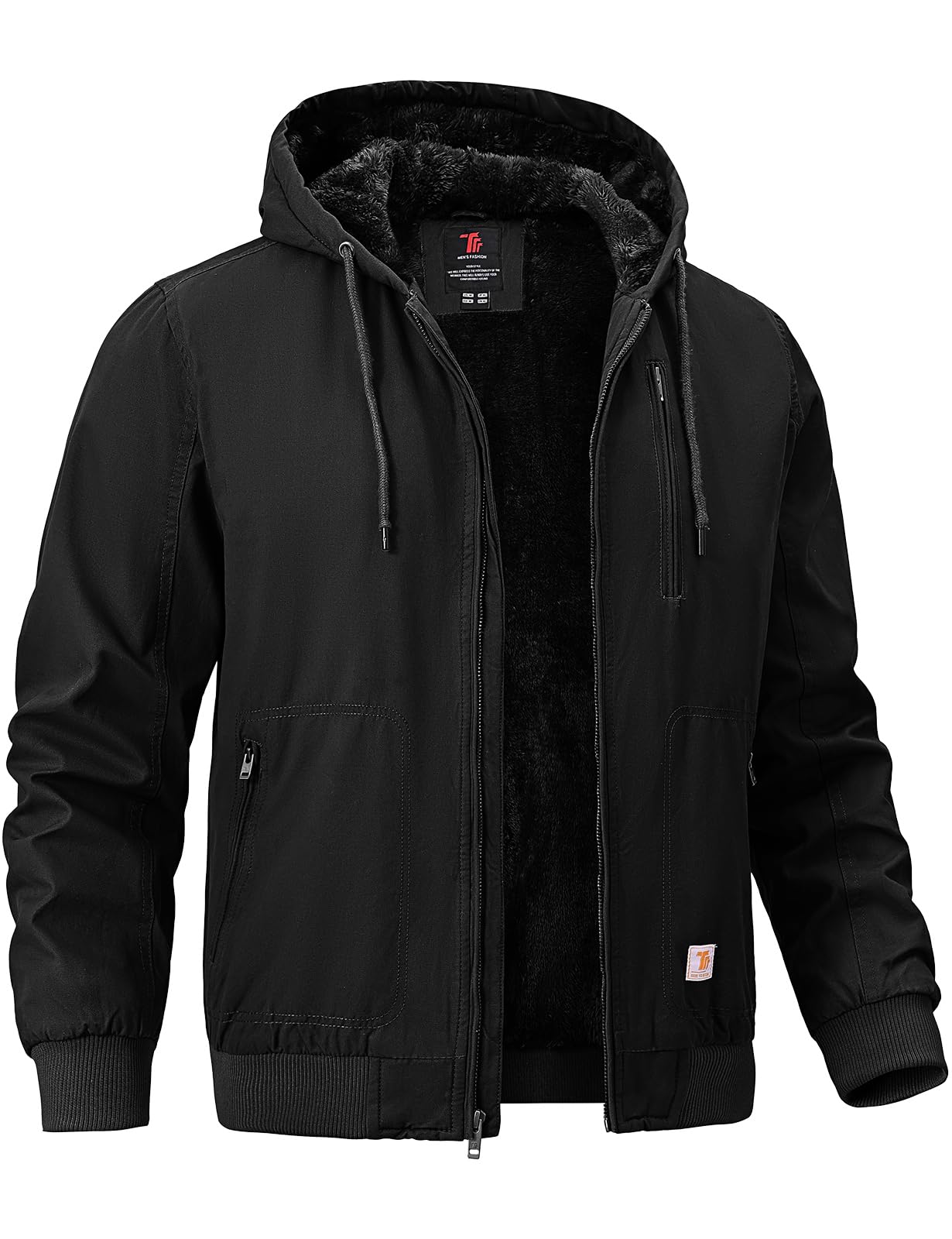
A fleece-lined duck coat that keeps you warm through cold weather without a premium price.
This is the coat for the guy who works outside in genuinely cold weather and wants warmth without spending a lot. The cotton duck shell is the real deal, and the fleece flannel lining traps heat well. Buyers consistently report it keeps them warm in cold conditions, and the quality of the build is the thing that gets praised most.
The hood is a practical addition for wind and light rain, and the overall cut is designed for movement. The cut is designed for movement, so the coat does not bind when you reach or climb.
Here is the sizing warning you need to hear: this coat runs small, particularly in the sleeves. The manufacturer even recommends ordering one size up for a looser fit. Value for money gets mixed feedback — some buyers feel it is a good deal, others feel it is not worth it. If you get the size right and catch it at a good moment, it is a strong budget-tier pick for cold weather.
The warmth-to-cost story: fleece flannel lining and a cotton duck shell deliver real cold-weather performance without a premium price tag.
Sizing caution: the sleeves run small and the maker itself suggests sizing up — do that or you will be disappointed.
Choose it for: cold-weather work on a tight budget where warmth is the priority.
skip it if: you are between sizes — the small sleeve cut is a real issue.
6. HISEA Men’s Sherpa Work Jacket
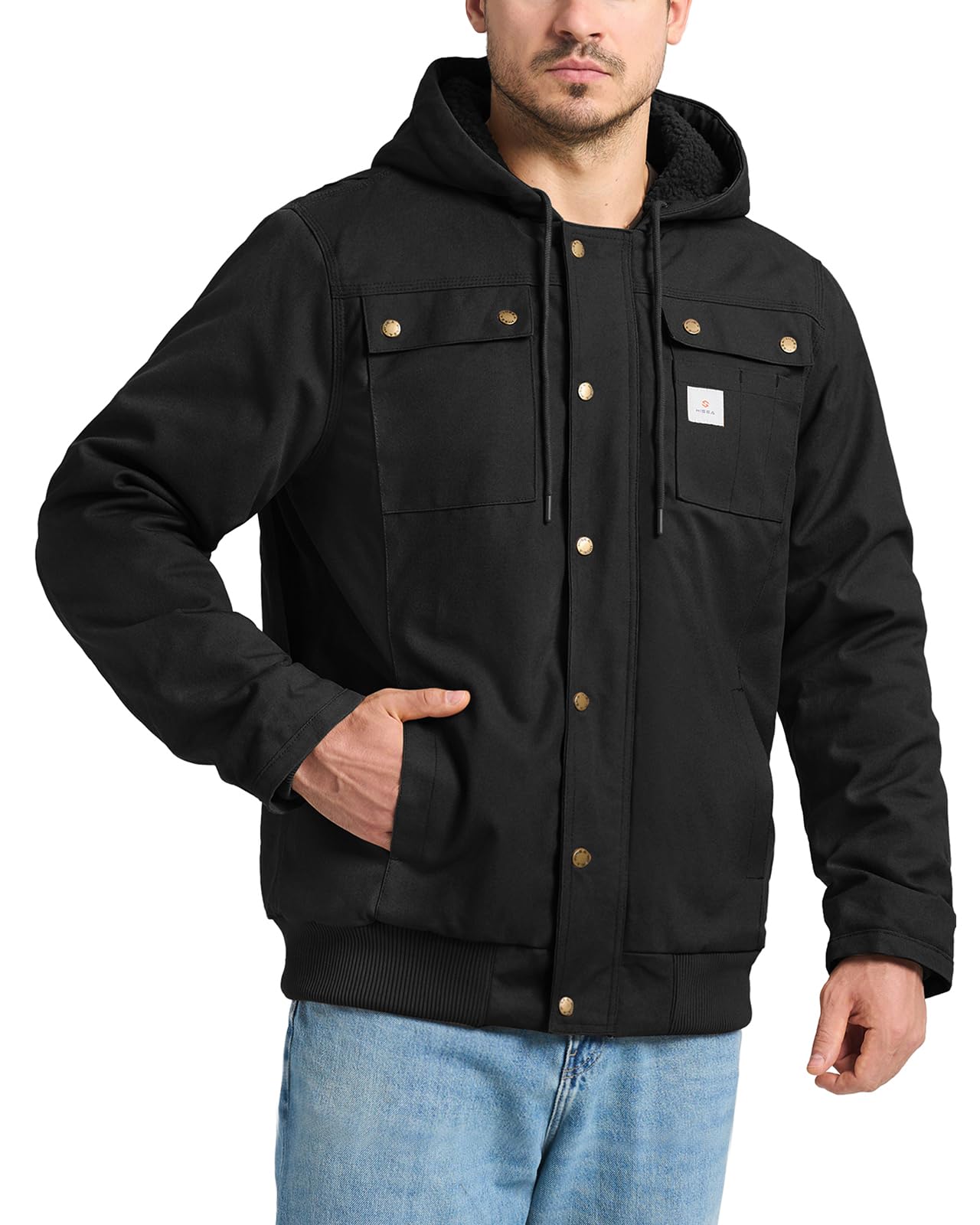
A sherpa-lined canvas coat that handles harsh winters with a soft, warm interior.
Sherpa lining is the fuzzy, fleece-like material that makes a coat feel warm the second you put it on. This HISEA coat wraps a water-resistant canvas shell around a sherpa interior, which is a combination that works well for cold, dry winter workdays. Buyers rave about the build quality, and the canvas and stitching hold up to a season of hard use.
The pocket layout is practical: chest pockets, hand pockets, and inner pockets give you places for tools and personal items. The hooded design blocks wind, and the water-resistant shell handles light precipitation. Buyers report it held up through a harsh winter of outdoor work.
The honest caveat: the zipper draws negative feedback from multiple buyers, which is a pattern worth knowing. The weight is also a mixed bag — some find it not heavy to wear, others consider it somewhat heavy. If you run hot or want a lighter coat for fall, this may be more than you need. For deep winter, the sherpa lining is a genuine asset.
The winter-ready build: a sherpa lining and water-resistant canvas shell make this a strong choice for cold, dry workdays.
The zipper note: it is the most common complaint — treat it with care and it will serve you.
Worth it if: you work outside in cold, dry winters and want a warm sherpa lining.
Not ideal if: you want a lightweight fall coat or you are rough on zippers.
7. Carhartt Men’s Yukon Extremes Insulated Coat

The coat for the guy who works outside in wind and bitter cold and refuses to be slowed down.
This is the most serious cold-weather coat on the list. The shell is 6.5-ounce, 500-denier Cordura nylon — a tightly woven synthetic fabric that is abrasion-resistant and lighter than duck canvas. Inside, 150g 3M Thinsulate insulation traps body heat. On top of that, Wind Fighter technology blocks wind and Rain Defender durable water repellent makes rain bead off. The result is a coat that handles conditions the other coats on this list cannot.
Buyers consistently report it blocks wind effectively and lasts longer than traditional duck jackets. The 3M Scotchlite Carbon Black reflective taping on the center back and front pockets adds visibility in low light, which is a real safety detail for early-morning or evening work. The droptail hem covers your backside when you bend over, and the rib-knit storm cuffs seal at the wrist. There are plenty of pockets: a left-chest map pocket with zipper, two lower-front snap pockets, a right-chest snap pocket, and inner zip and hook-and-loop pockets.
The fit is the main complaint. Some buyers find the room for layering just right, while others find it too tight, particularly in the armpit area. The zipper also draws negative feedback, and value for money is mixed — this is a premium-priced coat, so you need to genuinely need its cold-weather capability to justify it. If you work in extreme cold and wind, it is worth it. If you work in mild winters, it is overkill.
The extreme-cold performance: 500-denier Cordura nylon, 150g Thinsulate, Wind Fighter, and Rain Defender combine to make this the warmest, most weatherproof coat here.
The fit gamble: the armpit area runs tight for some — if you have broad shoulders or layer heavily, try it on with your work layers.
This is your coat if: you work outside in extreme cold and wind and need maximum weather protection.
Save your money if: your winters are mild — a lighter duck coat will serve you fine.
Know the Specs
Denier and Fabric Weight
Denier is a measure of fabric thickness and durability — a higher number means a thicker, tougher yarn. The Carhartt Yukon uses 500-denier Cordura nylon, which is a heavy-duty synthetic fabric that resists abrasion and tears. Cotton duck is measured in ounces per square yard instead — the Carhartt Ridge Coat uses 12-ounce cotton duck. Both are tough, but nylon is lighter for the same strength and handles rain better. Duck canvas is heavier and stiffer but breathes better.
Insulation Weight (Grams)
Insulation is rated by weight in grams — 150g 3M Thinsulate means 150 grams of synthetic fill per square meter. More grams means more warmth, but also more bulk. A 150g coat is built for serious cold. Quilted and fleece linings add warmth without a gram rating, which makes them lighter but less warm in extreme conditions. Match the insulation to your coldest typical workday.
Water Repellent vs. Waterproof
Water-repellent (often called DWR) means the fabric is coated so water beads up and rolls off — it handles light rain and snow but will eventually soak through in sustained downpour. Waterproof means the fabric has a membrane or coating that blocks water entirely. The TUAOVA quilted flannel jacket is waterproof; the Carhartt Firm Duck and Yukon are water-repellent. If you work in heavy rain, waterproof matters more.
Storm Cuffs and Plackets
A storm cuff is a ribbed inner cuff at the wrist that seals out cold air — it keeps wind from shooting up your sleeve when you reach overhead. A storm placket is a flap over the zipper that blocks wind and rain from getting through the zipper teeth. Both are small details that make a big difference in cold, windy conditions. Look for them if you work outside in winter.
Common Questions
Will a work coat fit over a hoodie or flannel?
What is the difference between duck canvas and Cordura nylon?
How warm is 150g Thinsulate insulation?
Do work coats run big or small?
What does water-repellent mean on a work coat?
Are storm cuffs worth having on a work coat?
Can I add a hood to a work coat that does not have one?
How should I care for a duck canvas work coat?
Is a sherpa lining warmer than a quilted lining?
What is a bi-swing back on a work coat?
The Bottom Line
For most men who need a work coat that handles cold, wind, and light weather without fuss, the Carhartt Firm Duck Traditional Coat is the one to get. It has the heaviest-duty build on the list, a quilted lining that keeps bulk down, and a water-repellent shell that shrugs off the elements. If you work in wet weather and want to keep the spend modest, the TUAOVA Quilted Flannel Lined Jacket is the waterproof value pick. It is also the crowd favorite here at 4.5+ stars across 300+ ratings.
How we choose
We do not accept paid placement. Every pick is matched to a real buyer and a real use-case; we do not hands-on test units.
Sources
Specifications: manufacturer listings and product documentation. Review insights: verified customer reviews, as of November 2026. Pricing: not shown on this page (it changes often); check the current price via the retailer link.
As an Amazon Associate, Tactical Gear Guy earns from qualifying purchases. This does not affect which products we feature.