Specs are compiled from manufacturer listings and verified buyer reviews and can change over time — please confirm the key details on the product page before buying.
If your thumbs never leave the sticks but you still want to reload, jump and crouch without letting go, the answer is a controller with rear paddles and triggers that click like a mouse button instead of pulling through a long, mushy squeeze. The catch most buyers hit is that “paddle” and “mouse-click trigger” get printed on a lot of listings that only half deliver — a paddle that feels cheap, a trigger stop that still travels, or a wireless link that drops mid-match. This guide sorts the genuine contenders by how those two features actually perform in your hands, and it names the one worth buying first.
This guide is built by comparing the manufacturers’ published specifications and the patterns across verified customer reviews, so you get each pick’s real strengths and trade-offs instead of marketing spin.
You will see how paddle count and placement change your grip, why a micro-switch trigger feels different from a Hall Effect pull, and which connection type holds steady. Below is the honest shortlist of the best Xbox controller with paddles and mouse-click triggers for competitive play.
Top Picks
How To Choose The Best Xbox Controller with Paddles and Mouse-Click Triggers
Two features decide whether a paddle controller is worth owning: how the rear buttons sit under your fingers, and whether the triggers can switch to a short click. Everything else — lighting, colors, app depth — is secondary. Here is what to weigh before you commit.
Paddle count and where they sit
Most competitive pads give you two or four rear inputs. Four paddles let you map jump, crouch, reload and melee without ever moving your thumbs off the sticks. Two is lighter and less crowded under the ring finger. Placement matters as much as count: a paddle that sits where your middle finger naturally rests means you can press it without shifting your grip, while one set too high forces you to reach.
Micro-switch triggers versus analog triggers
A mouse-click trigger uses a mechanical micro-switch, so it actuates the instant you press with almost no travel — good for shooters where you want the shot to fire now. A Hall Effect analog trigger measures how far you pull using a magnetic sensor, which gives you progressive control for throttle in racing games. The best pads let you toggle between the two, so one controller covers both genres.
Stick technology and drift
Drift is that slow creep where your aim wanders with no input. Traditional potentiometer sticks wear and start drifting; Hall Effect sticks use magnets with no physical contact, and TMR (tunnel magnetoresistance) sticks are a related magnetic design the makers position as more accurate with lower power draw. Any of these magnetic options is a better long-term bet than a plain contact stick.
Wired, wireless, and polling rate
A wired USB-C connection means zero battery worry and instant data transfer, which suits tournament play. Wireless 2.4GHz gives you freedom but adds a dongle and a charging routine. Polling rate, measured in Hz, is how many times per second the controller reports its position to your PC — 1000Hz means it reports a thousand times a second, so your inputs land sooner.
Side-by-Side Comparison
| Model | Best For | Rear Inputs | Trigger Type | Connection | Amazon |
|---|---|---|---|---|---|
| GameSir G7 Pro★ Best Overall | All-round value | 4 (L5/R5 + lockable back) | Hall Effect with clicky stops | Wired / 2.4G / Bluetooth | Amazon |
| Nacon Revo X MaxShooter Specialist | Competitive shooters | 2 rear shortcuts | Dual-mode analog / mouse-click stops | Wired USB-C | Amazon |
| SCUF VALOR PRO | Customization | 4 embedded paddles | Instant Triggers | Wired USB-C | Amazon |
| ASUS ROG Raikiri II | PC and Xbox tri-mode | 4 programmable rear buttons | Dual-mode micro-switch / TMR | 2.4GHz / Bluetooth / USB-C | Amazon |
| Razer Wolverine V3 Pro | Claw-grip shooters | 4 mouse-click back buttons + 2 bumpers | Pro HyperTriggers | 2.4GHz wireless / wired | Amazon |
| Razer Wolverine V4 Pro | High-refresh PC play | 4 removable back buttons + 2 bumpers | Adjustable Pro HyperTriggers | 2.4GHz / Bluetooth / USB-C | Amazon |
Detailed Reviews
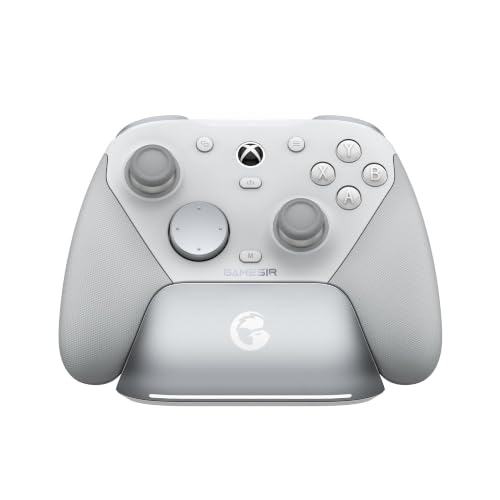
1. GameSir G7 Pro Wired Controller
Our pick — 4.0+★ from 5,500+ verified ratings; the strongest balance of quality and price.
Four extra buttons, clicky trigger stops, and a charging dock — the all-rounder that covers every base.
You get four extra buttons without paying a premium-tier price, and that is the whole case for this pad: two L5/R5 bumpers plus lockable back buttons, all mappable for macros and quick actions. The triggers are Hall Effect analog — meaning a magnetic sensor reads how far you pull for smooth, linear control in racing games — but they add Micro Switch trigger stops, so you can flick to a clicky, short-pull feel for shooters. Same pad, two trigger personalities.
Owners rate the stick feel highest. The Mag-Res TMR sticks pair the no-contact durability of a magnetic design with the response of a traditional stick, so you get smooth, drift-free aiming. On PC this pad also hits a 1000Hz polling rate — a thousand position reports every second — over both wired and 2.4G wireless, which is why inputs feel instant. The GameSir Nexus app goes deeper than most, adding gyro settings, stick curve adjustments and button-to-mouse mapping, and there is a built-in PC-only gyroscope you can map to sticks, buttons or mouse aim.
The one honest snag is the wireless link. Owners describe the connection as hit-or-miss depending on their setup, so treat wired or the 2.4G dongle as your safe pairing rather than leaning on Bluetooth. The other thing to know: that built-in 1200mAh battery only matters in wireless modes, and the Smart Auto Start-Stop Charging Station means you drop it on the dock and it tops up without you thinking about a cable. It tops the list on both average rating and owner count, so it is the safest pick here.
Where it earns first place
- Four mappable extra buttons (L5/R5 bumpers plus lockable back buttons) for macros and fast actions
- TMR sticks built to resist drift, with a 1000Hz polling rate on PC
- Hall Effect analog triggers that switch to clicky stops for shooters
- Smart Auto Start-Stop charging station and a 1200mAh battery for wireless play
What to keep in mind
- Wireless connectivity is the weakest link — wired or 2.4G is the steadier choice
- Xbox play is wired only; the wireless freedom is a PC and Android feature
Reach for this if: you want four extra buttons, clicky trigger stops and a dock in one package and you play mostly on PC or Xbox.
Look elsewhere if: you need untethered wireless on Xbox itself — this one runs wired there.
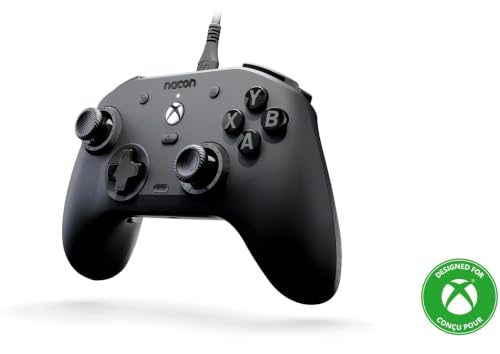
2. Nacon Revo X Max Wired Controller
The wired tournament pad that lets you dial stick tension and snap the triggers into mouse-click mode.
For a shooter-first player, the defining trick here is the dual-mode trigger. You can run full analog Hall Effect travel for progressive throttle control in a racing game, then switch to ultra-short mouse-click trigger stops for rapid fire in a shooter. The rest of the pad follows suit: mechanical micro-switches sit across the action buttons, D-pad and triggers, so every press actuates instantly with a tactile snap. That is a fully clicky-feeling controller, not just clicky on the triggers.
Then there are the adjustable tension joysticks — the integrated rings let you dial in how stiff the sticks feel on the fly. A tighter stick can help with fine aim; a looser one feels quicker in a scramble. It is a genuinely rare tweak. It also carries the most rear inputs of the wired crowd at a generous amount of body room, with dimensions of 2.6 x 6.42 x 4.33 inches against the ASUS ROG Raikiri II’s 6.1 x 4.1 x 2.6 inches — a chunkier, more spread-out shell. The 24-button layout is the same count as the SCUF VALOR PRO, so both pads give aggressive players a lot of mappable real estate.
What keeps it honest is the connection. This is a wired-only pad with a 3-meter detachable USB-C cable and a 1000Hz polling rate (1ms latency) on PC, so there is no battery to manage — and no wireless to drop. It is officially licensed for Xbox, plug-and-play across Series X|S, Xbox One and Windows 10/11 PC. Its rating is very high but the owner base is small, so treat it as a specialist wired FPS pick rather than a proven all-rounder.
The dial-a-stick edge: Adjustable stick resistance plus dual-mode mouse-click/analog triggers makes this a rare pad for players who want their sticks tuned to their own hand.
Count the paddles first: Two rear shortcuts covers the essentials but trails the four-button crowd, so map wisely if you need more actions bound.
Best fit for: a serious wired FPS player who wants to tune stick tension and snap into mouse-click triggers.
Think twice if: you lean on four rear inputs or you want a wireless option at all.
3. SCUF VALOR PRO Wired Controller

Four embedded paddles, Instant Triggers, and a faceplate you can swap — the pad built to be made yours.
Four embedded rear paddles that you can configure up to 16 functions is the headline, and it is a genuinely deep mapping setup for a wired pad. The Instant Triggers eliminate trigger pull, shaving the milliseconds it takes to squeeze rather than click. Under your fingers you also get a performance grip built from 13 years of SCUF’s design work, plus new wraparound bumpers with more surface area for faster presses.
The customization is where this one pulls ahead of the pack. You save up to three remapping configurations and switch between them with a flip of a switch, so you can carry a shooter loadout and a racing loadout on one pad. The audio control system lets you change volume on the fly. Faceplates and thumbsticks swap out easily, so the look and feel can change without buying a new controller. At 9.12 ounces, it sits lighter than the ASUS ROG Raikiri II at 9.6 ounces — a small but real difference over a long session.
Owners rate build quality highest, calling out the ergonomics and the Instant Triggers. The recurring gripe is the connection, which drops now and then for some owners, so a wired USB-C setup is your steady path. Reliability and stick drift come up as mixed notes too, which is worth knowing if you log heavy hours. Still, for a pad that adapts to your grip and your game, few wired options flex this hard — the light gray finish is just the starting point.
Why the deep map wins: Four paddles with up to 16 configured functions and three saved remap profiles make this the most adaptable pad on the list.
The comfort and the catch: The big wraparound bumpers and performance grip feel working in your favor, but keep it wired — the wireless link is the weak spot.
Choose it when: you love swapping faceplates and thumbsticks and want three saved layouts on one wired pad.
Skip the wireless idea: the connection is the recurring complaint, so plan on the USB-C cable.
4. ASUS ROG Raikiri II Wireless Controller
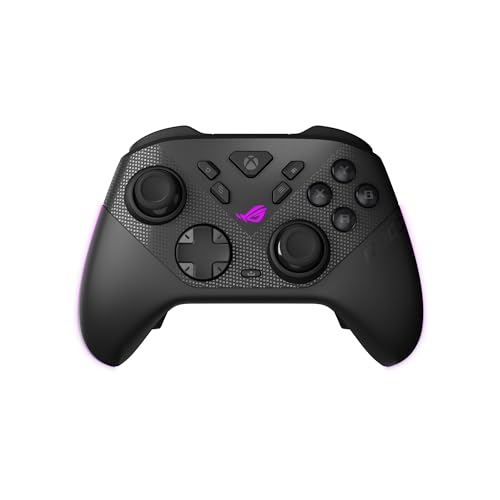
Three ways to connect and triggers that switch from a click to a full analog pull on demand.
The reason this pad earns a spot is versatility: low-latency 2.4GHz RF, Bluetooth, or wired USB-C, with certified Xbox support over USB-C and 2.4GHz RF. On PC you get a 1000Hz polling rate in both wired and 2.4GHz wireless modes, and the wireless side rides ASUS ROG SpeedNova Wireless technology for a steadier link. Carrying it around is no chore at 9.6 ounces.
Its triggers are dual-mode — you switch between micro-switch triggers with short travel and TMR sensor triggers with full travel. So a shooter gets the instant click, and a racer gets the progressive pull, without changing pads. The D-pad, ABXY buttons, rear buttons and bumpers are all micro-switch for instant actuation, and the TMR joysticks are tuned for anti-drift and low power draw. Four fully programmable rear buttons give you the paddle depth competitive players want, and the skin-friendly anti-slip grip keeps it stable in long sessions.
The honest caveat is connectivity consistency. Buyers report the build feels great to some and flimsy to others, and connection drops are the most-discussed problem. That mixed signal is the main reason it sits behind the GameSir on overall satisfaction despite costing more. The shell also runs a bit tighter than the Nacon at 6.1 x 4.1 x 2.6 inches — a more compact hold. Buy it for the tri-mode flexibility and dual-mode triggers, and keep a cable handy for the days the wireless link gets temperamental.
Strong suits
- 2.4GHz, Bluetooth and USB-C all in one pad, certified for Xbox over USB-C and 2.4GHz RF
- Dual-mode triggers switch between short micro-switch travel and full TMR analog
- Four programmable rear buttons with anti-drift TMR joysticks
Fair warnings
- Connection drops are the recurring complaint
- Build quality draws split opinions
Good match for: a player who moves between PC and Xbox and wants one pad with a click trigger and a full-pull trigger built in.
Weigh this instead: if a rock-steady wireless link is your priority, the connection reports here may give you pause.
5. Razer Wolverine V3 Pro Wireless Controller
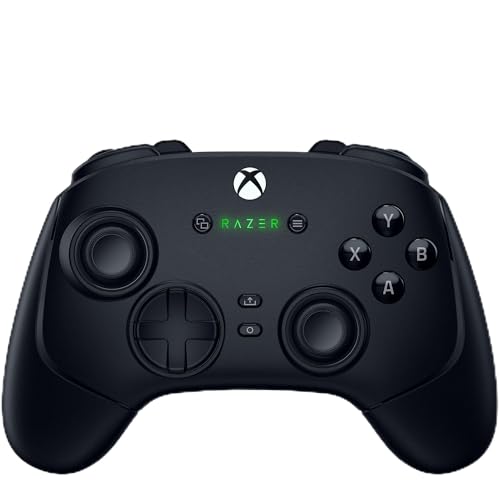
Four mouse-click back buttons and two claw-grip bumpers — built for players who never want to let go.
This is the pad that leans hardest into the mouse-click idea. Four buttons are built into the rubberized handles, so they press with the same ultra-responsive actuation as Razer’s top gaming mice, and two claw-grip bumpers add even more control. The Pro HyperTriggers let you set instant actuation with zero travel for rapid fire, or dial back to ultra-precise analog control with integrated haptic vibrations so you feel every pull. That dual nature is the real draw.
Under the hood, Hall Effect Precision Thumbsticks use anti-friction rings and pro-grade materials to stay smoother and more durable than traditional sticks, so drift stays at bay. Razer Mecha-Tactile Action Buttons blend microswitch speed with the cushioned comfort of a rubber membrane, and the 8-way floating D-pad sharpens directional input. HyperSpeed Wireless runs a low-latency 2.4GHz connection through its USB Type A dongle for Xbox and PC. A custom carrying case holds the controller plus two replaceable thumbstick caps and a 10 ft cable, which makes it easy to travel with.
Owners single out the tactile feel, with the Hall Effect sticks and mouse-click back buttons as the favorites. What tempers the picture is connectivity: owners mention the pad randomly disconnecting from Xbox, and the D-pad has been a durability weak point for some. Treat it as a dedicated-station pad rather than a toss-in-the-bag beater. Play wired on PC and a 1000Hz polling rate Tournament Mode is available via the companion app or a controller shortcut, which is where this one truly earns its keep.
Where it shines: Four mouse-click back buttons plus two claw-grip bumpers give you more paddle-style inputs than almost any other pad here, all seated in rubberized grips.
Treat the link gently: Random Xbox disconnects are the common thread, so wired play is the safer setup.
Pick this for: claw-grip shooters who want mouse-click paddles, haptic triggers and a travel case in one kit.
Go wired if: a stable Xbox connection is non-negotiable for you.
6. Razer Wolverine V4 Pro Wireless Controller

Up to 8000Hz polling on PC and removable mouse-click paddles — the responsive-flagship option.
If you chase every last millisecond, the standout number here is polling: up to 8000Hz on PC via Razer HyperPolling, which means the controller reports to your PC thousands of times a second for ultra-low-latency reactions. Add Razer HyperSpeed Wireless and you have a fast, responsive link for competitive play. For a pad aimed at high-refresh setups, that is the reason it tops the range.
It matches the paddles too. Four removable mouse-click back buttons and two claw-grip bumpers let you execute commands faster and remap inputs without lifting your thumbs from the sticks. Adjustable Razer Pro HyperTriggers switch between instant mouse-click activation and full-range analog control, so it covers shooters, racing sims and action titles on one pad. Capacitive anti-drift thumbsticks use contactless sensors for smoother tracking and consistent aiming, and interchangeable thumbstick caps plus a magnetic faceplate let you fine-tune the fit and look. Four onboard profiles and Razer Synapse 4 round out the setup.
Weigh the trade-off honestly: this is the heaviest of the bunch at 14.72 ounces and the most premium-priced, and it is the newest arrival with the fewest owners behind it, so long-term durability is not yet well proven. Buy it for the 8000Hz PC polling and removable paddles, not for a long track record it does not yet have. If sub-millisecond input on a high-refresh monitor is what you are chasing, this is the one built for it.
The headline spec: Up to 8000Hz HyperPolling on PC makes this the fastest-reporting pad here, ideal for high-refresh monitors.
The honest trade: At 14.72 ounces it is the heaviest pick, and with the fewest owners it has the least proven longevity.
Made for: a PC player on a high-refresh monitor who wants maximum polling and removable mouse-click paddles.
Not your pick if: you want a light, well-worn value buy — this one is the heavy flagship.
Know the Specs
Mouse-click triggers vs Hall Effect triggers
A mouse-click trigger fires through a mechanical micro-switch, so it actuates the instant you press with almost no pull — good when you want the shot to go off right now. A Hall Effect trigger reads your pull with a magnetic sensor across the full range, giving you progressive throttle for driving games. Many pads on this list let you toggle between them, so one controller covers both styles without a swap.
Polling rate in Hz
Polling rate is how many times per second the controller tells your PC where its sticks and triggers are. A 1000Hz rate reports a thousand times a second; the Wolverine V4 Pro pushes up to 8000Hz on PC. Higher rates generally mean lower input latency in supported games, which matters most on a high-refresh monitor during competitive play.
Stick technology: TMR, Hall Effect and capacitive
Traditional potentiometer sticks make physical contact that wears over time and can drift. Hall Effect sticks use magnets with no contact, and TMR sticks are a related magnetic design makers position as more accurate with lower power draw. Capacitive anti-drift sticks use contactless sensors too. Any magnetic or contactless design is a safer long-term bet against the slow aim creep known as drift.
Paddle count and remapping
Rear paddles let you press extra buttons without moving your thumbs off the sticks. Two paddles cover jump and crouch; four let you also bind reload and melee. Some pads, like the Wolverine V4 Pro, let you remove paddles you do not want. Saved profiles, such as the SCUF VALOR PRO’s three remap configurations, let you switch layouts for different games fast.
Common Questions
Will a wired paddle controller work on both Xbox and PC?
Do mouse-click triggers actually make you faster in shooters?
How many rear paddles do I actually need?
What is the difference between Hall Effect and TMR thumbsticks?
Does a 1000Hz polling rate matter on Xbox?
Can I remap the paddles to any button?
Are these controllers good for racing games too?
Will the built-in batteries last a full session?
My wireless paddle controller keeps disconnecting — is that normal?
The Bottom Line
For most players, the xbox controller with paddles and mouse-click triggers winner is the GameSir G7 Pro because it puts four mappable extra buttons, clicky trigger stops and a magnetic drift-resistant stick into one pad that also docks to charge. If dialing your stick tension and snap-clicking the triggers for shooters is the goal, reach for the Nacon Revo X Max. And if you want four mouse-click back buttons with a travel case for claw-grip play, the Razer Wolverine V3 Pro is built for exactly that — the pick to grab while it still holds the backing of a large owner base.
How we choose
We do not accept paid placement. Every pick is matched to a real buyer and a real use-case; we do not hands-on test units.
Sources
Specifications: manufacturer listings and product documentation. Review insights: verified customer reviews, as of November 2026. Pricing: not shown on this page (it changes often); check the current price via the retailer link.
As an Amazon Associate, Tactical Gear Guy earns from qualifying purchases. This does not affect which products we feature.