Specs are compiled from manufacturer listings and verified buyer reviews and can change over time — please confirm the key details on the product page before buying.
The course is not a road, and that is the whole problem. Cross-country racing means grass, mud, gravel, roots and a hill that shows up right before the finish, so the gear you wear has to grip, shed water and stay out of your way. This guide sorts the shoes and the one safety vest that actually hold up on that terrain, and tells you which pair fits your course, your foot and your stride.
This guide is built by comparing the manufacturers’ published specifications and the patterns across verified customer reviews, so you get each pick’s real strengths and trade-offs instead of marketing spin.
Some shoes here are built for a muddy school course, others for rocky trail miles, and one lights you up so drivers see you on a dark road. Read on to match the right pair and the right safety layer to the way you actually race, all within this breakdown of the xc running gear worth lacing up before your next start line this season.
Top Picks
How To Choose The Best XC Running Gear
Cross-country gear is chosen by the ground under your feet, not by the logo on the side. A shoe that feels great on a dry road can slide out from under you on a wet, chewed-up grass corner. Start with the surface you race on most, then work outward to fit and weight.
Match the outsole to your course
The outsole is the bottom rubber layer that grips the ground, and its lugs are the raised bumps that bite into dirt and grass. Deeper lugs dig into soft, muddy ground; flatter, road-style tread rolls faster on packed gravel. If your course mixes both, a shoe with a split pattern — smoother under the middle of the foot, deeper around the edges — is the smarter bet.
Get the drop and cushioning right for your stride
Heel-to-toe drop is the height difference between the heel and the toe of the shoe. A low drop, like the 4mm on the Altra Experience Wild 2, puts you closer to a flat, natural stride. A zero-drop shoe sits perfectly level underfoot. Higher cushioning softens long miles but can feel vague on tight turns, so racers on short, twisty courses often prefer a firmer, lower ride.
Check the toe box before you commit
The toe box is the front section where your toes sit. A roomy toe box lets your toes splay and reduces rubbing on long runs, but too much room can let your foot slide on sharp cuts. Shop your normal running-shoe size and read the fit notes closely — several shoes here are reported to run small or narrow.
Do not forget visibility on dark training runs
Most XC training happens in the early morning or after school, often on roads before you reach the course. A reflective or light-up layer keeps you seen by traffic when the light is poor, and it should be light enough that you forget you have it on.
Side-by-Side Comparison
| Model | Best For | Weight | Drop / Cushion | Outsole | Amazon |
|---|---|---|---|---|---|
| noxgear Tracer2 Vest★ Best Overall | Dark runs and road safety | 6.5 oz | — | — | Amazon |
| Brooks Draft XCTeam Racing Pick | Team XC racing | — | — | Durable outsole lugs | Amazon |
| ALTRA Experience Wild 2Natural Stride | Natural-stride trail running | 10.4 oz | 4mm drop / High cushion | MaxTrac | Amazon |
| New Balance 410 V8 | Budget trail starter | 2 pounds | — | — | Amazon |
| Merrell Antora 4 (Women’s) | All-day women’s trail comfort | 1.5 pounds | — | — | Amazon |
| Merrell Morphlite | Road-to-trail crossover | 1.5 pounds | — | Split road/trail lug pattern | Amazon |
| Saucony Peregrine 16 | Grippy all-terrain racing | — | — | Vibram Megagrip | Amazon |
| ALTRA Olympus 6 (Women’s) | Max-cushion technical trails | 10.2 oz | 0mm drop / Max cushion | Vibram Megagrip | Amazon |
| HOKA Speedgoat 7 | Long technical mountain days | — | — | Vibram Megagrip with Traction Lug | Amazon |
Detailed Reviews
1. noxgear Tracer2 Running Vest
Our pick — 4.5+★ from 6,000+ verified ratings; the strongest balance of quality and price.
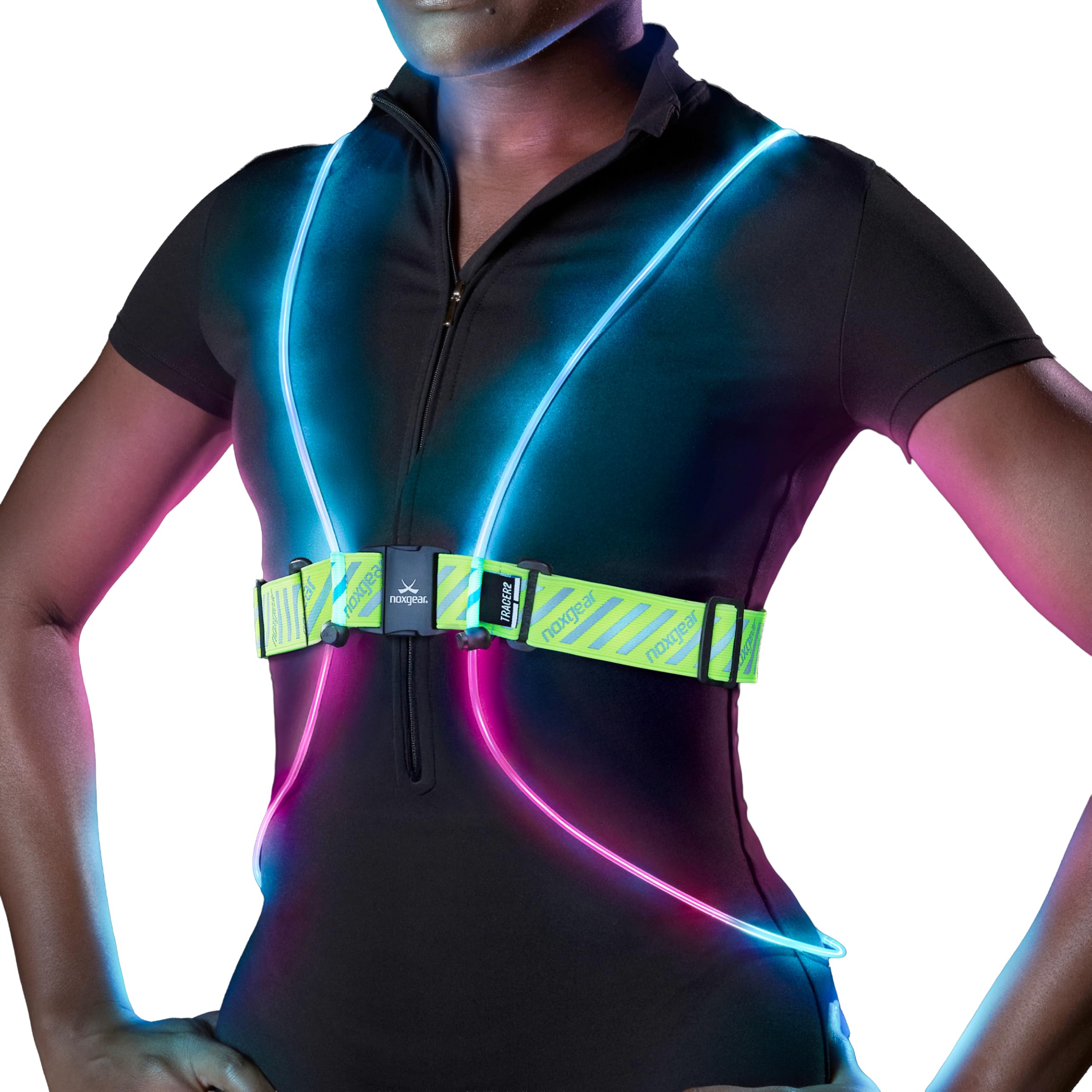
A 6.5 oz reflective vest that keeps drivers aware of you from over a quarter mile out.
Most XC gear is about grip and fit. This vest handles the other half: staying seen when you train before sunrise or after dark on roads that lead to the course. The reflective fibers run in a distinctive X shape across the chest, so light hits both sides of your body and stays visible from over a quarter mile in any direction — a real margin on a dim country road. That visibility is what wins people over, and it is why this vest sits at the top of the list.
You get eight solid colors — green, red, blue, pink, yellow, plus three mixed combos — and eight multicolor flashing modes, all switched with one button you can reach mid-stride. The true 360-degree setup pairs those fiber-optic cables with 3M reflector chest belts, so drivers catch you before their headlights sweep over you. At 6.5 oz it is lighter than the ALTRA Experience Wild 2 at 10.4 oz, and the sports mesh with elastic stretch keeps it chafe-free against bare skin. It is sweat-resistant and built to survive rain and snow.
The adjustability is the quiet hero. Expand it over a cold-weather jacket in winter, cinch it down over a singlet in summer, and it still sits with zero bounce. The slim design leaves minimal fabric against your body, which also keeps it out of the way of a heart rate monitor. One catch to plan for: it is a visibility layer, not a warm layer, so in deep cold you will still want sleeves under it. It charges by USB-C and runs up to 20 hours per charge, so a full week of practices on one top-up is realistic.
What earns its spot
- Visible from over a quarter mile in any direction, thanks to the X-shaped fiber-optic layout.
- Just 6.5 oz, and the sports mesh with elastic stays chafe-free on bare skin.
- Adjusts from a snug singlet fit to over a winter coat with zero bounce.
- Up to 20-hour runtime on a USB-C charge, with 8 solid colors and 8 flashing modes.
Where it needs a plan
- It adds visibility, not warmth — cold-weather runs need a base layer underneath.
- The front quick-clip buckle takes a few wears to get the tension dialed in.
Reach for this if: you train on roads at dawn or dusk and want to be seen without feeling weighed down.
Look elsewhere if: you only ever run in full daylight and want pure warmth from your outer layer.
2. Brooks Draft XC Running Shoe
The pair built for the start line of a school cross-country race.
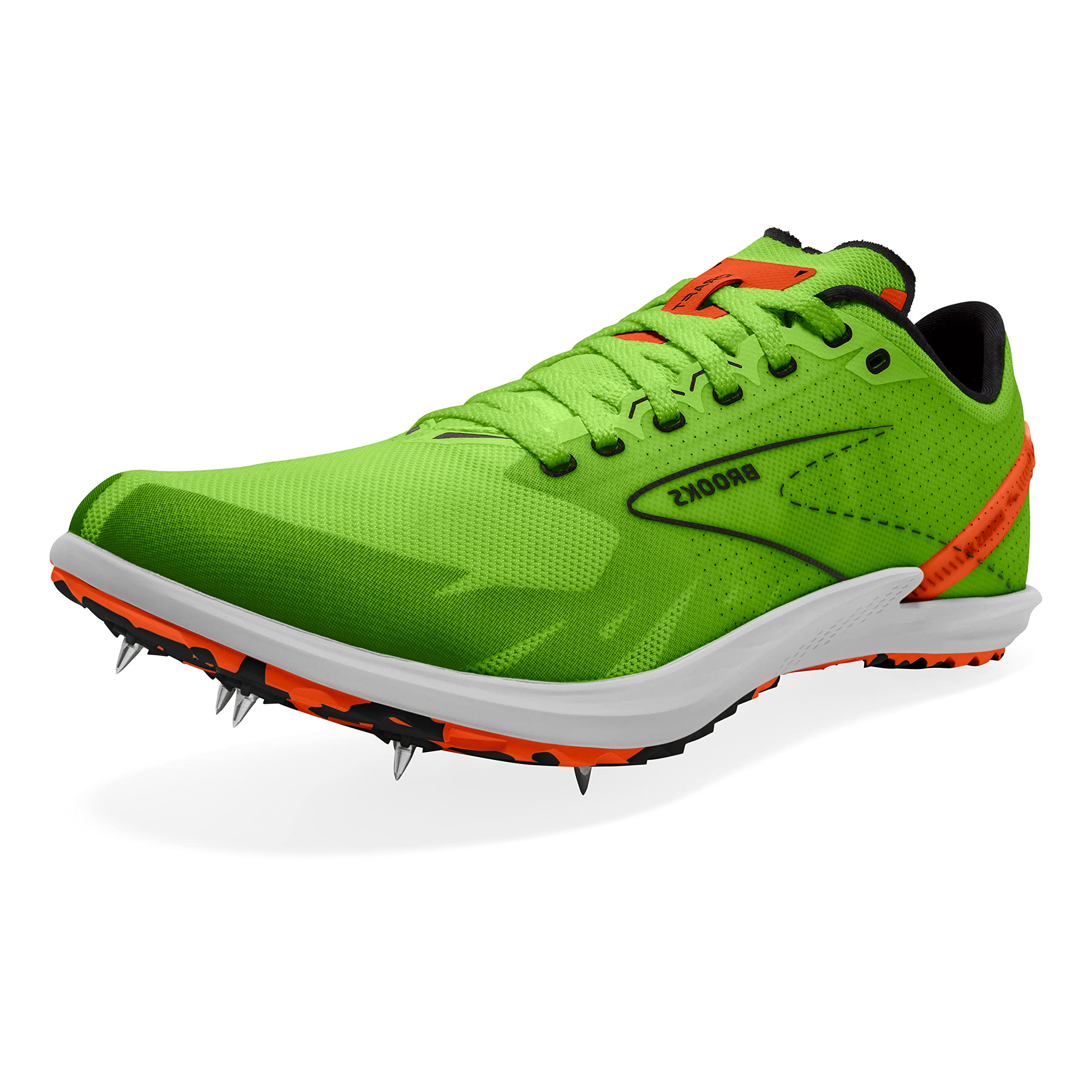
If you race for a middle or high school team, this is the shoe the description is written for. The BioMoGo DNA cushioning is a foam that springs back underfoot, giving a responsive feel from the start line to the finishers chute. Durable outsole lugs — the raised rubber bumps that bite into soft ground — work across different surfaces, and a wide midfoot gives you stable footing on uneven terrain. That combination is what makes it a race-day pick rather than a daily trainer.
what separates it on the team side is the customizable heel piece. You write goal times, draw a mascot, or scrawl a team cheer on it — a small thing race-day runners genuinely enjoy. It is a spikeless design, so you get XC-specific grip without metal pins digging into hard-packed sections. Fit is the one area to think about: some runners find it true to size while others size up, so try before you commit if your course has a lot of sharp cuts.
Race-day read: A spikeless XC shoe with a wide midfoot for stability on rough ground, durable outsole lugs for traction, and a custom heel panel for team spirit. Cushioning is responsive rather than plush.
The honest catch: Sizing splits — some runners need to go up a half size, so order with room to swap before the season starts.
Best fit: the school racer who wants an XC-specific shoe that represents the team and grips uneven ground.
Not the one for: runners who want deep, plush cushioning for long trail miles.
3. ALTRA Men’s Experience Wild 2 Trail Running Shoe
A low, springy trail shoe that pushes you forward with every stride.
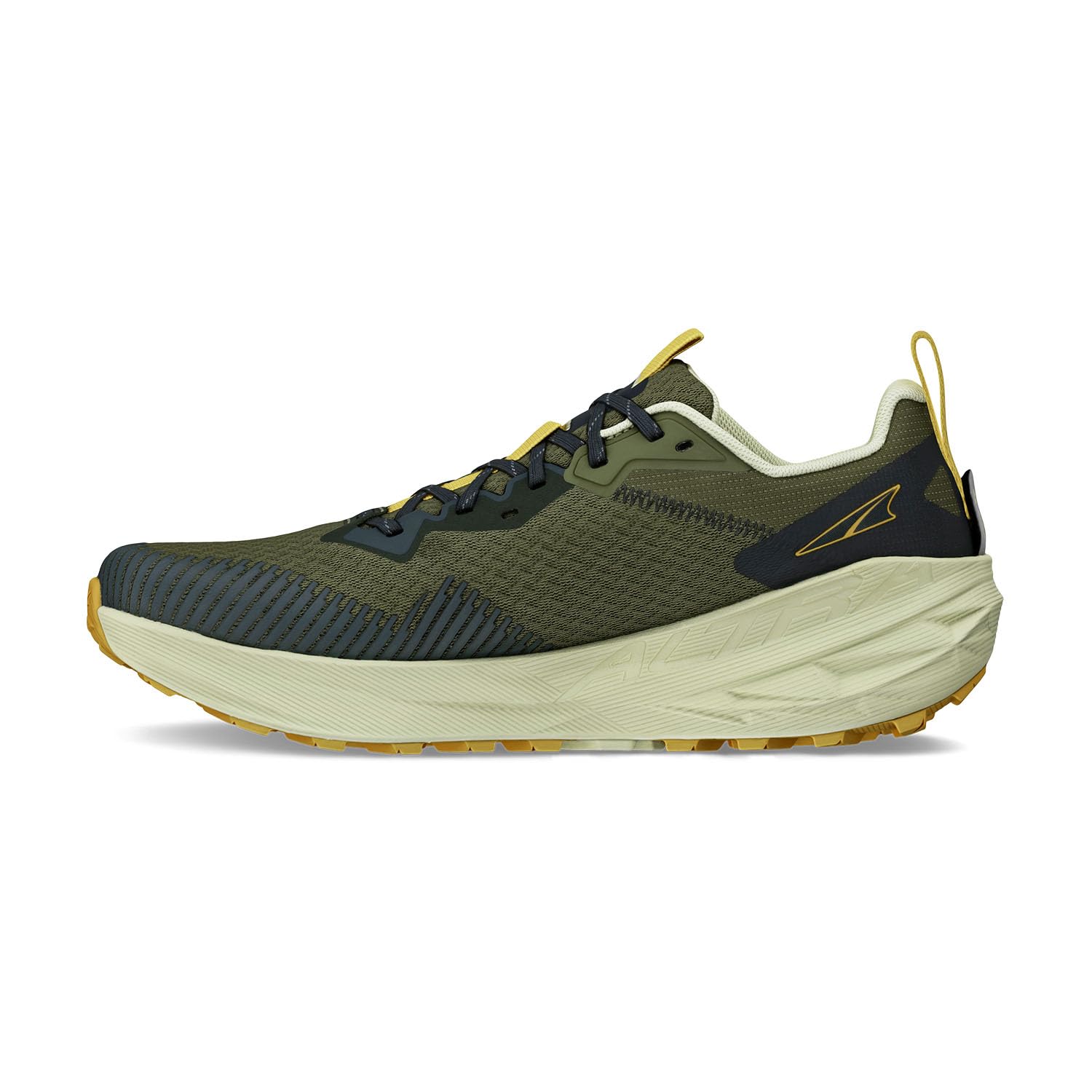
The rear out when you buy this is the 4mm drop. That is a low heel-to-toe difference, which keeps you close to a flat, natural stride instead of tipping you forward off a tall heel. A rocker shape — a curved sole that rolls you from heel to toe — adds an efficient toe-off without hijacking your stride. Add the grippy MaxTrac outsole and you have a shoe that wants to move fast over dirt and rock. At 10.4 oz it sits well above the 6.5 oz vest above, but that is boots-on-ground running weight, not a burden.
The midsole is compression-molded EVA foam, which is a lightweight, responsive foam that keeps you comfortable across all terrain. Toe protection got a real boost this version: the TPU overlay (a tough plastic shell over the toe) has more coverage for durability against rocks. There is an integrated GaiterTrap detail so you can attach a trail gaiter — a fabric cuff that keeps debris out of the shoe — without straps. Breathability improved with an updated mesh upper.
What wins people over is comfort, with the roomy toe box and secure midfoot letting your toes move freely while the shoe stays locked in. Durability is the split point — most owners find them sturdy, but some report trouble over the longer haul. Fit runs snug for some, so measure your foot before ordering rather than assuming your usual size.
Pick this one if: you want a low-drop trail shoe with a rocker that keeps your stride quick on uneven ground.
Think twice if: you want maximum padding underfoot — this is a responsive ride, not a plush cloud.
4. New Balance Men’s 410 V8 Trail Running Shoe
The affordable entry point for a first season of trail miles.
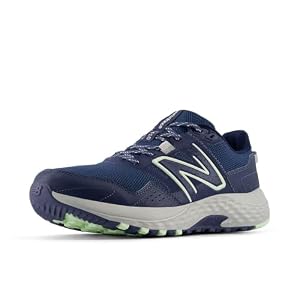
New Balance’s 410 V8 is the pair to start with when you are not ready to commit big. It is the heaviest shoe on this list by the numbers — 2 pounds, against the 1.5 pounds of the Merrell Antora 4 and Morphlite — but it delivers solid build quality and comfort for the money. Runners describe it as comfortable right from the start and easy to wear for everyday miles.
The fit is where you should pay attention. Some runners with wide feet find it spot-on, while others report it running small, so if you are on the edge, order up. Durability is the other reported weak spot, meaning this is a good starter or training shoe rather than a shoe you plan to race in for several seasons. Appearance gets positive notes, so it works on the road and the trail without looking out of place.
Value read: A trail runner priced at the budget end that still earns praise for build quality and out-of-the-box comfort. It is the practical first-shoe buy.
Set expectations: The 2-pound weight is the heaviest here, and the reported durability ceiling means it suits a starter season more than a multi-year racer.
Go here if: you are buying your first trail shoe and want comfort and quality at the entry level.
Hold off if: you have a wide foot that needs extra length — the sizing leans small for some runners.
5. Merrell Women’s Antora 4 Trail Running Shoes
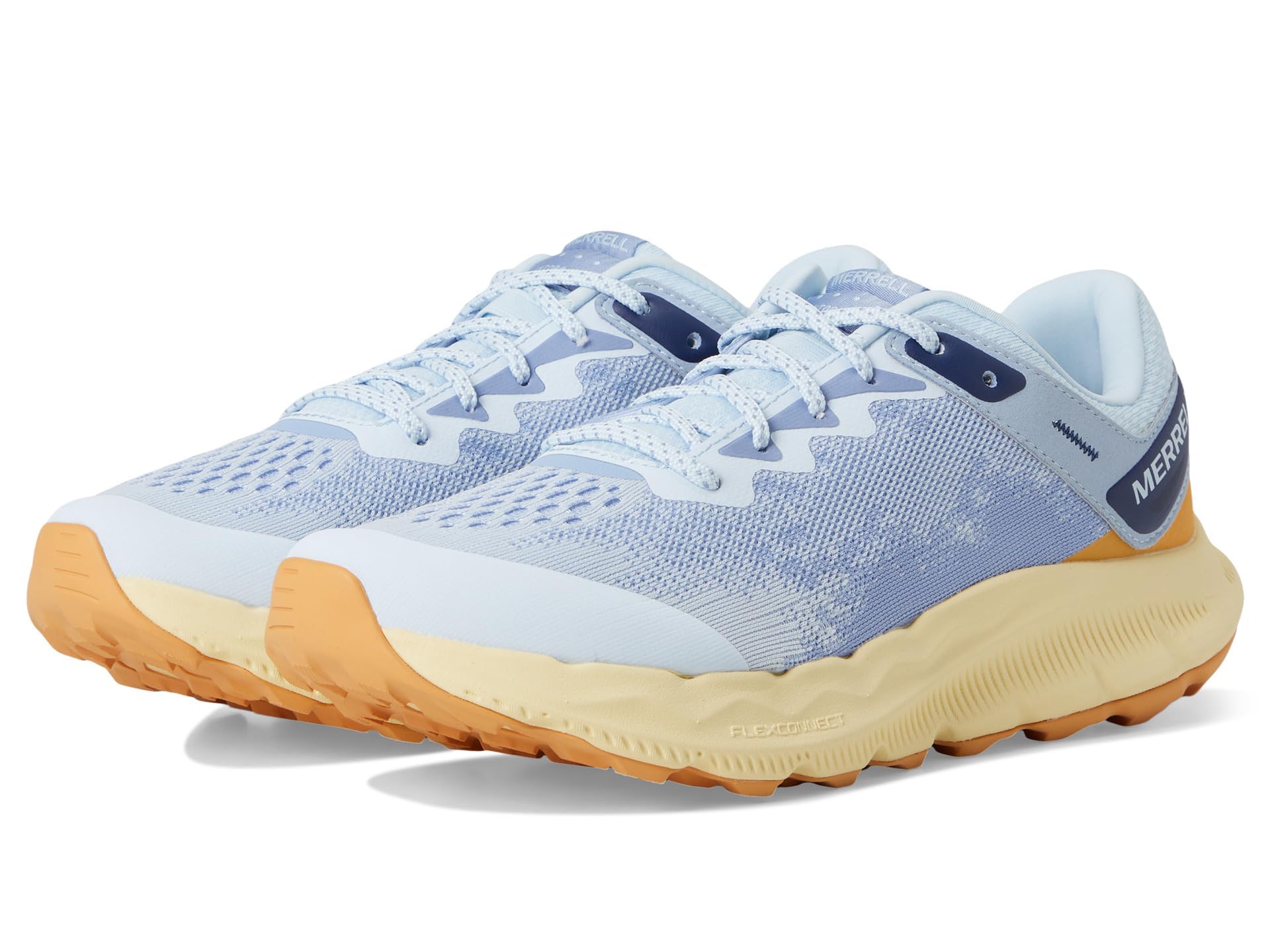
A women’s trail shoe that stays true to size and keeps feet happy.
Merrell reworked its best-selling women’s trail shoe to blend a clean athletic look with functional running comfort. At 1.5 pounds it is noticeably lighter than the New Balance 410 V8 at 2 pounds, which makes it the easier shoe to wear for long practice sessions and weekend trail outings. The fit is the headline: runners describe it as true to size with plenty of toe room, so your usual women’s running size is a safe starting point.
Arch support and stability get consistent praise, and the toe lift helps keep you from catching a rock on rough sections. Comfort holds up over long wear with no foot pain reported. What wins people over is comfort, closely followed by overall quality, which tells you this is a well-built everyday trail shoe rather than a race-day weapon.
Think of it as the reliable trainer in your rotation. The toebox has room to spare, the arch support is present, and the ride is stable on uneven ground. It is not built for the sharpest, most aggressive racing, but it will carry you through training and the occasional race on mixed terrain.
The case for lacing up
- True to size with plenty of toe room, so ordering your normal women’s running size usually works.
- Good arch support and stability for uneven trail surfaces.
- At 1.5 pounds, easy to wear for long training sessions.
- A toe lift that helps prevent tripping over rocks.
Before you commit
- The clean athletic look is understated, not flashy.
- It is a trainer, not the nimblest race shoe on this list.
The right call for: women who want a stable, true-to-size trail trainer with real arch support.
Skip the swap if: you want a superlight race flat for a fast grass course.
6. Merrell Men’s Morphlite Trail Sneakers

One shoe for the trip to the trail and the trail itself.
The Morphlite’s clever trick is its split lug pattern. The center of the foot has a shallower pattern tuned for road running, while the edges deepen for traction on dirt. That means you can run the pavement to the trailhead and keep going without feeling like you are on road shoes or trail shoes — you are on both. Merrell’s best running foam sits on top for premium comfort at 1.5 pounds.
Runners call them lightweight and properly sized, and durability gets the especially strong note — some buyers report them outlasting other brands by a wide margin. Arch support is there, and the look is sharp enough that one favorite note mentions pairing them with khakis. That versatility is what makes them a do-it-all shoe for someone who splits time between pavement and dirt.
Fit leans snug around the middle of the foot and tight across the toe box for some wearers, so if you have a wide foot, that is the one spot to check before you buy. Otherwise this is the shoe for the runner who hates deciding between a road shoe and a trail shoe every morning.
One-shoe solution: A dual-terrain shoe with a split lug pattern — smoother down the middle, deeper around the perimeter — so pavement and trail both feel natural.
Watch the width: The midfoot and toe box run narrow for some feet, so a wide-footed runner should size or try carefully.
Your match if: your runs mix neighborhood pavement and actual dirt, and you want one shoe for both.
Better elsewhere if: you need a roomy toe box for wide feet.
7. Saucony Men’s Peregrine 16 Sneaker
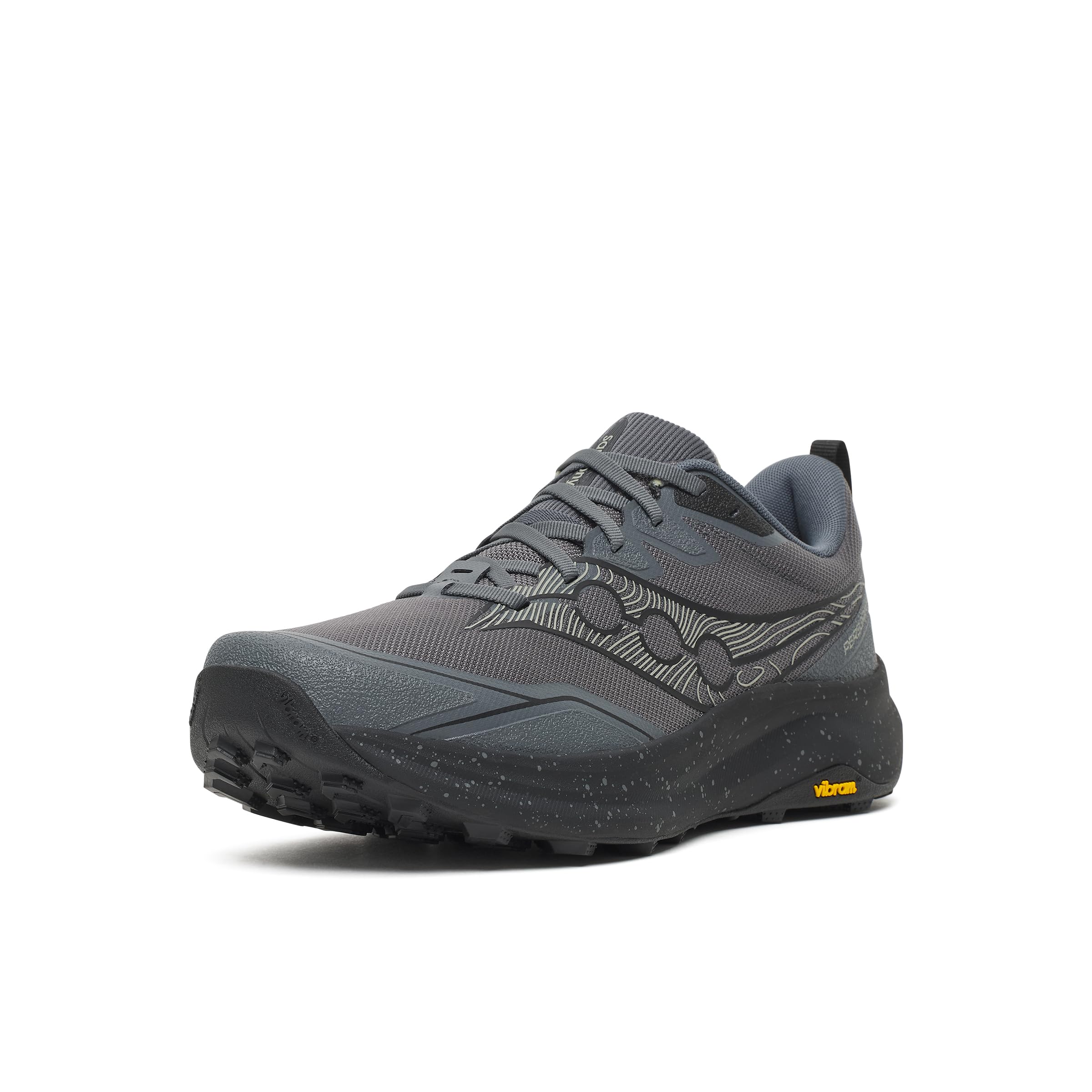
The nimble all-terrain shoe that keeps its footing on gravel and singletrack.
Saucony’s Peregrine has a reputation for being the go-anywhere trail shoe, and this version steps up the grip with a Vibram Megagrip outsole. That is a sticky rubber compound built to hold traction in wet and dry conditions alike, which matters on the loose gravel and muddy sections a cross-country course throws at you. Underfoot, increased PWRRUN foam adds cushioning and comfort over the previous spec.
Runners describe them as comfortable with a roomy toe box and a secure fit, and praise the grip especially on gravel. They feel more lightweight than a traditional hiking shoe, which is the point — you get trail-biting traction without the heft. Durability, stability and versatility all get positive notes, with the shoe handling singletrack and loose roads without complaint.
Compared with the ALTRA Experience Wild 2’s 4mm drop, the Peregrine emphasizes a bigger cushion build and a firmer trail footbed. It is the pick for the runner who wants to charge downhill and trust the rubber underneath.
Trail report card
- Vibram Megagrip outsole holds grip on wet and dry surfaces.
- Increased PWRRUN foam adds cushioning underfoot.
- Roomy toe box with a secure fit around the midfoot.
- Handles gravel, singletrack and loose road without complaint.
Worth knowing first
- It carries more foam than the nimblest racing flats here.
- Fit runs snug enough that your normal size is worth checking.
Choose it for: grippy all-terrain running where the ground changes underfoot every few minutes.
Move on if: you want a stripped-down feel and minimal cushioning underfoot.
8. ALTRA Women’s Olympus 6 Trail Running Shoe

Altra’s plushest trail runner, built to go all day without wearing you down.
The Olympus 6 leads with its cushioning. It carries a max-cushioned, soft and responsive midsole foam on a 0mm drop — meaning the heel and toe sit level, which lets your foot strike the way it naturally wants to. At 10.2 oz it is among the steadier shoes on this list. The upper is an updated engineered mesh built to boost breathability on long days on the trail.
Grip comes from a Vibram Megagrip outsole with an updated lug pattern for more durability, stability and traction on technical terrain. There is also a premium Achilles pillow, which is extra padding at the back of the heel for a more comfortable step-in feel. The Original FootShape Fit gives Altra’s roomiest toe box, with space through the midfoot so your toes can stretch out.
The GaiterTrap hook-and-loop tab lets you attach gaiters without straps or bungees to keep debris out. Arch support and cushioning win consistent praise, and comfort holds up over long wear. Fit is the split point — most find it roomy, but some say it runs a touch small. Traction draws mixed notes, and the super-plush cushioning means it is a comfort ride, not a precise racing shoe.
Made for: women who want maximum cushioning and a zero-drop, roomy ride for long days on technical trail.
Not your shoe if: you want a firm, low ride with sharp turnout for a short grass race.
9. HOKA Mens Speedgoat 7
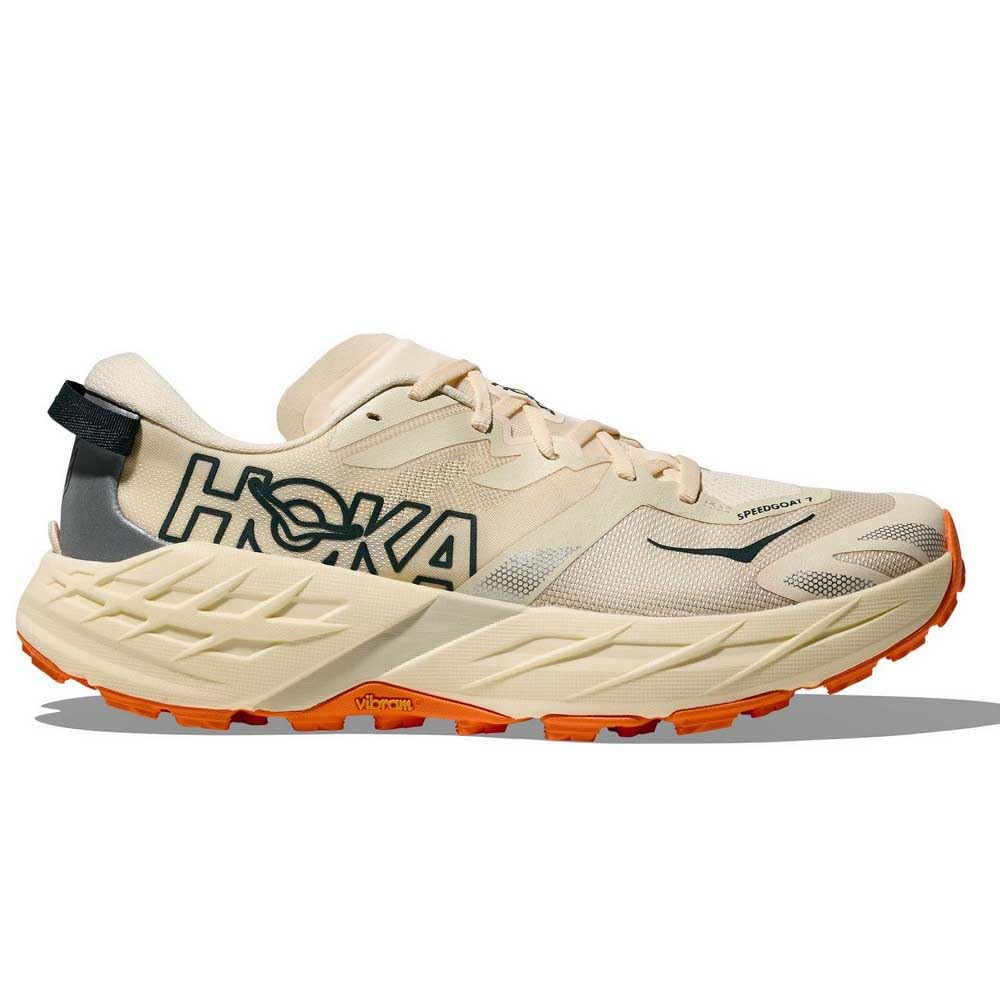
The long-day trail crusher with a new foam and tireless grip.
HOKA’s Speedgoat is the shoe for someone who plans to be on their feet for hours on technical terrain. The new SCF midsole — a super-critically foamed EVA, which is a lighter, bouncier foam — amps up energy return so the ride feels more responsive than before. The same trusted fit and traction carry over, with the heel collar refined for comfort and a gaiter integration added to fend off debris. The Vibram Megagrip outsole uses Traction Lug geometry with an updated lug orientation for mixed terrain.
The details are built for the long haul: a lay-flat tongue with a dual gusset, a stretchy dynamic vamp, a heel pull tab and reflective details for low light. The upper is a lightweight RPET woven textile, a fabric made from recycled plastic. Runners describe the shoe as comfortable and fantastic, which for a shoe at this level is the verdict that counts.
Where the Experience Wild 2 keeps you low and natural, the Speedgoat leans into cushioning and energy return for plush trail miles. It costs the most of any pick here, so it is the right choice for the runner who logs serious mountain mileage rather than the occasional practice loop.
Why long-day runners grab it
- New SCF super-critically foamed EVA midsole adds energy return.
- Vibram Megagrip with Traction Lug and updated lug orientation for mixed terrain.
- Gaiter integration, reflective details and a lay-flat dual-gusset tongue.
- Refined heel collar for a more comfortable step-in.
The trade-off
- It is the most premium pick here, so budget-minded racers should look lower.
- The plush energy-return ride is built for distance, not short sharp grass sprints.
Best for the mileage hound: runners who want a cushioned, energy-return trail shoe for hours on technical ground.
Look lower if: you race short cross-country courses and want a light, low feel underfoot.
Know the Specs
Heel-to-Toe Drop and Cushioning
Drop is the height gap between heel and toe. A low drop like 4mm on the ALTRA Experience Wild 2 keeps you close to flat and natural, while the 0mm on the ALTRA Olympus 6 sits fully level. Less cushion gives you more feel on tight turns; more cushion like the HOKA Speedgoat 7’s SCF foam adds spring and comfort on long descents. Match the ride to how long and how technical your course runs.
Outsole Type and Lug Pattern
The outsole rubber and its lug pattern decide grip. Vibram Megagrip, found on the Saucony Peregrine 16, ALTRA Olympus 6 and HOKA Speedgoat 7, is a sticky compound that holds wet and dry surface. The Merrell Morphlite splits the pattern — shallow down the middle for road, deeper around the edge for trail. Deeper, softer ground calls for more bite; hard-packed courses favor a flatter rubber.
Toe Box and Midfoot Fit
The toe box is the front pocket for your toes; the midfoot holds the shoe to your arch. A roomy toe box, like Altra’s Original FootShape Fit on the Olympus 6, lets toes splay and move freely. A secure midfoot keeps the shoe locked in on sharp turns. Both matter: too roomy and your foot slides, too snug and you get rubbing on long runs.
Visibility Rating for Dark Runs
Reflectivity and lighting matter if you train before sunrise or after dark. The noxgear Tracer2’s fiber-optic cables and 3M reflector belts make you visible from over a quarter mile in any direction, which is the safety spec to look for when a run starts in low light. A vest like this adds visibility, not warmth, so pair it with a proper base layer in cold weather.
Common Questions
Are spikeless XC shoes better than spiked ones for grass courses?
How much does shoe weight matter for cross-country racing?
What heel-to-toe drop should I look for in XC running shoes?
Do I need a light-up vest for early morning cross-country practice?
Will a wide toe box shoe work for someone with narrow feet?
How long should a pair of trail running shoes last?
Can I wear trail running shoes for a paved road course?
Is Vibram Megagrip actually better on wet grass and mud?
What is a gaiter and do I need one on the trail?
What should I check first when sizing cross-country shoes?
The Bottom Line
The safe running-day winner is the noxgear Tracer2 vest, because it solves the visibility problem every dark practice session creates and does it at 6.5 oz with up to 20 hours per charge. If you race for a team and want grip on uneven ground, grab the Brooks Draft XC. If you want one shoe for pavement and dirt, the Merrell Morphlite is the crossover to reach for. And for long, technical days, the HOKA Speedgoat 7 earns its top-tier spot with the new SCF midsole.
How we choose
We do not accept paid placement. Every pick is matched to a real buyer and a real use-case; we do not hands-on test units.
Sources
Specifications: manufacturer listings and product documentation. Review insights: verified customer reviews, as of November 2026. Pricing: not shown on this page (it changes often); check the current price via the retailer link.
As an Amazon Associate, Tactical Gear Guy earns from qualifying purchases. This does not affect which products we feature.