Specs are compiled from manufacturer listings and verified buyer reviews and can change over time — please confirm the key details on the product page before buying.
If your feet are throbbing by the end of a shift, the fix is usually not a new pair of boots — it is the layer between your foot and the floor. A good work shoe insert adds a firm arch, a deep heel cup, and shock-absorbing cushioning that the flat factory insole was never built to give you. The right one keeps your feet steady through ten or twelve hours on concrete, asphalt, or warehouse flooring, not just the first hour. This guide covers nine work boot inserts, sorted by what each one actually does well.
This guide is built by comparing the manufacturers’ published specifications and the patterns across verified customer reviews, so you get each pick’s real strengths and trade-offs instead of marketing spin.
You will see how arch height, heel cushioning, and trim-to-fit sizing separate the comfortable inserts from the ones that flatten out. If you want the short answer, the PowerStep Original is the crowd favorite — 4.5+ stars across 27,000+ ratings — and it earns that spot with a contoured neutral arch and a deep heel cradle. Here is the full breakdown of the best work shoe inserts.
Top Picks


How To Choose The Best Work Shoe Inserts
Buying an insert for a ten-hour shift on hard floors is a different job than buying one for a weekend walk. You need support that holds its shape under your full body weight for hours, not a soft pad that bottoms out by mid-morning. Arch height, length, cushioning thickness, and lifespan decide whether an insert helps you or just takes up room in your boot.
Arch height and the deep heel cup
A contoured arch supports the middle of your foot so your weight spreads across the whole sole instead of pinching in one spot. A deep heel cup cups the back of your heel and keeps it from sliding side to side as you walk. Together they keep your foot aligned, which is what insert makers mean by stability. Look for a firm arch rather than a mushy one — firm support is what holds up over a full shift.
Full-length versus trim-to-fit
Full-length inserts drop into a boot as-is and move from shoe to shoe with no cutting. Trim-to-fit inserts let you follow a cutting line so the insert matches your exact boot size. If you wear a half size, a trim-to-fit pair usually lands closer to a true fit. If you swap inserts between several pairs of boots, a full-length pair saves you the trimming.
Cushioning and boot room
More cushioning adds comfort but also takes up space inside the boot. In a roomy work boot that is no problem. In a snug safety toe, a thick insert can crowd your toes and lift your heel. If your boots already fit tight, measure the insert against the factory insole before you commit, and consider a slim pair like the EASYFEET.
How long the insert keeps working
An insert is a wear item. Foam compresses and the arch flattens with use, so plan on replacing the pair once support fades. Some manufacturers state a lifespan for their inserts, and that figure is a useful starting point when you compare pairs. If an insert starts feeling thin under the heel before that mark, swap it out.
Side-by-Side Comparison
| Model | Best For | Type | Support Style | Weight | Amazon |
|---|---|---|---|---|---|
| PowerStep Original★ Best Overall | Overall arch and heel support | Full-length, low-profile | Contoured neutral arch, deep heel cradle | 2.4 oz | Amazon |
| Dr. Scholl’s Work Insoles (Pack of 2)Best Value | Long standing shifts on hard surfaces | Trim-to-fit, 2 pairs | Reinforced arch, gel cushioning | — | Amazon |
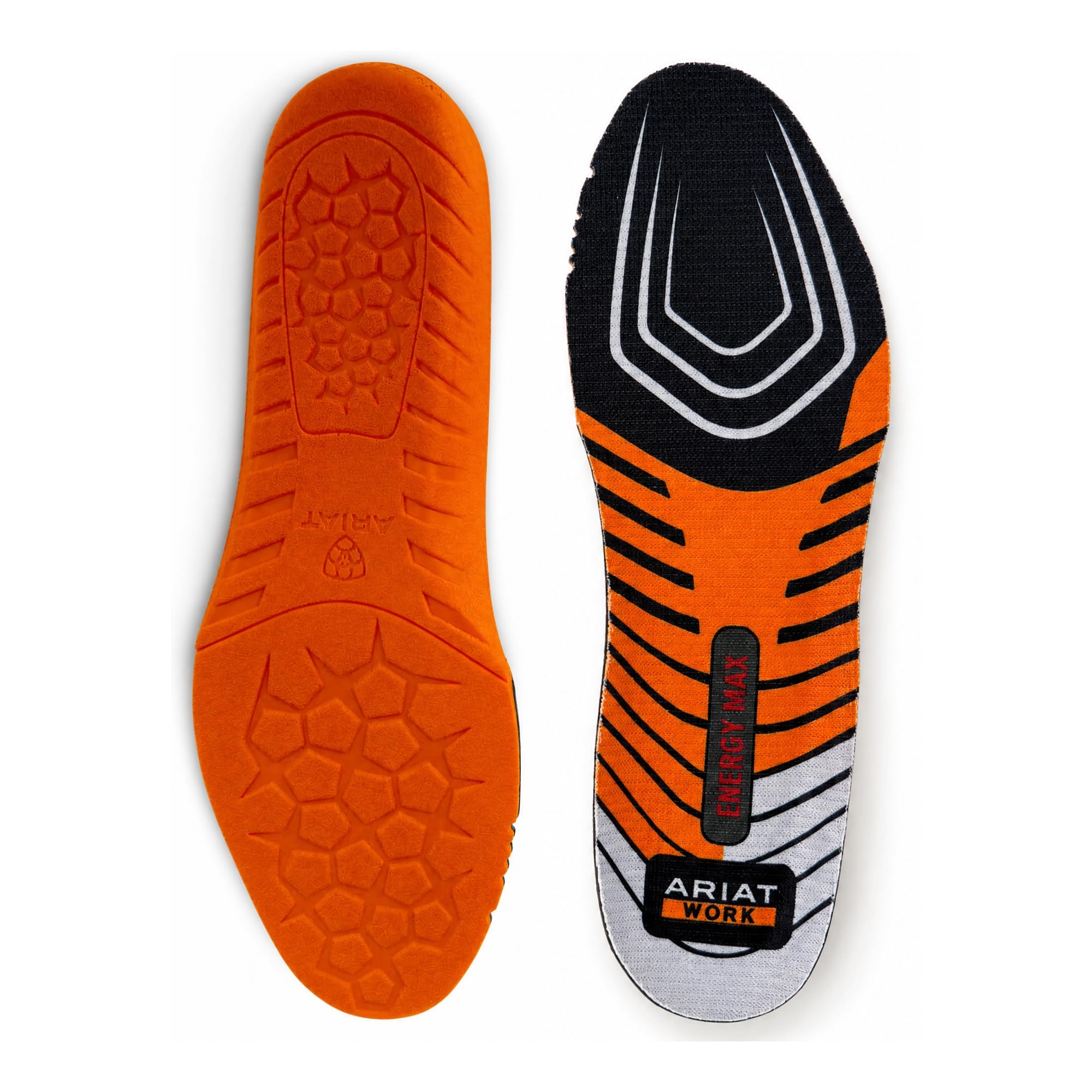
| ARIAT Energy Max Work InsoleBest for Work Boots | ARIAT round-toe work boots | Pre-shaped round-toe | Anatomical, energy-return foam | 6.38 oz | Amazon |
| Spenco PolySorb Heavy Duty | Heel and forefoot shock absorption | 1 pair, low-friction top cover | Thick SpenCore heel and forefoot pads | 4.8 oz | Amazon |
| EASYFEET Orthotic Work Insoles | Slim fit in snug safety boots | Trim-to-fit, slim build | Medium firm arch, deep heel cup | 3.28 oz | Amazon |
| BRUNT Super CUSH N Insoles | Plush cushioning in roomy boots | Full-length, memory foam layer | Contoured heel bed, polyurethane build | 8 oz | Amazon |
| Superfeet Work Cushion | All-arch-height cushioning | Trim-to-fit | Soft cushioning, moisturewick top cover | 7.83 oz | Amazon |
| Timberland PRO Anti-Fatigue | Soft gel-like cushioning | Replacement footbed | Anti-fatigue OrthoLite footbed | 5.28 oz | Amazon |
| Welnove Orthotic Work Insoles | Multilayer support for flat feet | Trim-to-fit, S to XL | TPU arch layer with gel heel and forefoot pads | 9.17 oz | Amazon |
Detailed Reviews
1. PowerStep Original Insoles, Arch Pain Relief Orthotics
Our pick — 4.5+★ from 27,000+ verified ratings; the strongest balance of quality and price.
The firm-arch workhorse that slides into tight boots without a trim.
The PowerStep Original is built around a full-length, low-profile design that fits tighter shoes — athletic, walking, work, and casual dress styles. The whole point is that contoured neutral arch, paired with a deep heel cradle, which together support alignment through a long shift. It is a full-length insert, so it drops into any shoe whose factory insole you can pull out, and it moves from boot to boot with no trimming.
At 2.4 ounces it is the lightest insert on this list, which matters when you are already wearing a heavy work boot. One practical note on sizing: it is sized to fit a specific range of men’s and women’s shoe sizes, so match your boot size to the size options before ordering. It is made in the USA and backed by a 30-day money-back guarantee, which gives you a clean window to test it on your own floors.
What wins people over is the fit — roughly 1,700 owners single it out, and pain relief is mentioned almost as often. The recurring gripe is the firmness: a portion of buyers report the insert feels too hard from the start. That firm feel is also the reason the arch holds its shape, so treat it as the trade-off you are buying rather than a defect.
What earns its keep
- Contoured neutral arch plus deep heel cradle supports alignment through a full shift
- Full-length low-profile build fits tighter shoes with no trimming
- Moves from boot to boot — designed for shoes where the factory insole pulls out
- At 2.4 oz it is the lightest insert reviewed here
Where it asks something of you
- Firm cushioning feels hard underfoot at first — a real adjustment period
- Needs a shoe with a removable factory insole to seat properly
- Full-length sizing means you must match your boot size to the size chart
Go-to pick: Anyone who wants firm, stable arch support for tight-fitting work shoes and walks all day on hard floors.
Test it first: The firm feel is the main complaint, so give it a few days before you decide.
2. Dr. Scholl’s Work Insoles (Pack of 2)
Two pairs of shock-absorbing gel insoles for people who spend the day on concrete.
The thing that sells this pack is the gel cushioning, which Dr. Scholl’s built to absorb impact from working long hours on hard surfaces like asphalt, concrete, cement, hard dirt, and wood floors. That makes it a natural fit for a warehouse floor or a jobsite where you are not standing on a cushioned mat. You get two pairs in the pack, so you can kit out two pairs of boots or keep a spare set for when the first starts to flatten.
Buyers describe these as effectively a workhorse for long standing — the general read is that they are comfortable and supportive through a full shift, and easy to trim to size so they stay put. The trim-to-fit design means you cut them to your boot rather than hunting for your exact size. If you are between sizes or wear a half size, that flexibility is a real advantage over a fixed full-length insert.
There is also a Polygiene StayFresh treatment built for odor control and moisture, which helps in boots that never get aired out. Set against the PowerStep’s 2.4-ounce build, these are chunkier at roughly 14 inches long in the package, so they fill more of the shoe. In a snug safety toe, measure first — in a roomy work boot, they slot in fine.
The core case: Extended gel cushioning plus two pairs in the pack makes this the practical pick if you want fresh inserts for two boots or a spare set ready to go.
Space to consider: The cushioning takes up room, so boots that already fit tight may feel crowded.
Reach for this if: Your shift is spent on concrete or wood floors and you want visible gel shock absorption.
Look elsewhere if: Your boots are already snug enough that added thickness would pinch your toes.
3. ARIAT Men’s Energy Max Work Insole, Round Toe
Built to the shape of an ARIAT round-toe boot, with a foam core that springs back under each step.
The defining feature here is the fit: this insert is pre-shaped to a round-toe last, so it matches the inside of an ARIAT work boot rather than asking you to trim it down. The Energy Max layer compresses under each step and springs back, which is the energy-return idea — your stride gets some of that push back instead of losing all of it to the floor. The top layer wicks sweat away from the sock so your feet stay drier from clock-in to clock-out.
Weighing 6.38 ounces, it carries noticeably more heft than the PowerStep’s 2.4 ounces, and that mass is the foam and structure doing the energy-return work. The open-cell foam core is designed to vent heat inside the boot so the footbed stays comfortable through warm floors and long hours. Sizing runs whole sizes 7 to 15 and half sizes 7.5 to 11, in D medium width, so match your usual US men’s size.
The buy-in is solid: quality is what buyers praise most, and comfort runs close behind, with a perfect fit reported often. The fair caveat is cushioning and durability — a share of owners find the padding thin and the lifespan shorter than they hoped. If you want a plush pillow underfoot, this is not it; if you want a boot-shaped insert that supports your stride, it delivers.
Why it fits the boot crowd: Pre-shaped for ARIAT round-toe boots, moisture-wicking, and built to return energy into each step — no trimming, no guesswork on shape.
The honest limit: Cushioning and durability draw mixed notes, so expect to replace it sooner than a firmer arch insert.
Made for: ARIAT round-toe work boot wearers who want a drop-in fit and a springy step.
Think twice if: You want a thick, plush pillow — the padding here is on the lean side.
4. Spenco PolySorb Heavy Duty Insoles

A thick heel pad and forefoot crash pad aimed at the two spots that take the hardest hit.
If your heel is what aches at the end of a shift, the Spenco puts its money there. A thick SpenCore heel pad delivers focused cushioning right at the heel strike zone, and a matching SpenCore forefoot crash pad eases stress at the front of each step. A first-ray drop zone is shaped to encourage a smooth, natural toe-off, so your foot rolls forward instead of slapping down flat.
Quality is what buyers praise most here, with comfort right behind and pain relief following close. The deep heel cup and metatarsal-style arch support work together to keep the foot aligned through a long shift in boots or work shoes. A low-friction top cover helps reduce irritation, which matters when you are walking miles across a jobsite in a single day.
The part to weigh honestly is durability and fit. Longevity draws mixed reports — some pairs hold up well past a year, others wear out faster than expected. Fit is the other variable: the insert suits some boots perfectly and sits awkwardly in others. Match it to a boot with room in the heel and check the length against your factory insole before you commit. At 4.8 ounces it sits in the middle of the pack for weight.
What the heel-first design buys you
- Thick SpenCore heel pad targets the heel strike zone directly
- Forefoot crash pad plus a first-ray drop zone smooths your toe-off
- Low-friction top cover reduces irritation on long walking days
- Deep heel cup with metatarsal-style arch support for alignment
What to plan around
- Durability reports are mixed — some pairs wear out faster than a year
- Fit is boot-dependent; measure against your factory insole
- Heel-focused padding may feel bulky in a low-volume shoe
Made for: Heel pain that flares at the end of a shift and feet that need shock absorption at both ends of each step.
Plan on: Checking fit against your own insole, since the heel cup needs room to seat correctly.
5. EASYFEET Orthotic Work Insoles

The deliberately slim insert for safety boots that already fit perfectly.
If your safety boot is already snug, most orthotic inserts (shoe inserts shaped to support your arch) add too much bulk. This one is built slim on purpose, so it tucks under your foot without crowding your toes or lifting your heel off the back. A medium, firm arch supports the middle of your foot through long shifts, and a deep heel cup keeps your heel steady. Those two shapes are the core of its plantar fasciitis (heel and arch pain) and general foot-pain support.
Shock-absorbing heel and metatarsal pads cushion the spots that hit the floor hardest, which is where nurses, warehouse crews, and servers on hard floors feel the difference first. The breathable top layer moves moisture away from your foot so your socks are drier at the end of a shift. At 3.28 ounces it stays light on the foot, and it is sized trim-to-fit with your boot’s liner as a guide.
Quality is what buyers praise most, and fit is next — with the note that it can be cut to fit specific shoe setups. The manufacturer designs it to keep its shape for up to 12 months of shifts, which is a useful benchmark to compare against other pairs. The mixed note is cushioning: a firmer, thinner insert trades plushness for room in a tight boot.
The tight-boot answer: A slim 3.28-ounce build with a medium firm arch and deep heel cup, so snug safety boots do not end up pinching your toes.
One caveat: The slim profile means less plush underfoot cushioning than thicker gel inserts.
Best for: Safety boots and tight-fitting work shoes where added bulk would ruin the fit.
Skip if: You want a thick pillow of gel — this favors room and support over plushness.
6. BRUNT Super CUSH N Insoles

Polyurethane cushioning with a memory foam layer, for boots with room to spare.
The Super CUSH N leans all the way into comfort. The polyurethane build carries impact-absorbing foam at the heel and forefoot — the two zones under the most stress — and adds a bonus memory foam layer that relieves pressure on your feet. A contoured heel bed protects the back of your foot and anchors it so it does not shift around inside the boot. The grippy toe coating is there to keep your foot from sliding forward and rubbing.
Moisture-wicking design and an anti-odor treatment keep the boot fresher through hard days, and a non-stick top cloth wipes clean so you can maintain the surface instead of replacing the pair at the first muddy shift. At 8 ounces it is the heaviest insert reviewed here, which is the cost of all that foam. In a roomy boot that weight mostly disappears; in a tight shoe, it crowds.
What buyers respond to is the outright comfort, with the general read being that these insoles feel fantastic and work well — knee, back, and hip relief gets reported too. It is a newer insert with a smaller review base than the older contenders, so you are trusting a shorter track record. If you want plush cushioning and have the boot room for it, this is the most comfort-forward pick on the list.
The comfort-forward case: Impact-absorbing foam at heel and forefoot plus a memory foam layer and a grippy toe coating — a lot of underfoot softness in one insert.
The trade-off: At 8 ounces it is the heaviest pick here, so it belongs in a roomy boot, not a snug one.
Pick it if: Your work boots are roomy and your priority is the softest landing underfoot through a long day.
Pass if: You wear a tight-fitting shoe or want the lightest possible insert.
7. Superfeet Work Cushion Insoles
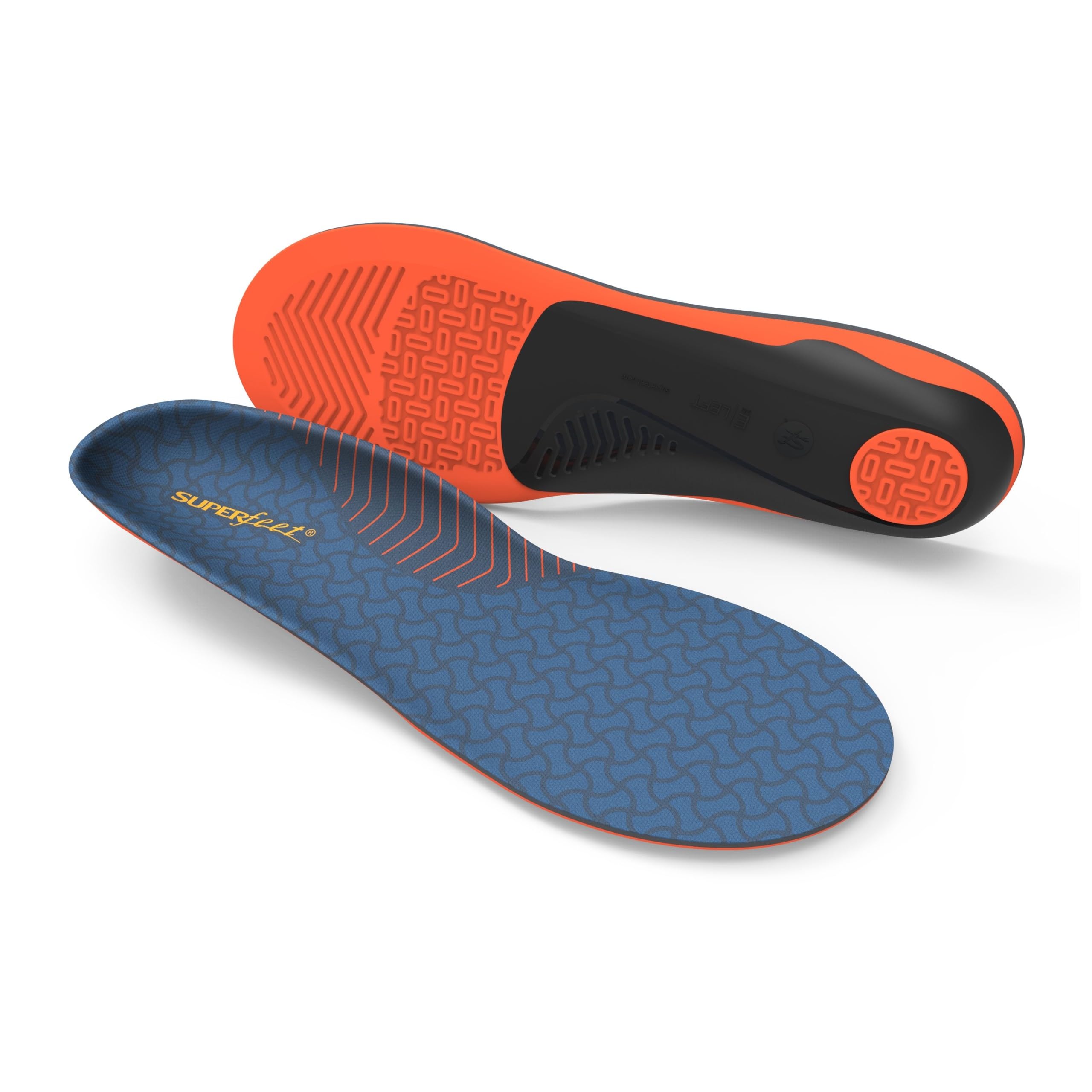
Soft cushioning designed for every arch height, then trimmed to your own boot.
Superfeet builds this one for all arch heights, so you do not have to guess whether you have a high, low, or neutral arch before ordering. The soft underfoot cushioning is aimed at anti-fatigue support for work and duty, and it is designed for work boots and roomy work shoes rather than tight dress shoes. A moisturewick top cover helps reduce odors and keeps feet fresher through the day.
Trim to fit is the order of the day: follow the cutting instructions before use, and if you are between sizes, size up and trim down. At 7.83 ounces it carries real mass, so it suits a boot with a wide bed. The manufacturer states the support holds for up to 12 months, which gives you a clear expectation for when to replace the pair.
Where it stands out is effectiveness on concrete floors all day — that is the use case buyers call out most. Comfort and fit split the room: some feet feel great and fit perfectly from the start, while others find the pair too tight. That tension makes sense for a structured insert that fills the boot. If your boots run narrow, trimming carefully and sizing up first is the safer route.
The concrete-floor pick: Soft cushioning built for all arch heights, a moisturewick cover against odor, and a stated support life of up to 12 months.
Room to note: Fit is the splitter here — some find it spot-on from the start and others feel it too tight, so trim carefully.
Made for: Long days on concrete floors in roomy work boots, where soft cushioning and odor control both matter.
Caution: If your boots run narrow, size up and trim deliberately before you wear them on a shift.
8. Timberland PRO Anti-Fatigue Replacement Insole

A soft OrthoLite replacement footbed that feels like walking on gel.
The Timberland PRO is the simplest idea on this list: an anti-fatigue OrthoLite footbed with a durable, rugged exterior that swaps straight into a boot. It is not trying to be an orthotic with a firm arch — it is trying to feel soft underfoot for a long day. At 5.28 ounces it sits in the middle of the weight range, lighter than the heavy foam picks and heavier than the slim ones.
Softness is what buyers praise most, and the comparison that keeps coming up is a gel-like feel underfoot. That makes it a comfortable first insert if you have never worn one and just want relief from the factory slab. It is a replacement footbed, so it works best when you pull the original insole out and drop this in its place.
The honest limit is arch support and sizing. Fit, comfort, and value all draw mixed notes — some find the perfect fit and real pain relief, while others say it runs narrow and does not help their foot pain. If you have a high arch or want firm structural support, a contoured insert like the PowerStep will serve you better. If softness is your goal, this is the cheapest way to get it.
What the softness delivers
- OrthoLite anti-fatigue footbed with a gel-like feel underfoot
- Durable, rugged exterior built to handle a work boot’s abuse
- A simple drop-in replacement for the factory insole
- Softness is the trait buyers praise most
Where it falls short
- Arch support draws mixed reports — not a firm orthotic
- Some buyers find it runs narrow
- Value is debated; it is softness, not structure, that you are buying
Go for it if: You want an easy, budget-friendly way to soften a hard factory footbed.
Look further if: You need firm arch correction rather than soft cushioning.
9. Welnove Orthotic Work Insoles for Plantar Fasciitis
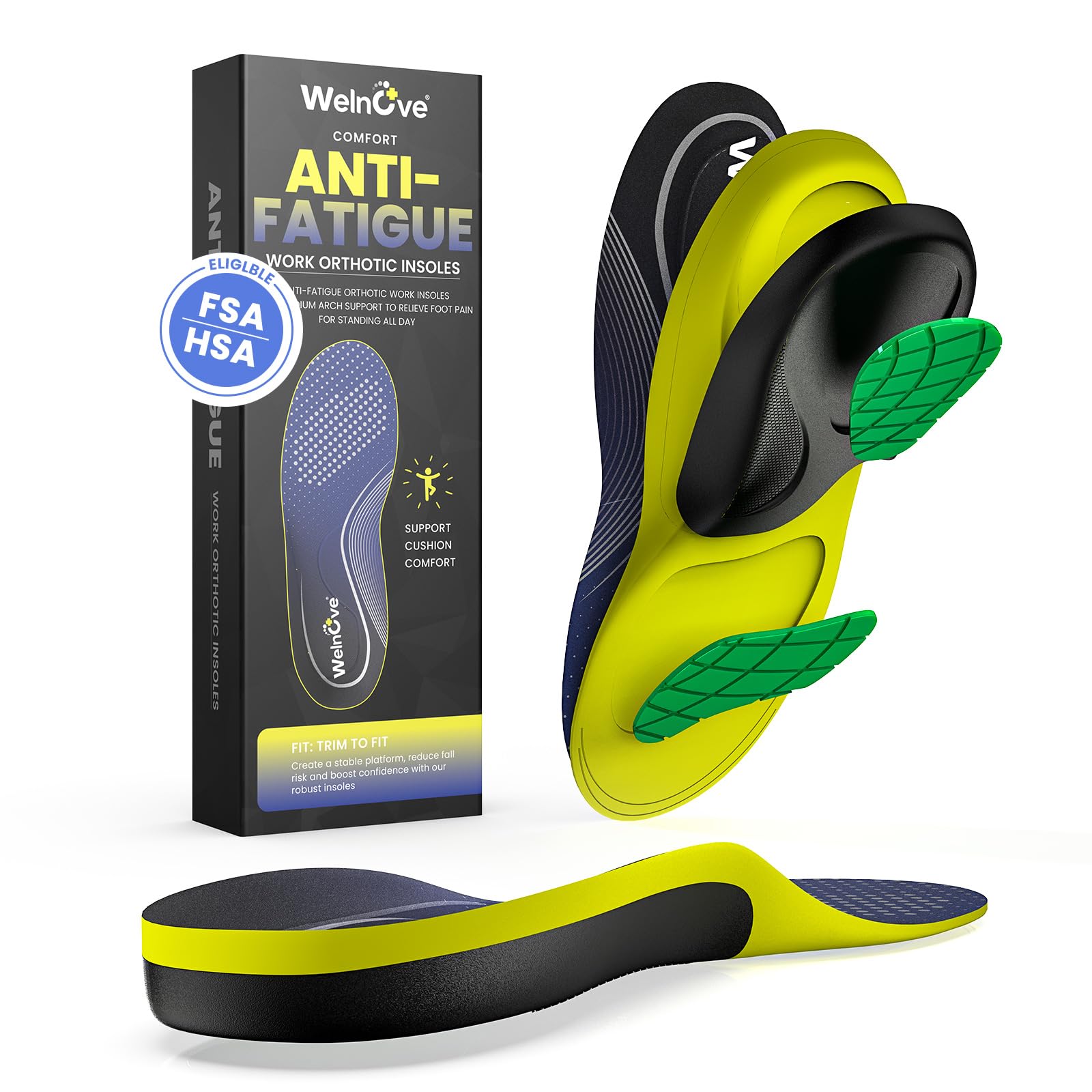
A four-layer build that stacks foam, a TPU arch shell, and gel pads.
The Welnove packs more layers than any other insert on this list. A PU foam (soft polyurethane foam) cushioning layer sits on top, a 3D dynamic TPU (a flexible plastic) arch support layer holds the middle of your foot, a deep U-cup heel cups the back, and shock-absorbing GEL pads sit at the heel and ball of your foot. All that structure is meant to keep your foot in the correct position and support both the longitudinal and transverse arches (the arch running front-to-back and the one running across your foot).
It is designed for people who spend long hours on their feet and feel the fatigue build by the end of the day. The manufacturer is upfront about the adjustment: it recommends wearing the pair for 3-5 hours a day at first, then gradually increasing until you can wear them all day. Because the insert takes up real space, it also recommends pulling the original insole or using a roomier shoe. At 9.17 ounces it is the heaviest pick reviewed here — a lot of material underfoot.
Fit and function are the strengths, with the general read being that the pair fits well and works — enough that a full workday without foot pain is the goal. Comfort and quality split the room: some feet find relief while others find them uncomfortable from the start. That split often tracks with shoe room and the adjustment window, so give them the trial period the maker suggests before you judge.
The layered case: Foam, a TPU arch layer, a deep U-cup heel, and gel pads at heel and forefoot give this the most structural layers here.
What to expect: A real break-in, a heavy 9.17-ounce build, and a boot with enough room to seat the layers.
Suits you if: You want maximum structural support in a roomy boot and can give it the 3-5 hour ramp-up the maker recommends.
Skip if: You want a drop-in-and-go insert or wear a snug shoe with no room to spare.
Know the Specs
Arch support and pronation
Your arch is the curved span under the middle of your foot. A contoured insert supports that span so your weight spreads evenly rather than pinching. Pronation is the natural inward roll of the foot as you walk; a neutral arch insert is built for feet that pronate mildly and roll inward normally. Firm arch support is what holds that shape over a long shift, which is why inserts with a firm shell hold up better than soft foam ones.
Heel cup and heel strike
Your heel strike is the moment your heel hits the floor at the start of each step. A deep heel cup cups the back of your heel, keeps it steady, and stops it sliding side to side. The thicker the pad under the heel, the more of that impact the insert absorbs instead of your leg. If heel pain is your main issue, put more of your decision weight on heel cushioning than on the toe area.
Trim-to-fit versus full-length
A full-length insert is shaped to go in as-is; a trim-to-fit insert is cut to your boot using printed lines on the base. Full-length suits anyone swapping one insert between several pairs of boots. Trim-to-fit suits half sizes and unusual boot shapes, and it lets you match the insert to your exact size. Always cut a little at a time — you can take material off, but you cannot put it back.
Insert weight and boot room
Insert weight is quoted in ounces, and it hints at how much material sits under your foot. A heavier insert usually means more cushioning or more structural layers, which is comfortable in a roomy boot but crowded in a snug one. A lighter insert around two to three ounces disappears underfoot but offers less shock absorption. Match the insert’s weight to the space inside your boot, not to the label on the box.
Common Questions
Will an insert fit inside a safety boot with a steel toe?
Do I need to remove the factory insole before adding an insert?
How do I pick the right size for a trim-to-fit insert?
How long does a work shoe insert last?
Is a soft insert or a firm arch insert better for standing all day?
Can these inserts go in normal sneakers or only work boots?
What is the difference between an orthotic insert and a cushioning insole?
Can I move one insert between several pairs of work boots?
Will a thick insole make my work boots too tight?
Do I need to break in a new work shoe insert?
The Bottom Line
For most people shopping for the best work shoe inserts, the winner is the PowerStep Original. It pairs a contoured neutral arch with a deep heel cradle, holds up through tight-fitting work shoes, and is the lightest insert on this list. If your shift is spent on concrete and you want two pairs of gel shock absorption in the pack, grab the Dr. Scholl’s Work Insoles. And for snug safety boots where room is the whole problem, reach for the slim EASYFEET Orthotic Work Insoles. The PowerStep carries the highest rating of the bunch, and with 27,000+ ratings behind it, it is the safest first buy if you are unsure which way to go.
How we choose
We do not accept paid placement. Every pick is matched to a real buyer and a real use-case; we do not hands-on test units.
Sources
Specifications: manufacturer listings and product documentation. Review insights: verified customer reviews, as of November 2026. Pricing: not shown on this page (it changes often); check the current price via the retailer link.
As an Amazon Associate, Tactical Gear Guy earns from qualifying purchases. This does not affect which products we feature.