Specs are compiled from manufacturer listings and verified buyer reviews and can change over time — please confirm the key details on the product page before buying.
If you want the short answer: the Garmin Forerunner 570 is the smart wrist watch most people should buy, because it pairs a bright AMOLED touchscreen with buttons you can actually press mid-run and up to 11 days of battery life in smartwatch mode. But the right pick changes fast if you own an iPhone, want a huge screen for reading notifications, or need a watch that survives salt water and rock scrapes.
This guide is built by comparing the manufacturers’ published specifications and the patterns across verified customer reviews, so you get each pick’s real strengths and trade-offs instead of marketing spin.
The biggest mistake buyers make is assuming every smart watch talks to every phone. It does not — Google’s Pixel watches work with Android only, while the Apple Watch Ultra needs an iPhone. Below you’ll find the honest strengths and trade-offs of each pick so you can choose a smart wrist watch that fits your phone and your wrist.
Top Picks
How To Choose The Best Smart Wrist Watch
Start with your phone, not the watch. A smart wrist watch is only as smart as its connection to your handset, and the two big ecosystems do not mix. Google’s Pixel watches and Samsung’s Galaxy watches pair with Android devices, while the Apple Watch Ultra is built around an iPhone. Buy outside your ecosystem and you lose messages, calls, and app support.
Match the battery spec to how you actually charge
Battery figures on the box are not one number — they are a set of promises. A watch rated for 11 days in smartwatch mode will drop to far fewer hours once GPS is running. Solar models add another layer, because the solar charging lens only helps when you are outside. If you hate charging, look for a smartwatch rated in weeks rather than days.
Screen size is a wrist-size decision
A 2.07-inch display is easy to read at a glance, but it covers a lot of forearm on a narrow wrist. Smaller cases suit smaller wrists, and the band matters just as much. A soft silicone sport band with a buckle stays put during a run; a stiff one digs into the wrist bone. Check the case size and band width before you commit.
Water resistance ratings decode simply
An IP68 rating means the watch survives dust and splashes from rain or a sweaty workout. A 10 ATM rating means it handles swimming and snorkeling pressure. The Samsung Galaxy Watch Ultra2 takes it further with an IP69K and 10ATM rating plus an EN13319 dive certification. Pick the rating that matches the water you actually get into.
Side-by-Side Comparison
| Model | Best For | Battery Life | Case Size | Phone Compatibility | Amazon |
|---|---|---|---|---|---|
| Garmin Forerunner 570★ Best Overall | Runners and triathletes | Up to 11 days | 47 mm | iOS and Android | Amazon |
| Fitpolo Smart Watch (2 Bands)Budget Champion | Budget everyday tracking | Up to 7 days | 1.85″ display | iOS and Android | Amazon |
| Amazfit Bip MaxBest Battery | Huge screen, long battery | Up to 20 days | 2.07″ display | iOS and Android | Amazon |
| Garmin Instinct 3 Solar | Rugged outdoor use | Up to 28 days | 45 mm | iOS and Android | Amazon |
| Google Pixel Watch 5 (41mm) | Android daily wear | Up to 40 hours | 41 mm | Android only | Amazon |
| Samsung Galaxy Watch9 | Style and health tracking | — | 40 mm | Android only | Amazon |
| Pixel Watch 5 Stephen Curry SE | Curry fans who want LTE | Up to 40 hours | 45 mm | Android only | Amazon |
| Samsung Galaxy Watch Ultra2 | Diving and hard trails | — | 47 mm | Android only | Amazon |
| Apple Watch Ultra 4 | iPhone owners going long | Up to 45 hours workout | 49 mm | iPhone only | Amazon |
Detailed Reviews
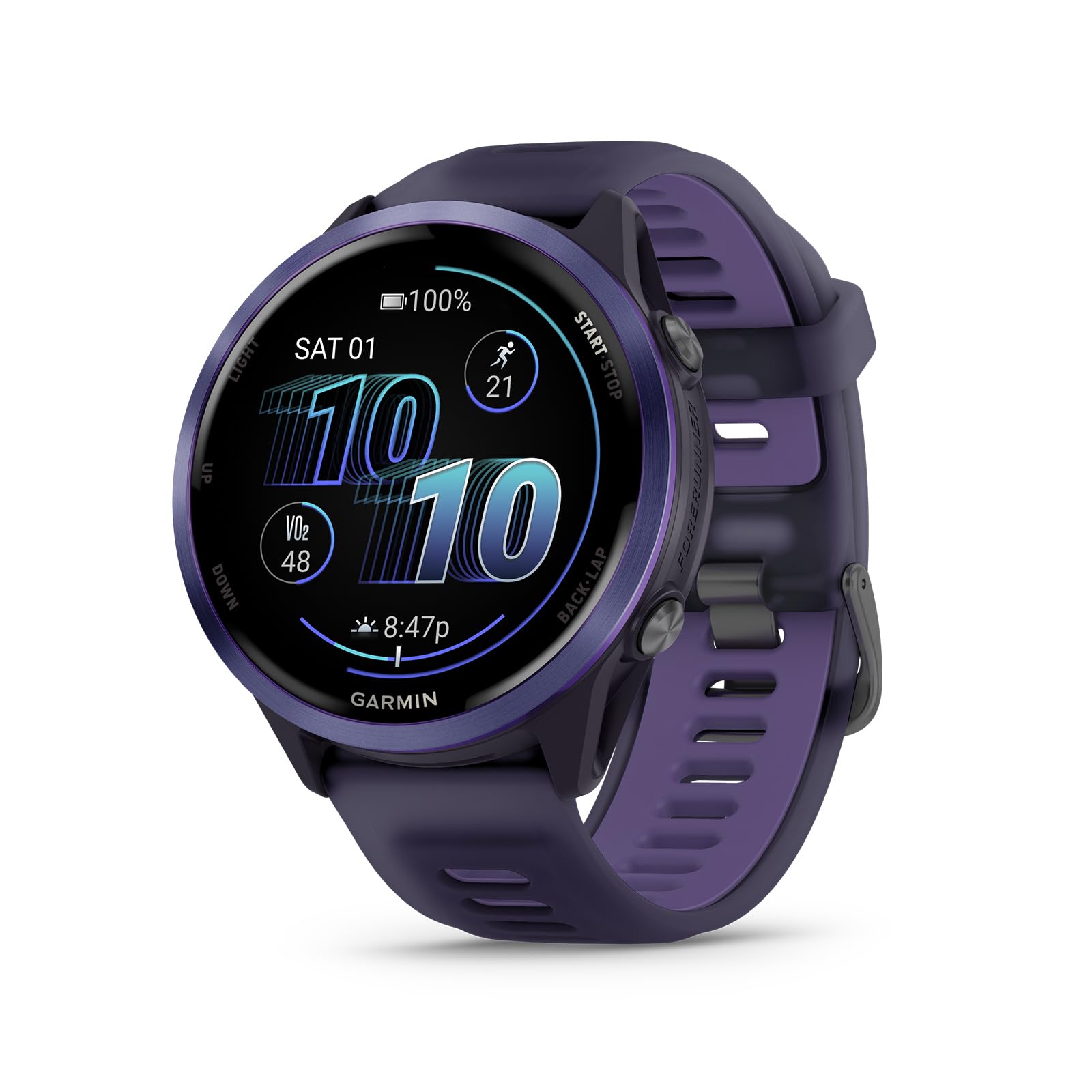
1. Garmin Forerunner 570 47mm
Our pick — 4.5+★ from 600+ verified ratings; the strongest balance of quality and price.
The trainer’s watch: a bright AMOLED screen you can swipe, plus buttons you can hit mid-sprint.
Garmin’s 47 mm Forerunner 570 gives you a bright AMOLED touchscreen (an organic LED panel that stays readable in daylight) framed by an aluminum bezel. The clever part is the button controls sitting alongside the touchscreen. So when your hands are wet or your fingers are numb in the cold, you can still lap your run without smearing across the glass. The case is 47 mm across, which reads big on a narrow wrist.
Battery life is where this watch earns its spot. Garmin rates it for up to 11 days in smartwatch mode and up to 18 hours in GPS mode. The people who actually wear it wind up charging closer to once a week and a half in daily life — buyers report it “only requires charging every 9 or 10 days.” Compare that to the Fitpolo’s 7-day rating and the gap is obvious over a month of use. That 11-day figure is the single number that keeps this watch on your wrist instead of on a charger.
What wins people over is build quality above all else — it is the most-discussed strength in its review history by a wide margin, with battery life a distant second. The GPS and sleep tracking both earn consistent praise from runners. The honest catch is value: the price sits in premium territory and a chunk of feedback questions whether the extra spend is justified over cheaper Garmin models. Reliability feedback is mixed too, so treat this as a watch you buy for the training tools, not for a bargain.
Reasons Runners Keep It On
- Up to 11 days in smartwatch mode, 18 hours in GPS mode
- 30+ activity profiles including triathlon and open-water swimming
- Built-in mic and speaker for calls from your wrist
- Training readiness score based on sleep, recovery, load and HRV
What To Weigh First
- 47 mm case is large for smaller wrists
- Premium price draws mixed value feedback
- Reliability feedback is split rather than uniform
Built for: anyone training for a race who wants real coaching plans and week-plus battery.
Second-guess it: if a slim case matters more than training depth — 47 mm is a lot of watch.
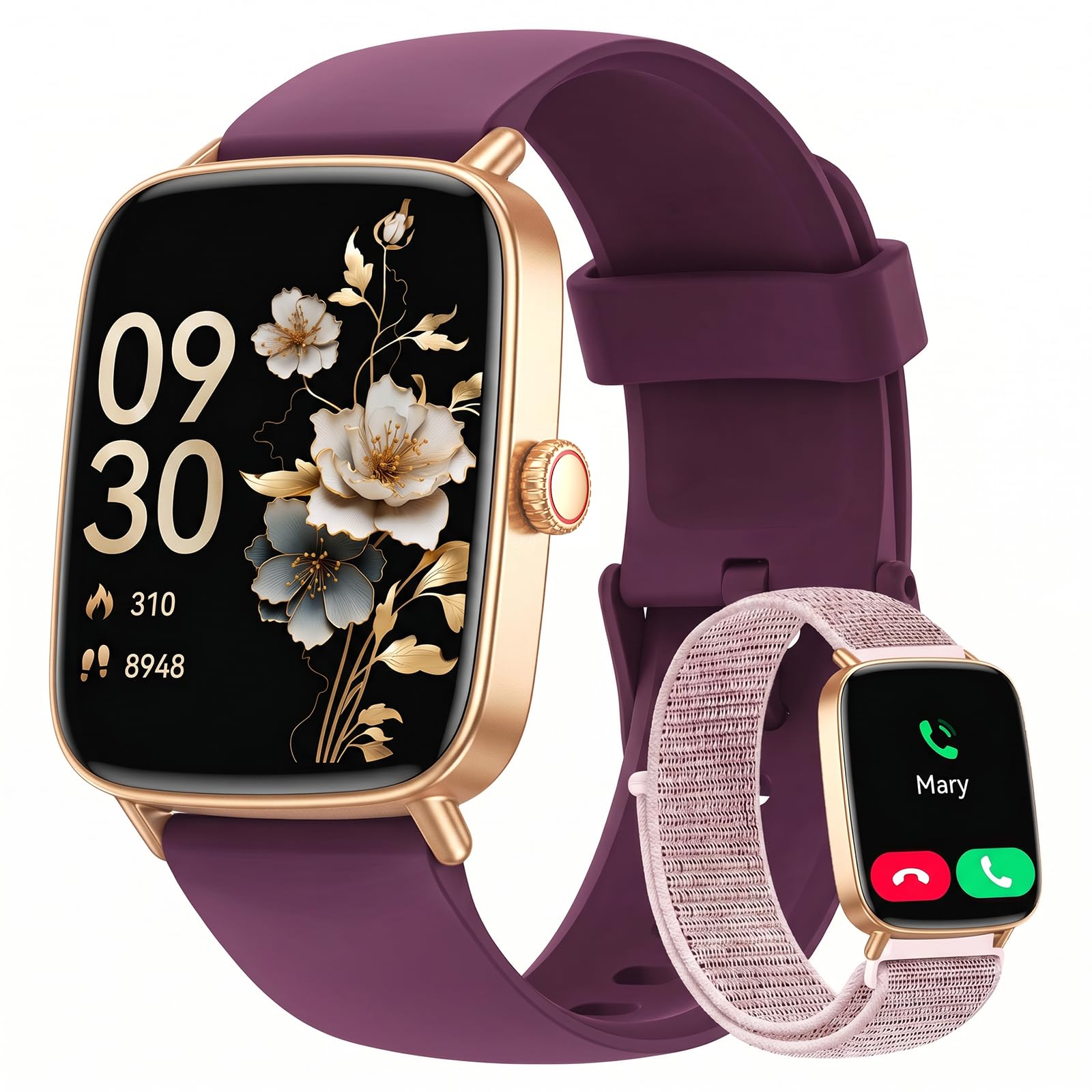
2. Fitpolo Smart Watches 2 Bands
Two bands, calls from your wrist, and a screen that refreshes at 60Hz for entry-level money.
The Fitpolo is the pick for someone who wants the smartwatch basics without the premium bill. It runs a 1.85-inch HD touchscreen that refreshes at 60Hz, which means scrolling through notifications feels smooth rather than jittery. The 350 milliamp-hour battery is rated for up to 7 days per charge, with a 2-hour charge time from empty. You get two bands in the box — a sporty silicone one and a casual braided one — so the same watch works for the gym and the office.
Calls are handled through Bluetooth 5.3 (a newer wireless standard that holds a steadier connection with less drop-out) with a built-in DSP chip that cleans up voice audio. That means you can answer a call at your desk or in the car without digging out your phone. Fitness tracking covers 120+ sports modes, and the IP68 rating handles dust and rain. Health tools include heart rate, sleep broken into deep, light and awake, plus stress tracking.
The watch’s look is what gets noticed — appearance is the most-praised aspect in its review history by a clear margin. Setup is quick, and the health-monitoring toolset gets steady approval. The real caveat lives in connectivity: iPhone users are the ones who hit snags, while Android pairing tends to behave. So if you carry an iPhone and calls from the wrist matter to you, test the pairing early.
Best money in the list: 120+ sports modes, two bands and 7-day battery at an entry-level tier is a lot of watch for the outlay.
Pair with care: the Bluetooth calling is the feature to verify first if you are on an iPhone.
Your match if: you want calls, health tracking and two straps without spending mid-range money.
Hold off if: you need rock-solid iPhone calling — that is the spot where feedback splits.
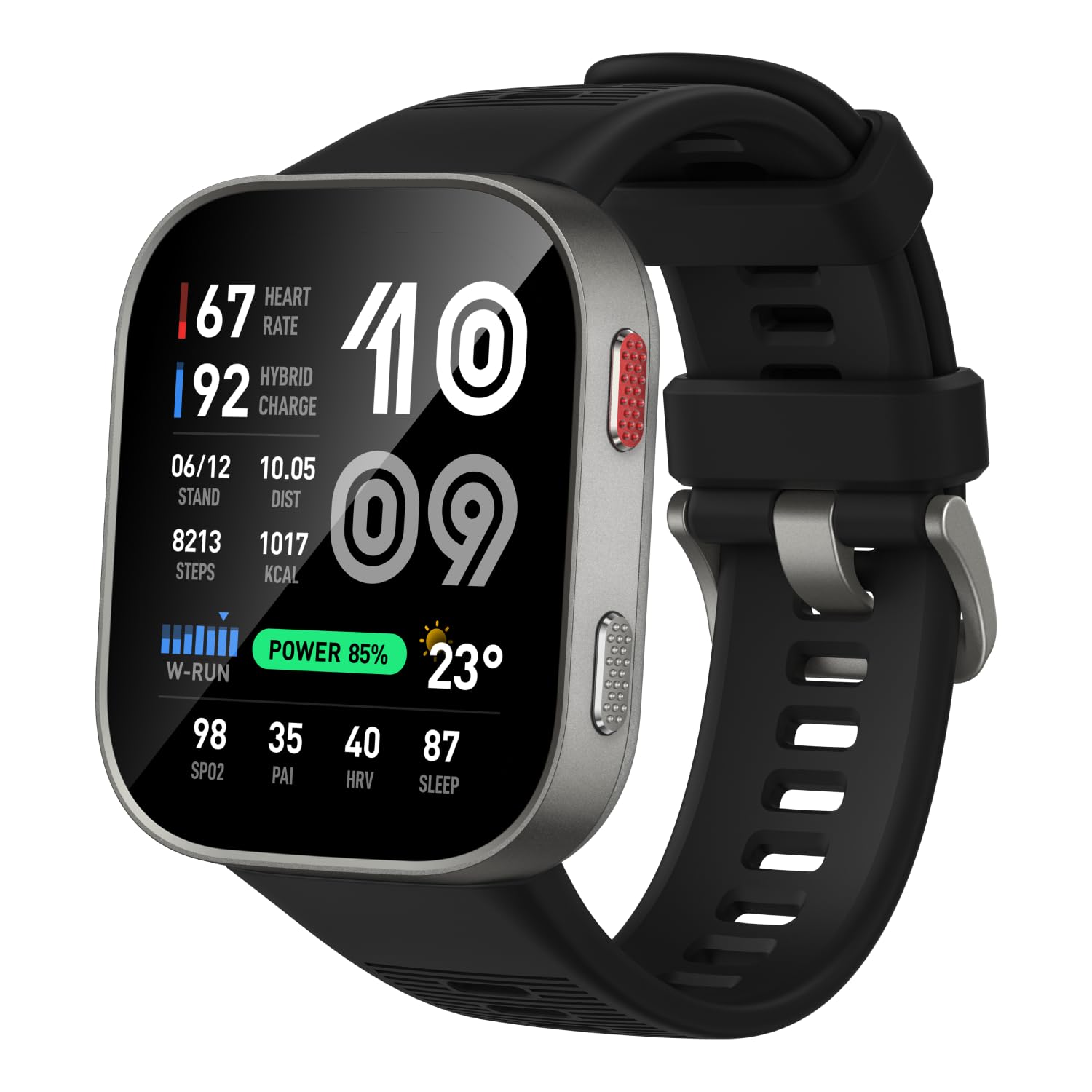
3. Amazfit Bip Max Smart Watch, 2.07″ AMOLED Display, GPS
Twenty days between charges and a 2.07-inch screen you can read from arm’s length.
The number that makes the Amazfit Bip Max hard to argue with is 20. That is up to 20 days of typical use on one charge — versus the Fitpolo’s 7-day rating. If you are the type who forgets the charger on a work trip, this watch simply keeps going. The screen is a 2.07-inch AMOLED panel on a lightweight aluminum alloy body with a two-button layout, so reading a message is a glance, not a squint.
Built-in GPS is backed by 5 satellite systems (multiple positioning networks that lock onto your location faster), and you can download free detailed maps from the Zepp App with turn-by-turn directions and off-track alerts. There is 4GB of onboard storage for offline maps, which means you can leave the phone behind on a hike. The Zepp Coach adds adaptive training routines plus metrics like VO₂ Max and Training Load, and the subscription-free Zepp App handles training and nutrition in one place.
What people rave about is build quality — it leads every other aspect in its review history, with battery life coming second. Owners describe it as looking more premium than expected, and the screen size draws steady approval. BioCharge recovery scoring rounds out the training side. The honest limit is the accessory: the box includes a magnetic charging base but no USB Type-C cable, so borrow one or buy one before the first charge runs low.
Why the battery wins: up to 20 days typical use means a two-week trip fits inside a single charge.
Check the box: no USB Type-C cable is included — just the magnetic charging base.
Reach for this if: charging is the thing you hate most about smartwatches.
Not your pick if: you expect a charging cable in the box — it does not come with one.
4. Garmin Instinct® 3 Solar, Rugged GPS Smartwatch, 45mm, Black

A solar backstop for multi-day trips, wrapped in a case built to shrug off rock and cold.
The Instinct 3 Solar is the watch for boots and backpacks rather than a treadmill. Garmin rates it for up to 28 days of battery life, and the solar charging lens pushes toward unlimited battery when you wear it all day with about 3 hours outside in 50,000 lux conditions. The case is a 45 mm fiber-reinforced polymer shell with a metal-reinforced bezel — lighter than a metal watch but built for knocks. That 45 mm case is 2 mm smaller than the Forerunner 570’s 47 mm.
It is rated 10 ATM for water pressure and built to MIL-STD-810 for thermal and shock resistance, so cold snaps and drops are covered. There is a built-in LED flashlight with variable intensities and strobe modes — genuinely useful when you are pitching a tent after dark. Navigation runs on multi-band GPS with SatIQ technology plus a 3-axis compass and barometric altimeter. Garmin Pay contactless payments work with a supported bank.
The 0.9-inch display is the spec to weigh honestly. It is small and the screen is not AMOLED, so it favors sunlight readability and battery over flashy color. If you want a big, bright screen for reading long messages, the Amazfit Bip Max’s 2.07-inch AMOLED is the better fit. If you want a watch that survives a wet, cold weekend and still has charge on Sunday night, this is the one.
Choose it for: hiking, hunting and multi-day trips where a charger is not coming along.
Look elsewhere if: a large, colorful screen is your priority — 0.9 inches is deliberately modest.
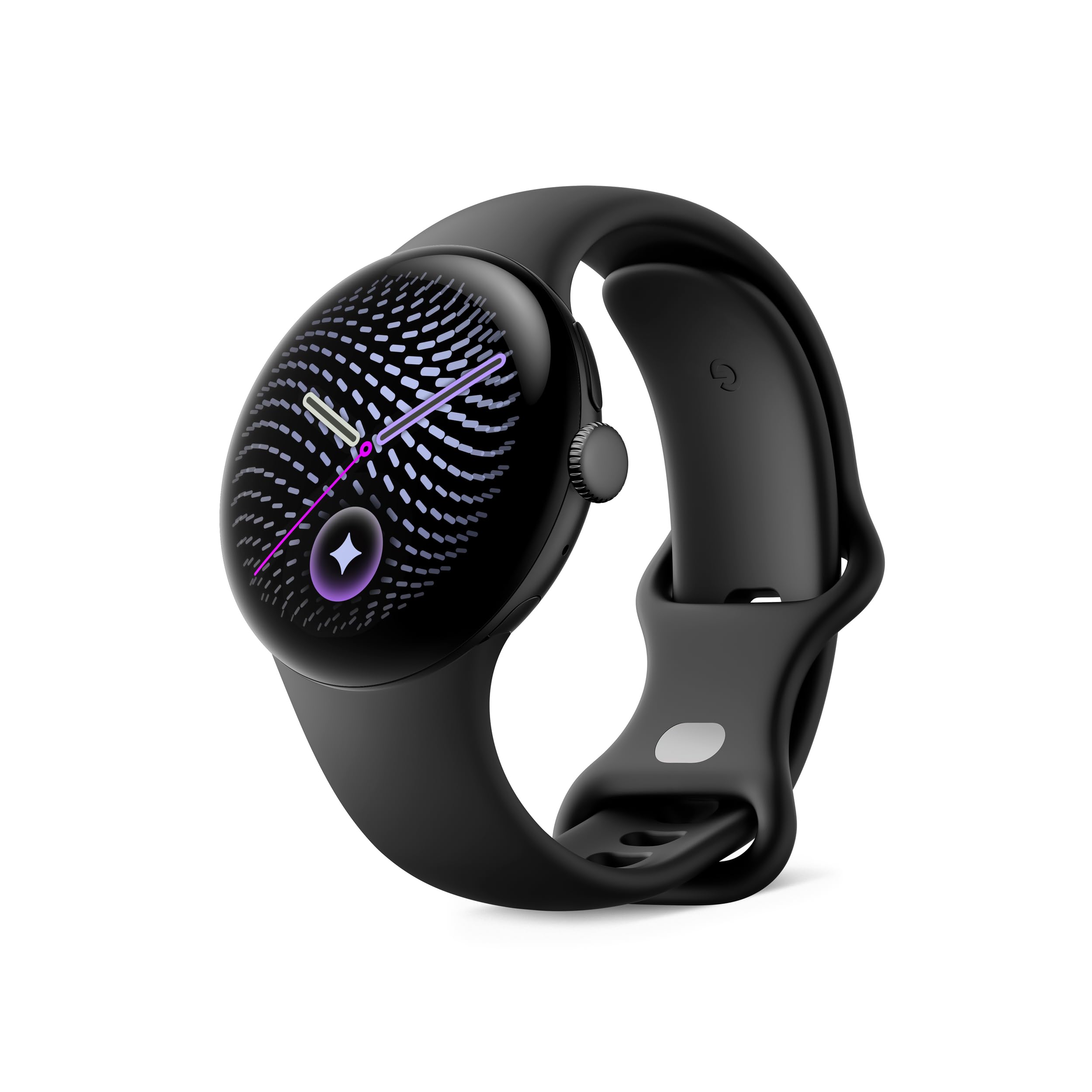
5. Google Pixel Watch 5 41mm
Google’s smallest watch, built around Gemini help and a scratch-resistant domed screen.
The 41 mm Pixel Watch 5 is designed for the Android phone in your pocket — it is not compatible with iOS devices, so iPhone owners should stop reading here. The domed Actua 360 display is covered in scratch-resistant Gorilla Glass, and battery life runs up to 40 hours. Two band sizes ship in the box (small and large), which solves the fit problem before it starts.
Health tracking is the core pitch. Advanced sensors feed heart rate tracking tuned to your activity, and sleep insights turn time in sleep stages plus breathing regularity into a personalized Sleep Score. Loss of Pulse Detection can prompt a call to emergency services if your pulse stops. The watch also works with Google Health Coach to build fitness plans around your activity.
Fast charging is the feature that gets the most love — it is the standout in the feedback. Comfort is a recurring theme too, with the domed shape described as not digging into the wrist bone. Where it splits is connectivity: Strava linking is the sticking point for a portion of users, so if your training life lives inside Strava, plan to test that early. Battery stamina also draws some mixed notes against the 40-hour claim.
Ticks The Right Boxes
- 41 mm case suits smaller wrists
- Up to 40 hours of battery life
- Two band sizes included in the box
- Loss of Pulse Detection can call for help
Know Before You Buy
- Android only — not compatible with iOS
- Strava connectivity draws mixed feedback
- Wi-Fi model, so no standalone LTE calls
Made for: Android users who want a compact daily watch with Google’s health tools.
Think twice if: you use an iPhone — this watch will not pair with it.
6. Samsung Galaxy Watch9, Cream, 40mm Bluetooth Smartwatch
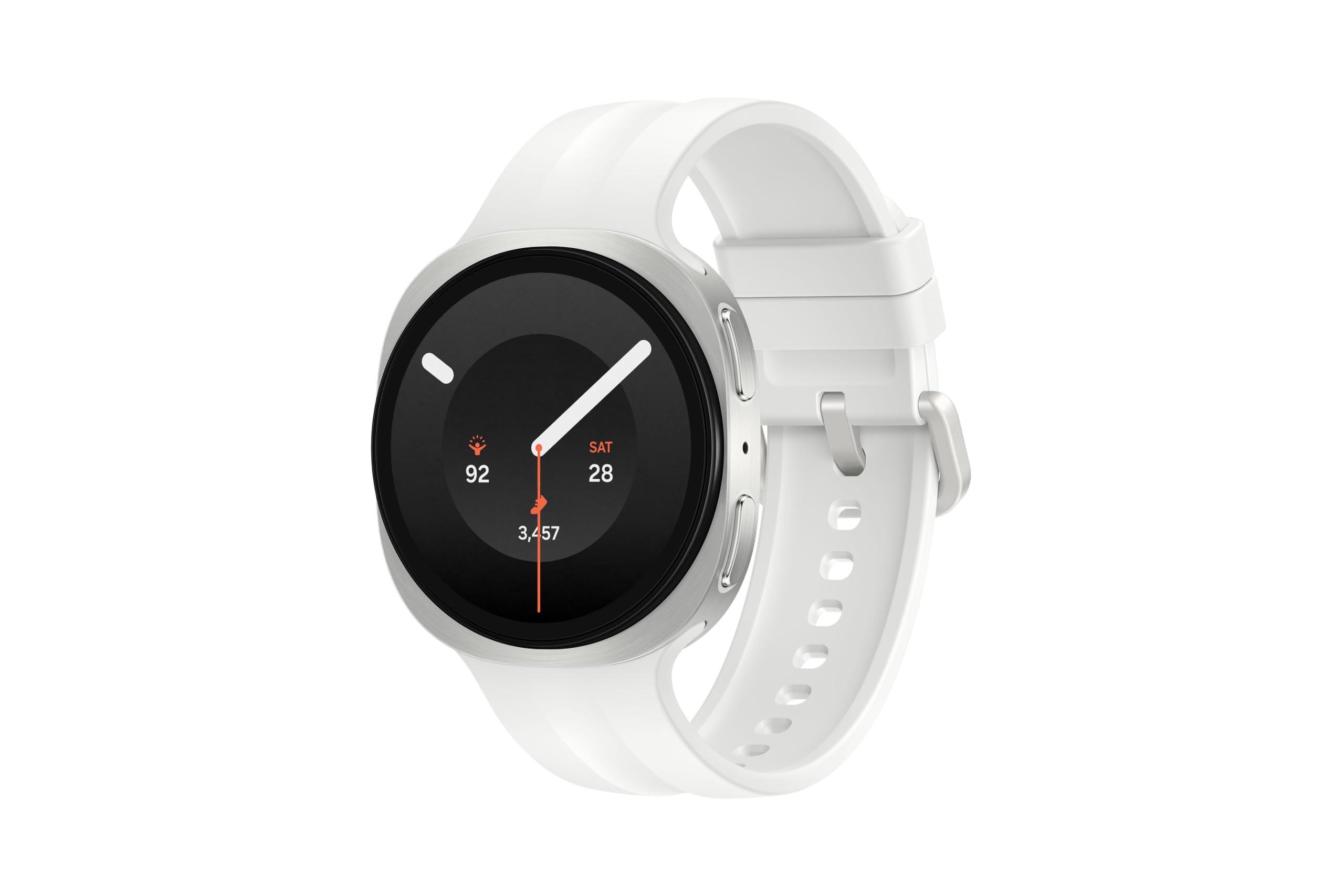
A 40mm cream case that looks the part, with sleep and heart scoring baked in.
Appearance is the whole story with the Galaxy Watch9. A 40 mm cream case with an OLED display (the same rich, high-contrast screen tech used in good phones) makes it the one you reach for when you are dressing up, not just working out. It pairs with Samsung Galaxy phones and other Android phones through the Galaxy Wearable and Samsung Health apps, and the soft sports band uses a breathable air pocket design for daily wear.
Health tracking goes deeper than most here. Vitals logs overnight health metrics and flags shifts from your usual patterns. A single Heart Health Score combines sleep time, BMI, activity and vascular load, while Advanced Sleep Coaching and Bedtime Guidance build better habits. Blood pressure readings require calibrating the watch against a blood pressure cuff, which is sold separately. Tap to Pay handles errands, and Fitness Index delivers guidance based on your fitness level goals.
The friction points are real and worth knowing: the band runs small on some wrists, and feedback on battery life, functionality and value is split rather than unanimous. This is a lifestyle-first watch, so buy it for the look and the sleep coaching rather than for week-long stamina. If battery life is your top concern, the Amazfit Bip Max’s 20-day rating is the safer bet.
The style lead: appearance is what buyers praise most about this one, and the cream 40 mm case earns it.
The fit question: the band is reported snug — try it on before you rely on the strap that ships in the box.
Buy it if: you want a watch that looks good with a dress shirt and coaches your sleep.
Skip the splurge if: you need multi-day battery — this one wants charging more often.
7. Google Pixel Watch 5 45mm
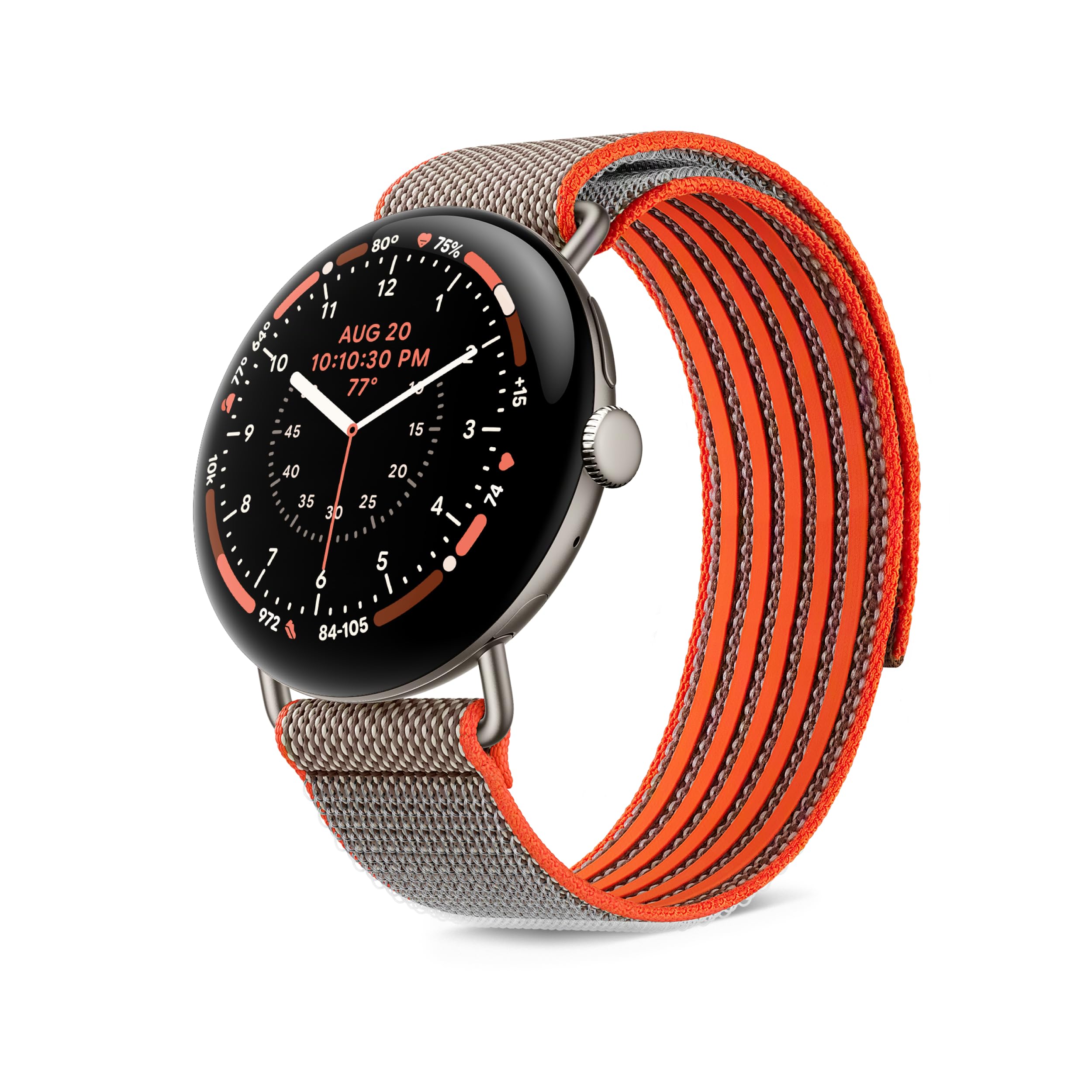
The Curry edition adds a bigger 45mm case and standalone LTE to Google’s watch.
This is the Pixel Watch 5 for people who want to leave the phone at home. The 45 mm Stephen Curry Special Edition in Rye color adds LTE cellular connectivity, so you can send messages, navigate and stream music straight from your wrist. It also comes with 2 years of data and texting included when you buy the LTE model through select sales channels — Google Fi powers that service, and you must redeem within 60 days of activation. Android only here as well; iOS devices are not supported.
The hardware follows the same template as its 41 mm sibling: a domed Actua 360 display under scratch-resistant Gorilla Glass, up to 40 hours of battery life, and Google’s heart rate tracking with sleep-stage and breathing-regularity insights feeding a personalized Sleep Score. The 45 mm case gives you more screen to work with than the 41 mm version, so maps and messages are easier to read mid-move.
Functionality is the rock-solid part — it is the most-liked aspect by a margin, and the LTE freedom is the reason to pick this over the standard model. Battery is the item to keep expectations in check: feedback is mixed, and the 40-hour figure is not something every owner matches in daily use. For heavy GPS or LTE days, charge it nightly.
Fits the buyer who: wants a wrist-only phone experience on Android and a bolder 45 mm look on the wrist.
Think hard if: you want days of battery rather than hours — plan on a nightly top-up.
8. Samsung Galaxy Watch Ultra2 47mm
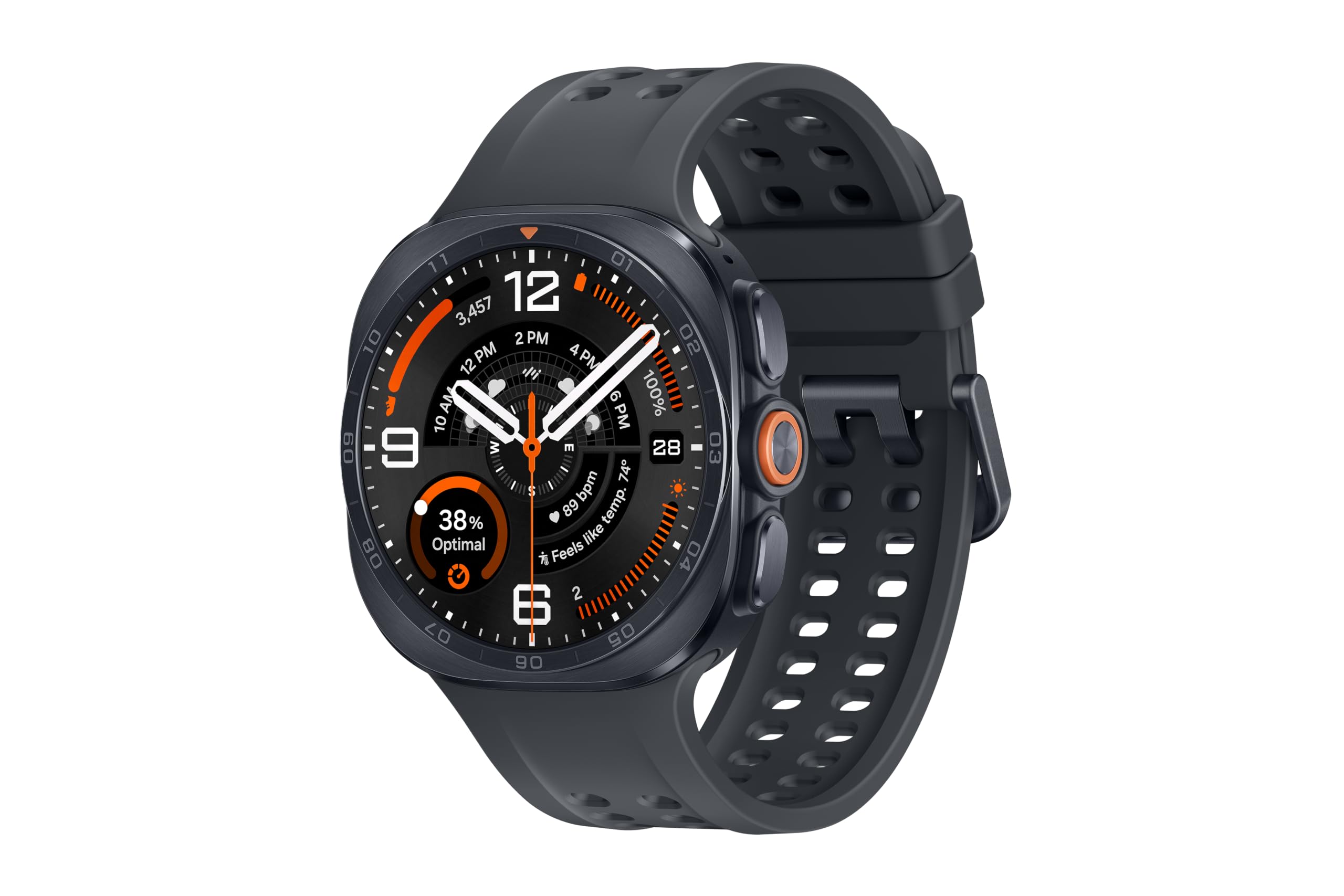
A 47mm titanium-bodied diver’s watch that stays readable at 5,000 nits in direct sun.
The Ultra2 is built for the outdoors from the case inward. A 47 mm titanium gray body is rated IP69K and 10ATM — dust-tight and water resistant up to 100m — and carries an EN13319 certification from the dive computer app built with Mares. That certification opens real-time ascent and descent monitoring, limit depth notification and safety stop information. It weighs 2.08 ounces on the wrist.
The display is the spec that separates it: up to 5,000 nits of brightness (a measure of peak screen light) makes it genuinely readable on a sunny hike or a lunchtime run. LTE connectivity means calls, texts and updates even when the phone stays home. On the health side, Vitals tracks 5 health metrics overnight with tailored guidance, plus a single personalized Heart Health Score. Navigation gives path, elevation and pace guidance on trails, along with personalized hydration alerts.
Quality is the runaway favorite in owner feedback, with functionality second. Battery life and value draw mixed notes — this is a lot of watch to keep powered, so treat the heavier demands with realistic expectations. If you want maximum clarity in bright light and real dive credentials, this is the pick. If battery stamina is your deciding factor, the 28-day Instinct 3 Solar leads on that spec.
Where It Dominates
- Up to 5,000 nits for sunny-day readability
- IP69K, 10ATM and EN13319 dive certification
- LTE calls and texts without your phone
- Built-in GPS with path, elevation and pace guidance
Worth A Pause
- Battery feedback is mixed
- Premium tier carries a value question
- 47 mm case is substantial on a smaller wrist
Built for: divers, hikers and anyone who has squinted at a watch screen in full sun.
Weigh this: the ruggedness and brightness come with heavier battery expectations than the multi-week picks.
9. Apple Watch Ultra 4 GPS + Cellular 49mm Smartwatch
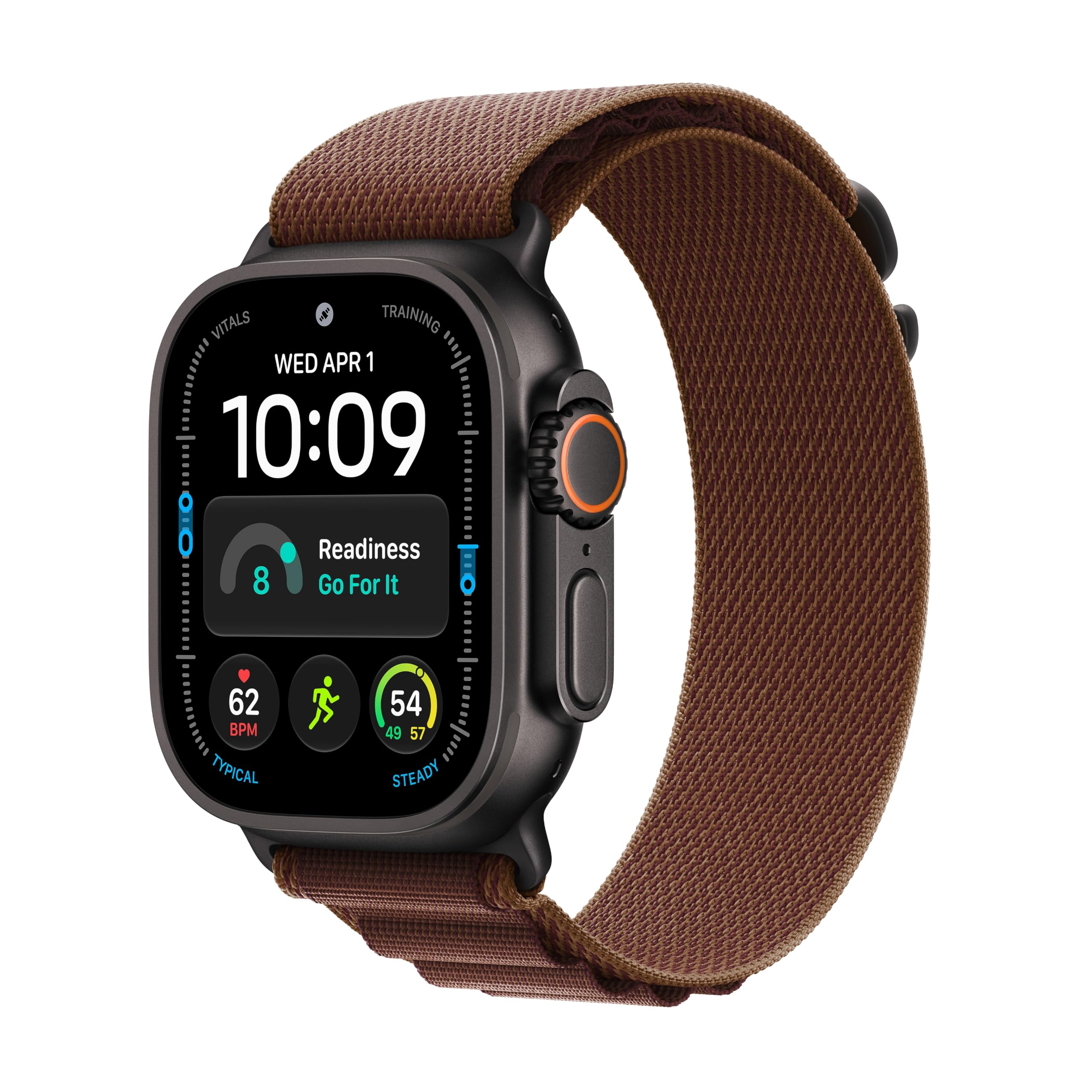
The 49mm titanium ultramarathon watch that texts for help where there is no signal.
The Ultra 4 is the largest watch in this list at 49 mm, and the toughest material spec too: a titanium case with a sapphire crystal display, water resistant up to 100m. For runners, the headline is battery — up to 45 hours of Max Extended Workout tracking, and a 15-minute fast charge returns up to 18 hours of use. It is an iPhone watch, and using cellular features means having service on your plan.
Heart rate sensing gets granular: the watch measures HRV (heart rate variability, the slight variation in time between beats that hints at stress and recovery) as often as every five minutes, with background heart rate readings every five seconds. Precision dual-frequency GPS, Pacer, Heart Rate Zones and training load cover serious running and triathlon work. Built-in satellite communications let you text emergency services when there is no cell service or Wi-Fi. Siri AI and Audio Intelligence add voice interaction and conversation summaries.
Battery life and functionality carry the strongest owner sentiment, with durability close behind. An occasional gripe surfaces on value, since this is the premium-tier watch here. Worth knowing: the charging routine is roughly an hour and a half for a full top-up, so an overnight slot works better than a quick dash.
The endurance play: 45 hours of extended workout tracking plus 18 hours back from a 15-minute charge covers a full ultramarathon weekend.
The cost of entry: it only works with an iPhone, and the price sits at the top of the list.
Suits you if: you run long distances with an iPhone and want satellite backup in the wild.
Wrong turn if: you carry an Android phone — this watch will not pair.
Know the Specs
Battery Life — Smartwatch Mode vs GPS Mode
A battery rating on a smart wrist watch is two numbers in one. Smartwatch mode counts the days the watch runs on notifications and basic tracking without heavy GPS use — the Forerunner 570 rates up to 11 days there, while the Amazfit Bip Max stretches to 20 days. GPS mode drains far faster; the same Forerunner drops to up to 18 hours when it is actively tracking a route. Solar models add a third path, since a solar charging lens can extend runtime when you spend hours outside. Read both figures before you commit.
Display Type, Size and Brightness
AMOLED screens (the bright, high-contrast panels used on the Forerunner 570, Bip Max and Pixel Watch) look vivid and stay readable at an angle. A display’s size in inches tells you how much message fits on screen — 2.07 inches on the Bip Max reads far more text at once than a 0.9-inch panel like the Instinct 3 Solar’s. Brightness, measured in nits, decides whether you can see the screen in direct sun; the Galaxy Watch Ultra2 rates up to 5,000 nits here.
Water and Dust Ratings
An IP68 rating means dust-tight and splash-safe for rain, sweat and handwashing. A 10 ATM rating is the swim-and-snorkel tier, rated for water pressure rather than just splashes. The Watch Ultra2 adds IP69K and an EN13319 dive certification, which is the spec that open up dive-computer features. If you only ever sweat on the watch, IP68 is plenty; if you swim or dive, look for the ATM and dive ratings.
Phone Compatibility
This is the spec buyers overlook most. Google’s Pixel watches are Android only and not compatible with iOS, and Samsung’s Galaxy watches pair with Galaxy phones and other Android phones. The Apple Watch Ultra 4 is an iPhone product through and through. Check your phone first, then compare everything else — no amount of screen brightness helps if the watch will not connect.
Common Questions
Will a Google Pixel Watch 5 work with my iPhone?
Does the Apple Watch Ultra 4 work with an Android phone?
How long does a smart wrist watch battery actually last?
Can I swim with these watches?
What does 5,000 nits brightness mean on a watch?
Do I need LTE on a smartwatch or is Bluetooth enough?
Is a 47mm watch too big for a smaller wrist?
What is the difference between IP68 and 10 ATM?
Do these watches come with a charging cable?
Can a smart wrist watch track my runs without my phone?
The Bottom Line
For most people, the smart wrist watch winner is the Garmin Forerunner 570 because it balances training tools, a bright AMOLED display and up to 11 days of smartwatch battery in one case. If charging is your biggest pain, the Amazfit Bip Max stretches to up to 20 days and a bigger 2.07-inch screen. For diving and bright-sun readability, the Samsung Galaxy Watch Ultra2 with its 5,000-nit display and dive certification is the one to reach for.
How we choose
We do not accept paid placement. Every pick is matched to a real buyer and a real use-case; we do not hands-on test units.
Sources
Specifications: manufacturer listings and product documentation. Review insights: verified customer reviews, as of November 2026. Pricing: not shown on this page (it changes often); check the current price via the retailer link.
As an Amazon Associate, Tactical Gear Guy earns from qualifying purchases. This does not affect which products we feature.