Specs are compiled from manufacturer listings and verified buyer reviews and can change over time — please confirm the key details on the product page before buying.
A zone valve is the small brass gate that decides which room of your house gets hot water from the boiler. When it sticks open you get a sauna in the spare bedroom; when it sticks shut you get a cold radiator and a heating bill that keeps climbing. The fix is almost always a valve swap, and the right valve depends on three specs: connection type (sweat, threaded NPT, or flare), control voltage (24 VAC on most residential loops), and whether your system needs an end switch to start the circulator.
This guide is built by comparing the manufacturers’ published specifications and the patterns across verified customer reviews, so you get each pick’s real strengths and trade-offs instead of marketing spin.
Below you will find nine boiler-zone valves sorted by how they actually behave in a basement, from the four-wire Honeywell head that comes off without draining the loop to the quiet heat-motor Taco that keeps bedrooms silent. Every pick here is a real hydronic zone valve, matched to the connection type and voltage a boiler loop actually uses, so you can shut off the guessing and get the heat back on. These are the zone valves for boilers worth your time.
Top Picks
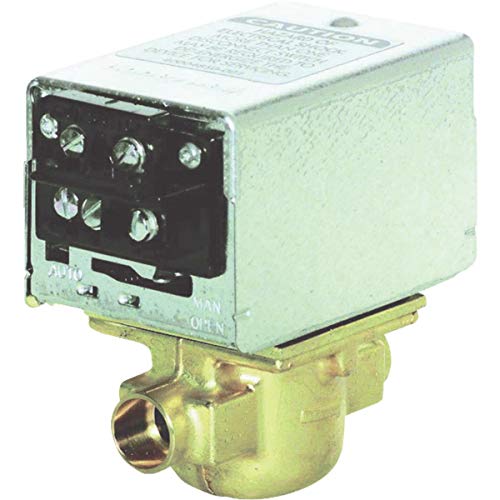


How To Choose The Best Zone Valves for Boilers
Start with the pipe, not the valve. A zone valve either sweats onto copper tubing with solder or screws onto threaded pipe, and the two are not interchangeable without adapters. Measure your existing connection and the diameter of the pipe feeding your zone before you read another spec sheet.
Sweat, Threaded, or Flare: Match the Connection First
A sweat connection means the valve has a socket you slide the copper pipe into and solder. It is the most common boiler-loop fitting and gives a leak-free joint that a torch and solder can handle in minutes. A threaded NPT connection (National Pipe Tapered, the standard tapered thread on US pipe) screws onto a male fitting, so it suits a repair where the old valve already used threads. Get the connection type wrong and you are cutting pipe and calling a plumber on a Sunday.
Voltage and Wires: 24 VAC, Two-Wire, Four-Wire
Almost every residential boiler zone valve runs on 24 VAC, the low-voltage control current your thermostat already switches. A two-wire valve opens when the thermostat closes the circuit. A four-wire valve adds an end switch — two extra wires that close when the valve is fully open and start the circulator pump. If your old valve had four wires, buy a four-wire replacement or your pump may never get the signal to run.
Cv Flow Capacity and Close-Off Pressure
Cv is the flow rating — how much water the valve passes at a given pressure drop. A Cv of 3.5 is the common figure on 3/4-inch residential valves and handles a typical radiator loop. Close-off pressure in psi tells you the pressure the valve can shut against; a higher number is more forgiving on a system with a strong pump. If your loop starves the far radiators, check the Cv rating before you blame the pump.
Serviceability: Can You Swap the Head Without Draining?
The feature that saves the most money over a valve’s life is a removable power head: the motor is what fails, and a head that lifts off lets you swap it without cutting the sweat joint or draining the loop. That is the motor and cover assembly that sits on top of the brass body. If it lifts off without breaking the plumbing line or draining the system, you replace the part that actually fails — the motor — in minutes, not hours. Look for a manual opener too, so you can open the valve by hand during a power outage and keep the loop flowing.
Side-by-Side Comparison
| Model | Best For | Connection | Valve Type | Pressure / Flow | Amazon |
|---|---|---|---|---|---|
| Honeywell V8043F1036★ Best Overall | Carefree head swaps | 3/4″ Sweat | 2-way, normally closed, 4-wire | 3.5 Cv | Amazon |
| V2313-A1S ValemoBest Value | Budget sweat repair | 3/4″ Sweat | 2-way, normally closed, 24 VAC | 30 psi / 3.5 Cv | Amazon |
| Taco T571-2 GoldTop Performer | Whisper-quiet bedrooms | 3/4″ Sweat | 2-way zone valve | 1–4.5 GPM / 240°F max | Amazon |
| V2323-A1S Valemo | Threaded pipe retrofit | 3/4″ Threaded NPT | 2-way, normally closed, 24 VAC | 30 psi / 3.5 Cv | Amazon |
| White-Rodgers 1311-102 | High-pressure boiler loops | 3/4″ (0.75″ tubing) | 3-wire hydronic | 50 psi max | Amazon |
| Honeywell V8043E1020 | One-inch pipe runs | 1″ Sweat | 2-way, 24 volt | 3.5 Cv | Amazon |
| Erie VT2317G13A02A | PopTop actuator swaps | 3/4″ Sweat | 2-way, 24 volt, w/ end switch | 15 psi | Amazon |
| Anrain V8043E1012 | Like-for-like Honeywell replacement | 3/4″ Sweat | 2-way, normally closed, 2-wire + end switch | 18″ leads | Amazon |
| White-Rodgers F84-0433 | Threaded body in compact spaces | 3/4″ Threaded | 2-way | 6.4 oz | Amazon |
Detailed Reviews
1. Honeywell V8043F1036 3/4″ Sweat Zone Valve
Our pick — 4.5+★ from 250+ verified ratings; the strongest balance of quality and price.
The four-wire workhorse you fix without a drain pan or a torch.
If you have ever paid a plumber to drain a loop just to swap a dead motor, this is the valve that ends that bill. The V8043F1036 has a removable actuator head that lifts off without breaking the plumbing line or draining the system. The brass body and seat stay put; the part that fails is the part you can reach. At 1 x 2 x 3 inches for the body assembly, it tucks into tight boiler closets — the Anrain V8043E1012 replacement is a notably bulkier 3.5 x 2.37 x 4 inches.
The wiring is what makes it fit most homes: two wires control the thermostat circuit and two wires close the end switch that starts your circulator. It is a normally closed, two-way, straight-through valve body with 3.5 Cv flow, so it feeds a standard radiator loop and shuts off when power drops. There is also a manual opener. Flip it by hand during an outage and water keeps moving until the utility comes back.
What wins people over is how quickly it goes in — the install is the most-discussed strength, and a like-for-like swap runs in minutes rather than an afternoon. Buyers also rate the value highly and call it an exact replacement for a failed Honeywell. The honest trade-off is durability: most units run for years, but a few have come apart in service, so buy from a seller with a clean return path and check the head is seated after the first heat cycle.
Sweat solder connection
- Power head lifts off without draining the system or breaking plumbing connections
- Four-wire setup with end switch starts the circulator the way most boiler loops expect
- Manual opener keeps the zone flowing through a power failure
- 3.5 Cv flow and 3/4-inch sweat inlet suit a typical residential radiator loop
Screw terminal torque
- Durability feedback is mixed — a minority of units have separated in use
- Sweat connection means solder and a torch, not a screwdriver
- Premium-tier spend compared with the Valemo and Anrain options
trusted Honeywell build: you want the valve that most boiler loops are already wired for, with a head you can swap yourself.
budget alternative wins: your budget is the driver — the Valemo V2313-A1S does the same 3/4-inch sweat job for less, without the same track record on serviceability.
2. V2313-A1S Motorized Zone Valve
An all-metal motorized valve built for the swap-and-forget crowd.
The Valemo V2313-A1S is the pick for a homeowner who wants a modern motorized head on 3/4-inch sweat pipe without premium-tier spend. Inside it runs a heavy-duty motor with all-metal gears, which is the part that strips on cheap plastic-motor valves. The housing is stainless steel with an aluminum cover, so a damp basement is not going to rust the head out from under you.
The FastFit design is the feature that matters on a repair day: the power head comes off quickly, so you service the motor without cutting the sweat joint you just soldered. Flow is rated 3.5 Cv at a maximum operating pressure of 30 psi, and the coil runs on 24 VAC at 50/60 Hz — the standard control voltage off a boiler transformer. Those 18-inch lead wires give you enough slack to reach a junction box without an extension.
Installation is the thing people rave about, and the motor opens and closes cleanly once wired. It also carries a UL specification rating, which is the sticker you want on anything switching mains-fed boiler water. Pair this with the threaded version below if your pipe is NPT instead of sweat; the two bodies are otherwise the same design.
Threaded NPT body: the 18-inch leads and quick-release head turn a two-person job into a one-person job, which is the whole game on a zone valve.
Motor head access: it runs on a 24 VAC transformer and expects an end-switch circuit if your old valve had one — check the wiring before you buy, because dropping to two wires can leave the circulator waiting.
straightforward swap: a standard 3/4-inch sweat loop where you want a serviceable metal head at a sensible tier.
premium brand instead: your pipe is threaded — step to the V2323-A1S instead of adding adapters.
3. Taco T571-2 3/4-Inch Gold Series Zone Valve
The quiet one — no hum, no clunk, no bedroom complaints.
Some zone valves announce every heat call with a buzz you can hear through a bedroom wall. The Taco T571-2 uses an exclusive heat motor that functions silently, which is why it turns up in homes where the boiler closet shares a wall with a nursery or a guest room. The body is bronze on a 3/4-inch sweat connection, and the whole thing is manufactured in the United States.
Under the marketing language it is a solid piece of hydronic hardware: normal flow range of 1 to 4.5 GPM, a maximum fluid temperature of 240°F, and a minimum of 40°F. That flow window covers a multi-radiator zone without pinching off the far radiators. What lands most, though, is that it simply works right from the start — functionality is the runaway favorite among buyers, and the value tier is a second strong point.
The other advantage is serviceability at the body: it can be disassembled without unsoldering the valve body, so a failed internal part does not mean cutting into the loop. Buyers also report a clean fit on the first try. The one caveat is that the silent motor trades a little speed for that quiet — the valve takes its moment to open, which is fine for a radiator loop and worth knowing if you have ever been impatient with a heat call.
quiet operation: bedrooms, nurseries, and any wall the boiler closet backs onto.
urgent replacement needed: a slow silent motor is not the valve for a system that needs instant, hard shutoff feedback.
4. White-Rodgers Hot Water Zone Control, 1311-102
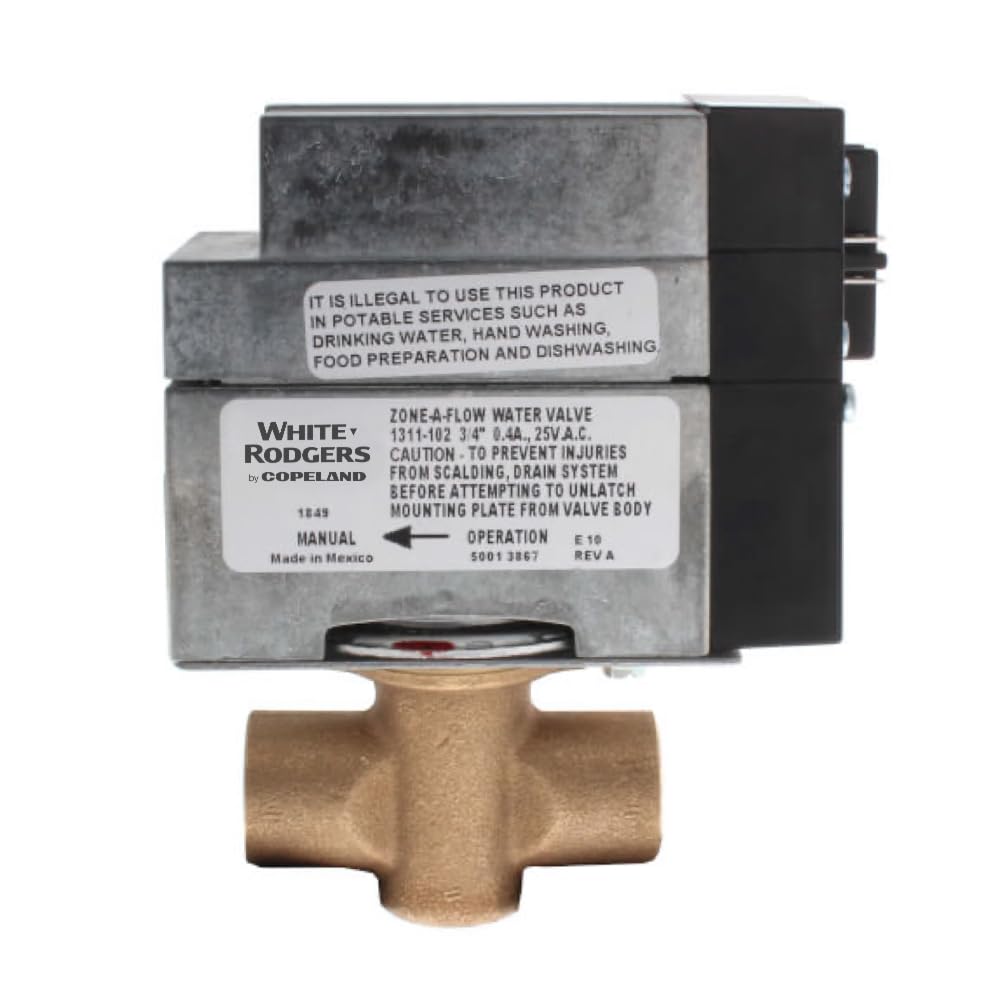
Fifty PSI of headroom for loops that push a strong pump.
Most residential zone valves shut against 15 or 30 psi. This White-Rodgers piece is rated to a maximum system pressure of 50 PSI, which makes it the safer fit on a hot-water loop that runs a higher static pressure or a beefier circulator. It is a 3-wire hydronic valve for 0.75-inch tubing (I.D.), so it goes on a standard 3/4-inch sweat line.
The feature that saves an extra part is the built-in auxiliary contacts that control a burner or circulator relay. Instead of wiring a separate end switch to start the pump, the valve handles it internally. It also has an automatic recycling manual operator that shows valve position at all times, so you can eyeball whether the zone is open without guessing. The stem is stainless steel, which is the material that resists scale and keeps the travel smooth over years.
Feedback lands on the basics: it works, it installs easily, and it fits exactly like the old valve it replaces. Buyers treat it as a straight swap rather than a project. The honest note is weight — at 2.5 pounds it is the heaviest piece on this list, so support the pipe while you solder rather than letting the joint carry the valve.
Hot water control: the 50 PSI rating plus the built-in auxiliary contacts mean fewer separate parts and more tolerance for a strong pump.
Wiring diagram needed: it uses a 3-wire configuration, so confirm your control wiring matches before you commit — it is not a straight two-wire drop-in for every thermostat setup.
simple zone control: higher-pressure residential boiler loops that also want the circulator started by the valve itself.
newer model preferred: your system is a simple two-wire thermostat circuit and you want the lowest-fuss wiring.
5. Honeywell V8043E1020 Valve, Zone, 1″, 3.5 Cv
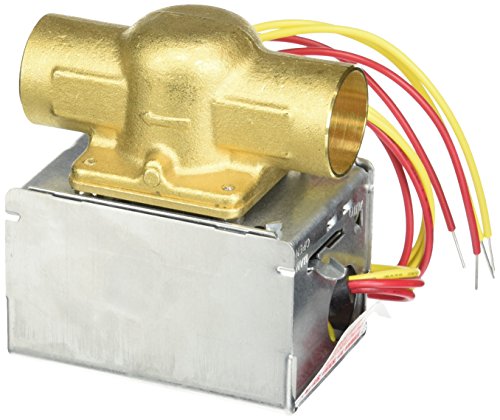
The one to buy when your main is an inch, not three-quarters.
Here is a spec most buyers overlook: a 3/4-inch valve will not fit a 1-inch main without a reducer, and a reducer adds a joint that can leak. The Honeywell V8043E1020 is a 1-inch sweat, two-way, 24-volt zone valve with 3.5 Cv, so it drops onto a larger supply line the way the 3/4-inch picks cannot. If your boiler header is 1 inch and feeds several zones, this is the valve that matches the pipe instead of forcing an adapter.
It carries the same 3.5 Cv flow rating as the 3/4-inch Honeywell above, so the capacity is familiar — the difference is purely the inlet diameter. That makes it the right buy for the homeowner whose loop was plumbed with 1-inch copper from the start. It is a two-way, normally closed body, so it holds the zone off until the thermostat calls.
Treat this as a fit-critical purchase rather than a versatile one: the 1-inch connection is its entire reason to exist, and it is wasted on a 3/4-inch line. Measure the outside of your pipe before you order, because returning a soldered valve after the torch has touched it is not an option. For the right 1-inch system, it is the cleanest match on this list.
larger zone coverage: your boiler loop runs 1-inch copper and you want a matching 3.5 Cv body with no reducer.
small loop installs: you have 3/4-inch pipe — that job belongs to the V8043F1036 or the Valemo sweat valve.
6. Erie VT2317G13A02A 3/4″ Sweat Zone Valve
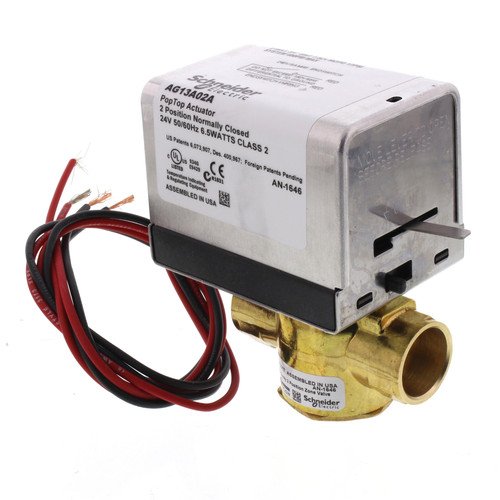
A PopTop head that pops off for service without touching the solder joint.
The Erie VT2317G13A02A is built around a removable and replaceable actuator — the PopTop design — so the motor and spring assembly can come off the body when it fails. That is the repair you actually do on a zone valve, and doing it without breaking the sweat joint is the reason to pick this one. It is electric-driven with a spring return, so it fails toward a known position rather than sitting wherever it stopped.
Connection choices here are broad for the category: the valve accepts NPT, sweat, or inverted flare connections, which means one body design can cover whichever fitting your loop already uses. It also carries a maximum operating pressure of 15 psi, the lowest rating on this list. Contrast that with the Valemo V2323-A1S at 30 psi — see the comparison table — and you can see the Erie is aimed at lower-pressure residential loops rather than high-head systems.
The end switch is included on the 24-volt version, so your circulator still gets its signal. The trade-off is that 15 psi ceiling: on a loop with a strong pump or high static pressure, it has less headroom than the White-Rodgers 1311-102 at 50 psi. Match the valve to your system pressure and this becomes a quietly competent, service-friendly choice.
PopTop service head: the replaceable actuator is the standout, and spring return keeps the valve predictable on power loss.
Plastic gear wear: 15 psi close-off is modest, so high-pressure loops should look elsewhere in this list.
easy head removal: a standard-pressure boiler loop where you value swapping the head over cutting into the pipe.
metal body wanted: your system runs high static pressure — the 50 PSI White-Rodgers is the safer call.
7. V2323-A1S Motorized Zone Valve

Threads straight onto NPT pipe — no torch, no solder, no swearing.
If your old valve screwed onto a threaded fitting, the V2323-A1S is the no-torch replacement. It uses a 3/4-inch threaded NPT connection on both inlet and outlet, so it spins onto the existing male fittings instead of requiring a sweat joint. That matters most on a Sunday repair, where threading onto an existing NPT fitting instead of soldering is the difference between heat tonight and a call Monday.
It shares the V2313-A1S below it in build: stainless steel housing, aluminum cover, a heavy-duty motor with all-metal gears, and the FastFit quick-release head. The forged brass body is rated 3.5 Cv at a maximum operating pressure of 30 psi — again, double the Erie’s 15 psi ceiling — with a 24 VAC, 50/60 Hz coil and a 24V, 2A end switch. It is UL-listed too, the safety certification worth having on a valve switching boiler water.
You can also run it without end-switch feedback by simply leaving those two wires unconnected, which makes it flexible on older systems that just need the valve to open and close. The honest limit is that this is a threaded-only body: it will not sweat onto copper, so the pipe has to already be threaded. For that exact job, nothing on this list fits more directly.
quick thread mount: threaded NPT pipe on a standard-pressure loop that wants a serviceable all-metal head.
sweat connection users: your pipe is bare copper — you want the sweat V2313-A1S instead.
8. White-Rodgers F84-0433 3/4″ Zone Valve Assembly
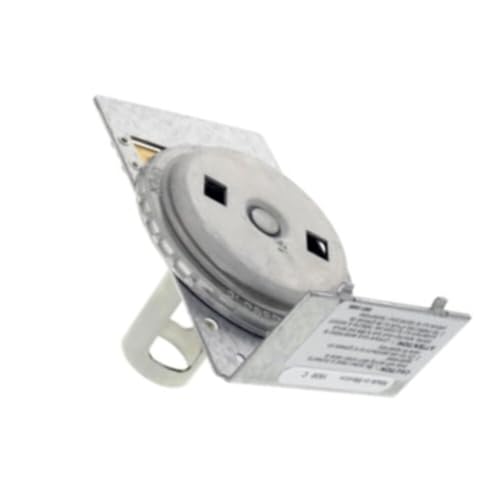
A light threaded body for tight boiler closets and quick swaps.
At 6.4 ounces, this White-Rodgers assembly is the featherweight of the group — the Honeywell V8043F1036 above is a comparatively hefty 16 ounces. That difference matters when you are holding a valve in one hand over a cramped boiler closet while threading it on with the other. The stainless steel exterior finish holds up against the damp air that hangs around a boiler, and the threaded 0.75-inch inlet is a spin-on fit rather than a solder joint.
It is a two-port, two-way zone valve body, so it does the one job a boiler zone needs: open the loop on a heat call and close it when the call ends. The metal construction is built to sit in the heat and stay put. Because it is threaded, it suits a retrofit where the old fitting is already on the pipe and you want to avoid a torch entirely.
The catch is that threaded fittings are less common than sweat on new residential loops, so check your pipe before you commit — this is a fit-first purchase, not a universal one. If you are replacing an existing threaded White-Rodgers body, this is the clean, light direct swap.
complete valve kit: a threaded 3/4-inch boiler loop where a light, stainless body makes the swap easier.
parts-only buyers: that your pipe is threaded NPT — a sweat-only system will send you back to the Valemo or Honeywell sweat valves.
9. Anrain for Honeywell V8043e1012 Zone Valve

The budget like-for-like that fits where a failed V8043 valve came out.
If your boiler stalled on a failed Honeywell V8043 valve and the budget is tight, this Anrain replacement is aimed at exactly that slot. It is a 3/4-inch sweat, two-way, normally closed body with two-wire thermostat control and an end switch, so it maps onto a standard heat zone. The solid brass body resists deformation and oxidation, and the connection comes as 18-inch leads rather than a terminal block, which gives you slack to reach the junction.
The service steps are home-mechanic friendly: you can replace the powerhead without damaging the pipe connections or draining the system, and you can swap the actuator motor without disassembling the valve body. There is a manual opener too, for moving the valve by hand when the power is out. The powerhead swap is as simple as a screwdriver, with no disassembly of the sweat joint required.
What buyers respond to is the value — it is the most affordable sweat replacement here and lands as a cost-effective way to fix a failed zone without paying premium-tier money. The honest trade-off is reliability feedback, which is mixed: some units report long-term stability, others do not, so buy from a seller with a clean return window and test the valve through a heat cycle before you button up the panel. Compared with the bulkier 3.5 x 2.37 x 4 inch body dimensions, this housing is the compact footprint many tight closets prefer.
Aftermarket savings
- Affordable like-for-like drop-in for a failed Honeywell V8043 loop
- Powerhead and actuator motor both replaceable without draining the system
- Manual opener keeps the zone flowing through a power outage
- 18-inch leads give extra reach to the junction box
Fitment variance
- Reliability feedback runs mixed — treat the return window as part of the purchase
- Sweat connection still needs solder and a torch to install
- Not the premium-brand track record of the Honeywell it copies
cheaper Honeywell swap: a tight-budget repair of a Honeywell V8043 loop where a serviceable sweat valve at entry-level cost is the goal.
OEM exact match: you want the longest service history — the Honeywell picks carry more of a track record.
Know the Specs
Connection Type: Sweat vs Threaded NPT
A sweat connection is a socket you slide copper pipe into and solder — leak-tight and standard on most residential boiler loops. A threaded NPT connection (National Pipe Tapered) screws onto a male fitting with no torch needed. Match the connection to what is already on your pipe; adapting between the two adds joints that can leak and minutes to the job.
Cv Flow Rating and Close-Off Pressure
Cv measures how much water the valve passes at a given pressure drop; a 3.5 Cv rating is the common figure on 3/4-inch residential valves and feeds a typical radiator zone. Close-off pressure in psi tells you the pressure the valve can shut against when the pump is running — 15 psi is modest, 30 psi is standard, 50 psi gives headroom for higher-pressure loops.
The End Switch and Your Circulator
An end switch is a pair of contacts that close when the valve is fully open and tell the circulator pump to start. Four-wire valves include it; two-wire valves do not. If your old valve had a pump-start wire, buy a valve with an end switch — or your pump may sit waiting while the valve opens and nothing moves the water.
Normally Closed vs Normally Open
Normally closed means the valve sits shut until the thermostat calls for heat and opens on power. That is the standard for most boiler zones, because it fails safe by keeping the zone off. Normally open is used in specific loops where you want flow by default; the boiler picks on this list are normally closed, which is what most homes expect.
Common Questions
Will a 3/4-inch zone valve fit my boiler loop?
Do I need a valve with an end switch?
Why does my zone valve hum or buzz?
Can I replace the motor without draining the boiler?
What voltage do boiler zone valves run on?
Is sweat better than threaded for a zone valve?
What does close-off pressure in psi mean for my system?
How do I know if my zone valve is failing?
Can I use a normally open valve where my old one was normally closed?
What is Cv and why does 3.5 Cv keep coming up?
The Bottom Line
For most homes, the zone valves for boilers winner is the Honeywell V8043F1036 because it gives you a four-wire end switch, a 3.5 Cv body, and a power head you can lift off without draining the loop — the repair that actually happens on a zone valve. If quiet bedrooms matter more than anything, reach for the Taco T571-2 and its silent heat motor. And if your pipe is threaded rather than sweat, the Valemo V2323-A1S spins on without a torch and carries a 30 psi close-off. Match the connection type, the wire count, and the close-off psi to your own loop, and any of these will keep the heat where it belongs.
How we choose
We do not accept paid placement. Every pick is matched to a real buyer and a real use-case; we do not hands-on test units.
Sources
Specifications: manufacturer listings and product documentation. Review insights: verified customer reviews, as of November 2026. Pricing: not shown on this page (it changes often); check the current price via the retailer link.
As an Amazon Associate, Tactical Gear Guy earns from qualifying purchases. This does not affect which products we feature.