Specs are compiled from manufacturer listings and verified buyer reviews and can change over time — please confirm the key details on the product page before buying.
You want a phone that vanishes into a coin pocket, not another slab that fights your hand for space. The catch is that most tiny phones sold today run on 3G networks that carriers have already shut down, so a miniature handset can look perfect in the photos and still fail to make a call. This guide separates the ones that connect reliably from the ones that belong in a drawer, and it names the palm-sized standouts that actually work as a backup or first phone.
This guide is built by comparing the manufacturers’ published specifications and the patterns across verified customer reviews, so you get each pick’s real strengths and trade-offs instead of marketing spin.
We walk through carrier compatibility, battery capacity, and real-world reliability on the smallest handsets sold, so you can pick a miniature phone that still earns its place in your pocket. Read on for the full world smallest phone shortlist.
Top Picks


How To Choose The Best World Smallest Phone
The first thing to understand is that “smallest” and “usable” pull against each other. A 2.5-inch screen saves space but shrinks the keyboard and the battery bay at the same time. The right mini phone keeps the features you actually need working at a size your hand tolerates.
Start with the network, not the size
A lot of the tiniest handsets on the market only talk to a 3G network. If your carrier has moved on to 4G, that phone becomes a tiny paperweight. A 4G mini phone (fourth-generation cellular, the standard most networks now run on) can still place calls and load data wherever you travel. Check the band list against your own carrier before anything else.
Carrier locks matter just as much. Some mini phones are built only for specific networks, so a model that works beautifully on one service may refuse another entirely. A phone that lists its supported bands explicitly, including the 4G ones, is the safer bet.
Read battery capacity in milliamp-hours
Battery capacity is measured in milliamp-hours (mAh), a simple count of how much charge the cell holds. A 900 mAh cell in a mini phone drains fast under even light use, while a 2600 mAh cell gives you a genuine day. Because the screen is small, modest cells can still stretch, but bigger numbers here mean fewer charger hunts.
Decide how “smart” you need it to be
RAM (random-access memory, the short-term workspace apps run in) dictates whether a phone multitasks or stutters. A 1GB mini phone is a calls-and-texts tool, while an 8GB model handles real apps without complaint. Storage works the same way: 8GB fills up after a few dozen photos, while 256GB leaves room for a whole library.
Weigh the extras that make it livable
Face recognition, a headphone jack, dual SIM slots, and expandable storage all matter on a phone this small because you cannot add most of them later. A rugged rating such as IP68 (a standard that certifies resistance to dust and to immersion in water) is worth having if the phone rides in a bag or a pocket full of keys.
Side-by-Side Comparison
| Model | Best For | Network | Battery | Memory / Storage | Amazon |
|---|---|---|---|---|---|
| Unihertz Jelly Star★ Best Overall | Best overall for real apps | 4G | 2000 mAh | 8GB / 256GB | Amazon |
| Palm Phone PVG100Pocket-Size Pick | Pocket-size with full phone feel | 2G/3G/4G | — | 32GB | Amazon |
| IBOZOU 4G Mini PhoneBest for Travel | Long trips and outdoor backup | 4G | 2600 mAh | 3GB / 32GB | Amazon |
| Ulefone Armor Mini 5 | Rugged and distraction-light | 4G | 2500 mAh | 1GB / 8GB | Amazon |
| 3G Mini Smartphone 3.88-Inch | Kids’ first device | 3G | 900 mAh | 2GB / 16GB | Amazon |
| BLKE Max 3.0-Inch Mini | Gift-ready starter phone | 3G | 2000 | 2GB / 16GB | Amazon |
| XS11 Ultra-Thin Mini | Wallet-slim backup | 3G | 1000 mAh | 1GB / 8GB | Amazon |
| Pdfbenli Kids Mini Phone | Parents wanting GPS + video calls | 2G | 2800 mAh | 128GB expandable | Amazon |
| Sudroid 2.5-Inch Mini | Featherweight wallet pick | 3G | 1000 mAh | — | Amazon |
Detailed Reviews
1. Unihertz Jelly Star
Our pick — 4.0+★ from 400+ verified ratings; the strongest balance of quality and price.
The pocket phone that actually runs full Android apps without wheezing.
Here is the number that decides everything: 8GB of RAM and 256GB of storage in a body with a 3-inch display. That is the same memory loadout you would expect from a normal-size handset, squeezed into a phone you close your fist around. Against the XS11’s 1GB of RAM and 8GB of storage, the Jelly Star holds a storage advantage of a 32x gap and an 8x lead on memory — so apps open instead of stalling.
The power behind that comes from an octa-core MediaTek Helio G99 chip and Android 13, plus a 2000 mAh battery. You get NFC for tap-to-pay, a fingerprint reader, dual Nano SIM slots, a 3.5mm headphone jack, an infrared port, and a programmable button. The transparent back panel lights up for notifications, which is the detail that wins people over — this is the most fun you can have with a phone this small.
What buyers mention most is simply how much they enjoy using it, and connectivity ranks right behind. The 4G radio keeps calls and data moving, though the network list is narrow: T-Mobile and Verizon only, and Verizon setup needs a support step. The camera draws mixed reactions, and the small screen is a love-it-or-leave-it proposition. A few screens have reportedly arrived cracked, so handle the glass with respect.
What it gets right
- 8GB RAM and 256GB storage let it run real apps, not just calls
- 4G connectivity with NFC, fingerprint open up, and a 3.5mm jack
- Transparent back with a dynamic LED notification light
- Octa-core Helio G99 processor on Android 13
Where it asks for patience
- Works only on T-Mobile and Verizon networks
- 2000 mAh cell and a 3-inch screen trade battery and typing room
- Camera quality and screen durability draw mixed reports
The one to buy: this is the mini phone for anyone who wants a true pocket handset that still installs and runs everyday apps.
Check the network first: if your carrier is not T-Mobile or Verizon, this pick is off the table before size even matters.
2. Palm Phone PVG100
A renewed classic that slips into a wallet but still behaves like a full phone.
The Palm PVG100 gives you a 3.3-inch display and 32GB of storage in a handset small enough that people forget it is there. It carries 2G, 3G, and 4G cellular support, plus Wi-Fi and a fingerprint reader. That trio of network support makes it one of the more flexible tiny options on this list, which matters if you switch carriers or travel.
The standout spec is the camera pairing: an 8MP front sensor and a rear setup, with 30 fps video. For a phone this small, that front sensor is unusually generous — selfies and video calls stay usable. There is also a 3.5mm headphone jack, so you can plug in a wired set without an adapter.
What stands out to owners is how it looks and how it carries. It fits in pockets and wallets without a bulge, and the size reads as a full phone experience rather than a toy. The honest trade-off is that it is a renewed unit, so cosmetic wear is possible, and it charges over Micro USB rather than the newer Type-C standard — keep a cable handy. As a secondary or backup device, though, it earns its keep.
The renewed reality: this is a refurbished phone, so you may see light handling marks, but it still brings a 3.3-inch screen and 32GB of storage at a price that matches its condition.
Reach for this if… you want a small phone that behaves like a large one and you do not mind a refurbished unit.
Look elsewhere if… you refuse to carry a Micro USB cable in a world of Type-C chargers.
3. IBOZOU 4G Mini Phone
The tiny handset built for a backpack — bigger battery, full 4G band list.
Most mini phones make you trade battery for size. This one carries a 2600 mAh cell, and it is the largest battery among the 3-inch 4G options here. The phone body measures just 94 x 47.4 x 12.5mm, so it disappears into a cycling jersey or a hiking pack while still holding a charge long enough to be useful.
The network coverage is where it separates itself. It lists 2G, 3G, and a wide spread of 4G FDD-LTE and TDD-LTE bands, including B1, B3, B5, B7, B8, B20, B28, and the TDD band range. That band list is broader than most tiny phones publish, so it stands a better chance of working on the network you actually use.
You get a 3.0-inch HD screen, dual SIM standby, face open up, a 3.5mm headphone jack, and up to 128GB of expandable storage. The size is what people praise most — it really is business-card small in the hand. The catch is battery life: the 2600 mAh cell does not always stretch a full day under steady use, and Wi-Fi connectivity draws mixed notes. Treat it as a backup you top up nightly, not a daily driver.
Who it is built for: weekend cyclists, hikers, and travelers who want a working phone that adds no weight — this is the smallest phone that still takes a full SIM.
The real-world catch: plan on a nightly charge, and confirm your carrier’s network bands before you rely on it far from home.
Made for the trail: pack this if you want a featherweight 4G phone with the broadest band support in this roundup.
Not your daily driver: the battery does not always last a full day, so keep a charger in the bag.
4. Ulefone Armor Mini 5
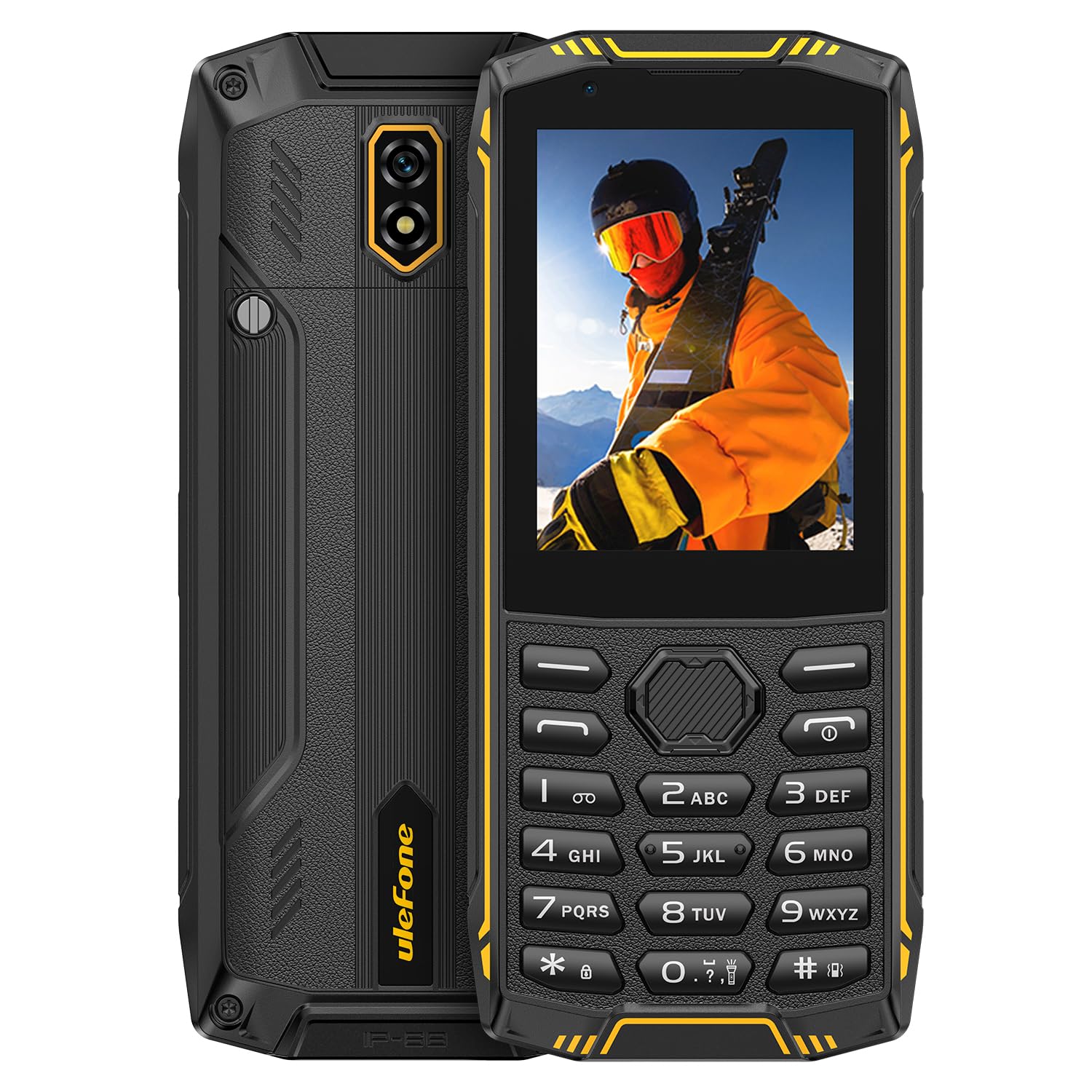
A mini phone that shrugs off water, dust, and a drop onto concrete.
This is the durable outlier in the group. It carries IP68 and IP69K ratings (water and dust resistance proven to survive submersion and high-pressure washdown) plus MIL-STD-810H compliance, a standard that tests gear against shocks, vibration, and temperature swings. If your phone rides in a bag with tools or lives in the rain, this build matters more than screen size.
The 2.8-inch touchscreen is small, but a 2500 mAh battery is removable — a rarity, and a smart one. Ulefone rates it at 12 days of moderate use, 311 hours of standby, and 11 hours of talk time. It also connects over 4G with 2.4G and 5G dual-band Wi-Fi, and it has WhatsApp pre-loaded alongside a 3.5mm headphone jack and dual cameras.
Know the limits before you buy. It ships with 1GB of RAM and 8GB of storage, and it is a Google-free phone — no Google Play Store, though you can sideload apps through a browser, F-Droid, or the Aurora Store. It does not support AT&T or Cricket. For basic calls, texts, and lightweight WhatsApp, that is fine; for heavy apps, it is not built for it.
The trade-off to accept: this is a distraction-light phone by design — no app store clutter, no heavy multitasking, just calls, messages, and a handful of sideloaded tools.
Built to survive: IP68, IP69K, and MIL-STD-810H mean it handles water and knocks that would retire a glass-bodied mini.
Pick this one when: the phone needs to survive the job site, the trail, or a kid’s backpack and heavy apps are not on the menu.
Bypass it when: you need the Google Play Store or run more than one demanding app.
5. 3G Mini Smartphone 3.88-Inch

The largest screen in this mini class, aimed square at first-time users.
At 3.88 inches, this is the biggest display on the list — 55% larger than the 2.5-inch XS11 — which matters when small hands are learning to type. Its 384 x 854 LCD keeps text readable on the compact frame.
Inside it carries 2GB of RAM and 16GB of storage, dual SIM slots, expandable memory, and face recognition open up. The 900 mAh cell is rated at 72 hours of average use, enough to sit in a school bag between charges. The styling draws the most praise — this is a genuinely cute device for a child or student.
Now the honest part: the small battery is the weak point, and reliability draws mixed reports, with some units malfunctioning over time. Parents who want a simple first phone for calls and photos often love it; buyers expecting full smartphone performance will not. Treat it as a starter device, not a main handset.
Why parents reach for it: the larger 3.88-inch screen and face open up make it friendlier for young users than the fingertip-sized options.
Best for a first phone: a kid or student who needs calls, photos, and a screen they can actually see.
Skip if you need apps: the 16GB of storage and small battery will not carry a demanding user through the day.
6. BLKE Max 3.0-Inch Mini Smartphone

A palm-sized gift phone that kids take to without a learning curve.
The BLKE Max measures 3.54 inches long and 1.97 inches wide, so it fits a pocket, a purse, or a small gift box. It runs Android 9 on a quad-core processor with 2GB of RAM and 16GB of storage, and it supports 2G and 3G networks, including GSM 850/900/1800/1900 and WCDMA bands B1, B2, B5, and B8.
It carries a 3MP front camera and a 5MP rear lens, plus face recognition for open up. Memory-card expansion holds more photos and music, and it charges over Type-C. Its 3.54-inch body fits small hands and pockets, and kids take to it without a learning curve.
The honest caveat is connectivity — 2G and 3G networks limit what the phone can do, so it may not behave like a full cellphone for data-heavy tasks. Download apps over Wi-Fi. It is a joy as a first phone or gift, and a poor stand-in for a full-featured handset.
What makes it a gift
- 3.54-inch length fits small hands and pockets
- 2GB RAM and 16GB storage with card expansion
- 3MP front and 5MP rear cameras with face open up
- Type-C charging for one-cable living
What to expect
- 2G and 3G networks limit data-heavy use
- Android 9 is an older platform
A fun starter phone: ideal for a first handset or a gift where calls and photos do the heavy lifting.
Not for power users: 2G and 3G connectivity means you should plan on Wi-Fi for app installs.
7. XS11 Ultra-Thin Mini Smartphone

Thin enough to vanish in a wallet, built as a connectivity spare.
This phone is defined by sheer portability: a 2.5-inch screen packed into a 4 x 0.85 x 0.4 inch body that weighs 0.12 lb. That is genuinely card-pocket territory, and it is the whole reason to consider it. It runs Android 6.0 with 1GB of RAM and 8GB of storage, expandable up to 64GB via micro SD card.
The camera pairing is a 0.3MP front and 2MP rear, and a 1000 mAh battery carries it through daily backup duty. Face recognition, Wi-Fi, Bluetooth, an MP3 player, and dual SMS work round it out. It connects over 3G WCDMA, so verify your carrier still supports that band before relying on it.
Compared with the Jelly Star’s 8GB of RAM and 256GB of storage, this one lands at 1GB and 8GB — a clear reminder of what the extra spend buys. It is best seen as a featherweight spare for calls, texts, and music, not a device to run modern apps on.
Where it wins: nothing else here is this thin and this light — 0.12 lb slides into a wallet without a lump.
Where it stops: Android 6.0 and 1GB of RAM keep it firmly in backup-phone territory.
For the true minimalist: carry it as a spare talk-and-text device that adds almost nothing to your pocket.
Think twice if: you want to run current apps, because Android 6.0 and 1GB of RAM will not keep up.
8. Pdfbenli Kids Mini Phone

The biggest battery in this roundup, wrapped in a body smaller than a bank card.
Battery capacity is where this one runs away: a 2800 mAh cell, the largest of any phone here and more than triple the 900 mAh cell of the 3.88-inch model. USB Type-C charging that the maker says fills the cell in 1 hour, plus 27-hour standby, keeps it alive through a school day.
The rest of the spec sheet is generous for the size. A 3.7-inch OLED HD screen, a quad-core processor on Android 10, an 8MP rear camera with 1080p video, a 2MP front camera, face recognition, GPS, and dual SIM slots. Storage expands up to 128GB via a TF card, and it runs apps like TikTok and Chrome over 2G connectivity.
Here is the honest catch. It is a 2G phone, so data-heavy use is limited and video calls depend on Wi-Fi. Reliability draws mixed reports, with some units proving sturdy and others faltering over time. As a first phone for a child — where GPS location and video calling to a parent are the point — it covers the essentials well.
Why it suits a child: the 3.7-inch eye-protection screen is sized for small hands and single-handed use, and the 2800 mAh battery outlasts every other mini here.
The parental pick: choose it if you want GPS, video calls, and the longest battery life on the list for a young user.
The trade-off: 2G connectivity limits apps, so plan on Wi-Fi for anything data-hungry.
9. Sudroid 2.5-Inch Mini Smartphone

The 1.8 oz handset you forget is even in your pocket.
At 1.8 oz, this is the lightest phone on the list — light enough that you will pat your pocket to check it is still there. The 2.5-inch screen fits a palm or a wallet, and the single-hand operation is the whole appeal: one thumb reaches every corner. It runs on a 3G network with Bluetooth, USB, and Wi-Fi, and it takes a USB Type-C cable.
Inside there is a 1000 mAh battery, a front camera, face recognition, a 480 x 320 resolution display, and a 4:3 aspect ratio. It ships with a case, screen protector, SIM tool, and USB cable, so you are ready the moment it arrives.
What it is not: a full smartphone. It is a 3G phone built for calls, basic apps, and a backup role — verify your carrier still runs a 3G network before you count on it. For a minimal, featherweight spare that disappears in a wallet, it does the job without complaint.
The lightest of the lot: 1.8 oz makes it a genuine pocket-afterthought — the phone you carry when you want the smallest possible footprint.
For the absolute minimalist: pick it if a 1.8 oz backup that fits a wallet is exactly what you want.
Mind the limits: a 3G network and 1000 mAh battery keep it out of daily-driver duty.
Know the Specs
Battery capacity in mAh
Milliamp-hours (mAh) count how much charge a phone’s battery holds. A 900 mAh cell drains quickly, while a 2800 mAh cell carries a child through a school day. Higher mAh ratings mean fewer trips to the charger.
Networks: 2G, 3G, and 4G
2G and 3G are older cellular standards that carry calls and light data; 4G is the faster standard most networks now run on. A 4G mini phone keeps working as older networks retire, so check the band list against your carrier.
RAM and storage
RAM is the short-term workspace apps run in, and storage holds your photos and downloads. A 1GB/8GB phone is a calls-and-texts tool, while an 8GB/256GB mini runs real apps without stalling.
IP and MIL-STD ratings
IP68 and IP69K certify a phone against dust and water, including submersion and high-pressure washdown. MIL-STD-810H tests gear against shocks, vibration, and temperature extremes — useful if the phone lives in a bag or on a job site.
Common Questions
Will a 3G mini phone still work on my carrier?
Can the Unihertz Jelly Star run normal Android apps?
What does the battery rating in mAh actually tell me?
Is a mini phone small enough to fit in a wallet?
Do these mini phones support dual SIM cards?
Which mini phone is best for a child?
Can I expand the storage on a mini phone?
Does the Ulefone Armor Mini 5 have the Google Play Store?
Are mini phones water resistant?
Do I lose real phone features by going this small?
The Bottom Line
For most people hunting the world smallest phone, the winner is the Unihertz Jelly Star because it pairs 8GB of RAM and 256GB of storage with 4G on Android 13 — a tiny phone that still runs real apps. If you want a full-size phone experience in a wallet-sized body, grab the Palm Phone PVG100. And for the longest battery life in the smallest shell, the Pdfbenli Kids Mini Phone is the one to reach for. Any of these beats a 3G-only relic that dies when your carrier retires the standard.
How we choose
We do not accept paid placement. Every pick is matched to a real buyer and a real use-case; we do not hands-on test units.
Sources
Specifications: manufacturer listings and product documentation. Review insights: verified customer reviews, as of November 2026. Pricing: not shown on this page (it changes often); check the current price via the retailer link.
As an Amazon Associate, Tactical Gear Guy earns from qualifying purchases. This does not affect which products we feature.