Specs are compiled from manufacturer listings and verified buyer reviews and can change over time — please confirm the key details on the product page before buying.
Most people buy a bug zapper light, hang it up, and then wonder why the mosquitoes still find their ankles. What actually matters is the UV bulb that lures insects, the grid voltage that kills them, and the square footage the light covers.
This guide is built by comparing the manufacturers’ published specifications and the patterns across verified customer reviews, so you get each pick’s real strengths and trade-offs instead of marketing spin.
The picks below range from a heavy-duty acre-covering unit to cordless solar models you can carry to a campsite, and each one is matched to the yard or room it suits best. Here is my working shortlist of the best bug zapper light options for patios, porches, garages, and tents this season.
Top Picks


How To Choose The Best Bug Zapper Light
A bug zapper light does two jobs at once — it glows to pull flying insects toward it, then kills them when they touch a charged metal grid. Match those two jobs to your actual space rather than collecting every feature on the box.
Start with coverage, not wattage
The coverage number tells you how much ground the light is built to protect. A small patio model rated around 1500 square feet suits a deck or a garage corner, while an acre-rated unit is meant for open yards where insects blow in from the tree line.
The UV bulb is the bait
Flying insects are drawn to ultraviolet light, which is why every zapper here uses a UV or blue-violet tube. A higher-watt bulb generally throws that attractant further, and dual-spectrum designs (regular UV plus black UV) aim to pull in a wider mix of flies, gnats, and moths.
Voltage decides the outcome
Once a bug touches the grid, the voltage across that grid does the work. Grids in this group run from 4000V up to 5600V, and the higher-charge models are the ones buyers describe as dropping insects on first contact rather than stunning them.
Where it hangs and how it cleans
Check three practical things: the length of the power cord, whether the housing is IPX4 or IPX5 rated (the splash-resistance grade that lets it survive rain), and whether the dead-bug tray pulls out or twists off for emptying. An awkward-to-clean zapper gets left dirty, and a dirty grid loses its charge.
Side-by-Side Comparison
| Model | Best For | Grid Voltage | Coverage | Power Source | Amazon |
|---|---|---|---|---|---|
| Flowtron Bug Zapper BK-40D★ Best Overall | Large yards and heavy mosquito seasons | 5600V | 1 Acre | Plug-in AC | Amazon |
| AMUFER Bug Zapper 18WMost Versatile | Balcony, patio, and open-bottom easy cleanup | 4000V | 1/2–1 Acre | Plug-in AC | Amazon |
| Zwiran Solar Bug ZapperOff-Grid Pick | Camping and spots with no outlet | 4500V | 1/2 Acre | Solar + rechargeable | Amazon |
| REOGLE Smart Sensor Zapper | Set-and-forget porch lighting | 4000V | 2100 sq ft | Plug-in AC | Amazon |
| GeckoMan Light Sensor Zapper | Dusk-to-dawn automatic control | 4200V | — | Plug-in AC | Amazon |
| LUOJIBIE Remote Control Zapper | Patio with remote on/off convenience | 4200V | 1500 sq ft | Plug-in AC | Amazon |
| DASDXU Upgraded Bug Zapper | Low running cost over a half acre | 4200V | 1/2 Acre | Plug-in AC | Amazon |
| snanlen 4200V Bug Zapper | Budget patio coverage with long cord | 4200V | 1500 sq ft | Plug-in AC | Amazon |
| Raindot 15W Bug Zapper | Entry-level indoor and deck use | 4200V | — | Plug-in AC | Amazon |
Detailed Reviews
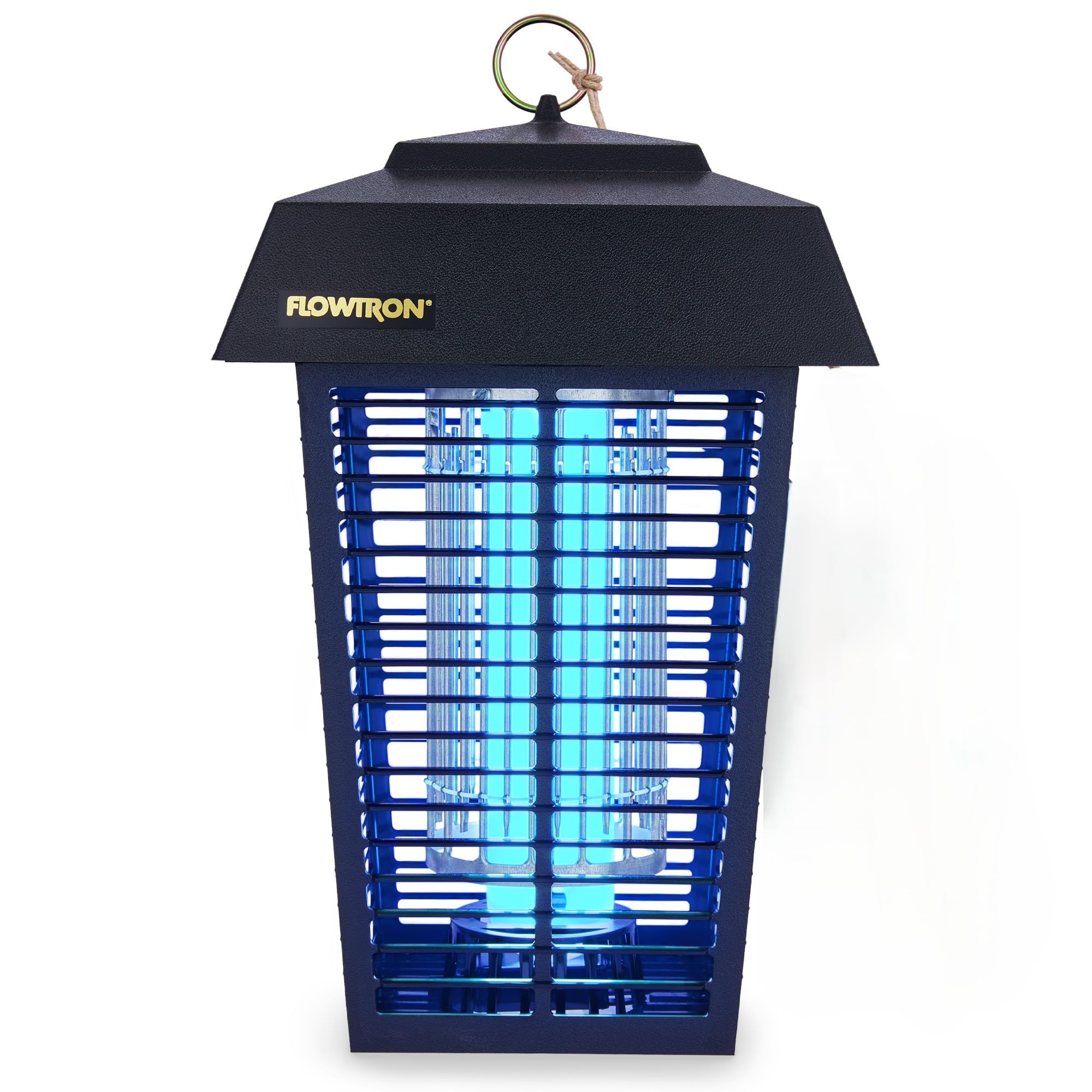
1. Flowtron Bug Zapper, 1 Acre Outdoor, 40W UV Bulb, 5600V
Our pick — 4.5+★ from 800+ verified ratings; the strongest balance of quality and price.
The heavy hitter that guards a whole acre on a 40W bulb and a 5600V grid.
If your yard backs onto trees, a ditch, or open field, this is the one to look at first. The Flowtron runs a 40W UV bulb — a stronger lure than the 15W tubes on the compact models here — and pairs it with a 5600V grid, the highest charge in this group. For context, that 5600V sits well above the 4000V on the REOGLE below, which is the kind of gap you feel when bigger insects hit the grid instead of skirting it.
What wins people over is raw effectiveness, and there is a lot of it. The attractant draws insects in from a distance, which is exactly what an acre rating is supposed to mean, and the bright light does double duty as a landmark on a dark lawn. The Octenol attractant is the extra nudge — a chemical lure that mimics the kind of scent that pulls mosquitoes toward a host.
Plan to hang this one and leave it there, because it is an outdoor appliance, not a bedroom gadget. At 5.3 pounds, a hook or bracket makes more sense than moving it every night. The zapping noise splits the review pages right down the middle — some people love the sound of the night’s work, others find it intrusive near a window. The bulb is the wear item, so treat a spare as part of the routine.
What earns it the top spot
- 5600V grid — the strongest charge here, so contact ends the insect rather than stunning it
- 40W UV bulb throws a wider attractant than the 15W models in this list
- Rated to guard a full acre, which suits a yard with a tree line or field behind it
- Octenol attractant adds a scent lure on top of the light
Where it asks for patience
- 5.3 pounds means you mount it and leave it there
- The zap is loud enough to divide opinion near open windows
- Bulb replacement is a running cost, and the bulb is the part that wears
Made for: anyone with a big open yard who wants one unit to do serious work and can mount it out of earshot.
Think it over if: you need quiet, or you plan to move the zapper between rooms and porch every evening.
2. AMUFER Bug Zapper 18W
Cleanup is the whole story here — the open bottom lets the bug drop straight to the grass.
Emptying a dead-bug tray is the chore that makes people abandon a zapper by July, and AMUFER skips the tray entirely. The bottom is open, so insects that hit the 4000V grid fall straight to the ground instead of collecting inside. Over a full summer, that open bottom means you rarely think about the zapper at all.
Insects get drawn in by an 18W blue-violet bulb with a 2W LED alongside it. The wavelength runs from 330nm to 420nm (nanometers, the measure of light color) — the swath of ultraviolet that flying insects respond to. AMUFER rates the coverage at 1/2 to 1 acre, so a large yard or patio stays covered. Compare that to the snanlen below, rated for 1500 square feet: the AMUFER is in a different class of coverage, which is why it belongs in the upper half of this list rather than the budget end.
It also happens to be light, at 1.9 pounds, so a hook on a porch beam or a stand will hold it without fuss. The honest limit is the noise — the zap itself is the sound of it working, and households split on whether that is satisfying or annoying after dark. If you have a window right beside the hanging spot, hang it further out.
Why it climbs high: an 18W attractant bulb, a 1/2-to-1-acre rating, and no collection tray to empty — three things that matter more than cosmetic shell design.
The honest trade-off: zapping is audible, so it is a poor fit directly outside a bedroom window.
Reach for this if: you want coverage that reaches across a yard and you hate cleaning zappers.
Look elsewhere if: the unit has to hang right beside an open window you sleep next to.
3. Zwiran Solar Bug Zapper Outdoor, 4500V, Cordless
No outlet, no problem — a 4500V grid that charges in the sun and runs all night.
You can leave the extension cord at home, because this is the one zapper here that does not need a socket within reach. A solar panel on top charges a rechargeable battery through the day. When the sky refuses to cooperate, Zwiran rates about 4 hours of USB charging to top it up. From full, Zwiran rates runtime at up to 12 hours — enough to cover a night of camping and then some.
You pay more here, and the range is what buys it: a 4500V grid (volts, the electrical push that zaps on contact) covers up to 1/2 acre at 360 degrees. The lamp is deliberately larger than the compact models to pull insects from all sides. A 10ft extension cord and the included chain let you hang it from a branch, set it on two grounding brackets, or stand it indoors.
Two modes keep it simple. The light-sensor mode charges by day and switches the grid on at dusk, while the always-on mode keeps zapping straight through charging. The trade-off is the one that follows solar anything: charging quality depends on sun, and the reviews split on whether the panel keeps up. A partly shaded patio will underperform a full-sun campsite.
The case for going cordless
- Runs off a solar panel, so it works where there is no outlet
- Up to 12 hours of run time from a full charge
- 4500V grid over a rated 1/2 acre in a 360-degree sweep
- Chain, brackets, and a 10ft cord give you three ways to place it
What to plan around
- Solar charging depends on direct sun, and reviews are split on how well the panel keeps up
- USB charging takes about 4 hours when you need a top-up
- At 2.29 kg it is the heaviest unit in this group to tote around
Suits: campers, cabin owners, and anyone whose best zapper spot has no power nearby.
Not for: a shaded porch where the panel will never see full sun — a corded model will simply perform more reliably.
4. REOGLE Bug Zapper 4000V

It clocks in at dusk and shuts down at sunrise so you never touch a switch.
The idea behind this one is that mosquitoes are most active after dark, so the zapper should be too. A light sensor turns the grid on the moment the sky dims and off again in the morning. Leave both switches on and it runs on its own all season. There is also a manual override for the sensor if you ever want it zapping in daylight.
Coverage comes in at 2100 square feet, which is the largest rated area among the compact corded units here — comfortably above the 1500 square feet the snanlen and LUOJIBIE are built for. The 6.5ft cord is generous, so you are not hunting for the socket nearest the porch rail, and the housing is IPX4 rated for rain and humidity.
Cleaning is a pull-out tray, and the grid spacing is kept child-safe with no chemicals involved. The honest note is voltage: 4000V is on the lower end of this group, below the 5600V Flowtron and the 4200V models further down. For typical patio mosquitoes that is fine, but in a heavy, large-insect season the higher-charge units edge it.
The automation payoff: dusk-to-dawn sensing plus a 6.5ft cord means you hang it once in spring and basically forget it until the tray needs emptying.
Who it fits: porches, garages, and backyard patios where you want protection without remembering to switch anything.
Best matched to: a set-and-forget porch setup with a nearby outlet and no one watching a switch.
Go bigger if: your yard is thick with large insects — a higher-voltage grid is the better tool there.
5. GeckoMan Light Sensor Bug Zapper, Hybrid UV Spectrum, 4200V

Two bulbs instead of one, aimed at the bugs a single UV tube tends to miss.
Most zappers here run one UV tube. GeckoMan runs a 15W pair — a regular UV bulb plus a black UV bulb — to throw a broader light spectrum. The thinking is simple: mosquitoes, fruit flies, gnats, and moths do not all respond to the same wavelengths, so a wider spread catches more kinds of them. If your yard has a mixed pest problem rather than purely mosquitoes, that is the reason to pick this one.
The second differentiator is the waterproof switch with three positions — ON, OFF, and AUTO. In AUTO the unit reads the light and switches itself on at dusk and off at dawn, no manual control needed. The 4200V grid sits in the middle of the range for this list, and the ABS shell is shaped to keep fingers away from the charged grid. A removable tray handles the dead-insect cleanup, and the 5ft cord gives you some slack on placement.
Weigh the lifespan before you pay the higher price. Reviews split sharply on how long the unit keeps running, and it is the recurring complaint in the data — some owners get a season of steady work, others see it quit inside a couple of months. If you buy this one, register it and keep the packaging handy until you know yours is a good unit.
What the dual spectrum buys you
- Two 15W bulbs — regular UV plus black UV — widen the attractant spread
- Three-position switch with a true AUTO dusk-to-dawn mode
- 4200V grid plus a removable tray for straightforward cleaning
- Runs on standard 110V/60Hz AC with a 5ft cord
The part to watch
- Lifespan is the weak spot — the reviews split on whether the unit lasts a season or a couple of months
- No coverage figure is published, so it is hard to size against the acre-rated models
Pick it if: you need a zapper pulling in more than just mosquitoes and you want automatic dusk operation.
Choose differently if: long-term reliability is your priority — the Flowtron above has a stronger track record there.
6. LUOJIBIE Remote Control Bug Zapper with LED Light, 4200V
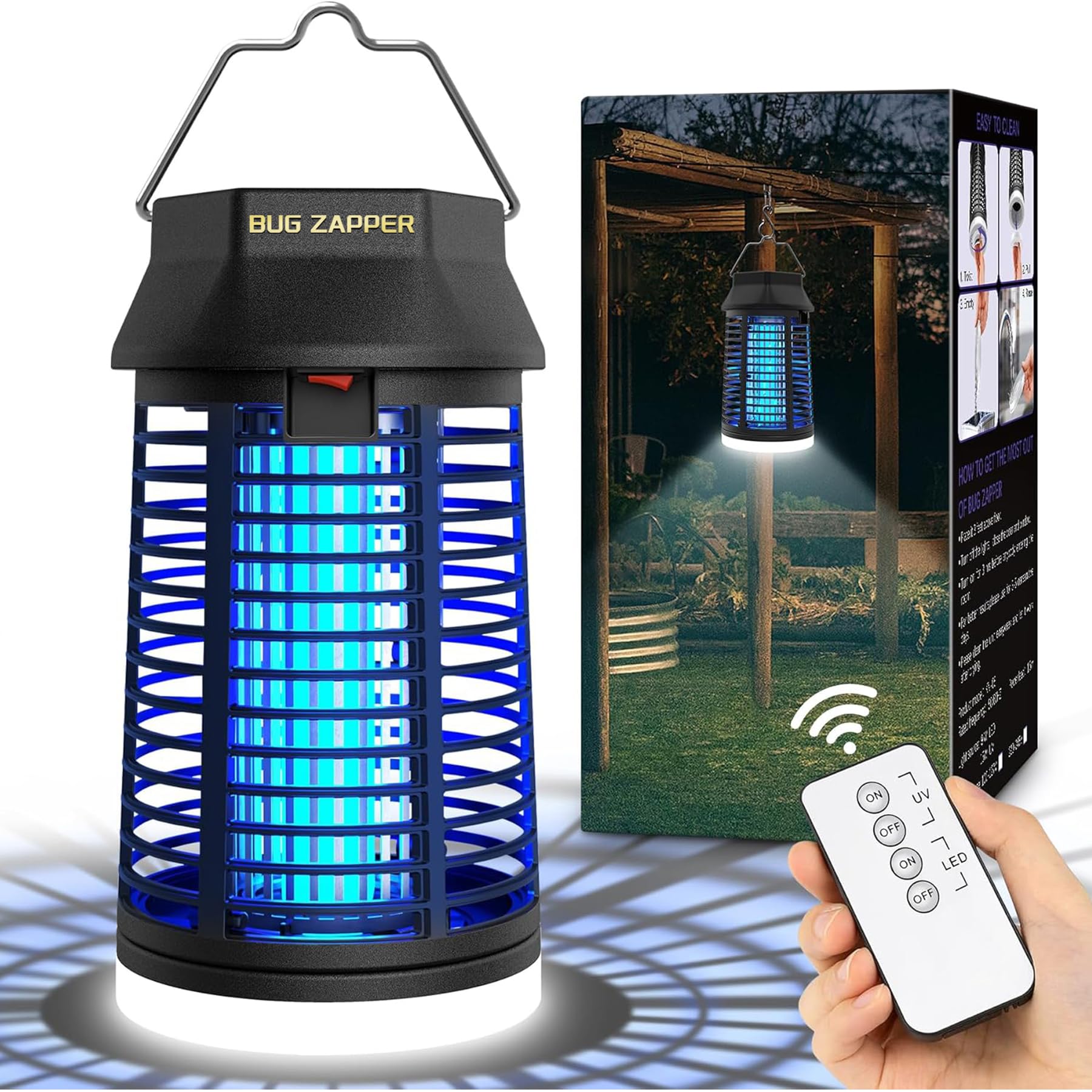
A remote for the switch, so you are not reaching over the rail after dark.
Reaching for a switch on the far side of a porch railing is a small annoyance that a remote fixes completely. LUOJIBIE adds one to a 4200V zapper, so you can turn the LED light and the grid on from inside. The LED is not just cosmetic — it adds a second attractant and lights the dark corner where the unit hangs.
The ultraviolet tube lures mosquitoes, fruit flies, gnats, moths, and other small fliers into the grid at 4200 volts, and the ABS shell is shaped as a lantern so the charged interior stays covered. Coverage is rated over 1500 square feet. That is a patio-sized number rather than a yard-sized one — comparable to the snanlen below, well shy of the acre-rated Flowtron.
The remote is the honest caveat. Some owners find it handy, others report it does not respond reliably, so treat it as a bonus rather than the reason to buy. The 4.92ft cord and the hanging ring give you a few placement options regardless. If the remote ever fails, the top switch still works.
Where it shines: a lantern-style 4200V zapper with an included LED light and a remote, built for over 1500 square feet of patio or porch.
The catch to know: the remote itself is hit or miss — some buyers report it not working properly, so plan on the manual switch as the fallback.
Right for: a patio where the zapper hangs out of arm’s reach and you want light plus a switch you can operate from indoors.
Pass on it if: the remote is the whole reason you would buy — reliability there is not guaranteed.
7. DASDXU Upgraded Bug Zapper Outdoor, 4200V, 1/2 Acre Coverage

Half an acre of coverage with a power management system that keeps the running cost low.
If you want your money to go into how the thing runs rather than how it looks, this is the pick. DASDXU pairs a 365nm UV bulb the maker says lasts 25% longer than traditional bulbs with a power management system it claims cuts energy use by 35%. Over a whole season of nightly zapping, that efficiency is the reason it earns a slot.
The grid runs at 4200V, with coverage rated at 1/2 acre, roughly 22,000 square feet. A single light source throws attraction 360 degrees, which is a real advantage over units that only pull from the angle they face. The twist-off bottom tray is the cleaning answer — no reaching into the housing, just twist and dump.
At 13.4 inches tall it is the tallest unit on this list, so check your overhang before you hang it. The bulb is replaceable, which matters because it is the part that wears. Long-term reliability is the honest question — a handful of owners mention failures in the first month — so buy from a seller with a clean return policy and test it in the first week.
Where the value sits: a 4200V grid over a full 1/2 acre at the efficient end of the power draw, plus a twist-off tray and replaceable bulb.
The caveat to hear: a few early failures show up in the reviews — test the unit right away rather than discovering a dud in August.
It is the one for you if: you want wide coverage without paying top tier, and you value low running cost over a premium casing.
Worth a pass if: a low overhang or a snug spot rules out the extra height of the housing.
8. snanlen 4200V High-Powered Bug Zapper with LED Attractant
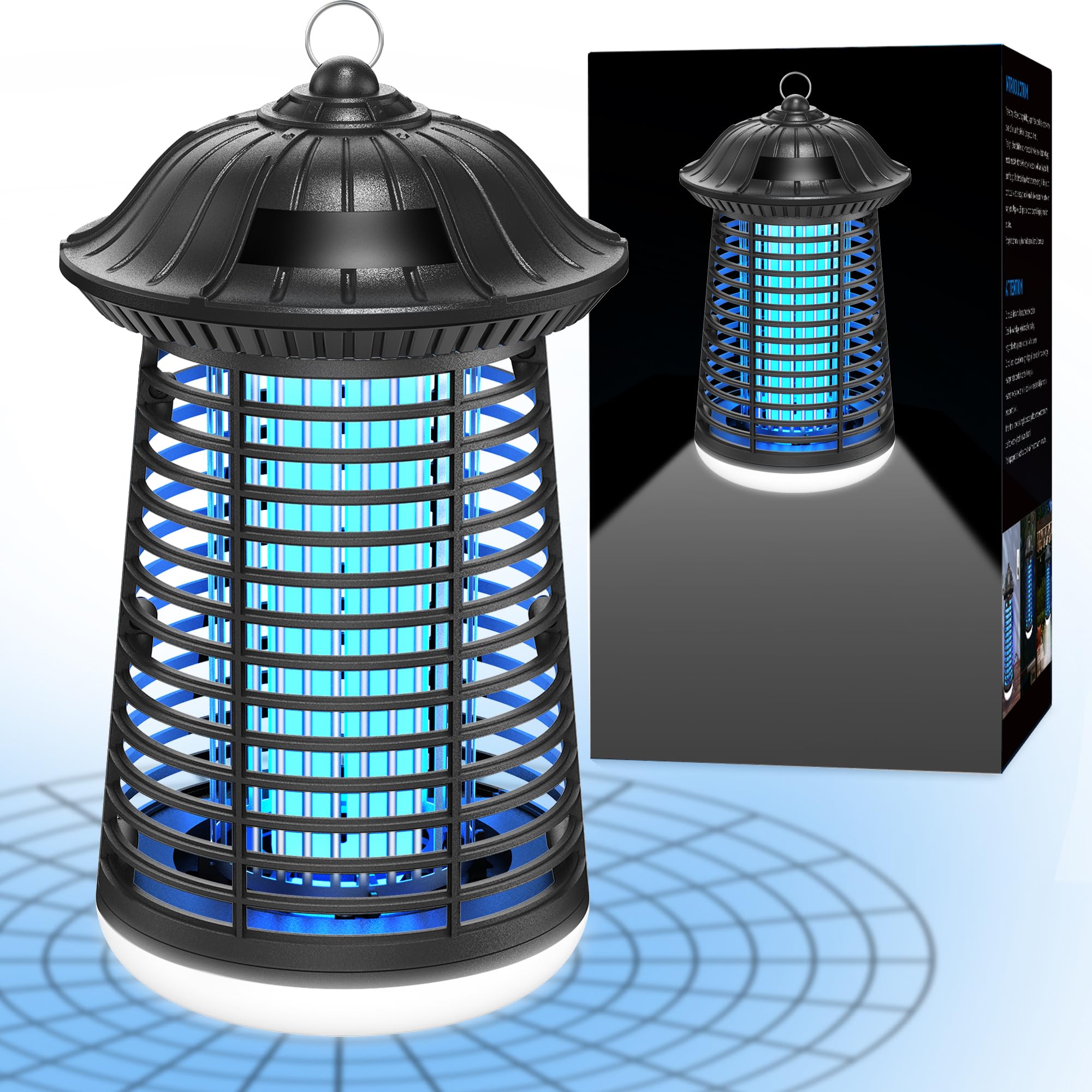
A dual UV-and-LED lure and a 5.6ft cord for a small patio, without the premium tier.
The lure is the interesting bit here. Alongside the UV tube, snanlen puts an LED attractant in the base — a second light that is designed to pull gnats, moths, and fruit flies toward the grid rather than just mosquitoes. On top of that there is a 4200V grid to end the job on contact. If you want a secondhand light doing more of the pulling, this is how it does it.
Coverage is rated at 1500 square feet, which suits a balcony, a small deck, or a garage corner. The housing is fire-resistant ABS with a 0.23-inch protective grid spacing — a physical barrier between fingers or paws and the charged interior — and the IPX4 rating lets it take a rain shower. The 5.6ft cord is the longest among the compact models, beating the 3.6 ft on the Raindot below.
The honest note is on the electronics rather than the design. A few customers note reliability issues, so treat the first few weeks as a checkout window. Then clean it weekly — the manual says so — because a grimy grid is exactly what makes a zapper feel weak. The bulb is replaceable, so a season-two replacement is possible.
What the small budget buys
- Dual UV plus LED attractant base broadens the range of bugs it pulls in
- 4200V grid handles contact in one strike
- 5.6ft cord, the longest of the compact units
- Replaceable bulb keeps it viable season after season
The limits to accept
- 1500 sq ft coverage — too small for a big open yard
- Reliability is the recurring knock, so test it early
- Weekly cleaning is not optional if you want full output
The right fit is: a small deck or balcony where 1500 square feet is plenty and you want the LED lure.
Look up the list if: your yard runs deeper than a deck — coverage is what limits this one.
9. Raindot 15W Bug Zapper, 4200V, IPX4 Waterproof
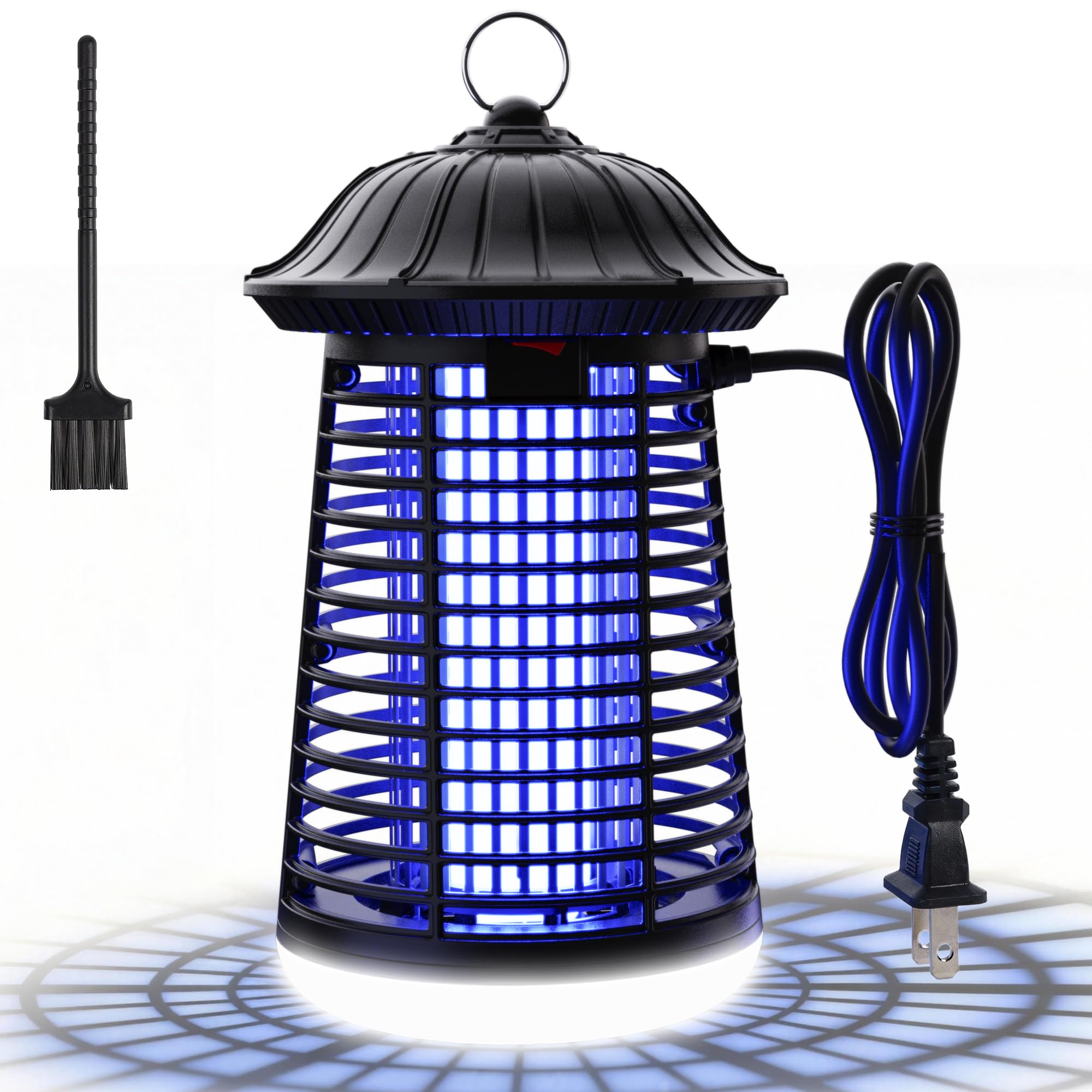
The simplest way in — a 15W UVA tube, a 4200V grid, and a hanging ring on top.
If your goal is to stop getting bitten in the kitchen and on the deck without spending much, the Raindot is the entry point. A 15W UVA tube lures insects in, the 4200V galvanized steel grid ends them, and a hanging ring on the top lets you hang it from a tree branch, a porch beam, or a bracket with no fuss. It also works standing flat on its base.
The build is plastic with IPX4 splash resistance, so an afternoon rain does not end it, and the bottom tray pulls out with a small brush included for the debris. The 3.6ft cord is the shortest in this group, which is worth knowing — the snanlen above has 5.6ft — so check your socket distance before you hang it.
The honest limit is lifespan. The bulb is the weak link, and a number of reviewers point out it burning out fairly early in the season. That does not make it a bad buy for a small budget; it means you treat the bulb as a consumable rather than expecting years of service. This is a starter zapper, and it does that job.
What you are starting with: a 15W UVA lure, a 4200V grid, IPX4 waterproofing, and a hanging ring for quick placement.
Where it stops short: the bulb tends to wear out sooner than you would like, so replacement is part of the deal.
Entry-level, and honest about it: a first zapper for a small patio or kitchen, with a short cord and a starter bulb.
Step up if: a short bulb life or a 3.6ft cord is going to frustrate you — the snanlen or the DASDXU fits that gap.
Know the Specs
Grid Voltage — Why 4000V vs 5600V Matters
Voltage is the charge sitting on the inner metal grid. When an insect touches it, that charge flows and ends the bug. A 5600V grid like the Flowtron’s carries a stronger charge than a 4000V grid like the REOGLE’s, so larger or tougher insects are stopped outright instead of stunned. The difference shows most in heavy season with big moths and flies, not in an average mosquito night.
UV Wavelength and Bulb Wattage — the Bait
Insects are drawn to ultraviolet light, and different species respond to slightly different wavelengths. That is why some zappers use a single UV tube while others add a black UV bulb or an LED base for a broader spread. Wattage (15W, 18W, 40W) affects how far that lure throws, so a 40W bulb in an outdoor unit reaches further than a 15W tube in a compact one.
Coverage Rating — Sizing It to Your Space
Coverage is the area the maker rates the unit to protect — 1500 square feet for a balcony, up to an acre for a big open yard. It reflects the lure’s reach more than a hard boundary. Buy slightly more coverage than your space needs if insects blow in from nearby trees or a field, because the rating assumes the zapper is the only thing pulling them.
IPX Waterproofing — Rain, Splash, and Placement
The IPX number is a splash-resistance grade. IPX4 means the unit is protected against splashing water, which covers rain showers and a wet porch floor. IPX5, on the solar Zwiran, is a step above that. It is fine to leave an IPX-rated zapper out in wet weather, but it is still worth bringing corded units in during a storm or keeping them under cover if you want the longest working life.
Common Questions
How does a bug zapper light actually kill insects?
Is a higher voltage always better for outdoor use?
Can I leave a bug zapper out in the rain?
How much ground will a bug zapper cover?
Do bug zappers work indoors as well as outdoors?
How often do I need to clean the dead-insect tray?
Will a bug zapper light bother my neighbors or my sleep?
Is a bug zapper safe around kids and pets?
How long does the UV bulb last?
Solar or plug-in: which bug zapper should I choose?
The Bottom Line
The pick that does the most real work for the widest range of yards is the Flowtron Bug Zapper — a 40W UV bulb and a 5600V grid over a rated acre of coverage. It also holds 4.5+ stars across 800+ ratings, and that mix of reach and voltage is why it sits at the top. For a porch with a socket nearby and no fuss wanted, the AMUFER Bug Zapper covers half to a full acre with an open bottom that spares you the tray. And if the best spot for your zapper has no power at all, the Zwiran Solar Bug Zapper charges by day and keeps the 4500V grid running through the night.
How we choose
We do not accept paid placement. Every pick is matched to a real buyer and a real use-case; we do not hands-on test units.
Sources
Specifications: manufacturer listings and product documentation. Review insights: verified customer reviews, as of November 2026. Pricing: not shown on this page (it changes often); check the current price via the retailer link.
As an Amazon Associate, Tactical Gear Guy earns from qualifying purchases. This does not affect which products we feature.