Specs are compiled from manufacturer listings and verified buyer reviews and can change over time — please confirm the key details on the product page before buying.
You want a watch that reads your pulse from your wrist accurately, without a chest strap that slips mid-run or a battery that dies before you finish. The rest of this page ranks these nine on sensor sampling, battery drain, and wrist fit.
This guide is built by comparing the manufacturers’ published specifications and the patterns across verified customer reviews, so you get each pick’s real strengths and trade-offs instead of marketing spin.
The picks below are ranked by sensor sampling rate and battery drain under heart rate tracking, not by the spec sheet’s headline claims. You also get the honest catches, like a screen that reads small on a narrow wrist and a battery that fades after months of daily charging. If you are narrowing a final shortlist, this comparison of each wrist watch with heart rate monitor will save you a return.
Top Picks

How To Choose The Best Wrist Watch with Heart Rate Monitor
Every watch here reads your pulse with an optical sensor built into the case back. That sensor shines a light into the skin and reads how much blood is moving underneath. The differences come down to how often it samples, what display it feeds, and how long the battery holds up while it samples. Spec-sheet battery numbers rarely survive a week of daily GPS runs.
Sensor Sampling Speed and What It Means for Your Day
How often your watch checks your heart matters more than the sensor’s name. One pick here samples background heart rate every five seconds and measures heart rate variability (HRV — the tiny timing changes between heartbeats that show stress and recovery) as often as every five minutes. That gives you a continuous stress and recovery picture. A watch that samples once every several minutes still catches trends across a week. If you want to spot a spike during a hard interval, go for the faster sampling watch. If you mainly want resting heart rate over months, slower is fine.
Battery Life Is the Input, Not the Output
Battery ratings are split between “normal use” and “always-on” modes. A 24-hour claim assumes standard use, not GPS constantly running and the heart rate sensor firing nonstop. A 7-day claim on a light tracker can hold true when GPS only pulls from your phone. If your routine is a daily run with GPS, plan to charge more often than the box suggests. Halve the rated battery figure for daily GPS workouts.
Water Resistance Ratings Decoded
IP68 means dust-tight and survives water immersion under defined test conditions. 10 ATM means it is water-resistant to the pressure depth — 10 atmospheres — which is why one pick here survives swimming and showering. Splashes and rain are a lower bar than a swim in a lap pool. If you only wash dishes with it on, IP68 is fine. If you swim laps, you want the higher rating and a rubber band, not leather.
Screen, Wrist Fit, and Why Both Split Buyers
Screen sizes from 1.47 to 1.85 inches sound like a minor difference until you put the watch on. Larger screens are easier to read while moving but can crowd a narrow wrist. Buyers show this: among the most-reviewed picks here has a screen size that some call perfect and others call smaller than expected. Measure your wrist circumference before ordering — a 45mm case and a 1.47-inch band watch sit very differently. A 45mm case with a 137-204mm fit range (the band adjusts to wrists from 137mm to 204mm around) fits differently than a slim 1.47-inch band watch.
Side-by-Side Comparison
| Model | Best For | Battery Life | Display Size | Water Rating | Amazon |
|---|---|---|---|---|---|
| Apple Watch Series 12 GPS 42mm★ Best Overall | Full health tracking with iPhone | Up to 24 hours | 42mm | — | Amazon |
| Garmin Instinct 3 SolarRugged GPS Pick | Rugged GPS and solar charging | 28 days | 0.9″ | 10 ATM | Amazon |
| Garmin Venu 3SHighest-Rated Pick | AMOLED health insights and calls | Up to 10 days | — | — | Amazon |
| MorePro Health Fitness Tracker | Budget daily wellness and sleep | Up to 7 days | 1.47″ | IP68 | Amazon |
| Xiaomi Mi Smart Band 10 | Battery endurance and bright screen | 21 days | 1.72″ AMOLED | — | Amazon |
| Smart Watches for Women (2 Bands) | Large display and Bluetooth calls | Up to 7 days | 1.85″ HD | IP68 | Amazon |
| Google Fitbit Inspire 3 | Readiness score and stress tracking | 10 days | — | — | Amazon |
| Garmin Instinct 3 Tactical Solar | Tactical features and durability | 28 days | — | 10 ATM | Amazon |
| Samsung Galaxy Watch 8 Classic 46mm | Rotating bezel and sleep coaching | 30 hours | — | — | Amazon |
Detailed Reviews
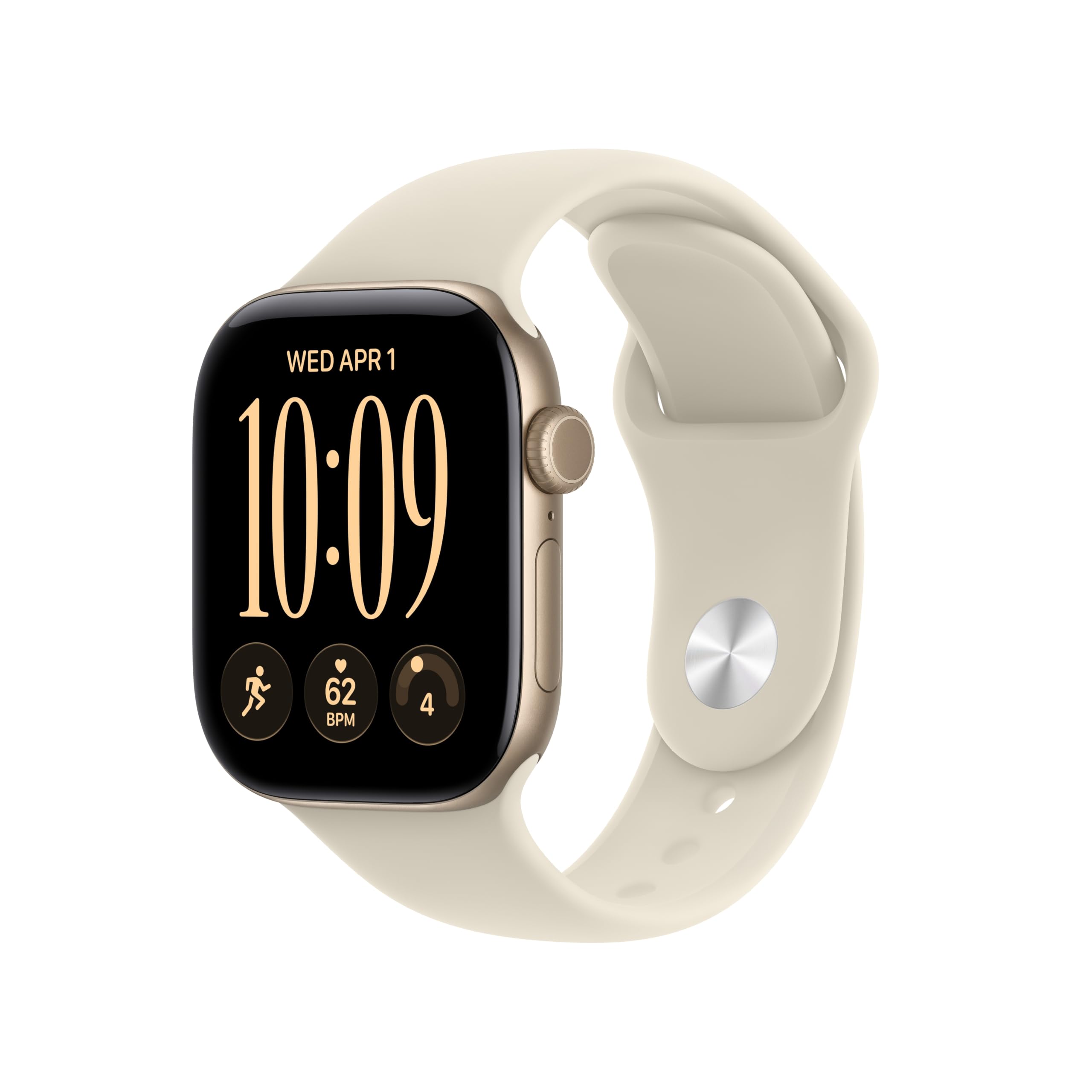
1. Apple Watch Series 12 GPS 42mm Smartwatch
Our pick — 4.5+★ from 450+ verified ratings; the strongest balance of quality and price.
Fires a heart-rate reading every five seconds and checks HRV every five minutes, so your stress and recovery trend never goes blind.
The Series 12 is built around the speed of its heart sensor. It takes background heart rate readings every five seconds, and it measures HRV (heart rate variability, the small gap between beats that hints at stress and recovery) as often as every five minutes. That cadence is why it is the pick for a buyer who actually wants to see the difference between a rest day and a hard interval session. It also tracks a daily sleep score, a menstrual cycle log, and blood oxygen readings.
There is a genuine safety side here too, and it is not marketing fluff. The watch can detect a hard fall or a severe car crash, help reach emergency services, and alert your emergency contacts. If you run alone or work outdoors, that is a feature you will be glad to have and hope never to see work.
The screen size is the honest catch. It is a 42mm case, and buyers split on it — some call it perfect, others find it smaller than they pictured from a listing page. If you have a wide wrist or are used to a big chunky sports watch, go into this one knowing that. Battery is the other trade-off: up to 24 hours of normal use, with a 15-minute fast charge giving up to 12 hours. That is a charge-every-night watch, unlike the Xiaomi band below that runs for weeks.
What earns the top spot
- Heart rate readings every five seconds and HRV every five minutes, so stress and recovery data stays current
- Fall detection and car crash detection with emergency contact alerts
- Fast charge gives up to 12 hours of use in 15 minutes
- Ceramic Shield 2 glass on aluminum cases
Before you commit
- Up to 24 hours of normal use means a nightly charge
- The 42mm case reads small to some wrists and perfect to others
- Needs an iPhone to open up the full notification and Siri experience
Built for: iPhone owners who want the densest heart and recovery data on the list.
The real cost: a nightly charge and a 42mm face that runs small on a broad wrist.
2. Garmin Instinct® 3 Solar, Rugged GPS Smartwatch, 45mm, Black
A 45mm fiber-reinforced case that may never need a wall charger if you spend 3 hours a day outdoors.
This is a watch for someone who lives outside more than they work a desk. The 28-day battery rating pairs with a solar charging lens that, under 50,000 lux conditions with 3 hours a day outside, extends to unlimited battery life. That is a spec for a long-distance hiker or field worker, not a treadmill runner. The 45mm fiber-reinforced polymer case sits over a metal-reinforced bezel, and the whole thing holds a 10 ATM water rating with MIL-STD-810 thermal and shock testing.
The navigation stack is serious. It packs a 3-axis compass, a barometric altimeter (which reads altitude from air pressure rather than just GPS), and multi-band GPS with SatIQ that keeps a lock in dense cover while stretching battery. A built-in LED flashlight with strobe modes means you can find your way in the dark without reaching for your phone. Garmin Pay lets you leave cards behind at supported terminals.
The honest note is the screen. It is a 0.9-inch display, deliberately compact and dim next to the AMOLED (active-matrix organic light-emitting diode — a screen type that lights each pixel for rich color) watches here. That small screen is what buys you the battery, but it is not the pick if you want to look at photos or read long messages on your wrist. Buy it for utility, not for screen time.
Trail-ready strengths
- 28-day battery that can stretch to unlimited with solar in 50,000 lux conditions
- 10 ATM water rating and MIL-STD-810 shock and thermal resistance
- Built-in LED flashlight with variable intensity and strobe
- Multi-band GPS with SatIQ plus a 3-axis compass and barometric altimeter
Where it asks a trade
- The 0.9-inch display is small and dimmer than an AMOLED
- A 45mm case is a big footprint on a slim wrist
- Wrist-based heart rate is a close estimation, not a medical reading
Choose this when: trail time beats screen time and you want GPS plus a flashlight on your wrist.
Look past it for: a desk-bound buyer who wants a vivid screen for messages.
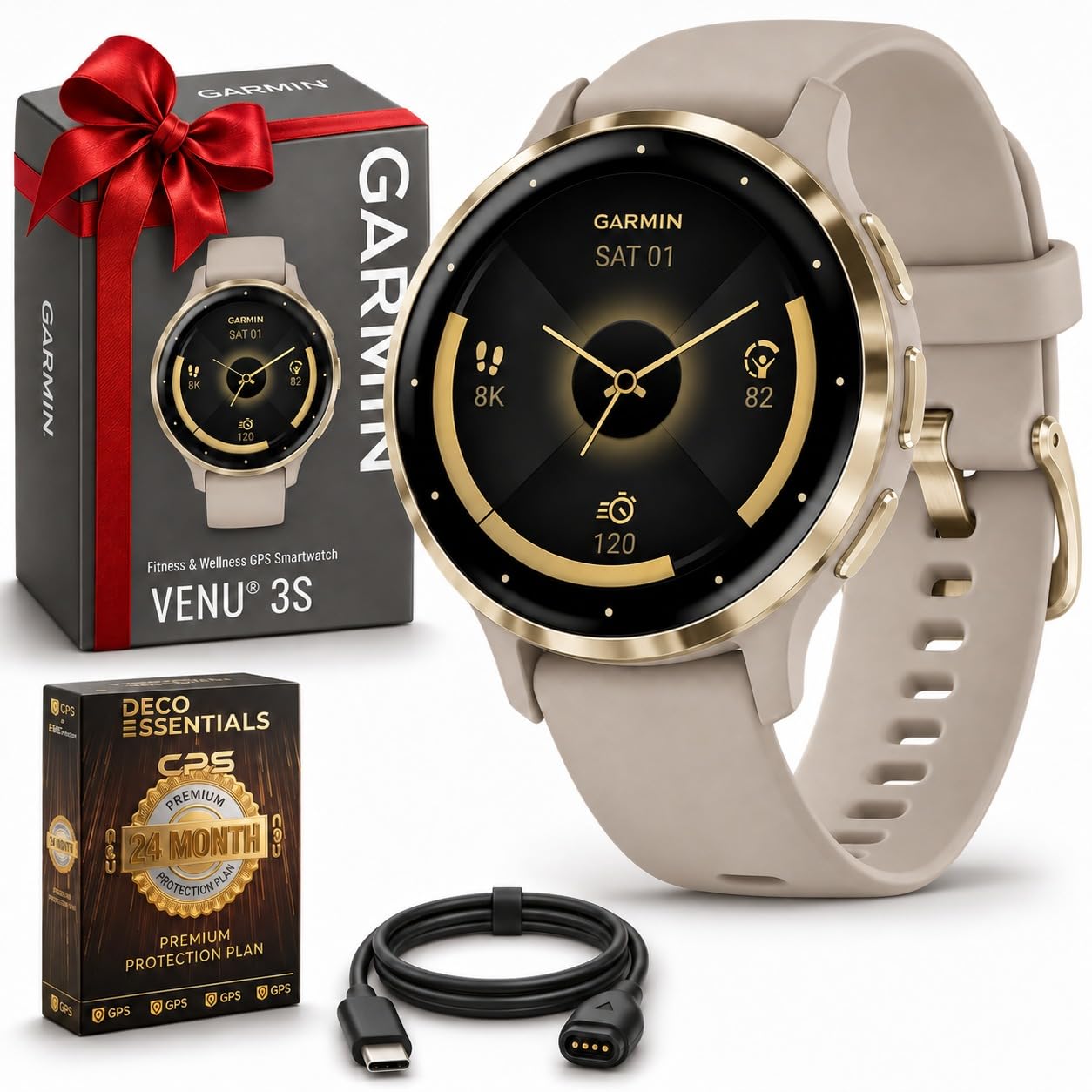
3. Garmin Venu 3S Smartwatch
A bright AMOLED screen with a Body Battery readout that tells you when to push and when to rest.
The Venu 3S is a smartwatch that turns your heart rate into decisions. Body Battery uses sleep, naps, stress levels and workouts to score how charged up you are. A sleep score plus personalized sleep coaching and HRV status round that into a health picture. The bright, colorful display is the reason you can actually read all of that in daylight. Battery life runs up to 10 days in smartwatch mode, and the 41mm case with a stainless steel bezel and 18mm silicone band is built to sit slim on the wrist.
You can make and take phone calls from the wrist, reply to texts by voice, and Android users can text directly from the watch. A wheelchair mode tracks pushes rather than steps and includes push and handcycle activities. Automatic nap detection logs how long you napped and how it affects your Body Battery. It also tracks fitness age, stress, menstrual cycle and pregnancy, and offers meditation sessions.
Here is the honest counterweight: this is the highest-scoring pick here by user satisfaction, but it has a much smaller pool of reviews than the mass-market trackers — so you are trusting a smaller crowd. If you want the deepest sample of opinions, the Xiaomi band below has the larger following, but the Venu 3S holds the better score. For buyers who want polished health data in a slim case, the trade is worth it.
Where it shines: the 10-day battery, AMOLED screen and Body Battery score work together as a daily readiness tool, not just a step counter.
Worth knowing: it only answers calls and texts when paired to your iPhone or Android, and the health metrics are estimations, not medical readings. The Bundle with the 2-year protection pack adds confidence for a device you wear every day.
Best fit: the buyer who wants a slim, good-looking watch with serious recovery coaching.
Think twice if: you want the largest verified review base before you buy — this pick leans on a smaller crowd.
4. Samsung Galaxy Watch 8 Classic 46mm Bluetooth Smartwatch
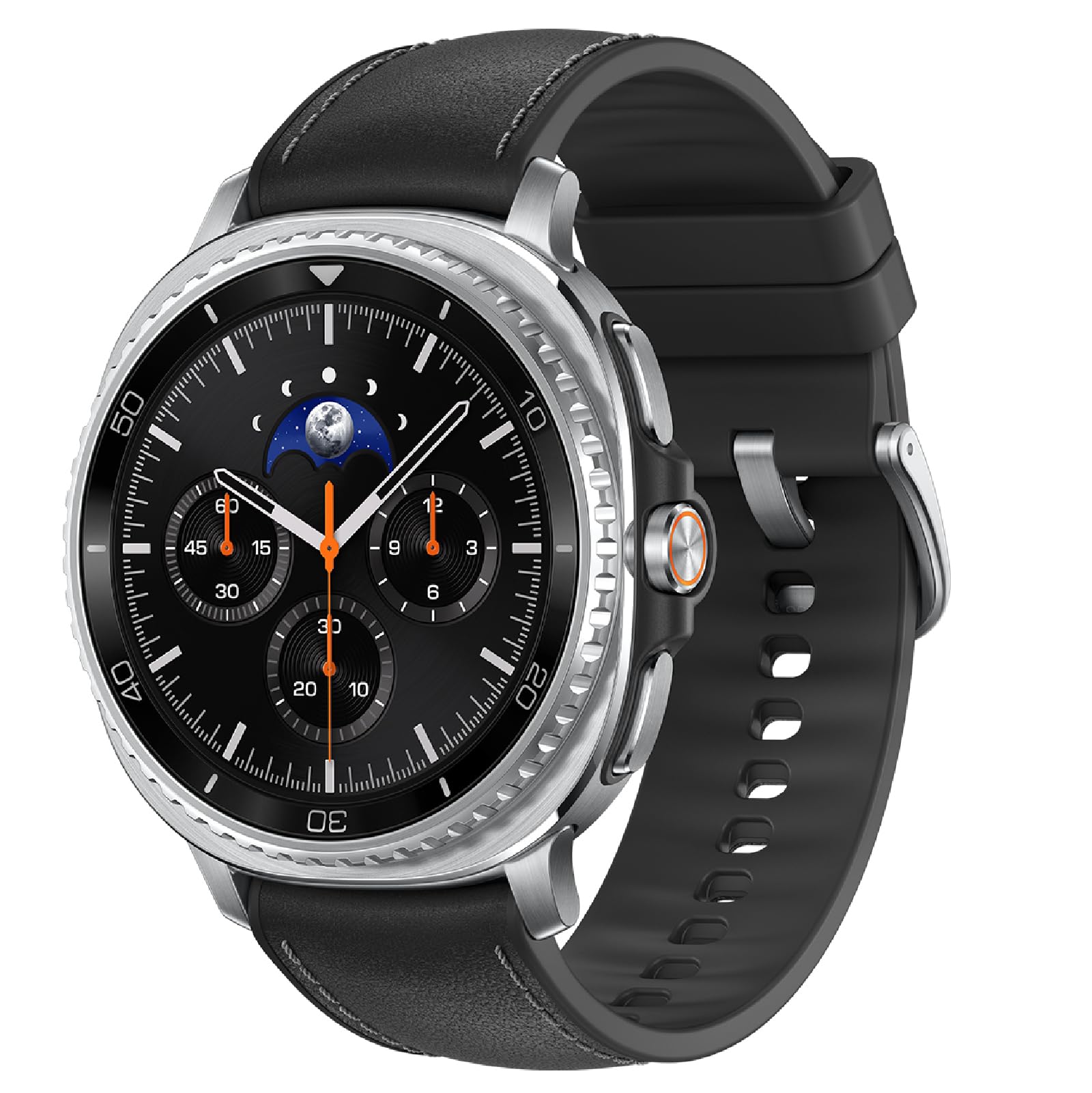
A rotating bezel and a 46mm case that looks like a proper watch, with blood pressure readings once you calibrate a cuff.
If appearance matters to you as much as data, this is the one that reads like a traditional timepiece. The 46mm case carries a 22cm eco-leather band, and the rotating bezel gives you a physical way to scroll apps instead of tapping a small screen. What buyers rave about most here is the look — it is the single most-praised trait of this watch by a wide margin. The health side includes Energy Score, built from yesterday’s sleep, activity and heart rate, plus Advanced Sleep Coaching and Running Coach that analyzes your age, weight, oxygen levels and heart rate to guide a run.
Blood pressure is a headline feature, with a caveat. You calibrate the watch against a blood pressure cuff sold separately, then read systolic and diastolic pressure in the Samsung Health Monitor app as part of maintaining a healthy lifestyle. That is a monitoring aid, not a replacement for a medical device. The Quick Button fires off your most-used commands, and the watch pairs with Samsung phones and other Android phones through the Galaxy Wearable and Samsung Health apps.
The catch is battery. It is rated at 30 hours, and battery life is one of the more discussed mixed points on this watch. A 46mm case is also big on the wrist. Neither of those is a flaw so much as a fit note — this is a statement watch, and statement watches cost you a nightly charge.
The draw: the rotating bezel, the 46mm cushion case and the eco-leather band make this the pick that pairs with a suit, while Energy Score and Advanced Sleep Coaching keep the health data serious.
The trade: 30 hours of battery is one of the shorter ratings in this list, and 46mm is a lot of watch. The blood pressure feature needs a separate cuff you have to buy.
Made for: a buyer who wants a traditional-looking watch with serious health software and Android pairing.
The trade-off to accept: one of the shorter battery ratings here at 30 hours, and a large 46mm case.
5. Garmin Instinct® 3 Tactical, Solar, 45mm, Black

Jumpmaster, waypoint projection and a kill switch — the version built for people who say “mission” without irony.
The tactical edition takes the Instinct 3 platform and adds a dedicated toolkit: a jumpmaster activity, waypoint projection, dual-position GPS format, a preloaded tactical activity, stealth mode, a kill switch, night-vision-goggle compatibility and a rucking activity. It also includes a preloaded Applied Ballistics solver, which needs a one-time purchase through the AB Quantum mobile app. The 45 x 45 x 14.9mm fiber-reinforced polymer case fits a wrist circumference of 137-204mm.
Underneath, it is the same tough hardware as the non-tactical Instinct 3. The 28-day battery stretches to unlimited with solar charging, assuming all-day wear with 3 hours a day outside in 50,000 lux conditions. It holds 10 ATM water rating and MIL-STD-810 shock and thermal resistance. Health monitoring covers wrist-based heart rate, advanced sleep monitoring and Pulse Ox, and the wrist-based heart rate is a close estimation, not a medical reading. Multi-band GPS with SatIQ, a 3-axis compass and a barometric altimeter handle navigation, and the built-in LED flashlight handles the dark.
What holds up over time is the durability. The rugged build is the most-discussed strength of this watch by a wide margin, with battery life right behind it — owners put a full charge at up to 30 days and say the solar charging works well. The honest grip is connectivity, which is a mixed point: keep your phone nearby and it is fine, but do not buy this expecting a cellular connection on its own.
Why a field user picks it
- Dedicated tactical tools: jumpmaster, waypoint projection, stealth mode and a kill switch
- 28-day battery, unlimited with solar in 50,000 lux conditions
- 10 ATM water rating and MIL-STD-810 ruggedness
- Multi-band GPS with SatIQ, 3-axis compass, barometric altimeter and an LED flashlight
Kept in mind
- The Applied Ballistics solver needs a one-time purchase through a mobile app
- Connectivity is a mixed point — smart notifications depend on your phone
- 45mm case is a substantial daily wear
Reach for this if: your kit list already includes night-vision and you want solar and a flashlight on your wrist.
Leave it if: you want a simple fitness watch without the tactical toolkit and its app purchase.
6. Xiaomi Mi Smart Band 10 (2025) Global Version

Three weeks on one charge, with a 1.72-inch AMOLED screen that stays readable in direct sun.
Battery is the reason this band earns a place. It is rated at 21 days on a single charge, and buyers report it lasting close to that in real life: “The battery life is impressive, with one customer reporting it works for 20 days without needing a recharge, and they consider it high quality for the price.” The Xiaomi is rated at 21 days; the MorePro below is rated at 7 days. A full charge takes about an hour. For anyone tired of charging a watch every night, this is the fix.
The screen is the other headline. It is a 1.72-inch AMOLED — the panel type that lights each pixel individually, so blacks stay deep and colors stay rich. The bezels are a symmetrical 2.0mm, which pushes the screen-to-body ratio to 73%. Brightness hits 1500 nits HBM, the high-brightness mode a phone uses in sunlight, so messages stay readable outdoors. At 22mm, the band is the widest of the trackers here — the MorePro is 16mm — which gives this a more substantial feel on the wrist. It also carries a high-precision electronic compass that tracks swimming direction for pool sessions, and comprehensive sleep-stage tracking.
Two things to know before you buy. The Xiaomi Fit app only supports the metric system — if you want miles, pounds or inches, you have to connect it through Google Fit and use that instead. And this is a band, not a full smartwatch, so do not expect the full app and call experience of the Apple Watch above. For the money, though, the battery and screen make a hard argument.
The case for it: 21 days of battery and a 1.72-inch AMOLED screen at 1500 nits are the two strongest numbers in this class, and the hour-long recharge keeps downtime tiny.
The catch: the Xiaomi Fit app is metric-only unless you route through Google Fit for imperial units, and it skips the call and app depth of a full smartwatch.
Suits you if: battery life and a bright AMOLED screen top your list over call and app features.
Not for you if: you need imperial units built in or want full smartwatch functions on the wrist.
7. Google Fitbit Inspire 3
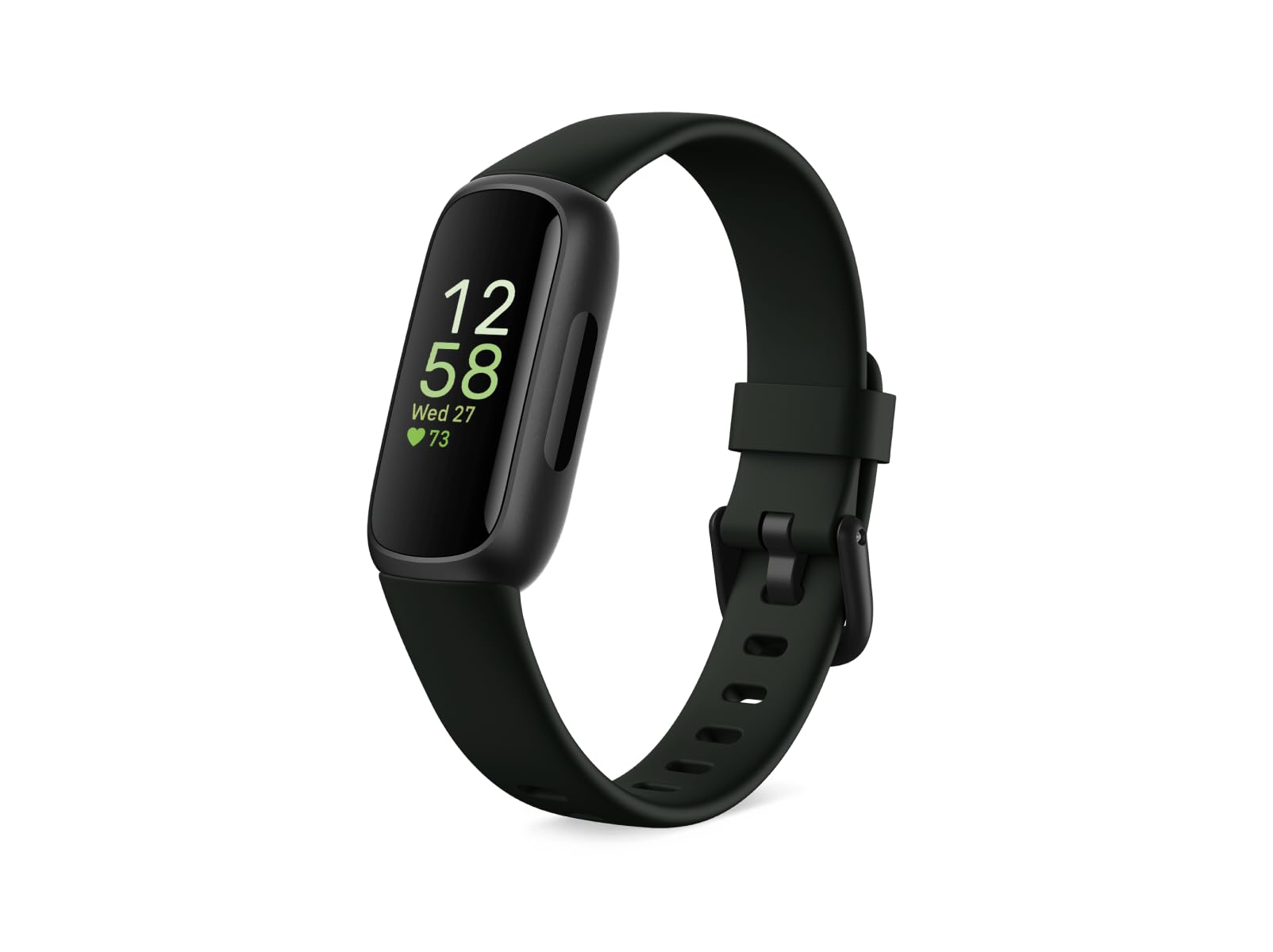
A slim tracker that scores your sleep, your stress and your readiness — and runs for 10 days between charges.
The Inspire 3 turns heart rate into a whole-day picture. A Daily Readiness Score tells you whether to push or rest, Active Zone Minutes track the intensity of your movement, and a Stress Management Score plus mindfulness and relax-breathing sessions give you a way to wind down. It logs 24/7 heart rate, 40+ exercise modes, automatic exercise tracking, SpO2, resting heart rate, menstrual health and irregular heart rhythm notifications. A daily Sleep Score and a smart wake vibrating alarm handle the night shift.
The physical design keeps it out of the way. It uses a silicone band with a tang buckle, a resin case, and battery life rated at 10 days with a 2-hour charge time. It works with Apple iOS 16.4 or higher and Android OS 11.0 or higher. That slimness and 10-day battery make it easier to wear around the clock than the 24-hour Apple Watch, so you actually get the sleep data the app keeps asking for.
The honest counterweight is battery reliability over time. Battery life draws mixed feedback — some find it amazing, others report the unit stops charging after a couple of months. That is not every unit, but it is enough that a two-year protection plan or a careful check of the warranty on arrival is worth the small effort.
Strongest suit: stress, sleep and readiness coaching — the trio that separates it from a step-only tracker.
Worth watching: long-term battery reliability draws mixed feedback, so keep proof of purchase and check the warranty early.
Good match for: a buyer who wants recovery coaching and long-wearing comfort with a 10-day battery.
Worth a pause if: you want a rock-solid long-term battery guarantee above all else.
8. Smart Watches for Women (2 Bands), 1.85″ HD Smartwatch
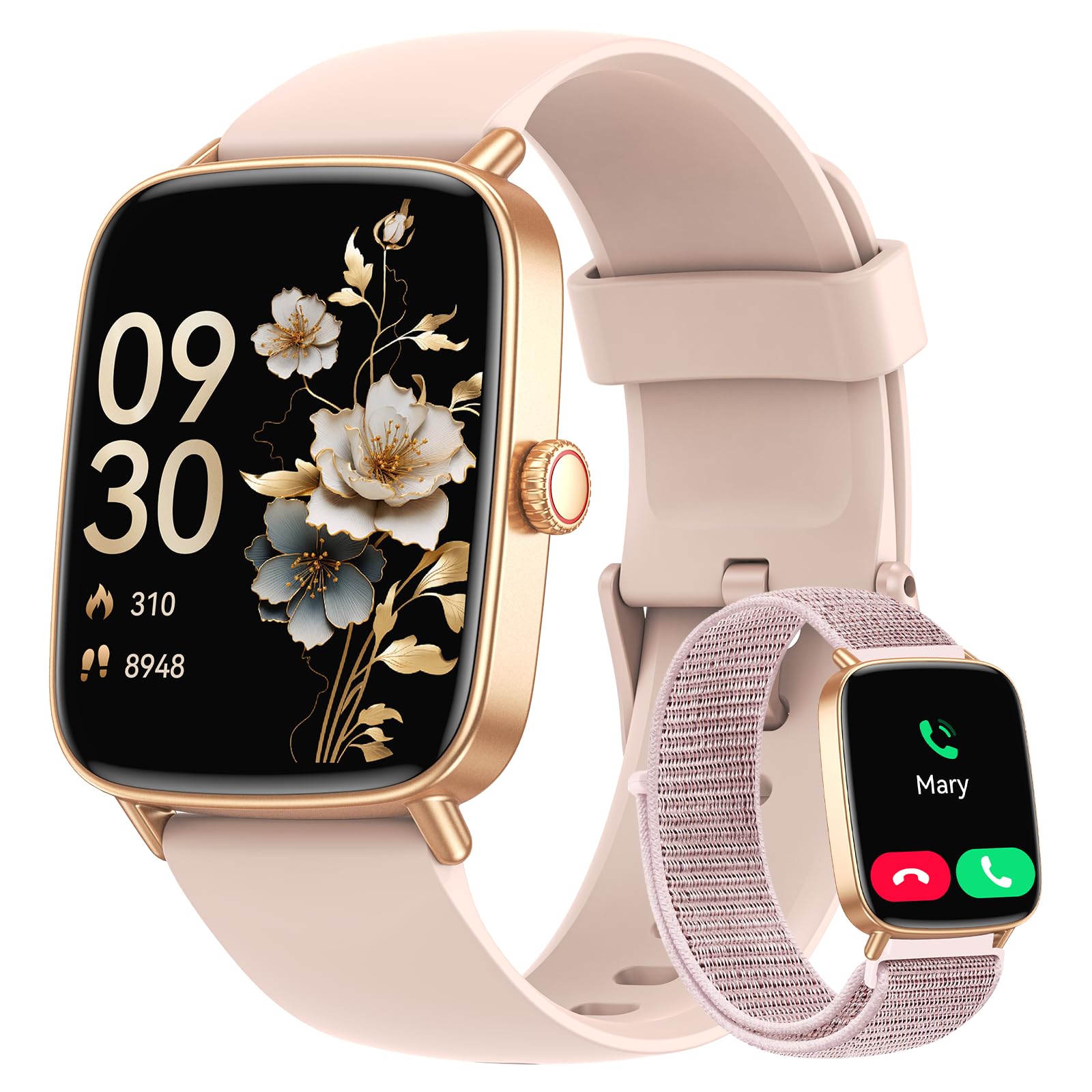
A 1.85-inch screen with 60Hz smoothness and two bands in the box — the roomiest display here for checking your pulse at a glance.
Screen size is where this watch wins. The 1.85-inch HD panel is the largest on this list — for reference, the MorePro below is 1.47 inches — and it runs at 60Hz for smooth scrolling. A larger, smoother screen makes a difference when you are glancing at heart rate mid-workout without stopping. You can also set your own photos as the watch face. The package ships with two bands, a sporty silicone one and a casual braided one, so you can swap looks without buying more.
The health suite covers real-time heart rate, sleep broken into deep, light and awake stages, and stress tracking, with the note that these are non-medical readings for general wellness. Fitness covers 120+ sport modes including running, cycling, yoga, hiking and swimming, backed by IP68 water resistance. Calls go through Bluetooth 5.3 with a built-in DSP chip, so you can answer and make calls on the wrist and get notifications for texts and apps. A 350mAh battery is rated for up to 7 days and charges in 2 hours.
Where this one asks for patience is iPhone connectivity. The function side is a mixed point — for many it works extremely well, but some iPhone users report trouble. If you are on Android, you sidestep most of that. What wins people over most here is the look, which is the most-praised trait of this watch by a wide margin. A 5-year warranty also backs it, which is a rare claim in this tier.
Where it delivers
- 1.85-inch 60Hz screen — the largest display in this list
- Two bands in the box, plus a 5-year warranty
- Bluetooth 5.3 calls with a built-in DSP chip
- 120+ sport modes and IP68 water resistance
The honest limits
- iPhone connectivity is a mixed point for some buyers
- Health and stress readings are non-medical estimations
- A large 1.85-inch case is a big presence on a small wrist
Fits: Android users who want the biggest, smoothest screen and a second band on day one.
Trouble spot: iPhone owners may hit connectivity snags — check the return window before you commit.
9. MorePro Health Fitness Tracker
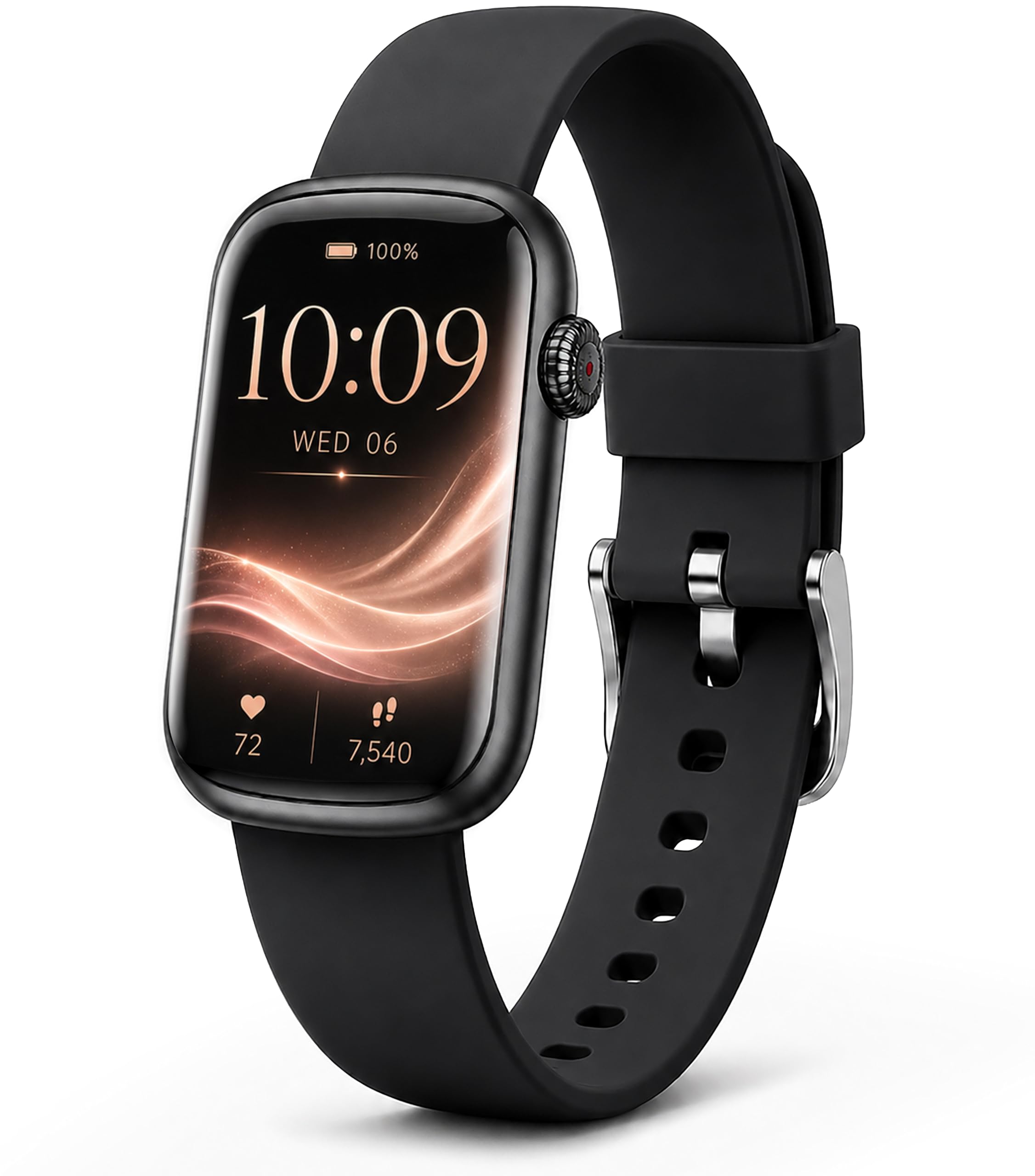
The entry ticket to round-the-clock heart and sleep tracking, with 300+ faces to make it feel like yours.
This is the pick for a first heart-rate watch, or a gift for someone who is not sure they will wear one daily. It runs 24/7 heart rate monitoring, blood pressure monitoring and on-demand blood oxygen checks, with all readings framed for general wellness rather than medical use. Sleep tracking separates light and deep stages so you can review how you are actually resting. The 1.47-inch display is slim, and the 16mm band is the narrowest here — the Xiaomi above is 22mm — which makes it discreet on a smaller wrist.
There is more packed in than the price suggests. It has 7 sport modes, IP68 water resistance (a rating that survives hand washing, sweat and light rain), women’s health tracking with cycle and ovulation calendars, and daily tools like sedentary and drink-water reminders, weather, music and camera control, a stopwatch, alarm and find-phone. Notifications cover calls, texts, email and app messages. Compatibility is Android 7.0 or iOS 13.0 and above with Bluetooth 5.3 (the wireless standard that pairs it to your phone), and it charges in about 2 hours with up to 7 days of use or 10 days standby.
The two honest limits: it is not compatible with PCs, iPads or tablets, only phones. And 7 days of battery is the shortest among the trackers here — the Xiaomi runs 21 days — so if charging frequency is your main frustration, look up the list. For the function you get, though, this covers a lot for an entry pick.
The value read: 24/7 heart rate, sleep stages, cycle tracking, 7 sport modes and IP68 for a buyer who wants to start tracking without a big commitment.
The two caveats: it pairs with phones only, not tablets or PCs, and the 7-day battery rating is the shortest among the trackers here.
Starts tracking here if: you want a discreet first heart-rate watch with sleep and cycle data.
Step up if: you want weeks between charges — the longer-battery picks sit higher in this list.
Know the Specs
Battery Life and “Normal Use”
When a watch says “up to 24 hours,” that means typical use — not GPS running the whole day and the heart sensor sampling around the clock. A 10-day or 21-day claim usually assumes light GPS. Check how often you will run with GPS on, because a tracker rated for 7 days can drop fast under daily GPS sessions. Buyers who want weeks between charges should look at the longer-rated bands and the solar Garmins.
IP68 Versus 10 ATM Water Ratings
IP68 means dust-tight and survives defined water immersion — good for hand washing, sweat and rain. 10 ATM means it is water-resistant to the pressure of 10 atmospheres, which is why those picks are the ones built for swimming and showering. If you only splash your watch, IP68 covers you. If you swim laps, look for 10 ATM or an explicit swimming mode.
Optical Heart Rate and HRV
The optical sensor shines light into the skin and reads blood moving underneath. Sampling speed matters. Some watches read every few minutes for a resting trend; one here reads every five seconds and checks HRV (heart rate variability, the beat-to-beat variation that hints at stress and recovery) every five minutes. Faster sampling gives you a more useful stress and recovery picture; slower is fine for long-term trends.
AMOLED Versus Transflective Displays
AMOLED screens light each pixel, so colors are rich and blacks are deep — bright and easy to read, but they draw more power. A transflective display (a screen that uses ambient light and stays visible in sun while sipping battery) is how some rugged watches stretch to weeks. A small transflective screen like a 0.9-inch one trades vivid detail for endurance. Match the panel to if you want a screen you enjoy looking at or one you mostly ignore.
Common Questions
Do heart rate watches need a chest strap to work?
How often does the heart rate sensor take a reading?
Can I swim with a watch that has IP68 rating?
Why does my watch battery drain faster when I run with GPS?
Will a heart rate watch pair with my phone?
How accurate is wrist based heart rate during exercise?
What is heart rate variability and why does it matter?
Do these watches track sleep and blood oxygen?
Can a solar watch really run without charging?
Is a tracker or a full smartwatch better for heart rate?
The Bottom Line
For most people, the best wrist watch with heart rate monitor is the Apple Watch Series 12 because it reads your heart every five seconds and your HRV every five minutes, so stress and recovery data never goes stale — the strongest health sensor here for a nightly-charge routine. If you want weeks between charges instead, grab the Xiaomi Mi Smart Band 10 and its 21-day battery. For a slim watch with serious recovery coaching, the Garmin Venu 3S pairs a Body Battery score with up to 10 days of use. Whichever you pick, prioritize all-day comfort — a watch you forget you’re wearing is the one that keeps logging your heart rate through sleep and rest days.
How we choose
We do not accept paid placement. Every pick is matched to a real buyer and a real use-case; we do not hands-on test units.
Sources
Specifications: manufacturer listings and product documentation. Review insights: verified customer reviews, as of November 2026. Pricing: not shown on this page (it changes often); check the current price via the retailer link.
As an Amazon Associate, Tactical Gear Guy earns from qualifying purchases. This does not affect which products we feature.