Specs are compiled from manufacturer listings and verified buyer reviews and can change over time — please confirm the key details on the product page before buying.
If you sleep cold, the fix is not a thicker jacket — it is a bag with a real sub-zero temperature rating, a draft-sealed shell, and enough loft that the cold cannot creep back in overnight. Every pick below is rated for genuine winter or expedition cold, not a mild three-season night. Each one is rated for genuine winter or expedition conditions, not a mild three-season night.
This guide is built by comparing the manufacturers’ published specifications and the patterns across verified customer reviews, so you get each pick’s real strengths and trade-offs instead of marketing spin.
You will see canvas-and-flannel bags that shrug off a frozen hunting cabin, modular military systems you can strip down for milder nights, and a down mummy built for the worst weather. Here is the honest breakdown of the world’s warmest sleeping bag.
Top Picks

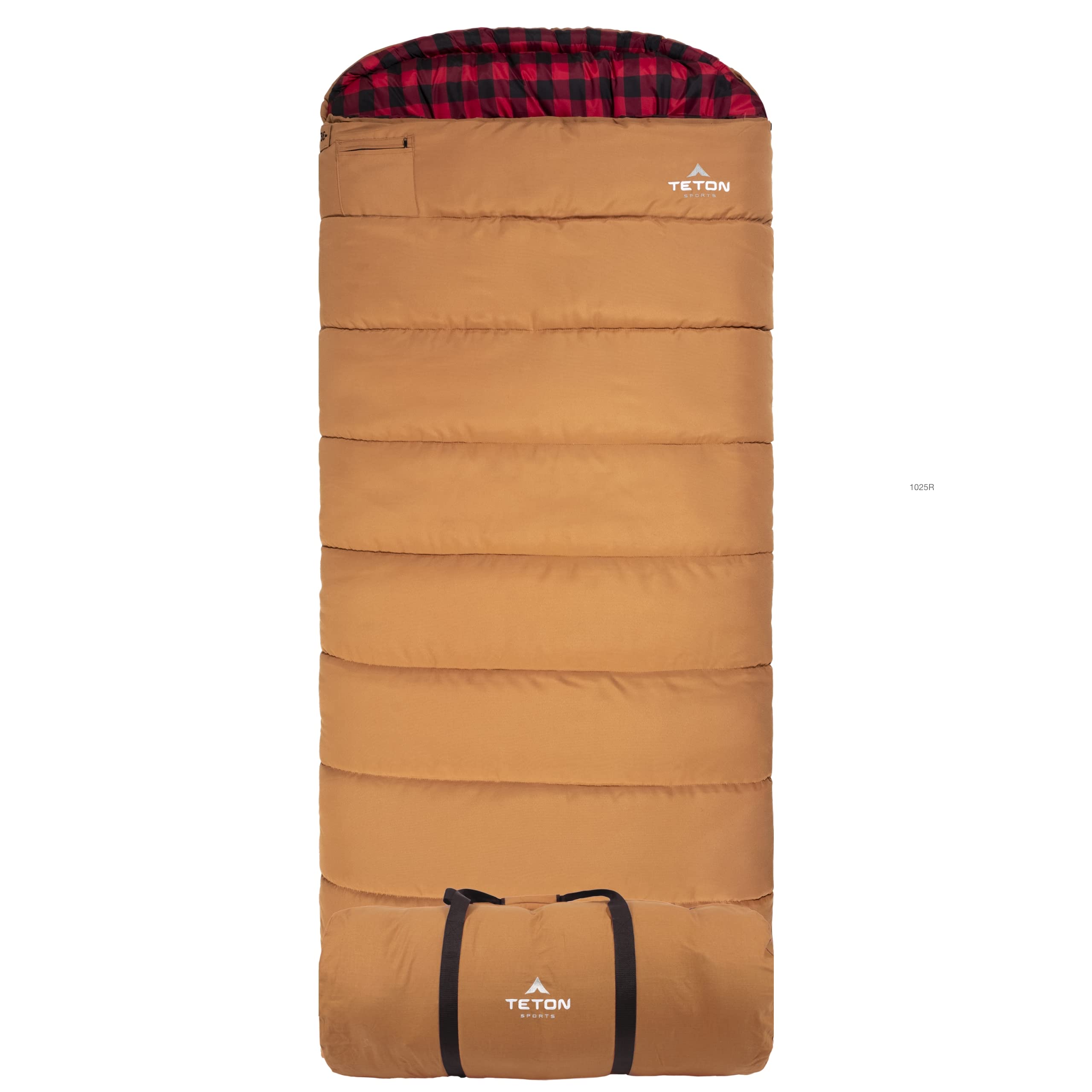
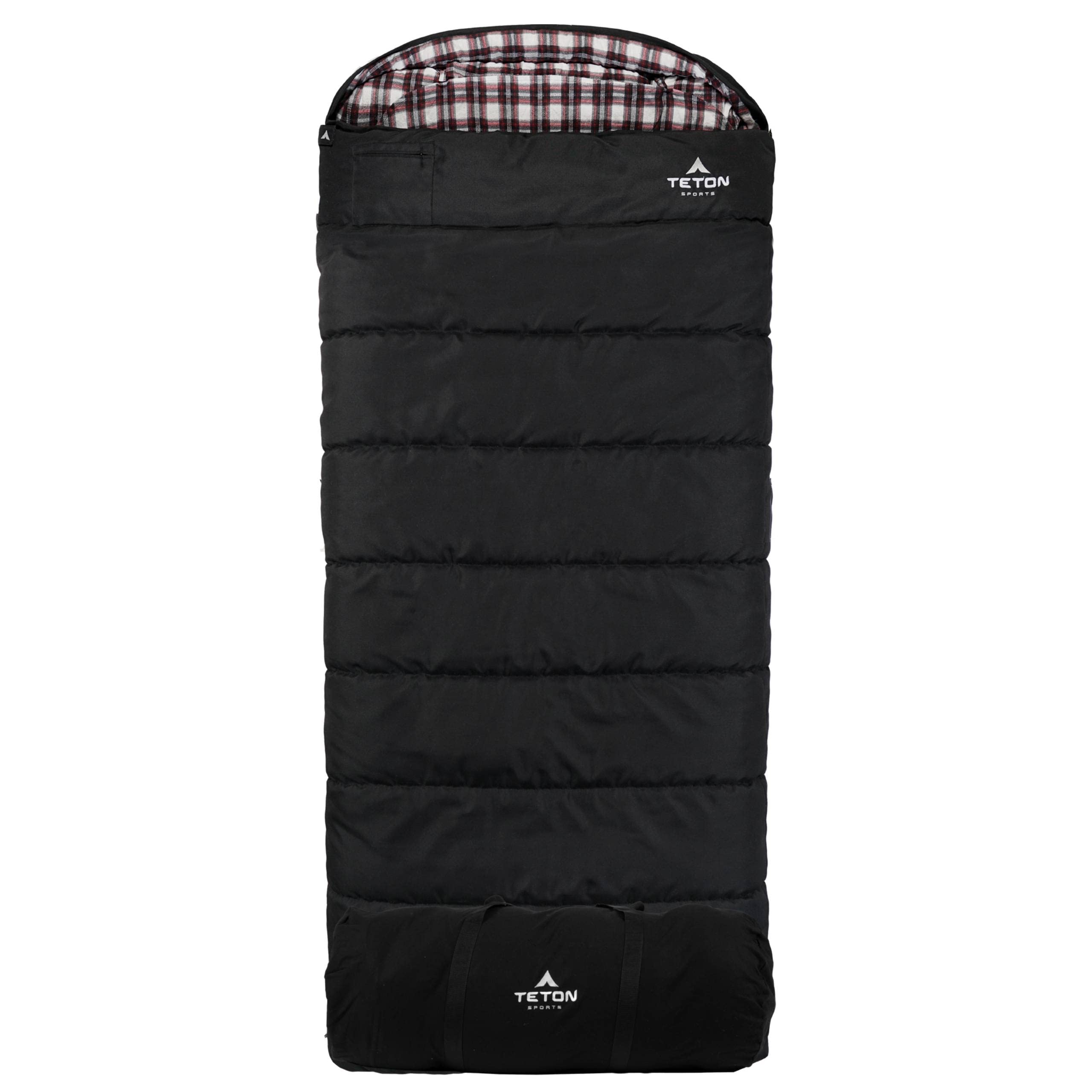
How To Choose The Best Cold-Weather Sleeping Bag
The number on the box is where most buyers start, and where most buyers get fooled. A rating like -10°F or -35°F tells you the bag is built for serious cold, but it does not tell you how you will sleep in it. Read the rating, then read the shell, the fill, and the weight before you commit.
Read the temperature rating as a range, not a promise
Bag makers print a cold-weather figure that describes the conditions the bag is engineered for. A -20°F bag is designed for below-zero nights. How warm you personally sleep, what you wear inside, and whether you use an insulated pad underneath all change the real result. A bag rated for extreme cold still needs a decent pad between you and the frozen ground, or you lose heat straight down.
Match the shell to how you camp
A cotton canvas shell is the tough, old-school choice. It resists wear, shrugs off brush and truck beds, and feels substantial. The catch is weight — canvas bags run heavy, which is why they suit car camping, base camps, and hunting cabins far better than long hikes. Nylon and ripstop shells cut weight and pack smaller, so they suit anyone carrying the bag on their back.
Down versus synthetic fill
Down packs small for the warmth it delivers, and a down mummy bag can hit extreme ratings at a weight a canvas bag cannot touch. Synthetic fill costs less and keeps more of its warmth if the bag gets damp. If you expect wet snow, a damp tent, or a soggy bivy, synthetic earns its place. If you want maximum warmth per ounce and keep your gear dry, down wins.
Draft tubes and hoods do quiet work
Most heat escapes at the zipper and around your neck. A bag with a draft tube behind the zipper and a shoulder-level collar holds warmth far better than one without. A hood that cinches down around your head seals the last gap. These details rarely appear in the headline rating, but they decide whether you sleep warm or wake up cold at 3 a.m.
Side-by-Side Comparison
Every bag below earns its place on cold-weather capability. Scan the three spec columns to see how they trade off on temperature rating, packed weight, and size.
| Model | Best For | Temp Rating | Weight | Dimensions | Amazon |
|---|---|---|---|---|---|
| ALPS OutdoorZ Redwood★ Best Overall | Cold-weather hunting and car camping | -10°F | 11.5 lb | 80″ x 38″ | Amazon |
| TETON Sports Deer HunterCold-Camp Stalwart | Cold, rainy mountain camping | — | 17.5 lb | 90″ x 39″ | Amazon |
| TETON Sports Outfitter -35FDeep-Freeze Pick | Extreme cold base camps | -35°F | 20 lb | 92″ x 39″ | Amazon |
| Browning Kenai -20 | Wide-fit cold sleeping | -20°F | 8.3 lb | 86″ x 40″ | Amazon |
| High Peak Cascade -40 | Deep-cold on a mid-range budget | -40°F | 8 lb | 86″ x 34″ | Amazon |
| Browning Klondike -30 | Premium canvas comfort | -30°F | 15.6 lb | 92″ x 38″ | Amazon |
| USGI Gear 4-Part Modular | Versatile tactical layering | 50°F to -50°F | — | 86″ x 36″ | Amazon |
| Genuine U.S. Military Goretex 5-Piece | All-season military system | — | — | — | Amazon |
| USGI ECW Down Mummy | Ultralight extreme cold | -20°F | 8 lb | 84″ x 30″ | Amazon |
Detailed Reviews
1. ALPS OutdoorZ Redwood -10°F Flannel-Lined Sleeping Bag
Our pick — 4.5+★ from 700+ verified ratings; the strongest balance of quality and price.
The canvas-shell workhorse that lets frost settle on the tent while you sleep through it
For a late-season hunt or a winter cabin trip, the Redwood pairs a -10°F rating (the temperature ALPS designed it to handle) with a cotton canvas outer shell that takes real abuse. The canvas resists wear and tear in the field, so dragging it across a truck bed or setting it down on frozen ground is not the panic moment it is with thin nylon. Inside, the 100% cotton flannel liner gives you a soft surface instead of a slick, cold-feeling shell against your skin.
What wins people over is the build. The canvas and stitching hold up season after season, and the flannel lining turns a hard cold night into something genuinely comfortable. The 38″ x 80″ rectangle gives you room to roll over without fighting the seams. Compare that to the High Peak Cascade at 86″ x 34″ and the Redwood is the wider, roomier bag — 80 by 38 against 86 by 34 — which matters when you sleep on your side or hate feeling pinned.
The catch is weight, and it is an honest one. At 11.5 pounds this is a car-camping and base-camp bag, not something you carry miles into the backcountry. If your plan is a pack trip, look at the down mummy below instead. Drive to your site and 11.5 pounds buys a canvas shell that outlasts several cheap bags.
What earns its keep
- Rugged cotton canvas shell shrugs off brush, truck beds, and frozen ground
- -10°F rating suits late-season hunts and winter camping
- 100% cotton flannel lining feels soft, not slick and cold
- Heavy-duty #8 zippers and zip-together capability for two identical bags
- 38″ x 80″ rectangle leaves room to turn over
Where it asks something of you
- 11.5 pounds rules out backpacking
- Canvas takes longer to dry if it gets soaked
- Bulkier packed than a nylon mummy bag
Made for: cold-weather hunters, cabin campers, and anyone who drives to their site and wants a bag that feels substantial and sleeps warm.
Pass if: you plan to hike the bag in on your back — the weight will wear you down fast.
2. TETON Sports Deer Hunter Sleeping Bag
Built for rainy cold camps where the canvas shell and draft tubes do the heavy lifting
The Deer Hunter is a mountain-and-wet-weather bag first. Its tough canvas shell is meant to survive years of use, and the inside pairs SuperLoft Elite single-channel hollow fiber fill (a synthetic loft that traps air for warmth) with a double-layer construction. Add the zipper and shoulder draft tubes — strips of fabric that block cold air sneaking in at the seams — and you get a bag that holds warmth in a cold, rainy climate rather than just claiming a low rating.
Two design choices stand out for side sleepers and couples. The half-circle mummy-style hood cinches around your head to seal the last gap, and the zippers run on each side so you can vent on a milder night or open it up without wrestling the bag. The poly-flannel lining gives it a soft inner feel. Warmth is clearly the reason people reach for it — that is the trait it gets praised for most, and the quality runs close behind.
Here is the trade-off you need to plan around: this is a 17.5-pound bag measuring 90″ x 39″. It is not a backpacking bag, and TETON itself suggests fluffing it and pairing it with an insulated pad to sleep warmer. The extra length gives tall sleepers room, but a few find the interior snug for loose gear. In a car camp or wall tent, 17.5 pounds buys a 90-inch bag that will last for years.
The long-and-warm read: at 90″ x 39″ it runs two inches longer and an inch wider than the Redwood, so taller sleepers get a bit more stretch room. The double-layer fill and dual side zippers make it genuinely adaptable from a frosty night to a chilly one.
The honest bill: 17.5 pounds is serious weight, and the flannel-lined interior is better suited to base camps than long carries.
Lean this way if: you want a long, roomy canvas bag for wet, cold mountain camps and value durability over pack weight.
Think twice if: you need a bag you can carry on foot — this one is built to be driven to its site.
3. TETON Sports Outfitter -35F Sleeping Bag
The -35°F canvas tank for base camps where the thermometer stops being polite
When the forecast reads well below zero, the Outfitter’s -35°F rating is the number that earns it a spot here. TETON builds it with SuperLoft Elite single-channel hollow fiber fill, a double-layer construction, and draft tubes that all work together to keep warmth inside the bag. The water-resistant canvas shell is meant to stand up to years of hard use, and the soft cotton flannel liner keeps the inside from feeling like a cold tarp.
At 92″ x 39″ this is the longest and widest canvas bag on this list, and the size is generous enough that it drew mixed notes only for being on the wrong side of snug for some. Low-temperature performance is what it is known for, with durability and value close behind. Hang loops let you store it uncompressed long-term so the loft stays full, which is the right way to treat any bag this thick.
You already know the caveat by now with canvas: it weighs 20 pounds. The Outfitter is a fixed-camp bag, plain and simple. The upside is a shell and liner that will take a beating for years while keeping you genuinely warm through a brutal night.
The case for the Outfitter
- -35°F rating handles the deepest cold on this list
- 92″ x 39″ is the largest footprint here
- Water-resistant canvas shell and cotton flannel liner
- Hang loops for uncompressed storage
- Draft tubes and double-layer fill lock warmth in
What you give up
- 20 pounds — a fixed-camp bag only
- Canvas shell takes longer to dry
- Occupies a lot of space when rolled
The right call for: a cabin, wall tent, or base camp where the temperature plunges and the bag stays put.
Look elsewhere if: you want portability — this bag is designed to be warm, not light.
4. Browning Camping Kenai -20 Degree Wide Mummy Sleeping Bag

A wide mummy that stays warm at -20°F without squeezing your shoulders
Most mummy bags save weight by tapering tight, and most side sleepers hate them for it. The Kenai widens the shape to 40″ x 86″ so you get mummy-style warmth with elbow room. A two-layer construction plus insulated chest and zipper baffles keep the cold from threading in at the seams.
Owner reports of warm nights at zero and below match the -20°F rating. People use it at zero or below and come back with warm nights, and the quality and comfort both land well. Compared with the 34-inch-wide High Peak Cascade, the Kenai’s 40-inch width is clearly the roomier body — 40 against 34 — which is the whole point of a “wide” mummy. The #10 separating zipper and compression sack round it out as a serious winter bag.
Bulk and weight are where this one asks you to plan. At 8.3 pounds it is far lighter than the canvas bags above, but owners do call it bulky and heavy for backpacking, and the carry bag is itself fairly large. Fill weight sits at 108 oz, so it is not a featherweight mountaineering sack. For cold car camping or a short haul to a base camp, that trade is easy to accept.
The width story: 40 inches across on a mummy is unusual, and it is what sets the Kenai apart from the 34-inch Cascade and the tapered down mummy below. If you have ever woken up with cramped shoulders, this is the fix.
Mind the pack: 8.3 pounds and a generous carry bag make it a poor fit for long backpacking trips, even though it is light for its rating.
Best suited to: side sleepers and broad-shouldered campers who want -20°F warmth without a body-hugging taper.
Not the pick if: you are packing it deep into the backcountry — the bulk will cost you.
5. High Peak Outdoors Cascade -40-Degree Sleeping Bag

A -40°F mummy at 8 pounds — the deepest cold rating without the canvas weight
The Cascade’s headline is real: a -40°F rating, the coldest number in this lineup, in a bag that weighs only 8 pounds. That combination is why it holds up in genuine deep cold without the 20-pound heft of the Outfitter. It uses a synthetic fill wrapped in a nylon shell, with a thermal collar (a padded ring that seals heat around your neck) and a hood with a drawstring and barrel lock so you can cinch it down tight. Two of them zip together if you camp as a pair.
Build quality is what people call out most on this bag, with warmth right behind it. It measures 86″ x 34″ — narrower than the wide Kenai, so it hugs the body more closely in classic mummy style. At 8 pounds it undercuts the 11.5-pound Redwood by a wide margin, which makes it the more portable of the two if carrying distance is on your mind. For the rating it delivers, this is a lot of cold-weather bag.
The honest limit is space and bulk. The 34-inch width drew mixed notes, and while many like the room, others want more of it. Some owners find it heavy and bulky to move around, so a long backpack is still a stretch. But for a winter camper who wants -40°F capability at a weight the canvas crowd cannot match, the Cascade is the standout.
Why it stands out
- -40°F rating is the coldest in the lineup
- 8 pounds is light for this level of warmth
- Thermal collar and cinch hood seal in heat
- Two bags zip together for couples
- Solid build quality
Where it runs tight
- 34-inch width is narrow — snug for broad sleepers
- Still bulky to haul on a long trek
Reach for it when: you want the deepest cold rating here without the canvas weight penalty.
Skip if: you need a wide fit — the 34-inch width is mummy-tight.
6. Browning Sleeping-Bags Klondike -30

A -30°F canvas-and-flannel rectangle for campers who refuse to rough it
Take the rugged, old-school canvas bag formula and push the cold rating down to -30°F. That is the Klondike. Browning fills it with 7-denier TechLoft Silver insulation inside a heavy-duty cotton canvas shell, then lines the whole thing in 100% cotton flannel. Two-layer offset construction plus insulated chest and zipper baffles keep heat from leaking at the seams, and #10 zippers run the length of an oversized hooded rectangle.
The dimensions tell you who this is for. At 92″ x 38″ it matches the Outfitter’s length and sits an inch off its width, so it fits tall sleepers and gives you room to move. Fill weight is a hefty 160 oz, which is why it sleeps as warm as the rating suggests. The hood is a full oversized hood rather than a cinch mummy, so you get canvas-bag comfort rather than a body-hugging taper. Roll-up straps and a rolled size of 38″ L x 13″ D make storing it straightforward.
Budget the weight before you buy. At 15.6 pounds this is a heavy, stationary bag — ideal for a hunting cabin or a car camp, wrong for a long hike. It sits between the 11.5-pound Redwood and the 20-pound Outfitter, so if you want burly canvas warmth with a little less heft than the Outfitter, this is your middle ground.
Comfort-forward construction: the cotton flannel liner and oversized hooded rectangle aim squarely at a warm, cozy night’s sleep, with 160 oz of fill backing up the -30°F rating.
Heft to plan for: 15.6 pounds keeps it in the car-camp category, and the canvas wants proper drying time after a wet trip.
The fit for you if: you want deep-cold canvas warmth and a soft flannel interior for a cabin or base camp.
Keep looking if: you are counting ounces — this bag stays near the vehicle.
7. Military Sleeping Bag System Tactical Gear – 4-Part Modular
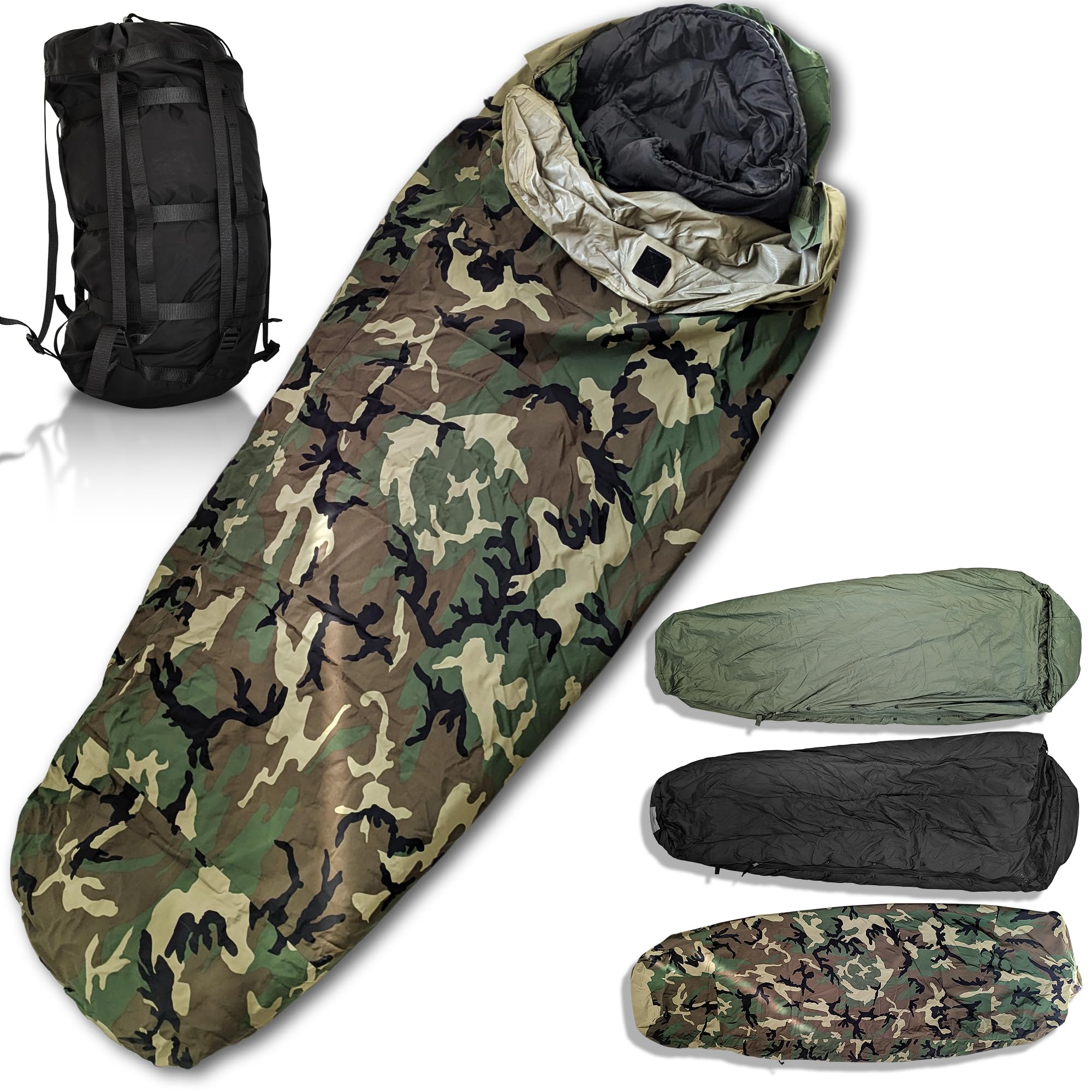
One system that swings from a 50°F summer night to a -50°F deep freeze
Instead of one bag with a single rating, this system gives you four pieces you combine as the weather demands: a patrol sleeping bag, an intermediate cold-weather bag, a waterproof bivy cover, and a compression stuff sack. Used together, the system covers a 50°F to -50°F range. That flexibility is the point — you can carry the light patrol bag for a mild night or stack all the layers for a brutal one, rather than owning three separate bags.
The construction is built for hard field use. The 210T nylon ripstop fabric carries a DWR coating (a durable water-repellent finish that makes water bead and roll off), and the shell is rated for tear resistance. Heavy-duty YKK zippers, hook-and-loop closures, combination buttons, and elastic drawstrings round out the hardware. The triple-laminated bivy cover defends against wind and moisture, and the insulation is built to keep its warmth even in damp conditions — a real advantage when you cannot guarantee a dry tent. It measures 86″ x 36″ and compresses into the stuff sack for a pack-friendly carry.
The trade-off with a modular system is fuss. You are managing multiple pieces, and on a freezing night you want to know your layer combination before the cold sets in. It is also a single-person, 4-item setup, so you get no zip-together option for a partner. If you want one kit to cover 50°F down to -50°F, that fuss is the price of the range.
The flexibility win
- 50°F to -50°F range from four combinable pieces
- Waterproof triple-laminated bivy cover for wind and wet
- DWR-coated ripstop nylon resists tears and water
- Heavy-duty YKK zippers with hook-and-loop and button closures
- Compression stuff sack packs the whole system small
What to weigh
- Managing several pieces takes more fuss than one bag
- Single-person setup, no zip-together for a partner
Made for you if: you want one system that adapts across seasons, from mild nights up to extreme cold.
Look past it if: you would rather grab one bag and go — the layering takes getting used to.
8. Goretex 5-Piece Improved Modular Sleeping Bag System

The genuine-issue modular kit that swaps layers as the season swings
This is the military sleep system proper: five pieces, made in the USA, built around a Goretex bivy and mummy-style bags you combine for the conditions. What wins people over is the range — it handles warm nights and cold ones, and the bivy traps warmth on top of that. It is the kind of system you buy once and adjust for years rather than replacing as the seasons turn.
Versatility is the trait it gets praised for most, and value sits right beside it. Durability is a clear theme too — the construction takes field use in stride, and buyers report the pieces arrive in brand-new condition and function reliably. The removable mummy bags mean you can go light in shoulder season or stack them for a deep-winter night. A maximum height recommendation of 76 inches tells you it fits most adults but not the tallest sleepers.
Weight is the honest catch, drawing mixed feedback because you are carrying multiple layers. If you only ever camp in one season, the extra pieces are dead weight — a single bag like the Cascade covers you with less fuss. But for a gear-minded camper who wants one system for four seasons, this is the real-issue article.
The system advantage: five pieces — including the Goretex bivy — let you dial in warmth across warm and cold trips without buying separate bags.
The weight consideration: carrying the full multi-piece set adds up, and at a 76-inch max height it favors average-height sleepers.
Right for: gear-focused campers who want genuine military modular range and durability across all seasons.
Wrong for: a single-season camper who would rather carry one light bag than a full layer set.
9. Military US Army Subzero ECW Down Sleeping Bag

Real military-issue down that packs deep-cold warmth into a mummy at 8 pounds
Genuine down is the reason this one is on the list. Down traps more warmth per ounce than synthetic, which is why a mummy this warm can weigh just 8 pounds — the same weight as the High Peak Cascade, but with the loft and packability only a down bag gives you. A draw-cord hood and full-length zipper seal the top and side.
The dimensions shape who it fits. At 84″ x 30″ it is the narrowest bag here — 30 inches wide at the top and tapering to 14 inches at the foot — so it is a true body-hugging mummy built to eliminate dead air. That max 84-inch length fits most adults, but a broad sleeper will feel the taper. It arrives new without tags and stored uncompressed so the down loft is full, which is exactly how a down bag should be kept between trips.
The honest note is care. Down loses warmth if it gets soaked, so a water-repellent shell helps but a dry tent or bivy is still wise. The bag is also the narrowest fit on this list, a real consideration for anyone who sleeps wide. If you want military down warmth at 8 pounds and sleep narrow, the taper is a fair trade.
Why the down matters
- 80% down fill packs deep-cold warmth at 8 pounds
- -20°F rating for serious winter nights
- Water-repellent poplin cotton shell
- Draw-cord hood and mummy taper seal in heat
- Stored uncompressed so the loft is full
What down demands
- 30-inch width is the narrowest fit here
- Down loses warmth if it gets soaked
The pick for you if: you want genuine military down warmth in a light mummy and keep your gear dry.
Think again if: you sleep wide or expect wet conditions — the narrow taper and down fill both ask for care.
Know the Specs
What the temperature rating really tells you
A rating like -10°F or -35°F describes the conditions the bag is engineered to handle, not a guaranteed night of toast-warm sleep. How warm you sleep, what you wear inside, and whether you use an insulated pad all shift the result. Read the rating as the bag’s cold-weather intent, then add a proper pad underneath so the ground does not pull heat straight out of you.
Down versus synthetic fill
Down traps more warmth per ounce, which is how a down mummy can hit a sub-zero rating at 8 pounds while a canvas bag needs far more weight for similar warmth. Synthetic fill keeps more of its warmth if the bag gets damp, so it suits wet, snowy trips better. Pick down for warmth-to-weight in dry cold; pick synthetic when moisture is likely.
Draft tubes and hoods
Most warmth leaks at the zipper and neck. A draft tube — a padded strip behind the zipper — and a shoulder-level collar block cold air from threading in. A hood that cinches around your head seals the top. These quiet details often decide whether you sleep warm or wake up shivering, so weigh them as heavily as the headline rating.
Weight and packed size
A canvas bag that weighs 15 to 20 pounds is a fixed-camp tool; a nylon or down mummy at 8 pounds can go on your back. Decide how the bag will travel before you commit — car camp, base camp, or backpack — because the weight and pack size follow directly from that choice, not from the temperature rating.
Common Questions
What does a -20°F or -40°F sleeping bag rating actually mean?
Is a canvas-shell sleeping bag warmer than a nylon one?
Can I backpack with a sub-zero sleeping bag?
How do I keep the down loft full in a down sleeping bag?
What is the difference between a mummy bag and a rectangle bag for cold weather?
Do I still need a sleeping pad under a sub-zero bag?
Can two sleeping bags zip together for couples camping?
Is a modular military sleep system better than one cold-weather bag?
How should I dry a wet canvas sleeping bag?
Will a sub-zero bag be too warm for milder nights?
The Bottom Line
For most cold-weather campers, the winner is the ALPS OutdoorZ Redwood — a -10°F canvas-and-flannel bag that sleeps warm, feels substantial, and takes a beating in the field. 700+ ratings back that up. If you want the deepest cold rating without canvas weight, the High Peak Cascade hits -40°F at just 8 pounds. And if one system for every season is what you are after, the USGI Gear 4-Part Modular swings from a mild night to -50°F in the same kit. Match the bag to how you camp — car, base camp, or pack — and the warmth follows.
How we choose
We do not accept paid placement. Every pick is matched to a real buyer and a real use-case; we do not hands-on test units.
Sources
Specifications: manufacturer listings and product documentation. Review insights: verified customer reviews, as of November 2026. Pricing: not shown on this page (it changes often); check the current price via the retailer link.
As an Amazon Associate, Tactical Gear Guy earns from qualifying purchases. This does not affect which products we feature.