Specs are compiled from manufacturer listings and verified buyer reviews and can change over time — please confirm the key details on the product page before buying.
You want your mixer, interface, or monitors to pass a clean, quiet signal — nothing else. That is the whole job of an XLR to TRS cable, and it is exactly where cheap, badly shielded leads fall apart. Balanced wiring plus a real shield is what keeps hum, buzz, and radio noise off your line, and this guide covers the nine options worth your attention.
This guide is built by comparing the manufacturers’ published specifications and the patterns across verified customer reviews, so you get each pick’s real strengths and trade-offs instead of marketing spin.
You will see which length and connector pairing fits your gear, where the shield quality actually lands, and how the budget and premium picks differ in daily use. Here are the xlr to trs cables that quietly do their job.
Top Picks

How To Choose The Best XLR to TRS Cable
Most buyers trip on one point: an XLR to TRS cable is a balanced line cable (it carries a clean audio signal between gear), not a speaker cable and not a headphone splitter. Get the gender pairing and the length right, and the rest depends on how well the cable keeps outside noise off your signal.
Match the connector gender to your gear
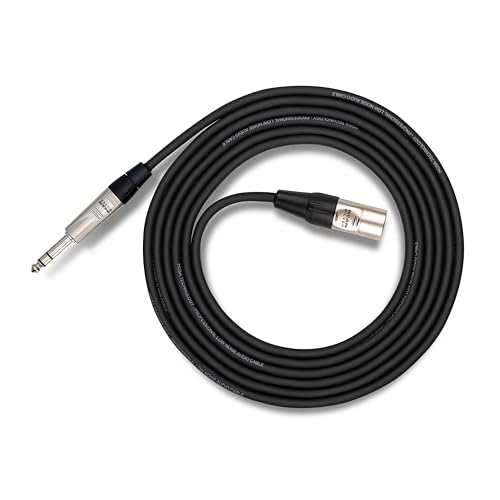
A balanced 1/4-inch TRS output on an interface goes to a male XLR input on a powered monitor, and that needs a TRS-male-to-XLR-male lead. Feeding a mixer channel from a microphone or DI, you want a female XLR end, which reverses the pairing. Check both ports before you order — an XLR male plug cannot plug into another male XLR output.
Length is a trade, not a free upgrade
Short patch runs behind a desk keep cable clutter down and stay out of the way, while a 15-foot or 20-foot lead gives you room to move a mic stand or reach across a stage. Longer runs in a noisy room put more cable in the path of power cords and routers, so lean toward the shorter length that still reaches.
Shielding is where the money goes
A foil layer rejects radio interference and a copper braid or spiral shield handles the rest, and the better cables combine both. That double-layer construction is what stops a router or phone from beeping through your monitors. The premium end of the market adds a star-quad layout with four conductors, which cancels noise even more aggressively.
Side-by-Side Comparison
| Model | Best For | Length | Connector Pairing | Shield / Gauge | Amazon |
|---|---|---|---|---|---|
| Hosa HSX-005 Pro★ Best Overall | All-round studio patch | 5 feet | TRS to XLR male | 24 gauge | Amazon |
| Suanqi 1/4 TRS to XLR Male 2-PackBest Value | Short pedalboard links | 1 foot | TRS to XLR male | 4N OFC, shielded | Amazon |
| Hosa HXS-005 ProTop Performer | Mic into a mixer | 5 feet | XLR female to TRS | 24 gauge | Amazon |
| Ihurllu Balanced Patch 2-Pack | Studio monitor pairs | 3.3 feet | TRS to XLR male | Dual-layer foil + OFC | Amazon |
Detailed Reviews
1. Hosa HSX-005 Pro Balanced Interconnect
Our pick — 4.5+★ from 850+ verified ratings; the strongest balance of quality and price.
Five feet of balanced line that stays dead quiet from mixer to powered speaker.
It earns the top spot on the strength of one simple thing: the jacket never kinks, so the shield survives daily coiling. The jacket stays flexible on the coil, so a lead that lives half its life wrapped around your hand does not develop a memory that cracks the shield later.
Hosa builds it with REAN connectors on a 24-gauge balanced interconnect, and that gauge is a step sturdier than the 22-gauge braided rival in this list. You get a 1/4-inch TRS end into a male XLR3, which is exactly the pairing for running a small mixer into a powered monitor. Owners use it for precisely that, and describe clean sound with very low noise on the run.
Owners praise the build most, with reliability right behind it: the REAN connectors seat firmly and stay put. The catch is length: at 5 feet the Hosa beats the 1-foot Suanqi patch pack on reach, but it falls well short of the 15-foot and 20-foot Pig Hog leads, so a wide stage layout will want a longer run.
What earns it the crown
- 24-gauge balanced interconnect with REAN connectors on both ends.
- Flexible jacket that resists kinking, so the shield survives daily coiling.
- Matching TRS-to-XLR-male pairing for interface-to-monitor runs.
- Five feet covers most desk-to-speaker distances.
Where it stops short
- Five feet is too short for across-the-stage or mic-stand work.
- Single cable per order, so a stereo monitor pair means buying two.
Reach for it if: you want one dependable balanced lead for a mixer or interface feeding a powered speaker.
Better look elsewhere if: your run needs to cross a room or reach a mic stand.
2. Suanqi 1/4 Inch TRS to XLR Male Cable, 1FT, 2 Pack
Stubby one-foot links that tidy up a pedalboard or a crowded interface rack.
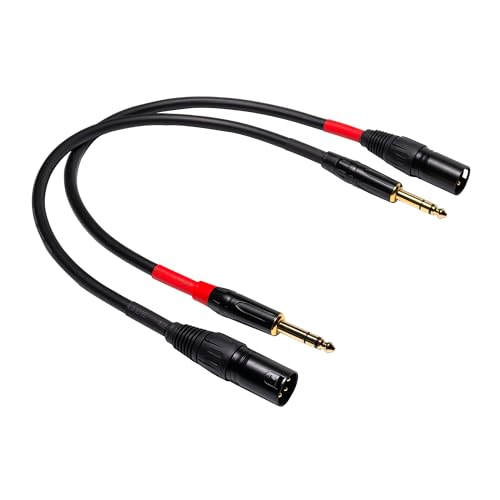
Hosa’s cable measures 5 feet; this Suanqi pair measures 1 foot each, and that gap is the whole point — 5 feet of slack is the last thing you want behind a pedalboard. Two cables in the pack means you can wire a stereo pair without a second order, and the black and red colors keep left and right easy to tell apart.
The conductors are 4N oxygen-free copper with shielding, and the connectors get a 24K gold plating to resist corrosion. That plating is about keeping a smooth signal over the years, not a flashy detail. The PVC jacket is built to resist twisting, kinking, and tangling, which matters when the cable lives in a tight box.
Value is what buyers talk about most here: two shielded gold-plated links for less than most single leads. HX Stomp owners in particular report it slots into their rig without noise and sounds great in the signal chain. Just be clear on the reach: a 1-foot patch connects adjacent gear only, so anything across the desk needs a longer lead.
Short-run specialist: two shielded gold-plated links at 1 foot each, sized for stacked gear rather than room-to-room runs.
You’ll be happiest here if: your gear sits side by side and you want a tidy pair of links.
Think twice if: your interface and monitors are more than a foot apart.
3. Hosa HXS-005 Pro Balanced Interconnect
The female-XLR twin to the top pick, built for feeding a mic into a mixer channel.
Same Hosa family, opposite ends. Where the HSX-005 runs TRS into a male XLR, this HXS-005 runs a female XLR3F (a 3-pin female XLR plug) into a 1/4-inch TRS — the pairing you need when a microphone or a DI box (a box that converts an instrument signal to a balanced line) has to reach a mixer’s balanced phone input. Both cables share the 24-gauge balanced build and REAN connectors, so quality is a known quantity going in.
Buyers rate functionality second only to build quality, and it shows in how they use it. It is a 5-foot lead that stays clean and quiet, with no hum creeping into the channel. The jacket is round and the connectors seat firmly, so it holds up to repeat plugging.
It slots naturally next to its male-ended sibling as the mic-side counterpart. The honest limit is straightforward: if your gear needs a male XLR dongle rather than a female end, this is the wrong-direction cable. Check which end your input actually wants before you add it to the cart.
Right-direction pick: a balanced female-XLR-to-TRS lead that gets a microphone signal into a mixer channel cleanly.
Grab this one when: your source is a mic or DI with a female XLR output and your destination is a TRS input.
Wrong tool if: you actually need the male-XLR-to-TRS direction instead.
4. KINXIYU XLR Female to 1/4 Inch TRS Cables, 3 FT 2-Pack

Braided 22-gauge twin leads that survive a gig bag and a busy stage night after night.
The number note here is 22 — this cable runs a 22-gauge oxygen-free copper conductor, thicker than the 24-gauge Hosa pair in this list, wrapped in a nylon braid that fights scratching and abrasion. It is also double-shielded, with a copper braid layer over aluminium foil, which is the combo that pushes back on both radio and electrical interference.
Two 3-foot cables come in the pack, so you can run a stereo pair without doubling up on orders. Sound quality and sturdiness both get strong word of mouth, and the durability story is the one that sticks: these leads ride in a gig bag and do regular shows without fraying at the ends.
The Hosa male-ended pair is the obvious trade-off point: that cable is thicker at 24 gauge, but KINXIYU gives you the 22-gauge conductor and a braided jacket for rugged use. Point this at your stage or rehearsal bag, where a braided cover earns its keep.
The rugged-case argument
- 22-gauge oxygen-free copper conductor for a solid signal path.
- Double shielding — copper braid plus aluminium foil — cuts interference.
- Nylon braid outside resists scratching and abrasion.
- Two 3-foot cables per pack for immediate stereo use.
What to keep in mind
- Three feet is short for anything beyond a desk or pedalboard.
- Braided jacket feels stiffer than a plain flexible PVC lead.
Suits you if: you gig regularly and want two tough braided leads without a big outlay.
Look past it if: you need a longer run or prefer a soft, supple jacket.
5. Ihurllu 1/4-Inch TRS to XLR Male Patch Cable 3.3 ft 2-Pack
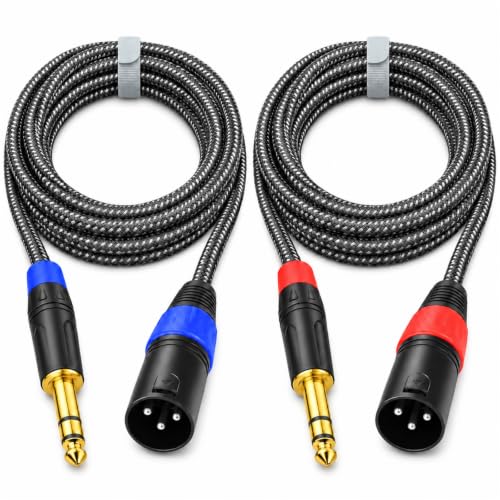
Two colour-coded monitor leads that trace left and right straight across your desk.
Here is the detail that sets this pair apart: one cable carries red rings at both ends, the other blue. Follow the colour from your interface to the matching powered monitor, and you never have to guess which line runs where behind the desk. Each cable carries one balanced mono signal, so one red and one blue make a clean stereo pair.
The build is serious for a patch lead. An aluminium foil shield sits under a spiral oxygen-free copper shield to cut EMI and RFI pickup (electrical and radio interference that adds hum or buzz), and the 1/4-inch TRS plug gets gold-plated contacts plus an internal clamp that grips the jacket so everyday pulls do not reach the solder joints. Both ends have strain-relief boots (flexible sleeves that spread the bending where the cable exits the plug).
Weighed against the KINXIYU braided pair, this Ihurllu set runs 0.2 kg versus 0.17 kg, and that extra heft shows up as the clamp and boot hardware. Each cable also ships with a reusable strap. The recurring note worth knowing is noise: some buyers report electrical device noise fully gone, while others pick up static. Check your grounding and phantom power before blaming the cable.
Desk-tidy design: the colour-coding and internal clamp make it the easiest pair in this list to route and identify.
Pick this if: you are wiring a stereo monitor pair behind a desk and want the runs labelled and neat.
Know before you buy: the XLR male end will not mate with a mic’s male XLR output — this is a line-level lead.
Know the Specs
Balanced wiring and TRS
A balanced cable carries the signal on two conductors plus a shield, and the receiving gear subtracts the noise picked up along the way. That is why a balanced 1/4-inch TRS-to-XLR lead stays quiet on a monitor run while a plain unbalanced TS patch can hum. Both ends must be balanced for the trick to work — a balanced TRS output into a balanced XLR input is the pairing that counts.
Star-quad and shield coverage
Most balanced leads use two conductors. A star-quad design runs four, crossing them so outside interference cancels itself out — that is the Mogami’s whole reason for existing. Shield coverage matters too: a full 100% spiral copper wrap blocks more than a partial braid, which is why a heavily shielded cable shrugs off router and phone noise that a thinner lead lets through.
Gauge and conductor metal
Gauge is the wire’s thickness, and a lower number means a thicker conductor. This list spans 22-gauge and 24-gauge leads, both fine for line-level audio, with the thicker 22-gauge favoring rugged stage use. Oxygen-free copper (OFC) is the refined conductor metal used in several of these cables to keep the signal clean. Gold-plated connectors resist corrosion over years of plugging.
Connector direction
The single most common ordering mistake is buying the wrong end. A male XLR plug connects to a female XLR input, never to another male output. Before you buy, trace the direction: an interface’s TRS output into a powered monitor’s male XLR input is one pairing, and a microphone’s female XLR output into a mixer’s TRS input is the other. Match the gender or the cable will not seat.
Common Questions
Will an XLR to TRS cable work with my audio interface and studio monitors?
What is the difference between a TRS cable and a TS cable?
Do I need a male or female XLR end?
Does an XLR to TRS cable reduce hum and buzz compared with an unbalanced lead?
Can I use an XLR to TRS cable to connect a guitar or bass?
What length XLR to TRS cable should I buy?
Is the Mogami cable worth the premium over a budget lead?
Do these XLR to TRS cables come in stereo pairs?
Will an XLR to TRS cable pass phantom power to a microphone?
Should I use an XLR to TRS cable between a power amp and a passive speaker?
The Bottom Line
For most setups, the xlr to trs cable that wins is the Hosa HSX-005 Pro because it pairs a 24-gauge balanced build with REAN connectors and a jacket that refuses to kink — one dependable lead for a mixer or interface feeding a powered speaker. If silent studio monitoring is the goal and budget is no object, the Mogami Gold TRS to XLR Male is the one to reach for, with its star-quad conductors (four wires that cancel noise) and 100% spiral copper shield. And for long stage runs, the Pig Hog PX-TMXM15 at 15 feet covers the distance its rivals do not.
How we choose
We do not accept paid placement. Every pick is matched to a real buyer and a real use-case; we do not hands-on test units.
Sources
Specifications: manufacturer listings and product documentation. Review insights: verified customer reviews, as of November 2026. Pricing: not shown on this page (it changes often); check the current price via the retailer link.
As an Amazon Associate, Tactical Gear Guy earns from qualifying purchases. This does not affect which products we feature.