Specs are compiled from manufacturer listings and verified buyer reviews and can change over time — please confirm the key details on the product page before buying.
If you shoot interiors, landscapes, or tight event spaces on a Nikon Z body, the lens that ends your search is the NIKKOR Z 14-30mm f/4 S. It earns its 4.5+ stars across 500+ owners by covering 14-30mm in one barrel and collapsing to 3.5 inches. Below you get eleven Z-mount wide-angle options sorted by what each one actually does for you, so you can stop reading spec sheets and go shoot.
This guide is built by comparing the manufacturers’ published specifications and the patterns across verified customer reviews, so you get each pick’s real strengths and trade-offs instead of marketing spin.
Wide glass is where a Z body either feels limitless or suddenly cramped, and the mount itself decides which of these you can even attach. Everything that follows sticks to real Z-mount fitment, honest optical trade-offs, and the numbers that change how you shoot — which is exactly the filter this list of z-mount wide-angle lenses was built around.
Top Picks

How To Choose The Best Z-Mount Wide-Angle Lenses
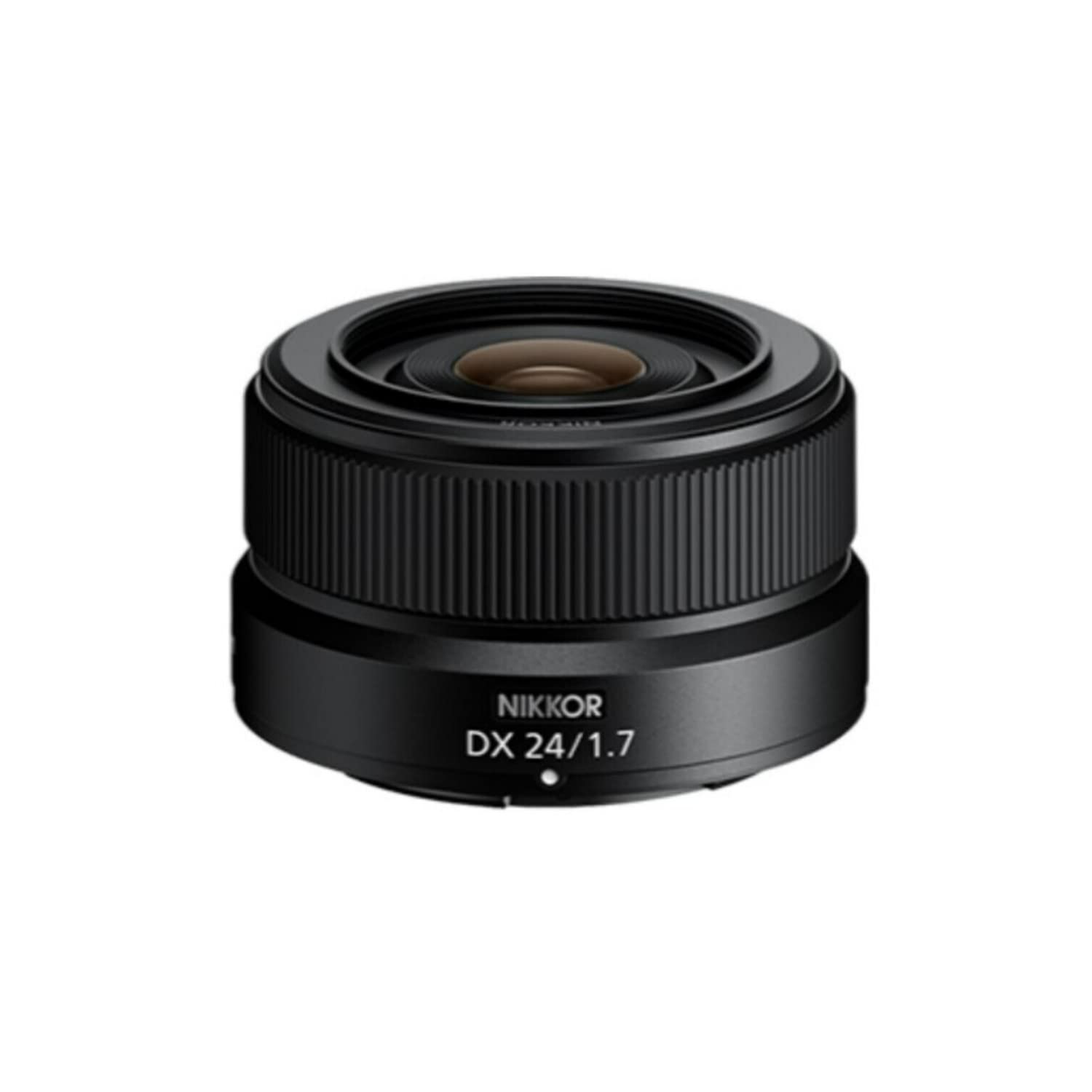
The first decision is not brand. It is sensor format. A 24mm lens on a full-frame Z body gives you a genuinely wide view. The same number on a DX body gives you a narrower, more normal-looking frame. Nikon frames this plainly for one of its own lenses: the DX 24mm is described as capturing nearly the same view as a 35mm lens on full frame. So before you compare anything, know which sensor sits behind your mount.
Full-frame versus DX: the same number, a different picture
If you own a Z5, Z6, Z7, Z8, or Z9, you are working with full frame and the wide end is truly wide. If you shoot a Z30, Z50, or Zfc, you are on APS-C, and a 13mm or 16mm lens ends up delivering a much more usable wide view. Buying a full-frame ultra-wide for a DX body wastes coverage you cannot use. Buying a DX lens for a full-frame body means the camera crops the frame for you.
Aperture means light, and light means hand-held shots
A brighter maximum aperture lets in more light, so you can shoot dim interiors or night skies without pushing your ISO into noisy territory. The flip side is that fast wide glass is bigger, heavier, and more costly. A fixed f/4 zoom covers a whole range and stays compact. A prime at f/1.7 or f/1.8 buys you low-light reach and shallow background blur at a single focal length.
Autofocus or manual: match the lens to how you shoot
For run-and-gun video, events, and anything moving, an STM stepping motor (a quiet, smooth focus motor) matters. It keeps focus pulls silent and steady. Fisheye lenses like the 10mm here are manual focus by design, which is fine for architecture and creative close-ups but slow for candid people shots. Decide your subject first, then your focus type.
Filters and front elements change the real cost
A lens that accepts standard circular filters saves you from buying a big square filter holder. The 14-30mm S takes 82mm screw-on filters, which keeps your landscape workflow simple. Some ultra-wides have a bulging front element that rules out screw-in filters entirely. Check that before you fall in love with a focal length.
Side-by-Side Comparison
| Model | Best For | Focal Length | Max Aperture | Weight | Amazon |
|---|---|---|---|---|---|
| Nikon NIKKOR Z 14-30mm f/4 S★ Best Overall | All-round wide zoom | 14-30mm | f/4 | 1.1 lb | Amazon |
| Brightin Star AF 24mm F1.8Top Performer | Full-frame fast prime | 24mm | f/1.8 | — | Amazon |
| VILTROX 35mm F1.8 II EVO Z APO | Street and close-up | 35mm | F1.8 | 0.38 kg | Amazon |
| VILTROX 16mm f/1.8 Z DF | Wide prime with LCD | 16mm | f/1.8 | 565 g | Amazon |
| Laowa 10mm f/2.8 Zero-D | Zero-distortion ultra-wide | 10mm | f/2.8 | 0.93 lb | Amazon |
| Tamron 16-30mm F/2.8 VXD G2 | Travel wide zoom | 16-30mm | F/2.8 | 15.9 oz | Amazon |
| Nikon NIKKOR Z 14-24mm f/2.8 S | Pro constant-aperture zoom | 14-24mm | f/2.8 | 650 g | Amazon |
Detailed Reviews
1. Nikon NIKKOR Z 14-30mm f/4 S
Our pick — 4.5+★ from 500+ verified ratings; the strongest balance of quality and price.
One lens that covers the whole wide end and still packs down to 3.5 inches.
Start with the number that defines this lens: it spans 14-30mm at a fixed f/4 aperture. That means you frame a whole room at 14mm, then twist to 30mm for a tighter, more natural composition — without swapping glass. The fixed f/4 matters because the aperture never dims as you zoom, so your exposure stays steady across the range.
The retractable mechanism collapses the barrel down to a mere 3.5 inches, which is why this zoom survives in a small bag instead of eating a whole compartment. What wins people over most is the optical quality: corner-to-corner sharpness with outstanding control of distortion, so interior walls and rooflines stay straight instead of bowing. It also takes standard 82mm circular filters, unlike some ultra-wides that bulge past filter threads.
Autofocus runs on Nikon’s STM stepping motor — a quiet, smooth focus drive — so video focus pulls stay silent. Here is the honest trade-off: f/4 is a full stop slower than the f/2.8 zooms further down this list, so for very dark interiors or serious night-sky work a faster lens earns its keep. Landscape and interior shooters rarely need that extra stop.
What earns it the top spot
- 14-30mm range with a constant f/4 aperture across the whole zoom
- Sharp corner to corner with minimal distortion
- Collapses to 3.5 inches for easy packing
- Accepts standard 82mm screw-on filters
Where it asks you to compromise
- f/4 is slower than an f/2.8 zoom for dark interiors
- Not the widest option here — the 10mm primes go far wider
Pick it for: full-frame shooters who want one compact lens for interiors, landscapes, and events.
Pass if: your work lives at f/2.8 in near-dark venues.
2. Nikon NIKKOR Z DX 24mm f/1.7
185 degrees of curve for the shot no straight lens can make.
This is the lens you reach for when you want the world to bend. At 10mm it sits at the extreme end of focal length, a long way from the 35mm VILTROX higher up this list; one is a creative effect, the other a natural perspective.
The constant F2.8 aperture helps in low light and cuts exposure time when you are chasing stars, and the 8-group, 11-element optical design with 2 ED and 1 aspherical element reels in color fringing. A minimum focus distance of 0.15m lets you get right on top of a subject for the exaggerated “big head” fisheye look. It weighs approximately 602 g, so it is a chunk to carry but far from backbreaking.
The trade-off is manual focus only. There is no autofocus motor, which is fine for architecture and static creative work but slow for moving subjects. This is a deliberate, considered lens — you focus by hand and you compose around the curve.
The fisheye draw: a 185° frame, constant F2.8 light, and close focus at 0.15m for effects a rectilinear lens simply cannot produce.
The deliberate limit: manual focus means no tracking autofocus for candid or fast-action work.
Made for: skate, music-venue, and architectural shooters who want a dramatic curved perspective.
Not for: anyone who needs autofocus to catch moving people.
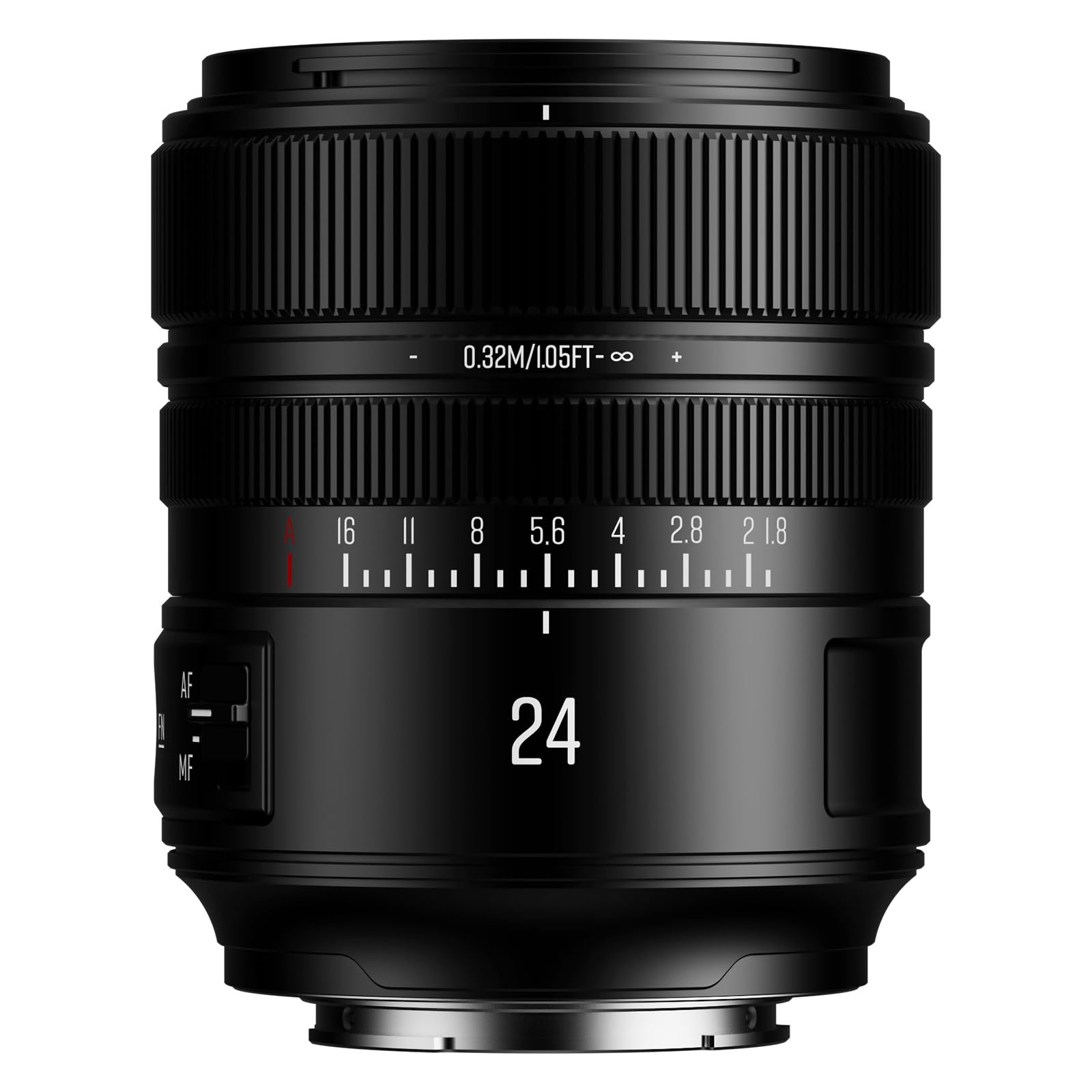
3. Brightin Star AF 24mm F1.8 Full Frame Z Lens
A 24mm full-frame prime built for clean video and low-light stills.
Two numbers tell the story of this lens for video. The first is a breathing effect rate as low as 0.5% — meaning the frame barely shifts as you pull focus, so your composition holds steady. The second is 14 aperture blades, which keep out-of-focus highlights round and clean at f/1.8. Together they make this a natural pick for hybrid shooters.
The optical formula is 11 groups and 14 elements, including 2 high-precision aspherical, 3 ED low-dispersion, and 3 high-refractive-index elements. In plain terms, that stack is there to suppress color fringing and keep the frame sharp. The f/1.8 aperture opens far wider than the f/4 zoom at the top of this list, so dim rooms and evening streets stay bright. Autofocus runs silently on an STM stepping motor with face and eye detection.
Build quality gets consistent praise, and images come out crisp. The honest note is reliability — most copies behave, but the mix of reports means it is worth testing autofocus thoroughly in your first week. If it tracks cleanly, you have a fast, quiet full-frame prime that covers landscapes, indoor portraits, and architecture.
Why hybrid shooters look twice
- f/1.8 aperture for low light and shallow depth of field
- 0.5% breathing rate keeps video framing stable
- Silent STM autofocus with face and eye detection
- 14-blade aperture for rounded bokeh highlights
What to verify early
- Reliability feedback is mixed — test autofocus on arrival
- Fixed 24mm means no zoom flexibility
Reach for this if: you shoot full-frame video and stills and want a fast, quiet 24mm.
Look elsewhere if: you need a zoom to cover several focal lengths in one barrel.
4. VILTROX 35mm F1.8 II EVO Z APO Lens

A 35mm prime tuned for crisp street shots and close-up detail.
This one sits at the narrow end of the wide family — 35mm versus the 10mm fisheye far below, a 3.5x difference in reach. At 35mm it frames street scenes and environmental portraits the way your eye sees them. It is the natural perspective for street scenes, environmental portraits, and the kind of frame that just looks like what your eye saw.
The F1.8 aperture keeps low-light shots clean, and the advanced APO design — 13 elements in 10 groups, including 2 ED, 3 HR, and 1 UA — targets sharp detail and pure color. A 0.34m minimum focus distance lets you get close on intricate subjects. An Fn button, a CLICK switch, and an AF/MF switch let you change settings without opening a menu.
Focus is driven by an STM stepping motor, quick and decisive for moving subjects from pets to street scenes. The full metal construction feels solid in the hand. At 0.38 kg it is not heavy, but check the control layout against your grip style before committing.
The case for 35mm: a natural, versatile perspective with APO optics and physical switches for fast handling.
One honest note: it is the least “wide” lens here, so it won’t give you stretched-out interior or architecture shots.
Best for: full-frame walk-around shooters who want sharp, colorful everyday frames.
Skip if: you actually need dramatic ultra-wide reach for tight interiors.
5. VILTROX 13mm F1.4 Z Mount Lens

The wide prime with the best build reputation of the whole group.
This is the sibling of the 16mm above, and it earns its own spot on build. Owners consistently single out the full metal body as the thing that sells them — a lens that feels like it belongs on a pro body. The 105.6° angle of view from the 16mm focal length fits whole rooms, wide cityscapes, and expansive skies into one frame.
Shoot in low light without a flash or a big ISO bump (a boost to sensor sensitivity that adds image noise), thanks to the f/1.8 aperture (how wide the lens opening is). That same wide opening blurs the background so your subject stands out. A 0.96″ LCD (a small screen) on the lens barrel shows your aperture and focus distance, so you can check settings without pulling your eye from the viewfinder. The Fn1 button jumps straight to a function you set yourself. An STM stepping motor (a quiet focus motor) drives face and eye recognition autofocus, and you can switch between manual and autofocus without a hitch.
Optically it runs 12 groups and 15 elements with 3 aspherical lenses for high resolution across the frame. At 19.9oz (565g) it is compact enough to carry all day, and the metal body takes standard filters. Its full metal body is the most-praised build of the wide primes here.
Built to be trusted: a full metal body with a 0.96″ LCD, Fn1 button, and 105.6° view for architecture and astro.
The honest trade: at 565g it is the heftier of the two 16mm options, so lighter shooters may feel it on long days.
Choose this if: you want a durable full-frame wide prime with on-lens readouts.
Weigh it against: the lighter 550g 16mm above if portability tops your list.
6. Laowa 10mm f/2.8 Zero-D Full-Frame Lens

Straight lines stay straight even at a 130.4-degree view.
Architectural shooters will understand this one fastest. The Zero-D design suppresses distortion to a close-to-zero level, so both horizontal and vertical lines stay true from corner to corner. That 130.4° angle of view lets you exaggerate space and fit a vast landscape into a single dramatic frame — without the bowed walls lesser ultra-wides produce.
The optical build is 15 elements in 9 groups, including 2 aspherical and 3 ED glasses, which keeps sharpness high and color fringing low. A 12cm minimum focus distance lets you get super close to a subject and separate it from a background in a wide-angle macro-style shot. Despite the full-frame spec, it is only 7cm long and weighs 0.93 lb, so it travels easily.
The honest trade is autofocus. The lens is a manual-focus wide-angle by nature, so you set focus yourself — fine for architecture and landscapes, slow for anything moving. On a tripod, focusing by hand at 130.4° costs you nothing.
The distortion-free promise: near-zero distortion at 130.4° keeps architecture and interiors geometrically honest.
The manual reality: no autofocus means you focus by hand for every frame.
Ideal for: architecture and landscape shooters who demand straight lines at extreme width.
Not ideal for: video creators who need fast, hands-off focus.
7. Tamron 16-30mm F/2.8 Di III VXD G2
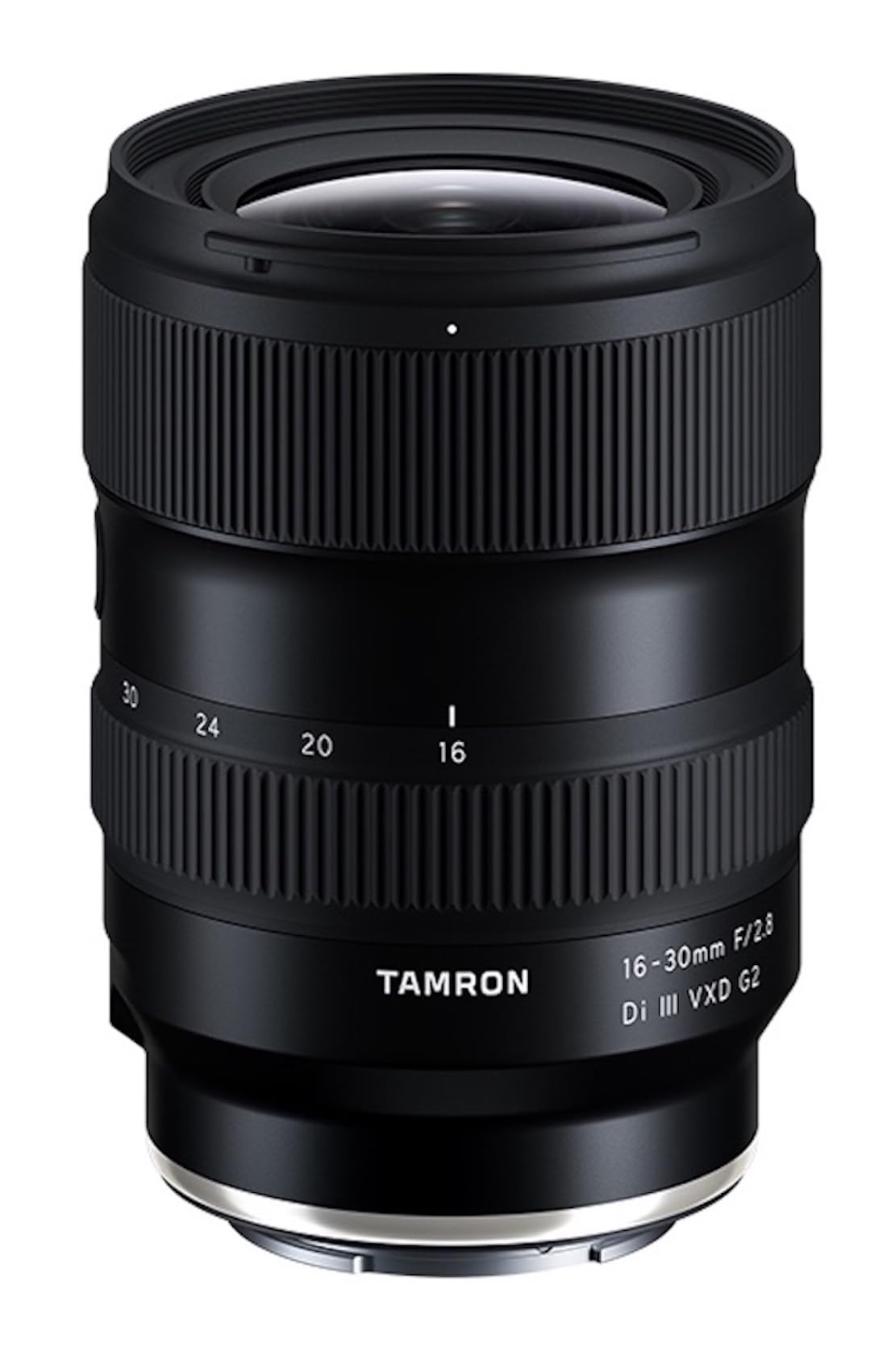
A constant-aperture wide zoom that disappears into a travel bag.
For a shooter who moves, the combination here is hard to argue with: 16-30mm at a fixed F/2.8 aperture. You get the flexibility of a zoom without the aperture dimming as you twist, so your low-light and depth-of-field control stays consistent from one end to the other. At 15.9 ounces it is built for mobility — ideal for travel and everyday video.
The VXD autofocus motor is high-speed and high-precision, quiet enough for video work. Optically it resolves fine detail in landscapes and architecture and renders smooth bokeh. Moisture-resistant construction and a fluorine coating help it shrug off weather, and it carries a 6-year limited USA warranty when bought from a Tamron authorized USA dealer.
The honest note lands on sharpness. Image quality draws strong praise, but sharpness feedback is split — some copies look crisp, others are less so. Check your copy’s corners on a detailed landscape early. A good copy is a 15.9 oz, constant f/2.8, moisture-resistant zoom built for a travel bag.
Why travelers like it
- 16-30mm zoom with a constant F/2.8 aperture
- 15.9 oz for easy all-day carrying
- Moisture-resistant build with fluorine coating
- Quiet, precise VXD autofocus for video
Check before you commit
- Sharpness feedback is mixed — verify your copy’s corners
- Zoom range stops at 30mm, so it is not a do-everything lens
Pack this if: you want one fast, light wide zoom for travel and video.
Look at the 14-30mm instead if: you need a wider starting focal length for tight interiors.
8. Nikon NIKKOR Z 14-24mm f/2.8 S
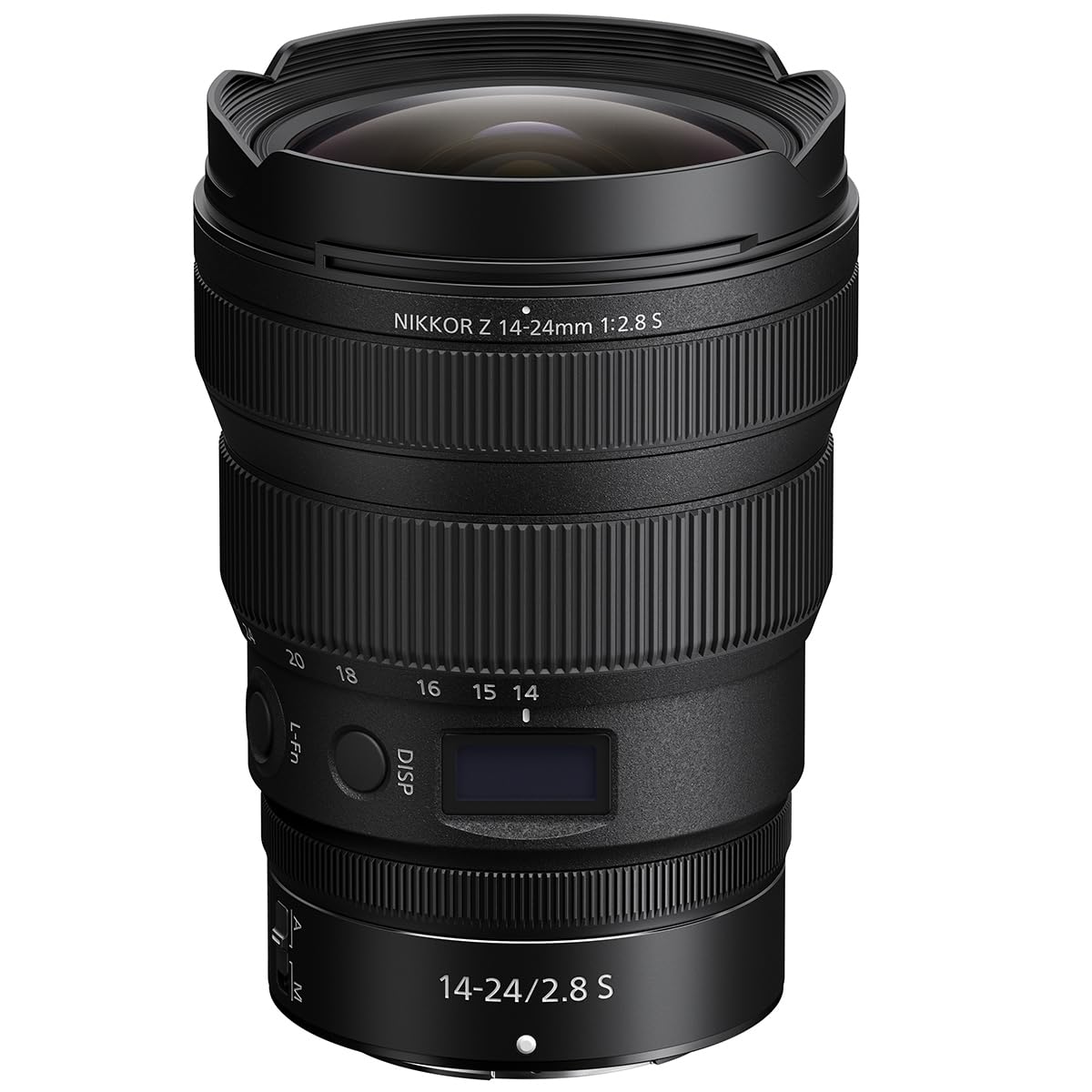
The f/2.8 version of the wide zoom, for shooters who work in the dark.
Here is the cleanest head-to-head on the page: the 14-24mm f/2.8 S shares its focal territory with the 14-30mm f/4 S that holds the top spot, but it carries an f/2.8 constant aperture where that one runs f/4. That extra stop of light is a real difference in dim venues, night skies, and interiors where you cannot add flash.
Optically it holds outstanding resolution across the entire frame, and the build is weatherproof — ready for landscapes and cityscapes in conditions that would sideline a fair-weather lens. It covers the same wide territory: landscapes, architecture, interiors, and environmental portraits. At 650 g it stays surprisingly compact for a constant f/2.8 ultra-wide.
The honest trade is value. Some owners find the cost easy to justify for the optics and speed; others simply find it expensive. That makes this a premium-tier decision — worth it if low light is central to your work, less so if you mostly shoot well-lit scenes.
The pro case: a constant f/2.8 aperture, weatherproofing, and edge-to-edge resolution for low-light and harsh-condition work.
The premium reality: it costs meaningfully more than the f/4 sibling, which is the trade for that extra stop of light.
For the working shooter: night skies, dim interiors, and rough weather where an f/2.8 wide zoom earns its keep.
Overkill for: daylight landscape work the f/4 14-30mm already covers well.
Know the Specs
Focal length
This is how wide your picture gets, measured in millimeters. A lower number pulls in more of the scene. A 10mm or 13mm gives you a dramatic, stretched-out view; a 24mm or 35mm looks closer to what your eye sees. On APS-C (DX) bodies, that number behaves differently than on full frame, so match the lens to your sensor.
Maximum aperture
This is how big the lens opening gets, written as an f-number. A lower number like f/1.4 or f/1.8 lets in more light and blurs backgrounds more; f/4 and f/2.8 are the zoom standards here. A constant aperture on a zoom means the light level stays the same as you zoom, so your exposure does not shift.
Autofocus type
An STM stepping motor is a quiet, smooth focus drive that suits video. A manual-focus lens has no motor at all — you turn the ring yourself, which is fine for architecture and slow work but slow for moving people. Match the focus type to your subject, not the other way around.
Filter thread
Many ultra-wides have a front element that bulges out, so you cannot screw a standard filter on. A lens with a normal 82mm thread accepts circular filters for landscape and long-exposure work. Check this before buying if you lean on filters.
Common Questions
Will a DX wide-angle lens work on a full-frame Nikon Z body?
What is the difference between a fisheye and a rectilinear wide-angle lens?
Is f/2.8 worth the extra cost over an f/4 wide zoom?
Do I need autofocus on a wide-angle lens?
Can I use standard screw-on filters on these lenses?
How close can a wide-angle lens focus?
Which wide-angle lens is best for shooting the night sky?
Is a prime or a zoom better for wide-angle shooting?
Do these lenses work on every Nikon Z camera?
Why do some wide-angle lenses have a built-in LCD screen?
The Bottom Line
Most full-frame Z shooters should buy the Nikon NIKKOR Z 14-30mm f/4 S. It covers 14-30mm at a constant f/4 (the same widest opening across the whole zoom), so exposures stay consistent as you zoom. It collapses to 3.5 inches, so it packs small in your bag. And it keeps straight lines straight, so buildings and horizons don’t bow — that’s why it tops this list. If you shoot a DX body (Nikon’s smaller APS-C sensor) and want one fast, tiny walk-around prime (a fixed-focal-length lens), grab the Nikon NIKKOR Z DX 24mm f/1.7. Its f/1.7 opening pulls in light for dim streets, all in a 281 g frame. For night skies and dim venues where one stop of light decides the shot, reach for the Nikon NIKKOR Z 14-24mm f/2.8 S. Whichever you pick, match the lens to your sensor format and your working light.
How we choose
We do not accept paid placement. Every pick is matched to a real buyer and a real use-case; we do not hands-on test units.
Sources
Specifications: manufacturer listings and product documentation. Review insights: verified customer reviews, as of November 2026. Pricing: not shown on this page (it changes often); check the current price via the retailer link.
As an Amazon Associate, Tactical Gear Guy earns from qualifying purchases. This does not affect which products we feature.