Specs are compiled from manufacturer listings and verified buyer reviews and can change over time — please confirm the key details on the product page before buying.
You plug your mixer into a powered speaker, hit play, and hear a buzz that was never in the recording. Nine times out of ten the culprit is the wrong cable on that run, not your gear.
This guide is built by comparing the manufacturers’ published specifications and the patterns across verified customer reviews, so you get each pick’s real strengths and trade-offs instead of marketing spin.
Get the connector gender and the balanced-versus-unbalanced question right first, because the wrong pairing simply will not seat. These eight cables cover every common studio and stage hookup in this xlr to 1/4 roundup.
Top Picks

How To Choose The Best XLR to 1/4 Cable
Most people buy the wrong one first because they assume all XLR-to-quarter-inch cables do the same job. They do not. One version carries a microphone signal, another carries a line-level signal out of a mixer, and a third is unbalanced and will hum the moment the run gets long. Getting this right takes about thirty seconds of checking two things on your gear.
Match the connector gender before anything else
Look at the jack on your device, not the cable picture. A microphone needs a female XLR end to plug into it, while a powered monitor or mixer output usually wants a male XLR or a male TRS plug. A cable with two male ends physically cannot connect to a microphone — the pins will not meet. Check both ends, write down what each device needs, and buy the cable that matches.
Balanced versus unbalanced is the hum decision
A balanced cable carries the signal on three conductors so noise picked up along the run gets cancelled at the far end. An unbalanced cable uses two conductors and skips that cancellation. On a short hop across a desk you may never notice. Across a stage floor next to lighting rigs and power bricks, unbalanced is where the buzz comes from.
Length is a real cost, not a marketing point
Buy the length the run actually needs and not much more. Extra cable coils up behind the rack and picks up interference, and every extra foot is another foot to trip over. A 5-foot cable handles a desk hookup; a 10- or 15-foot run reaches across a small stage to a speaker stand.
Shielding and gauge decide how quiet it stays
Copper gauge is numbered inversely — 22 AWG is thicker wire than 24 AWG, and thicker wire resists signal loss over distance better. Shielding, whether foil, spiral copper, or a braid, is what blocks hum from routers and dimmers. Both details matter more than the jacket color.
Side-by-Side Comparison
| Model | Best For | Connector Pair | Length | Signal Type | Amazon |
|---|---|---|---|---|---|
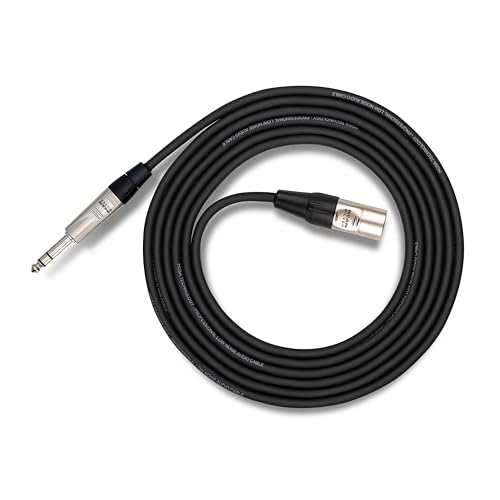
| Hosa HSX-010★ Best Overall | Clean mixer-to-speaker runs | 1/4″ TRS male to XLR male | 10 feet | Balanced | Amazon |
| Mogami Gold TRS to XLR MaleSilent Studio Pick | Silent studio monitoring | 1/4″ TRS to XLR male | 6 feet | Balanced | Amazon |
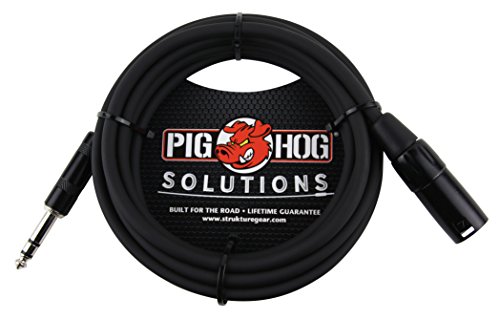
| Pig Hog PX-TMXM15Longest Run | Long stage runs | 1/4″ TRS male to XLR male | 15 feet | Balanced | Amazon |
| BEZOKABEL XLR Female to 1/4 | Miking up on a budget | XLR female to 1/4″ | 6 feet | Balanced | Amazon |
| SNANSHI 1/4 TRS to XLR Male | Full stereo monitor pair | 1/4″ TRS male to XLR male | 6.6 feet | Balanced | Amazon |
| Cable Matters XLR to 1/4 TS | Karaoke and amp hookups | 1/4″ TS male to XLR female | 10 feet | Unbalanced | Amazon |
| Smithok 2-Pack Braided | Two complete channel runs | 1/4″ TRS male to XLR male | 6.6 feet | Balanced | Amazon |
| Hosa HXS-005 | Desk-to-interface patches | XLR female to 1/4″ TRS | 5 feet | Balanced | Amazon |
Detailed Reviews
1. Hosa HSX-010 Pro Balanced Interconnect
Our pick — 4.5+★ from 850+ verified ratings; the strongest balance of quality and price.
Ten feet of balanced copper that takes a mixer output to a powered speaker without a whisper of hum.
For a small mixer feeding powered speakers, this is the cable you want in the bag. It runs a quarter-inch TRS male plug into an XLR male plug across 10 feet of 24-gauge copper, wired as a balanced interconnect so noise cancels out before it reaches the speaker. Ten feet reaches from a tabletop mixer to a speaker on a stand without leaving a coil of slack on the floor.
What wins people over is how thoroughly it stays quiet. Build quality earns more praise than any other single trait, with reliability a clear second — feedback from people rewiring the same rack night after night. It also stays flexible instead of kinking into a spring, which matters when you are coiling it back into a gig bag at 1 a.m. The 10-foot run here is exactly double the 5-foot Hosa HXS-005 below, so if you are covering the same distance you know which one to reach for.
The honest catch is the connector pairing. Both ends are male, so this cannot go into a microphone — it connects a line output to a line input, full stop. If you need to plug a mic into a mixer channel, you want the BEZOKABEL or the Cable Matters instead. For the desk-to-speaker job it is built for, nothing else in this lineup balances price against length this cleanly. Hosa’s own REAN plugs are the part most buyers end up trusting.
Where it pulls ahead
- Balanced three-conductor design keeps powered speakers free of hum on a 10-foot run
- 24 AWG copper with REAN connectors on both ends for a tight, repeatable seat
- Stays flexible and resists kinking when coiled for transport
- 10 feet reaches tabletop mixer to speaker stand without leftover slack
Where it stops short
- Two male ends means no microphone hookup — line level only
- Longer run than a desk patch needs if your gear sits side by side
Built for: anyone running a mixer, interface, or preamp output into a powered speaker or monitor over a real distance.
Think twice if: your destination is a microphone input rather than a line input.
2. Mogami Gold 1/4 TRS to XLR Male Cable
Four conductors instead of two, and a noise floor you can hear the absence of.
Here is the one cable in this group built around a different idea: the Neglex star-quad design runs four conductors rather than two. That extra pair is there to cancel the noise cheaper cables let through, so the line from your interface to your powered monitors stays quiet even with a phone and a router sitting on the same desk. The full-length shield is a 100 percent coverage spiral of pure copper — it wraps the whole run instead of leaving gaps, which is what keeps ground hum and electrical noise out.
Owners describe complete silence at full volume, and build quality draws the most praise of any trait, with sound quality a strong second. The connectors are gold contact and lock in tight, so they do not work loose when a monitor gets bumped. Tone stays neutral — no added color, no distortion — which is the whole point when you are mixing and need to trust what you hear.
Six feet is shorter than the 10-foot Hosa above, so this is a desk cable, not a stage cable. It is also the premium pick here, and plenty of buyers call it pricey even while admitting it delivers. The lifetime warranty is the counterweight: the maker covers it for life and replaces it free if it fails. Pick it when the silence is the product and you plan to keep the cable for a decade.
The quiet-room payoff: a four-conductor quad design plus a 100 percent coverage spiral copper shield (a full wrap of copper that blocks stray signals) keeps the run silent in a room full of wireless interference — something two-conductor cable often will not do.
The trade you accept: value for money is the one place feedback splits, and the 6-foot length rules out long stage runs. This is a studio desk purchase, not a gig bag purchase.
Reach for this if: you mix at a desk and interference is the enemy — the quad design and full spiral shield are the reason to pay more.
Look elsewhere if: you need to cross a stage floor, where the shorter 6-foot run will not get you there.
3. Pig Hog PX-TMXM15 Balance Adaptor Cable
Fifteen feet of balanced cable for the run that has to cross a stage floor.
Fifteen feet is the number that earns this one its place. That is half again as long as the 10-foot Hosa and more than twice the 6-foot Mogami, which is the difference between a cable that reaches the far speaker stand and one that does not. It runs a quarter-inch TRS male plug to an XLR male plug as a balanced line, so the length does not turn into a hum problem the way an unbalanced cable would.
Solid construction is what people notice, and the reinforced connections come up specifically — the kind of detail you appreciate when the cable gets stepped on at the end of the night. Sound quality and reliability both hold up under regular use, and the value read is strong for a cable this long. It also carries a limited lifetime warranty, which covers a 15-foot run that sees real wear.
Both ends are male again, so this is another line-level cable that will not take a microphone. And 15 feet is more cable than a home desk setup needs — if your interface and monitor sit a foot apart, you will be coiling slack. For a live setup or a band practice room where the speaker is across the floor, though, this is the length that solves it.
The length argument: 15 feet covers a stage-floor run that the shorter cables here simply cannot, and it stays balanced the whole way so distance does not cost you signal quality.
One thing to check: confirm both of your jacks are line level — two male plugs will not connect to a microphone.
Best for: band practice rooms and small stages where the speaker sits well away from the mixer.
Not your cable if: you are patching gear that sits arm’s length apart and hate coiling slack.
4. BEZOKABEL Balanced XLR Female to 1/4 Inch TRS Cable, 6 ft
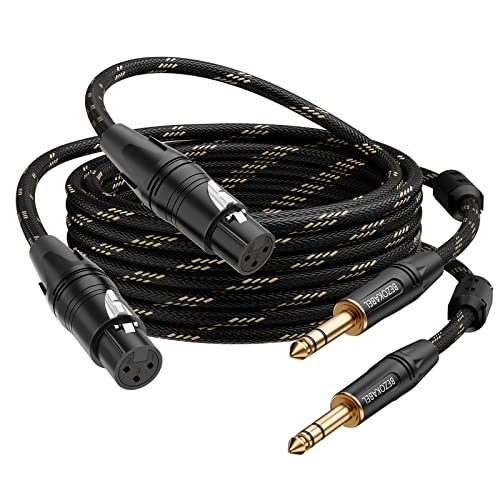
The female XLR end here is the part that lets a microphone join the party.
Everything else in this list so far has two male ends, which quietly locks a mic out. This one has a female XLR connector, so it plugs straight into a dynamic or condenser microphone and runs to a quarter-inch input on a mixer. The cable itself is 24 AWG oxygen-free copper with double shielding, wrapped in an aluminum alloy housing with gold plating on the quarter-inch adapter. There is also a magnetic ring on the line that filters interference — a small detail that keeps a phone sitting near the mixer from bleeding into the signal.
The self-locking XLR connector is the feature worth knowing about. It clicks into place and holds, so a mic stand getting nudged does not unplug your vocal mid-song. A braided nylon jacket keeps the cable soft and manageable instead of stiff. No humming or hissing shows up in the feedback, which is exactly what you want from a mic run. You get two cables in the pack, so a second mic or a backup costs you nothing extra.
At 6 feet, this is a short cable — great from a mic to a nearby interface, short if you are reaching across a stage. Worth knowing: the female-XLR-plus-quarter-inch pairing is built for a mic into a mixer input, so do not expect it to feed a powered speaker the way a male-to-male balanced cable does. For home recording and small live vocal setups, it does its one job cleanly.
What earns its keep
- Female XLR connector plugs directly into a microphone, unlike the male-to-male picks
- Self-locking XLR holds tight when a stand gets bumped
- 24 AWG oxygen-free copper with double shielding and a magnetic interference ring
- Two cables per pack covers a second mic or a spare
Worth knowing first
- 6 feet is a short hop — not built to cross a stage
- Mic-to-mixer duty only; it will not drive a powered speaker
Your pick when: a microphone needs to reach a mixer input and you want the lock to hold through a whole set.
Keep shopping if: the run is longer than a few feet or the destination is a speaker rather than a mixer.
5. SNANSHI 1/4 TRS to XLR Male Cable 2-Pack
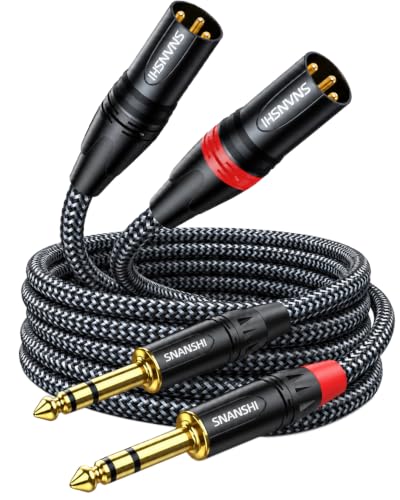
Two color-coded cables that wire your whole monitor pair in one purchase.
Buying one cable for a stereo setup is the mistake this pack fixes. Each cable carries one balanced mono channel, and you get two — a black ring for left, a red ring for right — so you run interface output to monitor input on both sides without ordering twice. The conductors are 22 AWG oxygen-free copper, which is thicker than the 24 AWG used on the other cables here, and the maker states that gauge reduces resistance over distance. Dual shielding combines an aluminum foil layer with copper shielding to keep WiFi routers and stage lighting out of your signal.
The connector pairing is two male ends, so read the warning before you buy: this is a line-level cable for an interface or mixer output into a powered monitor or PA speaker. It will not take a microphone, because a mic needs a female XLR end. Buyers report it handles the mixer-to-powered-speaker job exactly as intended. The nylon braided jacket is rated by the maker for thousands of bends and carries a 3-year warranty, and the 24K gold plating on the plugs resists oxidation over years of use.
At 6.6 feet per cable, this suits a home desk where the monitors sit just behind your interface. Two monitors across a larger room will want the longer versions the maker also offers at 10 and 15 feet. What you get for the money is a complete stereo run with left and right already distinguished, which saves the cable-tracing headache behind a rack.
The pair advantage: a color-coded left and right in one box, on thicker 22 AWG oxygen-free copper than the 24 AWG standard here — a genuinely tidy way to wire a monitor pair.
The line you cannot cross: two male plugs rule out every microphone, and 6.6 feet keeps this on the desk rather than the stage.
Suits you if: you are wiring two powered monitors to an audio interface and want the left and right done in a single order.
Wrong tool if: you are hooking up a microphone or running cable across a live stage.
6. Cable Matters XLR to 1/4 TS Microphone Cable
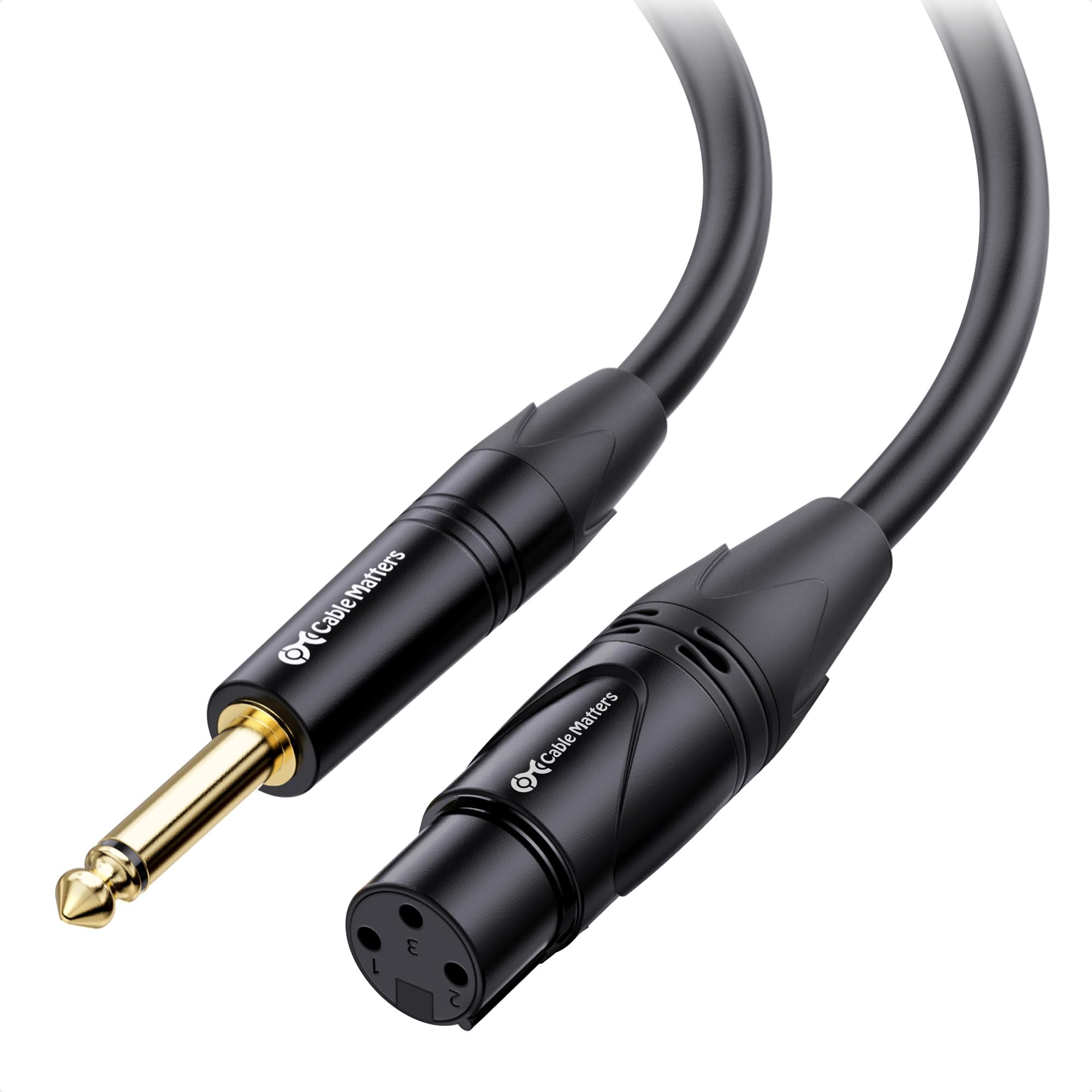
The karaoke fix: a microphone straight into a quarter-inch jack without a wobbly adapter in between.
This is the cable that replaces the little adapter people lose. It has a female XLR end for a microphone and a quarter-inch TS male end that plugs into an amplifier, karaoke machine, or other gear with an unbalanced quarter-inch jack. Cable Matters calls it unbalanced, and that label is the honest one — it uses two-conductor TS rather than three-conductor TRS. Inside, oxygen-free copper conductors carry the signal and a bare copper braided shield works to cancel hum, with polyethylene insulation around the wire.
The build is where the money went. A flexible PVC jacket surrounds gold plated connectors with easy-grip treads, and reinforced strain relief (a stiffened collar where the cable meets the plug) holds up the weight of a microphone hanging off the plug. Owners mention sturdy injection molding and clear sound at a price that holds up. Ten feet gives you room to move with a mic in your hand.
Remember the unbalanced part before you plan a big room. Across a karaoke setup or a mic into a nearby amp it is fine. Run it 30 feet alongside lighting and power cables and you may hear noise that a balanced cable would have cancelled. That is a design limit, not a defect — this cable is built for short-to-medium runs into unbalanced inputs, and it does that job with hardware that outlasts the average adapter.
Why it holds up: reinforced strain relief and easy-grip gold plated connectors are built around the weight of a real microphone, and 10 feet gives you room to actually move.
Read before buying: this is an unbalanced TS cable, so it is the right call for a karaoke machine or amp input and the wrong call for a long run next to power cables.
Grab it for: a microphone into a karaoke machine or amplifier quarter-inch input, where an adapter would just get lost.
Skip if: the destination jack is balanced TRS and you are covering a long distance.
7. Smithok 1/4″ to XLR Cable 2Pack

Two braided balanced cables with gold plugs that will not pull loose from the jack.
You get two cables, a nylon braid, and a drag-proof plug design for the price of one mid-range cable elsewhere. Each run is 6.6 feet of 24 AWG oxygen-free copper (a wire gauge and copper grade that carry a clean signal), wired as a balanced quarter-inch TRS to XLR male patch — the same line-level pairing as the Hosa and SNANSHI, so it moves signal from a mixer to an active speaker or from an interface to a monitor. The braided jacket protects the wire and cleans up easily, and the manufacturer states the outer diameter of the cable itself at 6.3mm.
The detail worth pointing at is the drag-proof plug: the tail grips the wire so it does not pull free under a yank. With 24k gold plating on the quarter-inch and XLR plugs, signal has less to lose at the contact points. Molded strain relief supports the weight of whatever is plugged in. Each of the two cables carries a 2-year warranty, so both channels of a stereo run are covered. Quality draws the bulk of owner praise, with functionality close behind.
Both ends are male, so this is another one that will not take a microphone. And while 6.6 feet is plenty for a desk, it is short for a stage. Where this genuinely earns its spot is as the buy-two-for-the-price-of-one option — if you need both channels wired and want a braided jacket that shrugs off a gig bag, this is the one to pick.
The case for it
- Two balanced 6.6-foot cables in one purchase covers a full stereo run
- Drag-proof plug tail grips the wire so it does not pull out of the connector
- Nylon braid over 24 AWG oxygen-free copper, with 24k gold plated plugs
- 2-year warranty on each cable
The limits to respect
- Male-to-male pairing shuts out microphones entirely
- 6.6 feet is a desk length, not a stage length
Worth it for: a stereo desk setup where you want two braided balanced cables without ordering twice.
Not the one for: mic hookups or long runs across a floor.
8. Hosa HXS-005 Pro Balanced Interconnect

Five short feet of balanced Hosa cable for the patch that lives behind the desk.
Five feet is the entire point here — it is the shortest balanced cable in this lineup, exactly half the 10-foot Hosa HSX-010 above. That makes it the one that fits a tight desk patch, where a 10-footer just coils up behind the interface and gathers dust. It carries a female XLR connector on one end and a quarter-inch TRS plug on the other, so it takes a device with an XLR output into a device with a balanced phone input, wired on 24-gauge copper with REAN connectors.
Owners get clean sound with no noise trouble, and the build quality is the trait that draws the most favorable comment, with functionality close behind. It is a simple, honest cable — well put together, no drama, and the value read is fair for the hardware. The round jacket coils flat and tucks away easily when you break the desk down, and the REAN plugs seat with the same firmness as on the longer version.
The catch is simply the length. Five feet will not reach across a room, and the female XLR end means it pairs with an XLR output rather than a microphone input. If your interface and outboard gear sit within arm’s reach, though, this is the tidy patch cable that does the job without a puddle of spare cable. It is the practical pick for anyone assembling a small home setup one short connection at a time.
Where it shines: 5 feet of balanced 24 AWG copper with REAN plugs — short enough to sit neatly behind a desk interface where longer cables just bunch up.
What to expect: the female XLR and quarter-inch TRS combo connects an XLR output to a balanced phone input, so check your jacks before ordering.
Fits the bill for: tight desk patches where a longer cable would just tangle behind the rack.
Look past it if: you need to bridge any real distance or your gear has an XLR input rather than output.
Know the Specs
Balanced vs Unbalanced
A balanced cable carries the signal on three conductors, so noise collected along the run cancels at the far end — this is what keeps a long run to a powered speaker quiet. An unbalanced cable uses two conductors and skips that cancellation, so it is fine for a short karaoke or amp hookup but can pick up hum over distance. The Cable Matters pick here is the unbalanced one; the rest run balanced.
TRS vs TS Plugs
TRS means tip-ring-sleeve, three contact points on a quarter-inch plug, which is what a balanced line needs. TS means tip-sleeve, two contacts, which is the unbalanced version. A TS plug in a TRS jack will still pass audio but loses the balanced benefit, so match the plug to what the jack expects.
Connector Gender
Female XLR has the holes that receive pins and plugs into a microphone or an output jack; male XLR has the pins and plugs into an input. A quarter-inch plug has no gender label, but the matching logic is the same. Two male XLR ends, which several cables here use, cannot connect to a microphone at all.
Wire Gauge and Shielding
Gauge is numbered inversely: 22 AWG is thicker copper than 24 AWG, and thicker wire resists signal loss over distance better. Shielding, whether foil, spiral copper, or a braid, blocks outside electrical noise. Neither number alone tells the whole story; a well-shielded 24 AWG cable can outperform a thin 22 AWG one on a noisy stage.
Common Questions
Will an XLR to 1/4 cable connect a microphone to a mixer?
Can I use a 1/4 TRS to XLR cable to feed a powered studio monitor?
Does a longer XLR to 1/4 cable add hum?
What is the difference between a balanced and an unbalanced 1/4 to XLR cable?
Why does my cable have two male ends and will not fit my microphone?
How long should my XLR to 1/4 cable be for a home studio?
Does gold plating on the plugs really matter?
Can I use a 1/4 to XLR cable for karaoke?
Will a thicker wire gauge make a real difference?
Do these cables work with a guitar or a keyboard?
The Bottom Line
For most setups, the xlr to 1/4 winner is the Hosa HSX-010. It runs balanced 24-gauge copper with REAN connectors across 10 feet, exactly the length that reaches a mixer to a speaker stand without hum, and it is the cable most buyers end up buying twice only to keep one in the bag. If you mix at a desk and interference is your problem, reach for the Mogami Gold with its four-conductor quad design. And if a microphone needs to join the signal chain, the BEZOKABEL gives you the female XLR end that the male-to-male cables simply cannot offer. Whichever run you are covering, match the connector gender and the balanced-versus-unbalanced question first — that is the whole decision.
How we choose
We do not accept paid placement. Every pick is matched to a real buyer and a real use-case; we do not hands-on test units.
Sources
Specifications: manufacturer listings and product documentation. Review insights: verified customer reviews, as of November 2026. Pricing: not shown on this page (it changes often); check the current price via the retailer link.
As an Amazon Associate, Tactical Gear Guy earns from qualifying purchases. This does not affect which products we feature.